REVIEW · BARCELONA
Barcelona | StreetArt Bike Tour Moco Museum
Book on GetYourGuide →Operated by A-Bike Rental and Tours - Barcelona · Bookable on GetYourGuide
Barcelona’s walls have stories on every block. This street art bike tour is a smart way to see the city fast on an electric bike while your guide translates what you’re looking at as you go, from Keith Haring style icons to older graffiti tags. I especially like the mix of famous mural names with lesser-known street pieces, and I like how the English guide keeps the stops readable instead of random wall shopping.
The main thing to consider is simple: the tour is not for people who can’t ride a bike, and the pace assumes you’ll comfortably pedal through 2.5 hours of short hops between neighborhoods.
In This Review
- Key things worth clocking before you go
- Getting Started: Carrer dels Tallers 45, Bikes, and a Quick Safety Check
- Electric Bike Flow: How the 2.5 Hours Feels Right (Not Too Long)
- CCCB and MACBA: A Contemporary-Art Warm-Up Before the Murals
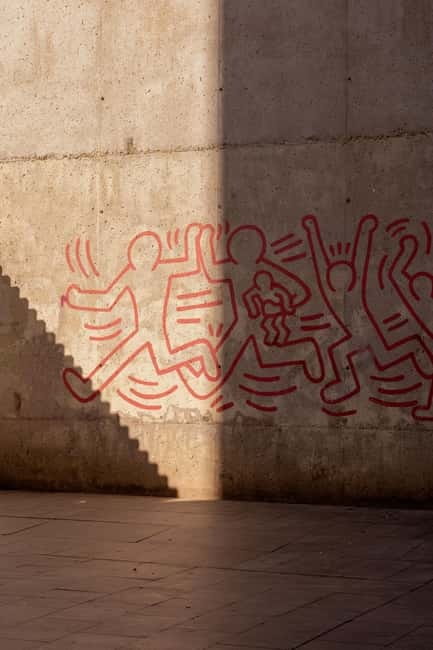
- Keith Haring at MURAL DEL SIDA: The Big Name Moment That Sets the Mood
- From Raval Streets to Early Graffiti: Feminist Wall, Space Invader, and Xupet Negre
- Ágora Benítez and the “Art in the Middle of Life” Feeling
- The Industrial Turn at Jardín de las Tres Chimeneas
- Mariscal’s La Gamba, BCN Head, and the Palms-Up Photo Breaks
- Cathedral Area: El mural del petó, El Beso Photomosaic, and Picasso’s Presence
- Palau de la Música and Passeig de Gràcia: Modern Icons Along the Ride to Gaudí Territory
- Who This Tour Suits Best
- Value Check: Why $34 Feels Fair for What You Get
- A Quick Note on Guides (And the Kind of Energy to Expect)
- Should You Book This Barcelona StreetArt Bike Tour With Moco Museum?
- FAQ
- What time does the tour start?
- Where do I meet the guide?
- How long is the tour?
- What’s included in the price?
- Do I need to ride a bike?
- Are helmets provided?
- Is the tour wheelchair accessible?
- What should I bring and what’s not allowed?
Key things worth clocking before you go
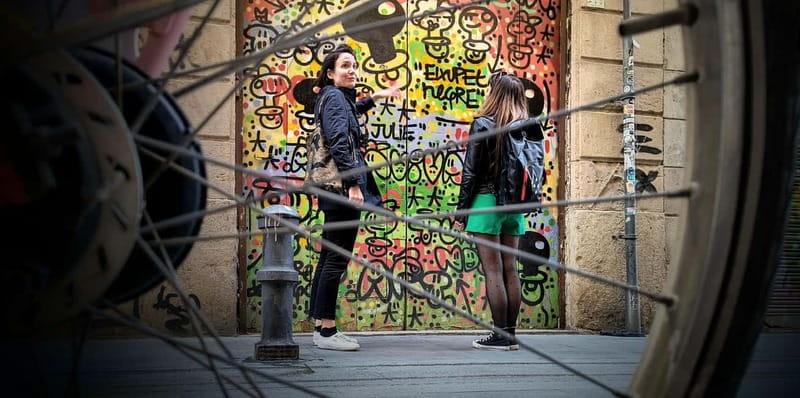
- Electric bike rides between mural zones keep the route smooth and manageable in heat
- English-speaking live guide turns each stop into a quick story, not just a photo break
- Keith Haring’s MURAL DEL SIDA is a standout anchor for the whole route
- Old graffiti mixed with modern street art lets you see how Barcelona’s walls evolved
- Photo stops are built in, with landmarks like the Gamba and a Picasso-related mural
- Poncho provided and the tour runs rain or shine, so weather is usually a “plan, not a problem”
Getting Started: Carrer dels Tallers 45, Bikes, and a Quick Safety Check
I like that this tour starts in a straightforward place: Carrer Dels Tallers 45. You’ll meet by a palm tree and enter the passage where the team meets you. Arrive about 10 minutes early if you can—this type of bike tour moves best when everyone’s ready before the first ride.
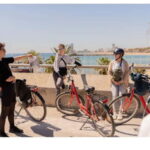
Before you roll, there’s a short safety briefing (around 5 minutes). That matters because Barcelona street corners can look calm from a sidewalk, but bikes need clear habits: hold steady, don’t drift, and follow the guide’s cues. You’ll also get what you need to make the ride easier: 1 bike per person, a handlebar bag for your stuff, and a free bottle of water.
One detail I appreciate for day-to-day comfort: no headphones are allowed. That’s not just a rule. It keeps you present for the guide’s talking and the group’s instructions, which makes the whole experience feel less like an audio tour and more like a guided walk you happen to ride.
You can also read our reviews of more cycling tours in Barcelona

Electric Bike Flow: How the 2.5 Hours Feels Right (Not Too Long)
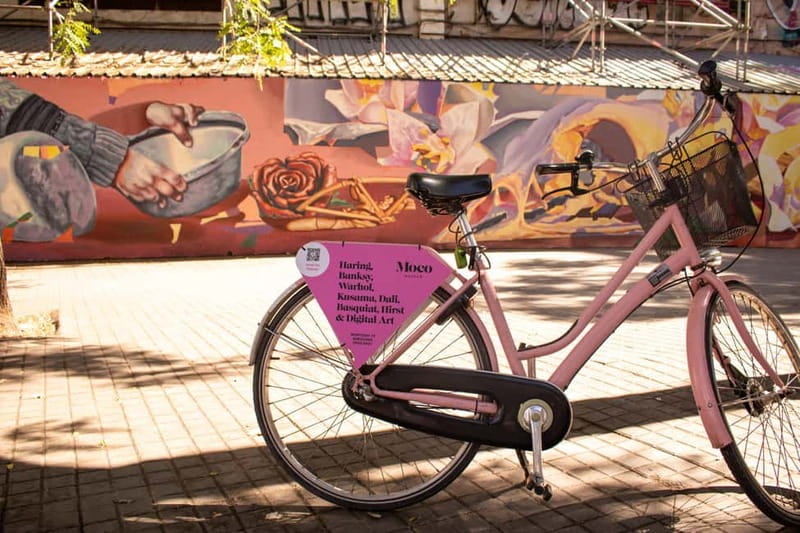
This tour runs about 2.5 hours. That time window is a sweet spot for street art. Long enough to cover multiple neighborhoods, short enough that you’re not exhausted halfway through.
The route is paced with short electric-bike rides between stops, plus photo and guided moments at the walls. You’ll spend time looking up and reading the art, then move to the next wall before your attention drains. If you’ve ever tried to “self-tour” street art in Barcelona, you know the trap: you end up walking in circles. Here, the bike keeps you pointed where the next story lives.
Also, the tour is designed for real Barcelona weather and conditions. It runs rain or shine, and you’re given a free poncho if the sky opens up. Bring sunscreen anyway—because even when there’s cloud cover, you’ll still be outside a lot, moving and stopping.
CCCB and MACBA: A Contemporary-Art Warm-Up Before the Murals
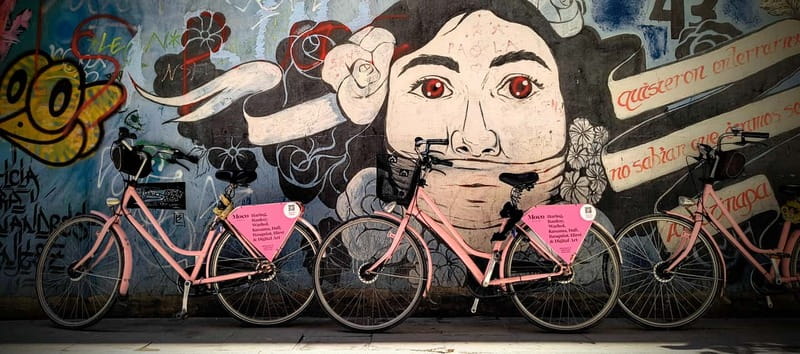
The first major stop is at the Centre de Cultura Contemporània de Barcelona (CCCB). This is a smart choice because it sets the tone: modern culture, social ideas, and the kind of art that doesn’t always explain itself instantly.
At CCCB, you get a photo stop and a guided walk, including a Sant Jordi Sculpture & Skyline moment. It helps because street art in Barcelona isn’t isolated. It sits next to institutions and public expression. You’re not just hunting for cool graffiti; you’re learning how the city frames art.
Next up is the Museu d’Art Contemporani de Barcelona (MACBA). Even if you’re not stepping inside for a full museum visit, you’ll get guided context and another quick photo-focused stop. A big reason this works is the contrast: after contemporary museum space, your eyes are ready for the more direct emotional language of murals.
Keith Haring at MURAL DEL SIDA: The Big Name Moment That Sets the Mood
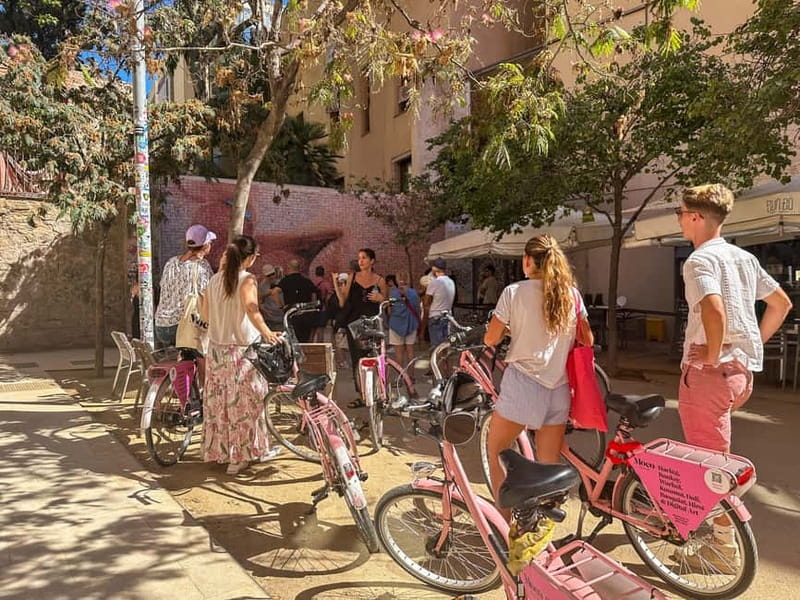
If you’re coming for one “must-see,” make it the MURAL DEL SIDA (Keith Haring) stop. It’s the kind of artwork people point to as shorthand for why street art matters: bold, readable shapes and a clear message.
On this tour, the Haring mural isn’t treated like a trophy. It’s presented as part of a bigger story about public art and communication. You pause for photos, but you also get the guide’s explanation about what you’re seeing and why it lands the way it does.
This is one of the stops where I’d expect the group to slow down naturally. The colors and figures grab your attention fast, but the real value is the guide’s walk-through, which helps you look past “cool style” and toward meaning.
From Raval Streets to Early Graffiti: Feminist Wall, Space Invader, and Xupet Negre
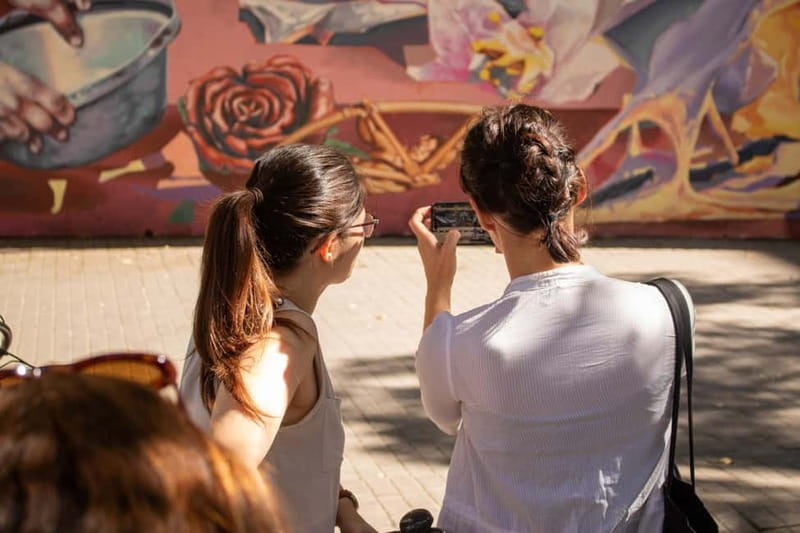
After you’ve got the contemporary context, the tour leans into the neighborhood walls that people actually pass every day.
You’ll pass and stop near streets like c/JOAQUIN COSTA and c/FERLANDINA, where you’ll spot pieces such as Birdie Al Awan and Xupet Negre. That last one matters because it’s described as one of the city’s earliest graffiti works. So you’re not just seeing the latest mural. You’re seeing the timeline.
Then comes Rambla del Raval, a street art corridor in many senses—more than one style, more than one theme. Here you’ll find a cluster of recognizable works including a Feminist wall, Space Invader, and contributions by Ana Eliza. This part is valuable because it shows street art as public opinion: identity, activism, pop-culture references, and playful art that still carries weight.
The best way to enjoy this section is to stop treating it like a scavenger hunt. Instead, pick one or two elements per stop—style, symbol, or text—and ask what it’s trying to say. The guide’s stories are built for exactly that kind of looking.
You can also read our reviews of more museum experiences in Barcelona

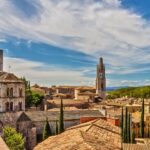
Ágora Benítez and the “Art in the Middle of Life” Feeling
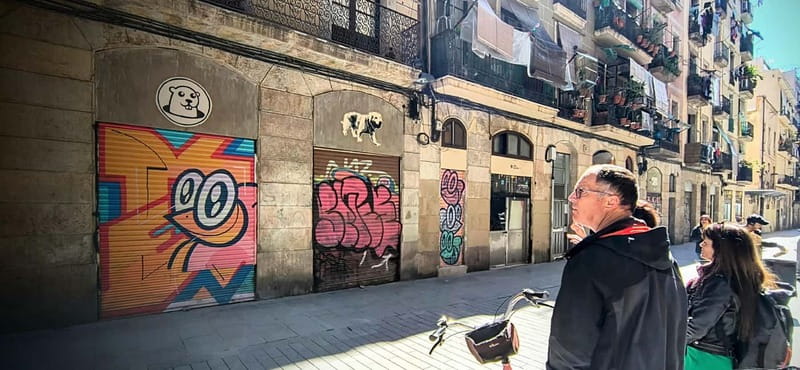
The tour continues toward Ágora Benítez at a stop tied to Àgora Juan Andrés Benítez, plus other street segments where art seems to appear in the middle of everyday movement. You’ll make additional photo stops along streets like c/Aurora, c/Riereta, and c/Sant Pau.
This is where you start to feel what makes Barcelona street art different from the “one famous mural” model. The city’s walls hold multiple eras of expression at once—some work feels like it belongs to the present moment, and some feels like it’s been there long enough to become part of the street’s memory.
And because the tour is built to adapt, you might see slightly different pieces or emphasis depending on what’s changed on the walls. That’s not a flaw. Street art changes. The tour’s structure acknowledges that and keeps the experience flexible.
The Industrial Turn at Jardín de las Tres Chimeneas
One of my favorite rhythm changes on this tour comes around Jardins de las Tres Xemeneies on Av/Paral·lel. You’ll get photo and guided time here, plus short scenic rides to connect the segments.
This stop works because the setting supports the art. You’re surrounded by an industrial-feeling backdrop, and street art often thrives in exactly that contrast: art that feels made for walls, not white galleries.
The quick lesson you take away is practical: look at the surroundings. Street art doesn’t exist in a vacuum. Artists choose placement, and the city’s built environment shapes how the piece reads.
Mariscal’s La Gamba, BCN Head, and the Palms-Up Photo Breaks
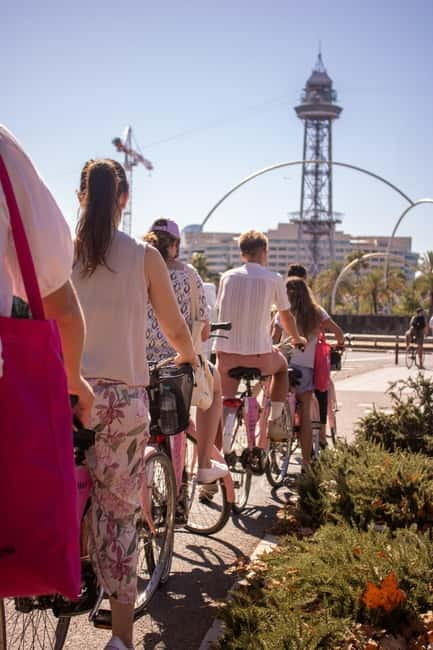
As the route reaches the central waterfront/monument zone, you’ll hit public-art moments that feel playful and official at the same time.
At La Gamba you’ll see the sculpture linked to Mariscal. It’s fun, but it’s also a reminder that Barcelona street creativity doesn’t only show up as illegal-looking murals. It can be bold and designed for the public, then shared like a local landmark.
You’ll also spot BCNs Head credited to Leinceshtain and pass by Columbus Monument. These stops add a different flavor: not just street art as protest or message, but street art as identity and humor.
Then comes Theatre Arnau and El Cap de Barcelona. These areas help you understand why the city feels like one big outdoor canvas. Even when the art isn’t strictly a mural, the attitude is the same—Barcelona likes expression in public space.
Cathedral Area: El mural del petó, El Beso Photomosaic, and Picasso’s Presence
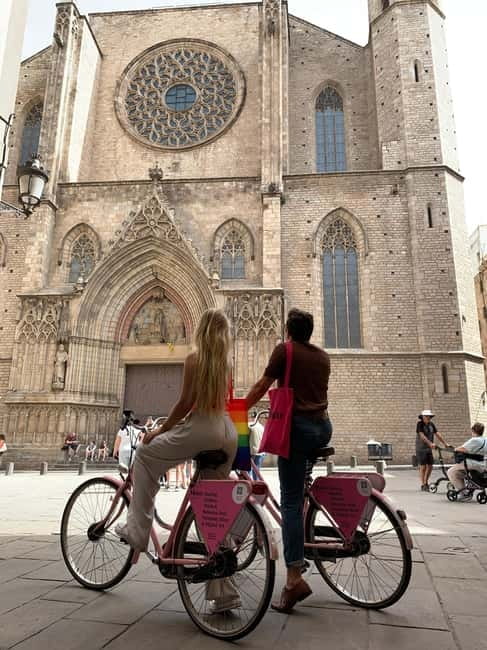
Near Barcelona Cathedral, you’ll encounter additional photo stops tied to el mural del petó (The Kiss mural) and the area featuring El Beso Photomosaic. You’ll also find a Picasso Mural in this stretch.
This is a key moment for most people because it connects old-world Barcelona with modern expression. The Cathedral area gives you history at close range. The street art elements beside it show how modern artists borrow attention and meaning from the city’s big landmarks.
I like how this section helps your brain stop separating “classic Barcelona” from “street Barcelona.” They’re not enemies here. They share space.
Palau de la Música and Passeig de Gràcia: Modern Icons Along the Ride to Gaudí Territory
Near Palace of Catalan Music (Palau de la Música Catalana), you’ll pause for photos and guided context. After that, the route heads toward Passeig de Gràcia and Casa Batlló, where you’ll get passing views and more photo opportunities.
This might sound like a detour from street art, but it actually completes the picture. Barcelona’s street art energy isn’t just “down in the alleys.” It coexists with architecture and design that the city treats as serious art.
So even if you’re not touring inside Casa Batlló, you’ll leave with the feeling that Barcelona is consistent: expression everywhere, from balconies and grand facades to walls and corners.
Who This Tour Suits Best
This is best for people who:
- want an active street art overview in 2.5 hours
- can ride a bike comfortably (it’s not suitable if you can’t ride)
- want a guide who explains what you’re seeing, not just points at it
- like mixing iconic names with older street works
It’s also a good fit for families when kids can ride. The helmet rule is important: helmets are mandatory for children up to age 16 (they’re provided free of charge for kids; adults can request one for an additional cost).
If you’re thinking about a wheelchair: it’s not suitable for wheelchair users, and bikes can’t be adapted based on the info provided.
Value Check: Why $34 Feels Fair for What You Get
At $34 per person for a 2.5-hour guided street art bike experience, the value is strongest in what’s included.
You’re getting:
- English-speaking live guide
- one bike per person, plus electric-bike style riding between stops
- picture stops
- water, a handlebar bag, and a free poncho in rain
If you’ve ever priced bike rentals plus a paid guide plus convenience items, $34 starts looking like a practical deal. The time also matters: street art is time-sensitive, and the tour’s route is built to cover a lot of key walls without turning the day into an unplanned hike.
A Quick Note on Guides (And the Kind of Energy to Expect)
One review highlighted a guide named Eirini as a standout for being extremely enthusiastic and giving strong recommendations after the tour for food. That’s exactly the vibe this kind of tour benefits from: you want someone who loves Barcelona’s walls and can also point you toward what to do next while the art is still fresh in your head.
Even if you don’t get Eirini, use this as your benchmark: a good guide should help you read the murals like you’re decoding a neighborhood newspaper.
Should You Book This Barcelona StreetArt Bike Tour With Moco Museum?
I’d book it if you want a street art day that feels organized, friendly, and meaningful. The route hits major mural names like Keith Haring, includes pieces connected to older graffiti history like Xupet Negre, and mixes in public art stops that make the city feel like one long art walk. With a live English guide and built-in photo moments, you spend your time looking and learning rather than guessing.
I would hesitate only if you:
- can’t ride a bike confidently
- need wheelchair access
- want a slow, sit-and-stare museum pace
If you match the bike-friendly rhythm, this is one of the more efficient ways to connect Barcelona’s contemporary art world with the street-level stories you’ll keep noticing long after the ride ends.
FAQ
What time does the tour start?
The tour starts at 11:00 am. Check availability to see starting times.
Where do I meet the guide?
Meet at Carrer Dels Tallers 45 (Barcelona Ciclo Tour: The passage). The instructions say to find the team by the palm tree and enter the passage.
How long is the tour?
The tour lasts about 2.5 hours.
What’s included in the price?
It includes an English-speaking guide, 1 bike per person, a free bottle of water, a handlebar bag, and picture-stops.
Do I need to ride a bike?
Yes. The tour is not suitable for people who can’t ride a bike.
Are helmets provided?
Helmets are mandatory for children up to age 16 and are provided free of charge for kids. Adults can request a helmet in advance for an additional cost.
Is the tour wheelchair accessible?
No. It is not suitable for wheelchair users based on the provided information.
What should I bring and what’s not allowed?
Bring sunglasses, a sun hat, sunscreen, weather-appropriate clothing, a charged smartphone, and ID (passport or ID card; a copy is accepted). Headphones are not allowed. A poncho is provided for rain.