REVIEW · BARCELONA
Barcelona Rooftop Paella Cooking Class with Sangria & Local Host
Book on Viator →Operated by benjamin mordoh · Bookable on Viator
You start learning paella before lunch even starts. This hands-on paella class in Barcelona pairs a local host with a rooftop-style meal, and you cook the recipe step by step instead of just watching. You also get time for questions, which turns it from a one-off meal into a skill you can repeat later.
I also like that you begin by helping mix homemade sangria or vermouth, then you sit down to enjoy what you made. One possible drawback: the experience is weather-dependent, so the rooftop atmosphere may be adjusted if conditions aren’t ideal.
Key Highlights at a Glance
- Hands-on paella from scratch: you’ll work through the steps, not just observe
- Homemade sangria or vermouth: you mix the drink before cooking
- Small-group private feel: only your group participates, so questions actually get answered
- Catalan starters: tomato salad and pan con tomate are part of the meal
- Vegetarian and allergy swaps: you can request changes
- Seafood paella roots: the seafood version draws from Costa Brava tradition
In This Review
- Where You Meet in Sant Martí (and Why That’s a Plus)
- Starting With Sangria or Vermouth (You’ll Actually Make It)
- Tomato Salad and Pan con Tomate: The Catalan Side That Teaches You Something
- Seafood Paella From Scratch: Sofrito, Broth, Rice, and Technique
- What you’re actually learning (not just cooking)
- Small “do this” guidance that helps at home
- Rooftop-Style Lunch: Eating While the Big Flavor Lands
- Customizing for Vegetarian or Allergy Needs
- Why This Host-Led Format Feels Different Than a Cookie-Cutter Class
- Price and Value: What You Really Get for $90.11
- Weather, Timing, and What to Bring to Enjoy It
- Should You Book This Barcelona Rooftop Paella Class?
- FAQ
- How long is the Barcelona rooftop paella cooking class?
- Is this class hands-on or a cooking demonstration?
- Can the menu be adapted for vegetarian preferences or allergies?
- What do you eat and drink during the class?
- What’s the meeting location for the class?
- Is the class affected by weather, and what happens if it’s canceled?
- Are service animals allowed?
Where You Meet in Sant Martí (and Why That’s a Plus)
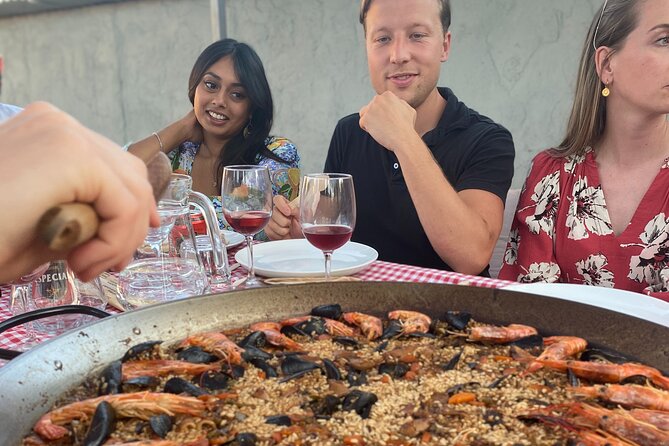
This class meets in Sant Martí, at Passatge de Coll, 19 (08019). It’s not in the thick of the tourist crush, which is a quiet win when your goal is food that feels local and relaxed. You’ll also find it convenient to reach via public transportation, and the activity ends back near the same meeting point.
What this location change does for the experience: it changes your mindset. Instead of racing from sight to sight, you slow down. You’re in a more residential pocket of Barcelona, so the whole thing feels closer to a neighborhood table than a scheduled show.
Time-wise, plan for about 2 hours. That sounds short until you realize you’re doing multiple tasks in sequence: drink prep, meal prep, cooking, and finally lunch. It’s a full “working lunch” format, just with more stirring and fewer phones.
Starting With Sangria or Vermouth (You’ll Actually Make It)
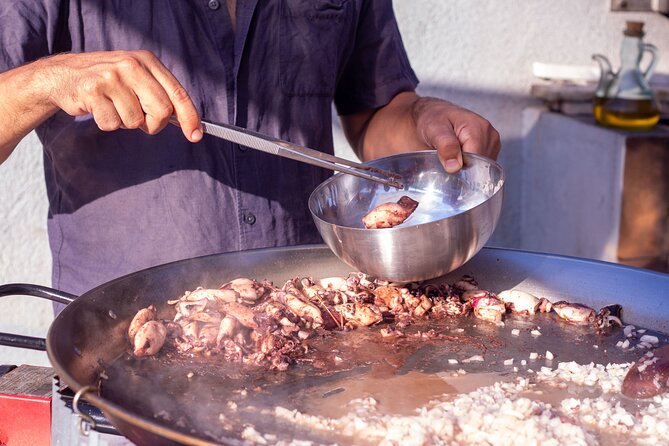
The class starts with a drink, either homemade sangria or vermouth—your group makes it together first. This is smart programming. Before anyone touches the paella pan, you’re set into a social rhythm: you’re chatting, learning little details, and loosening up.
From a practical standpoint, this also gives you a quick picture of the host’s teaching style. If someone is going to guide you through paella technique, you can tell early whether they explain things in plain language—and this start usually makes the whole class feel less intimidating.
You’ll likely be tasting and adjusting as you go (how sweet, how balanced, what flavors stand out). That matters later too, because Spanish cooking is about confidence with flavors, not just following steps.
You can also read our reviews of more cooking classes in Barcelona
Tomato Salad and Pan con Tomate: The Catalan Side That Teaches You Something
Before the main event, you’ll eat a starter menu that’s simple but very Barcelona/Catalonia in spirit. The starters include:
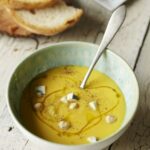
- tomato salad dressed with extra virgin olive oil
- pan con tomate, Catalan-style toasted bread rubbed with fresh tomato, olive oil, and salt
Here’s why these starters are worth paying attention to. Paella gets all the spotlight, but these dishes teach the basics Spanish cooks rely on: good olive oil, fresh tomatoes, and salt used with restraint. You’re building an intuition for the flavors that show up again and again in the region.
Also, pan con tomate is a lot more than bread with topping. The process is part of the point: toast first, then rub, then finish with a light touch. You can replicate it easily at home, even if your paella turns out less perfect than the rooftop version.
Seafood Paella From Scratch: Sofrito, Broth, Rice, and Technique
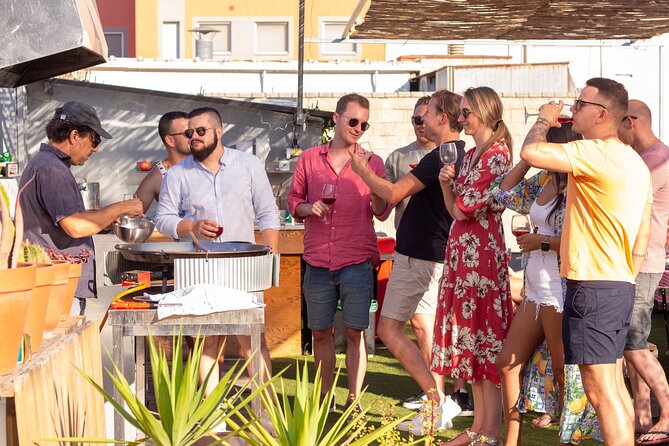
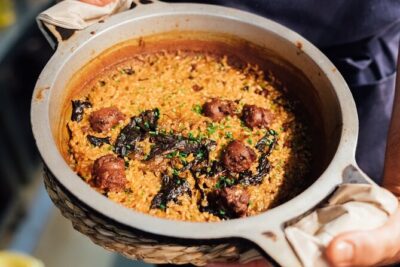
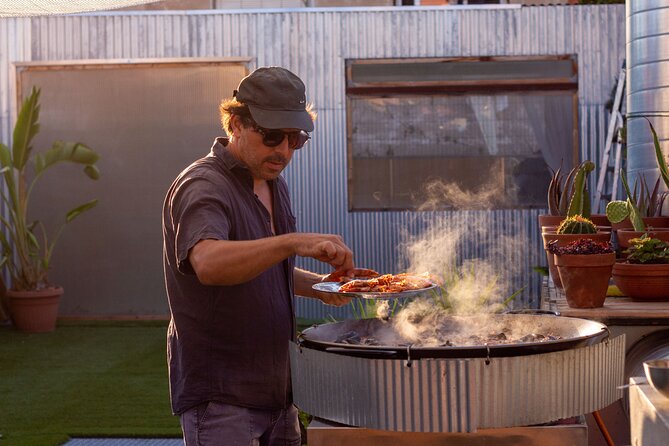
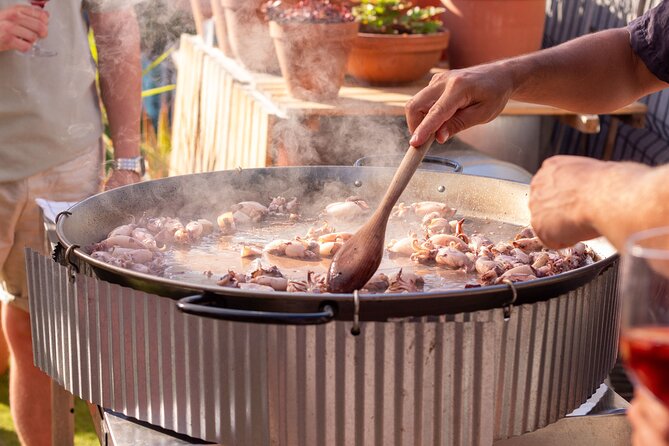
The heart of the experience is making seafood paella from scratch. This is not a demonstration. You’ll participate through the process while your local host explains what matters and why.
The seafood paella version you’ll learn includes prawns plus cuttlefish (or squid) and mussels. That ingredient mix reflects a Mediterranean seafood tradition, and the host connects it to fishing-area origins in Costa Brava—the kind of detail that makes the cooking feel less generic.
What you’re actually learning (not just cooking)
Even if you’ve watched paella videos before, you’ll likely notice how the techniques are broken down in a way that’s easier to repeat. Key moments include:
- sofrito prep (building flavor from aromatics)
- broth work (getting depth so the rice has something to absorb)
- rice cooking approach (timing and heat control)
- seafood timing (adding ingredients so they don’t overcook)
The goal isn’t perfection on the first try. The goal is understanding the rhythm: build flavor, control the cooking stage, and treat the rice as the main character.
Small “do this” guidance that helps at home
One of the best parts of a class like this is hearing the host’s practical dos and don’ts. In paella, tiny choices can matter—how the pan heats, how liquid reduces, when seafood hits the pan. You’ll come away with a mental checklist that makes cooking at home feel less like guessing.
And yes, you’ll be able to ask questions. Plenty. That’s a big difference between a classroom lecture and a real working lesson.
You can also read our reviews of more tours and experiences in Barcelona


Rooftop-Style Lunch: Eating While the Big Flavor Lands
Once the paella is ready, the group sits down together and eats. You’re not stuck with a paper plate version after cooking fatigue. This is a proper sit-down lunch, paired with the items that make it feel complete: bread, olives, and fresh fruit.
Timing matters here. The paella takes a bit of attention from the pan to the final stage. While it cooks, you can stay social, enjoy your drink, and ask last-minute questions. Then, when everything is finished, you taste the result as a group. That “we made it” moment is exactly where cooking classes become memorable.
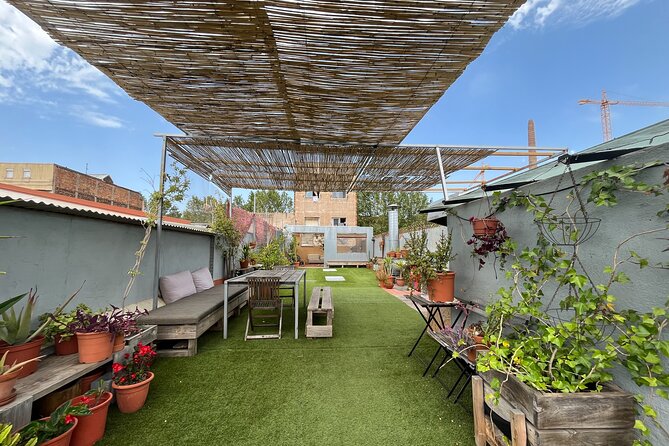
If you care about the overall vibe, you’ll likely appreciate the rooftop patio feel. A note of realism, though: the experience requires good weather. If the weather doesn’t cooperate, setup may change. So book with the mindset that the lesson and lunch are the constant, and the view is the bonus.
Customizing for Vegetarian or Allergy Needs
One of the smartest selling points here is the ability to adapt the menu. You can request a vegetarian version, and you can also share allergy needs so the menu can be adjusted.
That matters because paella is usually framed as meat-and-seafood heavy. Having a path to vegetarian paella means you’re not stuck with a “side dish instead” solution. It also means the host can steer you toward ingredients and technique that match the dietary needs without turning the class into a compromise.
If you have allergies, this is also where a class format beats many restaurant meals. You’re talking directly with your host, and you can clarify what you need before cooking starts.
Why This Host-Led Format Feels Different Than a Cookie-Cutter Class
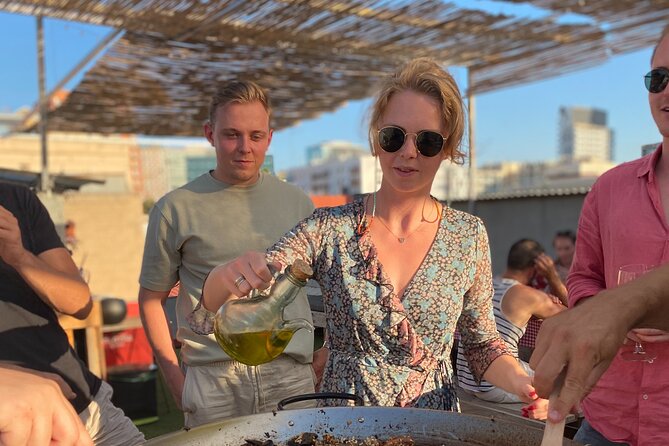
This is a private tour/activity for your group. That one detail changes the energy. In a small private setup, it’s easier to ask questions without feeling rushed. It’s also easier for the host to read your pace and explain adjustments when needed.
The host behind this experience is benjamin mordoh. From the way the class is described and the consistent praise for his style, he comes across as warm, story-driven, and focused on making the steps understandable—not just impressive.
You’ll also notice you can personalize your level of involvement. Some people want to stir and taste. Others want to learn technique more actively. The format supports both.
And because this lesson includes culture, you’re not only learning how to cook paella—you’re also picking up how it’s tied to regional identity: where seafood traditions come from, how ingredients vary, and why paella looks different across Spain.
Price and Value: What You Really Get for $90.11
At $90.11 per person, this isn’t the cheapest food class in Barcelona. But it’s also not just paying for a one-bite taste.
You’re getting:
- a fully hands-on cooking lesson that walks you through steps
- homemade sangria or vermouth as part of the experience
- a sit-down lunch with what you cooked plus bread, olives, and fresh fruit
- a structured menu that includes Catalan starters, not only paella
- the ability to adapt the menu for vegetarian preferences and different allergies
- a private group format (only your group participates)
Put bluntly: you’re paying for an evening of cooking instruction plus a full meal and drinks. That usually makes the cost feel more fair when you compare it to paying Barcelona restaurant prices for seafood plus drinks, without the skill-building.
If you’re the type of traveler who wants “I can do this again at home,” the value is strongest. If you only want to eat and don’t care about technique, you might compare it to a simpler meal with a smaller price tag.
Weather, Timing, and What to Bring to Enjoy It
The experience requires good weather. That affects the rooftop feel most, since rooftop setups depend on conditions. If weather is questionable, you’ll want to stay flexible and treat the meal-and-cooking portion as the core.
Timing is about 2 hours, which is ideal for fitting into a day without turning your itinerary into a math problem. It’s also long enough to get real participation, but not so long that you feel stuck once you’ve had your lunch.
Practical tips:
- Bring your appetite. This is a full meal format.
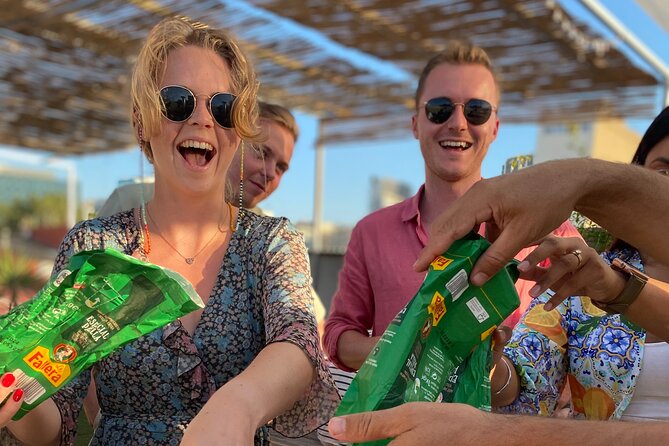
- Pack light layers and something for sun if it’s a clear day. One small hint from the vibe of these classes: it can get warm up there, so consider shades and sun protection.
- Wear shoes that are comfortable for a rooftop/patio setting.
And if you’re sensitive to heat or you just want to enjoy the process, you can plan to take breaks while the paella cooks, since you’ll have a natural pause during the cooking time.
Should You Book This Barcelona Rooftop Paella Class?
I’d book it if you want paella that’s more than a tourist souvenir. This class is built around participation, practical technique, and a meal you actually eat together. The pairing of sangria or vermouth with cooking is also a strong start, because it puts you in the right mood for learning.
I’d think twice if:
- rooftop setup is your absolute top priority, because good weather matters and conditions can change
- you only want a quick bite and don’t care about cooking steps or instructions
If you fall in the first group, you’ll probably leave with two wins: a better understanding of how paella works, and a lunch that feels genuinely Catalan-Spanish rather than mass-produced.
FAQ
How long is the Barcelona rooftop paella cooking class?
It runs for approximately 2 hours.
Is this class hands-on or a cooking demonstration?
It’s fully hands-on, and you participate in cooking rather than only watching.
Can the menu be adapted for vegetarian preferences or allergies?
Yes. The menu can be adapted for vegetarians and for different types of allergies.
What do you eat and drink during the class?
You’ll start with homemade sangria or vermouth, have starters like tomato salad and pan con tomate, and then enjoy the seafood paella you cook. Bread, olives, and fresh fruit are included with the meal.
What’s the meeting location for the class?
The start location is Passatge de Coll, 19, Sant Martí, 08019 Barcelona, Spain, and the activity ends back at the meeting point.
Is the class affected by weather, and what happens if it’s canceled?
The experience requires good weather. If it’s canceled due to poor weather, you’ll be offered a different date or a full refund.
Are service animals allowed?
Yes, service animals are allowed.