REVIEW · BARCELONA
Barcelona Old Town Private Tour: Past and Present
Book on Viator →Operated by Fábio · Bookable on Viator
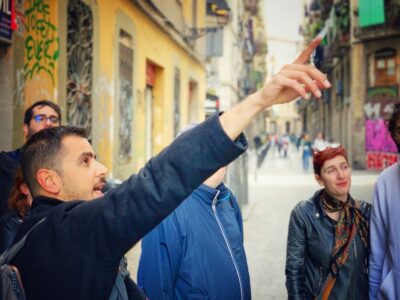
Barcelona has layers, and this walk reads them. This private “past and present” route ties 19th-century city power plays to Gaudí-era imagination, then finishes in the fishing streets with real eating breaks. The guide, Fábio, leans into stories, humor, and plenty of Q&A so you’re not just following landmarks.
I really like the pace and the way you can steer it. Two strong wins for me: you get a true 1-on-your-group feel (not a herd), and the La Boqueria tasting includes jamón ibérico, cheese, and fresh fruit juice plus bottled water. It’s a smart way to keep energy up while the streets turn into your history lesson.
The main catch to consider is time-sensitive access. Some interiors (like Santa Maria del Mar and the Gothic Cathedral patio) depend on when you’re there, and a few famous sights are presented without guaranteed entry—so keep your expectations flexible.
In This Review
- Key things to know before you go
- How this Past-and-Present route keeps your bearings
- Stop 1 at Arc de Triomf: the “triumphal” arch with a twist
- Parc de la Ciutadella: green space with political backstory
- El Born and Santa Maria del Mar: market structure meets memory
- Placa de Sant Jaume and Barcelona Cathedral: civic power and a patio surprise
- La Rambla and Mercat de la Boqueria: the iconic street plus the smart fuel stop
- Plaça Catalunya and the Gaudí house pair: what you’ll learn even without buying tickets
- Plaça Reial to Columbus Monument: secrets and a slower pace toward the port
- Moll de la Fusta to La Barceloneta: old fishing streets to beach time
- Price and value: what $90.70 gets you in real terms
- The guide factor: why Fábio’s style matters
- Who this private tour is best for (and who should skip)
- Should you book this Barcelona Old Town Private Tour?
- FAQ
- How long is the Barcelona Old Town private tour?
- Is this tour private or shared?
- What language is the tour offered in?
- Where do you meet and where does it end?
- What’s included for food and drinks?
- Are there entrance fees included for the major sights?
- Does the tour require good weather?
Key things to know before you go
- Private pace with lots of questions: you move at your group’s speed and can ask Fábio anything.
- Gaudí stops, but plan for street-level views: Casa Batlló and Casa Mila are part of the route, yet ticketed entry isn’t included.
- Santa Maria del Mar access is schedule-based: included only during specific windows, and access can’t be guaranteed.
- Born market building + memorial stops: you get history that isn’t just a photo op.
- La Boqueria snack break: fruit juice, jamón ibérico, and cheese are included.
- Finishes near La Barceloneta: you end where the beach-town vibe starts.
How this Past-and-Present route keeps your bearings
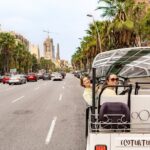
This tour works because it’s built like a guided walk through cause and effect. You start at the edge of the old city with a structure tied to a big 19th-century moment, then you move into the quieter “green lung” of Parc de la Ciutadella and the older civic core of the Gothic Quarter. After that, the route switches gears: iconic streets, market flavors, Gaudí’s modern mythmaking, and then the harbor and old fishing neighborhood.
That mix matters for two reasons. First, it prevents the usual Barcelona problem where you bounce between highlights with no story connecting them. Second, the tour isn’t only monuments. There are smaller reminders—memorial spaces, market structures, and city squares—that help you understand what Barcelona is like when it isn’t staged for tourists.
And because it’s private, you can ask for more detail when something clicks. If you care about wars, you can zoom in. If you care about architecture, you can ask about Gaudí’s style and inspirations at the exact right moment—while you’re already standing near the buildings.
You can also read our reviews of more private tours in Barcelona


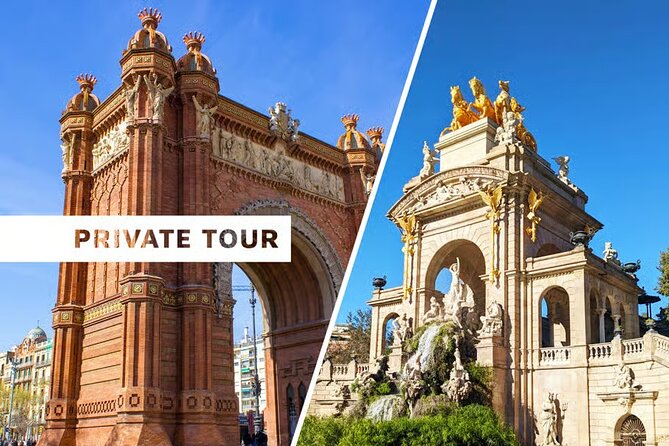
Stop 1 at Arc de Triomf: the “triumphal” arch with a twist
You begin at Arc de Triomf on Passeig de Lluís Companys. It looks like the kind of “victory arch” you’d expect in a big empire movie, but the framing here is different: this starting point was once an entry gate tied to an important 19th-century event, not just a simple celebration of war wins.
Why this matters on a walking tour: it sets the tone that Barcelona’s symbols have context. Even before you hit the Gothic Quarter, you’re learning to read what you’re looking at—so the rest of the walk feels less like “checklist tourism” and more like understanding how the city grew.
Also, it’s a good starting location if you like starting fresh. You’re at the Ciutat Vella edge, so you can head into the old streets without that early “how do we even begin?” feeling.
Parc de la Ciutadella: green space with political backstory
Next comes Parc de la Ciutadella, Barcelona’s green lung. The tour uses the park for two neat lessons. One is about architecture—your guide points you toward the early clue that Gaudí eventually becomes the city’s famous architect. The other is political memory: the park holds important memories of a major 18th-century event that shaped Europe.
This is a smart pairing. Parks often become a break from the story. Here, the story keeps going, but in a calmer setting—so you don’t feel rushed, and you get a break from street intensity before the old-town walking ramps up.
The park stop is short (about 20 minutes), so you’re not going to “tour a park.” You’re going to get the key threads and then move on with your brain already switched to history-reading mode.
El Born and Santa Maria del Mar: market structure meets memory
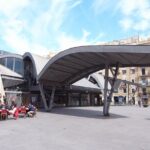
In El Born Centre de Cultura i Memoria, you’ll pass a huge iron structure that used to be part of the district’s market life. It’s one of those industrial leftovers that looks dramatic even from the sidewalk. You’re essentially seeing how commerce and daily life used to be built into the neighborhood.
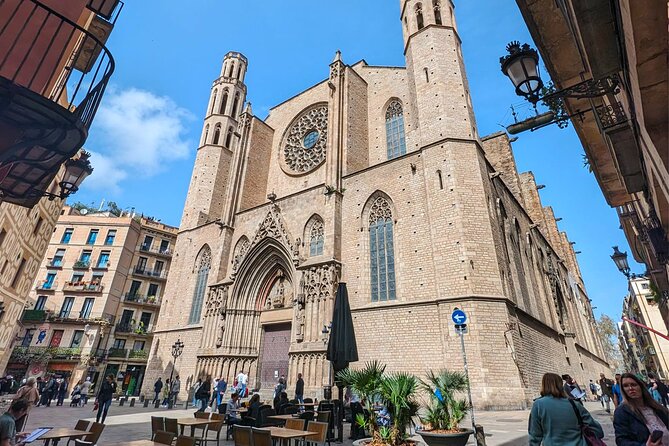
Then you head toward Basilica de Santa Maria del Mar, described as one of the city’s most beloved cathedrals. The tour frames it through the idea of belonging—how it fits into the heart of Barcelona’s citizens from the 14th century. There’s also a couple of angles that help it feel specific, not generic: a remembrance site tied to the Spanish Succession War (the Fosser del Moreres) and a little secret that soccer fans care about.
Here’s the practical note: access can be limited. Santa Maria del Mar has included entry at certain times (after 6pm and certain Sunday windows), but there’s also a note that access can’t be guaranteed. What I’d do: treat this as a good-to-have interior. Even if you’re only viewing what you can from outside, the stop still makes sense because it’s positioned as a memory anchor in the route.
Placa de Sant Jaume and Barcelona Cathedral: civic power and a patio surprise
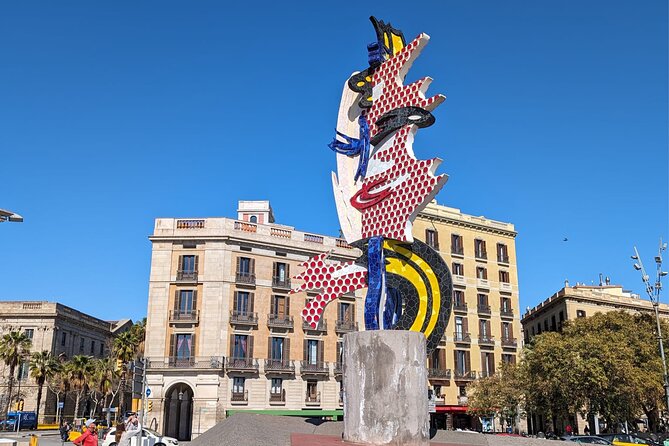
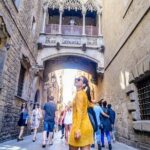
From El Born you move into the oldest district feel, toward Plaça de Sant Jaume in the Gothic Quarter. This square is described as the city hall area inside the oldest quarter. It’s one of those places where the architecture and the layout help you understand that Barcelona has long been a civic city, not only a tourist city.
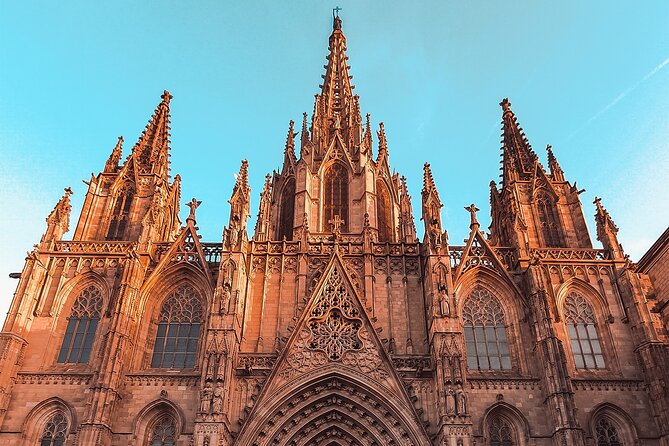
Next is Barcelona Cathedral (Santa Eulalia & Santa Creu). The tour doesn’t promise you’ll enter the cathedral, but there’s a chance you might see the patio where a surprise is said to be connected to a tragic event. It’s the kind of moment that makes the stop more than a photo angle, because you’re looking for the story behind the space.
One more thing: you’ll notice the tour avoids heavy “museums back-to-back.” It gives you a quick civic square, then a cathedral-area story moment, then continues—so you stay in walking mode, not sitting mode.


La Rambla and Mercat de la Boqueria: the iconic street plus the smart fuel stop
La Rambla is next, and you get a neat decision point. The tour describes two directions: heading down toward the port and beachfront, or heading up toward Plaça Catalunya and the two big Gaudí house stops. That kind of choice helps if your group has preferences, and it keeps the walk from feeling like a rigid checklist.
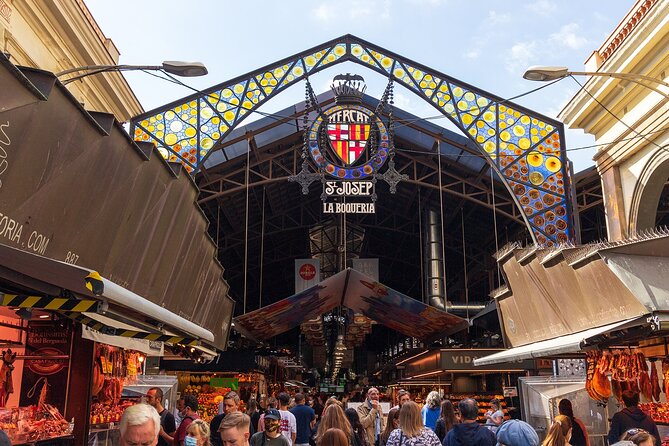
Then you hit Mercat de la Boqueria for the included tasting: jamón ibérico and cheese, plus fresh fruit juice. This isn’t just random grazing. It’s a practical break in the middle of dense sightseeing—right when your feet and attention both start to flag. You also get bottled water as part of the included items.
Real talk: Boqueria can be busy. But on a private tour, you can use the snack break as a calm pocket. Focus on eating and listening, not on trying to “see everything” inside a crowded market hall.
Plaça Catalunya and the Gaudí house pair: what you’ll learn even without buying tickets
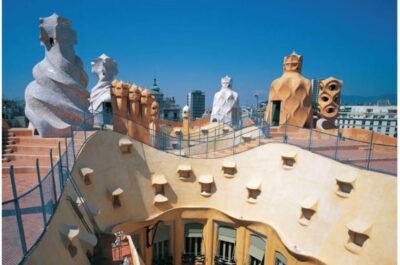
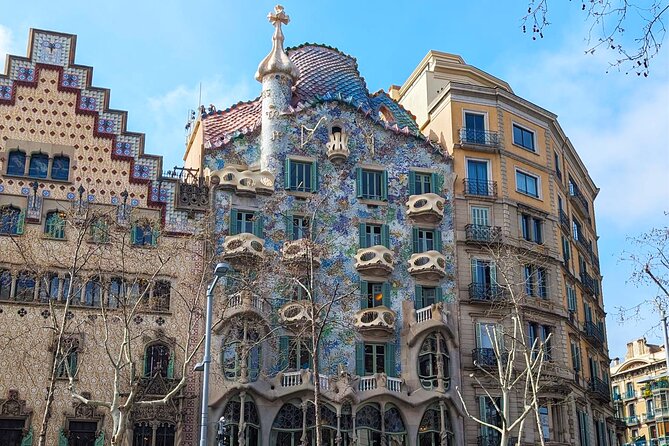
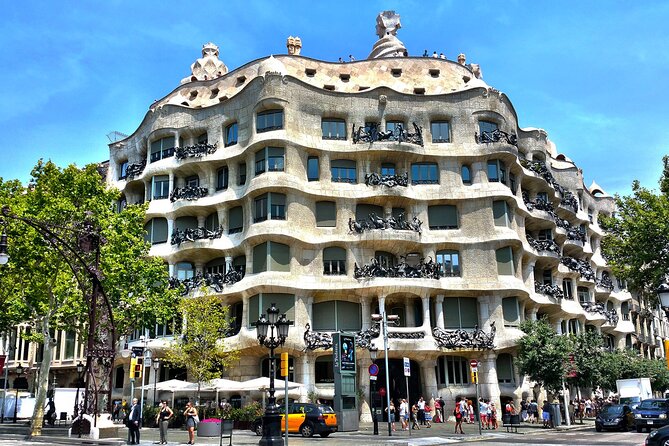
From Plaça Catalunya, you start the climb along Paseo de Gràcia. This is where Barcelona’s “present” starts showing its teeth. The tour takes you to two emblematic Gaudí buildings: Casa Batlló and Casa Mila (La Pedrera).
You won’t necessarily go inside (entrance isn’t included for these stops), but the guide explains enough about Gaudí’s style and inspiration that you’ll still feel like you’re getting value while looking at the facades. This is a good strategy for readers who don’t want to spend the extra time and money on ticketed interiors. You still come away with the why behind the wow.
Casa Batlló gets about 10 minutes here, with the advice to ask for a picture. Casa Mila finishes the Gaudí leg and is where the tour ends, with Fábio giving last tips about what to do next—where to eat, drink, and party, plus what to keep seeing.
If your priority is inside access to Gaudí interiors, this might feel a little limited. If your priority is understanding and momentum—this works well.
Plaça Reial to Columbus Monument: secrets and a slower pace toward the port
After the Gaudí stretch, you head to Plaça Reial, described as an iconic square linked to one of Gaudí’s early city jobs. The tour also notes a time difference: at night, it becomes one of Barcelona’s busiest places. Even if you visit earlier, it’s an easy stop to feel the square’s personality.
Then comes the Columbus Monument, with a promised secret inside it. No spoilers here, but the point is that the tour isn’t only about famous exteriors. It’s about planting curiosity so you look longer.
You also pass by the Golondrinas and Moll de las Drassanes. That’s your “waterfront shift,” where the city feels more maritime and less monumental. The walk starts to cool down mentally, even as you keep moving.
Moll de la Fusta to La Barceloneta: old fishing streets to beach time
You finish near La Barceloneta, the old fishing district now loaded with restaurants and bars, with the beach at the end of it. Before that, you pass Escultura al Moll de la Fusta, then see Port Vell and the History Museum of Catalunya along the way.
This ending zone is useful. Barcelona’s “best next step” is often the hardest thing to choose at the end of a tour, when your energy is low but your curiosity is high. Here, the tour is structured so the last minutes naturally flow into eating and relaxing rather than forcing you back into another strict sightseeing block.
And because it ends in a different location than where you started, it keeps your route from looping awkwardly. You’ll have a direct path into the neighborhood that people go to when they want the casual Barcelona vibe.
Price and value: what $90.70 gets you in real terms
At $90.70 per person, the big question is value. For me, the math hinges on three things:
First, it’s a private tour, and private time in a high-demand city costs money. You’re paying for your group’s flexibility—especially the ability to ask Fábio questions as you walk.
Second, there are real inclusions. You get bottled water and a Boqueria tasting with jamón ibérico, cheese, and fruit juice. That alone keeps the mid-walk slump from turning into a cranky scramble for snacks.
Third, there’s a mix of free stops and limited interior inclusions. Some sites are free during certain moments, and you may get entry to spaces like Santa Maria del Mar (time-based) and the Gothic Cathedral patio (also time-based), plus El Born Cultural Center. That schedule-based nature can cut both ways—if timing lines up, you’re getting more; if it doesn’t, you’re still getting the route and interpretation.
One more value note: the tour is booked pretty far ahead on average (about 94 days). That usually signals demand—and it also helps you plan. If you want this experience without stress, booking early is smart.
The guide factor: why Fábio’s style matters
This is the kind of tour where your guide can change the whole feel. Fábio is described in standout terms for being friendly, fun, and genuinely invested in Barcelona, with strong English and a knack for making history understandable. The best part, from a practical standpoint, is that the storytelling doesn’t stay trapped in dates and facts.
You get humor and surprising connections, and you also get neighborhood context that’s easier to remember than a list of monuments. One review noted that when some places were closed during a June holiday, the tour still stayed interesting. That’s exactly what you want from a private guide: resilience when access changes, instead of a silent walk back to the starting point.
Who this private tour is best for (and who should skip)
I’d recommend this tour if you want:
- A tight 2.5–3 hour walk that covers a lot without feeling like a race.
- Clear interpretation of old town + Gaudí + port/Barceloneta, not just snapshots.
- A guide who’s interactive, so you can ask questions about anything from civic life to memorial history.
I might skip it if:
- Your main goal is buying tickets and going inside multiple major sights. Some interiors are time-sensitive or not included.
- You hate walking. This is a city-walk tour with multiple stops, and you’ll want comfortable shoes.
Also, the experience requires good weather. If your trip includes iffy forecast days, plan to book this when conditions look decent.
Should you book this Barcelona Old Town Private Tour?
Yes, if you want an efficient, story-driven introduction to Barcelona that ends in a neighborhood where you can relax. The included snack break and water make the walking easier to handle, and the private format gives you control over questions and pacing.
Book it especially if your group includes at least one person who likes explanations and anecdotes, not only photos. If everyone in your group is obsessed with interior ticket access, you might pair this with a separate museum or Gaudí interior day.
FAQ
How long is the Barcelona Old Town private tour?
It runs about 2 hours 30 minutes to 3 hours.
Is this tour private or shared?
It’s a private tour, so only your group participates.
What language is the tour offered in?
It’s offered in English.
Where do you meet and where does it end?
You start at Arc de Triomf, Passeig de Lluís Companys, Ciutat Vella, 08003 Barcelona, Spain. The activity ends in a different location (details are provided by the operator after booking).
What’s included for food and drinks?
You get snacks at La Boqueria (fresh fruit juice, jamón ibérico, and cheese) and bottled water (one bottle per person).
Are there entrance fees included for the major sights?
Some entries are included at certain times, such as inside Santa Maria del Mar and the Gothic Cathedral patio, and El Born Cultural Center. Casa Batlló and Casa Mila (La Pedrera) are listed as not included, and Santa Maria del Mar notes that access depends on timing.
Does the tour require good weather?
Yes. The experience requires good weather, and if it’s canceled for poor weather, you’ll be offered a different date or a full refund.