REVIEW · BARCELONA
Barcelona Montjuic Three-Hour Bike Tour
Book on GetYourGuide →Operated by Born Bike Tours Barcelona · Bookable on GetYourGuide
Montjuïc can feel far away. This guided bike tour brings it close, with steady riding and jaw-dropping views of Barcelona and the Mediterranean.
Two things I like a lot: you get a guided route that’s designed to be safe and easy to follow, and the sights cover real neighborhoods and landmarks, from the Magic Fountain area to the Olympic zone.
One consideration: this ride doesn’t take you all the way to the very top of Montjuïc (the castle area), and it’s not on electric bikes. If your goal is the highest summit, plan for another option.
In This Review
- Key highlights at a glance
- From Port to Montjuïc: how the tour actually feels
- Raval, Columbus Monument, and the 1929 Universal Exhibition story
- Plaza de Espana: wide views and big-square energy
- Up Avinguda de la Reina Maria Cristina: architecture in motion
- The Olympic ring and Palau Sant Jordi: modern Barcelona from a hill route
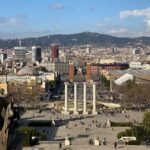
- Magic Fountain: the show moment you’ll actually remember
- Joan Miró Foundation pause, then Miramar for the big panorama
- Port Vell and the ride into the finish neighborhood vibe
- Bikes, helmets, and effort level on non-electric rides
- Guide quality: what to expect from Elisa and Dani-style guiding
- Price and value: is $42 a fair deal for 3 hours?
- Who should book this Montjuïc bike tour (and who might skip it)
- Should you book it?
- FAQ
- How long is the Barcelona Montjuïc bike tour?
- How much does the tour cost?
- What’s included in the tour price?
- What time does the tour run?
- What languages is the guide available in?
- What happens if it rains?
- What time should I arrive?
- Is there a minimum number of people needed?
- Is there free cancellation?
- Can I reserve now and pay later?
Key highlights at a glance
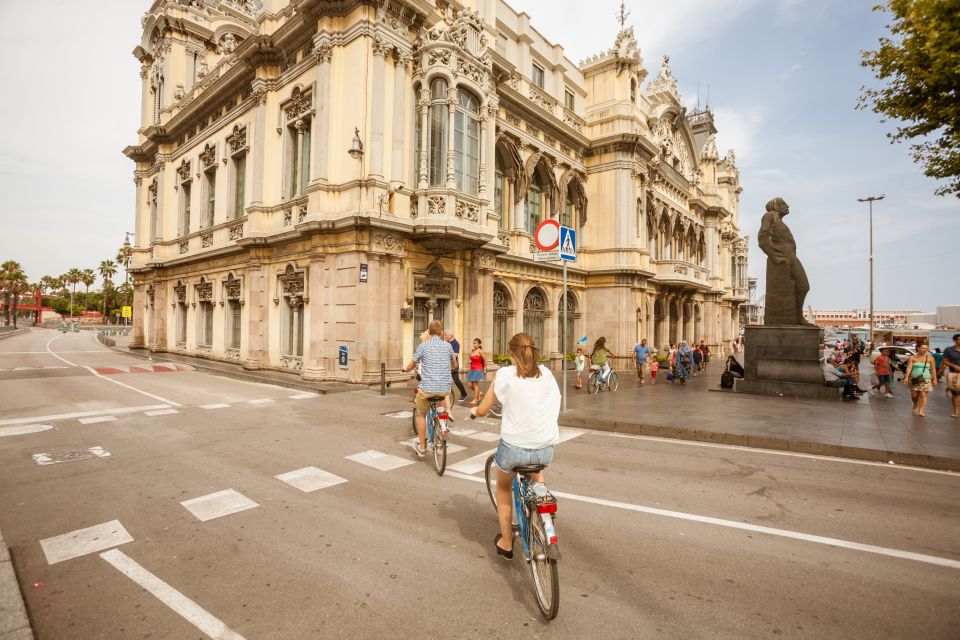
- A safe, traffic-light style route with a guide who handles the pacing and turns
- Magic Fountain water-and-light spectacle as a major payoff during the ride
- Olympic landmarks like Palau Sant Jordi and the Olympic Stadium visible on the climb
- Raval and the Columbus Monument, plus universal-exhibition-era history around the 1929 site
- Miramar viewpoints for wide city-and-sea panoramas, not just a quick photo stop
- Joan Miró Foundation pause to cool down and reset during the 3-hour flow
From Port to Montjuïc: how the tour actually feels
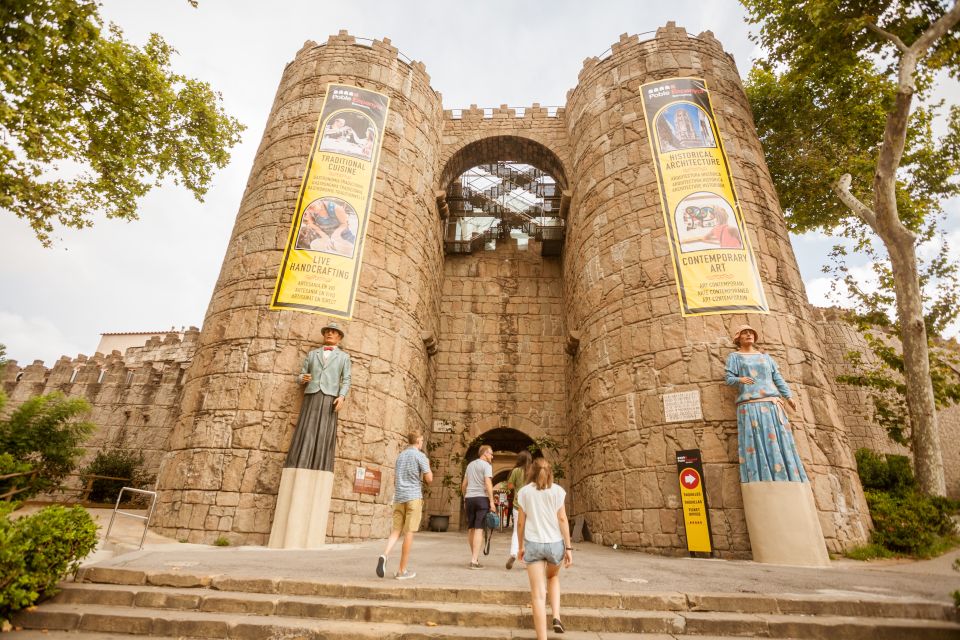
The start point is the port area, so right away you’re in that fresh ocean-air mood. Then the tour threads you into the Montjuïc side of Barcelona at an easy, guided pace. For a first-time visit (or even a second trip when you want better orientation), this kind of ride is hard to beat because you’re not just looking at landmarks—you’re seeing how the city “stacks” against the hills.
The total time is 3 hours, and you’re on the bike for the main stretch. That matters because it sets expectations: this isn’t a slow museum crawl. You’re getting motion, scenery changes, and quick interpretations from the guide, with downtime built into the route for stops.
You can also read our reviews of more cycling tours in Barcelona
Raval, Columbus Monument, and the 1929 Universal Exhibition story
Early in the ride, you’ll connect with the Raval neighborhood. This is where the tour adds real texture. Instead of only sticking to the famous postcard areas, you pass through parts of Barcelona that feel like lived-in city—palaces, streets, and monuments that help you understand what Montjuïc has meant to the city over time.
A major landmark in this stretch is the Columbus Monument, which commemorates the man traditionally linked to the discovery of America. It’s the kind of stop that’s easy to appreciate even if you’re not a deep history reader: it gives you a “why is this here” anchor, so the surrounding architecture stops looking random.
You also get the context of the 1929 Universal Exhibition, the big international event associated with the area. Even if you’ve never visited the exhibition sites before, hearing how that era connects to the monuments and the later uses of Montjuïc helps you connect dots as you ride.
Plaza de Espana: wide views and big-square energy
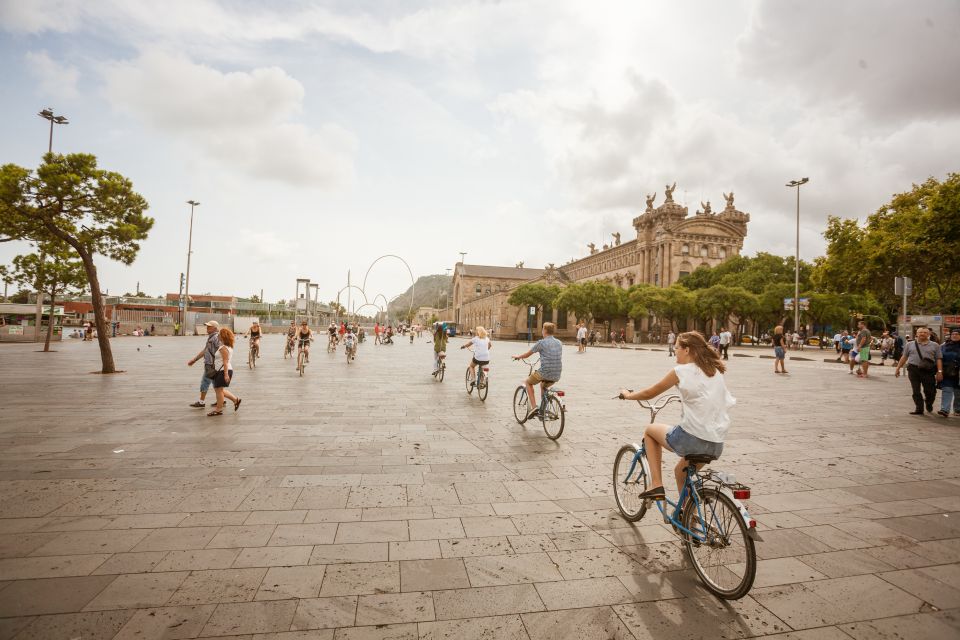
After Raval, the tour reaches Plaza de Espana, one of Barcelona’s major squares. It’s bigger than you expect, and that scale is part of the point. The tour uses this space to give you a sense of the city’s layout—how Montjuïc relates to central Barcelona, and how the hills shape where the big civic projects end up.
You’ll see elements like the Venetian Towers and statues by Miquel Blay. This stop works well because it’s not just sightseeing-for-30-seconds. You’re also riding between areas, so your sense of distance and direction improves fast.
If you’re the type who gets overwhelmed by too many stops in a walking tour, this is a nice middle ground: you get landmark focus without spending the whole day on foot.
Up Avinguda de la Reina Maria Cristina: architecture in motion
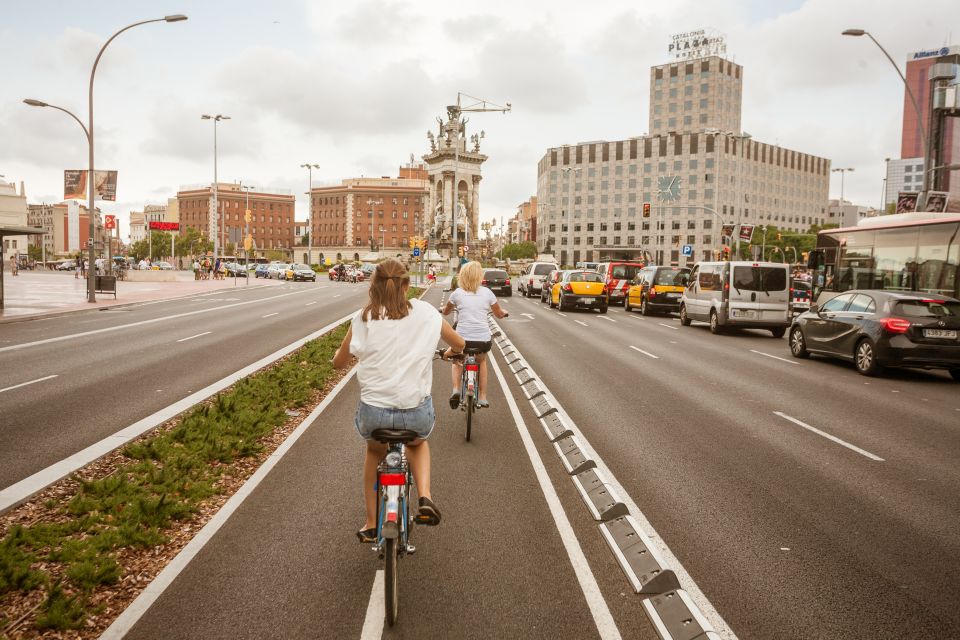
As you travel up Avinguda de la Reina Maria Cristina, you’re basically getting a moving architectural survey: a blend of older styling and more modern touches. It’s one of those stretches where the bike route makes sense. You can’t easily cover this area at walking speed, and you also don’t want to rush through it by taxi.
This section is where the “Montjuïc viewpoint” promise starts to become real. The higher you climb, the more the city begins to open up around you. You’ll start noticing how the coastline lines up with the hill slopes, and that makes later stops—especially Miramar—feel even more dramatic.
The Olympic ring and Palau Sant Jordi: modern Barcelona from a hill route
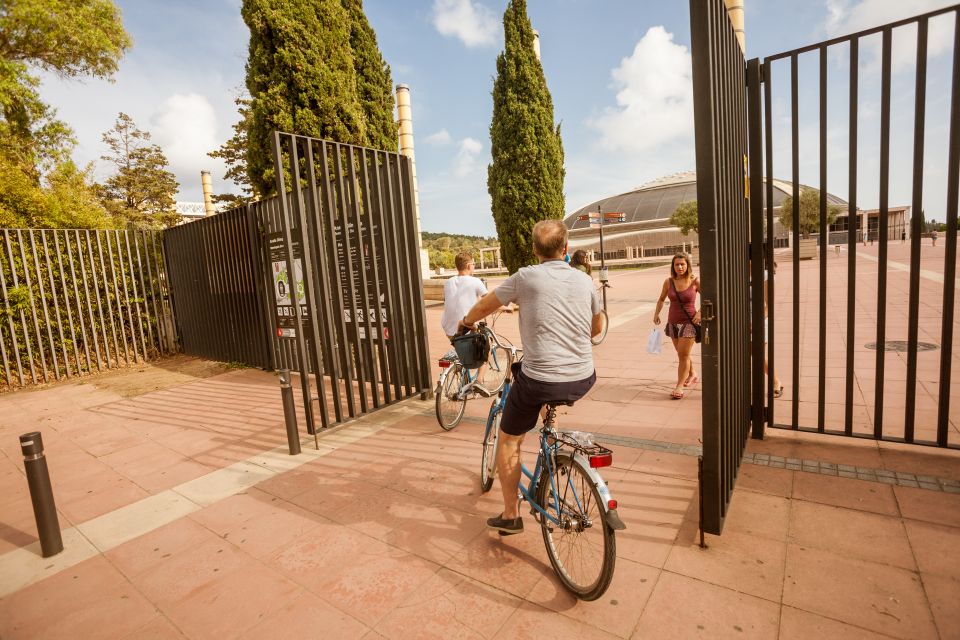
Midway up, the ride reveals the Olympic footprint. You’ll see the Olympic ring, plus Palau Sant Jordi and the Olympic Stadium along the way. Even if you don’t care about sports, these are major landmarks of Barcelona’s modern era.
Why this works on a bike: these structures sit in a context you feel more than you read. From the bike route, you get a sense of how the facilities sit relative to the hill, the roads, and the city grid. It’s not just “spot the building,” it’s “see how it fits.”
Also, it gives you a balanced view of Barcelona. The city is often presented as either old history or modern design. Here you get both, just by moving uphill.
You can also read our reviews of more tours and experiences in Barcelona
Magic Fountain: the show moment you’ll actually remember
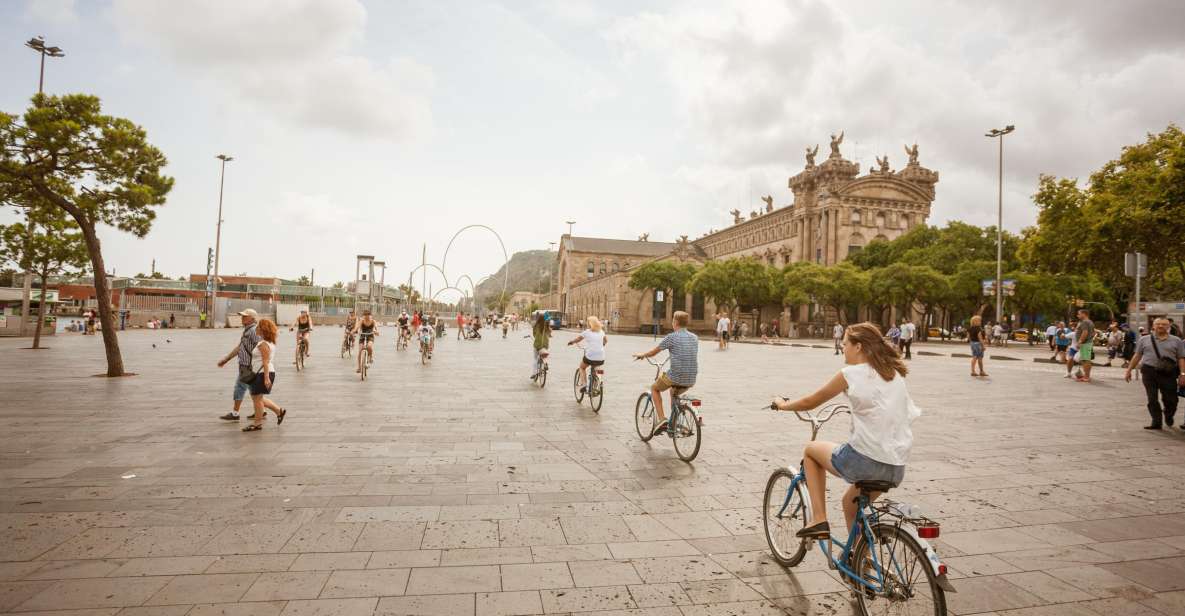
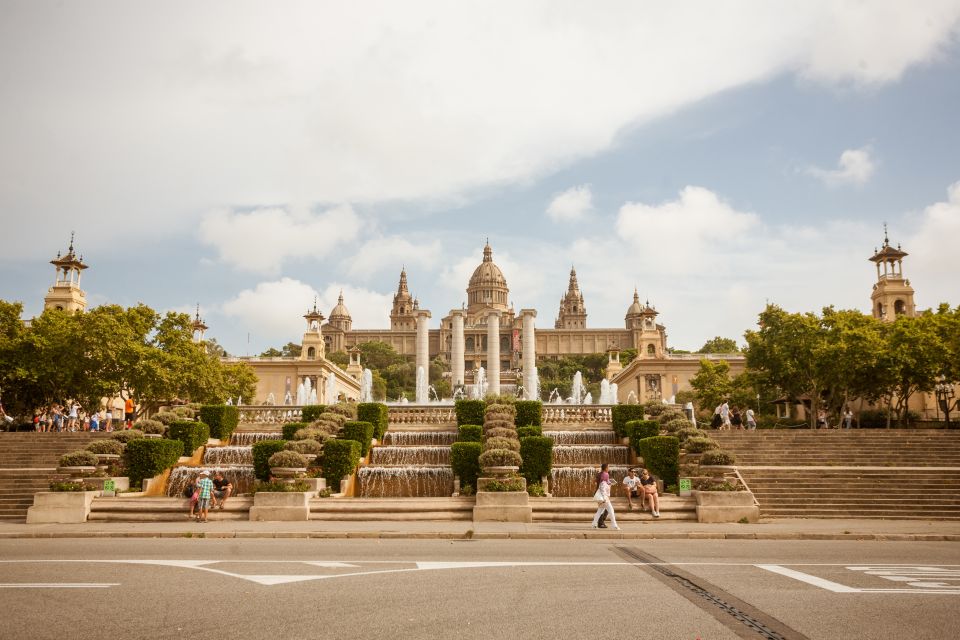
One of the tour’s top draws is the Magic Fountain area. You’re in the right mood for it because the ride is already taking you through neighborhoods and monuments, so the fountain feels like the payoff.
This is described as a display of lights and water, and that combination tends to land well on a guided ride. You’re not stuck searching for the best angles on your own, and the guide’s commentary helps you understand what you’re seeing.
Practical note: since this tour runs in any weather and supplies rain jackets, don’t assume you’ll have perfect conditions for a water-and-light show. That said, rain gear means you’re not forced to bail just because the sky changes its mind.
Joan Miró Foundation pause, then Miramar for the big panorama
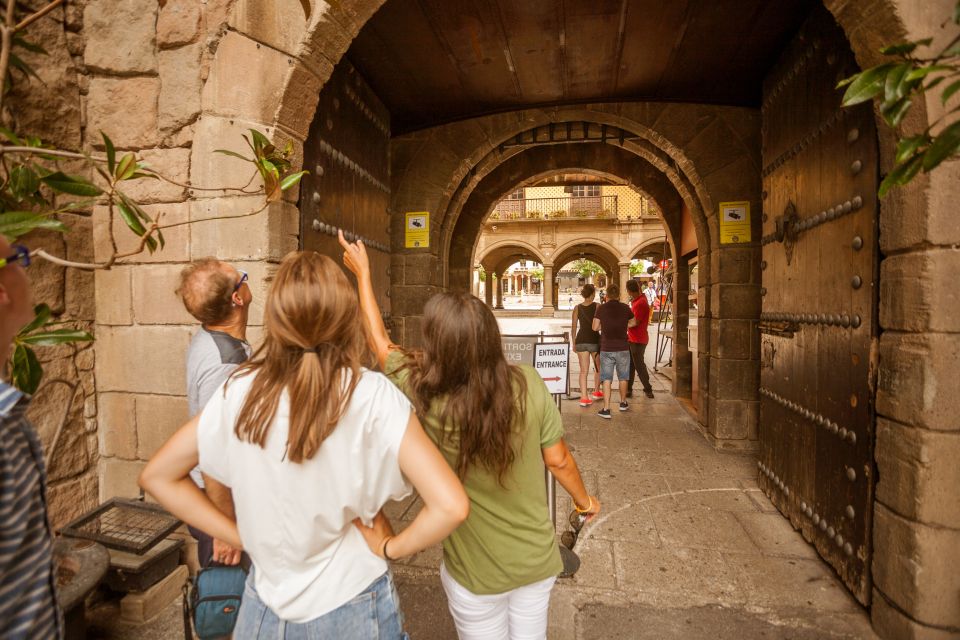
One of the smartest parts of the route is the chance to rest at the Joan Miró Foundation, a modern-art break during the climb. You’re not just stopping to catch your breath; you’re also shifting from the “structures and views” mindset into a cultural reset.
From there, the tour heads to Miramar, a viewpoint built for wide views. This is one of those stops where the bike tour earns its value. From Miramar, you’re looking at the whole city and the Mediterranean Sea. It’s not just a photo spot; it gives you a new mental map of Barcelona.
This is also where you’ll feel why the route length makes sense. A three-hour tour doesn’t let you slow down for everything, but it does enough key points that by the end you understand how the neighborhoods connect from sea to hills.
Port Vell and the ride into the finish neighborhood vibe
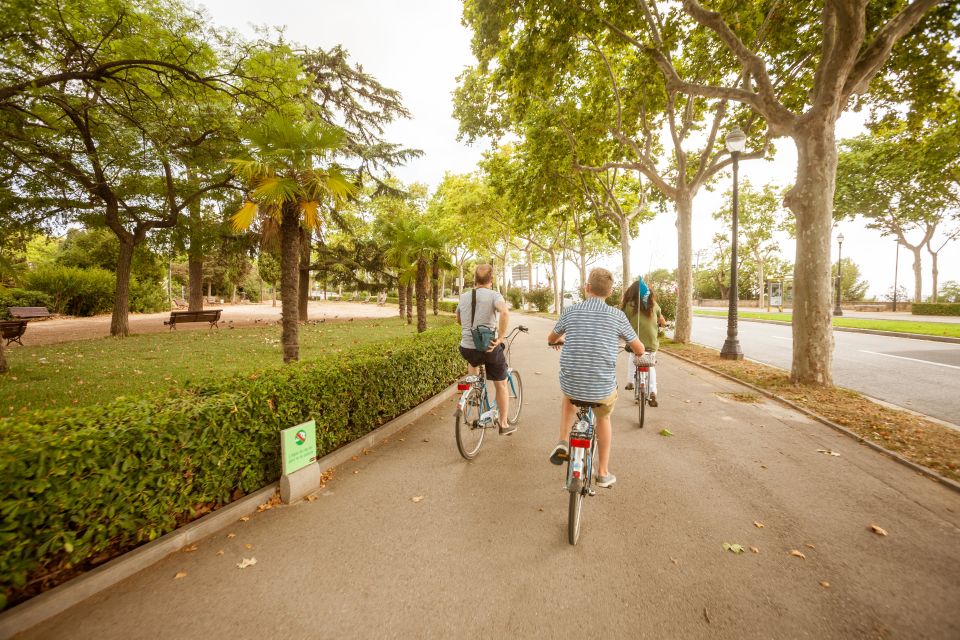
To conclude, you head through Port Vell, described as an old fishermen’s neighborhood that has become popular and more trendy. That ending matters because it ties the day back to the start: you began near the port with the ocean feel, and now you roll back through a part of Barcelona that shows the city’s evolution.
Ending this way is useful if you’re still figuring out where to eat, where to wander, or where to go next. You finish near a lively area, and your perspective from the hill helps everything look more “organized,” even if it’s busy out there.
Bikes, helmets, and effort level on non-electric rides
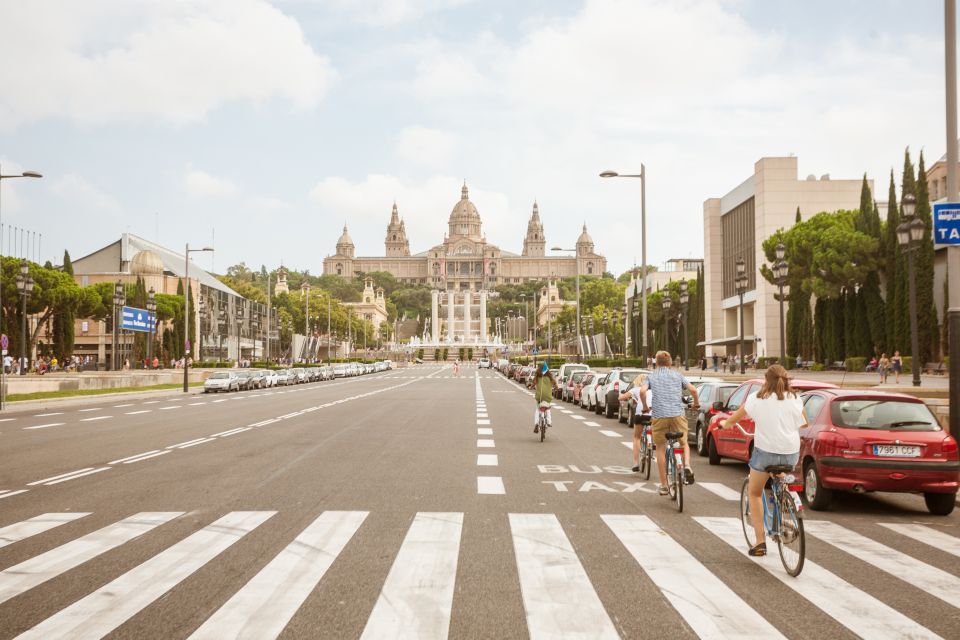
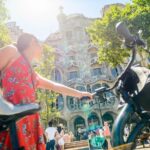
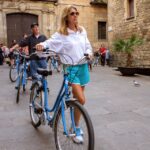
This tour includes bicycle rental and helmets, and it’s designed around simple routes without heavy traffic. A helmet is the kind of basic safety detail I appreciate because it means they expect you to actually ride, not just drift around scenic points.
As for effort: one review notes the bikes are not electric and that the route doesn’t go to the castle top. So if you’re expecting a very steep, full-summit trek on powered assist, you’ll likely be disappointed. If you’re comfortable riding a normal bike and you like scenic climbs, the pace fits the sightseeing goal.
If you’re riding with kids, there can be child-seats if desired. That’s a big deal for families because it makes “Montjuïc with everyone” more realistic.
Guide quality: what to expect from Elisa and Dani-style guiding
A guided bike tour lives and dies by the guide, and this one has strong examples. Elisa is mentioned as an engaging guide who taught the family group, and Dani is described as a great guide who made the experience fun. That combination—clear explanations plus good energy—turns an itinerary into a memory.
You’ll also hear that the tour runs in several languages: Spanish, Italian, Catalan, French, and English. In a perfect world, the language you choose matches the guide’s comfort. In real life, any multilingual operation can have rough edges, so if your language is crucial to you, you might want to confirm what languages will be available when you book.
Price and value: is $42 a fair deal for 3 hours?
At $42 per person for 3 hours, the best way to judge value here is what you get besides basic transportation.
You’re paying for:
- A rented bike (so you’re not juggling equipment logistics)
- A guide who keeps the route safe and organized
- Helmets included
- A drink included
- A sightseeing path that hits multiple major areas: Raval, Plaza de Espana, the Olympic zone, Miramar, and finish through Port Vell
For many visitors, the “value” isn’t the bike. It’s the way you save decision-making time. Instead of figuring out where to bike, which hill roads are reasonable, and how to connect the dots between landmarks, the tour does that linking for you. You also cover enough ground to feel like you’ve learned how Barcelona sits from sea up to the hills.
If you hate active sightseeing or you’re hoping for a slow walking pace, you might feel $42 is too much for the time you’ll spend moving. But if you want a structured overview that you can build on the rest of your trip, this price lands in the sensible range.
Who should book this Montjuïc bike tour (and who might skip it)
This tour is a good match if you want:
- A quick orientation of Barcelona beyond the city-center circuit
- Views that include both city and sea
- A guided ride that’s meant to be safe and easy to follow
- The mix of history-era monuments and modern Olympic landmarks
You might reconsider if:
- Your priority is reaching the very top of Montjuïc (like the castle area), since the route doesn’t go that far on non-electric bikes
- You’re very sensitive to needing perfect explanations in a specific language
If you’re traveling as a family and need kid-friendly logistics (child seats may be available), this can be one of the better “activity + learning” options because it’s active but not chaotic.
Should you book it?
I’d book this Barcelona Montjuïc bike tour if you want a three-hour highlight reel with context, without spending the day figuring out transport and route planning. It’s a strong pick early in your trip, especially because Miramar and the Olympic zone give you two very different angles of the city in one run.
Before you go, set your expectations: you’re doing a guided ride around the Montjuïc approach and surrounding areas, not a full “to the castle” climb on electric bikes. If that fits your goals, the combination of scenery, landmarks, and guide-led storytelling is exactly the kind of value that makes Barcelona feel easier to understand fast.
FAQ
How long is the Barcelona Montjuïc bike tour?
It lasts 3 hours.
How much does the tour cost?
The price is $42 per person.
What’s included in the tour price?
Included are the bicycle rental, tour guide, drink, and helmets. Child-seats are available if desired.
What time does the tour run?
Tours run daily at 11am and 4pm, except on December 25-26 and January 1. Starting times may vary by availability.
What languages is the guide available in?
The live guide is available in Spanish, Italian, Catalan, French, and English.
What happens if it rains?
The tour runs in any weather, and rain jackets are supplied.
What time should I arrive?
Please arrive 10 minutes before the tour begins.
Is there a minimum number of people needed?
Yes. The tour needs a minimum of 4 people to run.
Is there free cancellation?
Yes. You can cancel up to 24 hours in advance for a full refund.
Can I reserve now and pay later?
Yes. You can reserve now & pay later.