REVIEW · BARCELONA
Barcelona: Insider Street Art Tour with Private Studio Visit
Book on GetYourGuide →Operated by Artspace · Bookable on GetYourGuide
Barcelona’s street walls teach you fast. This insider tour mixes graffiti spotting with a real private studio visit, plus a gallery stop to show how street art becomes art-world work. I love that the guides are active in the scene as artists and art historians, with explainers like Kate, Kat, Anya, Luke, and Juan showing you how to read the city’s style choices. I also love the human part: you’re not just looking—you’re meeting the people who make it. One thing to consider: it’s tight timing in a short loop, so if you want to linger forever at every mural for hours, this may feel a bit scheduled.
You’ll start at Teatre Condal, then move on foot through big-name neighborhoods like El Raval, La Rambla, and the Gothic Quarter—while also getting taken to less-expected stops you’d be unlikely to find solo. The tour finishes at Canal Gallery, where the message shifts from public walls to curated space and original works.
In This Review
- Key things that make this tour worth it
- Why an artist guide changes everything about Barcelona street art
- The 2-hour route: Teatre Condal to Canal Gallery, with smart timing
- Teatre Condal meeting point and quick start
- Av. del Paral·lel, 40: guided segment for style recognition
- An off-the-map stop: time for close looking
- El Raval walk: watching how street art fits the streets
- La Rambla visit: quick contrast with a famous corridor
- Gothic Quarter walk: street texture and scale
- A second guided hidden stop: the payoff before the gallery
- Finish at Canal Gallery: where street art becomes exhibition
- What you actually learn: tags to paste-ups to murals to sculpture
- The private studio visit: the most memorable part of the whole trip
- Street-to-gallery transition at Canal Gallery: why that final stop matters
- Photo stops and what to bring so you’re not fighting your camera
- Price and value: $33 for a street art lesson plus studio access
- Who should book this tour (and who might want to skip it)
- Quick tips to make your tour even better
- Should you book it?
- FAQ
- How long is the Barcelona street art tour?
- Where does the tour start?
- Is the tour guided in English?
- Does it include a studio visit?
- What is the total price?
- Is free cancellation available?
Key things that make this tour worth it
- Artist-led storytelling that helps you spot tags, paste-ups, murals, and urban sculpture without guessing.
- Private studio access to an underground creative space where you can meet local artists.
- A short route built for variety, from Teatre Condal to Canal Gallery with multiple styles along the way.
- Street-to-gallery transition, so you see how works move from walls to exhibition.
- Photo-friendly wall stops across El Raval, La Rambla, and the Gothic Quarter.
Why an artist guide changes everything about Barcelona street art
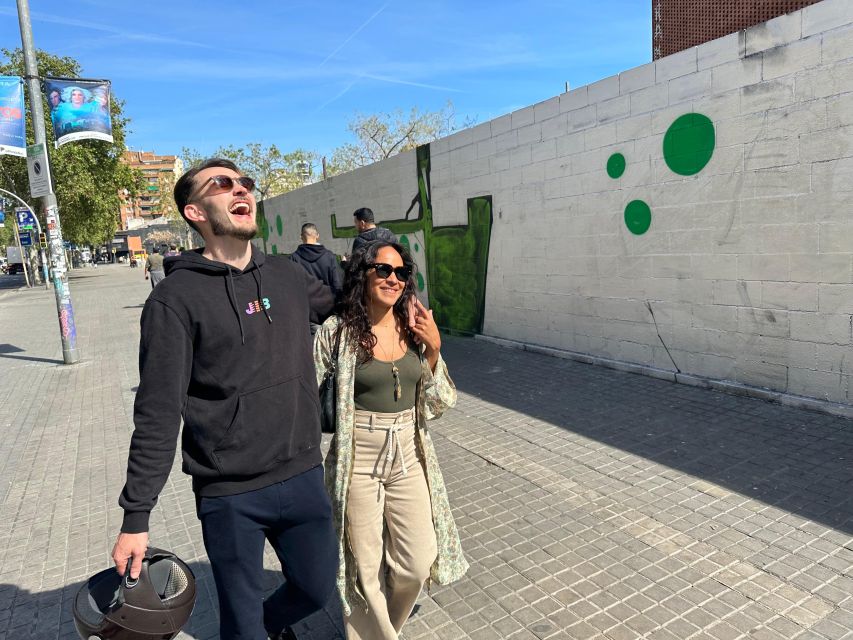
Barcelona is often called one of Europe’s graffiti capitals, and after a couple of hours here, you start to see why. The city doesn’t treat street art as background noise. The walls are part of the conversation.
What I like about this tour is that you’re taught how to look. Not just what to look at. A good graffiti experience helps you notice style differences and technique—how a tag differs from a paste-up, how lettering style and layering give away different authorship intentions, and how a mural might be built for scale and viewing distance. When your guide can explain the logic behind the piece, the city stops being a random gallery of color and becomes readable.
And because the guides are artists or art historians working close to the scene, you get stories that feel practical, not academic. You hear why a wall was the right place, how certain techniques show up repeatedly, and what the artists want people to notice when they pass by at street level.
You can also read our reviews of more private tours in Barcelona



The 2-hour route: Teatre Condal to Canal Gallery, with smart timing
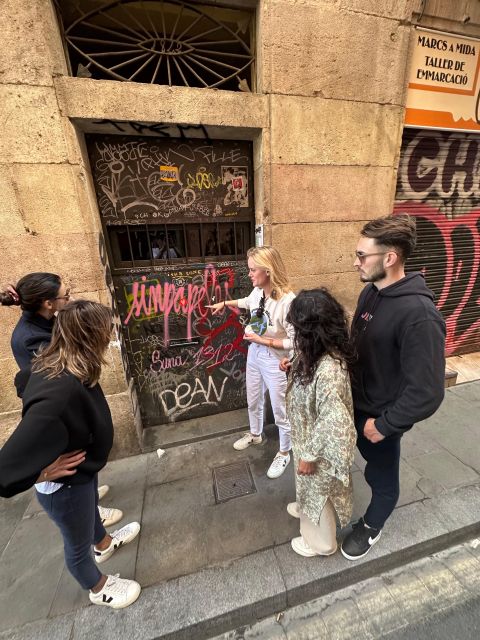
This is a fast, well-structured walk. It starts at Teatre Condal, meeting in front of the BINGO sign. From there, the schedule keeps you moving while still giving you time to stop, look carefully, and ask questions.
Here’s how the timing works and why it matters:
Teatre Condal meeting point and quick start
You begin in a practical spot where you can handle basics before you go—cafés and shops nearby, so you can grab water or step into a restroom without stress. The start location also helps you avoid the usual first-10-minutes panic of hunting for your guide.
Av. del Paral·lel, 40: guided segment for style recognition
Next you head to Av. del Paral·lel, 40 for a guided look (about 15 minutes). This is where you learn the tour’s “language.” Think of it as your warm-up: the guide points out what to notice, then you start spotting it yourself—lettering styles, composition choices, and the cues that help separate simple tags from bigger mural planning.
An off-the-map stop: time for close looking
Then you move to a quieter, less-expected location for another guided visit (around 15 minutes). These mid-route stops are the reason the tour is worth booking. If you only walk the obvious streets, you’ll see a lot of street art—but you’ll miss the layers that make Barcelona feel personal and specific.
You can also read our reviews of more tours and experiences in Barcelona




El Raval walk: watching how street art fits the streets
After that comes El Raval (about 20 minutes on foot). This part matters because street art changes meaning based on the block around it. In Raval, you’re not just viewing art. You’re seeing how it lives among storefronts, passers-by, and the rhythm of the neighborhood.
La Rambla visit: quick contrast with a famous corridor
You then hit La Rambla for a short visit (about 5 minutes). This isn’t the long “sit and stare” portion. It’s more like a contrast test: you can compare how art reads when foot traffic is heavier and how certain styles are designed to catch attention at a distance.
Gothic Quarter walk: street texture and scale
Next is the Gothic Quarter (around 15 minutes walking). This area helps you see scale and context. Street art here can feel like it’s in dialogue with stone alleys and tighter sightlines, and the guide’s explanations help you notice that the same technique can land differently depending on where it’s placed.
A second guided hidden stop: the payoff before the gallery
Right before the end, you get one more guided visit (about 15 minutes). This is often where the tour’s learning starts to click. By now you’ve practiced identifying what you’re seeing, so you can focus on the details you now understand—how tags connect to bigger themes, how paste-ups function, or why certain mural choices show up in that neighborhood.
Finish at Canal Gallery: where street art becomes exhibition
The tour ends at Canal Gallery. That last step is important: it gives your brain a transition point. Street art is usually made for streets, but the gallery context changes everything—materials are preserved differently, pieces can be studied up close, and the story becomes more explicit.
You also get an Urban Art Gallery moment to see that bridge from wall to exhibition. The point isn’t to “choose” one over the other. It’s to understand the spectrum.
What you actually learn: tags to paste-ups to murals to sculpture
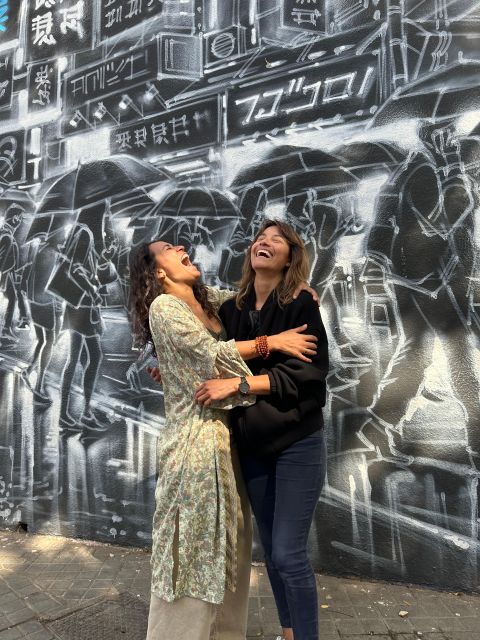
This tour doesn’t treat street art like one big category. You get the tools to read it.
Here are the specific elements the experience focuses on:
- Tags: quick signatures and style fingerprints.
- Paste-ups: layered, poster-based street work with their own composition logic.
- Murals: larger works designed around walls, sightlines, and neighborhood visibility.
- Urban sculpture: street-level work that behaves more like physical presence than flat graphic art.
What’s useful here is the way it changes how you walk around after the tour. You start noticing choices automatically: which letters look built to be seen from far away, which pieces look like they were designed for a close-up inspection, and which styles feel like they come from a particular creative approach rather than random spray.
And because the guides are in the scene, the explanations tend to include the human side: how artists think about placement and audience, not just technical breakdowns.
The private studio visit: the most memorable part of the whole trip
The standout feature is the artist studio access. You go underground into an artist workspace where you can meet local artists, chat with them, and see how works are actually made (not just finished on a wall).
This part is valuable for two reasons.
First, it removes the mystery. Street art can look effortless from a distance. In a studio, you see the setup, the workflow, and the patience behind execution. Even if you’re not an art person, it helps you respect the craft.
Second, it turns your street art viewing into a conversation. When you meet artists in their own space, questions come out differently. You’re more likely to ask about materials, planning, style habits, or what changes when something is made for a gallery versus made for public walls.
The tour also frames this studio time as part of the same story you’ve been hearing on the street: why certain aesthetics exist, how artists develop a recognizable voice, and what it means to represent yourself on a city’s face.
Street-to-gallery transition at Canal Gallery: why that final stop matters
Most street art tours stop after the walking. This one adds the gallery step, and that changes the way you process what you saw.
In a gallery:
- you can study pieces without the weather and traffic distractions,
- you understand which works are being represented and why,
- and you get a clearer sense of how artists and galleries talk to each other.
The tour also includes a visit to a dedicated urban art gallery so you can see that transition from street to exhibition. For me, that final lesson is what makes the “2 hours” feel longer in impact. You come away with a better mental map of the street art ecosystem, not just a list of murals.
Photo stops and what to bring so you’re not fighting your camera
The route is built around strong visual moments. You’ll pass striking street art with plenty of photo opportunities, and the guided stops give you “why look here” context, which helps you frame shots better.
For your kit:
- Wear comfortable shoes since you’re walking segments through multiple neighborhoods.
- Bring a phone camera or small camera with extra storage/battery.
- Keep some space in your memory for close-ups if you like capturing lettering styles and paste-up textures.
If you’re the kind of person who likes to photograph details—letter shapes, layers, stencils, edges—this tour rewards that mindset.
Price and value: $33 for a street art lesson plus studio access
At $33 per person for about 2 hours, the value comes from what you get beyond basic sightseeing:
- an English live guide from the art scene,
- multiple street art styles taught in context,
- a studio visit with local artists,
- and a gallery stop that connects street work to exhibition space,
- plus an interactive map with places like galleries and cafés you can use afterward.
If you’ve ever paid for a city walk and felt like you only got photos and a few facts, this one is built differently. You’re paying for access and explanation that you can’t replicate by wandering on your own.
Also, the tour format is ideal for a short trip. You don’t need a half day to start understanding Barcelona’s street art language.
Who should book this tour (and who might want to skip it)
This is a great fit if you:
- want an art-focused walk with practical learning, not just a route,
- care about meeting artists and hearing context directly,
- and like the idea of a studio visit rather than only outdoor walls.
You might think twice if you:
- hate scheduled timing and want unlimited time at each stop,
- prefer a purely “famous murals” self-guided experience with no studio element,
- or you want a longer tour that includes more neighborhoods and less walking density.
Quick tips to make your tour even better
- Go in willing to ask questions. The studio segment is where that pays off most.
- Take note of how your guide distinguishes tags vs paste-ups vs murals. That becomes your post-tour superpower.
- After you finish at Canal Gallery, keep using the interactive map to extend your street art evening. The tour’s learning is easiest to retain when you immediately apply it to a new wall.
Should you book it?
If you want Barcelona street art with context, access, and real people involved, this tour is an easy yes. The $33 price makes sense because studio access and artist-led interpretation are the costly parts in any city experience. And the street-to-gallery ending helps you leave with understanding you can use the next time you walk around.
Book it especially if you’re curious about how street art is made and how artists think, not just what it looks like.
FAQ
How long is the Barcelona street art tour?
The tour lasts 2 hours.
Where does the tour start?
You meet in front of the BINGO sign on Teatre Condal.
Is the tour guided in English?
Yes. The live tour guide speaks English.
Does it include a studio visit?
Yes. The experience includes a visit to an underground urban art studio where you meet local artists.
What is the total price?
The price is $33 per person.
Is free cancellation available?
Yes. You can cancel up to 24 hours in advance for a full refund.