REVIEW · BARCELONA
Barcelona in a Day: Personalized Private 6h Tour
Book on Viator →Bookable on Viator
Six hours in Barcelona, minus the guesswork.
This private tour strings together the city’s big feel-good zones—El Raval, La Rambla, the Gothic Quarter, El Born, and Eixample—so you get a solid first-day map without hopping around on your own.
I love that the guide keeps it personal, and that my guide Liliia adjusts on the fly so you can ask questions and steer the pace. I also like the very practical food focus, with local tastings plus churros with chocolate to end on a sweet note.
One thing to plan for: you’ll likely spend extra on admission tickets (at Raval) and on anything you want to eat or drink in markets and tapas stops, since most purchases aren’t included.
In This Review
- Key highlights worth planning around
- Why this private 6-hour format feels efficient
- El Raval: Gaudí’s connection, olive oil, and that secret terrace
- La Rambla: the boulevard you can’t skip, plus Gaudí and Picasso hints
- Mercat de la Boqueria: how to eat like a local without the chaos
- Gothic Quarter: Roman walls, Jewish Quarter remains, and geese in the cathedral cloister
- El Born: Santa Caterina’s wavy roof, galleries, and courtyard time
- Eixample modernism: Casa Mila, Casa Batlló, Sagrada Família, and a secret bank vault room
- Value check: what $226.37 buys you (and what to budget)
- Who this tour fits best
- Should you book this Barcelona day tour?
- FAQ
- FAQ
- Is this a private tour?
- How long is the tour?
- What language is the tour offered in?
- Do you get hotel pickup?
- Are tickets and market food included?
- What’s included besides the guided tour?
- Is free cancellation available?
Key highlights worth planning around
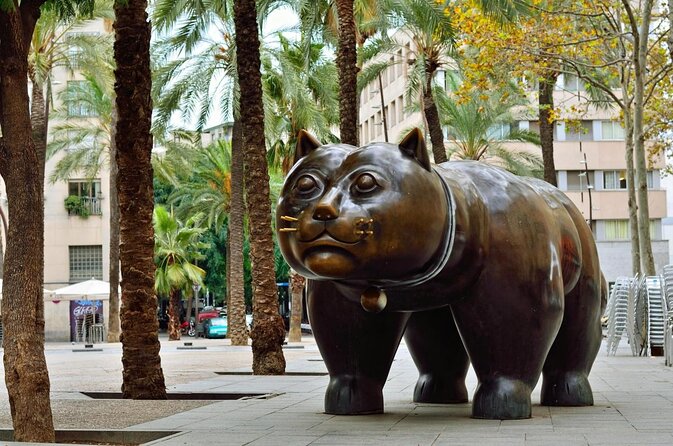
- Hotel pickup + private pacing so you’re not stuck waiting on a bus-sized group
- Liliia-style Q&A so you can ask anything, from architecture to neighborhood vibes
- Photo stop planning to make street scenes easier to shoot without rushing
- Old Town to Eixample flow that connects medieval lanes to Gaudí’s modernist world
- Snack time baked in, including olive oil tasting and churros with chocolate
Why this private 6-hour format feels efficient
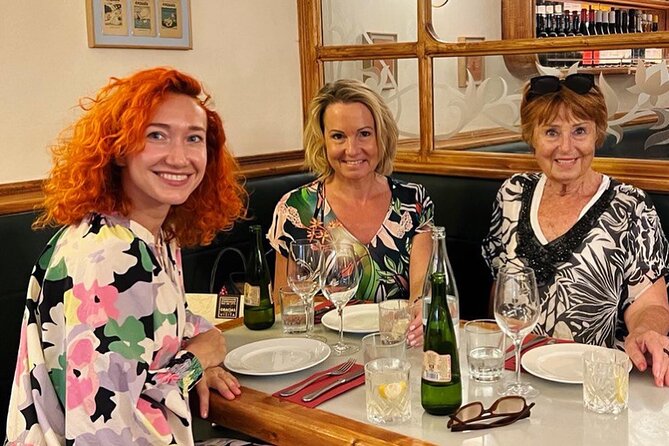
This tour works because it’s built for a single day, not a vague “see Barcelona” checklist. You get a dedicated guide for about 6 hours, and you’re not battling other groups to stand in the same photo spot. It’s also truly private, meaning it’s only your group, so the rhythm can match your energy level.
The pickup detail matters. You meet at the hotel entrance, not at some faraway corner that eats up your morning. And the tour ends in Eixample on Pg. de Gràcia (near Casa Batlló), which is perfect if you’re planning to continue the day around that modernist stretch.
There’s also a smart “ask anything” vibe. A private guide is best when you use them, and this one is clearly set up to answer real questions—not just recite a script. That’s where Liliia’s approach from past tours really shines: you can steer toward what you want more of, and you’ll still cover the key neighborhoods.
You can also read our reviews of more private tours in Barcelona

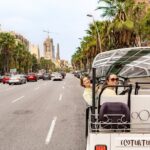

El Raval: Gaudí’s connection, olive oil, and that secret terrace

El Raval is one of those neighborhoods you can’t really understand from a map. It has changed a lot over the last 30 years, mixing cultures, creative shops, and street art with older Barcelona textures.
This stop is packed with details that help you read the neighborhood instead of just passing through it. You’ll see a medieval hospital connected to Gaudí’s story—where he died—along with local designer shops, colorful street art, and traditional tapas bars.
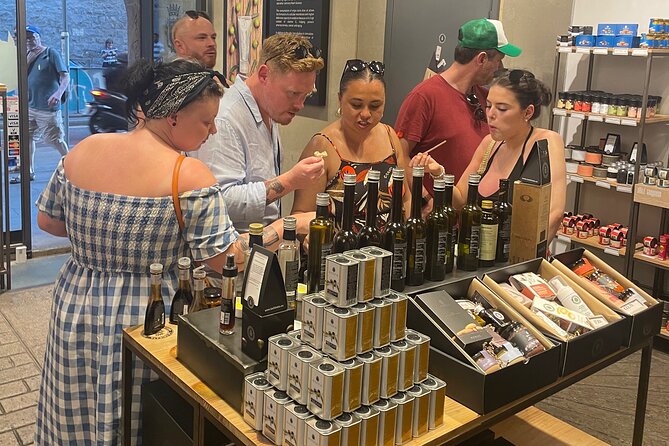
One of the most memorable parts is the olive oil tasting. Olive oil in Barcelona isn’t just a product; it’s a cultural habit. You’ll also get a secret terrace (the kind of view you’d never find by wandering alone), plus time to take photos without constantly dodging traffic.
Practical note: Raval’s area activities may involve admission or entry costs that aren’t included. If you care about specific interiors there, it’s worth budgeting a little extra.
La Rambla: the boulevard you can’t skip, plus Gaudí and Picasso hints
La Rambla is famous for a reason: it’s a long stretch where you see Barcelona’s street theater style—flower stalls, historic theaters, people watching, and storefront life. The vibe can shift by block, but the whole corridor gives you that “I’m in the city” feeling fast.
The guide also frames what you’re seeing with context—like how it was once tied to the city’s hippie era, and how it’s had major disruptions over the years. That matters because it turns La Rambla from a photo stop into a better story.
You’ll walk past places where local and contemporary artists have left their marks. And you’ll get photo-friendly stopping points, which is a big deal on La Rambla because it’s easy to rush and miss the best angles.
Food-wise, you’ll also be around the area that’s tied to Barcelona’s most famous market scene. You won’t be “lost” finding it later, because you’ll get oriented while walking the boulevard.
There’s another clever layer here: near La Rambla you’ll take a look at early Gaudí works and places connected to Picasso’s life and creations. Even if you don’t go inside, these cues make the city feel less random.
This stop is free of admission charges, but it’s still a good place to have your phone charged and your camera ready.
Mercat de la Boqueria: how to eat like a local without the chaos
Mercat de la Boqueria is one of those places where the atmosphere can overwhelm you if you walk in alone. Rows of fish and seafood, jamón and cheese counters, and bright produce everywhere. It’s busy, but it’s also a strong slice of daily Barcelona life.
The key advantage of coming with a guide is that you’re not just staring. You get direction on what’s worth trying and how to order without burning time. The market is described as the culinary heart of Barcelona, and it feels that way the moment you step inside.
You’ll have a chance to try typical tapas and a glass of local cava here. But keep expectations realistic: anything you order in the market is not included, so plan to pay for your own food and drinks.
The admission ticket itself also isn’t included for this market stop. So if you’re arriving hungry, you can turn this into a highlight. If you’re budgeting tightly, treat it like a taste-and-sample zone rather than a full meal.
Gothic Quarter: Roman walls, Jewish Quarter remains, and geese in the cathedral cloister
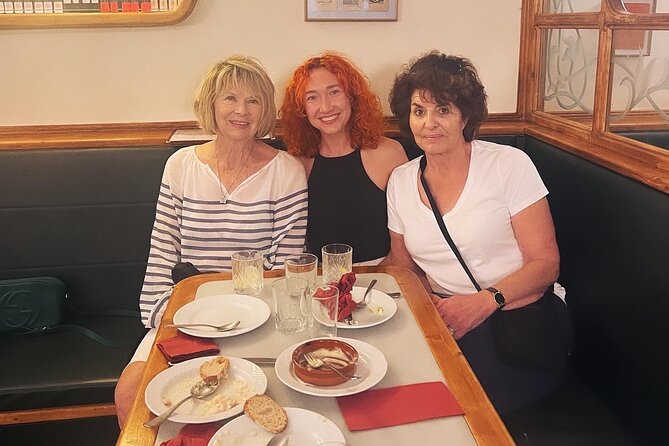
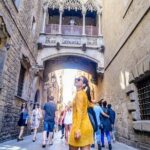
The Gothic Quarter is where Barcelona becomes a maze. Tight streets. Old stone. Small surprises around every corner.
This part of the walk is designed to help you spot real layers of the city. You’ll see sections of the original Roman wall and the historic Jewish Quarter area. Those stops change how you view the streets—suddenly the narrow lanes feel intentional, not just accidental.
The big landmark moment is Barcelona Cathedral, plus its hidden cloister where geese live. That’s exactly the kind of detail you miss if you’re only doing the obvious sights. The guide’s job here is partly navigation, partly interpretation: you get why the cloister is notable and what you’re looking at.
You’ll also get a craft-focused stop: a jeweler’s workshop that highlights local craftsmanship. This is a nice change from seeing only monuments. It reminds you that Barcelona’s charm isn’t only architecture—it’s people making things.
Admission isn’t included here, so if you want to go inside specific spaces, you’ll want to account for whatever entry fees apply.
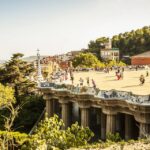
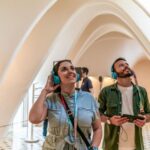


El Born: Santa Caterina’s wavy roof, galleries, and courtyard time
El Born has that creative energy people associate with Barcelona, but you feel it in specific ways: small art studios, galleries, and concept stores with local brands. It’s also a neighborhood where history still shows up in the buildings.
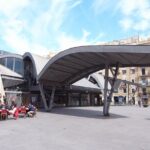
You’ll spend time around Santa Caterina, the market with a colorful roof that looks like waves. It’s an iconic visual, and it’s also a good anchor for understanding how this area lives day-to-day.
Another highlight is the El Born Cultural Centre, which is built over ancient Roman ruins. Even if you don’t go inside for an exhibit, the structure and the setting help explain why the neighborhood feels layered.
The guide also points out places with hidden courtyards—those quiet breaks from street noise where you can get photos and just breathe for a minute. That’s where this kind of guided day earns its keep. You don’t just see “nice streets.” You learn where to pause.
As with other stops, purchases inside shops and any entry-based visits in this area aren’t included.
Eixample modernism: Casa Mila, Casa Batlló, Sagrada Família, and a secret bank vault room
This is the moment where Eixample turns the day from old-city wandering into architectural nerd satisfaction (in a good way).
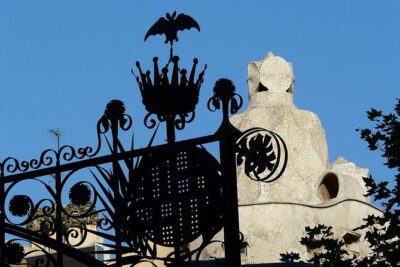
Eixample is the modernist district where architecture is basically a full-time job. The streets follow an organized plan—octagonal blocks, chamfered corners, and details inspired by nature, mythology, and even reptile imagery. That matters because Gaudí didn’t just design buildings. He played with the city’s logic, too.
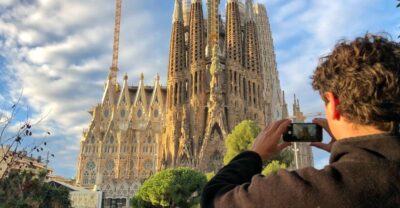
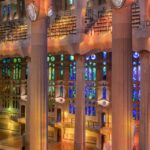
You’ll see major Gaudí and modernist landmarks from the street level, including Casa Milà, Casa Batlló, and viewpoints connected to Sagrada Família. Even without entering, the facades and urban layout give you a clearer picture of why this area is UNESCO-recognized.
Here’s the standout extra: a secret vault room of an old Spanish bank. The tour description says it’s a hidden spot most visitors never find. That kind of stop makes the Eixample portion feel more than just sightseeing. It’s a story you can’t easily piece together without help.
Admission is listed as free for this final segment, which is a nice way to keep costs steady. If you’re an architecture lover, you’ll probably want extra time here after the tour ends.
Value check: what $226.37 buys you (and what to budget)
The price is $226.37 per person for a private 6-hour experience. That isn’t pocket-change, but the value comes from the package: a guided day with hotel pickup, bottle of water per participant, photo stop planning, and a personal approach based on your interests.
On the included food side, you get churros with chocolate, plus the tour includes an olive oil tasting earlier in the day. So you’re not just paying for walking. You’re paying for guided eating moments that help you understand the city.
What you should expect to pay for separately:
- Any admission tickets that apply in El Raval and Mercat de la Boqueria
- Food and drinks you choose to buy in markets and bars
- What you might purchase in shops or at craft stops, depending on what catches your eye
There’s also a note about group discounts and a mobile ticket, which can help if you’re traveling as more than one person. Still, since it’s private, you’re paying mainly for the guide, pacing, and access to the places that are easier with someone who knows the angles.
My practical advice: set aside a small amount for tickets and an appetite budget for tastings. If you do that, the day feels like money well spent.
Who this tour fits best
This experience is a strong fit if you want:
- A first-day Barcelona foundation that moves through major neighborhoods without turning it into a marathon
- A food-and-photo day, not just monuments
- A guide who can answer questions and adjust the plan, especially if you care about Gaudí, modernism, and street-level details
It may be less ideal if you dislike walking a lot. The day covers multiple neighborhoods and transitions from older lanes to Eixample’s wider streets. Also, if you want only free sights and zero spending, you’ll need to plan carefully around the spots where admission or food isn’t included.
Should you book this Barcelona day tour?
Yes—if you want a structured but flexible day where you learn the city while actually seeing it in good order. The private format plus hotel pickup makes the logistics easy, and the mix of neighborhoods gives you both “old stone” and “Gaudí brain” in one sweep.
Book it especially if you enjoy asking questions and you like your tours to include real moments: tastings, craft stops, and photo breaks that don’t feel like a race.
If you’re the type who prefers total freedom with a guidebook and public transport, you might get a similar route on your own. But if you’d rather trade uncertainty for a guide who knows where to pause and what to point out, this one is a solid choice.
FAQ
FAQ
Is this a private tour?
Yes. It’s a private experience, and only your group participates.
How long is the tour?
It runs for about 6 hours.
What language is the tour offered in?
The tour is offered in English.
Do you get hotel pickup?
Yes. The meeting point is your hotel entrance for pickup, and the tour starts at Carrer Nou de la Rambla, 105.
Are tickets and market food included?
Not fully. Admission tickets are not included for El Raval and Mercat de la Boqueria, and food purchases in the market are not included.
What’s included besides the guided tour?
You get a bottle of water for each participant, a tasting of churros with chocolate, and a list of recommendations after the tour.
Is free cancellation available?
Yes. Free cancellation is allowed up to 24 hours in advance for a full refund.