REVIEW · BARCELONA
Barcelona: Gothic Quarter Walking Tour with Optional Pintxos
Book on GetYourGuide →Operated by Amigo Tours Spain · Bookable on GetYourGuide
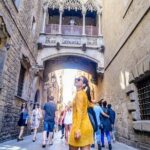
The Gothic Quarter can feel like a movie set. This walk gives you the why behind those stone streets, from ancient roots to the city’s political heart. You also get the option to finish with pintxos and a drink, so the tour ends on something you can actually taste.
I love how the guide stitches together big-name stories with the places you’re standing in—like how Barcelona traces back to Emperor Augustus, and how later figures shaped the city’s identity. I also like that you’re not just wandering: you’re covering key spots such as Nova Square and the cathedral area with clear, on-the-ground context.
One thing to keep in mind: this is a walking-heavy route, and monument entry/tickets are not included, so if you’re hoping to go inside specific sights, you may need to plan that separately.
In This Review
- Key things to know before you go
- Gothic Quarter in 2–3 hours: what this tour really delivers
- Meeting at the Fountain of the Six Putti (Plaça de Catalunya side)
- The Ramblas segment: Barcelona’s founding story in motion
- Finding Roman vestiges and old city walls in the Gothic streets
- Nova Square and the cathedral area: Gothic style in a central moment
- Plaza del Rei, Plaza del Pi, then Plaça de Sant Jaume
- The people behind the places: St. Roque, Wilfredo the Hairy, and the Catalan flag
- Optional pintxos tasting: one drink, two pintxos, and local advice
- Price and value: is $18 actually worth it?
- Who should book this Gothic Quarter walk?
- Should you book this Gothic Quarter Walking Tour with Optional Pintxos?
- FAQ
- How long is the Barcelona Gothic Quarter walking tour?
- Where do I meet the guide?
- Is the pintxos tasting included?
- What languages is the tour offered in?
- Are monument tickets included?
- Is the tour wheelchair accessible?
Key things to know before you go
- Bilingual, live commentary (English and Spanish) helps you follow the story even on faster sections of the walk.
- Roman vestiges are part of the route, not just a trivia line—old walls and traces show up as you move.
- Plaza stops are intentional, including Plaça de Sant Jaume, where civic and political power comes into focus.
- You can add pintxos at the end: one drink of choice plus two pintxos (if you select that option).
- Meeting is easy: your guide holds an Amigo Tours sign near the Fountain of the Six Putti.
Gothic Quarter in 2–3 hours: what this tour really delivers
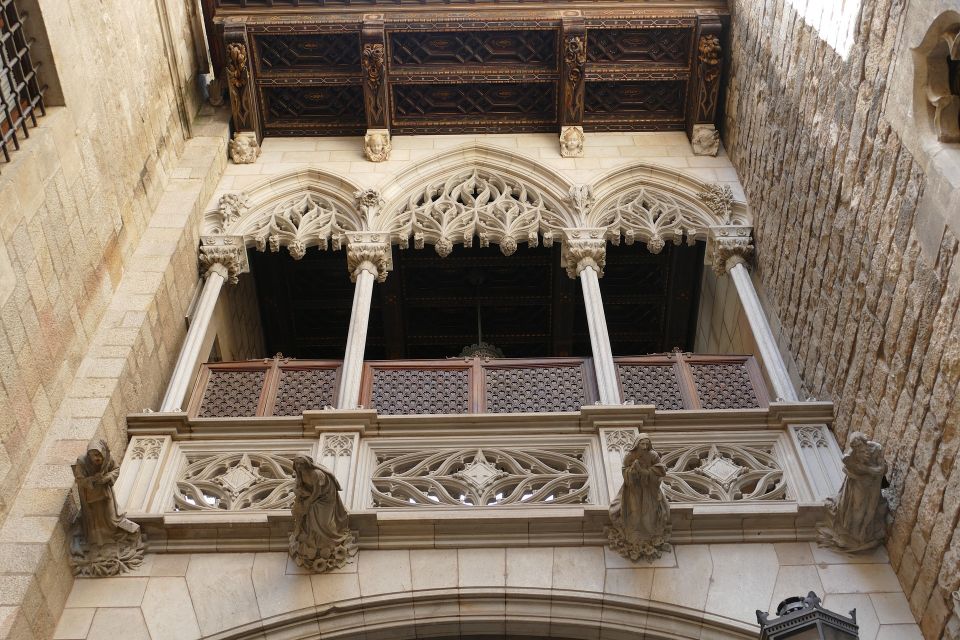
This isn’t a “standing in front of a postcard” kind of tour. It’s a guided walk built around how Barcelona became Barcelona—physically, politically, and culturally. In a short window (check availability for exact start times), you’ll cover enough terrain to feel the scale of the old city without burning your day.
You’ll move through Barcelona’s oldest layers, including the Gothic Quarter’s tight street pattern and the kind of landmark clustering that makes this area feel like it grew by accident. Your guide’s job is to turn that maze into a timeline you can remember: where the city’s story began, what got built, and who left fingerprints on the streets you’re walking.
The value also comes from the format. At $18 per person, you’re paying for a professional guide and live bilingual storytelling. If you choose the pintxos option, you’re also getting a built-in food stop—one drink plus two pintxos—so you don’t have to figure out where to start eating on an already full travel day.
You can also read our reviews of more walking tours in Barcelona



Meeting at the Fountain of the Six Putti (Plaça de Catalunya side)
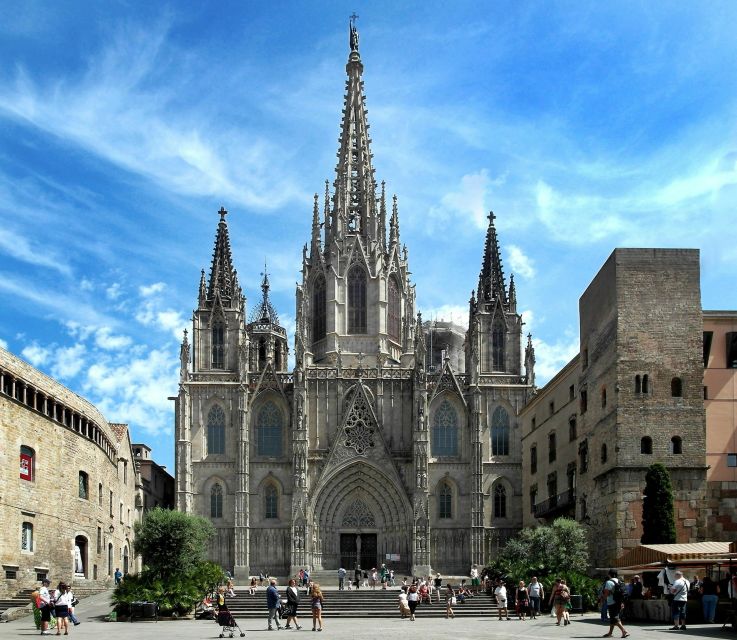
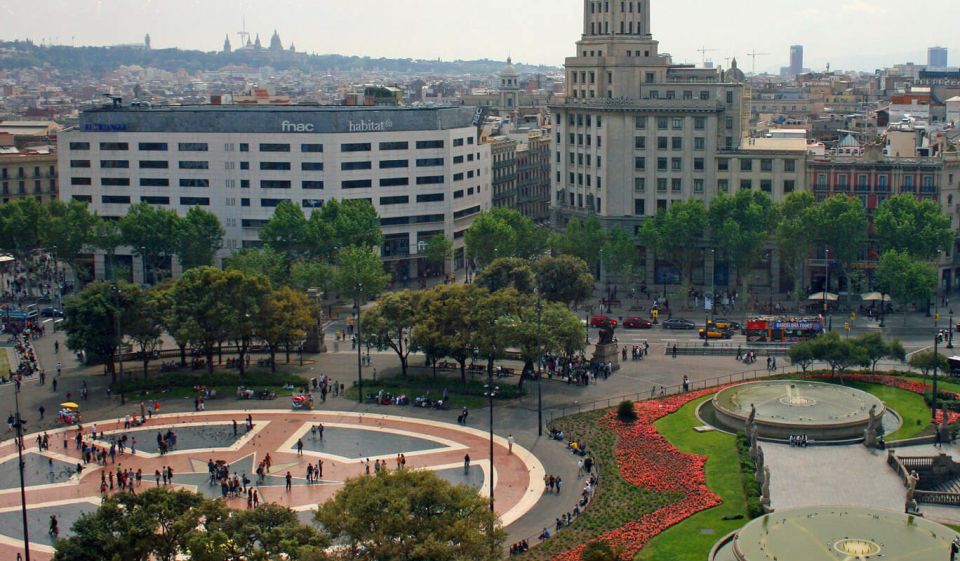
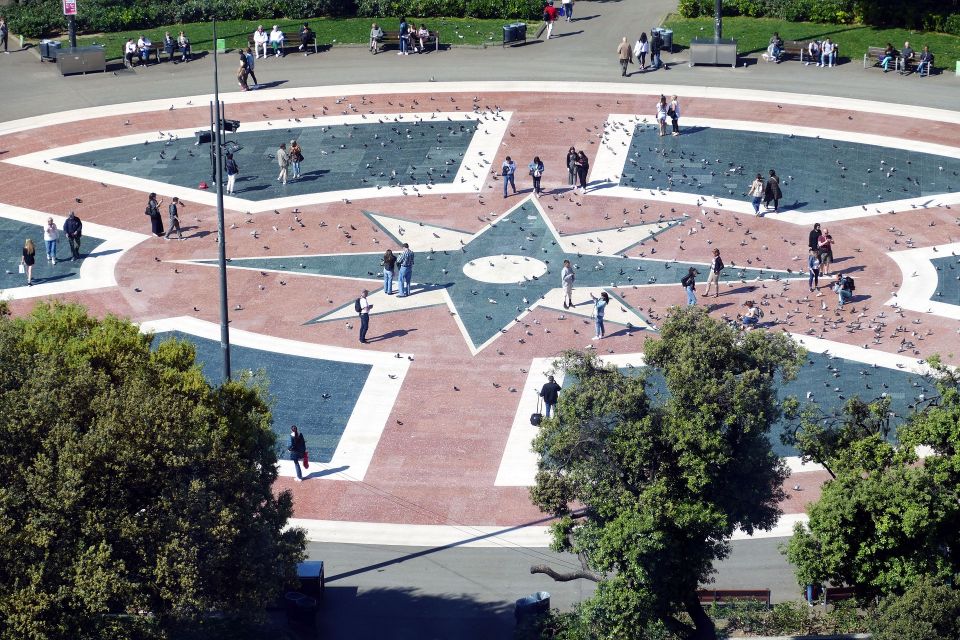
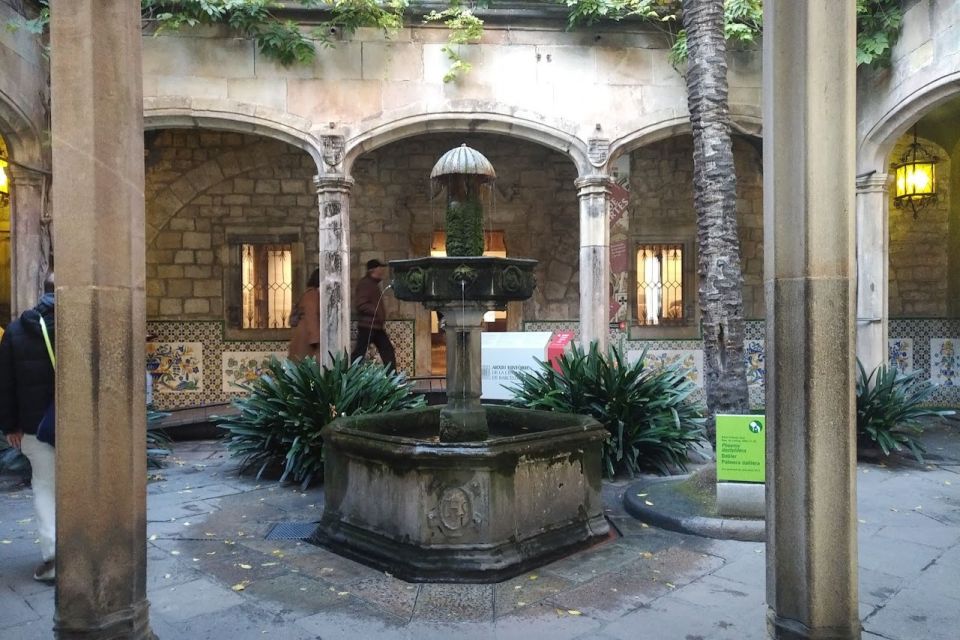
Your tour starts by the Fountain of the Six Putti, at Pl. de Catalunya, 31 (08002 Barcelona). Your guide carries an Amigo Tours sign, which is a big deal in Barcelona—there are plenty of people holding papers, flyers, or phones. Here, you should be able to spot the group quickly and avoid the awkward “are you the right one?” moment.
This location also sets up the walk nicely. You’re close enough to major tourist corridors that you can get oriented fast, but the route is still aimed at pulling you away from the busiest surfaces and into the older lanes.
Tip: wear comfortable shoes. The route is described as a lot of walking, and even if you’re in good shape, the cobblestones and turns can slow you down.
The Ramblas segment: Barcelona’s founding story in motion
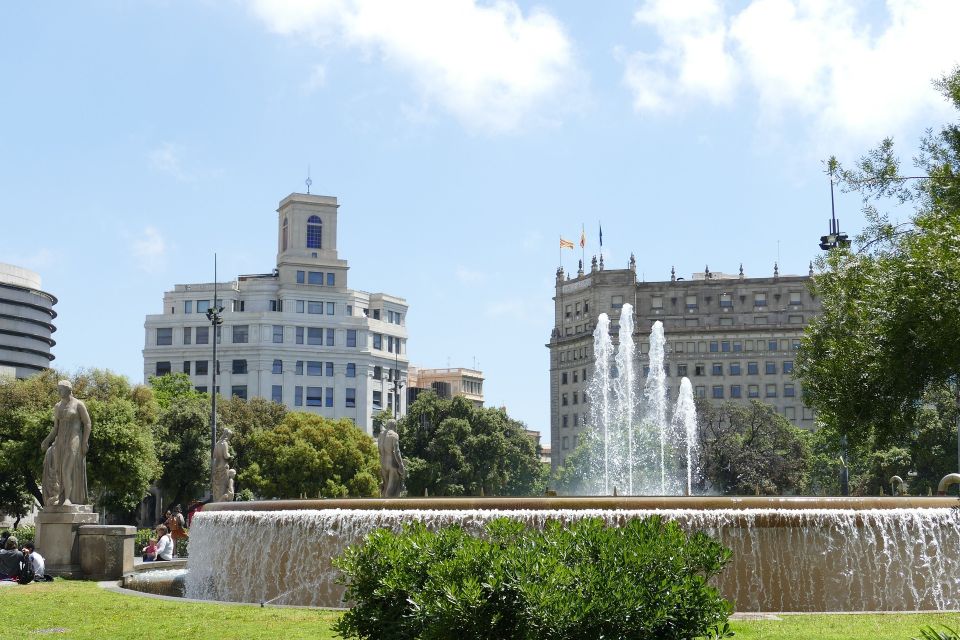
One of my favorite things about this tour concept is that the route doesn’t treat the Gothic Quarter like it’s isolated. As you head toward the older core, you’ll walk down the Ramblas and hear how Barcelona was founded by Emperor Augustus.
That detail matters because it changes what you see. The Ramblas area can feel like just another grand avenue on a first visit, but in the context of the tour, it becomes a connector—an easy-to-walk stretch that leads you from the present to the deep past.
You don’t need to memorize dates. The point is the guide ties a founding claim to the way the city developed, so you understand why the old quarter looks the way it does—tight streets, major religious/political anchor points, and layers of earlier defenses.
Finding Roman vestiges and old city walls in the Gothic streets
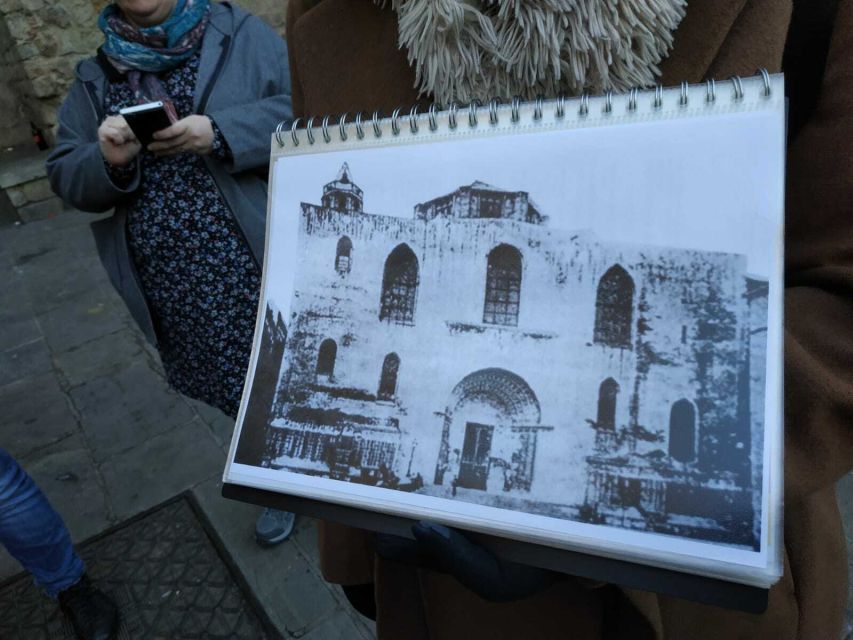
After the Ramblas, the walk brings you toward the old port area, where you can see remains connected to the city’s old wall. This is one of those moments where you realize the Gothic Quarter isn’t only about medieval drama—it still carries visible reminders of earlier urban planning.
As you move through the narrow streets, the guide points out Roman vestiges that are still present in the street pattern and nearby remnants. The takeaway is simple: Barcelona’s old city didn’t get built from scratch. It grew, it was reshaped, and parts of earlier structures lingered.
This is also where the tour’s walking style helps. The Gothic Quarter rewards low-speed attention—if you rush it on your own, you miss the subtle “wait, that’s older than the rest” cues.
Nova Square and the cathedral area: Gothic style in a central moment
Next comes Nova Square, the kind of place that feels like a hub inside the Gothic maze. In this stop area, you can admire the Cathedral of Gothic style. Even if you don’t go inside, the external setting is a strong anchor for the neighborhood.
Why it works on a guided walk: the guide uses the cathedral zone as a reference point in the city’s story. You’re not just seeing architecture; you’re using it to orient your mental map of the old quarter.
Also, this is a natural “pause” moment. The route has moving energy, and the cathedral area gives your eyes a bigger structure to focus on before you shift back into plazas and political spaces.


Plaza del Rei, Plaza del Pi, then Plaça de Sant Jaume
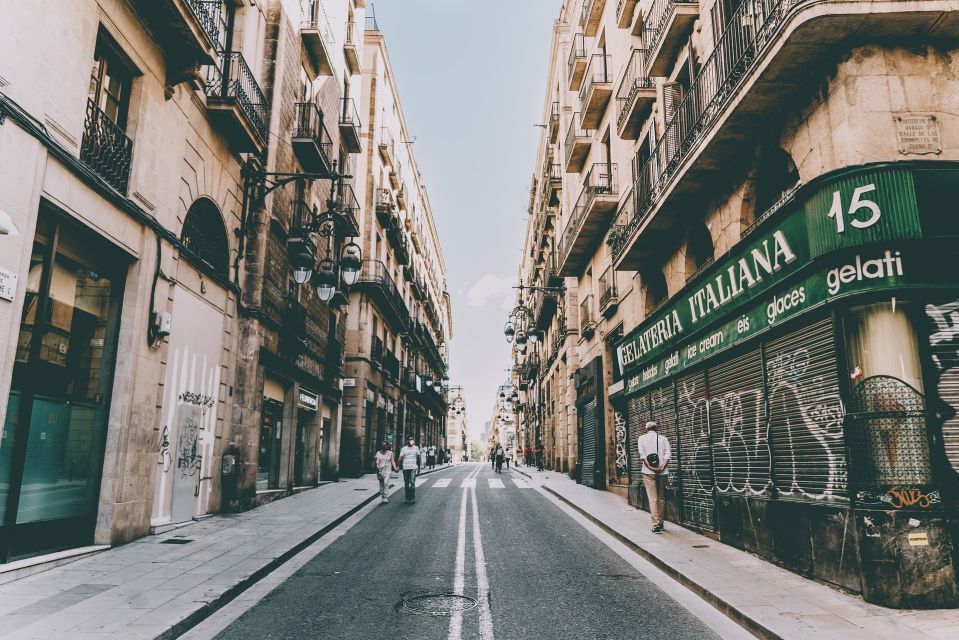
From Nova Square you continue around major plazas—starting with Plaça del Rei and Plaça del Pi—before reaching Plaça de Sant Jaume. These stops matter because each one has a different feel and role in the city.
- Plaça del Rei helps you understand the “old seat” side of Barcelona, where power and history overlap in one compact area.
- Plaça del Pi brings you into another classic Gothic Quarter public space—more intimate than big city squares, but still meaningful as a gathering point.
- Plaça de Sant Jaume is where the tour makes a clear pivot to the administrative and political center.
At Plaça de Sant Jaume, you’ll see the town hall and the Palau de la Generalitat. This is the part that tends to click for people who like city identity beyond landmarks. You start to see Barcelona as a place where governance and culture are tied to the physical layout of the old streets—not separated into “history” on one side and “life today” on the other.
The people behind the places: St. Roque, Wilfredo the Hairy, and the Catalan flag
A big reason this tour gets strong feedback is the way the guide connects named figures to real locations and symbols. You’ll hear about figures such as St. Roque and Wilfredo the Hairy, and you’ll also learn how the current design of Catalonia’s flag developed.
Even if you already know a bit about Catalan identity, the guide’s job is to explain it in a way that matches what you’re looking at. When you understand where symbols come from, the city feels less like scenery and more like a living document.
One practical note: don’t worry if you can’t catch every name on the move. With a bilingual, live guide, you can usually follow the flow, and you’ll get enough anchor points—like the plazas and key landmarks—to keep the story straight.
And yes, it helps if you ask questions. The tour ends with time to chat with your guide, and that’s one of the best ways to turn a good walk into a better day.
Optional pintxos tasting: one drink, two pintxos, and local advice
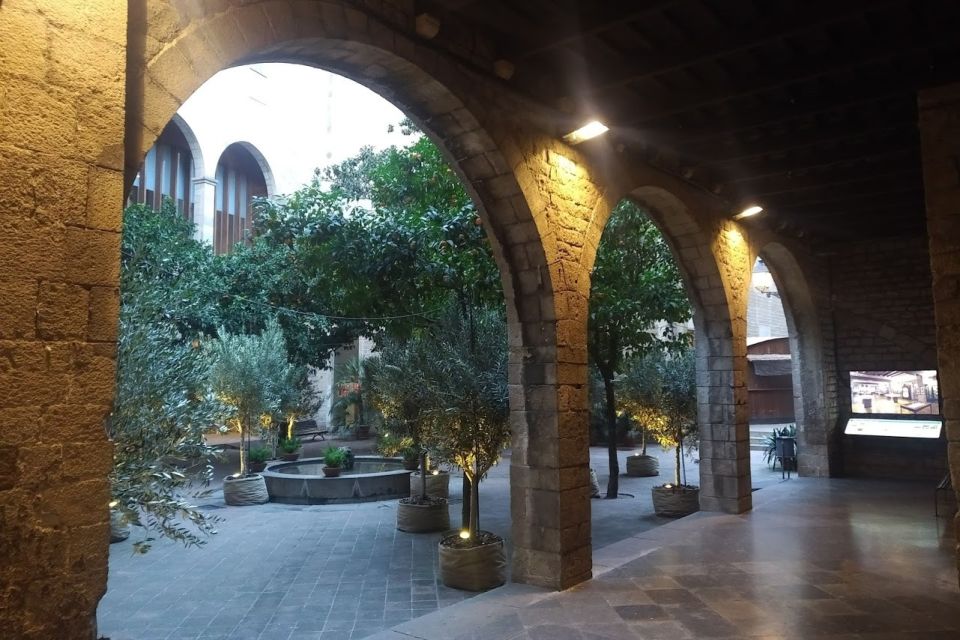
If you select the pintxos option before booking, the tour finishes with a local bar tasting. What’s included is clear: one drink of choice (alcoholic or non-alcoholic) and two pintxos.
This is a smart add-on for two reasons. First, it gives you an immediate reward after the walking. Second, a guide-chosen stop can save you time, because you’re not spending your energy searching for a decent first place to try pintxos in the middle of a busy area.
What to do during the tasting: keep it relaxed. Use the moment to chat with your guide about what to do next—whether you want more neighborhoods, museums, or day trips. They’re in the right mode for recommendations because they just spent hours showing you what matters here.
Also, if you’re picky about food, remember the tour includes exactly two pintxos. That’s usually plenty to sample the style, but it won’t replace a full meal if you’re very hungry.
Price and value: is $18 actually worth it?
For $18 per person, you’re getting a professional guide, a guided walking tour, and live bilingual commentary in English and Spanish. If you pick the pintxos upgrade, you’re also getting a drink plus two pintxos.
That’s a solid deal because your main costs on a trip like this are often time and effort. Here, someone else handles the story, route logic, and timing of stops. You get a concentrated slice of old Barcelona without having to plan the “what to look for” part.
It also feels like a good entry-point tour. If this is your first day in the city center, it helps you get your bearings quickly, which makes the rest of your independent exploring easier.
The main trade-off is the scope. Tickets to monuments aren’t included, and some landmarks may not be easy to enter during evening hours depending on what you’re hoping to see. If your priority is “inside the building” experiences, plan those separately.
Who should book this Gothic Quarter walk?
I think this tour is a great fit if you:
- Want an organized way to understand Barcelona’s oldest neighborhood without a map marathon
- Prefer stories tied to places, not long museum-style lectures
- Like cultural details—figures like St. Roque and Wilfredo the Hairy—connected to what you see
- Want an optional, low-effort pintxos finish that includes food and drink
It may not be ideal if you:
- Need a low-walking, low-cobblestone experience
- Are mainly looking for monument entry with tickets included
- Are traveling with reduced mobility and want to avoid stairs/uneven pavement (the tour is described as not recommended for reduced mobility or wheelchair users, even though it’s also listed as wheelchair accessible—so you should check directly before assuming it’ll work)
Should you book this Gothic Quarter Walking Tour with Optional Pintxos?
If you want a first-rate way to understand Barcelona’s layers—Roman traces, Gothic landmarks, and the political center—this is an easy yes. The format is efficient, the route hits major anchors, and the option to add pintxos means your ending has payoff, not just more walking.
I’d book it if you care about context. A good guide can turn confusing streets into a timeline you actually carry with you. Feedback around this tour highlights guides who give clear explanations and a friendly vibe (one guide name that shows up is Sylvia), which is exactly what you want for a neighborhood where it’s easy to feel lost.
I’d hesitate only if your main goal is paid monument entry. Since tickets to monuments aren’t included, you’ll likely still need to decide what you want to enter on your own schedule.
If that trade-off sounds fine, book it, wear comfy shoes, and plan to ask your guide what to do next over your drink and two pintxos.
FAQ
How long is the Barcelona Gothic Quarter walking tour?
The tour lasts about 2 to 3 hours. Start times depend on availability.
Where do I meet the guide?
Meet your guide next to the Fountain of the Six Putti at Pl. de Catalunya, 31, 08002 Barcelona. The guide carries an Amigo Tours sign.
Is the pintxos tasting included?
It’s included only if you select the pintxos option before booking. That option includes one drink of choice and two pintxos.
What languages is the tour offered in?
The tour provides live bilingual commentary in English and Spanish.
Are monument tickets included?
No. Tickets to monuments are not included.
Is the tour wheelchair accessible?
The activity is listed as wheelchair accessible, but it’s also noted as not suitable for wheelchair users and for people with mobility impairments due to lots of walking. Check directly with the provider before booking if mobility is a concern.