REVIEW · BARCELONA
Barcelona: Gothic Quarter By Night Guided Walking Tour
Book on GetYourGuide →Operated by Green Tours Barcelona · Bookable on GetYourGuide
Barcelona at night has a different heartbeat. This guided Gothic Quarter walk threads Roman streets, medieval landmarks, and Catalonia’s modern story into one 2.5-hour loop.
What I really like is how the route leans into the before you knew it feeling—Roman walls and a Roman cemetery make the area’s age feel real, not theoretical. I also like that the tour is built around specific, recognizable stops like the Cathedral of Barcelona and King’s Square, so you can picture what you’re seeing as the stories get going.
One thing to consider: this is a night walk on cobblestones, so comfortable shoes matter. Also, the listing says food and drinks aren’t included, even though there’s a sweet-café stop (hot chocolate in winter, gelato in summer), so budget a little for your order.
In This Review
- Key highlights at a glance
- Meeting outside Hard Rock Cafe and spotting your green umbrella
- Roman streets, cemetery vibes, and the feeling of time travel
- The Cathedral of Barcelona at night: history you can actually picture
- King’s Square and the Gothic Quarter’s medieval geometry
- Jewish Quarter alleys and the aftertaste of the Spanish Civil War
- Catalunya’s modern political angle between the medieval stones
- Sweet stop: hot chocolate and churros in winter, gelato in summer
- Guide quality: Paulo and Aidan/Aiden’s storytelling style
- Price and value: what $34 gets you (and what to budget)
- Timing, comfort, and how to make the night walk easier
- Who this tour is best for (and who might skip it)
- Should you book Barcelona’s Gothic Quarter by Night tour?
- FAQ
- How long is the Barcelona Gothic Quarter by Night guided walking tour?
- Where does the tour start?
- How do I find the guide?
- What languages is the tour offered in?
- Is the tour wheelchair accessible?
- Is food included?
- What should I bring?
- Are there options to cancel or book with flexibility?
Key highlights at a glance
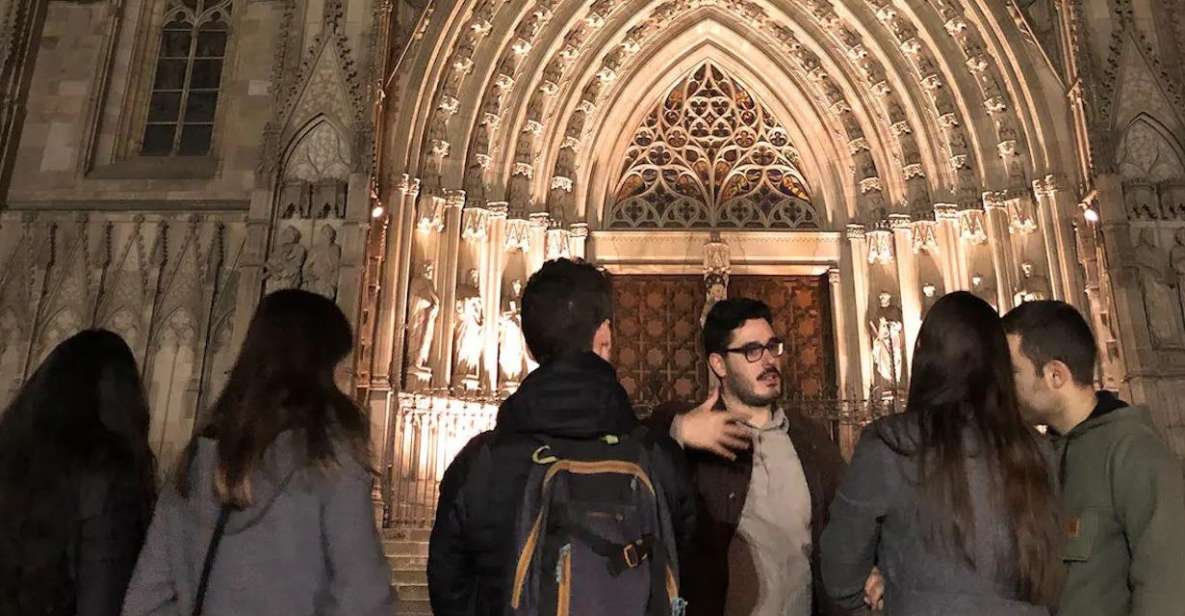
- Green-umbrella guide: Meet right outside Hard Rock Cafe (Plaza Cataluña) and spot your guide fast.
- Roman-era details: You’ll pass the Roman city walls and visit the area linked to a Roman cemetery.
- Cathedral + King’s Square: Two big anchor points that help you understand the Gothic Quarter’s layout.
- Jewish Quarter alley stories: You’ll hear how the area changed over time, including the scars of the Spanish Civil War.
- Catalunya’s modern angle: The guide ties medieval sights to today’s Catalonia conversation.
- Seasonal sweet stop: Winter hot chocolate and churros café, or summer gelato.
Meeting outside Hard Rock Cafe and spotting your green umbrella
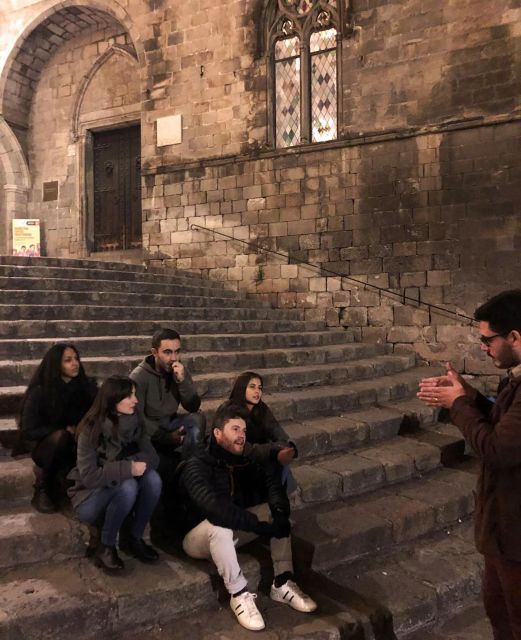
The tour starts where it’s easy to find: right outside the Hard Rock Cafe on Plaza Cataluña. This is practical. You’re not trying to guess a side street in the dark, and you’re already near one of Barcelona’s main squares.
Your guide is normally carrying a green umbrella, which is a small detail that makes a big difference after sundown. You’ll also stay anchored to a simple plan: the tour ends back at the same meeting point. That matters if you’re pairing this with dinner or another evening activity nearby.
The tour runs for about 2.5 hours. That’s long enough for a real story arc, but short enough that you won’t feel trapped when you’re tired or when the night cools down.
You can also read our reviews of more walking tours in Barcelona



Roman streets, cemetery vibes, and the feeling of time travel
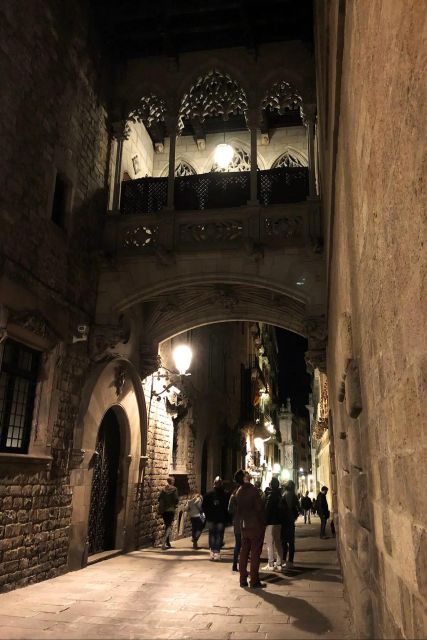
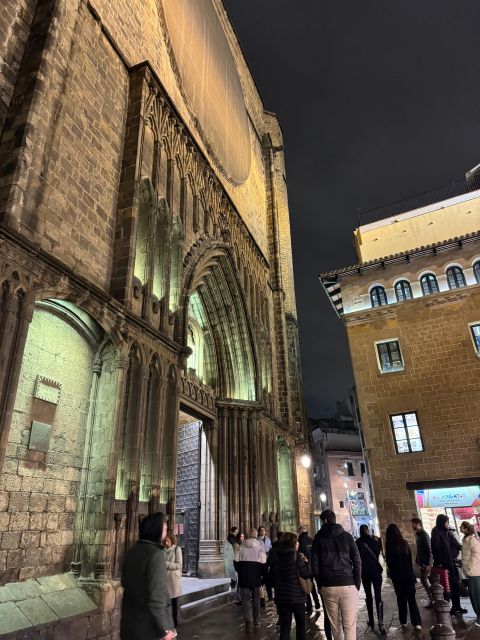
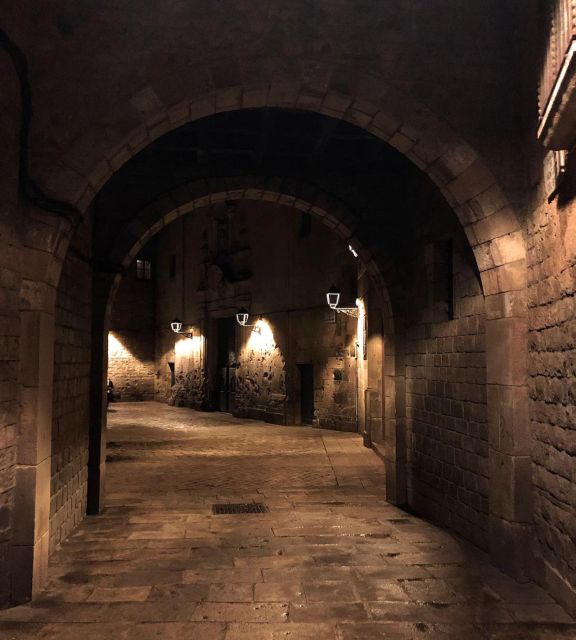
One of the strongest reasons to do this at night is that the Gothic Quarter’s stonework reads differently after dark. The guide leads you down cobblestone streets that have a way of making Barcelona feel older than modern maps. The goal is not just sightseeing—it’s walking through layers.
You begin at a legendary fountain, then move through an area tied to an ancient Roman cemetery. From there, the walk takes you beneath the imposing Roman city walls. Even if you’re not a “Roman nerd,” these are the kinds of structures your brain can grasp quickly: walls, boundaries, burial grounds. They’re the physical clues that the neighborhood didn’t start in the medieval era.
Why this works for you: when a guide points out what came first, your photos stop being just pretty. You start seeing the neighborhood as a timeline. And because it’s a walking tour, you’re not stuck reading explanations on a screen.
Practical note: expect cobblestones and uneven ground. It’s not an excuse to skip it, but it is a reason to wear shoes you’re comfortable walking in for a couple hours.
The Cathedral of Barcelona at night: history you can actually picture
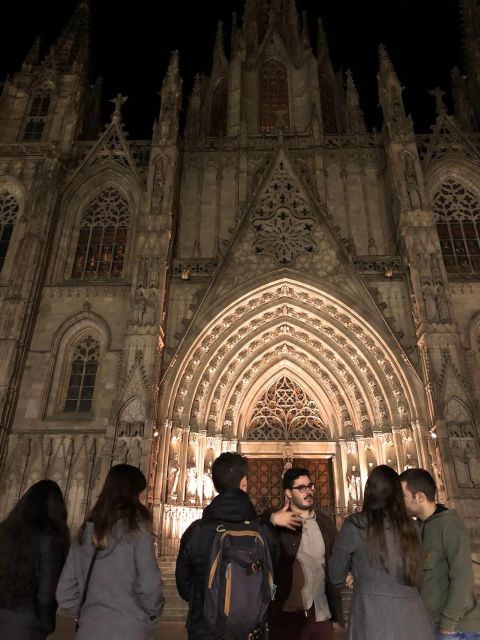
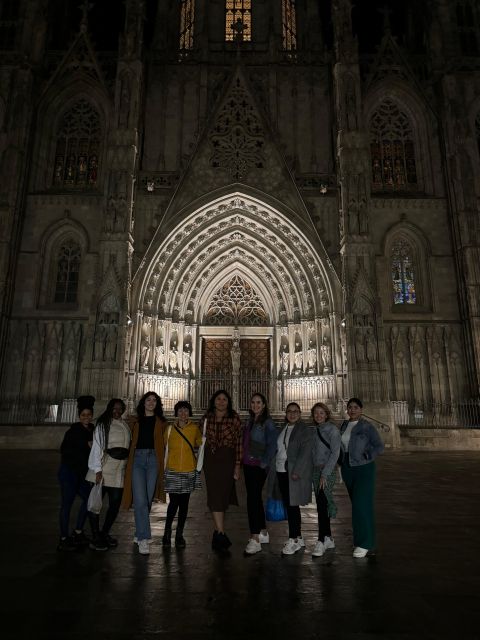
The tour highlights the Cathedral of Barcelona and its history, and this is one of those anchor moments that helps the rest of the Gothic Quarter make sense. In daylight, the cathedral is already impressive. At night, it tends to feel more serious and less touristy—like you’re visiting something that still matters.
The guide’s job here is to connect the cathedral to the surrounding streets, not treat it like a standalone monument. That’s what you want if your goal is understanding the neighborhood, not just collecting landmarks.
I also like that the tour doesn’t stay purely architectural. It threads human stories through the built environment—saints and martyrs, monarchs, and the way medieval symbols show up in stone details like gargoyles. You may not notice those elements on your own on a first visit, but a guide can point them out while you’re close enough to actually see them.
King’s Square and the Gothic Quarter’s medieval geometry
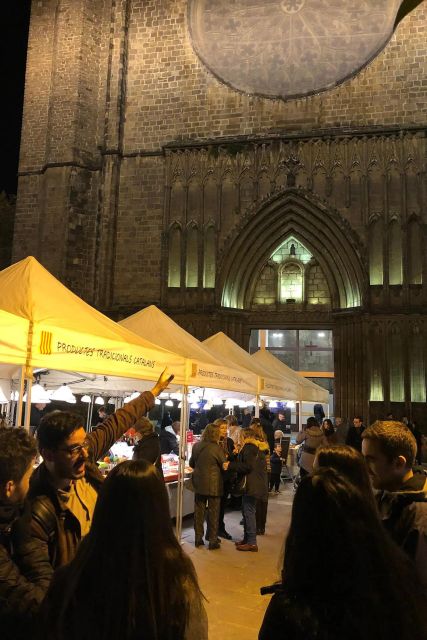
Next up is King’s Square, which the tour treats as a major stop for a reason. This square acts like a navigational landmark—once you understand its position, the surrounding alleys start to feel less random.
At night, squares like this can feel slower. That’s when you get the best storytelling conditions: fewer distractions, better listening, and an easier time noticing the way the streets funnel you from one moment to the next.
The tour’s structure matters here. You’re not walking in a straight line; you’re being guided through how the neighborhood is “put together.” That’s especially helpful if you’ve only got one night in Barcelona and you want your time to count.
Jewish Quarter alleys and the aftertaste of the Spanish Civil War
One of the most compelling sections is the walk along the alleys of the Jewish Quarter. This is where the tour leans into the idea that neighborhoods have scars.
You’ll hear about the aftermath of the Spanish Civil War and how those events left marks in the story of the area. You also get the guide’s explanation of how different eras layered onto each other—monarchs and medieval figures alongside later historical shifts.
For me, this is where the night format really helps. When you’re walking narrow streets and listening to history out loud, the stories don’t feel like facts you memorized. They feel like context you’re absorbing.
And since the tour is guided, you’re less likely to wander into “I’ve seen this before” mode. You’re pushed to notice specific details tied to the narrative the guide is building.
You can also read our reviews of more guided tours in Barcelona


Catalunya’s modern political angle between the medieval stones
This isn’t only a tour about old buildings. The guide also covers parts of Barcelona connected to the modern political landscape of Catalunya.
That choice makes the tour more useful for real travelers, because it answers the question you’ll probably have once you start talking to locals or reading about the region: how does an old neighborhood connect to today’s identity?
In the same way Roman walls explain why boundaries mattered in the past, the Catalunya conversation explains why identity matters now. You’re getting a bridge from stones to street-level reality.
If you like travel experiences that connect history to what people talk about today, this part is worth paying attention to. It’s also a nice balance after heavier historical topics, because the guide’s focus helps you see the present without losing the plot.
Sweet stop: hot chocolate and churros in winter, gelato in summer
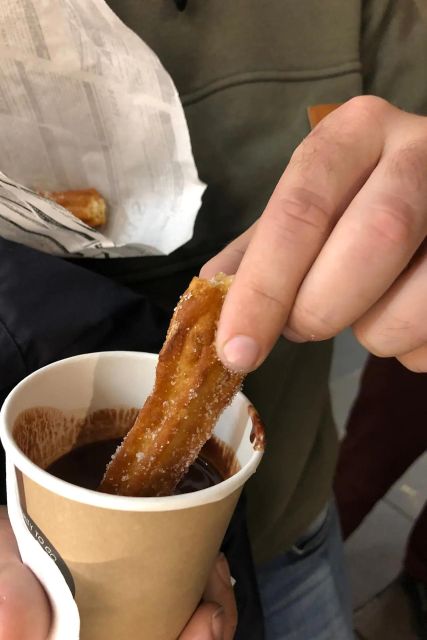
The tour includes a stop for a local sweet treat. In winter, it’s hot chocolate in a traditional churros café. In summer, it switches to gelato.
This is the part of the tour that feels like a reset button. You’ve been walking, listening, and concentrating. A café stop gives you a chance to warm up (winter) or cool down (summer) and compare notes with whoever you’re walking with.
One more practical point: the listing says food and drinks aren’t included. So even though there’s a sweet-café stop, plan to pay for what you order. I’d treat it as a bonus chance to sample a classic Barcelona comfort item rather than a fully included meal.
Guide quality: Paulo and Aidan/Aiden’s storytelling style
The tour’s rating is very high, and the reviews give you a pattern: guides are both informative and fun in the way they tell the story. Names that stand out include Paulo and Aidan/Aiden.
What makes these guides especially valuable is how they handle pacing and communication. Multiple comments praise guides who explain Barcelona’s history in a user-friendly way—clear enough that you’re not lost in dates and names. That’s big for a night tour, because you don’t want to spend half the time asking, Wait, what are we looking at?
I also like the human side that comes through in the reviews. One guest noted that Paulo messaged ahead, and when the guest was running late, the group waited kindly. That’s the kind of coordination that reduces stress when your day runs behind schedule.
Another recurring theme: you get recommendations at the end. That’s useful because it turns the tour into a launchpad for the rest of your evenings—where to eat, where to hang out, and what to seek next.
Price and value: what $34 gets you (and what to budget)
At $34 per person, this tour sits in the “solid value for guided time” category. You’re paying for two things that are hard to replicate on your own at night: (1) a guide to connect the sights into a coherent story and (2) the route design that takes you through key areas without you having to figure out everything on the fly.
Included items are straightforward: you get a live guide and restaurant/café/bar recommendations. Food and drinks aren’t included. That’s important because people often assume a “sweet treat” equals an all-paid snack.
So here’s the realistic budget view:
- Your main cost is the tour itself: $34.
- Set aside extra cash for your hot chocolate or gelato stop.
- If you add dinner or drinks afterward, that’s on you, but the guide’s recommendations can help you spend smarter.
For value, the key question is simple: do you want a guided story, or do you prefer wandering independently? If you want your night to feel organized and meaningful, this price makes sense for the time investment.
Timing, comfort, and how to make the night walk easier
This is a 2.5-hour walking tour on cobblestones. That means you should plan around comfort and not just enthusiasm.
Here’s how to make it easier:
- Wear shoes with real grip and support, because cobblestones can be slippery at night.
- Bring a light layer, since evening temperatures can shift quickly in Barcelona.
- Arrive early enough to find the guide with the green umbrella without rushing.
- If you’re running late, it’s worth contacting the organizer/guide, since at least one guide coordinated well when a guest had delays.
Also, check availability for starting times. Night tours often run at specific schedules, and you’ll want one that matches your dinner plans and your energy level.
Wheelchair accessible is listed, which is a good sign for wider inclusion. Still, cobblestones can be tough for some mobility setups, so it’s smart to choose your path carefully when you arrive.
Who this tour is best for (and who might skip it)
This tour is a great fit if:
- You want a guided way to understand the Gothic Quarter beyond the main sights.
- You like history stories connected to places you can see right in front of you.
- You want a night activity that doesn’t require complicated transit.
- You’re curious about Catalunya’s modern political landscape, not just medieval art and churches.
You might skip it if:
- You prefer fully self-guided walking and you already feel confident navigating on your own.
- You dislike cobblestone walking after dark.
- You’d rather spend your money on food and experiences than on guided interpretation.
Should you book Barcelona’s Gothic Quarter by Night tour?
I’d book it if you only have one night (or a limited window) and you want to leave Barcelona feeling like you actually understood what you saw. The route connects Roman-era elements, medieval landmarks like the Cathedral of Barcelona and King’s Square, and the Jewish Quarter’s darker historical layers—plus a seasonal sweet stop to keep things human and enjoyable.
The guide quality is the clincher. With guides like Paulo and Aidan/Aiden praised for clarity and entertainment, you’re not just paying for walking. You’re paying for someone to make the neighborhood click.
If you can handle cobblestones comfortably and you’re okay budgeting a little for your hot chocolate or gelato order, this is a smart, well-priced way to experience the Gothic Quarter after dark.
FAQ
How long is the Barcelona Gothic Quarter by Night guided walking tour?
It lasts about 2.5 hours.
Where does the tour start?
You meet right outside the Hard Rock Cafe at Plaza Cataluña.
How do I find the guide?
The guide is normally carrying a green umbrella.
What languages is the tour offered in?
The tour is offered in English.
Is the tour wheelchair accessible?
Yes, it is listed as wheelchair accessible.
Is food included?
Food and drinks are not included. There is a sweet treat stop (hot chocolate in winter or gelato in summer), but you should expect to pay for what you order.
What should I bring?
Comfortable shoes are recommended because you’ll be walking on cobblestones.
Are there options to cancel or book with flexibility?
There is free cancellation up to 24 hours in advance for a full refund, and there’s a reserve now & pay later option.