REVIEW · BARCELONA
Barcelona Express Tour in a Private Eco Tuk Tuk
Book on Viator →Operated by Eco Tuk Tuk - Spain · Bookable on Viator
Barcelona in one hour sounds impossible. It isn’t—this private eco tuk tuk ride is built for fast orientation. I like the mix of major sights plus the Ensanche street-level modernism you can read in real time. I also love how the guides keep it practical, sharing what to see next and how the neighborhoods connect. One heads-up: on the 60-minute option, you won’t have long on-foot time at each landmark, so plan this as an overview, not a full attraction visit.
You’ll roll through key Barcelona anchors: the modernist streets of the Ensanche and the grand “gateway” spots like Arc de Triomf and Plaza de Catalunya. The ride is also designed to be comfortable in real conditions, with winter rain/wind layers and warm blankets mentioned for colder months. The one possible drawback is simple: attraction entry tickets are not included, and parts like Sagrada Família still take real time if you want to go inside.
In This Review
- Quick hits you can bank on
- What this 59-minute Barcelona Express tour really does for you
- Price and what you’re paying for ($52.87 per person)
- Getting to the ride: Carrer de Casp meeting point, start to finish
- How the ride feels: comfort, smoothness, and real-weather fixes
- The guide experience: listening, context, and names you’ll hear again
- Stop by stop: what you’ll see and why it counts
- Casa Calvet: Gaudí’s early Ensanche statement
- Arc de Triomf: the 1888 gateway you’ll keep seeing in your plans
- Plaza Monumental: a bullring with a timeline
- The Sagrada Família: masterpiece context from the outside
- Casa Terradas (Casa de les Punxes): Puig i Cadafalch on Diagonal Avenue
- Casa Milà (La Pedrera): UNESCO status and a turning point in Gaudí’s life
- The Batlló house on Passeig de Gràcia: a facade you can’t miss
- Plaza de Catalunya: the city’s connector hub
- No long stops on the 60-minute route (so plan your expectations)
- Where this tour shines—and where it doesn’t
- Should you book this Barcelona Express tour?
- FAQ
- How long is the Barcelona Express Tour in a private eco tuk tuk?
- Are tickets to attractions included?
- Do you stop for photos during the 60-minute tour?
- Is this a private tour?
- Are babies, pets, or companion animals allowed?
- What happens if it rains or gets very hot?
Quick hits you can bank on
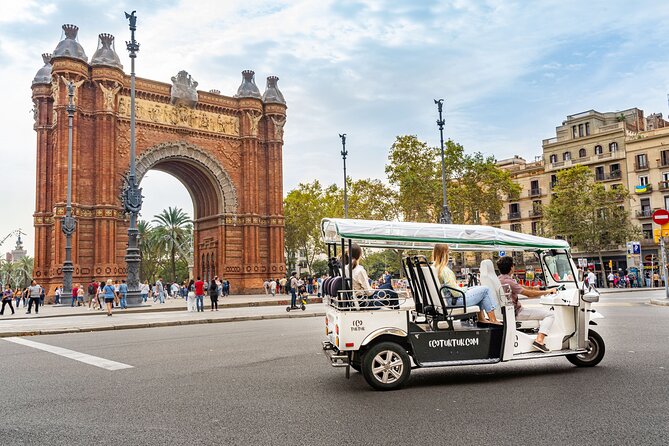
- Private eco tuk tuk time: Only your group rides, with the price set by how many tuk-tuks you need
- Gaudí highlights in a short window: Casa Calvet, Casa Milà (La Pedrera), and the Batlló house area of Passeig de Gràcia
- Sagrada Família overview without pressure: You’ll see the outside context; tickets aren’t part of this one-hour format
- Easy city navigation: Stops include Arc de Triomf and Plaza de Catalunya, both of which help you understand where you are
- Comfort-first planning: Rain/wind protection in winter, plus drivers who assist seniors getting on
- Guides with high energy: Names like Lucas, Victor, Roger, Alex, Irene, Anna, Richard, Rodrigo, Joan, and Marco show up repeatedly with praise for their setup and style
What this 59-minute Barcelona Express tour really does for you
This is a first-contact tour. Not in the fluffy sense. In the useful sense. In just under an hour, you get a guided pass through a stack of Barcelona landmarks that help you “decode” the city for the rest of your trip.
The format matters. Because the route is pre-set and the tour duration is fixed, this experience works best when you show up ready to look, listen, and connect dots. Think of it as building a mental map before you start spending time in lines, museums, or inside-ticket attractions.
Also, the “express” part isn’t only about speed. It’s about comfort. A tuk tuk lets you move through busy areas without the constant walking and stop-start frustration that can drain your energy on day one.
You can also read our reviews of more private tours in Barcelona


Price and what you’re paying for ($52.87 per person)
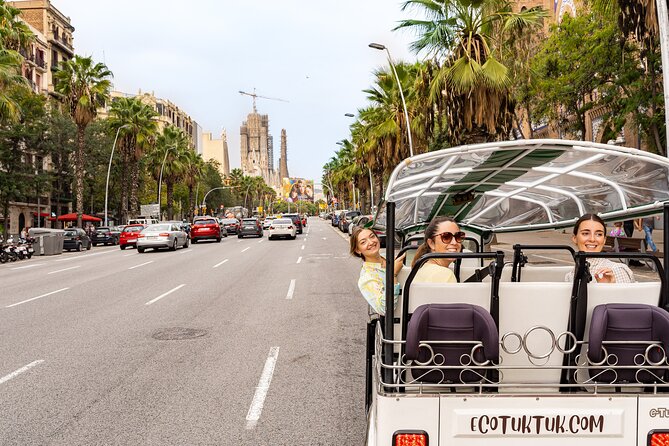
At $52.87 per person for about an hour, the value depends on your group size and how many people you have. This is a private activity, and the tuk-tuks are booked privately. The operator sets the price based on how many tuk-tuks you need, with a legal maximum of 4 passengers per tuk-tuk.
That can actually be a smart deal if:
- you’re traveling as a small group (especially 4 or fewer per tuk-tuk)
- you want a guide instead of a self-paced ride
- you want a quick orientation before committing to longer, more expensive activities
It’s less of a bargain if you’re traveling solo and can’t share the tuk-tuk cost, but the guided structure can still be worth it if your time in Barcelona is tight.
Getting to the ride: Carrer de Casp meeting point, start to finish
The meeting point is on Carrer de Casp, 13 in L’Eixample, and the tour ends back at the same spot. That matters more than it sounds—Barcelona is easy to get lost in if you hop between neighborhoods without a plan.
There’s also specific pickup guidance about using the “BSM Estació Barcelona Nord Parking” underground area. The entrance is in a glass structure near Carrer de Ribes (opposite number 25 on Carrer de Ribes). Once you’re at the door of the glass structure, you ring the doorbell once, then step inside to Floor 1 and follow the Eco Tuk Tuk signs. You can also contact the team by phone or WhatsApp at any time.
This is the kind of detail that saves your time on arrival day, especially if you’re carrying bags or you’re juggling a schedule around timed tickets later.
How the ride feels: comfort, smoothness, and real-weather fixes
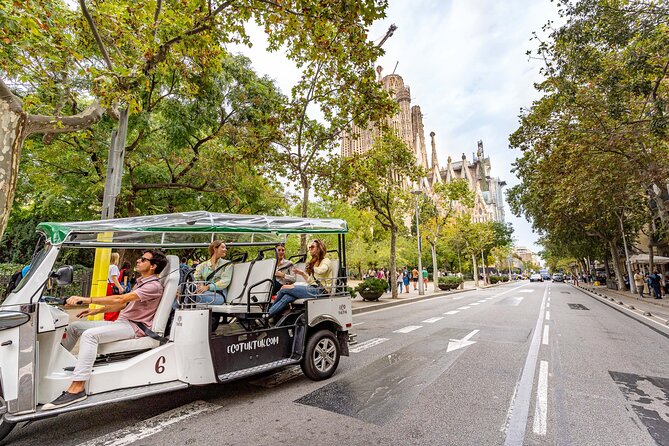
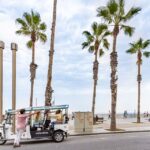
The big practical win here is that this tour is designed for comfort on the move. The tuk-tuks are suitable for seniors, and drivers can assist you getting on if needed.
Weather is handled with specifics too. The tour operates in rain or heat. In winter, the tuk-tuks have protective layers against rain and wind, plus blankets to keep you warm. On a day when you’d normally rethink sightseeing, this type of setup keeps your plans intact.
One more small but important detail: the itinerary can change due to street closures or demonstrations. If you’re planning a tight day with timed tickets right after, keep a little buffer.
The guide experience: listening, context, and names you’ll hear again
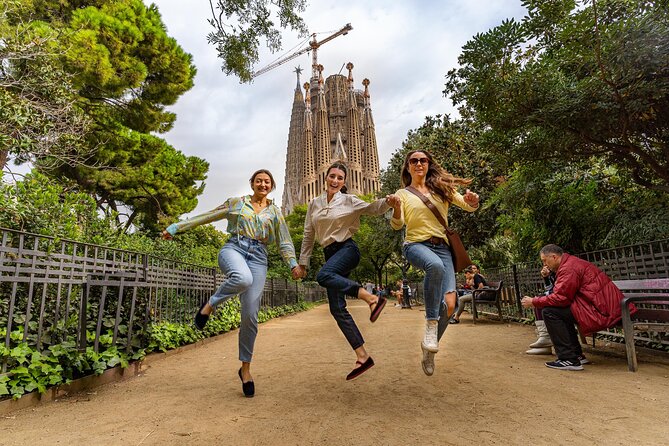
The guide is the heart of this kind of tour. In the praise you’ll see a consistent theme: guides are described as professional, enthusiastic, and fun to ride with, and they help you understand what you’re looking at instead of just rattling off facts.
Names that come up include Lucas and Victor (both praised for being informative and professional), Roger (highlighted for strong storytelling around Gaudí, the Sagrada Família, and even the bullring area), Alex (enthusiastic driver energy), and Irene and Anna (mentioned as gracious and impactful in the short time you have). Richard and Rodrigo also get credit for both history and practical city advice.
This matters because the best part of a one-hour overview isn’t memorizing every year. It’s learning what to prioritize next. On day one, that can save hours.
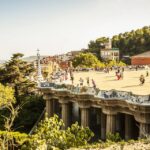


Stop by stop: what you’ll see and why it counts
Casa Calvet: Gaudí’s early Ensanche statement
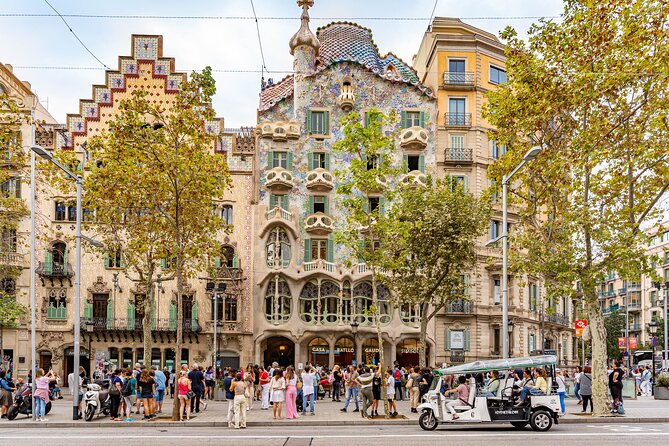
Your route starts in the Ensanche area with Casa Calvet, a modernist building designed by Antoni Gaudí and built between 1898 and 1900. It’s noted as Gaudí’s first work in Barcelona’s Ensanche (in a rental housing regime, between medians). Gaudí’s assistants—Francisco Berenguer, Juan Rubió, and Juli Batllevell—are also part of the story.
From the tuk-tuk, you’re not going to “experience” the building the way you would on an inside ticket visit. But you can still spot why it matters: it’s an early signal of the design thinking that becomes unmistakable later in his career. If you like tracing a style across time, this stop gives you a satisfying beginning point.
Arc de Triomf: the 1888 gateway you’ll keep seeing in your plans
Next up is Arc de Triomf, located at the confluence of Paseo de Lluís Companys, Paseo de San Juan, and Ronda de San Pedro. It was designed by José Vilaseca as the main entrance to the Barcelona Universal Exhibition of 1888.
This is a smart inclusion because Arc de Triomf works like a navigation landmark. Even if you don’t plan to linger, seeing it early helps you mentally anchor the northern side of the city and understand how major boulevards connect.
Plaza Monumental: a bullring with a timeline
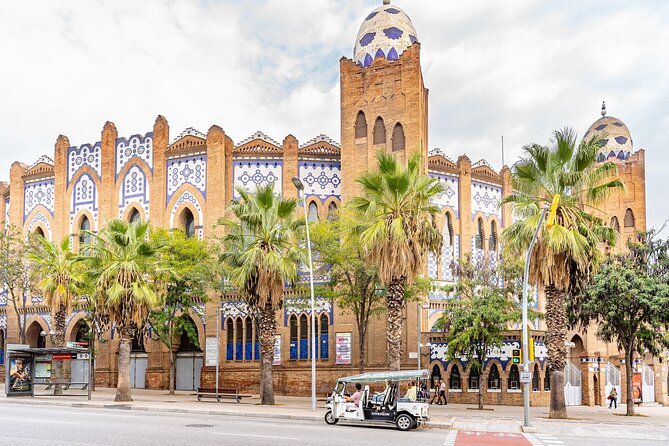
You’ll pass Plaza Monumental de Barcelona, a bullring originally inaugurated in 1914 under the name Plaza de El Sport. It was enlarged and renamed in 1916 to Monumental.
If bullfighting isn’t your thing, that’s fine. This isn’t here to recruit you to attend a corrida. It’s here because it’s a recognizable, historic piece of the city’s architectural past. Barcelona isn’t only Gaudí—this stop reminds you that the city’s identity is layered.
The Sagrada Família: masterpiece context from the outside
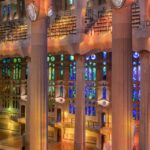
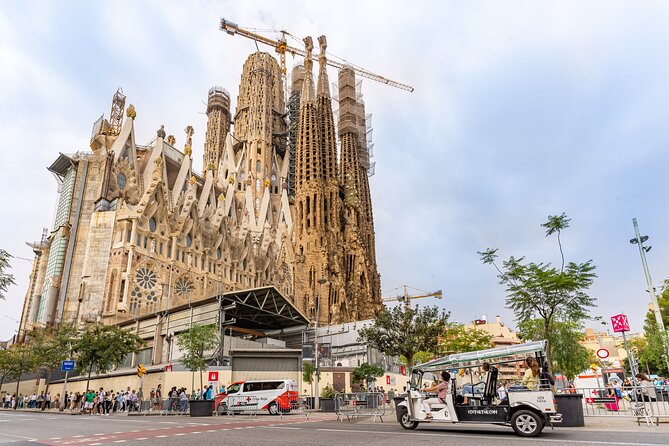
Then you get the big one: the Expiatory Temple of the Sagrada Família. This is a Catholic basilica designed by Antoni Gaudí, started in 1882, and still under construction. It’s described as Gaudí’s masterpiece and a major exponent of Catalan modernist architecture.
Here’s the key practical point for your planning: this tour option does not include attraction tickets. So on the 60-minute ride, you’ll get outside context and orientation. That can still be valuable—especially if you’re deciding later whether you want to book an interior visit, a guided tour, or a specific time slot.
If you already have Sagrada Família tickets booked for later, this ride is a great way to “meet the building” first and know how to approach it.
Casa Terradas (Casa de les Punxes): Puig i Cadafalch on Diagonal Avenue
You’ll also pass Casa Terradas, popularly known as Casa de les Punxes (Casa de los Pinchos) and designed by modernist architect Josep Puig i Cadafalch. It’s located on Diagonal Avenue.
Diagonal is one of those Barcelona corridors that can feel like “just a street” until you understand the buildings along it. This stop helps you recognize that Diagonal isn’t only about getting from A to B. It’s also a stage for architecture with its own identity.
Casa Milà (La Pedrera): UNESCO status and a turning point in Gaudí’s life
Another highlight is Casa Milà, known as La Pedrera, built between 1906 and 1910. It’s described as Gaudí’s last civil work before he dedicated himself exclusively to the Sagrada Família. In 1994, it was declared a UNESCO World Heritage Site.
If you’ve seen photos of La Pedrera, you’ll recognize the vibe immediately. On the tuk-tuk, you’re mostly observing the exterior and learning what it represents. The value here is the context: understanding it as a career turning point. That makes your later street-walks around Passeig de Gràcia feel less random.
The Batlló house on Passeig de Gràcia: a facade you can’t miss
You’ll also see one of the most famous buildings in the city designed by Antoni Gaudí at the height of modernism, created as the residence of the Batlló family. It’s described as a true work of art both outside and inside, with the facade being the first thing you notice when you walk along Passeig de Gràcia.
Again, with this being the 60-minute express format, you’re not getting a full interior experience here. What you’re getting is the payoff of immediate recognition. If your feet are tired later, you’ll still remember how the facade looked and why it’s famous.
Plaza de Catalunya: the city’s connector hub
Finally, you circle through Plaza de Catalunya, described as the link between Ciutat Vella and the Ensanche neighborhood, plus a key convergence point for public transport and major streets.
This is a clever finish point because it sets you up for your next moves. If you’re planning day-two neighborhoods, a strong sense of where you start from helps you waste less time.
No long stops on the 60-minute route (so plan your expectations)
The 60-minute version is designed with no on-foot stops made. It’s built to follow a fixed route and make photo opportunities at pre-established locations depending on duration—but for the one-hour format, you should expect mostly to see from the ride.
That’s not a flaw if you’re using this correctly. You should book it as:
- a day-one orientation
- a way to choose what to revisit later
- a comfort-first city highlights sampler
If you want lots of time for getting out, walking, and lingering, you’d likely prefer the longer duration options (where extra stops are mentioned, like Montjuïc for the 120-minute tour).
Where this tour shines—and where it doesn’t
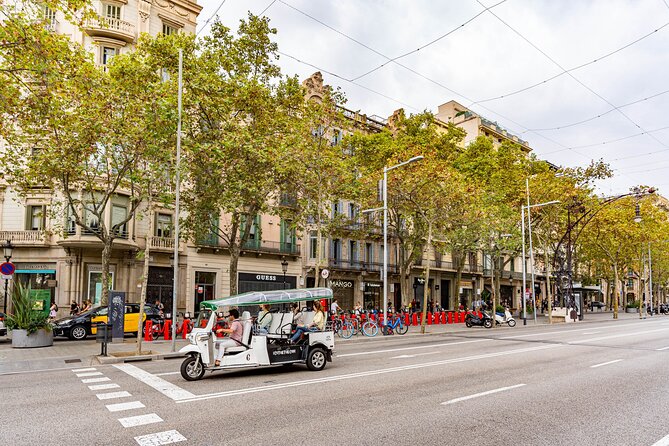
This experience is a good fit if you:
- have limited time and want the top sights in a structured way
- want a comfortable ride without spending your whole day on your feet
- like modernist architecture and want an easy entry point to Gaudí-era Barcelona
- need a plan that works even when the weather isn’t perfect
It’s not ideal if you:
- expect included entry tickets (they’re not included)
- want long photo breaks or a slow pace
- want an in-depth visit of one major attraction like the Sagrada Família inside
Should you book this Barcelona Express tour?
I think this is a strong booking when you want a quick city map more than a checklist. For many first-timers, it hits the sweet spot: you get a guided pass through major landmarks in a comfortable private setup, with a guide who can point you toward what to prioritize next.
One more reason to consider it: the guides are repeatedly praised for being professional and fun, and the ride is described as smooth, including help for an elderly traveler with knee issues. That’s a big deal when you’re choosing between “see everything” and “actually enjoy your day.”
If your schedule is tight, do this early in your trip so the rest of your planning feels easier. And if weather is an issue, remember the tour runs with rain/wind protection and warmth in winter.
If you can only spend an hour in Barcelona and you want a guided overview that helps you choose what to do next, this tour is an easy yes.
FAQ
How long is the Barcelona Express Tour in a private eco tuk tuk?
The tour runs for about 59 minutes.
Are tickets to attractions included?
No. Tickets are not included, so you’ll need to arrange entry separately if you want to go inside specific places.
Do you stop for photos during the 60-minute tour?
The tour follows a pre-established route with pre-set photo locations, but for the 60-minute option there are no stops made. Expect to see sights primarily from the ride.
Is this a private tour?
Yes. It’s a private tour/activity, meaning only your group participates.
Are babies, pets, or companion animals allowed?
The minimum age is two years, and babies are not allowed. Pets and companion animals are not allowed for security reasons.
What happens if it rains or gets very hot?
The tours take place in rain or heat. In winter, the tuk-tuks have protective layers against rain and wind, plus blankets to keep you warm.