REVIEW · BARCELONA
Barcelona: “The Secret of Cerdà” Treasure Hunt Walking Tour
Book on GetYourGuide →Operated by Mystery City · Bookable on GetYourGuide
Barcelona turns into a game. You pick up a backpack near Plaça Urquinaona and follow a treasure map to solve lock puzzles tied to a mystery from an eccentric architect’s past.
I like the way this hunt links five top sites in the city center with short Barcelona history stories you actually pay attention to. It’s not just sightseeing. It nudges you to notice details, read clues, and slow down.
One consideration: it’s designed for adults, and it’s not the easiest choice if you plan to go in not ideal alone. Also, you may stretch past the 2-hour game time if you stop for photos or snacks.
Key takeaways before you go
- Self-guided but structured: you follow the map from stop to stop, solving challenges at each one
- Backpack of tools: treasure map, book of challenges, and a treasure box with locks
- Five city-center stops: Illa de la Discòrdia, the Gothic Quarter, Eixample, Plaça de Catalunya, plus Palau de la Música Catalana
- Puzzle help exists: QR code support is available for tricky parts
- Private group play: you play with your own group, even if others book the same time
- Works well with teens: it can be a fun family activity for 7+ when parents join in
In This Review
- A treasure hunt that turns Barcelona errands into a mystery walk
- Start at Carrer de Trafalgar: your backpack is the real ticket
- Illa de la Discòrdia: the first story sets the tone
- Gothic Quarter: where the streets make the clues easier to read
- Eixample District: puzzles that reward patience (and good teamwork)
- Plaça de Catalunya: a handy reset point for your timing
- Palau de la Música Catalana: the lock-codes phase gets real
- The final city-center segment: finishing the mystery and returning to base
- How long it really takes, and what makes you run over
- Price and value: what you actually get for $26
- Who this hunt is best for (and who should rethink)
- Should you book The Secret of Cerdà?
- FAQ
- Where is the starting location?
- What do you receive at the start?
- How long does the experience take?
- Is this a guided tour or fully self-guided?
- How many places do you visit?
- What languages are available?
- Is it private for my group?
- Is it wheelchair accessible?
- Is it suitable for children, and should you play alone?
- What are the cancellation rules and pay-later options?
A treasure hunt that turns Barcelona errands into a mystery walk
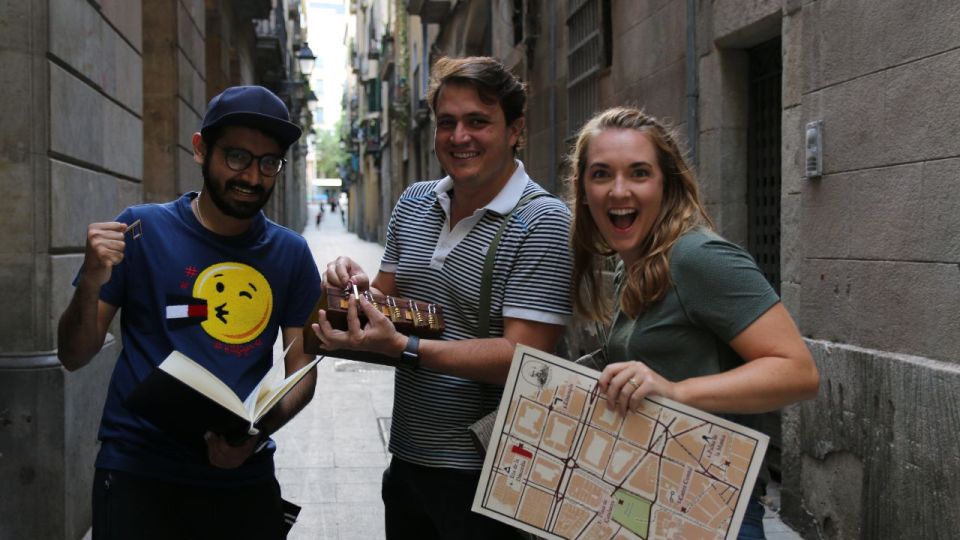
This is one of those experiences where the city feels different in a good way. Instead of racing from one landmark to the next, you wander with a purpose: find clues, solve challenges, and open a treasure box at the end. The format is simple, but it keeps your brain switched on.
You’re not dealing with a “follow the guide” script for hours. You grab your kit, get going, and let the game rhythm set the pace. It’s like a walk-based escape room, spread across some of Barcelona’s best-known areas.
And the best part is the gentle pressure it creates. You’ll notice small things you’d normally skip. You’ll also get a built-in reason to slow down, look up, and ask yourself how the next clue connects to what you just saw.
Start at Carrer de Trafalgar: your backpack is the real ticket
Your experience starts at Carrer de Trafalgar, 17. It’s near Plaça Urquinaona, and that location matters because it makes the whole route feel doable on foot. You’re in the middle of things, so you’re not spending your time commuting across the city.
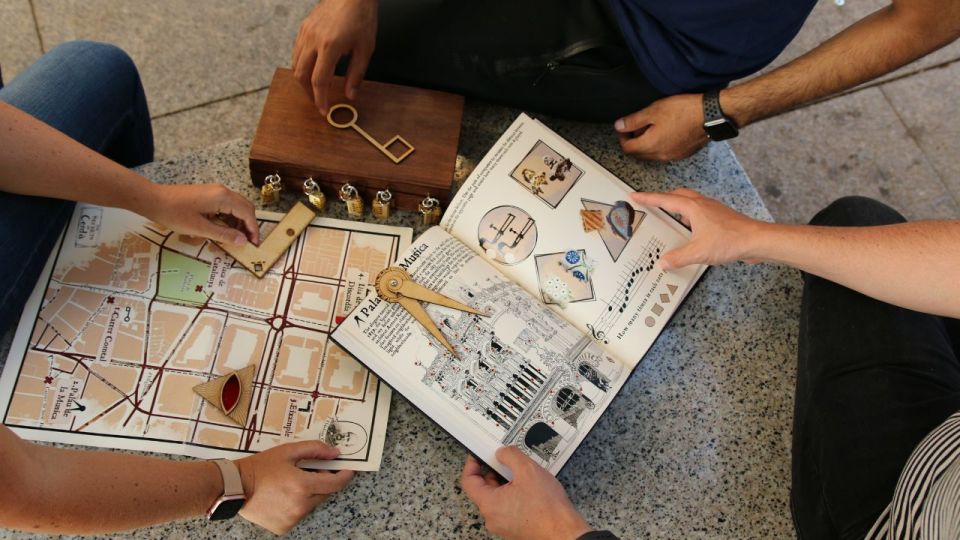
At the start, you pick up a backpack stocked with everything you need:
- a treasure map
- a treasure box
- an ancient book of challenges
- magical tools (used to complete tasks and interact with the game setup)
You’ll also choose your language support. The experience is available in English, Spanish, Catalan, and French, and that helps a lot if your group has mixed language comfort.
A practical tip: bring comfortable shoes. The “game takes 2 hours,” but you’re encouraged to take your time to explore along the way. Even if you move briskly, it’s still a walking experience through multiple neighborhood segments.
You can also read our reviews of more walking tours in Barcelona



Illa de la Discòrdia: the first story sets the tone
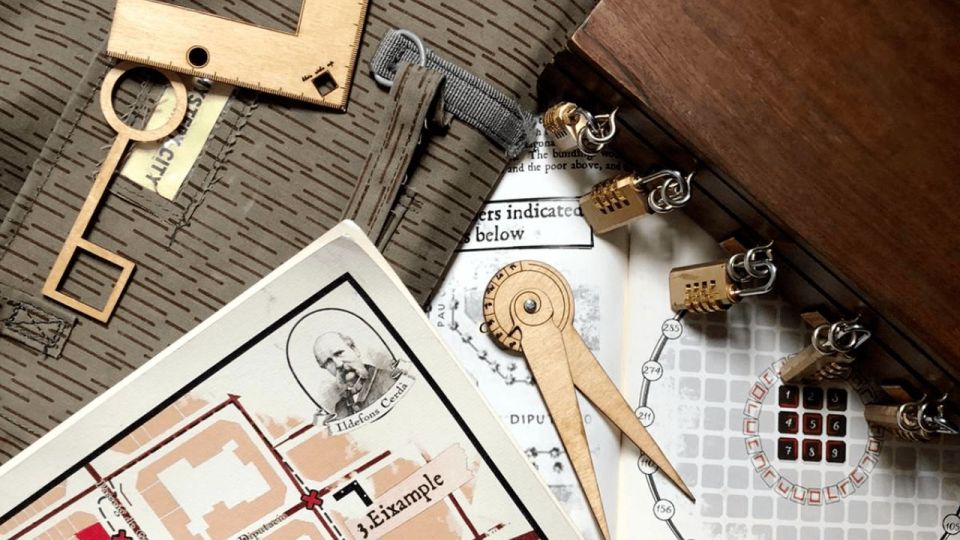
Your first sightseeing stop is Illa de la Discòrdia, where you’ll spend about 20 minutes. This is where the experience starts to feel like a real mystery instead of a casual stroll.
At each location, you’ll do two things:
1) get a short story that ties the clue to Barcelona’s past
2) solve a challenge that gives you what you need to work on the treasure box locks
For Illa de la Discòrdia, treat it as your warm-up. Don’t rush. The early puzzles are about getting you comfortable with the game style: read carefully, follow the treasure map, and don’t assume the answer is the first thing you notice.
Possible drawback here: if your group is the type that wants instant results, the first challenge may feel like it’s asking you to slow down and think. Give it a minute. Once you get the rhythm, the rest of the hunt usually feels smoother.
Gothic Quarter: where the streets make the clues easier to read
Next up is the Gothic Quarter, again about 20 minutes. This area is great for a puzzle route because the streets naturally invite you to look for details.
In a normal visit, you might wander through and soak up atmosphere. On this hunt, you’ll be doing something more focused: searching for the information that lets you progress at the treasure box.
Here’s the key value for you: puzzle-solving changes how you experience a place. You’re less likely to tune out when you pass by something you’ve seen in photos. Instead, you’re forced to make a connection between what you read and what you see in front of you.
How to avoid frustration: when you hit a tricky clue, use the game supports. There is QR code support available, and at least some QR codes are used for guidance when parts get hard. That’s a big deal for mixed-skill groups.
Eixample District: puzzles that reward patience (and good teamwork)
Then the route heads into Eixample, also about 20 minutes. This segment is where the hunt really starts to feel like an outdoor escape room.
You’ll keep repeating the same formula at each stop: history story, challenge, then progress toward opening the locks. Because Eixample is more structured than some older areas, you may find it easier to slow down and scan for what the clue is asking for.
This is also where I think teamwork shines. If you’re traveling with someone who loves puzzles and someone else who likes photos, you can split tasks without arguing. One person can handle the clues and the other can keep an eye on where the map wants you to go next.
Possible drawback: if you’re traveling with very young kids, this is still an adult-designed format (though it can work for children 7+ when parents are fully involved). Kids in that range often enjoy the challenge, but they’ll likely need active help to stay on track.
Plaça de Catalunya: a handy reset point for your timing
At Plaça de Catalunya, you’ll have another 20-minute stop. I like this part of the route for a simple reason: plazas act like resets. You can catch your breath, check the map, and make sure everyone’s aligned before you move to the next segment.
This is one of the places where you might notice how the hunt’s pacing works. The experience is listed as about 2.5 hours total, but the actual game takes around 2 hours, and you’re encouraged to slow down for photos, shopping, and extra exploring.
If you want to keep things stress-free, use Plaça de Catalunya to do a quick regroup:
- confirm your group’s next step
- check you have what you need in the treasure box setup
- decide whether you’re going to take short breaks now or save them for later
Possible drawback: it’s a busy central square. That can make puzzle-solving a little harder if noise and crowds make it tough to focus on the challenge book.




Palau de la Música Catalana: the lock-codes phase gets real
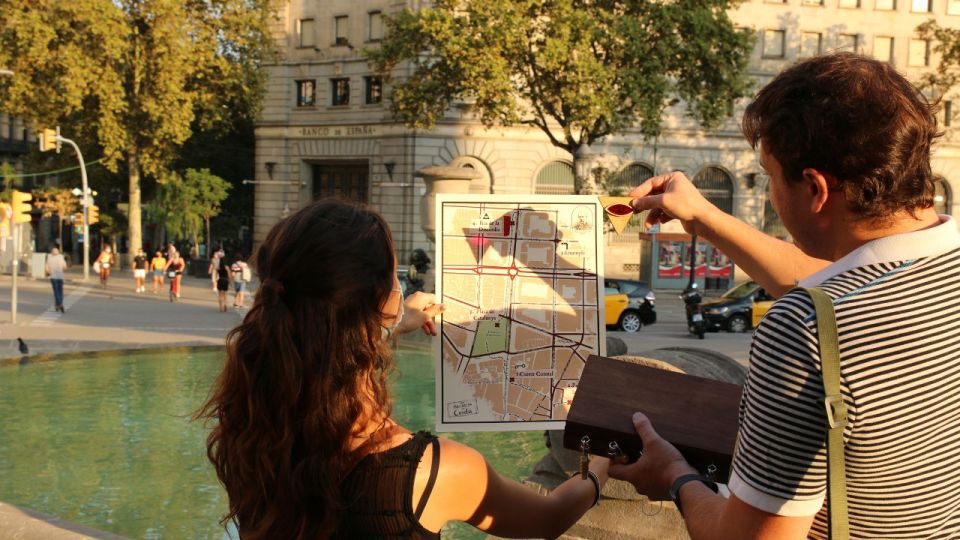
Next comes Palau de la Música Catalana (listed as the Palace of Catalan Music). You’ll spend about 20 minutes here, and this is likely one of your most memorable stops visually, even if you don’t care about architecture trivia.
The game mechanics keep building. You’ll be working on another history-based clue and another challenge tied to one of the locks on your treasure box. This is where most groups start to feel the satisfaction of progress.
From the puzzle perspective, think of it like this: each stop gives you a piece of the final mechanism. By the time you reach the later locations, you’re not just learning Barcelona through stories. You’re actively trying to solve the mystery that ties everything together.
A practical tip: keep your treasure box and book organized. If you let the pages get messy, you’ll waste time flipping around later. A small bit of organization keeps your momentum.
The final city-center segment: finishing the mystery and returning to base
After Palau de la Música Catalana, there’s a final sightseeing segment in the city center (also about 20 minutes). The exact nature of that last segment is less important than the purpose: it helps you wrap up the remaining challenges so you can finish the treasure box.
At this stage, the goal is clear:
- solve the remaining challenges
- open all the locks on the treasure box
- return to the start point to claim your prize
This is the payoff moment. The experience is built around the act of opening the box and completing the story. It’s not just a walk with stops. It’s a goal you work toward.
Possible drawback: if you take long breaks at earlier stops, you might feel rushed at the end. I’d rather you plan a relaxed pace than sprint for the finish. But try not to get so absorbed in shopping that you forget the game still needs completion.
How long it really takes, and what makes you run over
The schedule says the game takes about 2 hours, and you’re encouraged to take your time to explore. That’s accurate in real life. You’ll likely spend more time than you think, especially if you stop for photos, snacks, or a quick look around between clues.
The most common time-sinks are:
- decoding a tricky challenge (even with QR code support)
- coordinating a group if everyone is solving in parallel
- lingering at stops once the puzzle is completed
One review-style pattern I’ve seen with this kind of experience is simple: people often run a bit past the “time indicated,” but they don’t stop along the way because the walk is part of the fun. So if your day is tightly booked, I’d plan a little buffer.
Price and value: what you actually get for $26
At $26 per person, this sits in the “reasonable splurge” category for Barcelona. Here’s why it can feel like good value instead of a gimmick:
- You’re paying for a structured route across central neighborhoods, not just a ticket to one sight.
- You get hands-on materials: the backpack kit, treasure box, map, and challenge book.
- The time spent is meaningful. You’re busy, not just passing time between museums.
Also, bookings are private for your group. Even if others are playing at the same time, you won’t be mixed together. That matters if you’re traveling with family, friends, or a couple who wants a calm game pace without other groups affecting your focus.
Who this hunt is best for (and who should rethink)
This is built for adults, but it’s suitable for kids 7+ when they play with their parents. That parent involvement part is important. The puzzles require attention and some reading, so this isn’t a “drop kids off and wander” type of activity.
It’s also not ideal if you’re planning to go completely solo. The experience suggests you don’t play alone, which is sensible. Even with QR help, having at least two sets of eyes makes the challenges more fun and faster.
Best fit:
- couples who like low-pressure puzzles
- families with kids who enjoy games and can read the challenge book with guidance
- small friend groups who want an activity that isn’t another long museum line
Should you book The Secret of Cerdà?
If you want Barcelona to feel interactive, not just scenic, I’d book this. You’ll get a walk through classic areas, a mystery with a real endpoint, and puzzle tasks that nudge you to pay attention to details you’d normally skip.
I’d hold off if your schedule is extremely tight or your group prefers sightseeing with minimal thinking. And if you’re traveling solo, I’d try to line up a small group partner, because the format is more fun when you can discuss clues out loud.
If that sounds like you, this is a solid use of a morning or afternoon. You’ll leave with a prize from the treasure box and a city experience that feels personal, not just photographed.
FAQ
Where is the starting location?
It starts at Carrer de Trafalgar, 17.
What do you receive at the start?
You pick up a backpack that includes a treasure map, a treasure box, an ancient book of challenges, and magical tools.
How long does the experience take?
The game takes about 2 hours, and the total duration is listed as 2.5 hours. You’re encouraged to take extra time to explore and enjoy photos and shopping.
Is this a guided tour or fully self-guided?
It’s a self-guided adventure. You pick up your backpack near Plaça Urquinaona and then follow the treasure map and challenges at each stop.
How many places do you visit?
The route takes you to five top sites in the city center.
What languages are available?
You can play in English, Spanish, Catalan, or French.
Is it private for my group?
Yes. All bookings are private, and you play with your own group. If other people book the same time, they play separately.
Is it wheelchair accessible?
Yes, it is listed as wheelchair accessible.
Is it suitable for children, and should you play alone?
It’s designed for adults, but it is suitable for children 7+ when they play with their parents. It’s not recommended to play alone.
What are the cancellation rules and pay-later options?
There’s free cancellation up to 24 hours in advance for a full refund. You can also reserve now and pay later.