REVIEW · BARCELONA
Barcelona: El Born Ghost Walking Tour.
Book on Viator →Operated by Icono Spain Tours · Bookable on Viator
Night turns Barcelona into a storybook. This El Born Ghost Walking Tour pairs Barcelona’s backstreets with spellbook-style tales—exorcisms, witchcraft talk, and bewitched convent legends—starting right under the Arc de Triomf. I really like how the guide ties the mood to real landmarks like Church of Santa Maria del Mar, then adds local supernatural material from Fantasmes de Barcelona.
Two things I especially like: first, the walking route takes you past sights you’d miss in daylight, in Ribera and Sant Pere areas. Second, the guide storytelling can be top-notch—many people mention a guide named Christina as friendly, enthusiastic, and especially good at keeping the group engaged. One thing to consider: this is more folklore and dark history than jump-scare hauntings, so if you need it very scary, you may want to set expectations.
In This Review
- Key Highlights to Know Before You Go
- Arc de Triomf at Night: Where the Tour Gets Its Atmosphere
- The “Ghost” Part: Folklore, Exorcisms, and What’s Actually Being Said
- Stop 1: Arc de Triomf and the 1888 Exposition Backstory
- Sant Pere Streets: Commerce by Day, Apparitions by Night
- Sant Pere Square: The Monastery That Couldn’t Stay Hidden
- El Born Backstreets: Real Snow and a Roman Road Corner
- Plaça d’En Marcús: Charity Works with a Dark-Story Edge
- Camí del Born and Passeig del Born: The City’s Paths Above Hidden Stories
- Santa Maria del Mar: Catalan Gothic Built by the People
- How Scary Is It Really? Know What You’re Signing Up For
- Price and Value: Is $21.60 Worth Two Hours?
- Tips That Make the Walk Better (and Easier)
- Should You Book the Barcelona El Born Ghost Walking Tour?
- FAQ
- How long is the Barcelona El Born Ghost Walking Tour?
- What does the tour cost?
- Where do I meet the guide?
- Where does the tour end?
- Is it offered in English?
- What if the weather is bad?
- Are food and drinks included?
- What should I wear?
- Is it suitable for most people?
- Can I cancel for a refund?
Key Highlights to Know Before You Go
- Arc de Triomf start at night: A dramatic, easy-to-find kickoff point for the 1888 fair-era monument.
- Stories tied to Barcelona’s streets: You’ll hear legends connected to Sant Pere, El Born, and the Ribera quarter.
- Santa Maria del Mar as a payoff: Catalan Gothic architecture with a workers-built backstory.
- Guide energy matters: Many guests single out Christina for keeping the pace fun and the stories clear.
- Comfort over costumes: Narrow lanes and cobblestones mean good shoes are not optional.
Arc de Triomf at Night: Where the Tour Gets Its Atmosphere
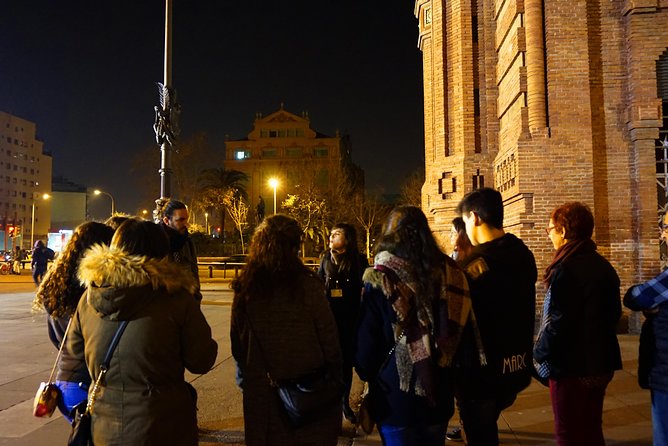
You meet at Passeig de Lluís Companys in Ciutat Vella, near the Arc de Triomf. It’s a big landmark in a wide square, so it’s actually a smart way to start a night walk. The guide is easy to spot too—people note a red umbrella under the arch, which helps when the area is dark and groups spread out.
Timing also helps you plan your evening. The tour runs in the evening, and departure times differ slightly: 8:30pm on Fridays and 8:00pm on Saturdays. Expect about 2 hours on foot, in real streets that can feel tight and a bit uneven.
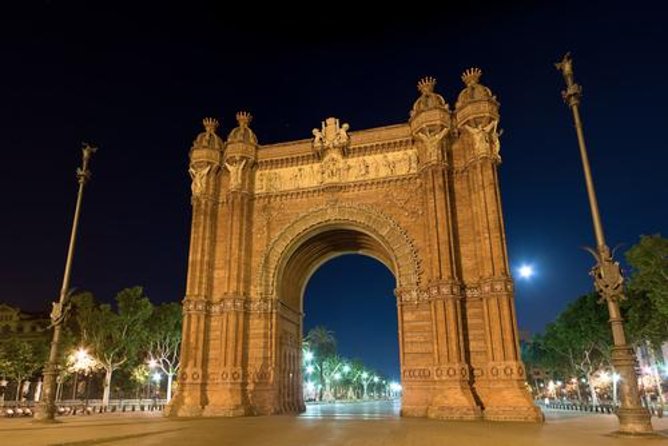
This opening is more than a photo stop. The Arc de Triomf was built for the 1888 Universal Exposition, in a redbrick, Neo-Mudéjar style. That mix of style and history gives your guide an easy starting point: you can feel how Barcelona used “theaters” of public life, fairs, and grand entrances—then later you hear what happened behind the scenes in older neighborhoods.
You can also read our reviews of more walking tours in Barcelona


The “Ghost” Part: Folklore, Exorcisms, and What’s Actually Being Said
Let’s clear up the word ghost. The tour leans hard into exorcisms, witchcrafts, bewitched convents, eerie apparitions, and other supernatural-sounding stories tied to Barcelona. It also references haunting material connected to Sylvia Lagarda-Mata’s Fantasmes de Barcelona.
But here’s the balanced truth: many people describe it as more history and folklore than scary horror. The guide may frame some stories as myths, not documented facts. That can still be fun—because the goal isn’t to convince you of the paranormal. It’s to show you how fear, religion, and local legend shaped how people talked about their city.
If you want thrills, this tour can deliver plenty of spooky mood through storytelling—especially when the guide sets the tone. If you want true paranormal activity or modern hauntings, you might feel it’s not that kind of ghost tour.
Stop 1: Arc de Triomf and the 1888 Exposition Backstory
The Arc de Triomf sits at the head of the avenue that led into the main entrance of the 1888 fair in Parc de la Ciutadella. The guide’s angle here is practical: this isn’t just a pretty gate. It shows how Barcelona once staged its own identity—using decorative styles that were fashionable at the time, including Catalan Art Nouveau tastes mixed into the Neo-Mudéjar look.
Why it works on a ghost walk:
- It gives you a clear start point and a clean visual anchor.
- It helps your guide build mood before you move into the older, narrower streets where the legends pick up.
Practical note: take a quick look before everyone starts moving. Once you’re in the alleys, your best “find the city” moments come from listening and watching your guide.
Sant Pere Streets: Commerce by Day, Apparitions by Night
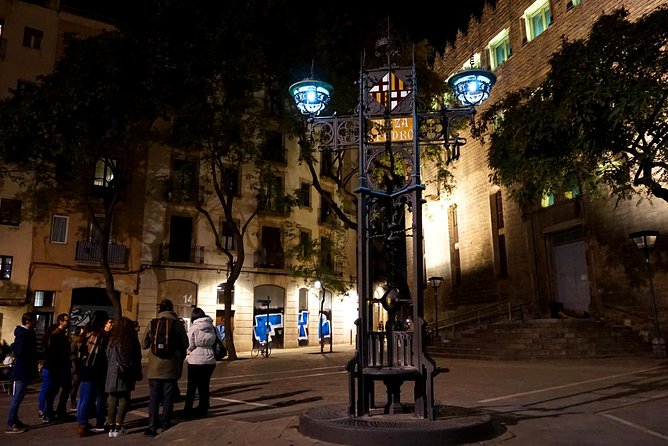
The route shifts into the Sant Pere area, and that matters because this wasn’t just a residential neighborhood. Sant Pere and Santa Caterina were major centers for commercial and textile activity starting long ago and continuing into the 19th century. You’ll hear that there were hundreds of textile businesses, including silk and cotton factories and printing workshops.
Then you get the street-level history. Carrer del Portal Nou has ancient origins as an entrance road that connects back to a Roman route coming from France. Later, porticoes lined the street to support commercial life, though most were demolished in the early 19th century. Today, only a few remain.
The ghost-leaning connection here is how the neighborhood’s layers create fertile ground for legends. You’ll be told about reports of mysterious apparitions seen late at night—exactly the kind of detail that makes you glance down a dark doorway and think twice.
Sant Pere Square: The Monastery That Couldn’t Stay Hidden
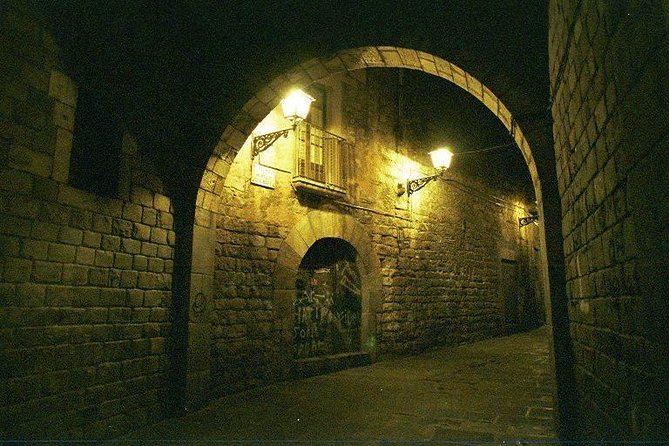
From the surrounding streets you reach Sant Pere Square, tied to the former Monastery of Sant Pere de les Puel·les. Here’s the story that turns this stop serious and eerie:
- The monastery was founded before the first millennium as a refuge for noble nuns.
- It was repeatedly destroyed by invasions, wars, and fires.
- It was rebuilt many times, and after reconsecration in 1143 it briefly enjoyed prosperity.
- Eventually, it was confiscated and used as a prison, and the nuns were forced to leave permanently.
Today, the square is surrounded by legends of ghostly nuns—staying in place because of centuries of suffering.
What I like about this stop is that it doesn’t rely on spectacle. It gives you a real place, a real pattern of hardship, and then explains how the city’s memory can harden into haunting stories. If you enjoy “dark history with a chill,” this is a standout.


El Born Backstreets: Real Snow and a Roman Road Corner
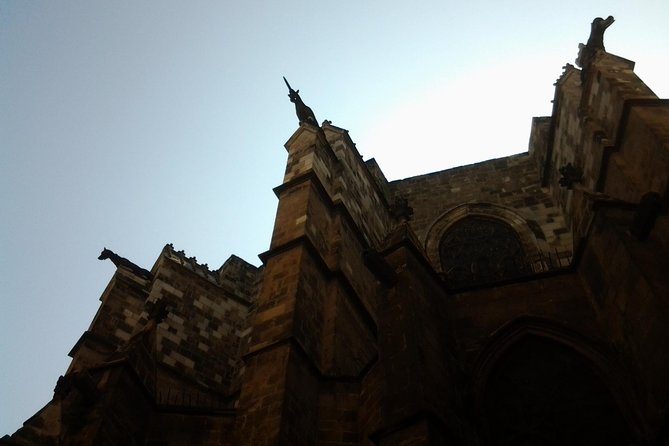
Next, you move into El Born, where the streets get narrower and the atmosphere changes fast.
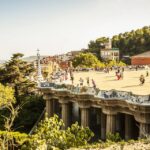
One stop focuses on a narrow, picturesque street that sold real snow long before refrigerators existed. People used it to cool drinks, preserve food, and even make ice cream. It’s a fun detail, but it also shows a deeper point: Barcelona’s past can be practical and weird at the same time.
Another stop brings you to a mysterious corner linked to the old Roman road connecting Barcelona to Europe. The guide points toward the now-notorious reputation around Hostal Flor de Lliri, using it as a hook into the kind of stories that attach themselves to older routes and older buildings.
This part of the walk rewards attention. Watch where your guide stops and what direction you’re facing. Many turns are subtle, and you’re on cobblestones in dark corners, not a lit museum corridor.
Plaça d’En Marcús: Charity Works with a Dark-Story Edge
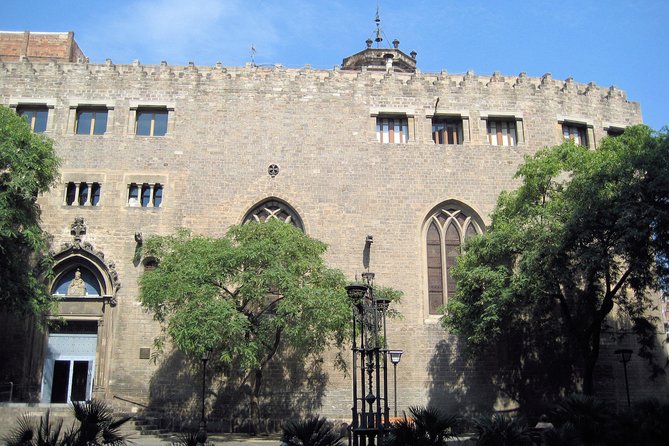
Then comes Plaça d’En Marcús, named after Bernat Marcús, a wealthy 12th-century benefactor. His story is more than a name plaque: he funded charity works including a chapel and a hospital for the poor and pilgrims.
Why this fits a “ghost” tour:
- Even when the legend seems supernatural, the tour often links back to human needs—power, punishment, charity, and desperation.
- It balances the horror angle with a reminder that medieval and early modern cities ran on real institutions and real compassion too.
If you like tours that don’t treat darkness as the only theme, this stop helps keep the experience grounded.
Camí del Born and Passeig del Born: The City’s Paths Above Hidden Stories
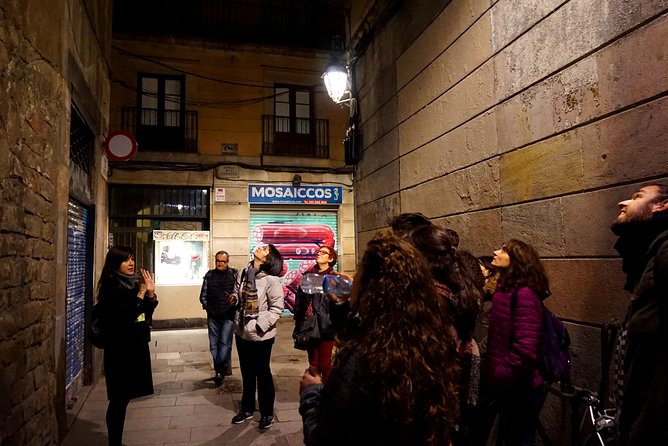
You’ll hear about the original Camí del Born, described as an 11th-century coastal path in what’s called the Vilanova del Mar area. Later, those lands were granted to influential citizens by Count Ramon Berenguer IV.
Then you move to Passeig del Born, which has a layered reputation. It used to be a site of medieval jousts, then became linked to the Inquisition, with the implication that darker events hid beneath a charming facade.
This “nice street, bad secrets” contrast is one of the reasons the tour works at night. In daylight, you might treat a street like a street. At night, with stories attached, it feels like you’re walking over history that people tried to cover up.
Santa Maria del Mar: Catalan Gothic Built by the People
The finale is Basilica of Santa Maria del Mar, built between 1329 and 1384 in Catalan Gothic style. The tour explains a detail that really changes how you see the building: it was funded and built by Ribera’s residents, especially the bastaixos—workers who carried heavy stones from Montjuïc over long distances.
Compared with Barcelona’s cathedral, this one is presented as belonging to the people. That makes sense of why it can feel different in person—more tied to everyday builders than to distant power.
Why this is a strong ending:
- You finish at a dramatic architectural payoff after the darker stories.
- You get closure with a place that’s beautiful, not just scary.
- It’s a clear destination square—so you’re not wandering off with no end point.
How Scary Is It Really? Know What You’re Signing Up For
Based on the way the tour is described and the way guests talk about it, I’d call this a spooky-meets-history walking tour. There are exorcisms and witchcraft-style tales, and the guide works to create atmosphere. But a lot of the “ghost” feeling comes from the content being folklore, plus the realism of walking through old neighborhoods at night.
So who should go?
- You’ll probably love it if you like medieval Barcelona, legends, architecture, and story-driven walks.
- It’s also a solid choice if you want something more engaging than a standard sightseeing route but not too intense.
Who might bounce?
- If you’re expecting strictly documented hauntings or very modern paranormal sightings, you might find the subject matter mostly older legends.
- If you struggle with narrow streets and cobblestones, plan on taking it slow. This tour keeps moving.
Also, timing can affect your fear level. Some guests note that the sun can still be out a bit earlier than expected, which can reduce the horror vibe. Either way, you’ll still get the night setting and the storytelling.
Price and Value: Is $21.60 Worth Two Hours?
At $21.60 per person for about 2 hours, this is priced like a value-minded walking tour. You’re paying for:
- A professional guide
- A focused route in neighborhoods you might not pick on your own after dark
- A guided narrative that links streets to legends
- A mobile ticket option (good for quick check-in)
Food isn’t included unless stated. That’s normal for walking tours, but it’s worth planning: Barcelona has late-night habits, so you can eat after instead of dragging snacks into the route.
Is it worth it? If you enjoy stories and seeing the Gothic-adjacent areas of the city without turning it into a checklist, yes. If your main goal is jumpy fright, the value will depend on how much you like folklore-style storytelling.
Tips That Make the Walk Better (and Easier)
These are the practical things that help you get the most out of the night.
- Wear comfortable shoes. You’re walking on cobblestones and through narrow streets.
- Arrive a few minutes early. The Arc de Triomf square is large, but the guide should be visible under the arch.
- Stay close to the group. The route crosses streets and turns quickly; getting separated can happen.
- Use the bathroom before you go. The tour is two hours with multiple stops, and there’s no mention of a built-in break.
- Dress for all weather. The tour runs in all weather conditions, so bring a layer even if Barcelona looks mild.
One more tip: the finish point is Santa Maria del Mar, so plan how you’ll get there from dinner, or how you’ll continue after the tour. You’ll end in a different place than where you started.
Should You Book the Barcelona El Born Ghost Walking Tour?
Book it if you want a night walk that’s part storytelling, part local folklore, and part real architecture—with an ending at one of the city’s most rewarding Gothic churches.
Skip it if you’re chasing a very intense ghost-hunt experience with modern hauntings or you need the stories to be strictly scary. This tour is about legends and the darker side of the city’s past, delivered through a lively guide and a route that shows you Barcelona after dark.
If you like your Barcelona with a little unease in the air and a lot of great street-level detail, this is an easy yes.
FAQ
How long is the Barcelona El Born Ghost Walking Tour?
The tour runs for about 2 hours.
What does the tour cost?
It’s priced at $21.60 per person.
Where do I meet the guide?
You start at Passeig de Lluís Companys in Ciutat Vella, Barcelona, Spain, near Arc de Triomf.
Where does the tour end?
The tour finishes at Basílica de Santa Maria del Mar, Plaça de Santa Maria, 1, Ciutat Vella, Barcelona, Spain.
Is it offered in English?
Yes. The tour is offered in English.
What if the weather is bad?
It operates in all weather conditions, so dress appropriately.
Are food and drinks included?
No. Food and drinks are not included unless specified.
What should I wear?
Comfortable shoes are recommended, since you’ll be walking through backstreets and on cobblestones.
Is it suitable for most people?
The tour notes that most travelers can participate.
Can I cancel for a refund?
Yes, you can cancel for free up to 24 hours in advance for a full refund.