REVIEW · BARCELONA
Barcelona 2-Hour Gothic Walking Tour
Book on GetYourGuide →Operated by Turisme de Barcelona · Bookable on GetYourGuide
Barcelona’s Gothic Quarter makes more sense with a guide. This 2-hour walk turns confusing lanes into a clear timeline, from Roman Barcino to medieval Barcelona, with you stopping at standout historic corners. I especially loved the focus on Saló del Tinell and the chance to see the Cathedral cloister up close; my one caution is that you’ll be walking for the full two hours, so bring comfy shoes and a drink.
If you’ve ever stared at old stonework and wondered what you’re looking at, this tour helps you decode it quickly. You also get a structured route with guided stops around the Barcelona Cathedral area, the Chapel of Santa Àgata, and major historic squares, so the Gothic Quarter feels less like random wandering. And if you book the English version, you get a free add-on visit after the walk to the Museu Frederic Marès, which is a fun way to keep the momentum going.
You should consider this tour if your first goal in Barcelona is context: understanding what’s around you before you start picking tapas spots. It’s also a good way to spot what you want to revisit later, like the places where daily life still flows through ancient streets.
In This Review
- Key things I’d look for on this Gothic Quarter walk
- Entering Barcelona’s Gothic Quarter on a tight, smart route
- Meeting at Plaça Seu and starting without getting lost
- The first walking stretch: squares, façades, and medieval street rhythm
- Saló del Tinell and the Cathedral zone: where you slow down for meaning
- Museu d’Historia de Barcelona stop: seeing the Quarter’s story as a whole
- Roman Temple of Augustus: a small shock of history
- Plaça Sant Felip Neri: a quiet square that hits emotionally
- The Royal and religious stops that connect power and architecture
- English-tour bonus: Museu Frederic Marès after your walk
- Price and value: why $32 can be a smart first investment
- Who should book this Gothic Quarter walking tour?
- Should you book it?
- FAQ
- How long is the Barcelona Gothic Quarter walking tour?
- Where do I meet the guide?
- Is the tour offered in English?
- What’s included besides the walking tour?
- How much does it cost?
- Can I cancel for free?
Key things I’d look for on this Gothic Quarter walk
- Saló del Tinell in context: you’re not just near it; you’re told what makes it important.
- Cathedral cloister time: a quieter, more detailed look than most quick visits.
- Roman Temple of Augustus: Roman Barcelona shows up in an unexpected medieval courtyard setting.
- Plaça Sant Felip Neri’s mood: one small square with a big emotional weight and real character.
- Museu Frederic Marès for English tours: a free, specific cultural follow-up after you finish walking.
Entering Barcelona’s Gothic Quarter on a tight, smart route
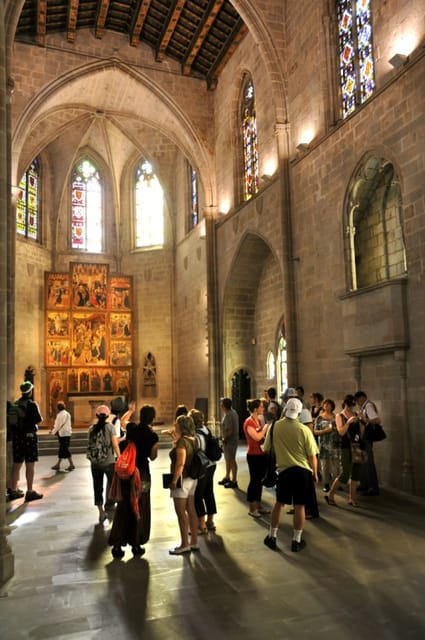
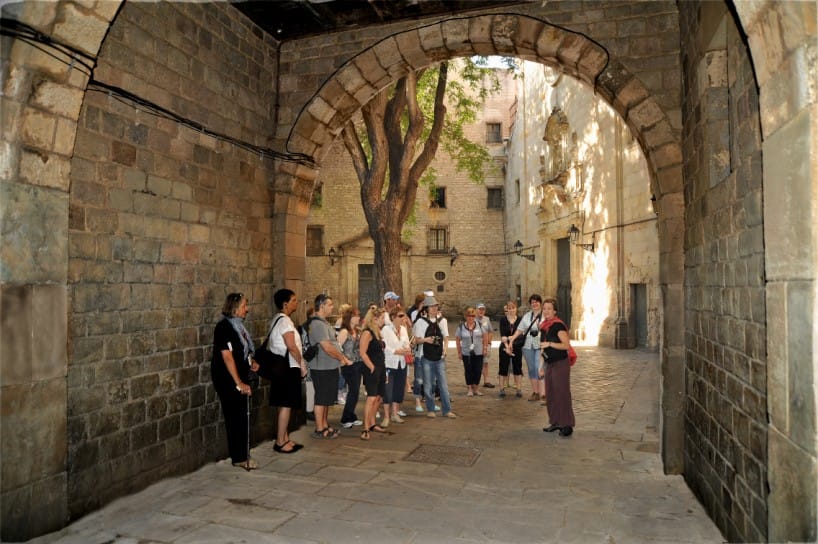
This is the kind of tour that helps you get oriented fast. The Gothic Quarter can feel like a maze of tight streets and beautiful stone facades, but that beauty also hides the logic. With an official local guide leading the way, you start to notice patterns: where power sat, where merchants worked, and where religious life shaped the streets.
You’ll be walking through the heart of the Gothic areas with stops tied to major architectural landmarks and squares. The biggest value is that you’re seeing layers of the city in a short stretch. You move from Roman-era remnants connected to Barcino into medieval Gothic grandeur, and the guide ties it all together so it clicks instead of just looking old.
The pace is built for a two-hour window. That matters, because many Barcelona walks are either too short to make sense of the site clusters, or too long when you’re already juggling Sagrada Família reservations and beach plans. Here, you get a lot of important stops without feeling like you need a full day and a second pair of shoes.
You can also read our reviews of more walking tours in Barcelona



Meeting at Plaça Seu and starting without getting lost
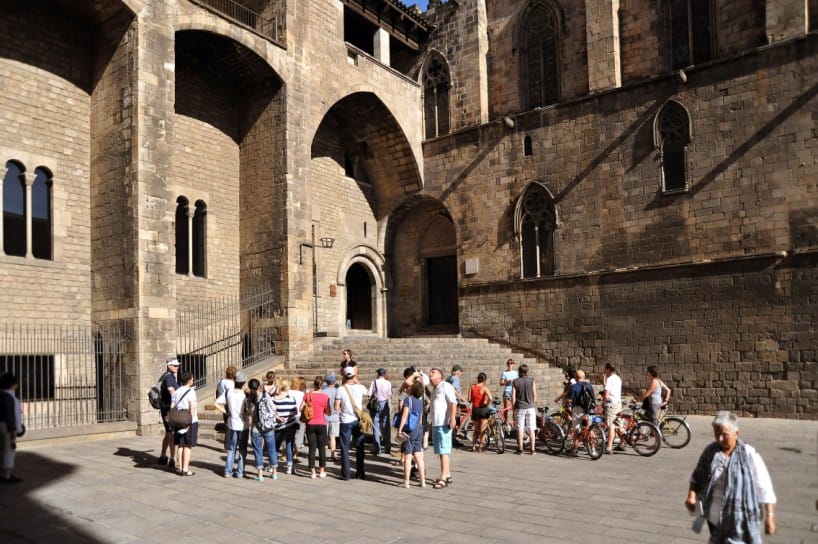
You meet at the tourist information office, looking for the little i symbol. The tour also points to Plaça Seu as the starting and ending area (so you’re not sent across the city and dropped somewhere inconvenient).
This matters more than it sounds. In the Gothic Quarter, a wrong turn can dump you into a side street with no real landmarks. Starting from a clear meeting point helps you trust the route and settle in quickly. I’d treat the first few minutes as your orientation warm-up: get your bearings, listen for what the guide is emphasizing, and don’t worry if the streets look similar at first. By the time you hit the Cathedral-side stops, the city shape starts to make sense.
The first walking stretch: squares, façades, and medieval street rhythm
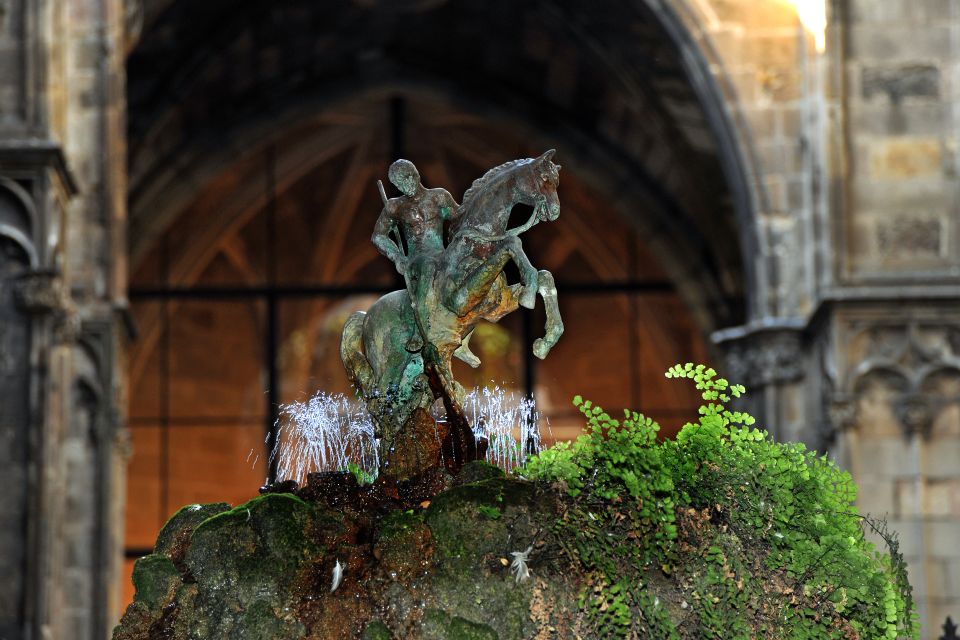
Once you’re moving, the tour’s structure makes the Gothic Quarter feel readable. You pass through the kind of narrow streets where the buildings loom close and the street turns keep surprising you. The guide helps you understand what you’re seeing—architecture, power, and everyday life—so the area feels less like a photo spot and more like a lived-in neighborhood.
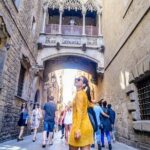
Two places stand out in how the tour frames them: Plaça del Rei and the area around Carrer del Bisbe. Plaça del Rei is one of those squares that feels atmospheric even when it’s busy, but on the walk you’re given the historical reason it carries that weight. Carrer del Bisbe, meanwhile, helps you connect street-level details—facades and balconies—with the bigger story of how the Quarter developed.
You’ll also hear stories tied to medieval life: the kinds of people who moved through here, how the city changed across centuries, and what the monuments were built to represent. That storytelling tone is a major reason many people rate this tour so highly: it turns architecture into a human timeline.
Saló del Tinell and the Cathedral zone: where you slow down for meaning
After the initial Quarter wandering, the tour leans into its biggest architectural anchors. The standout is the Barcelona Cathedral area, including guided time with the cloister. This is the sort of stop where you can easily rush on your own, because you might not realize how much is going on in the details.
On this walk, you’re guided to notice why the Cathedral matters beyond its famous exterior. The cloister in particular gives you a calmer, more intimate look at the building’s design logic. It also helps you understand why this site has been such a spiritual and civic center for centuries.
You also get a closer look at Capella de Santa Àgata (the Chapel of Santa Àgata). Even if you’re not a religious art specialist, this is the type of stop where the guide’s explanations help you read symbolism and style. You’re not just collecting sights; you’re learning how the buildings communicate.
Another early anchor is Saló del Tinell. It’s the kind of place you’d probably walk past without understanding what makes it important. Here, the guide ties it to the medieval world that shaped the Quarter and shows you the details that signal its role in the city.
Museu d’Historia de Barcelona stop: seeing the Quarter’s story as a whole
One of the tour stops includes the Museu d’Historia de Barcelona. This part matters because it shifts you from looking at stone and squares to seeing how historians interpret what you’re seeing. It’s a useful bridge: you’re already walking through physical layers of the city, and then you get a chance to connect those impressions with documented context.
If you’re the type who hates vague tours, this museum stop is a good check against that. It gives you a clearer frame for how the Gothic Quarter developed and why certain places became central. Even if you only spend a short amount of time inside, it helps you stop treating the Quarter like a collection of pretty backdrops.
You can also read our reviews of more tours and experiences in Barcelona





Roman Temple of Augustus: a small shock of history
One of the most memorable concepts in the tour is the Roman Temple of Augustus. The clever part is that it’s tucked into a medieval setting, so you don’t immediately associate it with the Roman era when you’re standing among Gothic stone.
The guide helps you understand the connection to Barcino, Roman Barcelona, and that shift in time period changes how you see everything around you. Suddenly the Quarter isn’t just medieval. It’s a city built over older foundations, shaped by different eras, and reused in ways that are still visible today.
If you like “how did this place become this place” questions, this stop delivers. It also makes you look differently at courtyards and passageways afterward, because you start to suspect what might be hiding just out of sight.
Plaça Sant Felip Neri: a quiet square that hits emotionally
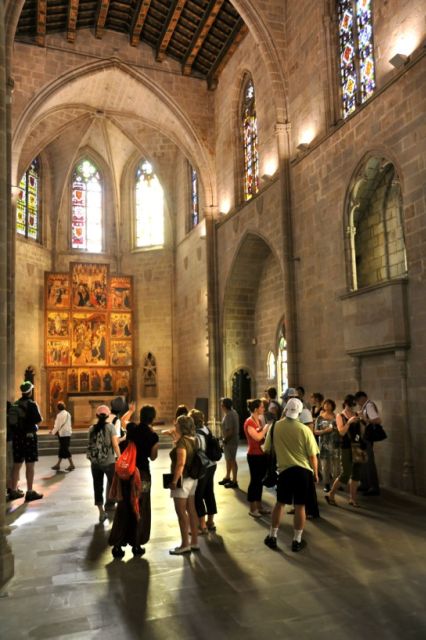
Not every highlight is the biggest monument. Plaça Sant Felip Neri earns its place because it feels like a pause button. The tour highlights this square as tranquil, and the guide’s framing brings in its moving history—marked by the Spanish Civil War and later life returning to the area.
This is the kind of place where the mood is part of the lesson. You’re not just learning dates; you’re learning how a city holds memory in its physical space. The baroque church nearby and the scars on the surroundings make the square feel honest rather than staged.
I like tours that include at least one stop where you stop and breathe. This square does that, and it also helps you understand why the Gothic Quarter can feel both gorgeous and heavy.
The Royal and religious stops that connect power and architecture
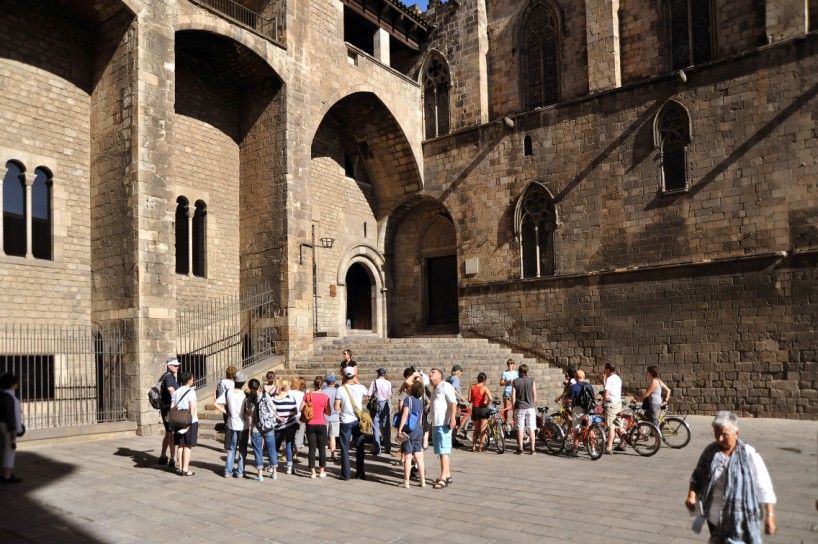
As you move through the Cathedral-side atmosphere and back toward the main Quarter, the tour also references major centers of influence. One example is the Palau Reial Major, tied to the former palace of Catalan kings. The guide connects this to the famous moment when Ferdinand and Isabella received Columbus after his New World voyage.
That sort of detail matters because it reframes the palaces and halls you might otherwise treat as background. You start linking who lived here, what decisions were made, and how that power shaped the city’s architecture.
The tour also points you toward other story-rich corners like Carrer del Bisbe, where the look of the buildings (and the life around them) reinforces why the Quarter became such a cultural anchor.
English-tour bonus: Museu Frederic Marès after your walk
If you book the English tour, you get a free visit to the Museu Frederic Marès after the walking part ends. This is a smart add-on because it keeps you in the same historical mood without adding another long outdoor walk.
The museum itself is housed in a medieval palace and focuses on an eclectic, very human collection built by Frederic Marès: sculptures, antique curiosities, and personal artifacts. You’ll see galleries that range from medieval religious art to everyday objects from later periods.
What I like about this bonus is that it doesn’t feel like a random “and now a museum” detour. It feels like a continuation of what you already learned in the streets. You finish with a walk that gives you city context, and then you leave the palace with a set of objects that make that context feel real.
Price and value: why $32 can be a smart first investment
At $32 per person for a 2-hour guided walking tour, this sits in the practical midrange for Barcelona. The value isn’t just the number of stops. It’s the fact that you’re shown how to read what’s in front of you.
If you walk the Gothic Quarter solo, you’ll see plenty. But you’re more likely to miss what makes each site matter: what Saló del Tinell represents, what the cloister adds to your understanding of the Cathedral, and why the Roman Temple of Augustus feels so surprising in its medieval surroundings. With a guide, you spend your limited time absorbing meaning instead of guessing.
The other value piece is pace. Two hours is long enough to feel you actually did something, but short enough that you can still plan a museum, a late lunch, or a beach break. One common lesson from real day-trippers is simple: eat first, then walk. This is still walking time, and you’ll be happier if you start fueled.
Who should book this Gothic Quarter walking tour?
This works especially well if:
- it’s your first day in Barcelona and you want to learn the area quickly
- you care about architecture, but want the story behind it, not just a postcard view
- you like your tours with real personality and plenty of answering-you-as-you-go questions
It may not be your best fit if you hate walking or if you expect a relaxed, sit-and-stare pace. This is a guided walk through a concentrated area, and that format takes physical effort.
Should you book it?
If your goal is to understand the Gothic Quarter fast, I think this is a great booking. You get a tight route, strong site selection (Cathedral cloister, Santa Àgata, Saló del Tinell, Plaça del Rei, Plaça Sant Felip Neri), and a bonus museum for English tours that helps the whole experience land.
My only pushback is practical: plan for two hours on your feet. Bring water, wear comfortable shoes, and show up ready to look closely. If you do that, you’ll leave with a Barcelona you can actually navigate—and a Gothic Quarter that finally feels like more than scenery.
FAQ
How long is the Barcelona Gothic Quarter walking tour?
It lasts 2 hours.
Where do I meet the guide?
The meeting point is at the tourist information office, and you should look for the i symbol.
Is the tour offered in English?
Yes. This experience is listed as an English tour.
What’s included besides the walking tour?
The English tour includes a free visit to the Museu Frederic Marès after the walking tour.
How much does it cost?
The price is $32 per person.
Can I cancel for free?
Yes, free cancellation is available if you cancel up to 24 hours in advance.