REVIEW · BARCELONA
3-Hour Private Guided Walking Tour of Barcelona
Book on Viator →Operated by THIBAUT PAKIRY, UNIPESSOAL LDA · Bookable on Viator
Old Barcelona hits different on foot.
This 3-hour private guided walking tour strings together big names and lesser-known stops in Barcelona’s historic center, with a guide who tells stories you can actually use while you wander. I like how the route moves beyond the loud postcard spots and reaches quieter streets and small monuments, and I especially like the way guides such as Valérie (and also guides identified as Julie in some parties) adjust to your group, including teens and mixed interests like architecture, anecdotes, and even food stops. One consideration: you’re on your feet for about three hours, and the Antic Hospital de la Santa Creu has an admission ticket that is not included.
In This Review
- Key takeaways
- Getting Your Bearings in the Old Town, Without the Crowds Feeling Like the Point
- Meeting at Lamaro Hotel Barcelona: A Practical Start in Ciutat Vella
- Barcelona Cathedral and Casa de l’Ardiaca: Gothic Power Meets a Quiet Patio
- Plaça Sant Felip Neri and the Barri Gòtic El Call: Civil War Echoes in Stone
- Basilica de Santa Maria del Pi to Plaça Reial: Medieval Corners and a Festive Square
- Plaça de Sant Jaume and Plaça del Rei: The Political Center and Catalan Gothic Details
- El Raval Stop: Antic Hospital de la Santa Creu and Gaudí’s Last Chapter
- Born’s Santa Maria del Mar and Mercado de Santa Caterina: Art and Daily Life Side by Side
- Why the Guide’s Flexibility Makes This Tour Feel Like Value, Not Just Touring
- Walking Time, Terrain, and Tickets: The Practical Things to Plan For
- Who This Private Walking Tour Fits Best
- Should You Book This 3-Hour Private Walking Tour of Barcelona?
- FAQ
- How long is the Barcelona private walking tour?
- What does it cost, and is it per person or per group?
- Is this a private tour?
- Where does the tour start?
- Are tickets included for all stops?
- Do I get something like a ticket or voucher?
- Can I bring a service animal?
- What is the cancellation policy?
Key takeaways
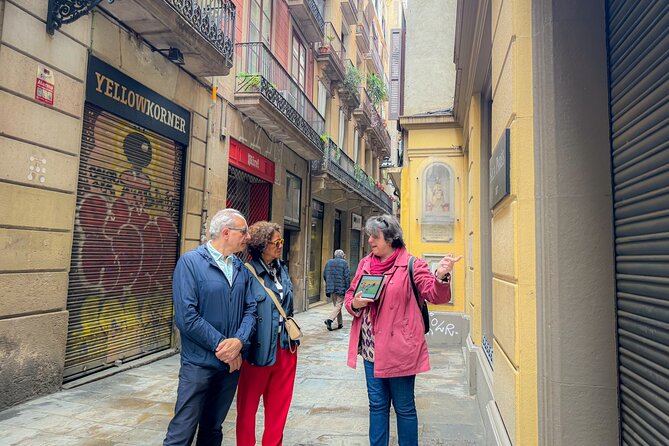
- Private pacing for your group only (up to 15 people), so questions and detours feel normal.
- Gothic Quarter essentials plus El Call to understand the old Jewish quarter in context.
- Catalan Gothic basilicas at Santa Maria del Pi and Santa Maria del Mar, not just one big stop.
- Smart street-level variety: squares, markets, and the Rambla, all in one tight loop.
- Local guidance beyond landmarks, including typical restaurant addresses and what else to see after.
Getting Your Bearings in the Old Town, Without the Crowds Feeling Like the Point
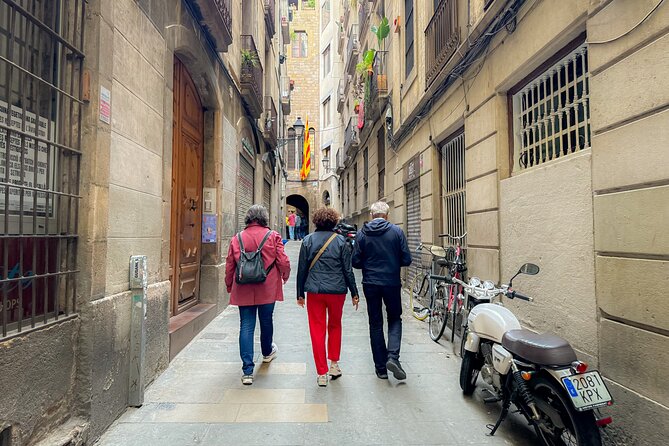
Barcelona’s historic core can feel like a blur if you only rely on a map. This tour is built for orientation: you get the layout of the Gothic Quarter first, then you shift into El Born and down toward El Raval, so the city starts to make sense in layers.
The best part is that it is not just a checklist. It’s a guided walk where the guide connects details you’d otherwise miss: a small courtyard here, a square there, and the meaning behind what looks like simple stonework.
The route also helps you travel smarter after the tour. Once you’ve walked these areas with a local, choosing where to eat, what to visit next, and how to structure your remaining hours gets easier fast.
You can also read our reviews of more walking tours in Barcelona



Meeting at Lamaro Hotel Barcelona: A Practical Start in Ciutat Vella
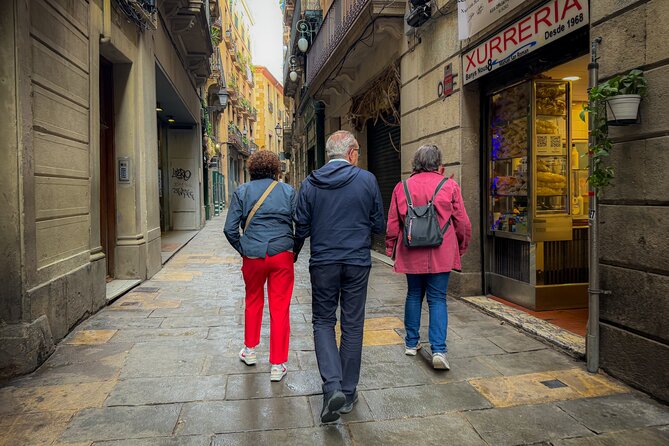
You’ll start at Lamaro Hotel Barcelona, on Av. de la Catedral, 7 in Ciutat Vella. This matters because you’re already in the old-city zone, close to the kind of streets where you want to be walking anyway—tight lanes, small squares, and neighborhood transitions.
The end point returns you back to that same meeting area, so you’re not stuck figuring out a late pickup or a long walk back. It also keeps the experience clean and easy to plan around.
Barcelona Cathedral and Casa de l’Ardiaca: Gothic Power Meets a Quiet Patio
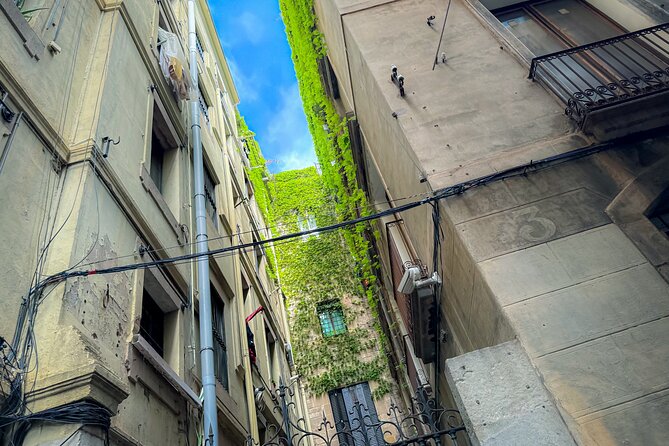
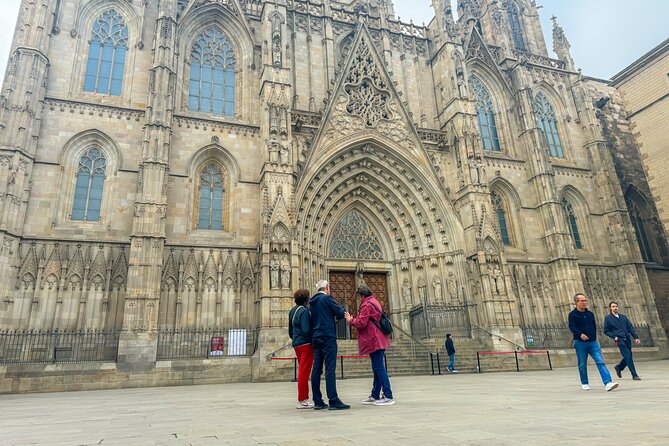
You kick off at Barcelona Cathedral, the gateway into the Gothic Quarter. Even if you think you know cathedral exteriors, the guide’s focus helps you look past the obvious. You get the landmark’s role in the old-city story and why it sits right where it does.
Then comes Casa de l’Ardiaca, a smaller monument that many visitors skip because it’s not screaming for attention. What makes this stop special is the emphasis on a secret patio, the kind of hidden-in-plain-sight place that makes a walking tour feel worth it. It’s short, but it gives you a change of pace from the big Gothic forms.
Both stops are marked as admission free on this experience, which is a nice little bonus. You spend time, not money, and you keep momentum in your first stretch of the walk.
Plaça Sant Felip Neri and the Barri Gòtic El Call: Civil War Echoes in Stone
Next you move to Plaça Sant Felip Neri, a stop that plays with contrast. It’s a simple square at street level, but the guide ties it to testimony from the Civil War in Barcelona. That kind of connection helps the city stop being a set of buildings and becomes a lived timeline.
From there, you get into the heart of the Barri Gòtic (Gothic Quarter) with a focus on El Call, the old Jewish quarter. This is one of the most valuable parts of the whole tour because it gives you historical framing while you’re standing in the streets where it all happened. You’re not just walking around medieval architecture—you’re learning how different communities shaped the area.
This stretch also tends to work well for mixed groups. If someone in your party likes architecture, they’ll appreciate the shapes and streets. If someone else cares more about people and stories, the El Call focus gives them something to latch onto immediately.
Basilica de Santa Maria del Pi to Plaça Reial: Medieval Corners and a Festive Square
You’ll visit Basilica de Santa Maria del Pi, located in the Gothic district near a charming medieval square. The attraction here is how the basilica fits into the everyday rhythm of the neighborhood. This is not just about the building; it’s about how the square supports the building and how both shape what it feels like to be there.
Then you’ll roll into La Rambla for a look at details of a theater façade and then a walk along the famous avenue. The Rambla can be touristy, but with a guide you learn how to see it as an urban stage rather than a single long street to cross off.
After that, Plaça Reial brings you back to a different tone: a rectangular square that feels made for evenings, performances, and people-watching. If your travel style is equal parts sightseeing and atmosphere, this is a good payoff stop.
You can also read our reviews of more guided tours in Barcelona




Plaça de Sant Jaume and Plaça del Rei: The Political Center and Catalan Gothic Details
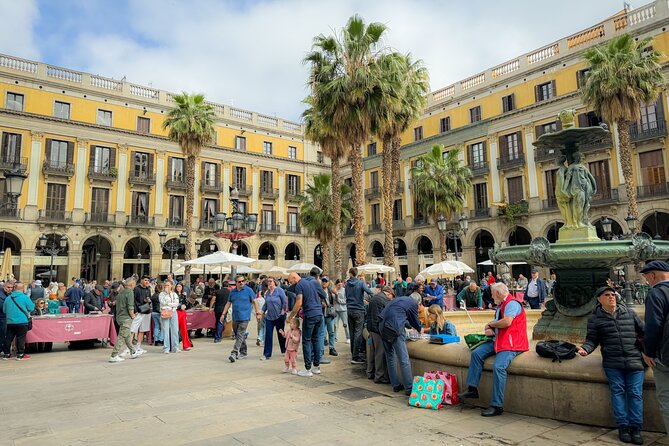
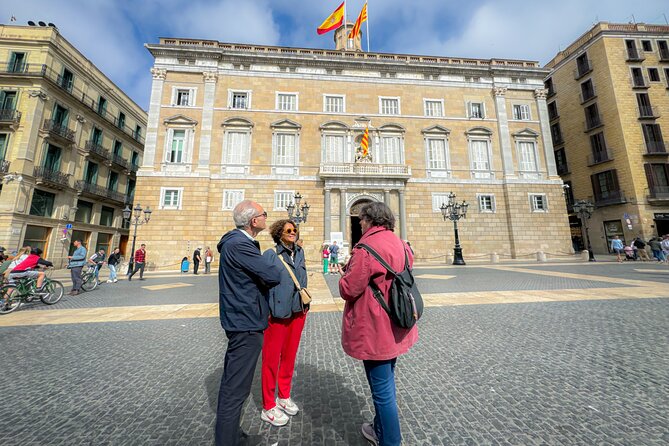
Barcelona’s administrative and political heartbeat shows up at Plaça de Sant Jaume. This stop is about understanding why certain squares matter beyond being photogenic. You’ll see how the space works as a center of power in the city’s imagination.
Then you step to Plaça del Rei, where the focus shifts to Catalan Gothic building details. This is a stop that rewards close looking. Instead of rushing past façades, you’re guided to notice design features that change how you interpret the entire area.
These two squares make a strong pairing because they connect function and style. Politics lives in space, and architecture tells you what kind of space a city wanted to project.
El Raval Stop: Antic Hospital de la Santa Creu and Gaudí’s Last Chapter
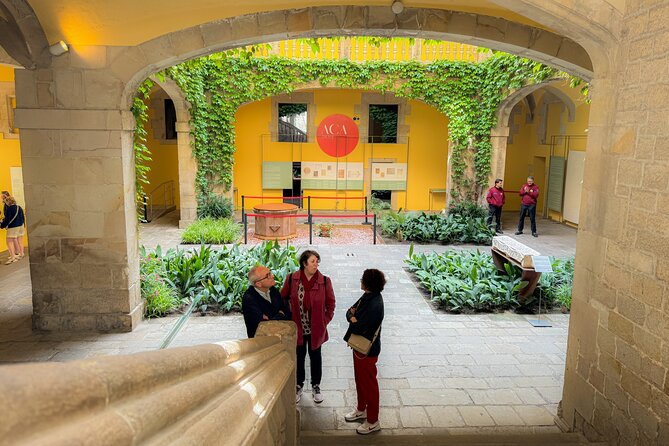
A big name moment comes in El Raval at the Antic Hospital de la Santa Creu. This is the hospital where Antoni Gaudí died, and that fact alone gives the stop extra weight.
One key practical note: admission is not included for this stop. So if you are budgeting tightly, it’s worth planning for that extra cost rather than treating it like the rest of the free entries.
Even with that caveat, this stop adds real emotional gravity to the day. It also balances the tour’s other architecture-centered pieces by bringing in a human story tied to a place you might otherwise only glance at.
Born’s Santa Maria del Mar and Mercado de Santa Caterina: Art and Daily Life Side by Side
In El Born, you’ll visit Basilica de Santa Maria del Mar, described as a masterpiece of Catalan Gothic. This is one of the moments where the tour feels like it’s showing you the best of the best—without being stuck in only one neighborhood flavor.
What makes this kind of basilica visit valuable is how it anchors the walk. When you understand one major Gothic structure deeply, the smaller streets and squares around it start to look like they belong together, not random medieval blocks.
Then you head to Mercado de Santa Caterina, an authentic market in the Sainte-Catherine district. This is where the tour shifts from stones and squares to normal life: food, stalls, and the kind of everyday energy that makes Barcelona feel like a city, not a museum.
If your schedule has you eating on the run most days, this market stop helps you slow down. It also gives you a natural lead-in to asking your guide for meal suggestions afterward.
Why the Guide’s Flexibility Makes This Tour Feel Like Value, Not Just Touring
The price is $194.75 per group (up to 15) for about 3 hours, with a mobile ticket. That pricing is worth thinking about in simple terms: divide by your group size to get a per-person estimate, and then compare that to what you’d pay for individual entry tickets plus the cost of a guided walk.
Here’s what you’re buying beyond walking:
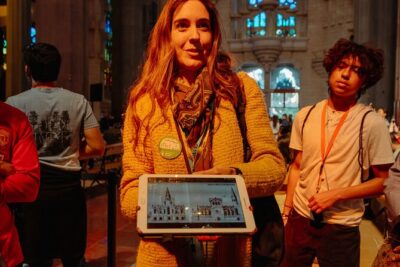
- A guide who adjusts to your pace and interests. In at least some groups, the guide worked with teens by shifting the vibe to make the old town feel playable and interactive.
- Story structure, not random facts. The tour leans into anecdotes and explanations that help you connect one stop to the next.
- Restaurant and sightseeing advice. Multiple parties highlighted that they left with solid typical food addresses, which is exactly what you want from a local guide.
A small but telling detail from the experience style: guides keep an eye on timing and comfort. If weather hits hard, your guide is prepared to adapt the flow rather than plow through. That makes a real difference when you’re walking for hours in an active city.
Also, because it is private, you’re not competing for the guide’s attention. Your group sets the rhythm, and you can ask follow-up questions instead of losing them in the shuffle.
Walking Time, Terrain, and Tickets: The Practical Things to Plan For
This is a walking tour, roughly 3 hours, and it stays inside the historic center areas: Gothic Quarter, El Born, El Raval, plus Rambla-adjacent stops and major squares.
Most entries are marked as free, including:
- Barcelona Cathedral
- Casa de l’Ardiaca
- Plaça Sant Felip Neri
- El Call focus in the Gothic Quarter
- Basilica de Santa Maria del Pi
- La Rambla and the square stops (Plaça Reial, Plaça de Sant Jaume, Plaça del Rei)
- Basilica de Santa Maria del Mar
- Mercado de Santa Caterina
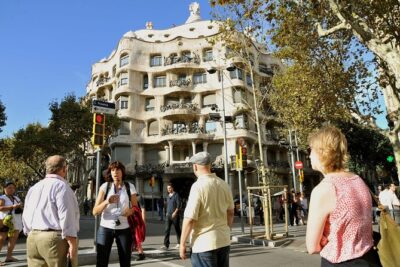
- And a final stop focused on artistic and historical details of a modernist Old Town spot (15 minutes)
The one significant exception is the Antic Hospital de la Santa Creu, where admission is not included.
So if you’re tight on museum-style costs, plan for that one place. If you like architecture and you’re already considering a Gaudí-related stop, this is a straightforward add-on rather than a surprise.
Who This Private Walking Tour Fits Best
This tour fits you well if you want:
- A big-picture Barcelona walk that still includes quiet corners and smaller monuments
- A history-and-architecture mix that explains what you’re seeing in the moment
- Local food guidance as part of the experience, not as an afterthought
- A private format that helps families with teens stay engaged
It also works if you don’t want to spend your vacation learning how to read a city yourself. The guide provides the connections, and you do the enjoying.
If you’re the type who hates walking or wants to sit for long stretches, this may feel like too much movement. But if you enjoy paced exploring with stops that don’t drag, it’s a strong fit.
Should You Book This 3-Hour Private Walking Tour of Barcelona?
I’d book it if you want Barcelona to feel personal and specific, not just photo stops. The route covers the Gothic Quarter, El Born, and El Raval, and it includes both famous anchors (cathedral, major basilicas, Rambla squares) and quieter pieces (Casa de l’Ardiaca’s patio, the Civil War context at Plaça Sant Felip Neri, the El Call focus).
I’d also book it if you care about value in real terms: a guided format that includes lots of free admissions, plus practical restaurant advice, all delivered by a guide who can adapt when your group’s interests shift.
The only reason not to book is simple: you’re trading comfort for momentum. If you don’t want to walk for about three hours or you’d rather keep ticket costs ultra-minimal, adjust your expectations around the one paid admission stop.
FAQ
How long is the Barcelona private walking tour?
It lasts about 3 hours.
What does it cost, and is it per person or per group?
It costs $194.75 per group (for up to 15 people).
Is this a private tour?
Yes. It is private, meaning only your group participates.
Where does the tour start?
It starts at Lamaro Hotel Barcelona, Av. de la Catedral, 7, Ciutat Vella, 08002 Barcelona.
Are tickets included for all stops?
Most stops list admission free, but Antic Hospital de la Santa Creu has admission not included.
Do I get something like a ticket or voucher?
Yes, it uses a mobile ticket.
Can I bring a service animal?
Yes. Service animals are allowed.
What is the cancellation policy?
You can cancel for a full refund if you cancel at least 24 hours before the experience’s start time.