REVIEW · BARCELONA
Semi-Private Barcelona Tour Gothic, Sagrada Familia & Park Guell
Book on Viator →Operated by We Are Guides Barcelona · Bookable on Viator
Barcelona has a way of pulling you in fast. This tour strings together the city’s biggest wow moments with a small group and skip-the-line access, plus the kind of guiding that turns streets into stories. Two things I especially like: you get a proper walking orientation in the Gothic Quarter, and you also get guided context for Gaudí’s masterpieces instead of just a photo line. One drawback to plan for: the tour price does not include the main attraction tickets, so your day budget should assume extra fees for Sagrada Família and Park Güell.
It runs about 6 hours and is designed to keep you moving without feeling like a cattle stampede. If you’re hoping to understand why Barcelona looks the way it does, I think you’ll appreciate the mix of medieval lanes, viewpoints from Montjuïc, and guided time at Sagrada Família and Park Güell.
In This Review
- Key highlights worth planning around
- First steps at Plaça de Catalunya and the Barri Gòtic maze
- What makes the Gothic Quarter part feel worth it
- Plaça Sant Jaume, City Hall, and Santa Maria del Mar
- Montjuïc by transport: the Face of Barcelona, Mirador views, and stadium vibes
- MNAC and Passeig de Gràcia glimpses: modernist landmarks in motion
- Park Güell: skip-the-line timing with a guided walk (tickets extra)
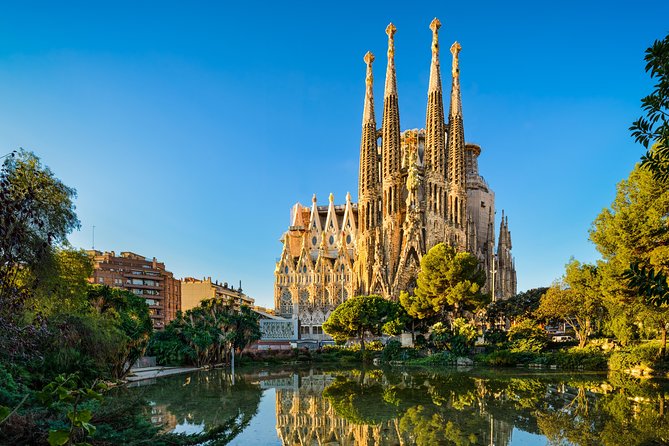
- Sagrada Família: the three façades, plus time inside
- The guide factor: why people keep mentioning names like Xavier, Faidra, and Angelique
- Timing, group size, and how to get the most out of a long day
- Value check: is $179.02 worth it for Sagrada Família and Park Güell?
- Who this tour suits best
- Should you book this Barcelona tour?
Key highlights worth planning around
- Small group format (up to 15) means you’re more likely to get real answers instead of rushed logistics.
- Skip-the-line tickets handled for you for Sagrada Família and Park Güell (you pay the entrance fees at cost).
- Complimentary coffee break during the walking portion to reset on a long day.
- Montjuïc viewpoints by comfortable transport so you see more without burning your legs early.
- Guide-led symbolism at Gaudí’s sites so you know what you’re looking at, especially at Sagrada Família.
- A day shaped for first-timers, with just enough variety to cover Barcelona’s “must see” areas.
First steps at Plaça de Catalunya and the Barri Gòtic maze
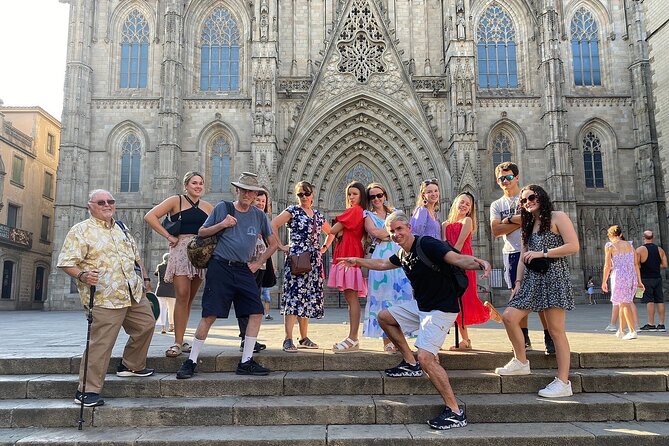
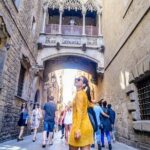
Most good Barcelona days start in the right place, and this one begins at Plaça de Catalunya. From there, you head straight into the Barri Gòtic, the city’s older core where the streets feel like they were built for wandering. You’re not just walking blocks. You’re following a trail that connects Roman and medieval remains to the Barcelona that grew around them.
The tour includes a guided walk through the Gothic Quarter’s narrower streets, plus key sights like the Cathedral area, the Jewish Quarter crossing, and stops around Plaça Sant Jaume territory. I like this style because you leave with street-level context. Later, when you’re on your own, you can actually picture where you are in the city’s timeline.
The pace is built for a “see it all” day without turning into nonstop sprinting. Still, the old town is old town: uneven sidewalks and tight turns are part of the deal.
You can also read our reviews of more private tours in Barcelona



What makes the Gothic Quarter part feel worth it
The walking tour portion is the backbone here. It’s timed so you get the structure early, then later you have the confidence to explore on your own.
Two moments really help the experience click:
- You get an outside look at the Barcelona Cathedral facade and learn how to read what you’re seeing rather than just admiring the stone.
- You cross into the Jewish Quarter area and move toward Plaça Sant Jaume, where the city’s political center meets its historic layers.
And yes, there’s a coffee break during this portion. It’s not just a perk. It’s practical energy management for a day that continues into Montjuïc and up toward Gaudí sites.
If you have limited time in Barcelona, this is the kind of orientation that pays off later. You’ll know which streets belong to the medieval core, which areas are more modern, and how the neighborhoods connect.
Plaça Sant Jaume, City Hall, and Santa Maria del Mar
After the Jewish Quarter crossing, the tour reaches Plaça Sant Jaume, with the City Hall of Barcelona and the Palau de la Generalitat in the area. Even if you’ve seen photos of these buildings, standing in the square makes it feel like the city’s “center of gravity.”
From there, the tour shifts toward the Born district area and includes Santa Maria del Mar (with exterior explanation). This church is a great change of pace after the Gothic maze, because it helps you see how different parts of Barcelona’s sacred architecture can feel both connected and distinct.
If you like learning what a place meant at the time it was built, this segment helps. It’s short, but it’s targeted.
Montjuïc by transport: the Face of Barcelona, Mirador views, and stadium vibes
Once the walking portion ends, the tour transitions into a more comfortable rhythm. You head toward Montjuïc by transport, which matters because Montjuïc is all about hills and viewpoints. You’ll get panoramic cityscapes without spending the whole day climbing.
This part of the tour also gives you quick, memorable “icon shots” from the vehicle. You may pass or view from the minibus:
- the Face of Barcelona sculpture near the port area
- the Columbus Monument, a tall landmark by the water
- stops for viewpoints like Miramar Viewpoint on Montjuïc
From Mirador de Miramar, you’ll have a brief chance to take photos of the skyline with the surrounding hills in the background. It’s short, but it’s one of those stops that can make you say, Okay, I get why people hype this view.
The tour also passes by cultural and Olympic-related stops on Montjuïc, including the Miró Foundation area and the Olympic Stadium zone. On certain days the stadium may be open, and if you’re lucky you might catch glimpses of the interior or at least understand what you’re looking at from the outside. The nearby Olympic Museum is mentioned as an option.
One consideration: Montjuïc can be weather-sensitive. If conditions aren’t great, you might get less time at each viewpoint than you’d hoped.
MNAC and Passeig de Gràcia glimpses: modernist landmarks in motion
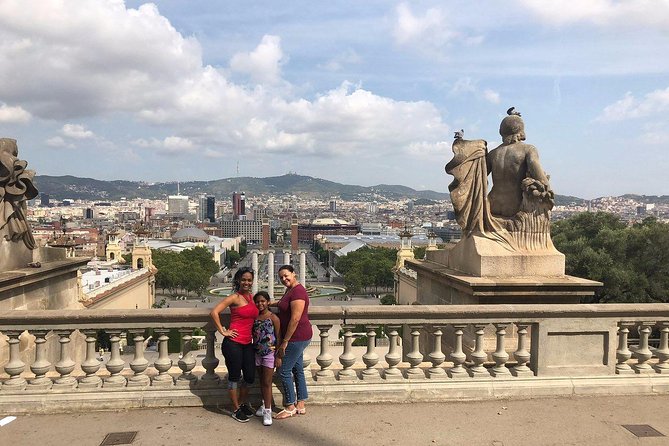
After the Olympic area, the tour route moves toward Museu Nacional d’Art de Catalunya (MNAC). Even with a short passing moment, this is a classic Barcelona landmark: it rises on Montjuïc in a way that makes the city look staged for sightseeing.
On the way through the next stretch, you may also pass Casa Batlló on Passeig de Gràcia. The tour doesn’t stop there, but you’ll get a view from your private transport, and your guide can point out what makes the design distinctive.
There’s also a scheduled stop for Casa Milà (La Pedrera) with an extra-ticket note. This is one of the easiest places to turn “I like Gaudí in theory” into “I get it in person.” If you’re a design-first traveler, consider using your free time there to go inside rather than just photographing the façade.


Park Güell: skip-the-line timing with a guided walk (tickets extra)
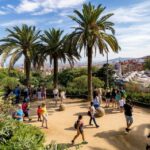
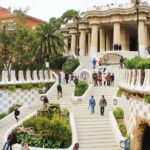
Park Güell is where Barcelona’s imagination becomes physical. The tour provides skip-the-line admission for Park Güell, and you’ll do a walking portion in the park after riding up. The ticket itself is extra (listed at about 10€ in the tour notes), and you pay at cost after the walking portion. The good news: you don’t have to sort out an outside booking on your own.
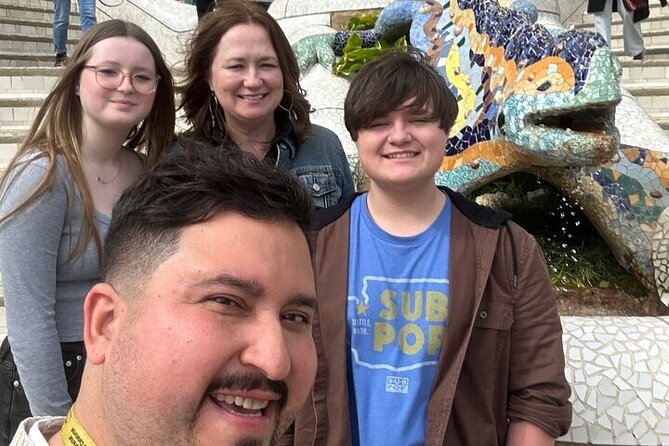
What I like about the way this is set up is that you’re not arriving cold. You get a guided introduction that helps you see the park as more than a landscaped hill. You’re learning how Gaudí created a world that mixes architecture with garden-like planning.
Also, the park is colorful and busy. A guided route helps you avoid getting stuck in the most crowded spots without seeing the rest.
Practical tip: bring a layer. Hills mean you’ll feel shifts in temperature, even if the morning started mild.
Sagrada Família: the three façades, plus time inside
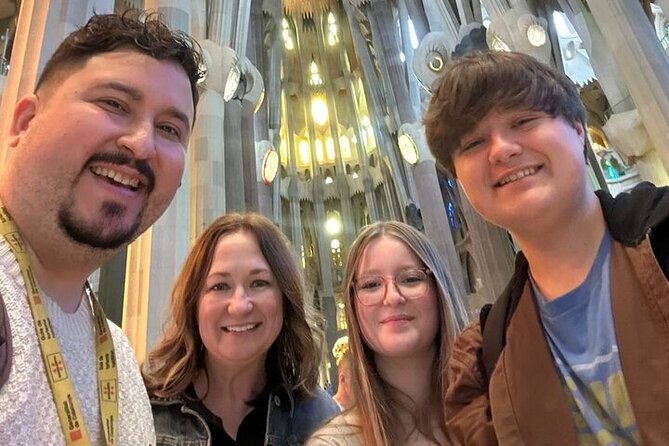
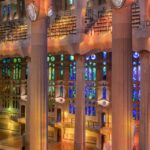
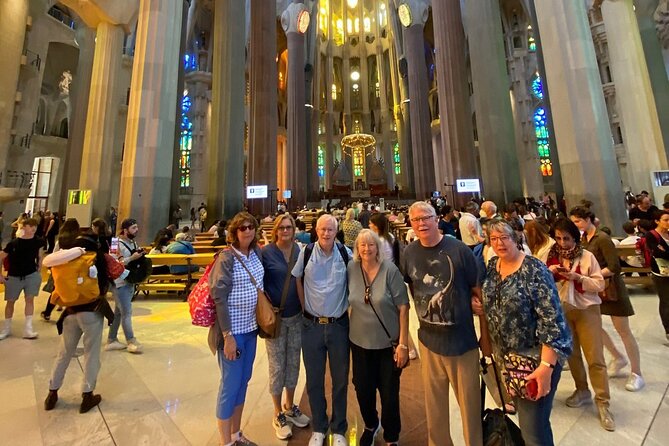
If you’ve only seen Sagrada Família from photos, you’re missing the scale. Your guide gives you a focused overview of the monument’s meaning and design choices before you go in. They explain Gaudí’s vision and why the building is still under construction, which changes how you experience the church once you’re there.
Here’s what’s built into the guide’s approach:
- The symbolism behind the three façades:
the Nativity Façade, the Passion Façade, and the Glory Façade
- A clear link between nature, geometry, and religious meaning in Gaudí’s work
Then you get access inside with skip-the-line entry. The tour notes recommend around one hour inside, but you can spend more if you want. I like that flexibility because Sagrada Família rewards both quick first sightings and slower re-looking.
If you’re going with someone who gets impatient in museums, plan your timing so you can still enjoy the main interior highlights. And if you love architecture, know that an hour can feel short once you start noticing details in the stonework.
The guide factor: why people keep mentioning names like Xavier, Faidra, and Angelique
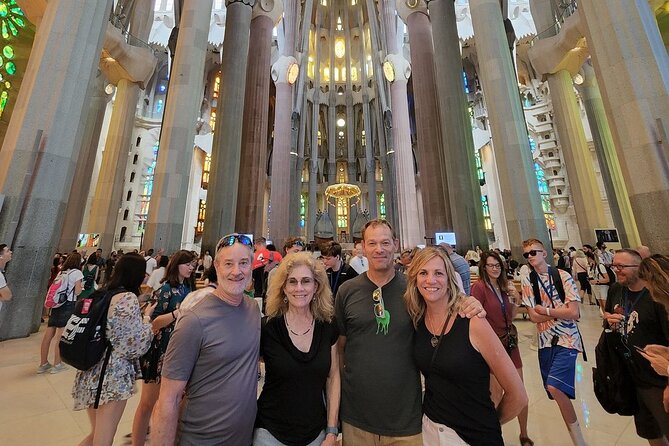
This is one of those tours where the guide quality matters a lot, because you’re covering multiple neighborhoods and major landmarks. The booking notes are clear it’s a group experience with a professional local guide, and the guide talent shows up repeatedly in how people describe the tour: engaging, funny, and full of answers.
Names that come up often include:
- Xavier (Xavi/Xavier) for enthusiasm and strong presentation
- Faidra for passion and depth on how Barcelona evolved
- Marta for making Gaudí feel alive
- Nuria for a resident’s perspective on the history and area
- Angelique for a relaxed style and extra context that helps you explore food and culture
I can’t guarantee who you’ll have, but I can tell you what to look for on the day. If your guide starts by explaining what you’ll see and why it matters, you’ll feel it immediately at Sagrada Família and Park Güell.
Timing, group size, and how to get the most out of a long day
This tour runs about 6 hours. That’s a full day, but it doesn’t feel like a never-ending bus-and-walk trap. The mix of old-town walking, transport to Montjuïc, and guided time at major attractions keeps it from becoming one long blur.
Group size matters here. It’s described as exclusively for a group up to 15 (and overall maximum travelers is listed at 22). In practice, you’ll likely feel the difference versus big bus groups: more room for questions, fewer bottlenecks around viewpoints, and a guide who can adjust pacing.
One more practical point: the tour ends at Sagrada Família. The notes also say it may end at Park Güell due to operational or weather circumstances. So if you’re planning a dinner reservation or a specific pickup, keep your schedule flexible or confirm the end point the day of.
Value check: is $179.02 worth it for Sagrada Família and Park Güell?
Let’s talk money in a grounded way. The tour price is listed at $179.02 per person, and the major tickets are extra: Sagrada Família (~26€) and Park Güell (~18€) are listed in the tour notes.
So, is it worth it? Here’s how I’d reason it out for you:
- You’re paying for more than entry. You’re paying for guided context across multiple neighborhoods, plus transport to Montjuïc and back into the city rhythm.
- You’re also paying for skip-the-line timing, but only for those sites, not for every stop.
- The tour includes coffee during the day, which doesn’t move the needle on cost, but it does improve comfort on a long schedule.
The one complaint I’d take seriously is the argument that you could see some places on your own. You might be able to. But the value question comes down to how much you want guidance for Gaudí’s symbolism and how much effort you want to spend navigating Barcelona’s geography and sightseeing flow.
If this is your first trip and you want an efficient, story-based introduction, the structure is likely to feel worth it. If you’re very independent and your only must-sees are the two-ticket sites, you may feel the cost is heavy compared to DIY.
Who this tour suits best
This tour is a strong match if you want:
- an easy first-day orientation through the Gothic Quarter and central landmarks
- a guided experience at Sagrada Família and Park Güell rather than a solo sprint
- a day plan that uses transport to cover Montjuïc viewpoints efficiently
It’s also a good choice if you’re traveling with someone who cares about both culture and logistics, since the route is built to reduce stress.
If you hate walking on uneven old streets or you’re sensitive to hills, I’d reconsider. The tour includes enough uphill and sidewalk variety to make mobility a factor.
Should you book this Barcelona tour?
Book it if you want a guided, semi-private day that hits Barcelona’s top three pillars: historic core, Montjuïc viewpoints, and Gaudí’s landmarks. The combination of guided walking, transport planning, and skip-the-line access for Sagrada Família and Park Güell is exactly what makes this type of tour feel efficient.
Skip it or swap your approach if you’re only chasing photos and you prefer DIY. In that case, the extra ticket fees plus the full-day structure might feel like more cost than value.
If you do book, decide early how you’ll handle the extra ticket moments: prioritize Sagrada Família inside time and treat Park Güell as a guided walk you don’t rush. And if you care about the guide’s energy, keep an eye out for names people repeatedly praise like Faidra and Angelique.