REVIEW · BARCELONA
Secrets of Barcelona Old Town Guided Walking Tour
Book on Viator →Operated by Republic Experiences · Bookable on Viator
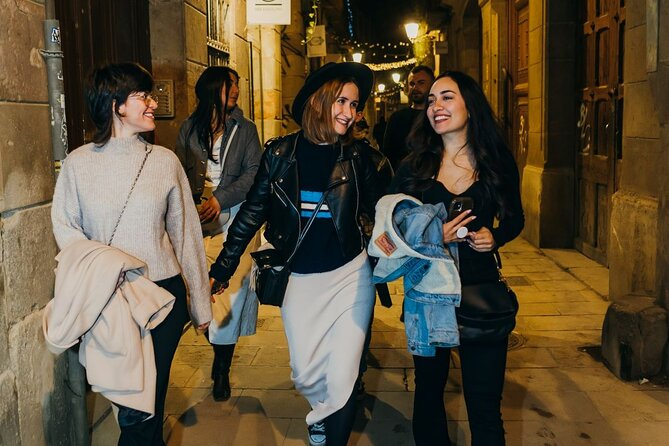
Old streets, sharp stories, and fast orientation. This guided walk is a simple, affordable way to see the Gothic Quarter and key landmarks in about two hours, with a guide who keeps the pace easy to follow. I especially like how the stops mix famous icons (like Barcelona Cathedral) with surprising corners that make the city feel lived-in, not staged. The main drawback to plan for is crowds—certain days and times can make it harder to stay together and hear everything.
This is a small-group format (up to 20), offered in English, and it starts in Ciutat Vella and finishes near El Born. You’ll move through compact streets where you can actually connect the dots between architecture, street layout, and the big events that shaped Barcelona.
In This Review
- Key things to know before you go
- Why this walking tour works in Barcelona’s Old Town
- Meeting point to final stop: the flow of your walk
- Stop 1: Els 4 Gats and the artistic spark
- Stop 2: El Mon Neix En Cada Besada and Catalan Day symbolism
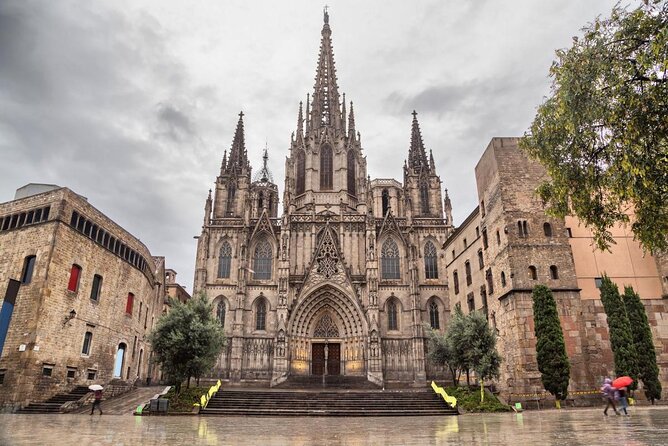
- Stop 3: Barcelona Cathedral from the outside (and why that matters)
- Stop 4: Casa de l’Ardiaca and Roman traces in plain sight
- Stop 5: Pont del Bisbe and the story you’ll remember
- Stop 6: Placa Sant Felip Neri and Spain’s complicated modern past
- Stop 7: MUHBA – El Call and the former Jewish district
- Stop 8: Placa de Sant Jaume and the seat of power
- Stop 9: Placa Del Rei and the Spanish Inquisition shadow
- Stop 10: Plaça de l’Àngel and a legend tied to a procession
- Stop 11: Basilica de Santa Maria del Mar (El Born) and your ending point
- Guides make or break it: what to expect from the human side
- Crowds, timing, and keeping your group together
- Value for money: why $22.83 can be a smart buy
- Who should book this tour
- FAQ
- FAQ
- How long is the Secrets of Barcelona Old Town guided walking tour?
- What is the price per person?
- Is the tour offered in English?
- How many people are in the group?
- What’s included for admission?
- Where does the tour start and end?
- Is there a mobile ticket?
- What’s the cancellation window?
- Should you book it?
Key things to know before you go
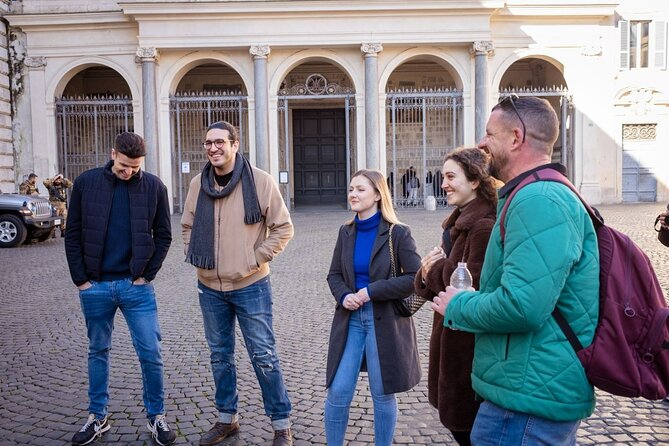
- Small group, easy pace: Max 20 people, and the walk is described as manageable (about 2 miles in at least one guest’s experience).
- Stories that explain the streets: Expect behind-the-scenes history, not just names—guides use anecdotes to make places click.
- Photo-friendly highlights: You’ll get classic views around Barcelona Cathedral and other major squares.
- Some entries are not included: Cathedral and Santa Maria del Mar have admission not included, so plan for that if you want inside time.
- Guide style varies: Most guides are warm, funny, and engaging, but if you dislike any edgy humor, pick your timing carefully.
- Time your visit for crowds: A quieter Sunday morning can make the whole experience feel more relaxed.
Why this walking tour works in Barcelona’s Old Town
Barcelona’s Old Town is beautiful, but it can also be confusing. Streets twist. Squares appear where you didn’t expect them. And the Gothic Quarter can look like one big “pretty zone” until someone explains what you’re seeing—why certain buildings sit where they do, and what each era left behind.
This tour is designed for orientation. You start in Ciutat Vella and end near the Gothic-to-El-Born transition, walking through the kind of corridors you’d otherwise wander through with no clue what mattered. That’s where the value shows: for $22.83, you’re paying for a guide who can translate stone and street signs into meaning.
The route is tight and efficient—ideal if you’re only in Barcelona for a short time or you want a first-day feel for the city. And because it’s a small group, you’re less likely to get swallowed by the crowd than you would on a huge bus tour.
You can also read our reviews of more walking tours in Barcelona



Meeting point to final stop: the flow of your walk
You’ll begin at Plaça del Vuit de Març in Ciutat Vella (08002). The walk ends at Basílica de Santa Maria del Mar, Plaça de Santa Maria, 1 (08003). That end point matters: Santa Maria del Mar sits in a neighborhood that feels very “Barcelona” in its own way—maritime, historic, and less tourist-y than some cathedral-adjacent streets.
The “about two hours” timing is also realistic. Each stop is brief enough to keep you moving, but long enough for the key story and a few photos. If you’re the type who gets restless on long tours, this structure tends to suit you.
One practical tip: the meeting area is in the old center, so bring your phone charger. You’ll be flipping between maps and photos, and the route is easier to remember when you’ve seen it once with guidance.
Stop 1: Els 4 Gats and the artistic spark
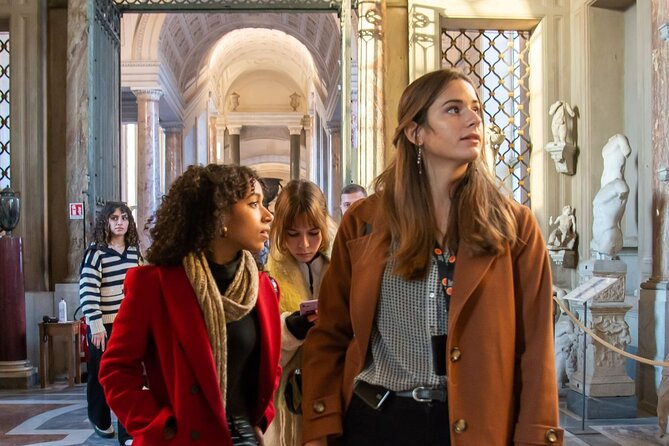
Your first stop is Els 4 Gats, linked to the modernist world of Casa Martí. This place isn’t just a restaurant name—it’s tied to the kind of creative gathering Barcelona became famous for. It’s the sort of stop that works because it introduces a theme you’ll keep hearing throughout the walk: Barcelona doesn’t only have history in buildings; it has history in ideas and people.
If you care about culture—art, design, how cities build identity—this start helps. It also sets a tone for the guide’s storytelling: they’re not just listing dates. They’re connecting people to places.
You’ll spend about 10 minutes here, and the admission ticket is free for this stop, so you’re not paying anything to get the context.
Stop 2: El Mon Neix En Cada Besada and Catalan Day symbolism
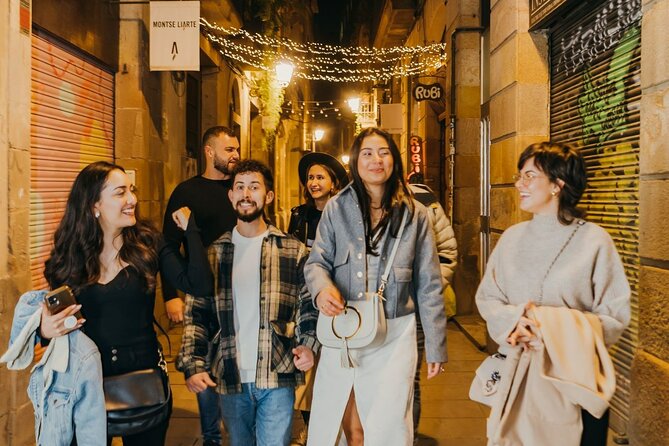
Next comes a short, punchy stop: El Mon Neix En Cada Besada. It’s known as an Instagram-friendly spot and tied to freedom symbolism and the Catalan celebration La Diada (Catalonia Day).
This is a good reminder that the Gothic Quarter isn’t only medieval. It carries modern identity too—through public spaces and the way people mark important days. A quick stop like this is exactly what keeps the tour from becoming a single-theme history lecture.
Admission is free at this point, and you get a moment to frame your photos with a story behind what you’re seeing.
Stop 3: Barcelona Cathedral from the outside (and why that matters)
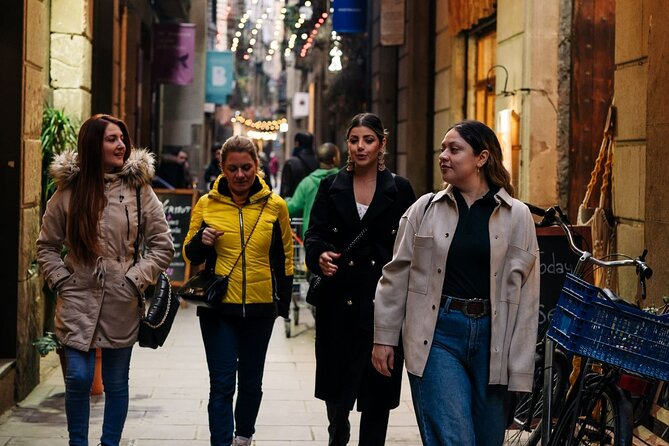
Then you reach Catedral de Barcelona. This is one of the visual anchors of the Gothic Quarter, and it’s the kind of landmark you’ll want in your photo set even if you’re not planning to go inside.
Important: admission is not included here. If you want entry time and a closer look inside, you’ll need to plan for that separately.
Even without going in, the guide’s value shows: you don’t just stand there taking pictures—you understand why this church dominates the area and how it shapes the experience of walking around the neighborhood. It’s also a helpful moment to reset your bearings. Once you’ve “placed” the cathedral in your mental map, the rest of the quarter becomes easier to navigate.
You can also read our reviews of more guided tours in Barcelona


Stop 4: Casa de l’Ardiaca and Roman traces in plain sight
Casa de l’Ardiaca is where the tour starts to feel extra interesting. You’ll see elements that point back to Roman Barcino, including ruins of the Roman wall and arcades connected to an aqueduct from around the 1st century B.C.
This is one of those stops that turns “pretty old buildings” into “oh wow, layers.” Barcelona’s history stacks. You’re walking over time you can still spot in architectural remnants.
Admission is free at this stop, which makes it a great ROI moment: you get high storytelling value without extra ticket cost. It’s also a nice break from the biggest-name sights—one of the best ways to make the Gothic Quarter feel like a real place rather than a checklist.
Stop 5: Pont del Bisbe and the story you’ll remember
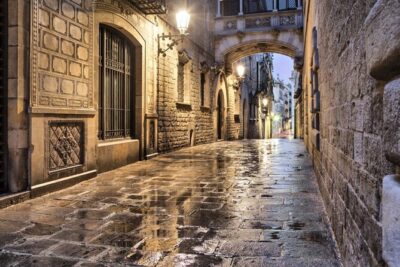
Now you’ll cross Pont del Bisbe, a neo-gothic bridge with an architecture style that feels dramatic even in a narrow old street setting. It comes with legend—enough of a story that you’ll likely remember it long after you’ve left.
This is also a practical photo moment. Bridges create a natural “frame” for the streets you came from and the route you’ll keep taking. If you’re traveling with a group, it’s also an easy place to regroup because the landmark is obvious.
Admission is free here, and the stop is short—about 10 minutes—so you won’t lose time waiting around.
Stop 6: Placa Sant Felip Neri and Spain’s complicated modern past
Placa Sant Felip Neri is quieter than the big squares, which helps the story land. This space holds a related history connected to the Spanish Civil War and the desire for Catalan independence.
This stop is valuable because it corrects a common mistake: treating the Gothic Quarter like it’s only medieval. Barcelona’s political identity runs through these streets too, and the way the guide explains it helps you see the city as a living timeline rather than a museum.
Admission is free. You’ll likely find the square feels like a “pause button” in the walk—small enough to focus, quiet enough to hear the explanation.
Stop 7: MUHBA – El Call and the former Jewish district
MUHBA – El Call brings you into the former Jewish district, where you’ll learn about the neighborhood’s past, including an ancient synagogue and legends.
This is one of the most meaningful stops on the walk because it changes the emotional tone. The Gothic Quarter isn’t only about grand churches and romance—it also carries the weight of community life and upheaval.
Admission is free for this stop as listed. The guide’s job here is crucial: they help you see more than stone. They connect the space to the people who once lived and worshiped here.
If you like history that feels human—daily life, identity, and change—this is the moment that usually sticks.
Stop 8: Placa de Sant Jaume and the seat of power
Placa de Sant Jaume is one of the main squares of the city. You’ll hear how it houses the seat of Catalan government and City Hall. It’s a place for both celebration and protest, and the guide ties it to an important figure celebrated on a major beloved holiday.
This is where “Barcelona as a political city” becomes visible. When you stand in a square like this, you understand why people gather. It’s not abstract. It’s physical.
Admission is free at this point. Also, photo-wise, it’s a wide-open space compared to the narrower lanes, so it helps you reset your picture-taking style.
Stop 9: Placa Del Rei and the Spanish Inquisition shadow
Placa Del Rei is imposing, and it comes with a darker historical thread connected to the Spanish Inquisition. This is one of those square stops that can feel heavy, especially if the guide speaks clearly and stays grounded in what happened rather than turning it into a spooky story for laughs.
Admission is free.
A practical note: squares can get crowded, and this one is central to the route’s “major landmarks” feeling. If you want clean photos, hold your phone low for a second when the group moves, then take your shot while you still have space.
Stop 10: Plaça de l’Àngel and a legend tied to a procession
Then you reach Plaça de l’Àngel. The square used to be known as Wheat Square because it was a hub for grain trading. Later, it was renamed due to a legend involving a ceremonial procession of Saint Eulalia and a heavenly apparition.
This stop is a nice blend of practical and poetic. The guide explains how the name shift reflects what the square meant over time. In other words, the city remembers through labels and stories.
Admission is free.
If you like a tour that alternates between big events and small details, this is a good “breather” before the final church.
Stop 11: Basilica de Santa Maria del Mar (El Born) and your ending point
You finish at Basilica de Santa Maria del Mar in El Born. This Gothic basilica is strongly linked to the area’s maritime past, and it has that distinctive feel of a church built by a community that depended on the sea.
Admission is not included here either, so if you want to go inside, you should budget time separately (and keep in mind your group pace).
This ending is smart. After walking through squares and narrow lanes, arriving at a major church at the end helps you “land” the experience. You can take a final look, then decide if you want to stay in El Born for food, wandering, or a longer rest.
Guides make or break it: what to expect from the human side
What stands out most is the guide tone. Different names come up often—Sonia, Vanessa, Tamara, Mariah, Jamie, Sara, and Rolene (and others like Jordan). The common thread is that guides tend to bring energy and humor and explain how history affects what you see today.
Sonia, for example, has been described as a local archaeology student with a cheerful, funny style that makes history feel approachable. Mariah is praised for making stories simple and candid. Tamara and Vanessa are repeatedly described as engaging and knowledgeable, and some guides even add trip suggestions for what to do after the walk.
Still, there’s one caution worth taking seriously: one experience described a guide using cuss words, jokes, and stories that didn’t feel appropriate for teenagers. If you’re traveling with kids or you strongly prefer a family-friendly tone, it’s worth being aware that humor style can vary by guide.
Crowds, timing, and keeping your group together
Barcelona’s Old Town can get packed fast. One guest noted that a holiday evening made it challenging not to get lost in the crowd in busier areas.
Here’s the practical fix: choose a time when streets are calmer. A Sunday morning was described as a better option for fewer people. If your schedule is flexible, that’s a solid instinct.
Also, in tight streets, listening is easier when you don’t stop for too long. If you want photos, do them fast and then move back into the group flow. You’ll hear more and spend less time frustrated.
Value for money: why $22.83 can be a smart buy
At $22.83 per person for about two hours, you’re paying for guided context during one of the most complex parts of the city. The tour isn’t trying to be expensive by including big entrance fees everywhere. Most stops are free to access, and the two big-ticket entries you might want (Barcelona Cathedral and Santa Maria del Mar) are clearly marked as not included.
So the value math looks like this: you get orientation, storytelling, and photo stops for a modest price, while you control which major interiors you want to pay to enter. If you’re the type who hates lining up for tickets mid-walk, this can actually feel better—you choose your “inside time.”
Who should book this tour
This tour is a good fit for:
- First-time visitors who want a fast, accurate map of the Gothic Quarter.
- People who like history explained through places and street layout.
- Travelers who want manageable walking in a small group (up to 20).
- Anyone who enjoys dark-but-real stories as part of understanding a city’s identity.
You might want to reconsider if:
- You expect low-noise, quiet narration for sensitive ears.
- You hate crowds and can’t choose a calmer day or time.
- You specifically want extensive cathedral/church interior time, since key entries are not included.
FAQ
FAQ
How long is the Secrets of Barcelona Old Town guided walking tour?
It runs for about 2 hours.
What is the price per person?
The price listed is $22.83 per person.
Is the tour offered in English?
Yes, it’s offered in English.
How many people are in the group?
The maximum group size is 20 travelers.
What’s included for admission?
Most stops are marked free, but admission is not included for the Catedral de Barcelona and Basilica de Santa Maria del Mar.
Where does the tour start and end?
It starts at Plaça del Vuit de Març, Ciutat Vella, 08002 Barcelona, and ends at Basílica de Santa Maria del Mar, Plaça de Santa Maria, 1, Ciutat Vella, 08003 Barcelona.
Is there a mobile ticket?
Yes, it uses a mobile ticket.
What’s the cancellation window?
You can cancel for free up to 24 hours in advance for a full refund.
Should you book it?
If you want an efficient, budget-friendly way to get your bearings in Barcelona’s oldest streets, I’d book it. The route hits iconic landmarks and also gives you those “wait, this is Roman-era” and “here’s why this square matters” moments that make the Gothic Quarter feel understandable.
Just be strategic about timing. If you can swing a calmer period, you’ll hear more and enjoy the walk more. And if your group is sensitive to humor tone, keep that in mind when choosing your day—guides vary in style, and it can affect the vibe as much as the buildings do.