REVIEW · BARCELONA
Private Tour Spanish Civil War & Franco’s Dictatorship
Book on Viator →Operated by Nostos Tours · Bookable on Viator
Barcelona holds some brutal history in plain sight.
This private walking tour connects the Spanish Civil War to everyday landmarks you’ll recognize, from Placa Catalunya to La Rambla and the bomb-damaged squares of the old city. I really like how the route is built for fast learning—2 hours 30 minutes with focused stops—plus the chance to ask questions one-on-one. One possible drawback: the story is heavy, and a few stops are in dense city streets, so it helps to have comfortable shoes and a bit of patience for a serious topic.
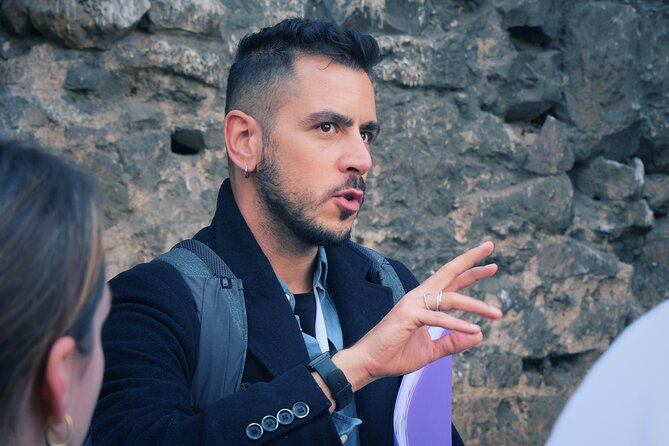
The walk is led by expert guides from Nostos Tours, and one guide named Yannis specifically earned standout praise for being passionate and clearly passionate about the subject. If you want a structured, conversation-friendly way to understand how the war spilled into civilian life and then got twisted under dictatorship, this format fits well. Just know that you’re covering a lot of emotionally tough ground in a short time—so if you prefer lighter, purely scenic touring, you may find it a grind.
In This Review
- Key highlights in 2.5 hours
- Why a Spanish Civil War walk makes sense in Barcelona
- Private tour value: what you pay for (and why it can be worth it)
- Placa Catalunya: the fight over the Telefonica building
- La Rambla: George Orwell and a war-era presence you can picture
- Plaza de Vicenc Martorell and the Raval: suffering, resistance, anarchism
- Antic Hospital de la Santa Creu: where wounded soldiers and civilians passed through
- Basilica de Santa Maria del Pi: an overlooked Civil War remnant in plain sight
- Plaça Sant Felip Neri: visible damage from aerial bombings
- Timing and how the route fits your Barcelona day
- What to expect from the guide experience
- Who this tour is best for
- A quick checklist before you go
- Should you book the Private Tour Spanish Civil War & Franco’s Dictatorship?
- FAQ
- How long is the private Spanish Civil War tour in Barcelona?
- Is the tour in English?
- Is this a private tour?
- Are tickets or admissions included for the stops?
- Is lunch or food included?
- Do I need good weather, and is cancellation free?
Key highlights in 2.5 hours
- Telefonica building fight at Placa Catalunya: a concrete start that sets the stakes fast
- George Orwell link on La Rambla: history with a recognizable name attached
- Raval’s working-class resistance: anarchism and survival, not just battles
- Antic Hospital de la Santa Creu: war wounds plus the aftershocks of dictatorship
- International Brigades in Santa Maria del Pi: international support shown through local architecture
- Aerial bombing damage at Placa Sant Felip Neri: a visible reminder of what cities suffered
Why a Spanish Civil War walk makes sense in Barcelona

Most people visiting Barcelona get the highlights—Gaudi, beaches, big museum nights. That’s great. But the Spanish Civil War and the years of Franco’s dictatorship left marks that don’t always get explained well, especially in a typical sightseeing loop.
What I like about this tour approach is that it treats history like something you can walk up to. You see buildings, squares, and church spaces you’d otherwise breeze past, then the guide ties them to specific wartime realities: who fought, who suffered, who resisted, and how culture got pressured afterward. It’s not just dates. It’s how a conflict becomes daily life.
And since this is a private tour, your guide can pace the story to your questions. If you want more detail on one theme—anarchism in the Raval, international fighters, or the bombing—you can usually steer that conversation.
You can also read our reviews of more private tours in Barcelona


Private tour value: what you pay for (and why it can be worth it)
At $181.41 per person for about 2 hours 30 minutes, this isn’t a budget group bus tour. The value comes from two places:
First, you’re buying time and attention. You don’t have to share your guide with a large crowd, so it’s easier to keep focus and ask practical questions as you walk.
Second, you’re getting a curated set of stops that connect war themes to Barcelona’s physical layout. That matters because the Spanish Civil War can feel abstract unless you’re shown how it landed in specific neighborhoods and structures.
If you’re a history lover, this format often feels like a strong bargain. If you’re a first-time visitor with zero interest in politics or the darker side of 1930s Spain, you might decide to do a different tour style—something more light and scenic.
Placa Catalunya: the fight over the Telefonica building
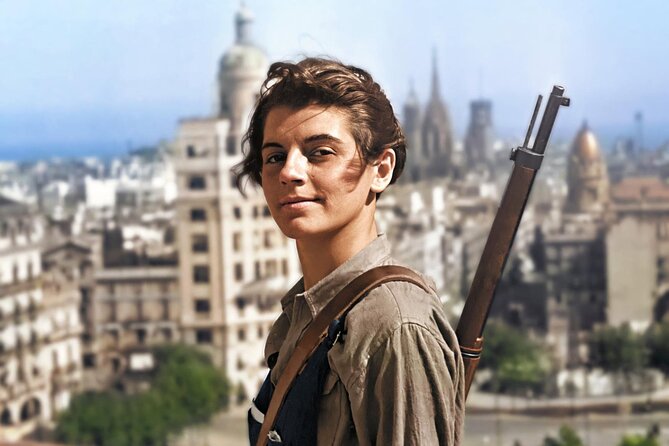
Your walking story starts at Placa Catalunya, one of Barcelona’s main hubs. Even if you’re just using it as a transit point on your own, it’s a smart place to begin because it immediately signals: power struggles aren’t something that happened far away. They happened in key infrastructure and public spaces.
Here, your guide frames the fight over the Telefonica building during the Spanish Civil War. That detail is important. Communications and coordination matter in any war, and wartime control over services can decide how quickly different sides organize, how information spreads, and how civilians experience the conflict.
What to do while you’re there: look around at how open and central the area is. Then let the explanation anchor it. It’s easier to understand the stakes when the location still feels like a nerve center.
La Rambla: George Orwell and a war-era presence you can picture
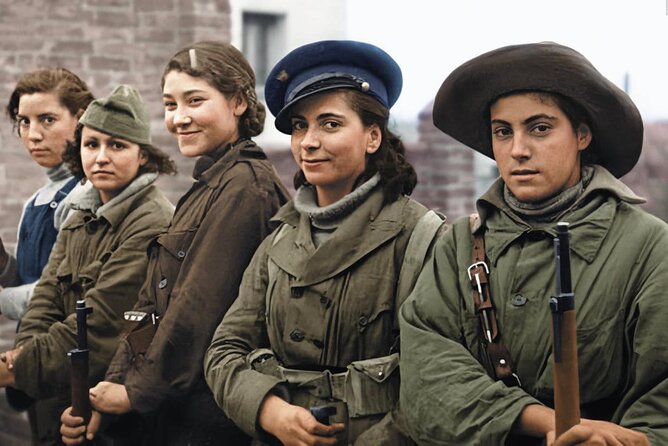
Next comes La Rambla, where the tour highlights a connection to George Orwell, including where he stayed during the Spanish Civil War. This is one of the reasons the walk works even if you’re not an expert already.
Orwell is a familiar name for many visitors, and tying him to a real place helps make the conflict feel less like a textbook. It also gives you a sense that writers, observers, and international attention were present while Spain was in turmoil—not something that only later got explained.
A small practical tip: La Rambla gets busy. Give yourself a moment to step aside if the street crushes your view. The guide will do the explaining, but you’ll hear better if you’re not stuck shoulder-to-shoulder with passing crowds.
Plaza de Vicenc Martorell and the Raval: suffering, resistance, anarchism
The tour then shifts into the Raval neighborhood area around Plaza de Vicenc Martorell. This part matters because it focuses on working-class realities—suffering, resistance, and anarchism—instead of only looking at the front lines.
That’s a key difference. Battles decide headlines, but civilian conditions decide survival. When the guide connects everyday hardship to forms of resistance, you get a more complete picture of why the war escalated and why different groups saw the conflict as more than just political power.
What I’d watch for here: the neighborhood feel. The Raval is a place where life has density—people, streets, older buildings. When the guide talks about this area as a center of resistance, the geography helps you understand how ideas and action can spread quickly in close quarters.


Antic Hospital de la Santa Creu: where wounded soldiers and civilians passed through
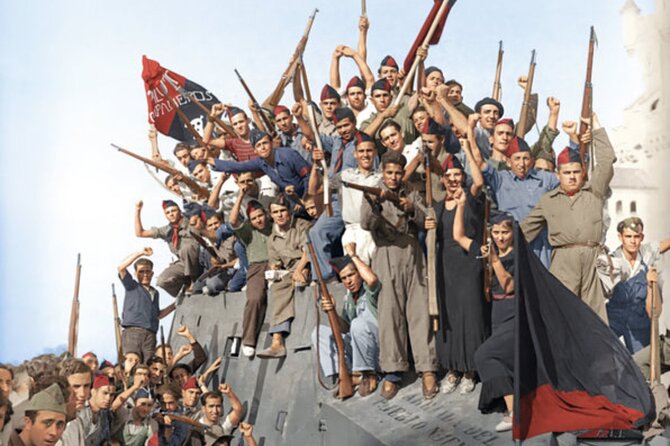
One of the most emotionally direct stops is at Antic Hospital de la Santa Creu. This is a 15th-century hospital, and the tour uses it to show what the war did beyond combat: it brought wounded soldiers and civilians through the same systems.
When you hear about a place like a hospital in wartime, it can still feel abstract unless someone points out the scale and mix of victims. The guide’s explanation links this site to the end of the war and then to the cultural oppression under the dictatorship that followed.
That after-part is especially important for visitors who only know the war as a standalone event. In reality, the conflict’s ending didn’t mean relief. It often meant control—over culture, expression, and what could be publicly discussed.
This stop is likely to slow you down. It’s worth it.
Basilica de Santa Maria del Pi: an overlooked Civil War remnant in plain sight
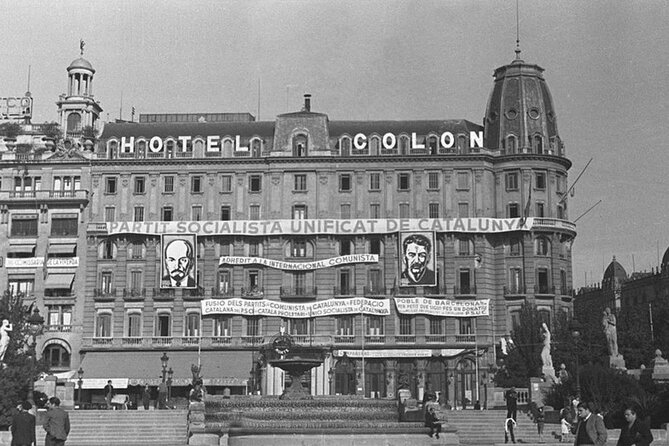
The tour continues to Basilica de Santa Maria del Pi, where the emphasis is on how history can be hiding right in front of you. The guide points out a Civil War remnant in the church and connects it to the International Brigades.
This is a great stop for two reasons. First, churches are often treated as purely religious monuments during sightseeing. Here, the building becomes a historical document. Second, the International Brigades angle reminds you the war wasn’t only Spain versus Spain. International involvement shaped perceptions and support—and it left traces.
If you like learning through architecture, pay attention to what the guide points out and then look for visual clues on your own. You’ll probably start spotting where the building tells a story even before the guide finishes the explanation.
Plaça Sant Felip Neri: visible damage from aerial bombings
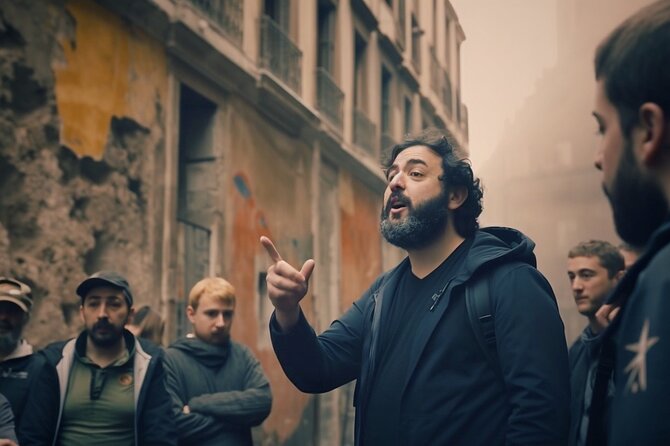
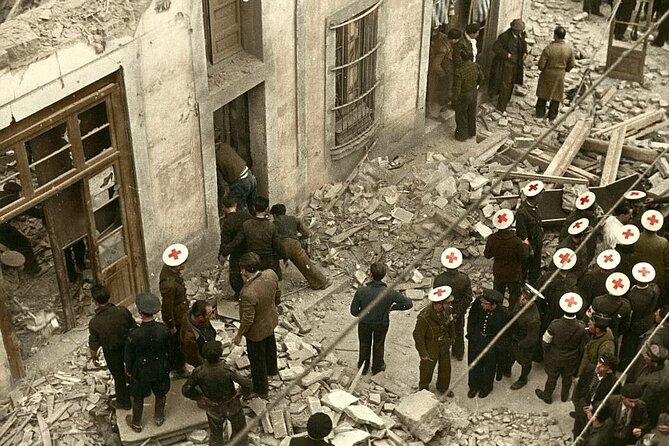
By the time you reach Plaça Sant Felip Neri, the tour turns to a location with the most visible damage from aerial bombings. This is where the war becomes brutally concrete in the skyline and walls.
The guide discusses the tragic bombing and the involvement of the axis powers, which helps frame the conflict within the broader European war context. That context is useful because it stops the Spanish Civil War from feeling like a side note. It becomes part of the same big machinery of the era.
What you’ll likely feel at this stop is grief and clarity. When damage is still visible decades later, it’s hard for the story to turn abstract. I like that the tour doesn’t sanitize the topic—it shows it where it happened.
Timing and how the route fits your Barcelona day
With an approximate 2 hours 30 minutes duration and flexible tour times, this walkthrough is designed to slot into a day that already includes standard sightseeing. It’s long enough to give you real context, but short enough to avoid ruining your whole schedule.
Also, most of the stops have free admission, so you’re not juggling ticket lines. You’re spending your time with the guide, not with waiting screens and ticket booths.
If you’re planning your day: try to avoid stacking another intense museum right after. This tour is heavy. Your brain needs a decompression walk afterward.
What to expect from the guide experience
This is the part people remember. One guide named Yannis received top marks for being both knowledgeable and passionate, and you can feel the difference when someone clearly cares about the details.
A private format also changes the vibe. Instead of rushing, the guide can take a moment to answer your questions, explain confusing context, or point out why a specific building or square matters.
If you’re the type who likes to understand cause and effect—how conflict escalates, how dictatorship changes daily life—this guide-led storytelling style should land well.
Who this tour is best for
I think this tour works best if you:
- want a structured history lesson tied to real places in Barcelona
- are curious about the Spanish Civil War and Franco’s dictatorship, not just the cultural cool stuff
- like asking questions and getting direct answers in a private setting
- prefer walking routes with stops that carry meaning, not just photo ops
It may feel less ideal if you want a lighter mood, or if political history is a hard sell for you.
A quick checklist before you go
Because this is a walking tour through central Barcelona:
- wear shoes that handle cobblestones and uneven spots
- bring water, especially if it’s warm (no food or drink is included)
- be ready for serious content—this is not a casual topic
- if weather looks rough, be flexible, since the experience requires good weather
Should you book the Private Tour Spanish Civil War & Franco’s Dictatorship?
If you want to understand Barcelona beyond the postcard layer, I’d say yes—especially if you enjoy guided context and you’re okay with a serious storyline. The combination of key locations, the International Brigades and Orwell threads, plus a focus on the lived experience in neighborhoods like the Raval makes this more than a list of sites.
Book it if you care about how wars show up in cities long after the fighting stops. Skip it if you only want scenic Barcelona or you’re sensitive to dark historical topics. Either way, you’ll come away with a sharper map of the past—literally, in the streets you walked.
FAQ
How long is the private Spanish Civil War tour in Barcelona?
It runs for about 2 hours 30 minutes.
Is the tour in English?
Yes, the tour is offered in English.
Is this a private tour?
Yes. It’s a private tour/activity, so only your group participates.
Are tickets or admissions included for the stops?
The stops listed include free admission, so you generally won’t need paid entry tickets for these locations.
Is lunch or food included?
No. No food or drink is included in the tour.
Do I need good weather, and is cancellation free?
The experience requires good weather. If it gets canceled due to poor weather, you’ll be offered another date or a full refund. You can cancel for a full refund up to 24 hours in advance.