REVIEW · BARCELONA
Palau de la Musica Catalana Guided Tour
Book on Viator →Operated by Palau de la Musica Catalana · Bookable on Viator
This palace hums with music and light. In about an hour, you step into one of Barcelona’s most famous Modernist showpieces and focus on the Rehearsal Hall and Concert Hall, where the building’s Art Nouveau details make total sense instead of looking like decoration for decoration’s sake. You also get context fast, thanks to a short film that ties the architecture to early 20th-century society.
I especially like that this runs as a small-group visit, so you can actually hear what the guide is pointing out while you’re inside the spaces. One catch: the tour is short, and a couple of visitors noted the timing can run a bit tight, so don’t count on long lingering stops if you’re the type to slow-walk every inch.
In This Review
- Key highlights to look forward to
- Why the Palau de la Música Catalana guide is worth it
- Meeting point and getting your bearings fast
- Small-group, English tour, and why booking early helps
- Rehearsal Hall first: where the story begins
- The staircases: tiles underneath and marble banisters overhead
- Lluís Millet Hall: windows that bring the façade inside
- Concert Hall: stained glass arches and the inverted dome skylight
- What you get for $26.60: value check
- When this tour is the right fit (and when it might not be)
- Should you book this Palau de la Música guided tour?
- FAQ
- How long is the Palau de la Musica Catalana guided tour?
- Is admission to the Palau included?
- Do I need to buy a separate ticket?
- What language is the tour offered in?
- What is the group size?
- Do I choose a departure time?
- Where do I meet the guide?
- Does the tour include food or drinks?
- Are service animals allowed?
- What should I expect at the start of the tour?
- Can I cancel for a refund?
Key highlights to look forward to
- Skip-the-line entry into the Palau’s main interior spaces
- Small group (max 15) for a more personal pace
- 15-minute history film before you start climbing and exploring
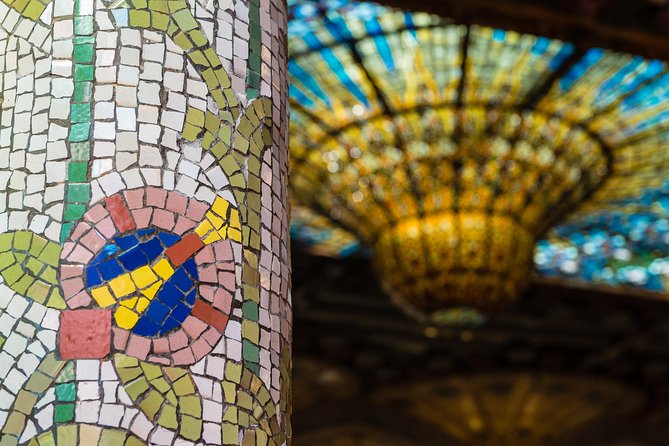
- Stained glass, mosaics, and an inverted-dome skylight in the Concert Hall
- Named artists and architects tied directly to the décor
- Quick hit option when you want the Palau without losing half a day
Why the Palau de la Música Catalana guide is worth it
Barcelona has plenty of eye candy. This is different. The Palau de la Música Catalana looks stunning from the outside, sure, but the real wow comes when you understand how the details work with the building’s purpose as a performance space.
A guided visit helps because you’re not just staring at tiles and glass. You’re learning how materials, light, and layout guide your eyes and shape the sound. The tour starts in spaces that explain the Palau’s role before you reach the big finale. That matters, because once you hit the Concert Hall, the architecture is no longer random. It’s a full design system built for music.
Also, the Palau isn’t some passive museum piece. It’s a living concert hall in a UNESCO-listed package. That combination tends to make people treat it like a quick photo stop. A good guide pushes you past the selfie urge and into pattern-spotting: nature motifs, stained glass placements, and the way staircases lead you upward like a story.
You can also read our reviews of more guided tours in Barcelona


Meeting point and getting your bearings fast
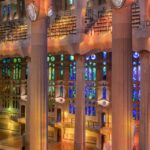
You’ll meet at the Palau de la Música Catalana, C/ Palau de la Música, 4-6, in Ciutat Vella. It’s listed as near public transportation, which is helpful because Barcelona’s streets can be a little maze-y once you’re in the historic core.
One practical tip: when you arrive, check for the group at the venue itself rather than assuming the meet spot is purely outside on the sidewalk. A visitor specifically noted the meeting place was behind the bar inside, not where an app might make it look from the street. So if you’re standing around outside, do a quick scan for the guide sign and the easiest doorway access.
If you’re timing this with other stops in the area, give yourself a few extra minutes. Not because the Palau is difficult, but because Barcelona is full of small detours and you’ll want that buffer for finding the exact meetup point.
Small-group, English tour, and why booking early helps
This experience is capped at 15 travelers, and that’s a big deal here. In a building this detailed, large crowds make it hard to hear the guide and harder to take in the craft at the right distance. With a smaller group, you can usually move in a clear flow: look, listen, move to the next “aha” spot.
Language is also straightforward: the tour is offered in English. That’s great for most visitors, but it’s also worth knowing that one review mentioned a guide had some trouble in English, making the pacing feel more challenging. If language comfort matters a lot to you, choose a departure time when you can comfortably focus for the full hour without rushing.
Finally, prebooking helps. This tour is booked about 29 days in advance on average, and that’s a clue: slots can fill. If the Palau is a key stop for you, grab your time slot early and build your day backward from there.
Rehearsal Hall first: where the story begins
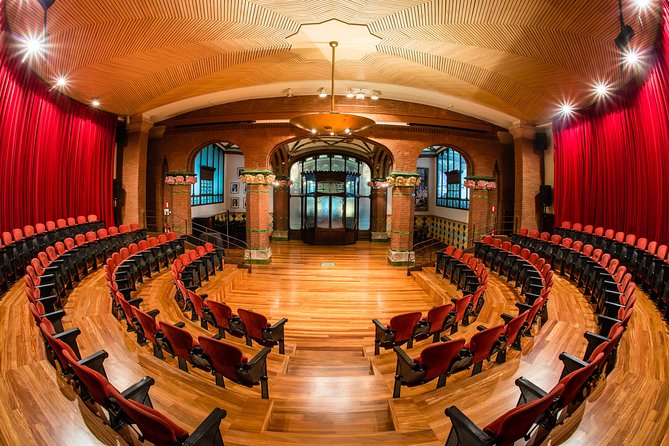
The tour takes you straight inside with a skip-the-line ticket. The first stop is the Rehearsal Hall of the Orfeó Català. This is the move that separates the Palau tour from a generic “look around” visit. You start before the big show-stopper room, so the rest of the building reads like a connected plan instead of a random collection of beautiful parts.
In this space, you learn how the foundation stone was laid in 1905. That date matters because it anchors the building in a specific moment. Then you watch a clip (about 15 minutes) that sets the architecture in the context of early 20th-century society. It’s not just facts. It gives you a frame for why the Palau looks the way it does, and why the building needed to feel more than functional.
Practical angle: this is where you’ll likely get your first real understanding of what to look for. Tile work, metal and glass details, and the way light is handled start to make more sense right away. When you move on to the staircases, you’ll recognize details instead of just seeing them.
The staircases: tiles underneath and marble banisters overhead
After the Rehearsal Hall and its short film, you move into the best kind of architectural workout: the staircase. This part is more than getting to the next floor. It’s a design gallery.
You’ll see elaborately decorated staircases that ascend to the second floor. The underside tiling is a highlight here—this is the stuff people often miss when they rush upward. You’re also guided toward the unusual glass balusters that support the marble banisters. It’s an odd combination at first glance—delicate glass next to solid stone—but that contrast is part of the Palau’s personality.
What I like about this stage is that it trains your eyes. You start noticing repeated motifs and consistent design choices. By the time you’re ready to enter the next hall, you’ve already learned how the building uses materials to create movement and drama.
Caveat: since this is a guided loop inside, the pace is controlled. If you’re the type who needs time to fully pause and take photos without being nudged forward, you might want to choose a less busy time slot so you have slightly more slack.



Lluís Millet Hall: windows that bring the façade inside
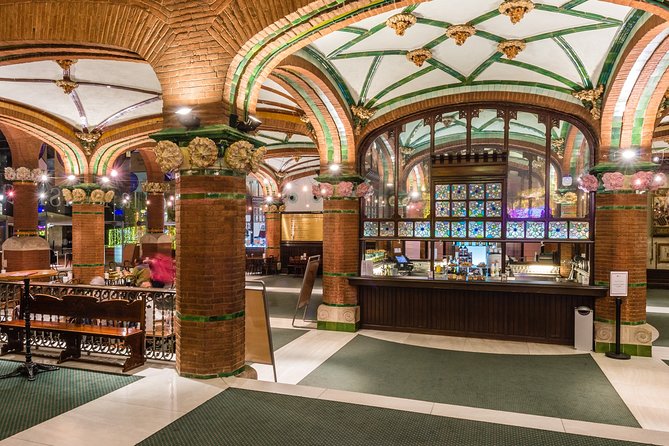
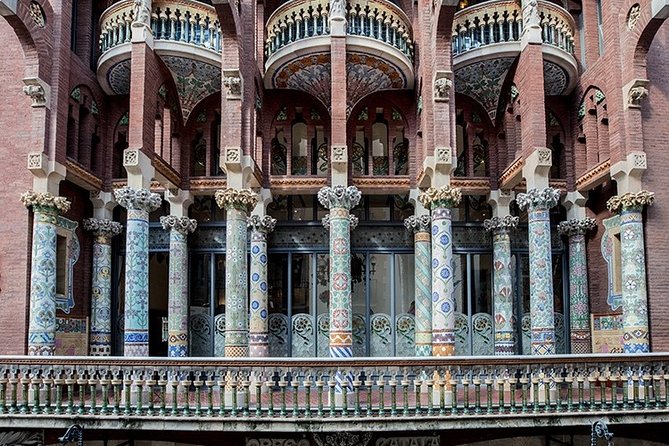
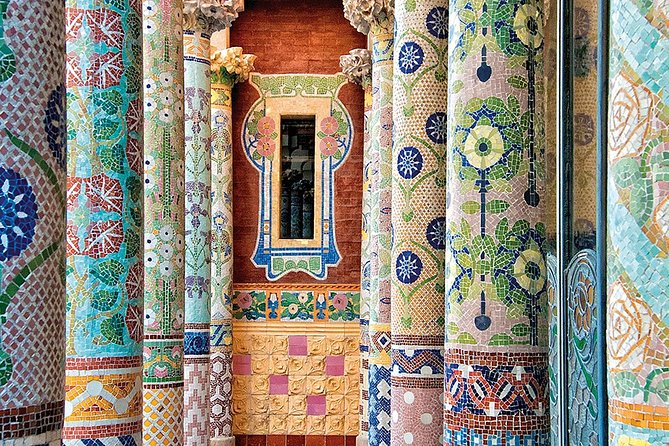
Next you head to the Lluís Millet Hall, and this is where the Palau starts feeling like it’s breathing. The hall has floor-to-ceiling windows looking out onto the balcony colonnade of the main façade.
You’ll also notice mosaics on pillars, including floral motifs that act like a tribute to nature. It’s one of those details that can feel decorative until a guide helps you connect it to the overall design language—then it turns into a theme you can track.
This stop is valuable because it shifts your view from interior craft to the relationship between inside and outside. The Palau doesn’t treat the building as a sealed box. It’s constantly referencing light and nature, and this hall makes that idea visible.
If you care about architecture as a system—how design choices support a space—this is one of the best moments. If you only care about the most famous room, you might feel tempted to skim ahead. Don’t. The Lluís Millet Hall is a key step toward understanding why the Concert Hall is so dramatic.
Concert Hall: stained glass arches and the inverted dome skylight
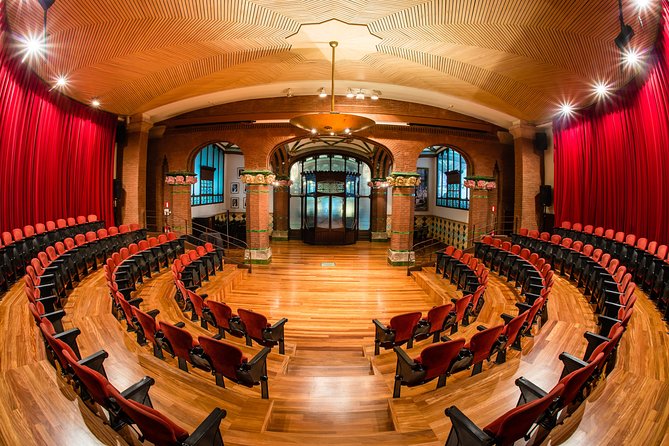
The Concert Hall is the centerpiece. This is where most people’s expectations come from, and the interior tends to exceed them because the room is built around both sightlines and sound.
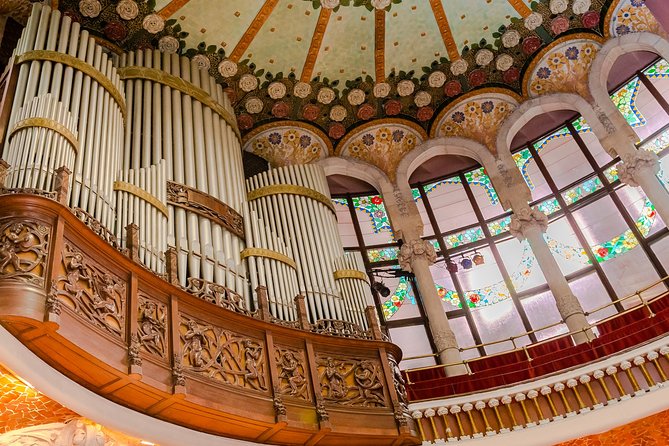
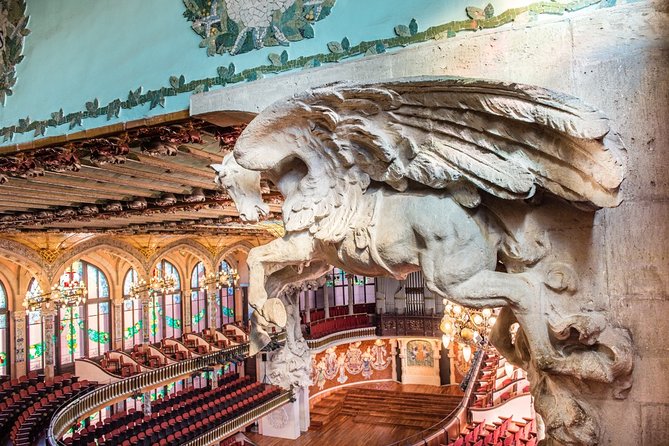
You’ll see massive panes of stained glass set in arches along the walls. Then the ceiling feature steals the show: a large skylight shaped like an inverted dome. It’s the kind of detail that looks beautiful in a photo, but even better in person because of how light moves through it as you shift your position.
As the guide explains the décor, you’ll hear specific names connected to the work: Eusebi Arnau, Pau Gargallo, Lluís Bru, and Antoni Rigalt. Having names attached to elements turns the visual into something you can remember. It also helps you avoid the common problem of seeing a gorgeous building and forgetting what you actually looked at.
One more practical note from real experiences: some tours can include hearing the organ, and at least one visitor described the organ being played and mentioned it has close to 3,000 pipes. That’s not guaranteed in your control, but it’s a strong reason to stay attentive when you reach this room—sound is part of the Palau’s magic, not just the décor.
What you get for $26.60: value check
At $26.60 per person, the price is easier to justify than you might expect because your ticket is included. You’re paying for three things bundled together:
- a local guide
- the Palau admission ticket
- the 15-minute audio-visual clip
You’re also getting access to the Palau’s key interiors in about one hour. For many travelers, that’s the ideal length: long enough to see the meaningful rooms, short enough to keep your Barcelona day intact for other plans.
Is it a bargain? For the combination of guide-led context plus admission plus skip-the-line entry, it often feels like the sensible way to do the Palau if you don’t want to spend your visit figuring out what’s most important on your own.
What it doesn’t include is also important: food and drinks aren’t part of the tour. So if you’re pairing this with lunch or dinner later, plan that separately and avoid expecting a pre-arranged break inside.
When this tour is the right fit (and when it might not be)
I’d steer you toward this tour if you want the Palau experience without losing your whole afternoon. It’s also a good fit if you like architecture explanations that connect details to purpose. The Rehearsal Hall setup and the stair-and-hall sequence are built to make you understand the building, not just admire it.
It also works well for music-focused travelers. Even though this is an architectural tour format, the building’s function as a performance venue shows up in the way light, glass, and décor shape the space.
It may be less ideal if you want total freedom to linger for long photo sessions. Since the tour is roughly an hour and follows a structured path, you might feel time pressure if you’re trying to photograph everything at every angle.
Should you book this Palau de la Música guided tour?
Yes, if your goal is a smart first look at one of Barcelona’s most striking Modernist landmarks. The guide-led order—Rehearsal Hall, staircases, Lluís Millet Hall, then the Concert Hall—gives you meaning while you’re looking. And with skip-the-line entry, it’s the kind of plan that usually saves time rather than adding friction.
I’d also book if you’re sensitive to group size. With a maximum of 15, you’re more likely to hear the guide and see details without being shoved along by a bigger crowd.
Skip it only if you’re perfectly happy browsing on your own and you know exactly what you want to focus on. If you’re unsure where to look first, this tour acts like a map—and the Palau rewards attention when you’re told what matters.
FAQ
How long is the Palau de la Musica Catalana guided tour?
It runs for about 1 hour.
Is admission to the Palau included?
Yes. The Palau de la Musica admission ticket is included.
Do I need to buy a separate ticket?
No. The tour includes the admission ticket and uses a skip-the-line ticket format.
What language is the tour offered in?
The tour is offered in English.
What is the group size?
The tour has a maximum of 15 travelers.
Do I choose a departure time?
Yes. You select a departure time that fits your schedule.
Where do I meet the guide?
Meet at Palau de la Música Catalana, C/ Palau de la Música, 4-6, Ciutat Vella, 08003 Barcelona, Spain.
Does the tour include food or drinks?
No. Food and drinks are not included.
Are service animals allowed?
Yes, service animals are allowed.
What should I expect at the start of the tour?
You meet your guide at the Palau, enter with your ticket, and begin with the Rehearsal Hall plus a 15-minute audio-visual clip.
Can I cancel for a refund?
Yes. Cancellation is free up to 24 hours in advance for a full refund.