REVIEW · BARCELONA
Barcelona & Gothic to Modern. Regular Tour
Book on Viator →Operated by Barcelona Architecture Walks · Bookable on Viator
Barcelona’s buildings talk fast.
What I like here is the way this guided walk connects architecture to real life—politics, religion, culture—moving through Barcelona from Roman traces to later eras. You’ll follow the thinking of architect Enric Miralles, not just memorize dates, with an architecture microguide and practical ways to look at details.
Two things I especially appreciate: first, the tour isn’t only about pretty façades. It builds a cause-and-effect story for why buildings changed—what societies wanted, argued about, and tried to fix. Second, when the guide is Pia (an architect and university-level architecture lecturer, based on past groups), the explanations land clearly even if you are not an architecture expert.
One consideration: if you want a light, easy-going intro with lots of casual storytelling, this can feel more like an architecture lesson. One review described it as closer to an architecture encyclopedia than a dramatic story, so you’ll likely enjoy it most if you’re curious and willing to pay attention.
In This Review
- Key highlights to look for on this walk
- From Roman traces to modern change: the Miralles way of seeing Barcelona
- The 3-hour format: how the pace and group size affect your experience
- Finding the start at Plaça Nova (and not getting swallowed by the crowd)
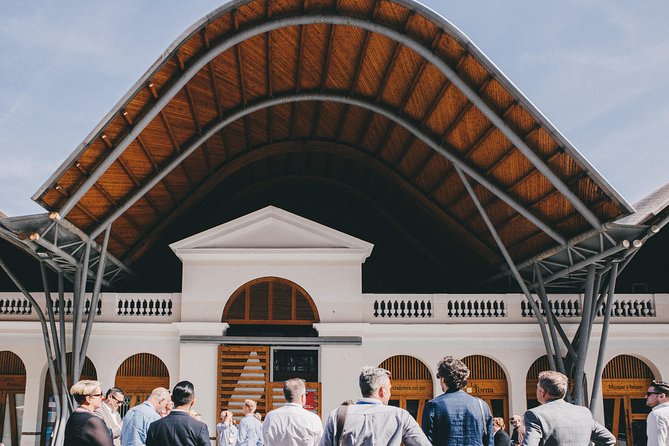
- Stop 1: Santa Caterina Market and the fieldwork mindset
- Stop 2: Basilica de Santa Maria del Mar and Gothic clarity
- Stop 3: Barcelona Cathedral and the politics you can see
- Stop 4: MUHBA Temple d’August and the Roman layer under your feet
- How the tour ties together Carolingian, post-Franco, Olympic, and el forat de la vergonya
- The guide factor: when an architect teaches, you feel the structure
- Accessibility, comfort, and what to wear
- Who should book this tour (and who should skip it)
- Should you book Barcelona & Gothic to Modern?
- FAQ
- How long is the Barcelona Gothic to Modern regular tour?
- What language is the tour offered in?
- Where do we meet, and when does it start?
- Is there a mobile ticket?
- What is the maximum group size?
- Can I get a full refund if I cancel?
Key highlights to look for on this walk
- Enric Miralles-led “how to see” approach that treats the city like a living argument
- A guided architecture walk through the Gothic Quarter and La Ribera areas
- Period-to-period connections from Roman Barcelona to post-Franco, Olympic-era change, and beyond
- Santa Caterina fieldwork where you practice Miralles-style observation at the market
- Four anchor stops: Santa Caterina, Santa Maria del Mar, Barcelona Cathedral, and MUHBA Temple d’August
- Small group size with a maximum of 20 travelers, for tighter pacing and questions
From Roman traces to modern change: the Miralles way of seeing Barcelona
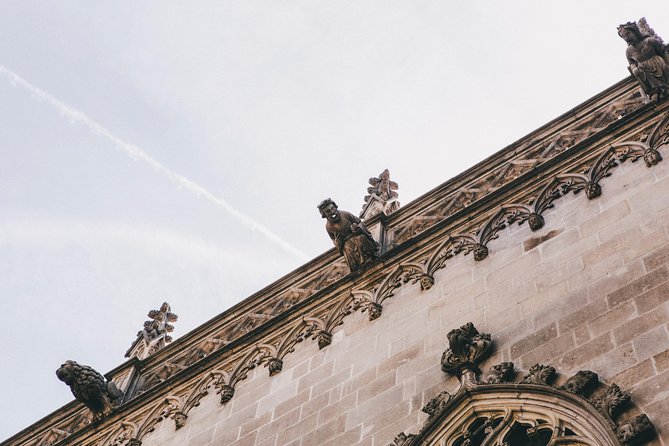
This is not a walk that only points and names. The core idea is learning to read the city the way Enric Miralles does: with attention to the complex reality behind architecture. In practical terms, that means you’ll be asked to connect what you see (stone, layout, materials, façades) with why it happened (beliefs, politics, social pressure, and rebuilding).
The tour’s timeline is part of the fun. You start with Roman Barcelona and keep moving forward through multiple layers: the Carolingian era, the shift after Franco, the modernization associated with the Olympics, and then a later period tied to el forat de la vergonya (the hole of shame). You don’t have to treat these as memorization tasks. You’ll see them as changes in priorities, power, and public space—how a city rewires itself over time.
If you like architecture explanations that stay grounded in real motives, this approach makes the Gothic Quarter far more than a photo stop. Instead of thinking, Gothic is just ornate, you start noticing how Gothic logic works: what gets built, what gets funded, what symbolism is doing the heavy lifting, and where compromise shows up.
You can also read our reviews of more tours and experiences in Barcelona.
The 3-hour format: how the pace and group size affect your experience
The walk runs about 3 hours in English, with a small group capped at 20 travelers. That matters more than it sounds. Small groups tend to work better for architecture walks because you can ask questions and actually hear the answers without shouting down a canyon of tourists.
Plan to stay mentally active. The structure is designed like a guided lesson with anchor stops. Between those stops, the guide is likely to point out cues—subtle transitions, street patterns, building relationships—that help you connect eras. If you stroll on autopilot, you’ll miss the point.
Also, you’re using a mobile ticket, so you’ll want your phone charged and ready at the start. And since the tour is near public transportation, it’s easier to build into a sightseeing day without planning a complicated route.
Finding the start at Plaça Nova (and not getting swallowed by the crowd)
You meet at Barcino Sculpture, Plaça Nova, 40 in Ciutat Vella. This is a high-activity area with lots of tours and pedestrians. One practical tip: arrive a few minutes early and confirm you’re standing at the exact sculpture spot before the group fills in.
Why this matters: architecture tours often start with a short briefing that sets up what you’ll be looking for during the next stops. If you arrive late and miss that setup, the later details may feel like disconnected facts instead of one evolving story.
Stop 1: Santa Caterina Market and the fieldwork mindset
The tour centers Santa Caterina Market as more than scenery. It’s where the experience turns from seeing to practicing. You’ll do fieldwork to check Miralles’s methods—essentially, learning a way of observing the city that goes beyond surface impressions.
Markets are great teaching tools because they show layers at human scale. Even if you think you know markets already, this one is positioned to help you notice how daily life and design choices influence each other. You’re likely to be guided in what to look for: patterns of movement, how space supports activity, how older structures and later changes coexist.
One reason this stop is valuable is timing. If the tour includes a return to the market area for the fieldwork component, you benefit from having already learned a few ways to interpret architecture. That means the market becomes the practice page, not just the opening chapter.
Practical tip: wear comfortable shoes. You’ll be walking between major stops and moving your attention constantly—up close to details and then back to the wider street context.
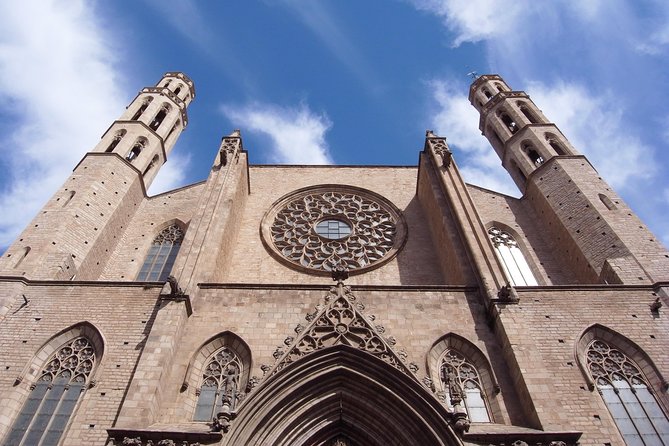
Stop 2: Basilica de Santa Maria del Mar and Gothic clarity
Santa Maria del Mar is a strong choice for learning Gothic form because it invites you to look at structure, not just ornament. In a Gothic setting, it’s easy to get lost in the look. A good architecture walk pulls you toward what the building is doing: how the space feels, how the layout supports worship and gathering, and how the building’s identity is expressed.
Here’s what I think you’ll take away if the guide does their job well: Gothic architecture can look complicated, but it often follows a clear logic. The tour’s broader goal—linking architecture to social and political reality—fits well in a basilica context, where religion, civic identity, and community life overlap.
If you’re into questions like why certain design decisions exist, this stop gives you real material. If you’re more interested in stories than structure, keep an open mind. Even narrative-heavy architecture experiences still need you to look at stone for the story to make sense.


Stop 3: Barcelona Cathedral and the politics you can see
Barcelona Cathedral tends to overwhelm first-time visitors with scale and detail. On this tour, that can become an advantage. You’re not just walking past a landmark; you’re learning to interpret it as a product of power, belief, and changing priorities.
The tour’s framing includes eras beyond medieval stonework, and that’s key. A cathedral sits at the crossroads of long timelines. As societies change, their needs and their budgets change too. What you see now is often the result of decisions made over time—some intentional, some compromise, some rebuilding after disruption.
This is where having an architect-style guide is useful. In past groups, Pia’s explanations have been described as very detailed, including charts and careful linking of history to architectural choices. That style helps you move from looking at surface details to understanding why they’re there and what they signal socially.
One small drawback to consider: if you prefer fast, playful tours, the cathedral stop can feel more like focused study than casual sightseeing. It’s still engaging, just not designed as a casual stroll.
Stop 4: MUHBA Temple d’August and the Roman layer under your feet
MUHBA Temple d’August brings the story back to roots. Roman remnants in a dense historic city are a reminder that the Gothic streets weren’t the first version of this urban fabric—they were built on top of earlier decisions, earlier planning, earlier power structures.
This stop helps you understand the tour’s timeline promise in a tangible way. When you start from Roman Barcelona, it’s easy for the later eras to feel like separate chapters. The value of ending at a Roman-related anchor (or revisiting Roman context during the walk) is that it helps you see continuity: the city keeps rewriting itself, but it never starts from zero.
In practical terms, Roman archaeology in an active city also teaches you patience. You’ll be looking at what remains, not what used to exist. That’s not a downside—it’s part of how architecture tells the truth about history: what survived, what was repurposed, what got covered, what was rediscovered.
How the tour ties together Carolingian, post-Franco, Olympic, and el forat de la vergonya
The itinerary’s four anchor stops are the visible anchors, but the tour’s bigger strength is the connecting tissue. You’ll likely spend time between stops linking architectural ideas to specific political and cultural shifts.
That includes:
- Carolingian-era influences as part of the long European story
- Post-Franco change, where Barcelona’s identity and urban priorities shifted
- Olympic Barcelona modernization, which helped reshape public space and the city’s global image
- A later era tied to el forat de la vergonya (the hole of shame), which is explicitly part of the tour’s narrative
Even if you don’t know these terms going in, the guide’s job is to keep them understandable. The best moments are when you start seeing how a city’s official image and its lived reality can diverge, and how architecture records those tensions.
If you like thinking like a designer—asking what problem a building was meant to solve—this is where the tour earns its keep.
The guide factor: when an architect teaches, you feel the structure
One of the most consistent strengths in the experience is the guide’s ability to communicate architecture clearly. Several past participants praised an architect-led approach, and Pia especially has been highlighted as exceptionally knowledgeable and able to explain details in a structured way.
From what’s been shared, the teaching style can include:
- very detailed explanations of how Barcelona evolved
- charts or organized breakdowns
- attention to how history, religion, and politics show up in building decisions
- tailoring to different levels within the same group
But here’s the balanced part: one review also noted a mismatch for a small subgroup who wanted more storytelling and less encyclopedia-style instruction. So the guide is strong, but the format can skew academic. If you’re the type who likes being challenged a little, you’ll probably thrive.
Accessibility, comfort, and what to wear
Most people can participate, and service animals are allowed. Since it’s a walking tour in central Barcelona, you should treat it like a walking-and-standing experience: plan for uneven streets and time spent looking up and around.
Bring:
- comfortable walking shoes
- water, especially if you’re touring on a warm day
- a phone for the mobile ticket and photos
Also, the experience requires good weather. If weather conditions are poor, the tour may shift to a different date or offer a full refund.
Who should book this tour (and who should skip it)
You’ll likely love Barcelona & Gothic to Modern if you:
- enjoy architecture and want to learn how to see, not just what to see
- like connecting buildings to politics, religion, and civic identity
- want an organized, theory-informed walk rather than a casual history chat
- don’t mind a guide who explains details and expects your attention
You might want to think twice if you:
- want an easy introductory city tour with lots of broad, simple takeaways
- prefer mostly storytelling with minimal architectural analysis
- struggle with finding the meeting group quickly (since multiple tours start at the same general spot)
If you fall into the middle—curious but not technical—this tour can still work well, especially if your guide explains things in a way that matches your level.
Should you book Barcelona & Gothic to Modern?
Book it if you want your Gothic Quarter visit to feel like more than sightseeing. The combination of Enric Miralles-inspired methods, an architect-led guide (often Pia), and a practice-oriented market fieldwork component gives this tour a sense of purpose.
Don’t book it if you want a casual, beginner-only architecture overview. This walk is strongest when you’re ready to pay attention to how buildings work and why societies shaped them that way.
If you’re deciding between doing this and another classic big-bus style tour, think about what you want your trip to do. This one helps you see Barcelona with sharper eyes—and it leaves you with frameworks you can use long after the walk ends.
FAQ
How long is the Barcelona Gothic to Modern regular tour?
It lasts about 3 hours.
What language is the tour offered in?
The tour is offered in English.
Where do we meet, and when does it start?
You start at Barcino Sculpture, Plaça Nova, 40, Ciutat Vella, 08002 Barcelona. The start time is 10:30 am.
Is there a mobile ticket?
Yes, the tour uses a mobile ticket.
What is the maximum group size?
The maximum is 20 travelers.
Can I get a full refund if I cancel?
Yes. You can cancel up to 24 hours in advance for a full refund. If you cancel less than 24 hours before the start, the amount paid isn’t refunded. The tour also requires good weather, and if it’s canceled due to poor weather, you’ll be offered a different date or a full refund.