REVIEW · BARCELONA
Gothic Quarter – Private Tour
Book on Viator →Operated by Be Local Tours · Bookable on Viator
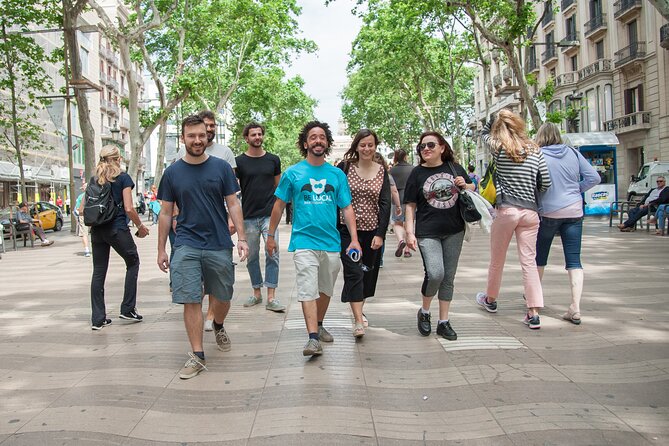
Barcelona hides 2,000 years in plain sight. This private Gothic Quarter tour stitches together La Rambla, Roman burial sites, and the grand Cathedral of Santa Creu and Santa Eulalia, with a local guide keeping it clear and walkable. I love the way you get a tight, human-scale route through places that can feel chaotic on your own.
My other favorite part is the mix of eras in one stroll: medieval narrow streets, the old Jewish quarter, and even traces from the Spanish Civil War. Guides like Patrick and Carlos also bring personality and humor, including ways to keep younger people engaged. One catch: the start area at Plaça de Catalunya can be busy, so you may want to plan extra time to spot your guide and confirm the meeting point before you go.
In This Review
- Key things to know before you go
- Plaça de Catalunya start: private tour feel, easy pickup, real-world meet-up tips
- From La Rambla’s history into the Gothic Quarter’s medieval maze
- Roman Barcino tombs: outdoor history you can actually spot
- Jewish Quarter lanes: medieval flavor, everyday alleys, and a deeper sense of place
- A 14th-century Catalan Gothic church and a hidden square marked by war
- Neo-Gothic bridge symbolism and Catalonia’s seat of power in an old palace
- Santa Creu and Santa Eulalia: neo-Gothic grandeur layered over medieval structure
- Roman remains of Barcino and the Gothic Quarter’s time-warp effect
- Royal Aragon power at the Gothic and neo-Gothic square near Santa Ágata
- Price and value: is $66.52 per person a fair deal for 2.5 hours?
- What kind of traveler should book this Gothic Quarter tour?
- Should you book? My take before you commit
- FAQ
- How long is the Gothic Quarter private tour?
- Where does the tour start and end?
- Is pickup available?
- Is the tour private?
- What language is the tour offered in?
- What’s included in the price?
- What’s not included?
- Are mobile tickets used?
- Is the tour suitable for most people?
- What weather requirements apply?
Key things to know before you go
- Private, only your group for a calmer pace and more questions.
- 2 hours 30 minutes that concentrates Roman, medieval, and Catalan Gothic sights.
- English guide plus a local approach that connects politics, religion, and culture.
- Pickup available if you’re within 0.5 km of Plaça de Catalunya (guide carries a company card).
- Built-in variety: Rambla history, Roman outdoor tombs, Jewish quarter alleys, and neo-Gothic landmarks.
- Highly rated by past participants, with frequent praise for storytelling and flexible pacing.
Plaça de Catalunya start: private tour feel, easy pickup, real-world meet-up tips
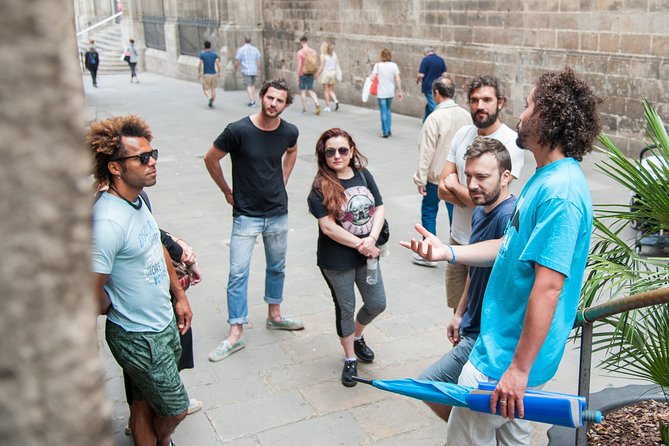
This tour is designed as a true private experience, meaning only your group joins you. That matters in the Gothic Quarter, where the streets twist and the crowds can surge without warning. With a guide, you’re not just following sights—you’re following context.
The tour starts at Plaça de Catalunya (L’Eixample) and ends at Pl. de Correus (Ciutat Vella). If you want pickup, you can arrange it as long as you’re within 0.5 km of Catalunya Square. The guide carries a company card, so it’s worth keeping an eye out and not wandering in circles.
One practical note from real-world experience: Plaça de Catalunya is big, and it can take a few minutes to visually match a guide. If you’re picky about timing (or traveling with kids), plan to arrive a little early so the first five minutes don’t turn into a stress test.
You can also read our reviews of more private tours in Barcelona



From La Rambla’s history into the Gothic Quarter’s medieval maze
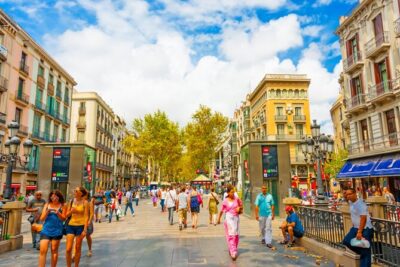
The first stop leans into Barcelona’s signature contrast: La Rambla. Even if you’ve walked it before, this tour treats it as more than a shopping-and-street-performer strip. You’ll get the avenue’s historical role, plus the sense that it’s tied to the city’s identity.
Then you move into the medieval narrow streets, the real Gothic Quarter atmosphere. Expect important churches and palaces from different historical periods—so the walk becomes a timeline you can feel under your feet. This is where a guide earns their fee: you don’t just see stonework, you learn why it’s there.
What I like about this segment is that it sets your mental map. Once you understand how the area evolved, the rest of the route makes more sense, especially when Roman references pop up later.
Roman Barcino tombs: outdoor history you can actually spot
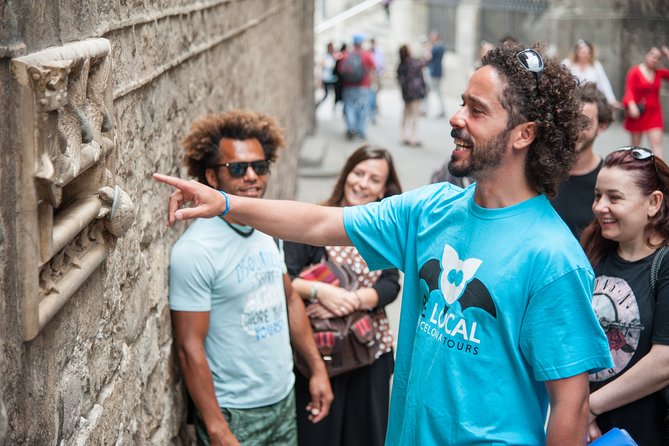
Next comes a Roman stop: an old imperial burial site where you can see Roman outdoor tombs. It’s one of those moments in Barcelona where the city doesn’t switch eras neatly—it layers them. You’re walking in a neighborhood shaped by centuries, not moving between separate “attractions.”
Look for how the site sits in its surroundings. Even if you’re not a hardcore archaeology person, the guide’s job is to translate what you’re looking at: why Romans were here, and how those physical remnants connect to later Barcelona.
A possible drawback here: since this is a walking tour, you’ll be standing and observing more than you might on a bus tour. If you have mobility limits, tell your guide early so they can manage the slowdowns. Past participants praised guides for accommodating walking speed, so it’s something you can ask for.
Jewish Quarter lanes: medieval flavor, everyday alleys, and a deeper sense of place
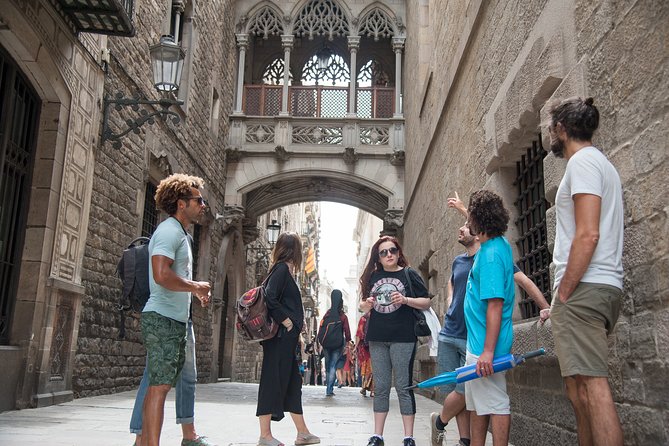
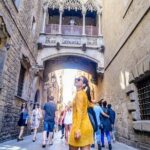
The route then turns toward the old Jewish quarter—a network of alleys with a medieval flavor where a large Jewish community once lived. This section works best if you’re open to learning how cultural life shaped the city’s layout, not just its monuments.
You’ll move through tight lanes where it’s easy to imagine daily life happening right where you stand. The guide’s context helps this part land emotionally, because the neighborhood design tells a story about community and history.
If you’re short on time in Barcelona, this stop is a good reminder that the Gothic Quarter isn’t only about cathedrals. It’s also about people, and the streets that still carry their echoes.
A 14th-century Catalan Gothic church and a hidden square marked by war
The tour includes a standout architectural moment: a wonderful 14th-century church, described as a masterful example of Catalan Gothic architecture. In practice, this stop is where you slow down and start noticing details—how Gothic forms read in daylight, and how the building’s age feels different from the surrounding streets.
From there, you head to a beautiful hidden square. In the center is a baroque church with visible marks from the Spanish Civil War. This isn’t a “war museum” stop, but it’s meaningful. It shows how Barcelona carries modern history right into historic spaces, including damage that never fully disappears.
One thing to keep in mind: this is a walking tour with frequent turns. Hidden squares can be easy to miss on your own, and that’s exactly why a guided route matters. Your guide helps you find the place and understand why it’s worth pausing for.



Neo-Gothic bridge symbolism and Catalonia’s seat of power in an old palace
Then comes a neo-Gothic bridge known for spectacular design and its history tied to symbols described as “disturbing.” If you like stories that explain odd details, this is one of the stops that tends to spark questions. A bridge is a short moment physically, but the symbolism can open the door to larger themes about identity and belief.
After that, you’ll see an old medieval palace, described as a symbol of Barcelona’s past power and now the seat of the Government of the Autonomous region of Catalonia. This part is great if you care about how politics lives in architecture. You’re not just touring stones; you’re seeing the physical weight of governance.
If you’re the type who likes to connect the dots, you’ll probably enjoy how the guide ties earlier religious and cultural history into later civic identity. That thread is one reason many people rate this tour so highly for “understanding” rather than just “seeing.”
Santa Creu and Santa Eulalia: neo-Gothic grandeur layered over medieval structure
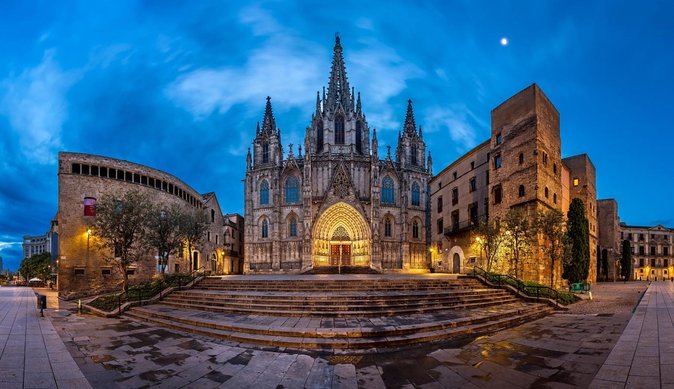
The tour’s biggest religious centerpiece is the Cathedral of Santa Creu and Santa Eulalia. It’s described as one of the most impressive churches in the city, with a splendid neo-Gothic façade over a medieval structure and a long, layered story.
This cathedral stop is where you’ll likely spend the most mental effort. You’re looking at visible contrasts: medieval foundations with later neo-Gothic styling. A guide helps you interpret what you’re seeing so you don’t leave with only general impressions.
Practical tip: this area can feel like a “photos and pauses” moment. If your group is mixed age, you can use the guide’s cues to keep everyone engaged while you still enjoy the space.
Roman remains of Barcino and the Gothic Quarter’s time-warp effect
One more Roman connection appears as remains of the temple of ancient Roman city Barcino tucked into a corner hidden from view. This is the kind of stop that proves why a guide is useful. Even if you’re standing in the right neighborhood, you might walk right past small fragments without knowing what they are.
This segment also helps explain the “time warp” feeling people get in Barcelona’s old center. You’re moving through medieval streets, then stepping into Roman leftovers, then back toward neo-Gothic flourishes. The guide’s job is to keep that timeline organized in your head.
If you tend to forget what you saw earlier, this stop can serve as a mental reset: it ties the whole route together.
Royal Aragon power at the Gothic and neo-Gothic square near Santa Ágata
Near the end, you’ll visit an enchanting Gothic and neo-Gothic square linked to the Royal Palace of the Kings of Aragon and the Chapel of Santa Ágata. Squares like this are where Barcelona feels theatrical—stone, symmetry, and history stacked in one viewpoint.
This stop works well because it combines setting and story. The square isn’t only a backdrop; it’s a stage for royal and religious presence. Even if you don’t memorize dates, you can feel why ruling families mattered and how that influence shapes the city.
Price and value: is $66.52 per person a fair deal for 2.5 hours?
At $66.52 per person for about 2 hours 30 minutes, you’re paying for three things: a local guide, a private route, and tax included (GST is listed as included). Transport is not included, so you’ll handle your own way to the meeting area.
Is it worth it? For me, the value comes from reducing wasted time. Instead of wandering the Gothic Quarter guessing what’s important, you get a sequence that moves through the major layers of the area: Rambla context, Roman tombs, the Jewish quarter, key Gothic/neo-Gothic landmarks, and the cathedral.
It’s also booked fairly far ahead on average (around 33 days), which usually signals steady demand for this style of walk. If you like history but also like sanity, private guided time often beats DIY in neighborhoods that reward local knowledge.
What kind of traveler should book this Gothic Quarter tour?
This tour is ideal if you want:
- A structured walk through the Gothic Quarter’s major eras in one morning or afternoon.
- A private-group experience where the pace can flex.
- A guide who can connect politics, religion, and culture so the stones don’t feel random.
It’s also a good pick for families. One family specifically praised how the guide engaged kids (including a funny attention-getter moment) while still delivering real historical context for adults. If you’re traveling with mixed ages, private helps a lot.
Should you book? My take before you commit
If you want to understand Barcelona’s old center instead of just collecting photos, I’d book this. The route is strong: it threads Roman remains, medieval streets, Jewish Quarter history, Catalan Gothic architecture, and the big cathedral centerpiece—without letting the story drift.
I’d hesitate only if you dislike walking for 2.5 hours or if you need a very strict start time without any possibility of “finding the guide” at Plaça de Catalunya. In that case, plan buffer time and message details ahead of arrival.
FAQ
How long is the Gothic Quarter private tour?
It lasts about 2 hours 30 minutes (approx.).
Where does the tour start and end?
It starts at Plaça de Catalunya, L’Eixample, 08002 Barcelona and ends at Pl. de Correus, 9999, Ciutat Vella, 08002 Barcelona.
Is pickup available?
Yes. Pickup is offered if you choose a location within 0.5 km of Catalunya Square. The guide carries a company card.
Is the tour private?
Yes. It is a private tour/activity, so only your group participates.
What language is the tour offered in?
The tour is offered in English.
What’s included in the price?
The price includes GST (Goods and Services Tax) and an experienced local guide.
What’s not included?
Transport is not included.
Are mobile tickets used?
Yes. The tour uses a mobile ticket.
Is the tour suitable for most people?
The tour notes that most travelers can participate.
What weather requirements apply?
The experience requires good weather. If it’s canceled due to poor weather, you’ll be offered a different date or a full refund.