REVIEW · BARCELONA
Gaudí and Barcelona Legends – Private Tour
Book on Viator →Operated by The Barcelona Feeling · Bookable on Viator
Gaudí makes more sense when a local guides you. This private, English tour stays crowd-free and uses entertaining stories to connect façades, streets, and legends. You’ll also get the simple luxury of your own guide to ask questions as you go.
I love the way the tour treats architecture like a story, not a lecture—especially the stop at La Pedrera, where you learn how it fits into Gaudí’s timeline. I also like the balance between famous names and the places people miss, like Els 4 Gats, the art café linked to early Picasso days.
One thing to plan for: entrance fees are not included, and many stops are timed tightly. So if you’re hoping to go inside several sites during the 2 hours, you’ll likely need extra time (and extra tickets).
In This Review
- Key highlights at a glance
- A crowd-free private route that makes Barcelona feel walkable
- La Pedrera and Passeig de Gràcia: where the tour teaches you how to look
- Casa Batlló: Gaudí’s creativity explained from the exterior outward
- The Modernist Block: Casa Amatller and La Mansana de la Discordia
- Plaça Catalunya to El Born: legends meet the older streets
- Els 4 Gats: the quick art-café stop with real cultural weight
- Palau de la Música Catalana: modernist details plus a lobby glimpse
- Time, tickets, and walking pace: how the 2 hours really work
- Price and value: what $94.63 per person buys you
- What you’ll get out of the guide (and why the anecdotes matter)
- Who should book this tour (and who might skip it)
- Should you book Gaudí and Barcelona Legends?
- FAQ
- How long is the Gaudí and Barcelona Legends private tour?
- Is this tour private or shared?
- What language is the tour offered in?
- Are entrance tickets included for the attractions?
- What are the main stops on the route?
- Where do we meet and where does the tour end?
- Is there a mobile ticket for the tour?
- Is the tour near public transportation?
- What’s the cancellation policy?
- What if the tour is canceled because of the minimum number of travelers?
Key highlights at a glance
- Crowd-free pacing that helps you actually hear the guide
- Façade-first storytelling at major Modernist addresses along Passeig de Gràcia
- A legend-to-street connection, from Plaça Catalunya to El Born
- Els 4 Gats as a quick stop with a real cultural link (including young Picasso)
- Palau de la Música Catalana for detailed exterior views plus a lobby glimpse
A crowd-free private route that makes Barcelona feel walkable
Barcelona can be crowded in a hurry, especially around the headline Modernist buildings. This tour aims to dodge that chaos with a private, timed walk where the guide keeps you moving at a human pace. It’s designed for learning without feeling rushed or squeezed in with strangers.
You’re not stuck in a rigid script either. You get time to ask questions as you move between stops, which changes the whole vibe. Instead of looking at stone and walking away confused, you start noticing patterns—materials, shapes, and the ideas behind what you’re seeing.
The overall flow is also smart. It starts in the Eixample area with Gaudí’s most iconic public-facing addresses, then works toward Plaça Catalunya and into the older lanes of El Born. That mix helps you understand the city’s layers, not just its famous photos.
You can also read our reviews of more private tours in Barcelona



La Pedrera and Passeig de Gràcia: where the tour teaches you how to look
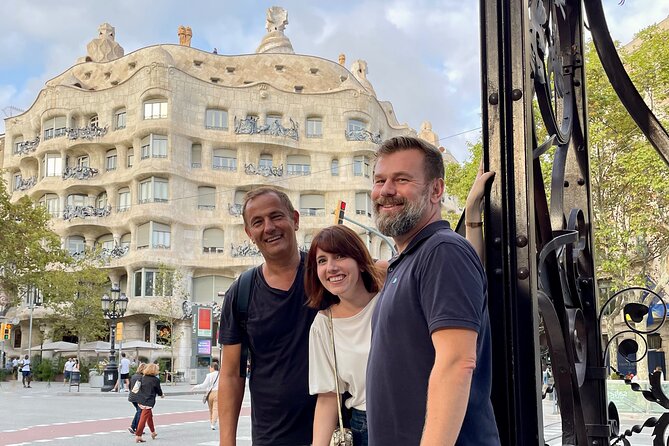
The tour kicks off at a practical meeting point by Casa Milà, known as La Pedrera. From the first moments, you’re aimed at the building’s exterior and the façade as the main attraction, not a distant view you can’t interpret.
At Casa Milà (La Pedrera), you’ll spend time learning about the building’s history and façade. The standout detail here is how it connects to Gaudí’s broader life work: it was his last civic building before he dedicated the rest of his time to the church of Sagrada Familia. Even if you only know Gaudí from photos, that kind of timeline context helps you see the façade differently—like it’s a closing chapter rather than just a pretty face.
Then you shift onto Passeig de Gràcia, the grand boulevard where everything looks polished and intentional. The guide doesn’t treat it like a corridor to the next stop. You’ll get little story beats tied to street pavement and even lamp posts—small details that turn a walk into a guided scavenger hunt.
That approach is one of the tour’s best values. You don’t just arrive at landmarks; you learn how to read the street around them.
Casa Batlló: Gaudí’s creativity explained from the exterior outward
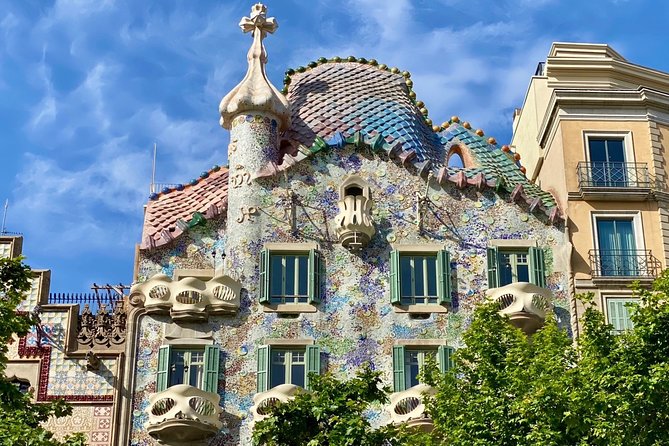
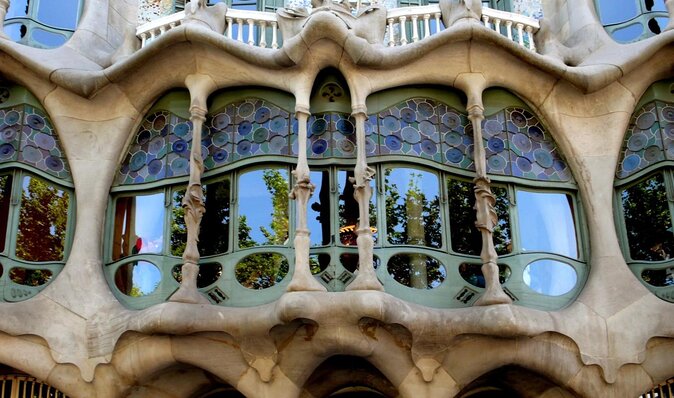
Next comes one of Barcelona’s best-known Gaudí addresses: Casa Batlló. This stop is short, but it’s built around what matters most for a timed walking tour—the exterior façade.
You’ll hear how the guide interprets Gaudí’s design creativity on the building’s front. Because the emphasis is on the exterior, you’re not stuck waiting for entrances or deciding last-minute whether to add tickets. You get a strong “what am I looking at and why?” experience within the tour’s 2-hour frame.
One practical tip for you here: bring your curiosity even if you’re not a lifelong Modernism fan. The guide’s job is to translate weird shapes and bold design choices into something that clicks fast. If you’re the type who likes to ask questions, this stop is a great place to do it.
The Modernist Block: Casa Amatller and La Mansana de la Discordia
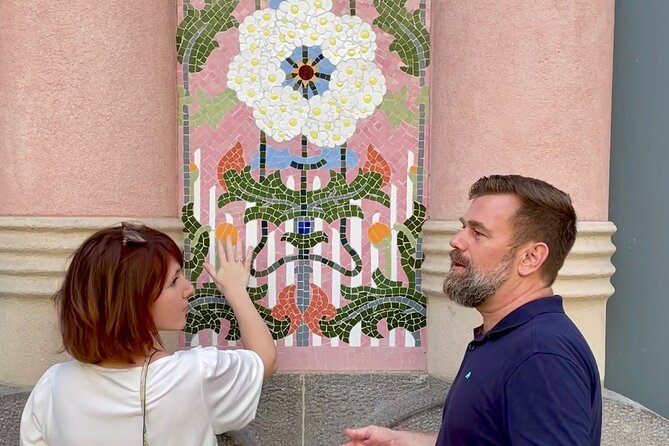
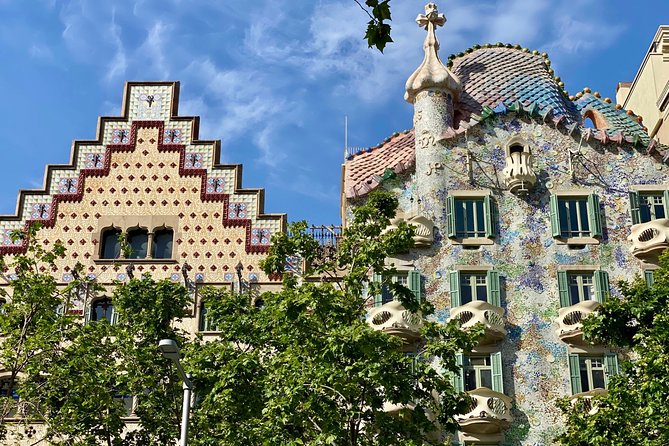
The tour then moves into the area people call La Mansana de la Discordia, where several Modernist buildings sit close enough that you can compare styles without extra transit. You’ll get a guided look at how the façades relate to each other and why they’re spoken about as a group.
A key stop here is Casa Amatller. The tour highlights it as one of the more fascinating Modernist buildings, especially because many visitors don’t pay much attention to it. The guide’s promise is that you’ll come away enthusiastic after learning its architectural and historical story—not just seeing it as another façade on a famous street.
From there, the focus moves to Casa Morera, designed by Lluís Domènech I Montaner. This is where the tour’s “hidden detail” angle really works. The façade includes lots of floral decoration, and you’ll be pointed toward a surprising detail you might otherwise miss when you’re just taking photos.
Then you’ll connect the dots across the block: the tour explains why these three distinct Modernist buildings are grouped under the phrase Block of Discord. Even without going inside, the learning payoff can be big because you can see differences side by side as you walk.
Plaça Catalunya to El Born: legends meet the older streets
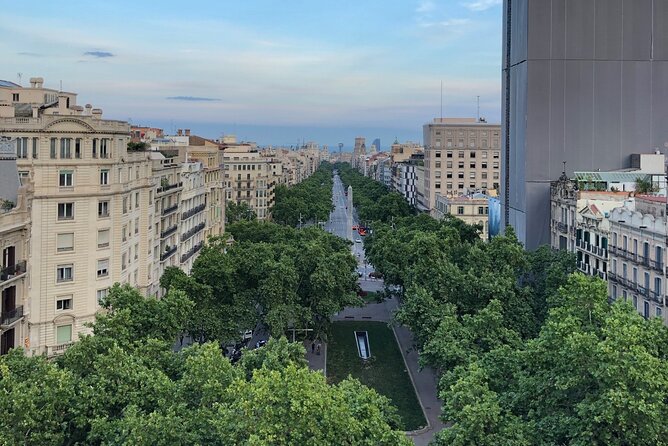
After the Modernist cluster, you get a shift in atmosphere. The tour passes Plaça Catalunya, described as the connector between the newer Eixample area and the older city. For many first-time visitors, that’s useful context. You’re not just walking; you’re crossing from one Barcelona identity to another.
Then you reach El Born, with time set aside to explore the neighborhood and look for references to the legends you learned earlier. This isn’t a museum-style stop. It’s a chance to make the stories “stick” by noticing them in the street layout, nearby sights, and the feel of the area.
Why I like this part for you: it turns the tour from a list of buildings into a location-based understanding of Barcelona. Even if you can’t name every architect yet, you’ll know how to relate buildings and legends to the areas where they sit.
If you want a smooth transition for the evening, El Born is also a strong place to keep walking after the tour ends. You’ll be in an area that’s easy to explore on foot.



Els 4 Gats: the quick art-café stop with real cultural weight
One short stop that punches above its time slot is Els 4 Gats. The tour positions it as an art café tied to architects from the turn-of-the-century circle, including Gaudí socializing there. It also includes a clear cultural link: young Picasso came here.
You’ll only spend about 5 minutes at this stop, so it’s not about lingering. It’s about getting the story so that when you see the place on your own later, it means something beyond a name on a map. This is the kind of detail that makes a walking tour feel worth it, even when the clock is moving.
If you like cultural context, this is a great morale boost midway through the route. It also breaks up the pace between the heavier architecture stops.
Palau de la Música Catalana: modernist details plus a lobby glimpse
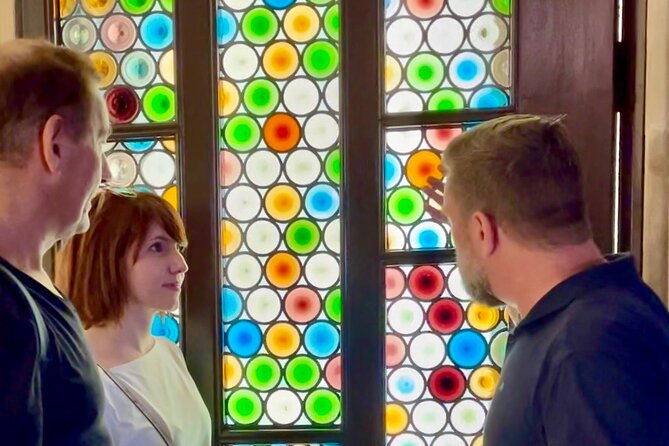
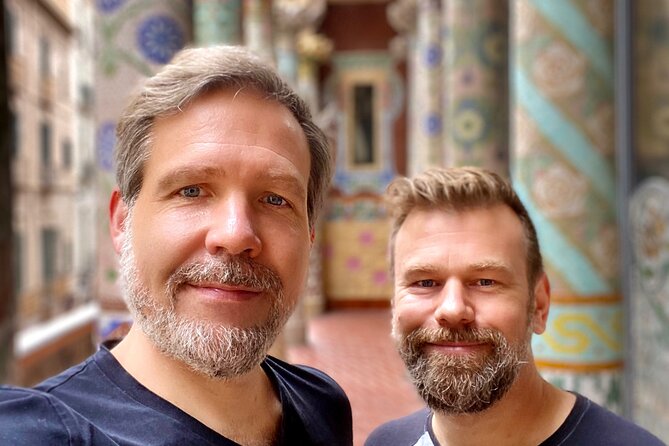
The final major attraction on the route is the Palace of Catalan Music, the Palau de la Música Catalana. The tour frames it as a modernist architectural gem and focuses on the magnificent outer façade with many details. You also get a glimpse into the beautiful lobby.
This kind of exterior focus is practical for a timed private tour. Instead of waiting for indoor access you might not have, you get the key visual ideas from the outside and a brief interior view that still feels special.
The meeting point and ending points are also thoughtfully chosen for transit. The tour ends at the concert hall address in Ciutat Vella, and the yellow metro line is close to that end location. That makes it easier to continue your day without backtracking across town.
Time, tickets, and walking pace: how the 2 hours really work
The tour runs about 2 hours and includes multiple stops with timed windows. Most of the building moments are around 10 minutes each, with shorter passes on the street and one longer neighborhood segment in El Born (about 30 minutes). That structure is ideal if you want a fast, guided introduction rather than an all-day architectural project.
Entrance fees are not included, so you should treat this as primarily a façade and street-learning experience. That’s not a flaw—it’s often the smart way to do Gaudí and Modernism in a single afternoon. Just make sure you don’t assume you’ll be paying for nothing. If you want interiors, plan to add tickets and time.
For your comfort, wear shoes that handle city sidewalks. You’re walking between major areas, including long boulevard sections and older neighborhood streets. Even if each segment sounds short on paper, the total walking adds up quickly in Barcelona.
Price and value: what $94.63 per person buys you
At $94.63 per person for roughly 2 hours, the value is really in three places: the private guide, the crowd-free approach, and the way the tour connects sites through stories.
You’re getting a professional tour guide and a mobile ticket. You’re also getting a format where you’re not sharing the experience with another group. That matters because the guide can tailor answers to your questions and keep you moving efficiently.
Group discounts are listed too, which is a helpful detail if you’re traveling with friends or family. When you can split the cost among several people, the per-person value often improves a lot.
The one financial consideration is entrances. Since ticket costs are not included, your final spend depends on whether you choose to add entry tickets beyond what you see during timed exterior stops. If you keep expectations realistic—guided façades, street stories, a lobby glimpse—you’ll likely feel the price reflects the quality of the guide and the time saved.
What you’ll get out of the guide (and why the anecdotes matter)
The biggest praise the tour receives is about the guide’s communication style. The guide you might have—Michael is specifically mentioned—comes through as articulate and personable, and the experience feels effortless and engaging rather than scripted. There’s also mention of short, vivid anecdotes that make the architecture feel less distant.
That’s a real difference on a Gaudí day. You can absolutely go to these buildings on your own. But without someone connecting the dots—why a façade matters, where the legends connect, what to notice—you often end up with photos and little understanding.
Here, the stories do the heavy lifting. You start seeing details you’d otherwise miss, like design ideas tied to specific buildings or the contrast between structures in the Block of Discord area.
Who should book this tour (and who might skip it)
You’ll probably love this tour if you’re:
- First-time visitors who want a guided Gaudí and Modernism overview without getting lost
- People who like streets and stories, not just standing in front of buildings
- Travelers who prefer asking questions and getting clear answers
- Anyone with limited time who still wants a satisfying architectural route
You might want something else if you:
- Want a long inside-only sightseeing day, with lots of time in multiple interiors
- Prefer self-guided exploration with minimal talking
- Need a slower pace with extended stops beyond 10-minute windows
The sweet spot is a short afternoon that gives you context fast and leaves you ready to explore on your own afterward.
Should you book Gaudí and Barcelona Legends?
I’d book it if you want a smart, guided Gaudí introduction that feels personal and keeps you moving through the right neighborhoods. The crowd-free private format, the façade storytelling, and the way the tour connects modernist buildings to legends and locations make the 2 hours feel efficient.
Before you book, do two quick checks:
- Confirm in your own plans whether you want to add entrance tickets later, since they aren’t included here.
- Decide whether you’re happy with brief stops and outdoor-focused viewing. If yes, this tour fits your day.
If that sounds like you, this is an excellent way to spend an afternoon in Barcelona without feeling like you’re rushing through a checklist.
FAQ
How long is the Gaudí and Barcelona Legends private tour?
It runs for about 2 hours.
Is this tour private or shared?
It’s private. Only your group participates.
What language is the tour offered in?
The tour is offered in English.
Are entrance tickets included for the attractions?
No. Entrance fees to attractions are not included.
What are the main stops on the route?
You’ll see Casa Milà (La Pedrera), Casa Batlló, Casa Amatller and the La Mansana de la Discordia area (including Casa Morera), Els 4 Gats, the Palau de la Música Catalana, and time in El Born.
Where do we meet and where does the tour end?
The tour starts at Farmàcia La Pedrera, Pg. de Gràcia, 90, L’Eixample, 08008 Barcelona, Spain, and ends at Palau de la Música Catalana, C/ Palau de la Música, 4-6, Ciutat Vella, 08003 Barcelona, Spain.
Is there a mobile ticket for the tour?
Yes, the tour includes a mobile ticket.
Is the tour near public transportation?
Yes, it’s near public transportation, and the yellow metro line is close to the end point at the concert hall.
What’s the cancellation policy?
You can cancel for free up to 24 hours in advance for a full refund.
What if the tour is canceled because of the minimum number of travelers?
If it’s canceled because the minimum isn’t met, you’ll be offered a different date/experience or a full refund.