REVIEW · BARCELONA
From Barcelona: Medieval Villages Day Tour
Book on GetYourGuide →Operated by Explore Catalunya · Bookable on GetYourGuide
Three medieval villages, one great day out. I love the guided storytelling that brings each town to life, and I love the free time that lets you wander at your own pace. You’ll start in Barcelona and end back in the city after taking in cliff views, old stone streets, and quiet countryside.
What makes this tour work so well is the way it mixes “walk with the guide” moments with time to reset—especially in Rupit. Guides like Berta and Sergio show up repeatedly in participant write-ups for keeping the pace lively and the history clear, without turning the day into a lecture.
One possible drawback: the schedule is full. It’s a 10-hour outing, and you do have a limited amount of time in each village (Rupit gets 2 hours), so if you want to linger for hours in one place, you might feel a bit time-pressed.
In This Review
- Key Things That Make This Tour Worth It
- Three Medieval Villages from Barcelona, with Real Breathing Room
- Meet Point and Timing: Start Straight, Keep It Simple
- Besalú: Arcades, a Mikveh, and the Jewish History That Still Shows
- Castellfollit de la Roca: The Tiny Basalt Cliff Town Stop
- Rupit: The Free Time Village with Cobblestones and a Hanging Bridge
- The Drive to Tavertet: Cingles de Tavertet Views and Ancient Markers
- Tavertet: A Nationally Protected Village and the Romanesque Sant Cristòfol
- Getting Back to Barcelona: Countryside You Can Watch Through the Window
- Transportation and Group Size: Comfortable, Small-Group Energy
- Price and Value at $117: What You’re Actually Paying For
- Tips to Get the Most out of the Free Time (Without Feeling Rushed)
- Who This Tour Suits Best
- Should You Book This Medieval Villages Day Tour?
- FAQ
- What villages does this day tour visit?
- How long is the tour?
- Where is the meeting point in Barcelona?
- Is transportation included?
- Is lunch included?
- Do I get free time to explore?
- Is the tour guided in English?
- Do I need to arrange hotel pickup?
- Does the itinerary include viewpoints and scenic drives?
- What is the cancellation policy?
Key Things That Make This Tour Worth It
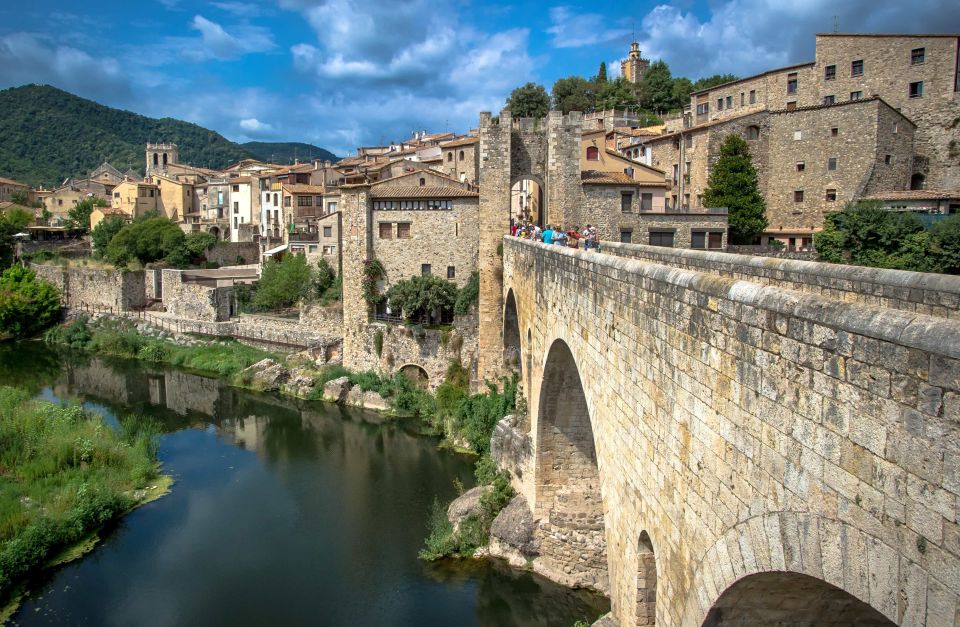
- Besalú’s Middle Ages in focus: arcaded streets, a restored 12th-century mikveh, and the remains of a medieval synagogue
- A smart roadside stop at Castellfollit de la Roca: a tiny town perched on the edge of a basalt cliff
- Two hours to roam in Rupit: cobblestones, 16th-century houses, the hanging wooden bridge, and Church of Sant Miquel
- Cingles de Tavertet viewpoints: sandstone cliffs plus prehistoric and Iberian sites along the drive
- Tavertet’s preserved village feel: 48 protected houses from the 17th/18th centuries and the Romanesque Church of Sant Cristòfol
- Comfortable countryside driving: scenic passes through areas like El Montseny after the village stops
Three Medieval Villages from Barcelona, with Real Breathing Room
This day tour is basically a time-travel route built around three very different medieval stops. Besalú feels like a “walk-in-the-past” town. Rupit gives you postcard views plus actual time to wander. Tavertet is smaller and quieter, with viewpoints that make you understand why people built houses on stubborn stone.
I like that the day doesn’t rely only on guided narration. You also get time to absorb details yourself: the curves of streets, small shopfronts, and the way the countryside opens up between villages.
It’s also good value for people who don’t want to rent a car. At $117 per person for a 10-hour guided experience with transportation included, you’re paying for convenience plus interpretation—what you’d otherwise piece together with multiple local buses, taxis, and a lot more patience.
You can also read our reviews of more tours and experiences in Barcelona.



Meet Point and Timing: Start Straight, Keep It Simple
You meet the guide at the Explore Catalunya office, directly across from the Palau de la Musica, off Via Laietena. It’s a central Barcelona spot, which matters on a day trip: you want to get out of the city quickly and avoid wasting your morning on complicated transit.
Since the tour is 10 hours and there’s no hotel pick-up, plan to arrive a bit early. Wear shoes that work for walking on cobblestones and stone lanes. Even though you’ll have guided segments, your feet will still do most of the sightseeing.
Practical note: the day is long. Bring the things that help you last—like a reusable water bottle if you like to stay hydrated during long drives. Food and drinks aren’t included unless specified, so you’ll be making small choices during the free time.
Besalú: Arcades, a Mikveh, and the Jewish History That Still Shows
Besalú is often the first medieval stop that makes people stop talking and start looking. When you arrive, you’ll do a guided walk through this well-preserved Middle Ages town, focusing on the bones of medieval life rather than just the scenery.
Two parts I’d prioritize in Besalú:
- Arcaded streets that shape how people moved through town
- The restored 12th-century mikveh (an old Jewish bath), plus the remains of a medieval synagogue
That mix is powerful because it connects architecture to everyday practices. A mikveh isn’t a random “detail.” It tells you how community life worked, and how the town’s history goes beyond one religion, one king, or one era.
You’ll also want to take your time scanning the edges of buildings and doorways. Medieval towns often reward slow looking. If you rush, you’ll miss the small clues that make the history feel real.
Castellfollit de la Roca: The Tiny Basalt Cliff Town Stop
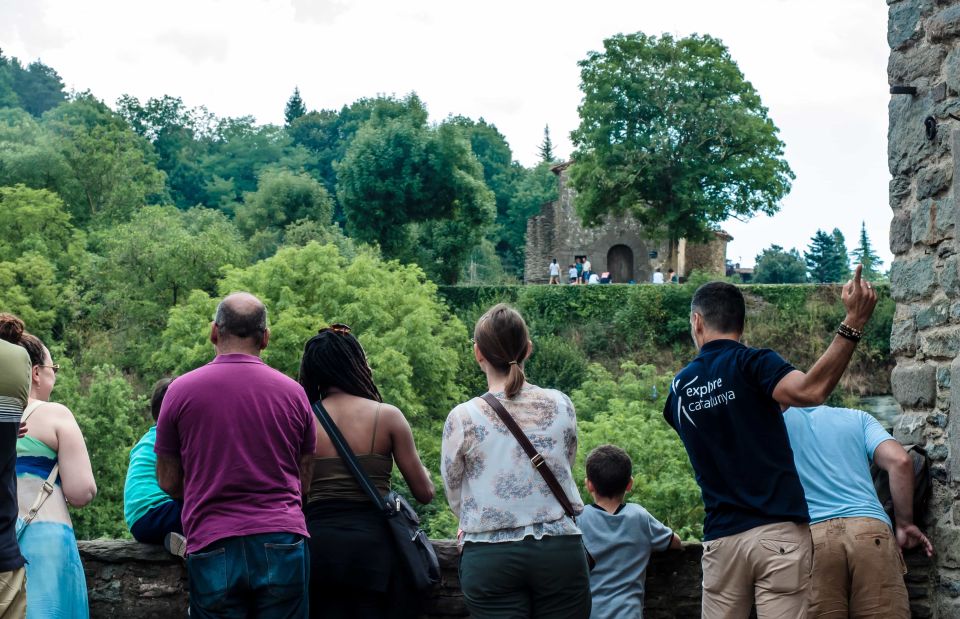
Between the bigger villages, you pass by Castellfollit de la Roca, one of the smallest towns in Catalonia. The reason it’s worth that brief detour: it sits on the edge of a basalt precipice.
The details you get here are the kind that make your photos feel smarter. You’re not just seeing a village. You’re seeing a place shaped by tough geology and limited space. The description puts its scale at about 1,000 inhabitants living in roughly 3,280 square feet—a reminder that “small” can be awe-inspiring.
If you like getting off the main tourist routes, this is the type of stop that scratches that itch. It’s also a nice break from sitting and it helps break up the day’s travel rhythm.
Rupit: The Free Time Village with Cobblestones and a Hanging Bridge
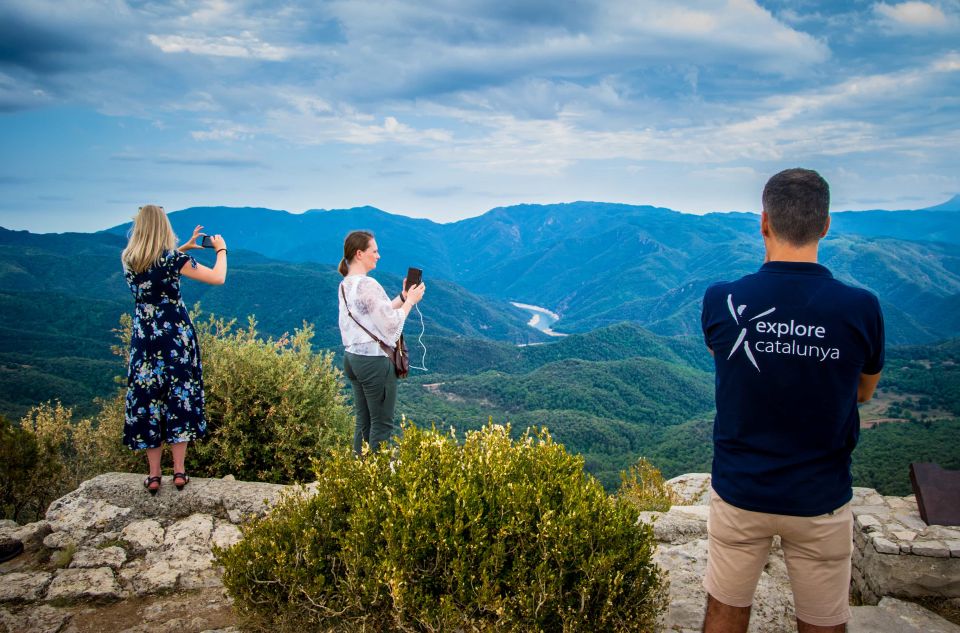
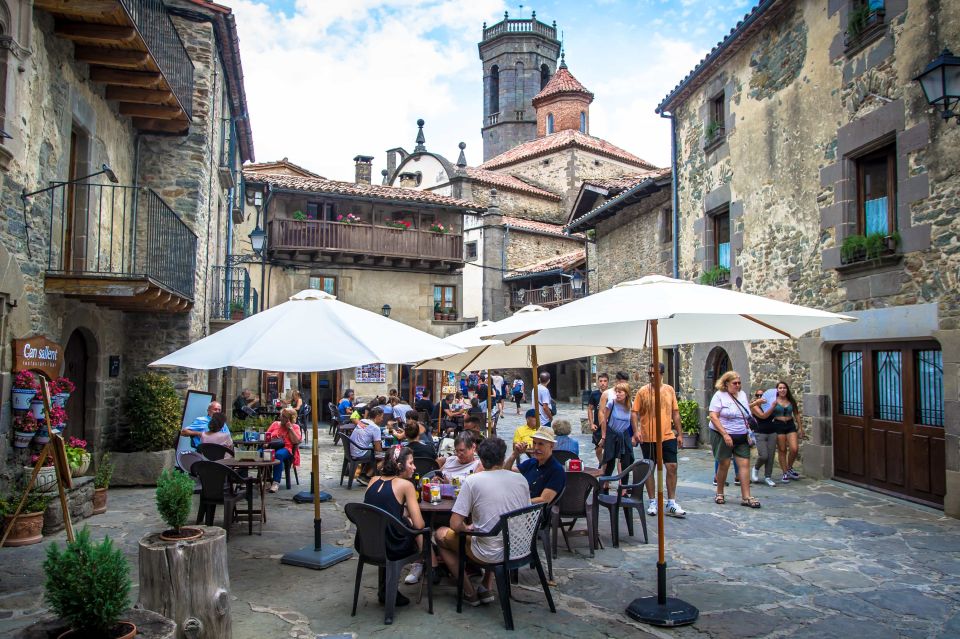
Rupit is the stop where the tour lets you breathe. You’ll arrive and then get 2 hours of free time to explore on your own while still having the guide’s context in your head.
Here’s what makes Rupit fun to wander:
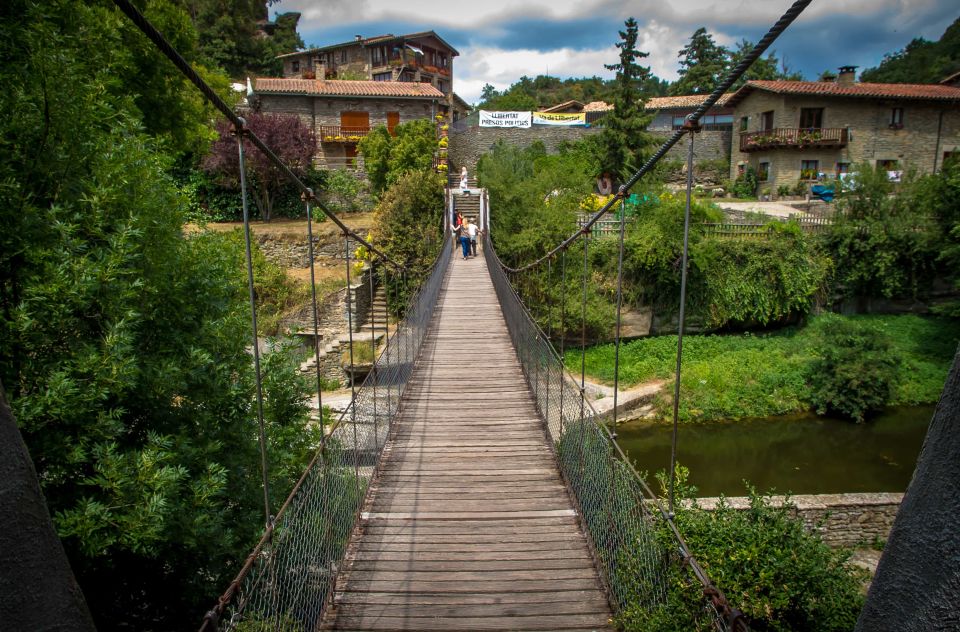
- Cobblestone streets lined with 16th-century country houses
- The hanging wooden bridge, a classic Rupit feature that’s both scenic and good for perspective shots
- The Baroque-era Church of Sant Miquel
You can also pace yourself around the town’s viewpoints and small lanes. Because you’re not constantly herded from one photo spot to the next, you’ll likely end up discovering the slower corners—those side streets that look like they were built for walking, not for traffic.
Lunch is also your decision point. You can purchase lunch at a local restaurant here. Since food isn’t included, think of Rupit’s meal as part of the experience: one of those chances where “simple local lunch” beats hunting for something familiar.
One more thing that adds depth: Rupit includes visible traces of the Castle of Rupit perched on a rocky peak. Even if you don’t climb anything, the fact that castle life shaped where people lived adds meaning to the village layout.


The Drive to Tavertet: Cingles de Tavertet Views and Ancient Markers
After Rupit, you’ll head toward Cingles de Tavertet, the sandstone cliff area where the terrain starts telling a story of its own. The drive includes stops or passing points with historical weight, including:
- A megalithic tomb described as a field of funerary urns
- The Iberian Wall
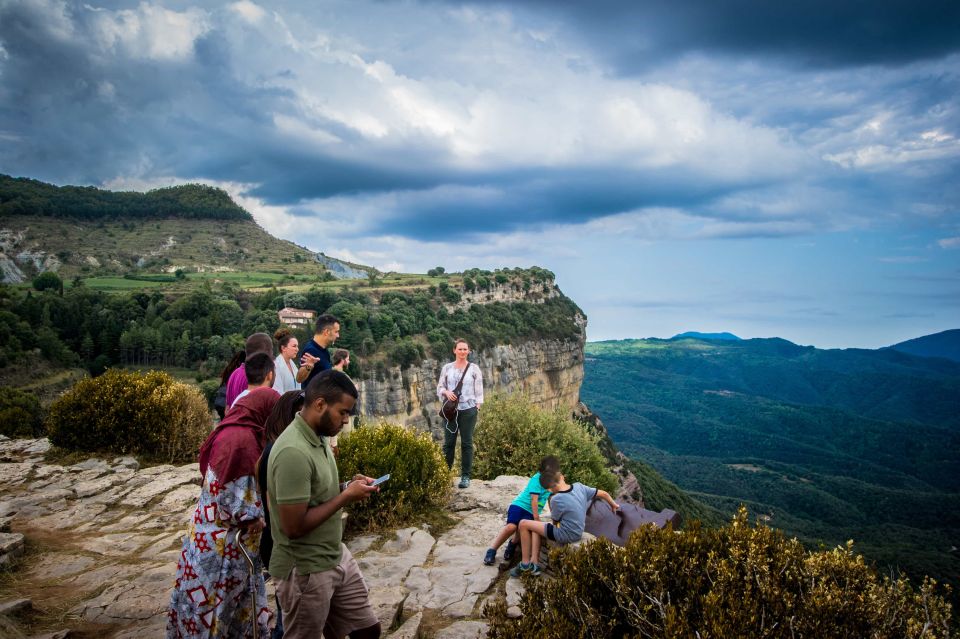
You’ll feel this shift as you approach Tavertet. The cliffs aren’t just pretty; they explain why villages cling to certain edges and why the countryside feels segmented by stone.
Then comes the payoff: the stunning views from the cliff area. Weather makes a big difference here. Clear visibility gives you that broad “look forever” feeling across the countryside.
If you’re traveling with a camera, plan to pause. Even if you only get a few minutes for the best viewpoints, the photos will be worth it.
Tavertet: A Nationally Protected Village and the Romanesque Sant Cristòfol
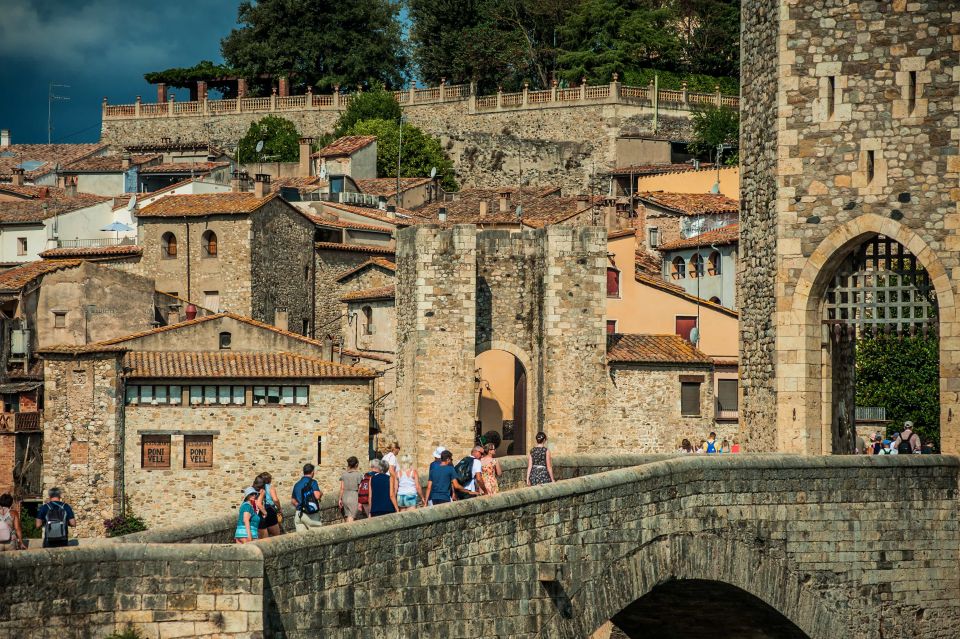
Tavertet is where the tour slows down a notch. You’ll take a guided tour through the village, which is listed as a National Property of Cultural Interest due to 48 preserved houses from the 17th and 18th centuries.
That house count matters because it signals something specific: this isn’t a village where everything new replaced the old. You’re walking among structures that have been protected, so the overall feel stays old rather than “theme-park medieval.”
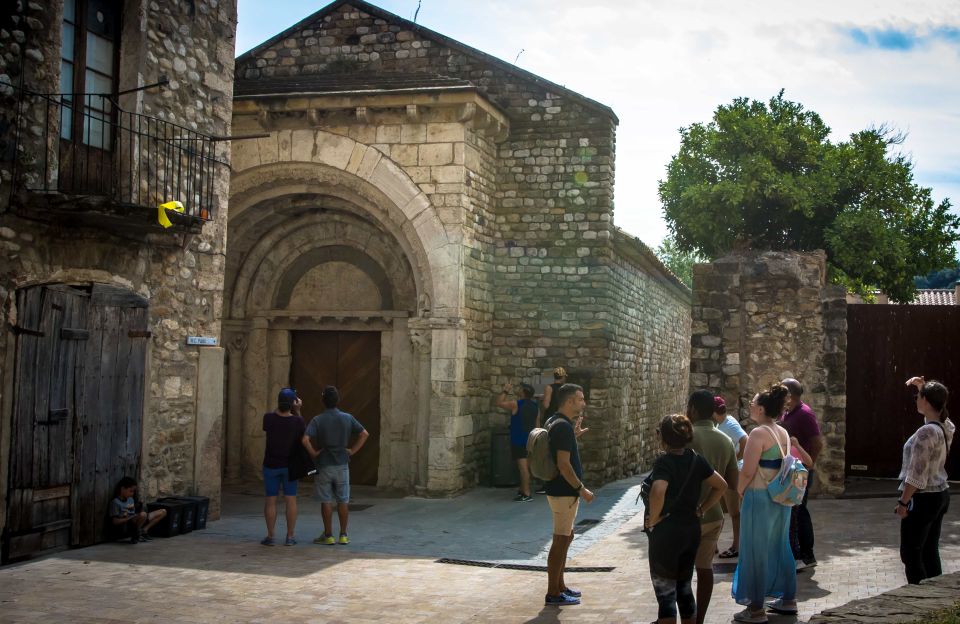
Your guide will point out highlights as you go, including the 11th-century Romanesque Church of Sant Cristòfol. This isn’t just about admiring a church exterior. Romanesque style often shows up in the way the building sits in the village fabric—simple forms, sturdy stone presence, and details that look better when you stop and look closely.
You’ll also have a short break option:
- Coffee at a local café (at your own expense), or
- A walk to the viewpoint for the views over Panta de Sau Lake
If you’re choosing between café time and viewpoint time, think like this: café time is warm and social; viewpoint time is visual proof that the effort was worth it. Either option works because Tavertet’s scale is small—you won’t lose your whole day to one choice.
Getting Back to Barcelona: Countryside You Can Watch Through the Window
On the drive back, you’ll pass scenic areas including El Magatalls (a lush forest area) and El Montseny, a UNESCO Man and Biosphere natural park.
This is more than decoration. These passes help connect the villages to the region they depend on. Medieval towns didn’t exist alone; they relied on surrounding routes, farming zones, forest resources, and safe travel corridors.
If you like scenery, pay attention during the drive. It’s not constant stop-and-go. You get stretches where you can just watch the world change through your bus window.
Transportation and Group Size: Comfortable, Small-Group Energy
This is run as a guided small group tour with transportation included. Many participants describe it as a comfortable 9-seater mini-van, with the guide also driving.
That format tends to matter. Smaller groups mean less waiting, faster loading/unloading, and more chance that your questions actually get answered. It also helps keep the tone conversational rather than stiff.
You’re also spending a lot of the day outside of Barcelona, where things are spread out. A van keeps you from spending your time budgeting taxi fares or tracing bus schedules.
Price and Value at $117: What You’re Actually Paying For
Let’s talk value without the fluff. At $117 per person, you’re paying for:
- Transportation for the full route
- A local guide who handles the story and the town pacing
- A structured mix of guided walks and free time in Rupit and Tavertet
Food and drinks are not included (unless specified), and that’s important for your budget. You’ll likely spend money on lunch in Rupit and maybe coffee in Tavertet.
So is it worth it? For me, yes if you want:
- A day with low planning stress
- A guide who can connect church history, Jewish history, and village layout
- Time to wander without trying to figure out how to stitch villages together yourself
It may not be the best fit if you’re the type who hates group schedules and prefers fully independent travel. In that case, you’d need your own transport strategy.
Tips to Get the Most out of the Free Time (Without Feeling Rushed)
Rupit is where you have the most freedom—2 hours. Tavertet gives you a shorter break for café or viewpoints. Since time is limited, do this:
- In Rupit, start by walking the main lanes first, then pick one direction for deeper exploration.
- Use the hanging bridge as a “landmark.” Once you cross it, you’ll have a mental map for the town.
- In Tavertet, decide early if you’re doing the café or the viewpoint so you don’t split your attention.
Also, build in slow moments. Medieval towns reward it. The best photos often come after you stop chasing the next street and just let the scene settle.
If the day’s weather is poor, viewpoints may not deliver. In that case, lean into Besalú’s interiors and street-level history—those parts still work.
Who This Tour Suits Best
This is a strong choice if you want a guided intro to Catalonia beyond Barcelona’s main sights. It fits well for:
- Couples and friends who like day trips with structure
- History and architecture lovers who appreciate specific details like the 12th-century mikveh and Romanesque church
- People who want a route that feels “off to the side” rather than just more beach time
It’s also a good match if you don’t want to plan how to get from town to town on your own. You’ll be spending your energy on enjoying the villages, not on logistics.
If you’re the kind of traveler who needs 4+ hours in one town to feel satisfied, you may prefer a slower plan. Here, the whole point is variety.
Should You Book This Medieval Villages Day Tour?
Book it if you want a well-paced medieval sampler with real history markers, dramatic views from Cingles de Tavertet, and enough free time to make the towns feel personal instead of rushed.
Consider skipping or switching tours if you only care about one village and want hours upon hours there. This route is designed to cover three places in one day. That’s the value, but it also sets the ceiling on how long you’ll linger.
Overall, I think this one is a solid pick for your first day trip from Barcelona to medieval Catalonia—especially if you like the mix of guided walks plus time to roam.
FAQ
What villages does this day tour visit?
It visits Besalú, Rupit, and Tavertet.
How long is the tour?
The tour lasts 10 hours.
Where is the meeting point in Barcelona?
You meet at the Explore Catalunya office, directly across from the Palau de la Musica, off Via Laietena.
Is transportation included?
Yes. Transportation is included along with a local guide.
Is lunch included?
No. Food and drinks aren’t included, though you’ll be able to purchase lunch at a local restaurant in Rupit.
Do I get free time to explore?
Yes. You get 2 hours of free time in Rupit, and there’s also a short break in Tavertet for coffee or a viewpoint walk.
Is the tour guided in English?
Yes. The tour is in English with a live guide.
Do I need to arrange hotel pickup?
No hotel pickup is included. You’ll meet at the designated office in central Barcelona.
Does the itinerary include viewpoints and scenic drives?
Yes. The tour includes drives with views over the countryside and stops connected to the Cingles de Tavertet sandstone cliffs, plus an optional viewpoint over Panta de Sau Lake.
What is the cancellation policy?
You can cancel up to 24 hours in advance for a full refund.