REVIEW · BARCELONA
Cultural Walking Tour in Barcelona with Food & Wine Tasting
Book on Viator →Operated by PlayTour Barcelona · Bookable on Viator
If you only have one afternoon, make it this.
This 3-hour Barcelona tour mixes street-level history with 11 tastings, from churros and jamón to seasonal wines. I love how the stops are practical, not museum-ish, and you end up walking through the places you’ll want to revisit—especially the Gothic Quarter and El Born. You also get diet-friendly options (vegan, vegetarian, gluten-free) when you ask in advance, and the guides, like Moisés or Alasdair, tend to keep the pace fun and the food choices smart.
One possible drawback: it’s a true walking tour, and it runs best in good weather. Also, bottled water isn’t included, so bring your own bottle (ideally refillable).
In This Review
- Quick highlights you should know
- Why La Rambla and Boqueria set the tone for a food tour
- Market stop at Mercat de la Boqueria: ham, paella, and the Barcelona baseline
- Walking the Roman and medieval layers: walls, Barcino, and MUHBA Temple d’August
- Gothic Quarter tastings in hidden bars: where the food feels more like a local habit
- El Born: medieval streets, upcoming neighborhood energy, and more tastings
- Mercado de Santa Caterina and Basilica de Santa Maria del Mar: finishing with a local lens
- What’s included: 11 tastings, seasonal wines, churros, and diet-friendly options
- Price and value: what you’re really paying for at $98.79
- Logistics that matter: meeting at Plaça de Catalunya and ending near El Born
- Should you book this Barcelona food and wine walking tour?
- FAQ
- How long is the Cultural Walking Tour in Barcelona?
- Where does the tour start and where does it end?
- Is the tour offered in English?
- What’s included in the tastings and drinks?
- Do you offer vegan, vegetarian, or gluten-free options?
- Is there alcohol on the tour, and what’s the minimum age?
- Is bottled water included?
- How big are the groups?
- What happens if the weather is poor?
Quick highlights you should know
- La Rambla context fast: why it became Barcelona’s most famous street, including Ramblas names and the word’s origin
- Boqueria tastings that feel local: acorn-fed Iberian ham 100% plus paella
- Hidden-bar tastings in two neighborhoods: Gothic Quarter and El Born, with photo-friendly lanes
- Architecture stops without the long lines: Cathedral explanation outside only, plus Roman and medieval layers
- Dietary options built in: vegan/vegetarian/gluten-free available by request
- Max group size 15: a small group keeps the tour from turning into a food stampede
Why La Rambla and Boqueria set the tone for a food tour
La Rambla is one of those streets where you can either rush through and miss the meaning—or slow down and learn why it matters. On this tour, you start right where the story begins: La Rambla. You’ll get the big-picture reason it became famous, plus details that make it feel less like a generic postcard. Expect talk about the walls that used to fortify the Old Town, and how the area connects to FC Barcelona. You’ll also hear there are different names for the Ramblas, and you’ll learn the origin of the word Rambla itself. It’s the kind of context that helps you read the street as you walk.
Then comes the gut-level proof: you shift from “what is this place?” to “what does it taste like?” That’s why the Boqueria market stop works so well early. You’re not yet tired. Your senses are fresh. And it becomes much easier to understand why Barcelona’s food culture is tied to neighborhood rhythms.
A small but real plus: the tour is designed to help you avoid the worst tourist traps around La Rambla. You’ll learn what to do with your eyes and instincts once you’re back on your own later in the day.
You can also read our reviews of more walking tours in Barcelona
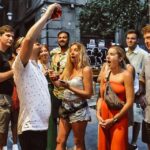
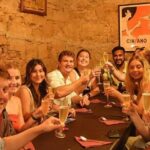
Market stop at Mercat de la Boqueria: ham, paella, and the Barcelona baseline
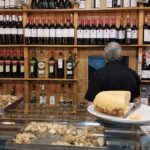
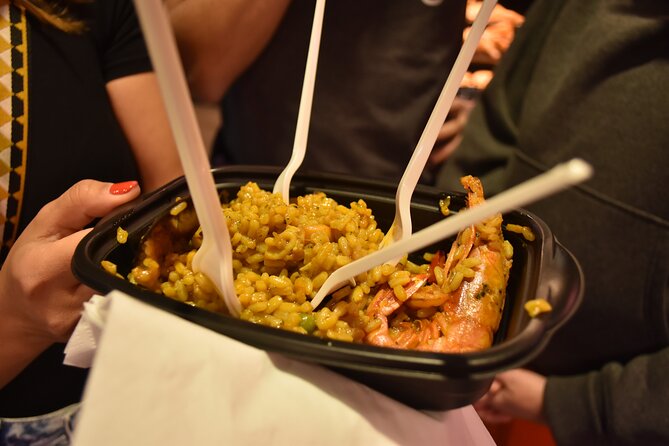
The Mercat de la Boqueria tasting is the star market stop on this route. It’s described as the oldest market in Barcelona, and the idea here isn’t to admire vendors from afar. You’ll taste Acorn-fed Iberian Ham 100% and paella during the market visit. That combination matters: ham gives you the salty, cured side of Spanish eating, while paella gives you the rice-and-saffron culture that Spain uses to show off regional pride.
This is also one of the easiest moments to ask questions, because market food invites curiosity. If you’re the type who wants to know what you’re tasting and why it’s made that way, this stop delivers practical answers.
Time-wise, you get about 30 minutes here. That’s long enough to taste and reset, but short enough that you don’t feel trapped in a crowded market loop. Admission is listed as free for the visit portion, so you’re paying mostly for the guidance and tastings.
Walking the Roman and medieval layers: walls, Barcino, and MUHBA Temple d’August
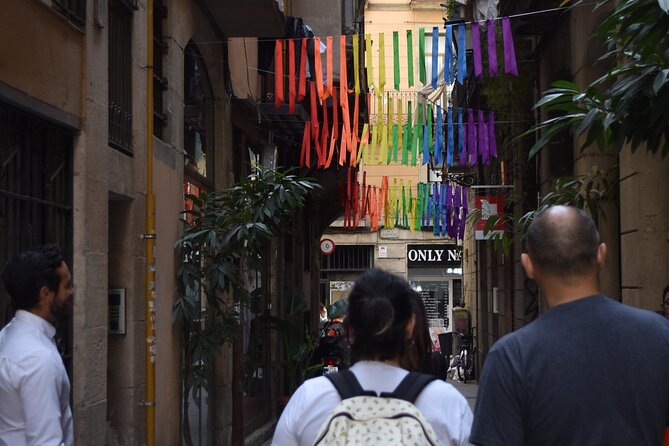
Barcelona is built like a stack of eras. If you’ve ever wondered how a city can feel medieval and modern at the same time, you’ll understand it better by walking it in order.
After the market and a quick neighborhood orientation in El Raval, the tour turns into a history walk you can actually see. You’ll get an outside explanation of the Muralla Romana, including the Roman times of Barcino and how the foundation of the city evolved. Even if your brain wants the dates, the real payoff is visual: you start spotting how later Barcelona grew around older bones.
Next, you visit MUHBA Temple d’August, described as a hidden temple you only really catch if you know where to look. The explanation focuses on the foundation of Barcelona and how the temple sits inside a medieval building. That contrast is why this stop feels special. You’re not just reading about the past—you’re watching how structures reuse space over centuries.
Finally, there’s the Catedral de Barcelona exterior. The tour doesn’t pull you inside. Instead, you’ll get the breakdown of gothic, neogothic, and romanic architecture while standing outside. This is smart for a food and wine day. You get architecture context without burning your time waiting, and you’re still fresh when tastings start ramping up.
Gothic Quarter tastings in hidden bars: where the food feels more like a local habit
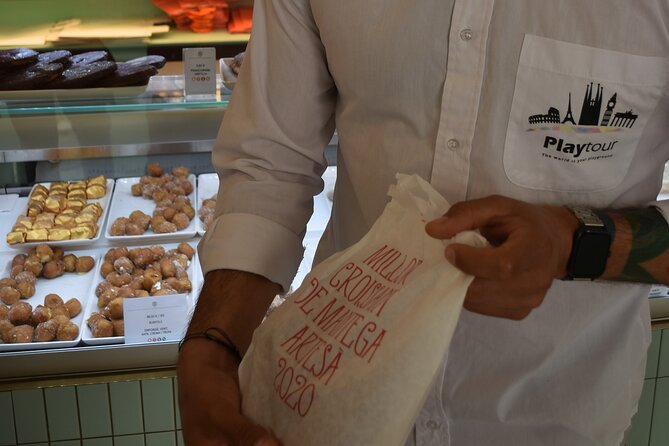
Once you reach the Gothic Quarter, the tour shifts gears into the part many people came for: real neighborhood eating. The time here is about 35 minutes, and it includes tastings in hidden bars with traditional food in the area.
This is where the tour’s structure pays off. You spent the earlier stops learning where Barcelona’s layers come from. Now you taste in the places that carry those stories in daily life. The Gothic Quarter can be confusing if you’re wandering solo, because the lanes look similar and the menus can get touristy fast. With a guide, you’re pointed toward the smaller spots that fit the vibe of the neighborhood.
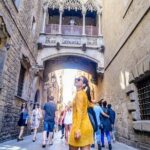
If you’re into photos, this is also your zone. The streets you walk are built for it: narrow, stone, angled light, and sudden views that make you stop even if your stomach is asking for tapas.
Food-wise, the tour is set up to be varied. Across the full experience, you’re promised 11 different tastings total—wines, sweets, savory snacks, tapas, and more. So the Gothic Quarter portion doesn’t feel like one-note eating. It feels like a sequence.
El Born: medieval streets, upcoming neighborhood energy, and more tastings
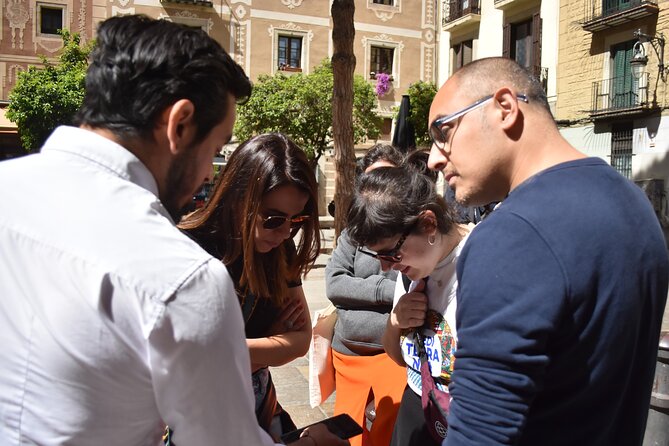
Next is El Born, described as medieval Barcelona today with an upcoming neighborhood feel. You get another 35 minutes here, again with tastings in hidden bars plus best recommendations to navigate the area.
I like El Born for the same reason I like good food tours: it’s a neighborhood where your future “wander on my own” plans actually connect to what you learned on the guided walk. The guide’s local navigation tips are especially useful here, since El Born is the kind of place where one wrong turn can lead you into a less interesting pocket of streets.
This stop also tends to be where you start recognizing patterns. You’ll see how Barcelona mixes casual bar life with formal-looking architecture nearby. The tastings reinforce it. Instead of treating food as a separate activity, the tour makes it part of the city’s walking rhythm.
And since the tour ends near this area, El Born is a smart place to “practice” what you’ll do after the tour. You’ll leave with specific spots in mind instead of a generic craving for tapas.
You can also read our reviews of more food & drink experiences in Barcelona


Mercado de Santa Caterina and Basilica de Santa Maria del Mar: finishing with a local lens
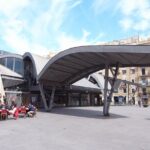
For a final shift, the tour includes Mercado de Santa Caterina, described as the more local market and the second oldest in the city. The important detail here is that it’s not as crowded as La Boqueria. If you want a glimpse of how locals live, this is a calmer way to see market culture in action. The stop is about 10 minutes and includes a tasting of local favorites.
Then the tour ends at Basilica de Santa Maria del Mar with about 10 minutes focused on neighborhood history and time for questions and more recommendations.
This ending works because it’s still within the walking world you’ve been exploring. You get one last architectural anchor and a chance to ask practical questions before your day breaks into “solo time.” If you’re doing Barcelona for the first time, this is a strong moment to ask what to prioritize next and what to avoid.
What’s included: 11 tastings, seasonal wines, churros, and diet-friendly options
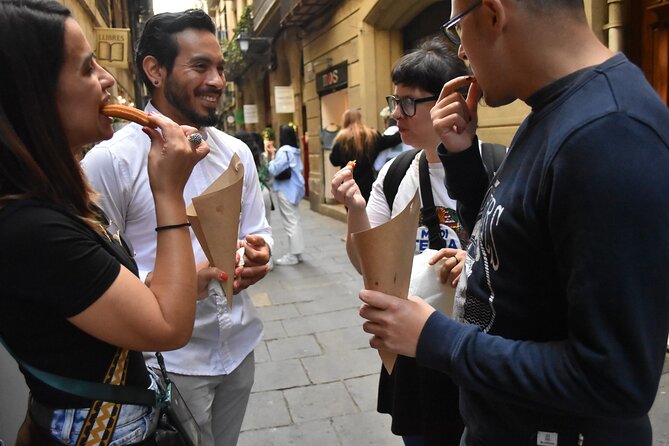
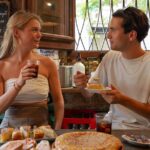
The biggest value driver here is that you’re not just getting a guide and a photo walk. You’re getting a full run of tastings. The included snacks are described as a total of 11 different tastings, including wines, sweets, savory items, tapas, Acorn fed Iberian ham, and churros. Seasonal wines are part of the drink plan.
There’s also flexibility for different diets. Vegan, vegetarian, and gluten-free options are available upon request. One practical note from the overall experience: if you have a strict diet, don’t assume you’ll be accommodated without telling the tour in advance. This tour is built to handle it, but it depends on you making the request clearly.
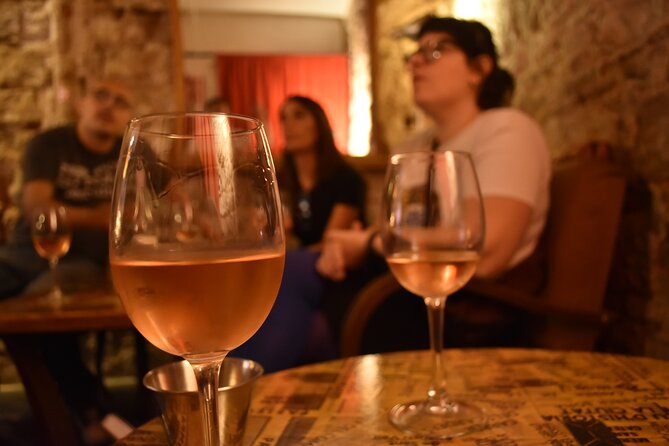
Alcohol is included in the form of seasonal wines, and the legal drinking age is 18. For anyone who is under 18 or who prefers to skip alcohol, the tour includes local Spanish soft drinks for kids, teenagers, and anyone else who wants alcohol-free options.
Also: bottled water isn’t included. Since you’re walking and tasting, bring a water bottle. Preferably refillable. You’ll thank yourself halfway through the afternoon.
Price and value: what you’re really paying for at $98.79
At $98.79 per person, this tour isn’t the cheapest thing you can book in Barcelona. Still, it often feels fair because you’re buying three things at once: guided context, multiple tastings, and alcoholic drinks for those who are eligible.
If you tried to recreate this yourself, you’d quickly run into a cost stack: market food costs, bar stops cost, and drinks add up fast. Plus, the guide saves you the effort of hunting down places that match the neighborhood vibe instead of chasing menus designed for tourists.
You’re also getting a small group size—maximum 15 travelers—which matters for pacing and questions. And you’re getting a mobile ticket, which removes a little friction from your travel day.
One more value signal: this kind of tour is booked fairly ahead, with an average booking window of 45 days. That usually means the schedule fills up, especially in high season. If you want the 10:00 am start, it’s smarter to book early rather than gamble.
Logistics that matter: meeting at Plaça de Catalunya and ending near El Born
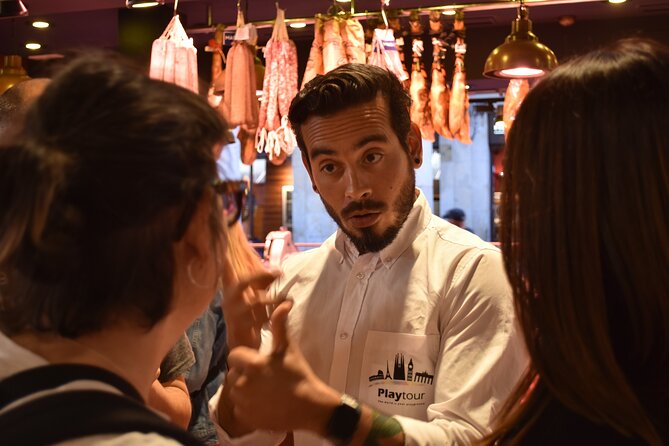
The tour starts at PlayTour Barcelona, Plaça de Catalunya, 1 (Eixample), with a 10:00 am start time. It ends at Basílica de Santa Maria del Mar, Plaça de Santa Maria, 1 (Ciutat Vella), and the tour finishes in the neighborhood of El Born.
That start-to-finish path is a helpful “day shape.” You begin near one of Barcelona’s major transit and landmark zones, then you end deeper in the Old Town areas where you’ll want to explore next. If you’re planning a second walk later, you’ll likely already be positioned in the right area.
It’s near public transportation, and service animals are allowed. Most people can participate, but you should still plan for a steady walking pace. Comfortable shoes are not optional; they’re the price of admission to tasting your way through stone streets.
Finally, the tour requires good weather. If poor weather cancels it, you’ll be offered a different date or a full refund.
Should you book this Barcelona food and wine walking tour?
Book it if you want an efficient first taste of Barcelona that combines food + city storytelling without wasting your time waiting around. This is especially appealing when you’re curious about how the Gothic Quarter, El Born, and the older Roman layers fit together—and when you want a guide to keep you on the good side of the tourist-food line.
Skip it if you hate walking, or if you’re hoping for long interior museum time. This is more “street level and plates in hand” than “sit and absorb for hours.”
If you have dietary needs, you’ll likely like that the tour offers vegan, vegetarian, and gluten-free options by request. Just be clear when you book.
FAQ
How long is the Cultural Walking Tour in Barcelona?
It runs about 3 hours, roughly.
Where does the tour start and where does it end?
It starts at PlayTour Barcelona, Plaça de Catalunya, 1 (Eixample). It ends at Basílica de Santa Maria del Mar, Plaça de Santa Maria, 1 (Ciutat Vella), finishing in the El Born neighborhood.
Is the tour offered in English?
Yes. The tour is offered in English.
What’s included in the tastings and drinks?
You get seasonal wines (for those 18+), plus 11 different tastings covering wines, sweets, savory items, tapas, acorn-fed Iberian ham, and churros. Soda or local soft drinks are included as well.
Do you offer vegan, vegetarian, or gluten-free options?
Yes. Vegan, vegetarian, and gluten-free options are available upon request.
Is there alcohol on the tour, and what’s the minimum age?
Alcoholic beverages are seasonal wines, and the legal drinking age is 18.
Is bottled water included?
No. Bottled water isn’t included, so you should bring a water bottle (preferably refillable).
How big are the groups?
The tour has a maximum of 15 travelers.
What happens if the weather is poor?
The tour requires good weather. If it’s canceled due to poor weather, you’ll be offered a different date or a full refund.
If you want, tell me your travel dates and diet preferences, and I’ll help you decide whether the 10:00 am start fits your plan and what to book next for the rest of your day.