REVIEW · BARCELONA
Barcelona’s El Raval and the Gothic Quarter: A Self-Guided Audio Tour
Book on Viator →Operated by VoiceMap Audio Tours · Bookable on Viator
Barcelona’s side streets have stories.
This self-guided audio walk strings together El Raval and the Gothic Quarter with clear narration, an on-screen map so you don’t feel helpless, and offline access so you can wander without worrying about data. I especially like how you can pause to look closely at details instead of being shoved along in a pack, and how the pace works well for a 75- to 90-minute walk. One thing to consider: in narrow medieval lanes, GPS can sometimes feel jumpy, so you’ll want to rely on the in-app map.
I like that the price is modest for what you get: lifetime access to the same route, plus audio and maps in the app, and no entrance-ticket pressure. You can take it again later in the week, or on another trip, and your memories of Barcelona stay stitched to places instead of lost to the next day’s itinerary. The only real drawback is you need to bring a smartphone and headphones, since they’re not included.
If you’re the kind of traveler who enjoys old neighborhoods, small surprises, and stopping whenever something catches your eye, this is a strong match. If you hate apps on your phone or you want a full-time human guide, you may feel less “guided” than you expected.
In This Review
- Key highlights that make this audio walk worth your time
- From Font de Canaletes into El Raval: a simple start that beats getting lost
- El Raval and the House of Mercy: a dark detail that adds meaning to the streets
- Mercat de la Boqueria: old market energy without the crowds problem
- Palau Güell and Botero’s cat: understated architecture meets playful art
- Plaça de Sant Jaume and the Gothic Quarter squares: you’ll feel the city tighten
- Can Culleretes and the Carrer d’Avinyo shortcut: stories you can walk right through
- Meson del Café and the “possibly bump into the mayor” angle
- Cathedral of Barcelona and Pont de Bisbe: the Gothic Quarter’s neo-gothic payoff
- El Peto: a kissing mural made of 4,000 images of freedom
- Barcino and the ancient wall: when the walk turns into a time machine
- Why the pacing feels good: narrow streets, your own speed, and fewer crowd headaches
- Navigation and GPS reality check: how to handle the one real risk
- Price and value: $11.99 for lifetime access plus offline support
- What I’d bring, and what kind of traveler should choose this
- Should you book the El Raval and Gothic Quarter audio walk?
- FAQ
- How long is the El Raval and Gothic Quarter audio tour?
- Is this tour offered in English?
- Can I use the tour offline?
- Do I need tickets for museums or entrances?
- What do I need on my end?
- Where do I start, and where does it end?
- Can I get a refund if I cancel?
Key highlights that make this audio walk worth your time
- Offline audio + maps: keep going even with spotty signal
- Free roaming pace: pause, walk on, and don’t rush for anyone else
- Real neighborhood variety: markets, churches, bridges, and street art in one loop
- Famous-but-not-too-flashy stops: Palau Güell and the Botero cat
- Enough landmarks to find your way: Plaça de Sant Jaume and Pont de Bisbe anchor you
From Font de Canaletes into El Raval: a simple start that beats getting lost
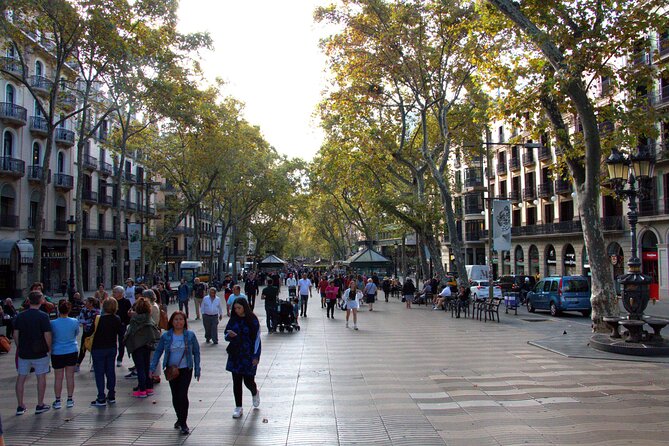
You begin at Font de Canaletes on La Rambla (La Rambla 133, Ciutat Vella). It’s a good launch point because it’s central, easy to spot, and you can orient yourself before you step off into the older, tighter streets.
From there, the tour leads you away from La Rambla and into El Raval, once known as one of the most densely populated urban areas in Europe. The audio framing matters here: instead of treating the neighborhood like just a backdrop, it sets you up to notice the layers—architecture, street life, and history—without needing a museum ticket.
You can also read our reviews of more guided tours in Barcelona


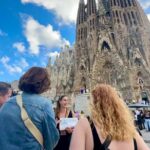
El Raval and the House of Mercy: a dark detail that adds meaning to the streets
Early on, you’ll be guided through El Raval’s side lanes, including the area historically linked with the city’s Red Light District. That topic can be uncomfortable in a “walk-and-talk” format, but the narration gives it context and helps you process the neighborhood as part of Barcelona’s real past—not a postcard theme.
One of the most memorable segments focuses on the House of Mercy, and how destitute mothers used to drop off unwanted babies through a hole in the wall. It’s heavy subject matter, but it’s also the kind of story that makes a walking route feel grounded. If you like your travel thoughtful, this stop helps you connect place to people, not just buildings.
Practical tip: since it’s self-guided, you decide how long to stand and listen. If that story hits hard, you can slow down for a minute. If you’d rather keep moving, you can keep your pace without guilt.
Mercat de la Boqueria: old market energy without the crowds problem
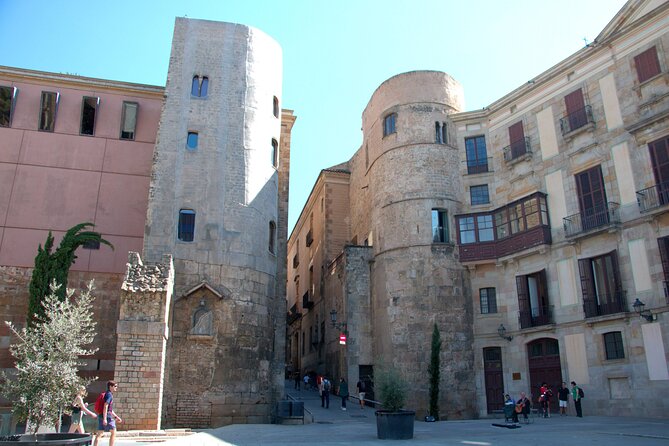
Next, you get a chance to step into Mercat de la Boqueria, a food market operating since the 1100s. That detail is the kind that makes even a quick walk-through feel special: you’re not just seeing stalls, you’re moving through a long-running meeting point of Barcelona’s food culture.
This is also where the “own pace” idea pays off. If the market is crowded when you arrive, you can linger where you like, step aside when it feels too busy, and come back to the audio for the next cue whenever you’re ready.
Just note the practical boundary: food or drinks aren’t included, so treat it as a chance to browse, smell, and snack only if you feel like it.
Palau Güell and Botero’s cat: understated architecture meets playful art
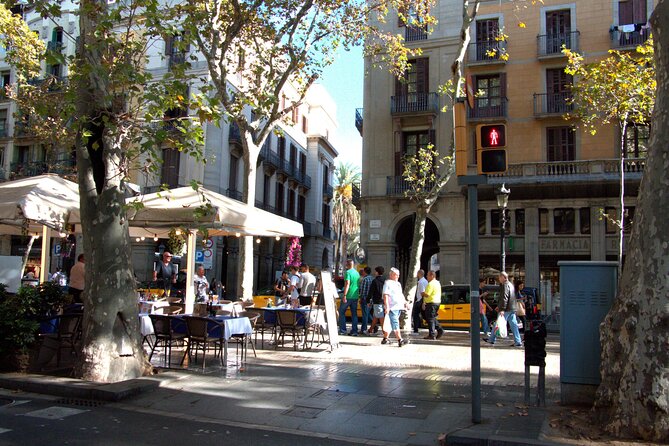
Two stops bring a nice balance of “look closer” and “take a silly photo if you want.”
You’ll hear about Palau Güell, described as one of Gaudí’s more understated buildings. Even if you’ve seen big Gaudí landmarks already, this helps you notice that he didn’t only build showy spectacles—he also shaped intimate, detail-heavy spaces.
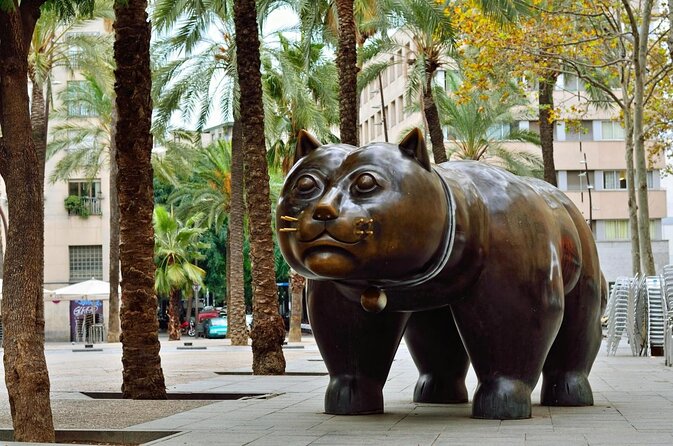
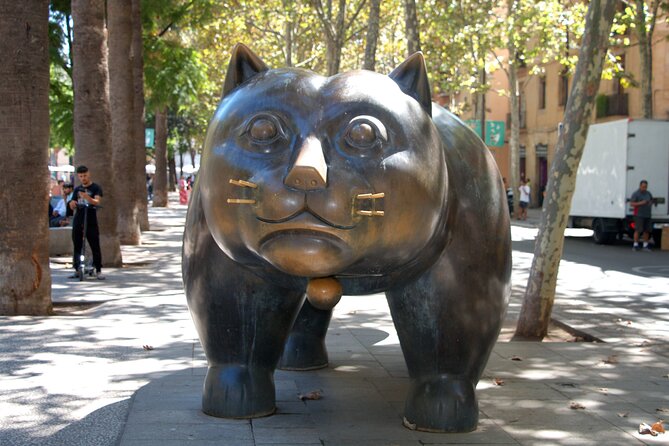
Then comes Fernando Botero’s fat feline statue, El Gato de Botero, including the chance to rub the statue’s crown jewels. It’s funny, but it’s also a good reminder of how public art works in real cities: people interact, touch, and carry the place forward with little rituals.
Plaça de Sant Jaume and the Gothic Quarter squares: you’ll feel the city tighten
As you shift into the Gothic Quarter, the route leans into classic squares—places where medieval Barcelona “stops moving” for a moment and you can reset your bearings.
You’ll pass through Plaça de Sant Jaume, Plaça Nova, and Plaça Sant Felip Neri. These aren’t random names on a list. They’re practical wayfinding anchors, and they give you natural pauses to listen clearly to the next piece of audio without being squeezed by crowds or traffic.
I like that the tour doesn’t demand nonstop attention. You can stop at a square, look up at facades, and take in the space before continuing down a narrow lane.
You can also read our reviews of more tours and experiences in Barcelona





Can Culleretes and the Carrer d’Avinyo shortcut: stories you can walk right through
The narration includes Can Culleretes Restaurant and offers you two origin stories. The setup here is smart for a self-guided route: it invites you to listen, then decide what feels more believable based on what you notice around the place.
You’ll also take a shortcut through Carrer d’Avinyo, a street connected to Picasso’s Les Demoiselles d’Avignon. If you’re an art fan, this kind of link turns a simple walk down a street into a small “aha” moment. It also helps you see how modern art ideas sit on top of older city geometry—street grids and courtyards that artists could imagine and reshape.
If you’re not a Picasso scholar, that’s fine. The audio gives enough context to make the connection land without homework.
Meson del Café and the “possibly bump into the mayor” angle
At Meson del Cafe, the audio points you toward what it calls the city’s best coffee. It also adds a fun, low-stakes detail: you might even bump into the mayor.
You shouldn’t count on the mayor showing up—but I like this sort of note because it shapes your expectations. It tells you to treat the stop like a local pause, not just a photo-op moment.
Food and drink aren’t included, so plan to treat coffee as optional. If you do stop, keep your break short enough that you don’t lose the thread of the route.
Cathedral of Barcelona and Pont de Bisbe: the Gothic Quarter’s neo-gothic payoff
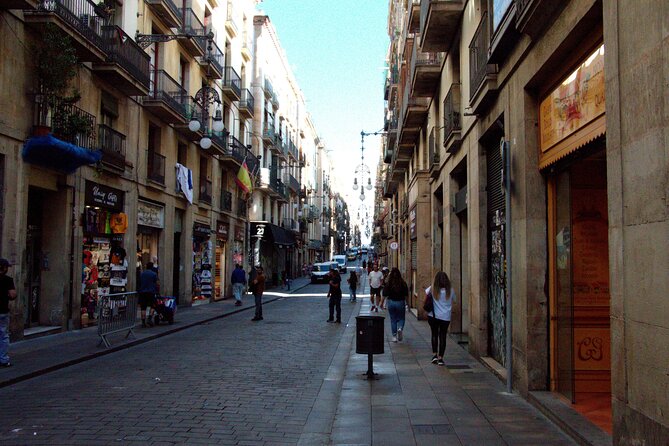
Once the route reaches the Gothic Quarter’s major sights, it does so with a clear sequence and strong landmarks.
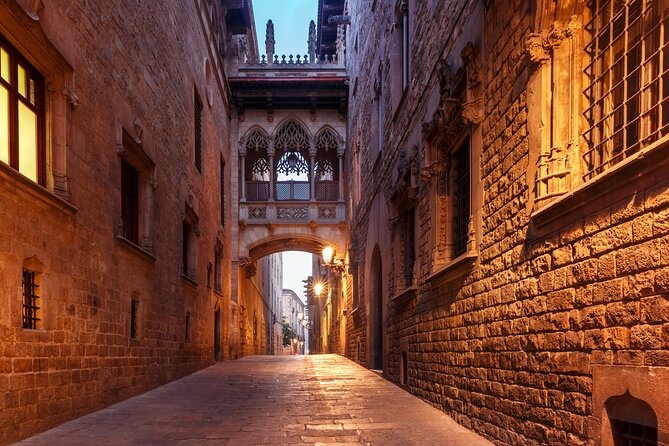
You’ll see neo-gothic attractions like the Cathedral of Barcelona and Pont de Bisbe (Bishops Bridge). This is a great part of the walk because you can stand back and look up. You also get the chance to slow your pace without the tour falling behind you—audio stays with you through the walking and into the viewing moments.
This segment works especially well if you like architecture but don’t want to buy multiple tickets. You get the big visual hits while staying in the street-level flow of the neighborhood.
El Peto: a kissing mural made of 4,000 images of freedom
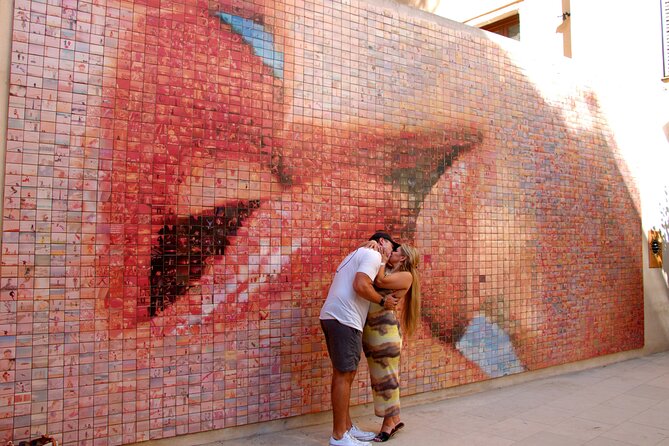
The route includes El Peto, a mural made of 4,000 photographic images tied to a message of freedom, donated by the public. This stop shifts the mood from stones and statues to something people contributed to—an artwork that feels communal rather than distant.
It’s also a great choice for a self-guided format. You can decide how long to stand there. Read the message, watch how other people react around it, and let the audio finish its context whenever you’re ready.
Barcino and the ancient wall: when the walk turns into a time machine
One of the most grounding parts of the audio walk explains how the small fortified Roman village of Barcino developed into the Barcelona you recognize today. The tour also points to where tombs of the dead once lined the ancient village wall.
This is the “city under your feet” part of the experience. Even if you don’t see Roman stones with your eyes at every stop, the narration helps you imagine what used to be there. It makes modern streets feel less random.
I also find this helpful for travelers who worry that “self-guided” equals “not that deep.” The audio gives you depth, and you control how much you absorb.
Why the pacing feels good: narrow streets, your own speed, and fewer crowd headaches
A 75-minute walk is long enough to matter but short enough that you’re not stuck for an entire afternoon. The best part is that the route is designed for you to move at your speed.
If you’re with family or friends with different interests, this kind of audio format helps. You can stop for a photo, step aside for a coffee, then rejoin the flow when you’re ready.
And if you want to avoid crowds, this is a decent way to do it. You’re still walking through busy central areas, but you’re not forced into a group rhythm. That reduces the classic problem: watching everything at someone else’s pace.
Navigation and GPS reality check: how to handle the one real risk
The map on your screen is a big plus. When you’re in older neighborhoods with tight streets and tall buildings, GPS accuracy can wobble.
If that happens to you, don’t panic. Use the in-app map first, then—if needed—keep a backup mapping app on hand as a quick sanity check. The point is simple: you’re not “lost,” you’re just verifying.
Also, do yourself a favor before you start: download the audio and maps through the app so you’re not hunting for signal mid-walk. Offline access is part of why this route works well.
Price and value: $11.99 for lifetime access plus offline support
At $11.99 per person, this audio walk is priced like a budget add-on. But it punches above that level because you get lifetime access. That matters: one purchase can cover multiple visits, or multiple listens, so you aren’t wasting money on a single one-time experience.
You also avoid the “ticket creep.” Entrance fees to museums or attractions are not included, and the route doesn’t push you into paying at each stop. You’re using the city itself as the main attraction.
What you do need to budget for is simple: a smartphone and headphones. You provide those. The audio and offline files are included, which is the big part.
What I’d bring, and what kind of traveler should choose this
Bring:
- A charged phone (and ideally a power bank if you’re out all day)
- Headphones you’re comfortable wearing while walking
This tour fits you if you want:
- An audio-led way to explore El Raval and the Gothic Quarter
- The freedom to pause at squares and viewpoints
- Stories that connect places like Mercat de la Boqueria, Palau Güell, and Pont de Bisbe
I’d skip it if you only like live, human guidance, or if you strongly dislike using apps while traveling.
Should you book the El Raval and Gothic Quarter audio walk?
Yes—if you’re the kind of traveler who enjoys walking at your own pace and you like learning from clear stories while you look around. The value is strong: offline audio, a map, and lifetime access for a price that’s hard to beat for a 75–90 minute self-guided route.
Book it especially if you want to cover a lot of ground in one go—Roman-era context at Barcino, Gothic landmarks like the Cathedral and Pont de Bisbe, plus human-scale details like El Peto and Botero’s cat. If you’re worried about GPS quirks, go in with patience, use the on-screen map, and you’ll be fine.
FAQ
How long is the El Raval and Gothic Quarter audio tour?
The walk is about 1 hour 15 minutes to 1 hour 30 minutes.
Is this tour offered in English?
Yes. The audio tour is offered in English.
Can I use the tour offline?
Yes. You get offline access to audio, maps, and geodata, which helps when data coverage is spotty.
Do I need tickets for museums or entrances?
No tickets or entrance fees are included. The tour does not include admission fees to museums or other attractions en route.
What do I need on my end?
You’ll need your smartphone and headphones. The VoiceMap app is included, and it works on Android and iOS.
Where do I start, and where does it end?
You start at Font de Canaletes, La Rambla 133, Ciutat Vella, 08002 Barcelona and the activity ends back at the same meeting point.
Can I get a refund if I cancel?
No. This experience is non-refundable and can’t be changed for any reason.
If you want, tell me your travel dates and whether you’re doing any major Gaudí stops already. I can suggest the best time of day to tackle this route so you get the most comfortable mix of light, walking, and crowds.