REVIEW · BARCELONA
Barcelona: Mies van der Rohe Pavilion Ticket and Audio Guide
Book on GetYourGuide →Operated by Fundació Mies van der Rohe · Bookable on GetYourGuide
Minimal architecture can still stop you cold. The Mies van der Rohe Pavilion is one of those places where calm matters, because the building asks you to look closely. With your ticket and audio guide, you get time in one of Barcelona’s most influential modernist spaces without racing through it.
I love the way the design strips architecture down to its essentials, so your eyes rest on materials and the straight, clean relationship between indoor and outdoor space. I also love that the included audio guide comes in five languages, which makes the story easy to follow even if you’re not fluent in Catalan or German.
One possible drawback: the pavilion is intentionally minimalist and often quiet, and it can also be used as a backdrop for professional photography and modeling. If you’re expecting a long, crowded “attraction” with lots of action, plan for something more reflective (and slightly photo-friendly).
In This Review
- Key things to know before you go
- The Mies van der Rohe Pavilion: a calm stop that rewards slow looking
- Price and value: $10 for entry and a five-language audio guide
- How your self-guided visit works (and how to time it well)
- Seeing the pavilion’s design logic: indoor-outdoor balance and material contrast
- A big historical reset: why the pavilion had to be rebuilt in 1986
- When photos and art show up: how the pavilion can look different
- Practical rules that affect your experience (yes, they matter)
- Don’t over-plan: what “short and calm” means for your expectations
- Who this ticket fits best (and who might want a different plan)
- Should you book the Mies van der Rohe Pavilion ticket and audio guide?
- FAQ
- What does the ticket include?
- Which languages are available for the audio guide?
- How long is the visit?
- Is the pavilion wheelchair accessible?
- Are pets allowed?
- Is smoking or eating allowed inside?
- Are tripods allowed for photos?
Key things to know before you go
- Five-language audio guide included makes the experience readable fast in Spanish, Catalan, English, French, and German
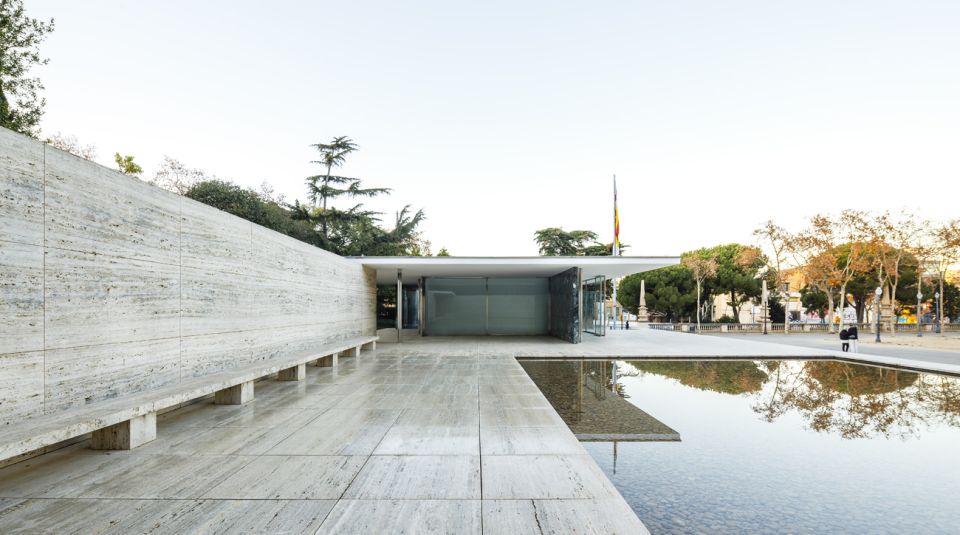
- Pared-down modernism turns your walk into a lesson in balance, restraint, and contrast
- 1929 to 1986 reconstruction story gives context for why this pavilion exists at all
- Indoors and outdoors stay in dialogue, so don’t just look straight ahead
- Occasional artistic interventions can change how the pavilion looks during your visit
- Rules matter: no food and drinks, no smoking, and no tripods inside
The Mies van der Rohe Pavilion: a calm stop that rewards slow looking
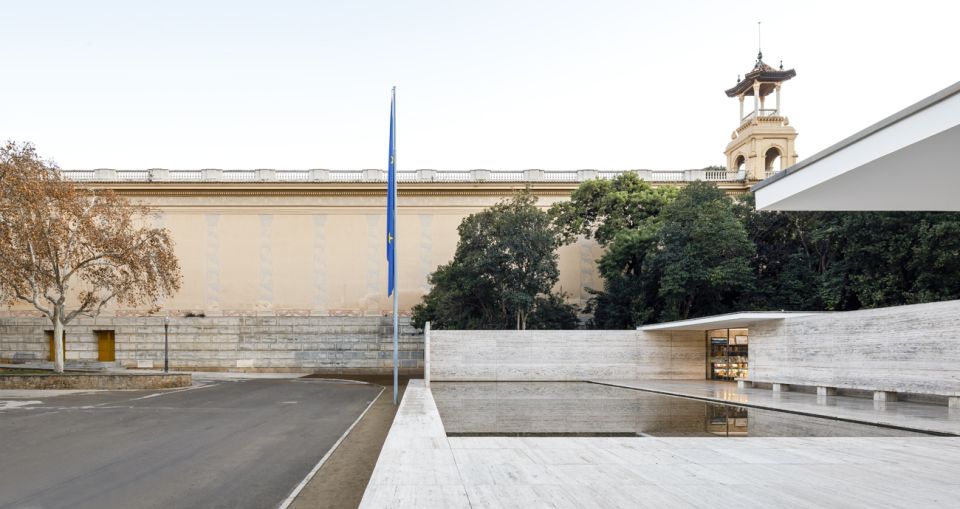
If you like architecture, this is the kind of place that feels like it’s politely challenging you. No loud exhibits. No heavy signage. Just a building with strong ideas, pared down until the fundamentals show.
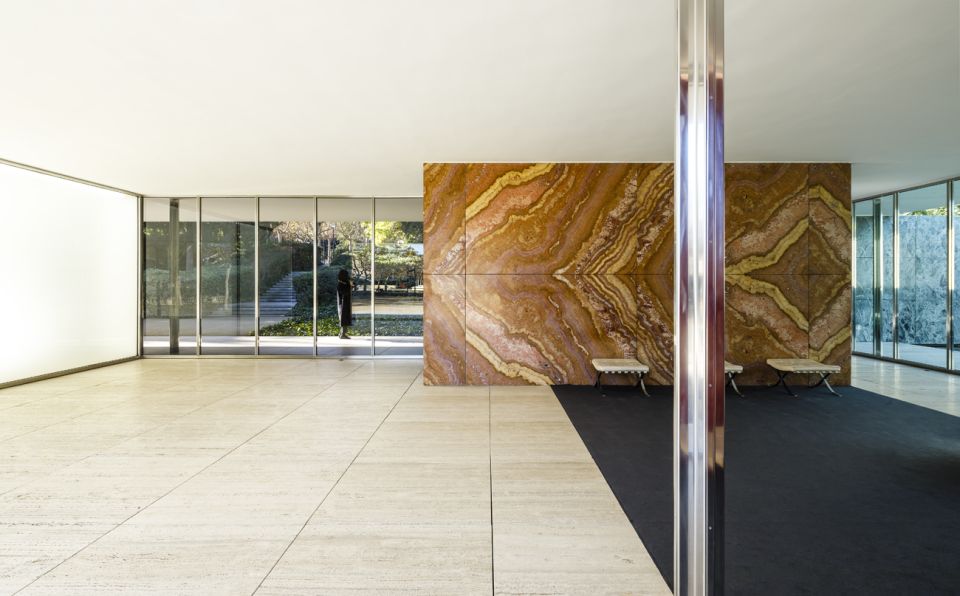
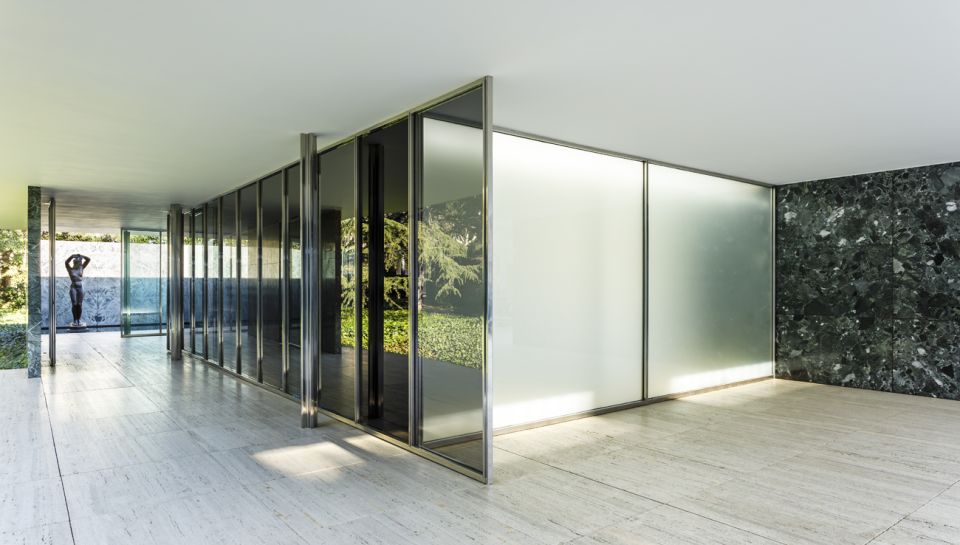
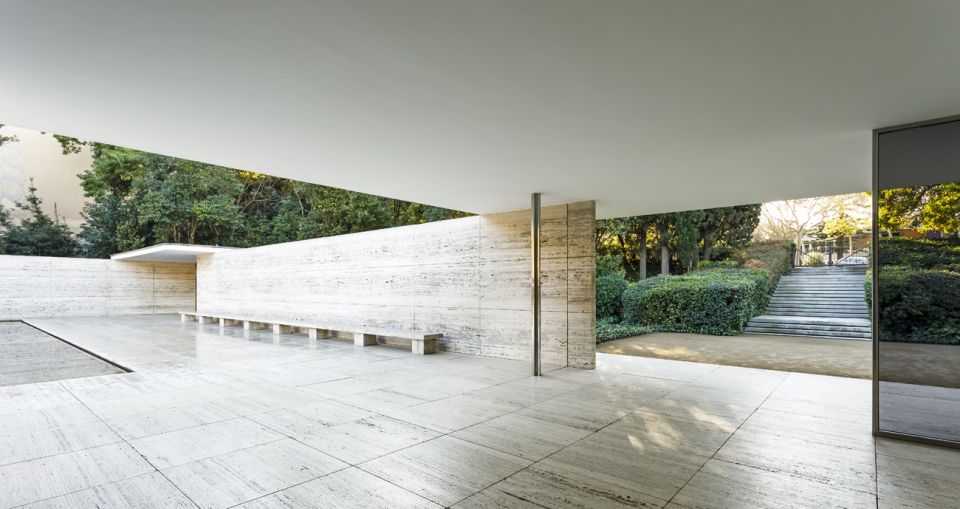
The pavilion was designed by Mies van der Rohe and Lily Reich and originally served as the German national pavilion for the 1929 Barcelona International Exhibition. That’s a huge deal historically, but the magic here is how the structure’s simplicity still does the talking. You’re looking at purity of form, sobriety in the way the space behaves, and a very deliberate relationship between what’s inside and what’s outside.
And yes, it tends to be calm. People often treat it like a place to think for a few minutes longer than they planned. That’s when it clicks.
You can also read our reviews of more tours and experiences in Barcelona
Price and value: $10 for entry and a five-language audio guide
At about $10 per person, this ticket is priced like an “architecture ticket,” not like a theme-park admission. The value comes from two things you actually use during your visit: entry and an audio guide.
What you’re paying for isn’t just access to a courtyard or a quick photo stop. It’s context. The audio guide helps you understand why the pavilion is a benchmark for generations of architects and artists, and why its design choices became foundations for modern architecture.
There’s also a practical angle: with this ticket you can skip the ticket line, which matters in a city where time can vanish. And the audio guide is included in Spanish, Catalan, English, French, and German, which is a real quality-of-life detail. You won’t have to hunt for someone who speaks your language.
Now, a fair note: some visitors feel the site should be free. If you only want a quick look and you won’t use the guide, the ticket might feel harder to justify. But if you’re the type who likes to understand what you’re seeing—this one is easier to love.
How your self-guided visit works (and how to time it well)
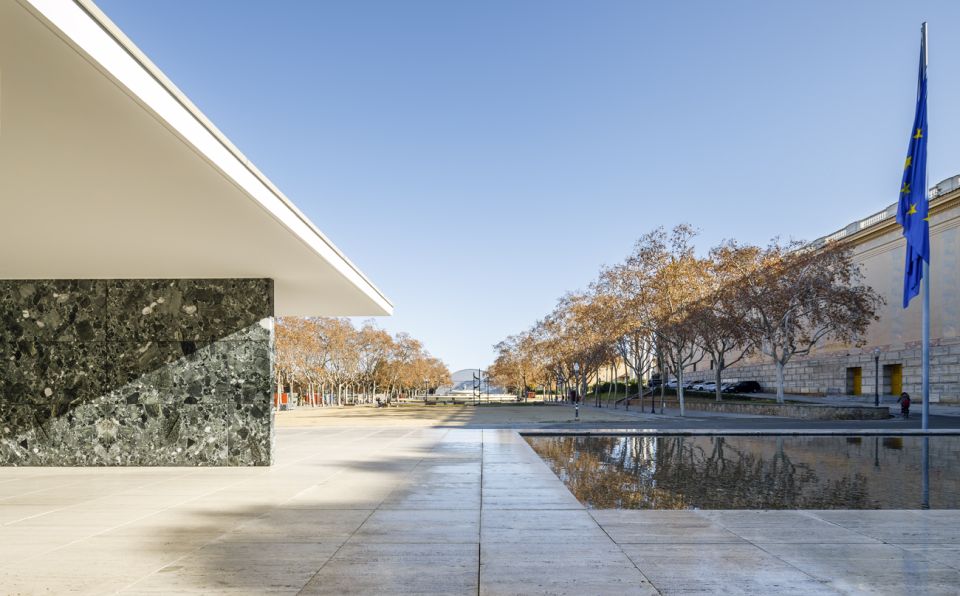
This experience is essentially your ticket plus your audio guide, valid for 1 day, with starting times you should check for availability. Since there’s no long scheduled guided route described, your best plan is simple: show up on time, start the audio right away, and give yourself enough room to pause.
Here’s the rhythm I’d follow if I were planning your day:
- Arrive at your time slot and go straight to the start of the audio guide. If you wait too long, you’ll lose the advantage of a story that builds as you look.
- Walk the pavilion’s key viewpoints slowly instead of sprinting for the best angle. The whole point is the “linear interplay” between interiors and exteriors.
- Let the audio explain what you’re seeing, then let your eyes confirm it. That back-and-forth is where the experience becomes more than just watching.
One extra tip: the pavilion can host artistic interventions that may alter its appearance. If you arrive and the space looks slightly different than you expected, that’s part of the site’s present-day life. Don’t panic. Let the audio guide keep you oriented.
Seeing the pavilion’s design logic: indoor-outdoor balance and material contrast
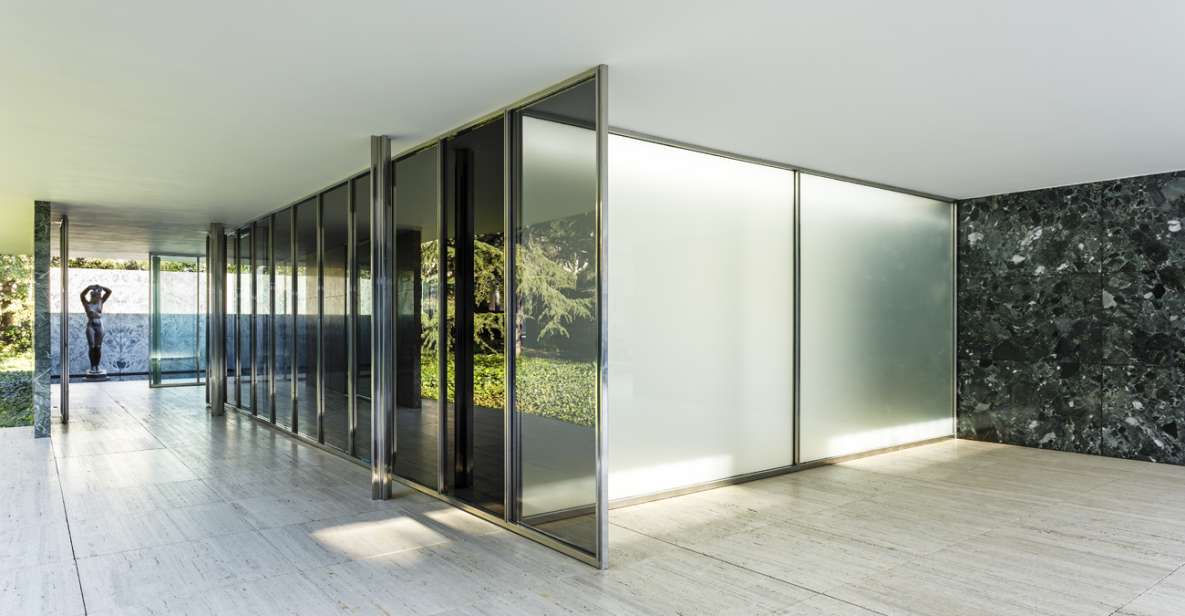
This pavilion is famous because it doesn’t decorate its ideas. It clarifies them. When you stand here, you’re meant to notice how the space behaves—how it frames views, how it feels ordered, and how it stays calm even when you’re surrounded by city noise outside.
Three design themes are worth actively looking for while the audio guide runs:
- Purity of form: everything feels reduced to essential lines and planes.
- Sobriety: the building doesn’t compete for attention. It invites you to pay attention.
- Precise contrasts in materials: the audio guide points out how the palette isn’t random.
The pavilion’s story includes something you can actually look for: materials were brought from the Alps, Tivoli, Atlas, and Tinos. That’s not just a trivia line. It helps you understand why the building’s surfaces look and feel the way they do. Instead of thinking of the pavilion as “just modern,” you start to see it as a carefully assembled relationship between material choice and architectural form.
Also, don’t treat it like a purely interior monument. The experience is built around the interplay between interiors and exteriors. If you only look from one side, you’ll miss the way the boundaries line up and the way space transitions feel intentional.
A big historical reset: why the pavilion had to be rebuilt in 1986
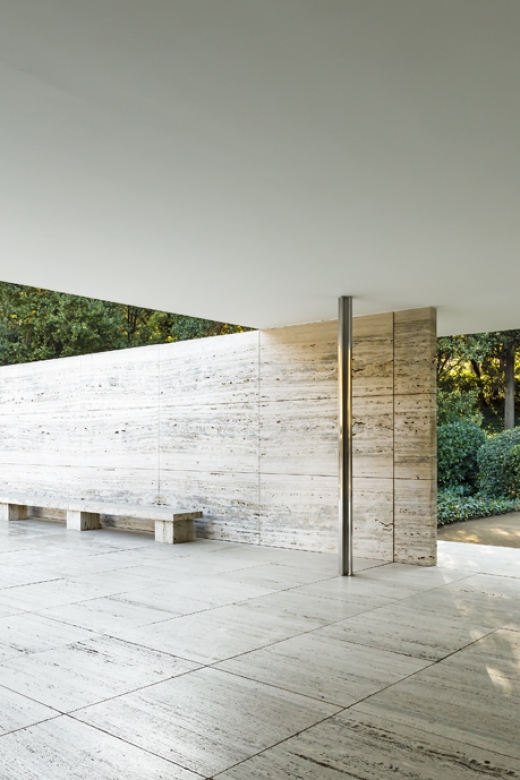
The pavilion didn’t just get forgotten. It got dismantled after the 1929 event ended. That alone makes the story more interesting than a lot of architecture tickets, because it reminds you that buildings can live through history—and also disappear.
The pavilion was reconstructed later due to its significance and reopened on its original site in 1986. That timeline matters for two reasons.
First, it explains why you’re standing in Barcelona looking at an “architectural artifact” that had to come back. Second, it reinforces why the pavilion became such a benchmark. If a structure like this is worth rebuilding decades later, that tells you the design ideas weren’t just fashionable. They were influential.
While you listen, pay attention to how the audio connects the pavilion to the wider modern movement. The guide frames it not only as a beautiful building, but also as something that laid groundwork for modern architecture and influenced generations of architects and artists.
You can also read our reviews of more guided tours in Barcelona



When photos and art show up: how the pavilion can look different
The pavilion can be used during your visit in ways that affect the atmosphere. One reason people return is that the site doesn’t always read the same way twice.
During some visits, the pavilion has served as a backdrop for professional photographers and models, which can make the scene feel more staged and lively than you’d expect from such a quiet structure. Also, the pavilion occasionally hosts artistic interventions, which can alter its appearance.
So what should you do? Stay flexible:
- Treat your visit as a meeting with the pavilion as it exists today, not as a performance of what you saw in a photo online.
- Keep the audio guide playing so you can translate what you’re seeing into the building’s core design logic.
If you’re someone who gets thrown off by change, this might be a slight adjustment. If you’re the type who likes watching how art and architecture share space, you’ll probably enjoy the added energy.
Practical rules that affect your experience (yes, they matter)
The pavilion has straightforward rules, and they affect your comfort level.
Not allowed:
- Smoking
- Food and drinks
- Pets (assistance dogs are allowed)
- Tripods
If you’re the kind of person who brings a snack for “just in case,” skip that habit here. You’ll get a cleaner, calmer environment if you plan to eat before or after. And if you rely on a tripod for photography, you’ll need another plan, since tripods aren’t allowed.
The site is also wheelchair accessible, which is a big plus for visitors who need step-free movement. If you’re traveling with mobility needs, this is one of those “good to know” details that saves stress.
Don’t over-plan: what “short and calm” means for your expectations
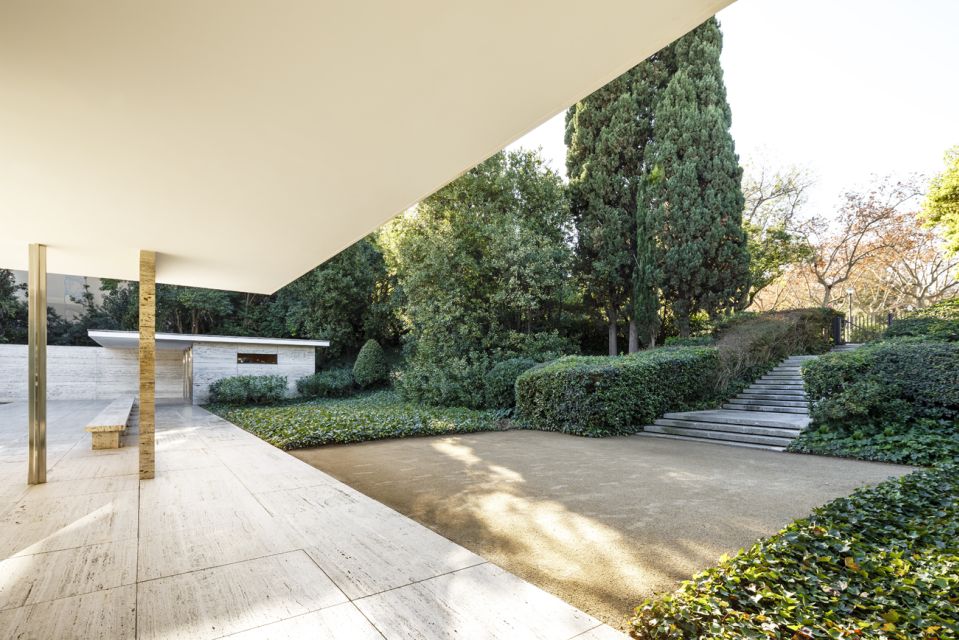
Here’s the honest way to think about this ticket: it’s a focused visit to a single architectural site. You’re not doing five stops, and you’re not wandering through a long museum floor.
That’s exactly why it works for the right traveler. If you like:
- modern architecture
- minimalist design
- places where you can hear your own thoughts
- short walks with a strong payoff
…then you’ll likely find your visit satisfying.
One review-based observation that matches the site vibe: people often find the pavilion relatively quiet compared with big-ticket Barcelona landmarks. That calm can help you process the design choices instead of fighting crowds.
And if you like pairing the pavilion with a short outing, there may be a short nature trail nearby depending on conditions and access. Consider it a gentle way to stretch your legs after the architecture.
Who this ticket fits best (and who might want a different plan)
This is a strong match if you:
- care about modern architecture and want to understand why it matters
- want an easy, self-guided visit with an audio guide in your language
- prefer calm sightseeing over constant movement
- like learning while you look, not reading a brochure afterward
It’s not the best match if you’re:
- chasing maximum “things to do” in a day
- looking for a hands-on, interactive museum-style experience
- expecting an all-day guided tour with multiple stops
Also keep in mind that the pavilion is a minimalist space. Some people feel that the ticket cost is too high for how short the visit can be. My take: if you use the audio guide and really look, the cost feels more reasonable. If you only stop long enough for a couple photos, it might not.
Should you book the Mies van der Rohe Pavilion ticket and audio guide?
Book it if you want a high-impact architecture visit with clear context and an audio guide available in five languages. For the price, you’re buying entry plus guidance that helps you see the pavilion as more than a pretty modern structure. It’s a design with a real legacy: 1929 origins, dismantling, and a reconstruction reopening in 1986 that brought it back as a modernist benchmark.
Skip it or rethink if you want a long, busy itinerary, or if you tend to ignore audio guides. Also note the pavilion can look different on different days due to artistic interventions and occasional photography-style use.
If you like calm, precise design and you enjoy learning by watching, this is one of those tickets that makes your day in Barcelona feel more thoughtful than rushed.
FAQ
What does the ticket include?
Your ticket includes entrance to the Mies van der Rohe Pavilion and an audio guide.
Which languages are available for the audio guide?
The audio guide is available in Spanish, Catalan, English, French, and German.
How long is the visit?
The experience is valid for 1 day. Check starting times for your specific entry.
Is the pavilion wheelchair accessible?
Yes, the pavilion is wheelchair accessible.
Are pets allowed?
Pets are not allowed. Assistance dogs are allowed.
Is smoking or eating allowed inside?
Smoking is not allowed. Food and drinks are also not allowed.
Are tripods allowed for photos?
No, tripods are not allowed.