REVIEW · BARCELONA
Barcelona’s Dark History Night Tour
Book on Viator →Operated by Runner Bean Tours · Bookable on Viator
Dark history comes alive after sundown. This Barcelona night tour links Arc de Triomf to El Born with clear, human-scale stories about the Spanish Inquisition and other grim justice from centuries ago.
I like the format: a small group (max 15) with radioguides means you can actually hear your guide while you walk and stop often enough to ask questions. One thing to keep in mind: the subject matter is heavy, and it is not recommended for children under 14.
Key points at a glance
- Arc de Triomf to El Born at twilight: seasonal start times make the evening atmosphere part of the experience
- Spanish Inquisition, explained: what they believed, the methods they used, and what an Acts of Faith meant
- Specific punishment types: medieval punishments, execution styles, and what public executions involved
- Interactive storytelling tools: projector visuals plus radioguides, so the gruesome parts stay understandable
- Personal feel: small-group size plus a route ending near food, metro, and taxis
In This Review
- Twilight Walk Through Barcelona’s Spanish Inquisition Stories
- Starting at Arc de Triomf: A Smart Place to Begin
- El Born at Night: Ending Near Food, Metro, and Real Life
- What You Learn About the Spanish Inquisition, Acts of Faith, and Punishments
- Small Group, Radioguides, and Projector Images That Keep It Clear
- Price, Timing, and What to Bring for a Smooth 2-Hour Evening
- Who Should Book This Dark History Tour (and Who Should Skip It)
- Should You Book Barcelona’s Dark History Night Tour?
- FAQ
- How much does the Barcelona Dark History Night Tour cost?
- How long is the tour?
- What time does it start?
- Where do I meet the guide?
- Where does the tour end?
- Is it suitable for children?
- Will the tour run if it rains, and should I bring anything?
Twilight Walk Through Barcelona’s Spanish Inquisition Stories
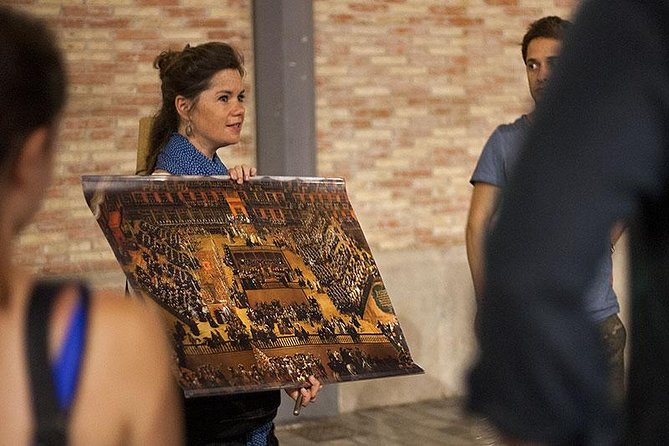
This is the kind of tour you take when you want more than pretty buildings and postcard views. As the light drops, you follow your guide through central Barcelona and watch the city’s past show up in the details: the institutions, the punishments, and how fear moved through everyday life.
The headline topic is the Spanish Inquisition, but what makes it more than a single lecture is that you get the logic behind it. You don’t just hear that people were punished. You hear what the Inquisition believed, how that belief translated into real methods, and how it affected the city and its people.
One of the biggest strengths is how the stories are set up to be understandable without turning soft or vague. You’ll hear about 15th-century executions, other gruesome punishments, and what public executions consisted of. And while the tour has dark legends in the mix, it’s framed as history, not a Halloween-style scare-fest.
Starting at Arc de Triomf: A Smart Place to Begin
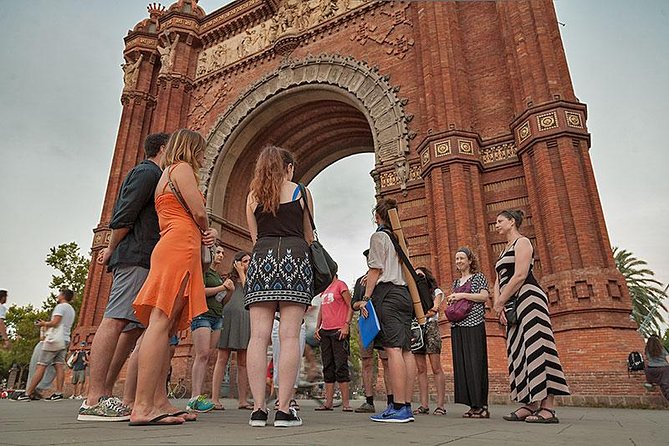
You meet at Arc de Triomf, right in central Barcelona (Ciutat Vella). This matters because it’s a clean, easy arrival point and a natural starting “moment” for a night walk—wide space for your group to gather, then a steady shift into narrower, older streets.
The tour runs at twilight, so the starting time changes through the year. In winter it typically starts around 7:00 pm, and in summer it can be as late as 9:00 pm. That difference affects how your guide sets the mood and pacing. Later start times mean more time in full evening light; earlier start times mean you’re already in the early dark as the stories begin.
Also, this walk is not meant to feel like a ghost tour. If you’re the kind of person who likes real historical landmarks and real civic history, you’ll appreciate that the focus stays on the methods and public rituals of punishment—less spooky, more chilling in a factual way.
You can also read our reviews of more historical tours in Barcelona

El Born at Night: Ending Near Food, Metro, and Real Life
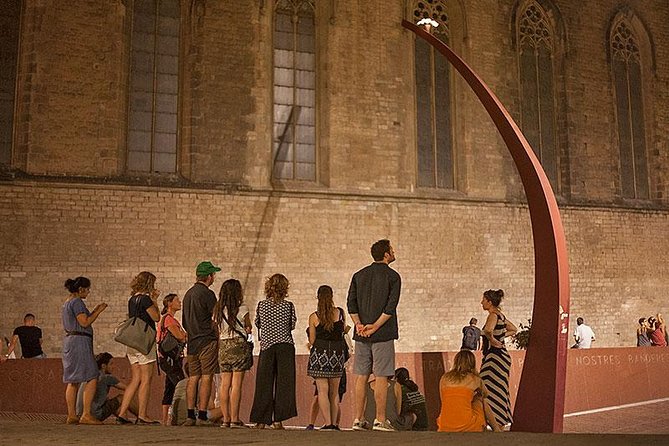
The tour finishes at El Born Centre de Cultura i Memòria, near the Mercat del Born area (Plaça Comercial). It’s a helpful ending point because you’re not dumped somewhere isolated. After the last story lands, you’ve got plenty of practical options: restaurants, metro connections, and taxi stops.
El Born itself is a great stage for this subject. It’s the kind of neighborhood where older layers of Barcelona feel close together. Walking here at night helps you picture the past as something that happened in real streets—not a history book far away.
The final stretch is where the tour’s themes start to “stick” together. You’ll connect Inquisition ideas and enforcement methods with what people experienced publicly, not just in documents. You’ll also hear the story around the development of cemeteries, and how shifts in burial and public space grew out of changing social and religious realities.
What You Learn About the Spanish Inquisition, Acts of Faith, and Punishments
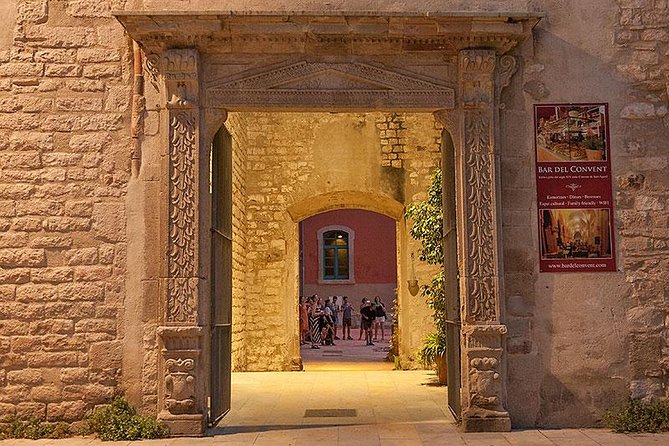
If you came for the Spanish Inquisition angle, you’re in good shape. The tour is built around how the Inquisition worked: what they believed, the seriousness of their actions, and the practical methods they used to enforce those beliefs.
A key part is the explanation of what an Acts of Faith of the Inquisition means in context. You’ll also hear about methods and the idea of public judgment—how punishment wasn’t just a consequence, it was a message.
On top of the Inquisition focus, you get a broader map of medieval justice in Barcelona:
- Types of executions that took place in the city
- Public executions and what those were like in practice
- Other medieval punishments, not only executions
- The way these events shaped social divisions, including references to different classes of the Catalans
And yes, there are dark legends. But the point isn’t to shock you for entertainment’s sake. It’s to show how stories of punishment and fear can echo through local memory.
This isn’t for everyone, and that’s okay. The tour explicitly warns that it isn’t recommended for children under 14, and you should treat that seriously. If you’re sensitive to descriptions of violence and executions, you’ll want to think twice before booking.
Small Group, Radioguides, and Projector Images That Keep It Clear
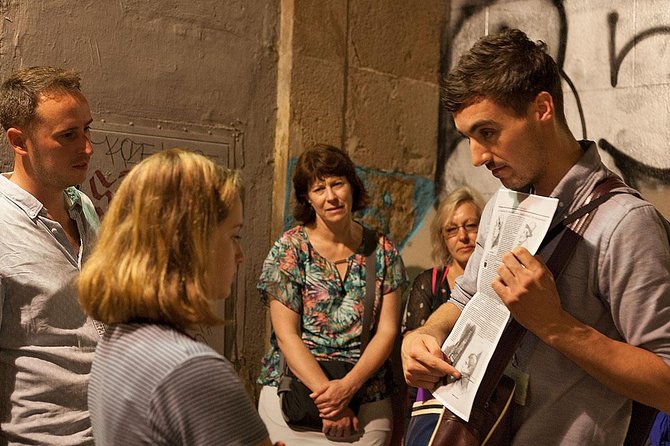
The difference between a good history walk and a forgettable one is communication. Here, your guide works with tech and visuals so you can follow along.
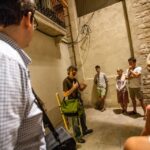
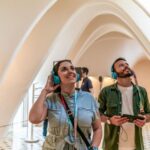
You’ll use radioguides so you hear the guide clearly while walking and when the group stops. You’ll also see projector images, which helps when your guide is describing symbols, contexts, or details you can’t read off a building.
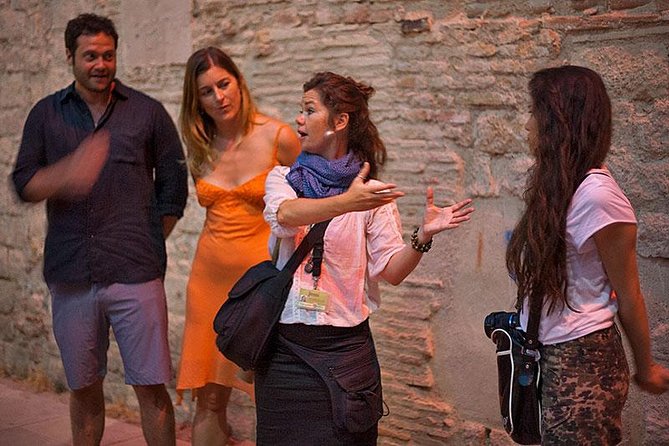
The “small group” limit is also a big deal. With no more than 15 people, you’re not stuck in a slow-moving line where the guide can’t adjust. Several reviews praise guides who keep the energy up and keep everyone involved, including guides named Elena, Noah, Sara, Annemarie, and Eleanor. Even if you don’t get your favorite guide from that list, the pattern is consistent: story-led delivery plus a lively tone.
One small practical tip from the vibe of the tour experience: wear comfortable shoes. It’s about a two-hour walking pace, and the content is dense enough that you’ll want your body to cooperate.
Price, Timing, and What to Bring for a Smooth 2-Hour Evening
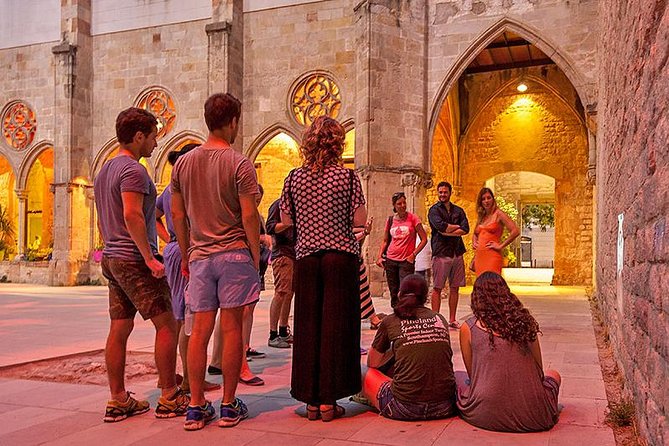
At $25.41 per person for about 2 hours and 2 minutes, this lands in the “good value” zone for Barcelona at night—especially because the tour includes a professional local guide, radioguides, and projector visuals.
It’s not a bargain because it’s cheap. It’s a decent value because it’s structured. You’re paying for a focused narrative walk that connects multiple themes—Inquisition beliefs and methods, Acts of Faith, executions, public punishments, and cemetery development—into a single route.
Timing-wise, plan around the seasonal start:
- winter: around 7:00 pm
- summer: around 9:00 pm
Food and drinks are not included, so decide whether you want dinner before you go or a drink after. Most people enjoy a quick meal first, then use the walk for the history and the nighttime streets.
And since the tour is not canceled due to weather, bring an umbrella if rain is in the forecast. You’ll also feel better if you bring water or plan a stop afterward, since you’ll be walking for the full duration.
You can also read our reviews of more evening experiences in Barcelona




Who Should Book This Dark History Tour (and Who Should Skip It)
This is best for you if:
- you like history that doesn’t avoid ugly parts
- you enjoy guided storytelling with visual aids and props
- you want a structured evening walk through central Barcelona, not a random wander
It’s also a strong pick if you like small groups. The maximum group size keeps the experience more personal and keeps your hearing clear with radioguides.
It may be a wrong fit if:
- you’re traveling with kids under 14
- you know you don’t handle descriptions of executions and public punishment well
- you only want light, ghost-story vibes
On accessibility, there’s positive signal: one manual wheelchair user reported the tour felt accessible. The tour also allows service animals and is described as having most travelers can participate. Still, it is a walking tour, so if you have mobility limits, it’s smart to wear shoes that work well on city sidewalks and consider bringing a plan for pacing.
Should You Book Barcelona’s Dark History Night Tour?
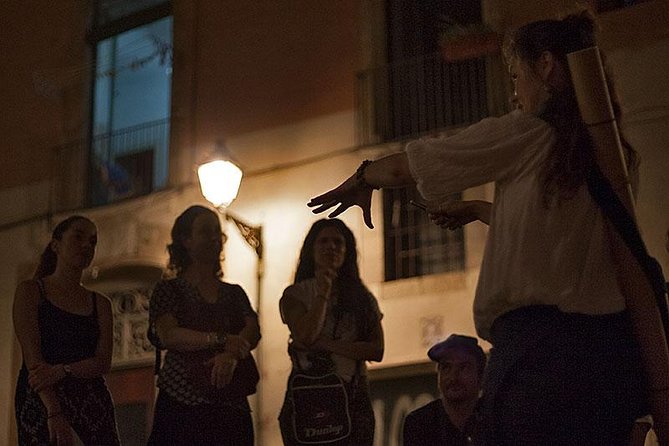
Book it if you want a night in Barcelona that feels different from the usual tapas-and-architecture loop. You get a tight two-hour route, a small group, and clear explanations of the Spanish Inquisition and medieval punishments, plus visuals and audio support to keep it understandable.
Skip it if you’re seeking a spooky ghost hunt, or if dark content is a deal-breaker for your group. If you’re okay with heavy topics and you like real history told like a story, this one is worth slotting into your evening—and then heading straight to El Born for a post-tour dinner.
FAQ
How much does the Barcelona Dark History Night Tour cost?
It costs $25.41 per person.
How long is the tour?
The tour lasts about 2 hours (approximately 2 hours and 2 minutes).
What time does it start?
It starts around twilight. In winter, it’s around 7:00 pm, and in summer, it can be around 9:00 pm.
Where do I meet the guide?
You meet at Arc de Triomf in Ciutat Vella, Barcelona (08018 Barcelona, Spain).
Where does the tour end?
The tour ends at El Born Centre de Cultura i Memòria, near Mercat del Born (Plaça Comercial, 12, Ciutat Vella, 08003 Barcelona, Spain).
Is it suitable for children?
No. It isn’t recommended for children younger than 14 due to the darker content.
Will the tour run if it rains, and should I bring anything?
The tour is not canceled due to weather conditions, so you should bring an umbrella if rain is likely. Also, since food and drinks aren’t included, it helps to plan for water or a drink stop.