REVIEW · BARCELONA
Barcelona: Wonders of Gaudi Bike Tour
Book on Viator →Operated by Fat Tire Tours Barcelona · Bookable on Viator
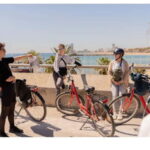
Gaudí on wheels is a smart way to plan your day. This Barcelona Gaudí bike tour mixes quick, guided stops with the big payoff of skip-the-line access to La Sagrada Familia, so you spend less time waiting and more time learning. I like the setup for a first-timer: you cover a lot of ground without feeling like you’re sprinting from one site to the next.
Two things I especially like: the route is built around Gaudí’s real influence on Barcelona’s art and architecture, and you get context for the Modernista style as you see the buildings up close. You’ll also hit both the famous names and some lesser-talked-about stops that help the whole puzzle click, from the Raval area to major landmarks.
One possible drawback: it’s still a bike tour. You’ll be on a bike for about 3 hours 45 minutes, with multiple short photo stops, and lunch is on your own dime.
In This Review
- Key points to know before you ride
- Gaudí on wheels: what this 3h45 tour really gives you
- Value check: $42.69, what’s included, and what costs extra
- Meet-up at Carrer de Marlet and what a max-9 group means
- From Raval to Palau Guell: early Gaudí and Modernista context
- Quick stop reality check
- La Pedrera to Casa Batlló: the Mançana ride plus Diagonal views
- Casa Batlló: where the block theme peaks
- Sagrada Familia day: your priority pass and Gaudí’s 43-year commitment
- One tip for the Sagrada Familia stop
- Parc de la Ciutadella to Arc de Triomf: a change of pace that matters
- Choosing the right guide: Marco, Misha, and Alvaro energy
- Should you book the Barcelona Gaudí Bike Tour?
- FAQ
- Does the tour include skip-the-line access to La Sagrada Familia?
- How long is the Barcelona: Wonders of Gaudi Bike Tour?
- Where is the meeting point for the tour?
- What’s included in the price, and what costs extra?
- How big is the group?
- Do you get a helmet?
- Will the tour run in the rain?
- What’s the cancellation policy for a full refund?
Key points to know before you ride
- Skip-the-line La Sagrada Familia pass saves a chunk of waiting time at the biggest stop.
- Small group size (max 9 travelers) keeps the pace manageable and the guide’s attention focused.
- Live guided learning ties Gaudí’s life, influences, and Modernista architecture together as you go.
- A route that mixes famous and lesser-known works helps you see the patterns, not just the headlines.
- City cycling with frequent brief stops means you’ll get lots of viewpoints, but you shouldn’t expect long museum-style hangs.
Gaudí on wheels: what this 3h45 tour really gives you
This isn’t a “one building at a time” day. It’s a tour that treats Barcelona like the classroom—Gaudí’s buildings are the lessons, and the bike ride is how you move between them fast enough to see the story unfold in real life.
I like that the tone feels leisurely and guided rather than frantic. You get a sequence of stops where the guide can explain what to notice—forms, symbolism, and why Gaudí mattered—while you’re still close enough to spot details without straining. And since you’re using a La Sagrada Familia priority pass, the most time-sensitive stop is handled for you.
You’ll also get a real sense of Barcelona’s style shift in the Modernista era. The tour doesn’t just point at buildings; it explains why these structures belong to a period when architects and artists pushed boundaries, and why Gaudí became one of the most influential voices.
You can also read our reviews of more cycling tours in Barcelona


Value check: $42.69, what’s included, and what costs extra
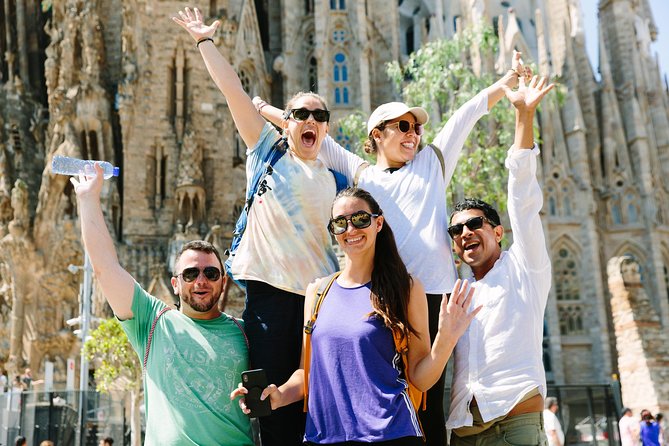
At $42.69 per person, this is priced like a budget-friendly way to get guided access plus transportation. And the big value driver is the skip-the-line arrangement for La Sagrada Familia, which is typically where time and annoyance spike for independent plans.
What’s included is straightforward:
- live guide
- bike
- helmet (provided, optional)
What costs extra:
- lunch at a local tapas restaurant (you pay your own meal)
- optional guide gratuity (not required, but you can tip if you want)
If you’re coming to Barcelona without a plan for how to manage Sagrada Familia lines, this price can feel like a bargain. If you already had timed entry locked and you’re comfortable biking on your own, the value shifts. Still, the guided “what to look for” part is the reason most people stick with it.
Meet-up at Carrer de Marlet and what a max-9 group means
Your start point is Carrer de Marlet, 4, Ciutat Vella. You’ll meet there, then head shortly to pick up your bikes. The tour runs rain or shine, so you’ll want to be ready with a light layer and something for wet weather if needed.
The group size is capped at 9 travelers. That matters more than you’d think. With a smaller group, stops don’t stretch out into chaos, and you’re less likely to get left behind while the guide explains what you’re seeing.
It also helps with the bike rhythm. You’ll have several short stops throughout the day, which works best when the group can regroup quickly. If you’ve ever toured cities where you’re constantly waiting for slow walkers, you’ll appreciate this tighter setup.
From Raval to Palau Guell: early Gaudí and Modernista context
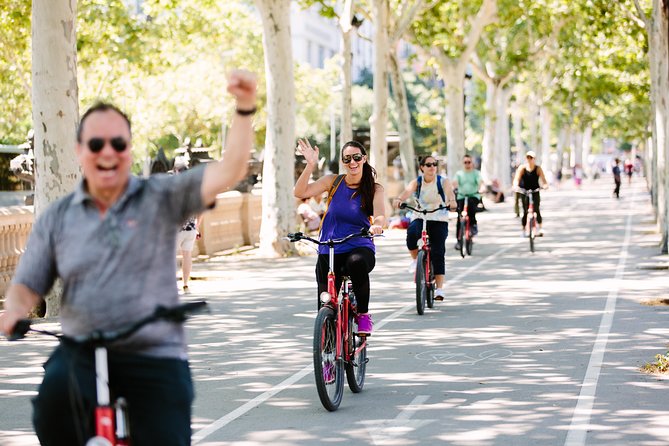
The route starts with a warm-up and a neighborhood setup. One of the first stops is Museu d’Art Contemporani de Barcelona, where you get a speech about the Raval. Even if you don’t go inside, this kind of orientation is useful. It helps you understand why the city’s architecture looks the way it does in different districts, not just in tourist magnets.
Then you move to Palau Guell, Gaudí’s first major building in Barcelona tied to industrialist Eusebi Güell. This is a strong early stop because it shows you that Gaudí’s story wasn’t just one blockbuster phase. You’re seeing how the collaboration and ambition started, and how his ideas began forming in a real setting.
Next comes the fun part for architecture nerds: the tour focuses on the area people connect with La Mançana de la Discòrdia—the Block of Discord. You’ll see multiple houses close together, and the guide will help you spot the “conversation” between styles and surfaces.
You’ll stop at Casa Amatller for a talk about the Mançana de la Discòrdia idea, then nearby at Casa Lleo i Morera with the same theme. The point isn’t to memorize names like a test. It’s to learn how Gaudí and other Modernista architects treated the same urban block like a stage for bold design choices.
Quick stop reality check
These early stops are relatively short, which can be great. You get enough time to see the key exterior details and hear what matters, without dragging the day into museum fatigue. If you’re the type who likes to linger, you’ll still find places to take photos and re-check details, but you’ll be nudged toward the next viewpoint.


La Pedrera to Casa Batlló: the Mançana ride plus Diagonal views
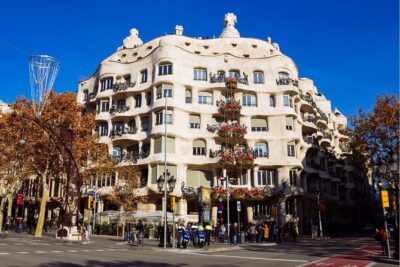
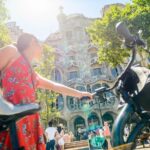
After the block of discord houses, the tour hits one of Gaudí’s most recognizable structures: Casa Mila, La Pedrera. You’ll learn that it was constructed between 1906 and 1912 and later declared a UNESCO World Heritage site in 1984. Even if you’ve seen pictures, hearing the facts while you’re close to the building helps you connect scale with design.
You’ll also get a quick stop at Hotel Casa Fuster, with a brief speech. These shorter moments are like punctuation marks. They help keep the tour’s rhythm moving while still feeding you small pieces of meaning about the city’s architectural language.
At some point you’ll ride down the Diagonal. This matters because it gives you a different kind of view—less “tight street” and more “Barcelona in motion.” It’s a good mental reset between the densest Modernista clusters and the major destination ahead.
Then you pass by CaixaForum Macaya, again with a short talk. You don’t need to be a museum goer to benefit here. The guide is using these stops to connect you to broader Barcelona patterns: how buildings relate to their surroundings and how design choices shape the street experience.
Casa Batlló: where the block theme peaks
The next big exterior hit is Casa Batlló, another stop tied to the Mançana de la Discòrdia explanations. This is usually where the tour’s idea of architectural “debate” clicks for people. You can see how different Gaudí-inspired choices—color, form, and detail—work together in the same neighborhood context.
And then you transition to Torre Bellesguard, described as a modernist castle designed by Antoni Gaudí. The stop time is longer here than many quick exterior moments, which gives you a little breathing room to look at how this structure feels different from the houses you just saw.
Sagrada Familia day: your priority pass and Gaudí’s 43-year commitment
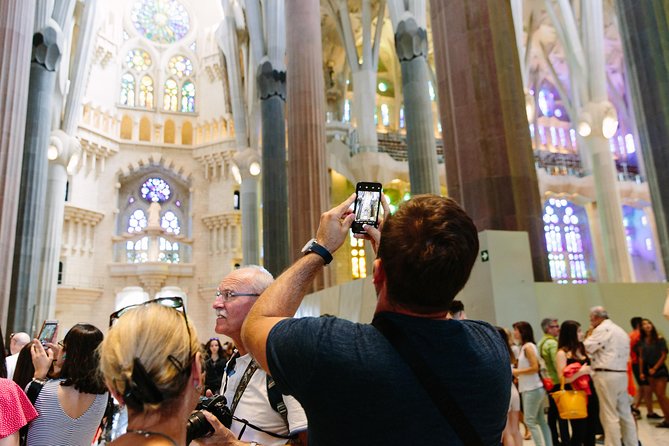
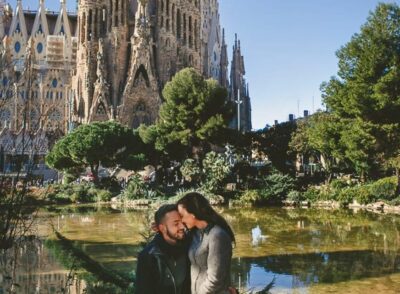
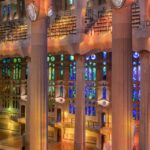
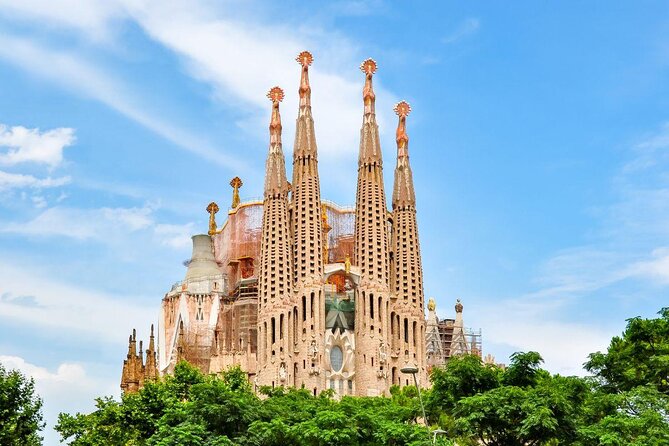
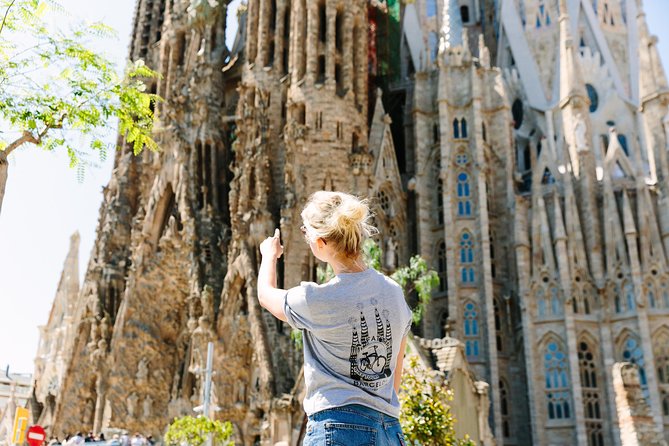
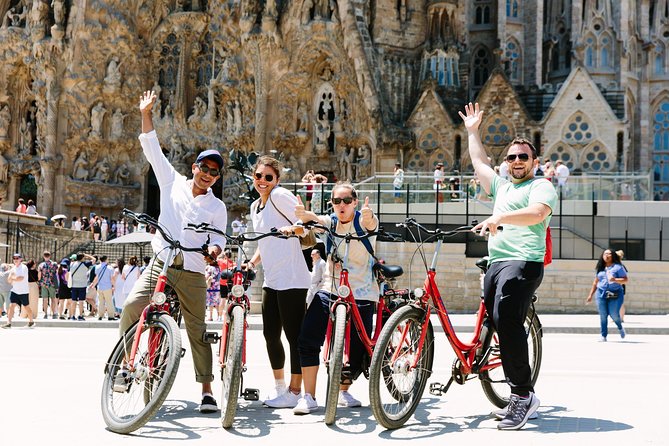
Eventually, the tour lands at Basilica de la Sagrada Familia. This is the reason many people book in the first place, and it’s handled the smart way: skip long lines with your pass.
The guide delivers a stop speech about the Sagrada Familia, and the tour’s framing is built around Gaudí’s extraordinary commitment: he worked on it for 43 years. That detail helps you read the basilica not as a single finished project, but as a living long-term work influenced by time, planning, and persistent vision.
This is also where you’ll feel the practical value of biking as your transport choice. The bike route gets you there efficiently, and the priority access keeps your visit from getting swallowed by queues.
One tip for the Sagrada Familia stop
Go in ready to look up. Even when you’re only getting a limited time window, the guide’s explanations help you know what you’re seeing rather than treating it like a huge pretty building. You’ll get more out of it if you pick one or two things to focus on—like structural character or sculptural themes—then let the guide connect the dots.
Parc de la Ciutadella to Arc de Triomf: a change of pace that matters
After Sagrada Familia, the route continues with more city texture. You’ll see the Castle of the Three Dragons at Parc de la Ciutadella. This spot comes with a talk about the park and helps break the heaviness of the basilica visit. It’s a reminder that Gaudí wasn’t the only force shaping Barcelona’s design era—public spaces and architecture work together.
Next you stop at Mercat del Born. The entry is optional, so you can decide on the spot if you want more. Even if you don’t go inside, the stop keeps you oriented in central areas that feel like lived-in Barcelona rather than just photo corridors.
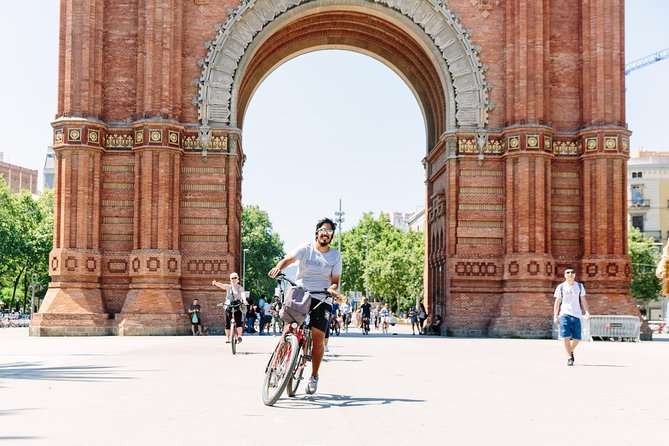
Finally, you reach Arc de Triomf. The guide explains it was built by architect Josep Vilaseca i Casanovas as the main access gate for the 1888 Barcelona World Fair. It’s a nice historical anchor before the tour ends back near your meeting point.
And this end matters. When you finish with a landmark that connects to the broader story of the city, you’re more likely to remember the tour as a coherent route rather than separate building sightings.
Choosing the right guide: Marco, Misha, and Alvaro energy
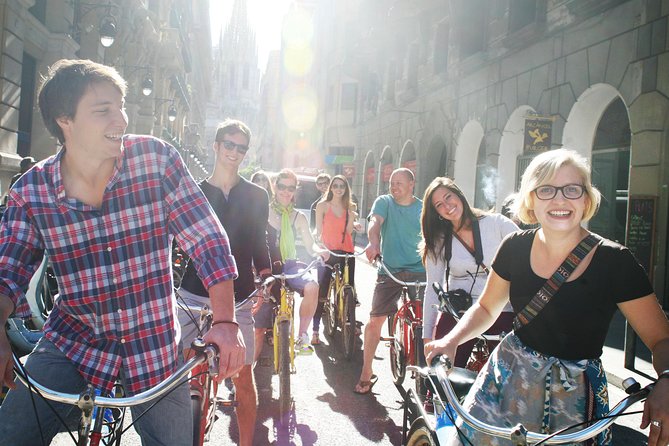
The quality of a bike tour lives or dies with the guide, and this one seems to attract strong personalities. I’ve seen praise attached to guides like Alvaro, described as a veteran Gaudí tour guide with Texas roots, as well as Misha, who handled a group with three preteens while keeping the pace reasonable and the explanations clear. Another name that came up was Marco, praised for being very informative even during a short stint.
What you can take from that: this tour is built to work for different group types, including families. The guide approach is the practical part—teaching you what to look for without turning the day into a lecture marathon.
You’ll also notice the tour emphasizes safety and experienced guidance, which is important when you’re cycling in a busy city environment.
Should you book the Barcelona Gaudí Bike Tour?
Book it if:
- you want guided Modernista context rather than random exterior hopping
- you care about saving time at La Sagrada Familia
- you like the idea of covering multiple landmarks in one smooth plan
- you’d prefer small-group pacing over a big crowd experience
Skip it or consider alternatives if:
- you don’t feel comfortable on a bike for about 3 hours 45 minutes
- you’d rather spend longer time inside major sites than doing quick exterior-focused stops
- you’re already set on a self-guided Sagrada Familia plan and you just want to pay for entrance time
My take: this is a strong value choice for first-time Gaudí fans who want the big names and the connecting tissue between them. The priority access at Sagrada Familia plus a guided route through Barcelona’s key Modernista highlights makes it an efficient, genuinely enjoyable way to understand why Gaudí still dominates the city’s identity.
FAQ
Does the tour include skip-the-line access to La Sagrada Familia?
Yes. Your pass is meant to help you skip long lines at La Sagrada Familia.
How long is the Barcelona: Wonders of Gaudi Bike Tour?
The tour is about 3 hours 45 minutes (approx.).
Where is the meeting point for the tour?
You meet at Carrer de Marlet, 4, Ciutat Vella, 08002 Barcelona, Spain. The tour ends back at the meeting point.
What’s included in the price, and what costs extra?
Included are the live guide, bike, and an optional helmet. Lunch at a tapas restaurant is your cost, and guide gratuity is optional.
How big is the group?
The tour has a maximum of 9 travelers.
Do you get a helmet?
Yes. A helmet is provided, and wearing it is optional.
Will the tour run in the rain?
Yes. The tour runs rain or shine.
What’s the cancellation policy for a full refund?
You can cancel for a full refund if you cancel at least 24 hours in advance of the experience start time.