REVIEW · BARCELONA
Barcelona: Palau de la Música Guided Tour
Book on GetYourGuide →Operated by Palau de la Música Catalana · Bookable on GetYourGuide
This building listens like a concert. A guided visit to Palau de la Música Catalana lets you see Modernist splendor in areas many visitors don’t get to reach, and you’ll end with a short organ moment. I love the grand staircase’s ornate floral details, and I love the way the Concert Hall turns architecture into a kind of stage picture. The one thing to consider is that some tours can feel crowded, so plan to arrive ready to move and take photos fast.
You’ll start where music work happens, not just where tourists pose. The tour begins in the Rehearsal Hall of the Orfeó Catalala, tied to the foundation stone laid in 1905 and the choir’s long-running rehearsal tradition. From there, the route is built to keep escalating: the staircase, then the Lluís Millet Hall, then the famous Concert Hall and its skylight on the second floor.
If your schedule is tight, the 50 minutes is also its own limitation. It’s enough time for the highlights, but not enough to linger like you might in a museum. Still, for $28 with entrance included, it’s a smart way to see the Palau in one efficient, well-paced hit.
In This Review
- Key highlights at Palau de la Música Catalana
- Why this Palau visit feels different from a normal sightseeing stop
- The 50-minute route: rehearsal hall to Concert Hall and skylight
- Rehearsal Hall of the Orfeó Catalala: the start point with meaning
- The grand staircase: floral ornament and flags up close
- Lluís Millet Hall: the balcony and the nature symbolism
- The Concert Hall: color, shapes, and the feeling of a stage
- The 2nd floor and the grand skylight
- The organ performance: the closing note
- Price and value: what $28 buys you in real terms
- Guides, languages, and how to get the most out of the talk
- Getting there and timing: where to meet and when to go
- Photo and comfort tips for the staircase and skylight
- Should you book the Palau de la Música guided tour?
- FAQ
- How long is the Palau de la Música guided tour?
- Where is the Palau de la Música Catalana located?
- How much does the tour cost?
- What’s included in the price?
- What’s not included?
- What does the tour cover from start to finish?
- Will I hear any music during the tour?
- Do I need to bring ID?
- What languages are available for the live guide?
- Is it possible to cancel and get a refund?
Key highlights at Palau de la Música Catalana
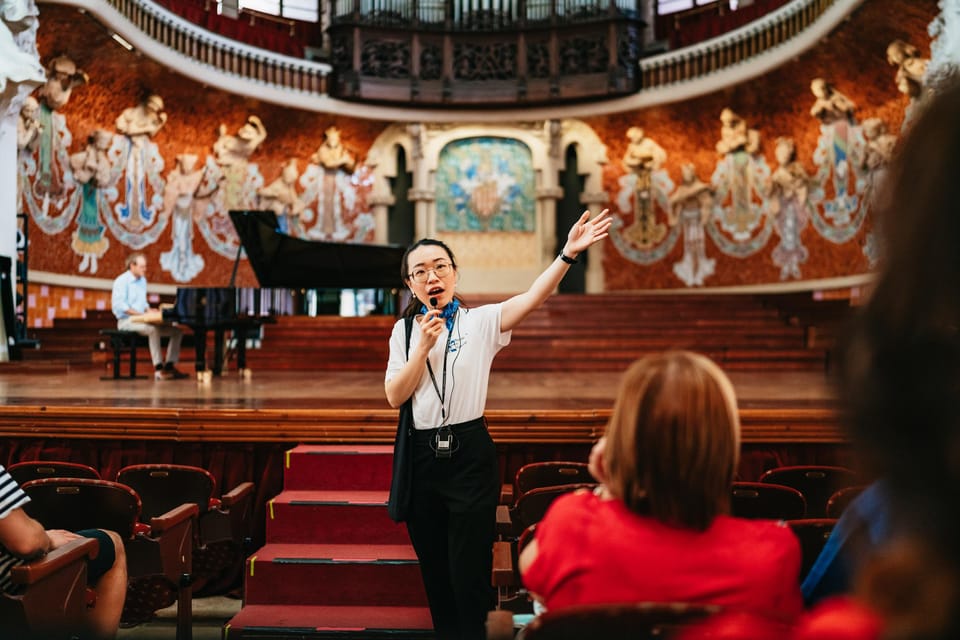
- Orfeó Catàlà rehearsal spaces: start in the hall linked to the 1905 foundation stone
- Grand staircase floral and flagwork: a standout close-up photo stop
- Lluís Millet Hall balcony views: columns tied to nature symbolism
- Concert Hall color-and-light effect: the signature moment of the visit
- 2nd-floor skylight: a major design pay-off near the end of the route
- Short organ performance: a satisfying finale to cap it off
Why this Palau visit feels different from a normal sightseeing stop
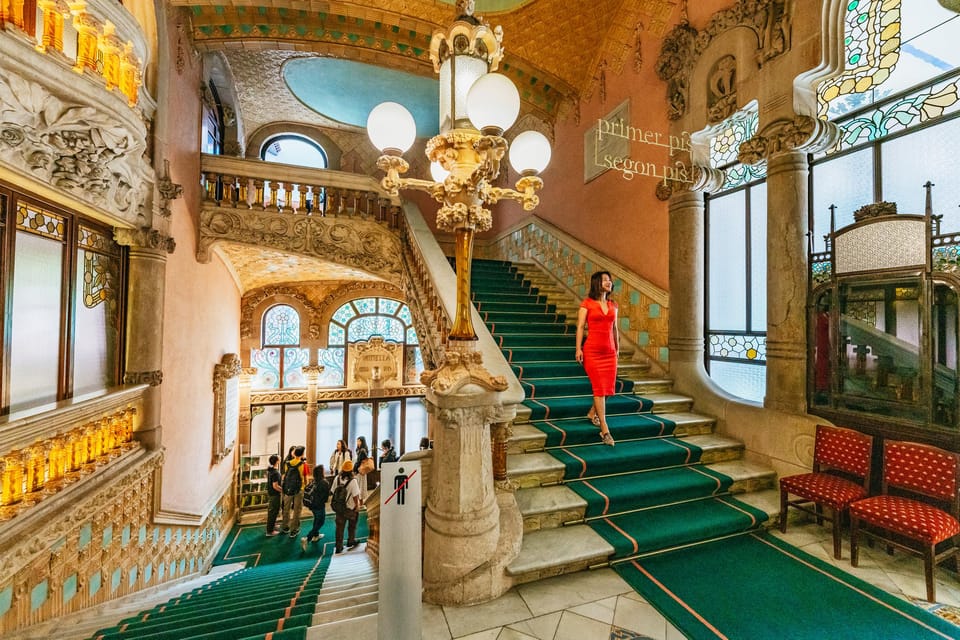
Palau de la Música Catalana isn’t just a pretty building. It’s an active music venue, designed so sound, light, and ornament all work together. That’s why a guided tour matters here: you’re not only looking at details, you’re learning what they mean in a space built for performance.
Two things make this experience click. First, you get to move through the Palau in a clear sequence instead of wandering and missing the best angles. Second, the tour includes access to areas that are normally off-limits, so you’re not stuck only at the public-view edges. Even the way the itinerary is organized supports the architecture—each stop builds toward the Concert Hall moment.
There’s also a practical payoff. At $28 for about 50 minutes, you’re paying for both entrance and a live guide, plus a short organ segment at the end. If you like your Barcelona sights to come with context, not just selfies, this one fits.
You can also read our reviews of more guided tours in Barcelona

The 50-minute route: rehearsal hall to Concert Hall and skylight
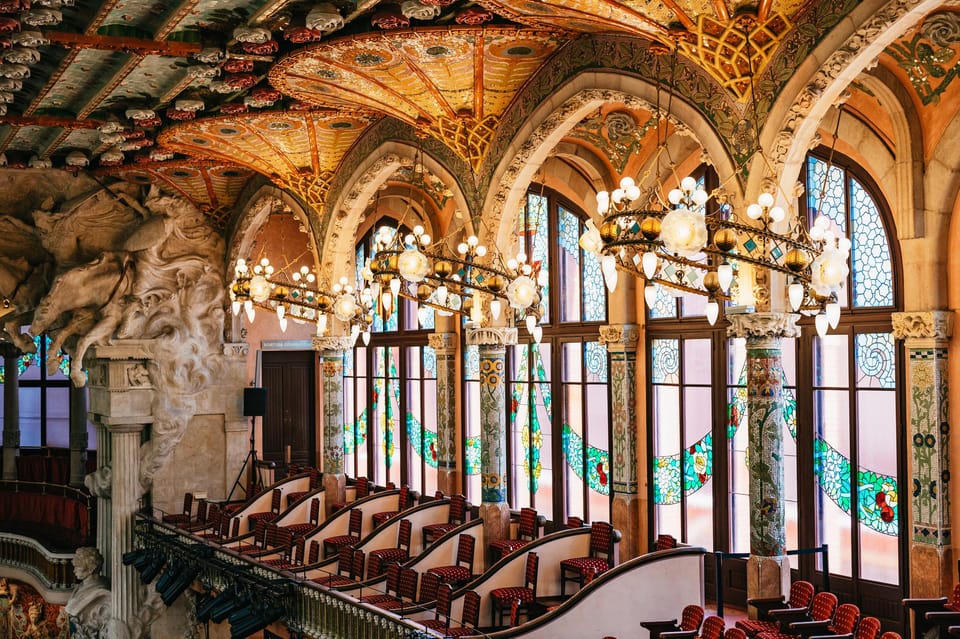
Expect a compact, step-by-step tour. The pacing is fast enough to cover the major rooms, but not so rushed that you can’t pause for photos if you’re ready.
Rehearsal Hall of the Orfeó Catalala: the start point with meaning
You begin in the Rehearsal Hall of the Orfeó Catalala. This is not a random first room—it’s linked to the foundation stone laid in 1905, and it’s also where the choir rehearses regularly, with a tradition running for more than 100 years. Standing there, you get a different perspective: this Palau isn’t just heritage, it’s working culture.
If you like the performing-arts angle, this start helps you connect the design to real use. You’ll understand why the building’s details aren’t just decoration; they’re part of a music identity.
The grand staircase: floral ornament and flags up close
Next comes the grand staircase—one of the Palau’s best-known design spectacles. This is where you’ll want your camera ready. The staircase features ornate floral decoration and flag elements, using a range of materials that create depth and texture rather than a flat painted look.
In practical terms, this stop is a photo test. People cluster here, so treat it like a quick photo sprint: pick your angle, shoot, then step aside so the flow keeps moving. If you get stuck in the crowd for too long, you’ll lose time for the main showpiece.
Lluís Millet Hall: the balcony and the nature symbolism
Then you move on to the Lluís Millet Hall. This is where you get a glimpse of the balcony with columns that symbolize nature. That detail matters more than it sounds, because the Palau’s Modernism often works through symbolism—art and meaning built into structure.
From here, the tour starts shifting from “pretty architectural parts” to “why this looks the way it does in a performance space.” You’re being prepared for the Concert Hall explosion of design.


The Concert Hall: color, shapes, and the feeling of a stage
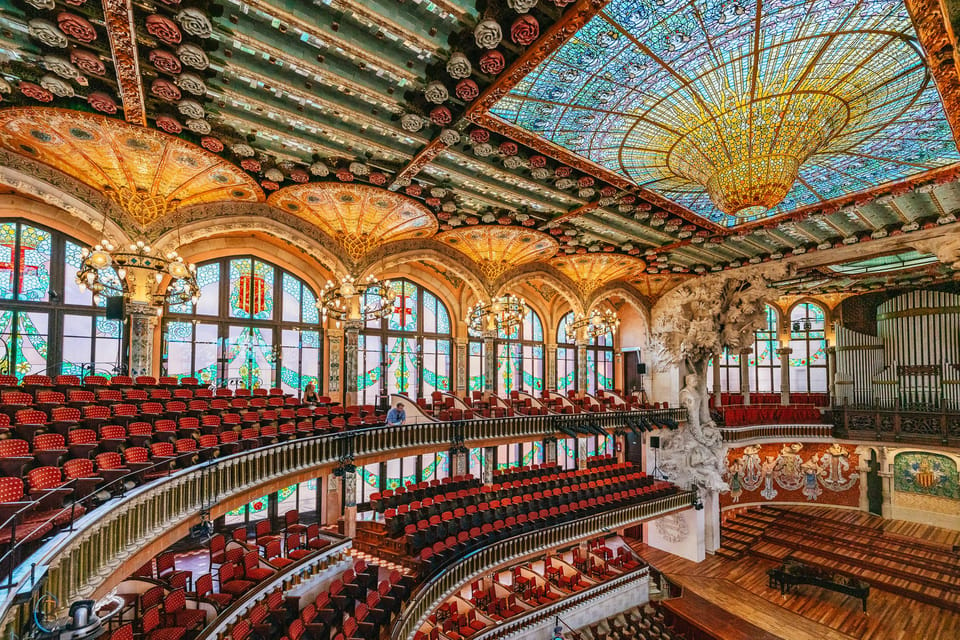
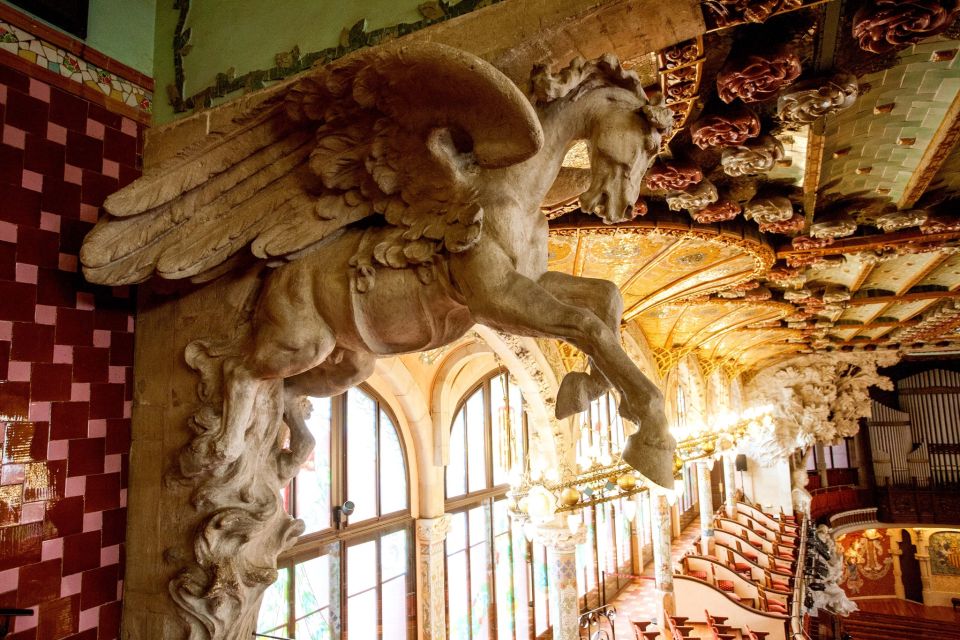
The Concert Hall is the peak experience. When you enter, you get that burst of color, shapes, and light that makes Palau de la Música Catalana famous. This is the room most people picture in their heads before they arrive, but seeing it as an actual venue is the real point.
If you’re a music fan, you’ll also appreciate the sense of intention. The hall is built for sound and sight lines, not just visual impact. That’s why the organ finale at the end lands so well—it ties the room’s design to what it was made to do.
The 2nd floor and the grand skylight
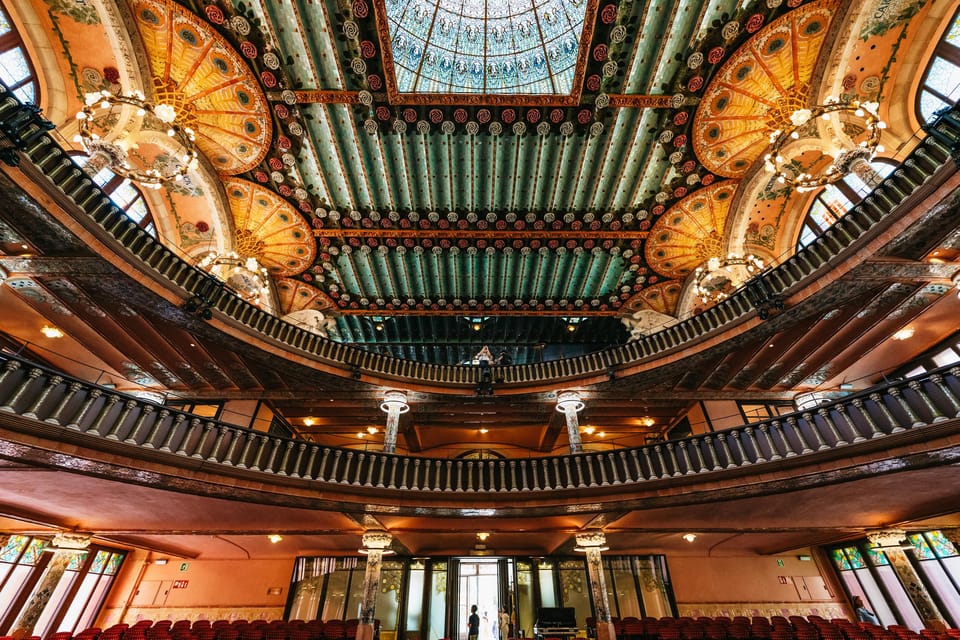
After the Concert Hall viewing, you head to the second floor. This is where you admire the grand skylight. It’s one of those “stop and look up” moments: the building’s light is part of the architecture, and the skylight is where you see that design idea most clearly.
This is also a nice breathing point. If you’ve been busy taking photos down at eye level, the skylight asks you to switch your focus and look at the Palau’s vertical drama.
The organ performance: the closing note
Finally, the tour ends with a short performance from the Palau’s organ. It’s a quick moment compared with a full concert, but it’s the payoff. You hear how the room carries music, and the building stops feeling like a static monument.
Even in short form, it helps you understand why the Palau is treated like more than a landmark.
Price and value: what $28 buys you in real terms
$28 for about 50 minutes is a fair price when you look at what’s included. You get guided access plus entrance to Palau de la Música Catalana, and the tour includes a short organ moment at the end.
What you don’t get matters too. Café and restaurant time are not included, and concert tickets are not included. That’s fine if you’re doing this as a structured architectural stop. If you want music beyond the organ demo, you’ll need a concert ticket on a separate booking.
Is it worth it? For most people, yes—because a typical visit without a guide would leave you piecing together the “why” on your own. Here, you get the story and the design connections in a tight schedule, and you also benefit from access to areas that are not usually open in the same way.
Guides, languages, and how to get the most out of the talk
A big part of the experience is the live guide. The tour offers languages including Italian, French, English, Chinese, Catalan, and Spanish. If you’re relying on English (or another language you speak), this matters, because you’ll catch more when the explanations match your comfort level.
The tour guides named in recent experiences include Yu, Juan, Axel, Marco, and Fei Fei. Different personalities shape the tour, but the common thread is clear: people remember the guide’s explanations and how much they added to the visit.
Two practical tips can help you maximize the value:
- Bring a phone with enough storage. You’ll likely take more photos than you plan, especially at the staircase and Concert Hall.
- If your tour uses an audio earpiece, pay attention to sound quality. Some people reported issues like crackling or poor clarity. If that happens, mention it right away so the guide or staff can adjust what they can.
Getting there and timing: where to meet and when to go
The Palau de la Música Catalana is about a 10-minute walk from Plaza Catalunya and Las Ramblas. That’s convenient. It also means you can usually fit this between other central sightseeing stops.
Meeting point can vary depending on the option booked. One helpful detail you might see: a meeting spot described as behind a coffee shop, near the main entrance or accessible via a side route with outdoor seating. Still, don’t assume that’s your exact location. The safe move is to confirm where to meet based on your booking details.
Timing also influences what you catch inside. Some experiences mention being fortunate enough to hear a choir, or to notice that rehearsals and special school-group moments can occur around certain hours. Because of this, it’s smart to confirm the time of your arrival with the supplier because availability can vary by day.
Also: plan for construction or crowding. A few people noted that construction made hearing harder, and others mentioned too many people around certain photo areas. That doesn’t ruin the experience, but it does affect comfort and audio clarity.
Photo and comfort tips for the staircase and skylight
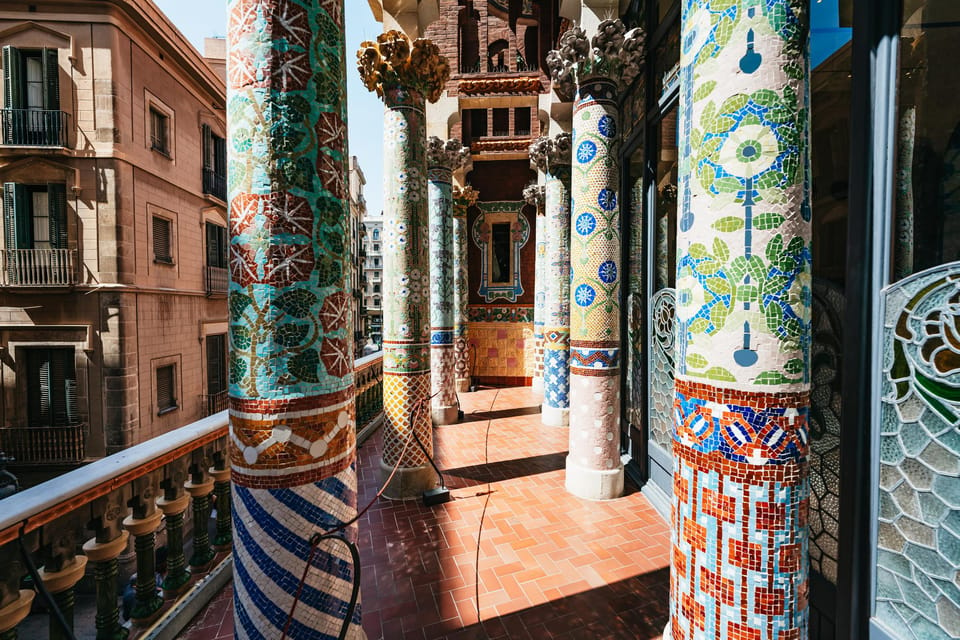
This is a camera-friendly venue. The best advice is simple: treat the Palau like you’re photographing a stage set. Stand where the light works, shoot, then move on before you block someone else.
Here’s how I’d handle it:
- At the grand staircase, be ready immediately. Ornate floral and flag details take a second to frame, but you don’t want to lose your spot waiting for the perfect shot.
- In the Concert Hall, aim for a quick series from a couple angles. The colors and light shift with perspective.
- When you reach the skylight on the second floor, slow down and look upward. That moment is less about quick shots and more about getting the full geometry into your camera.
If you’re sensitive to noise, go in with an expectation of sound and movement. You’re touring a venue in use, and that’s part of the character.
Should you book the Palau de la Música guided tour?
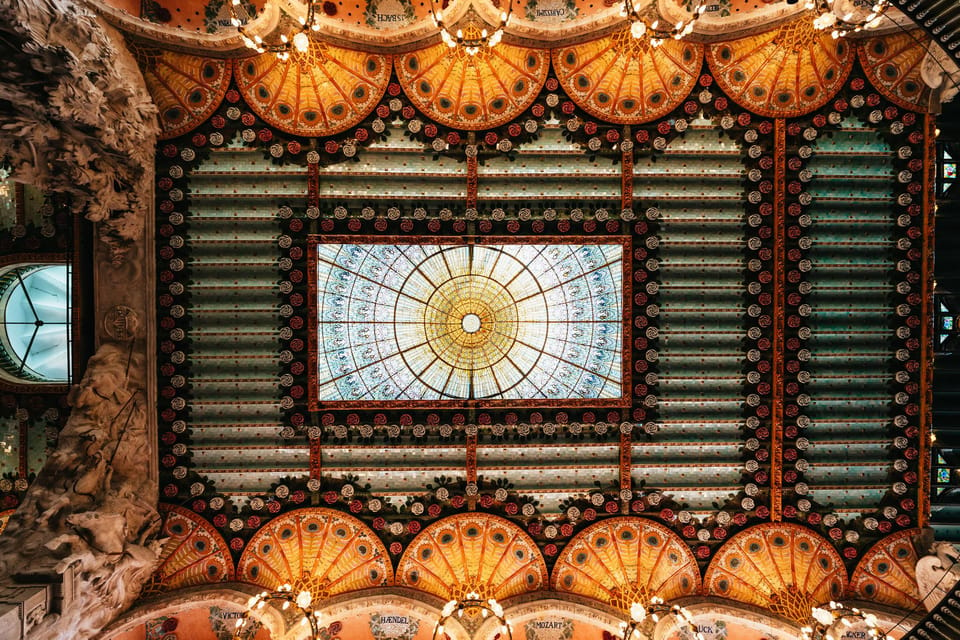
Book it if you want the fast, high-impact version of Palau de la Música Catalana with real context. The biggest reasons to say yes are the off-limits access, the staircase-to-hall itinerary, and the short organ performance that makes the building feel alive.
Pass or rethink it if you want a slow, unguided wander with lots of time per room. This tour is 50 minutes, so you’ll cover key areas and move along. Also consider crowding: if you hate tight groups or if you’re worried about audio clarity, you may want to choose a time when the venue is calmer and arrive a few minutes early.
If your goal is to understand Barcelona Modernism through one of its most musical buildings, this one is a strong choice.
FAQ
How long is the Palau de la Música guided tour?
The tour lasts 50 minutes.
Where is the Palau de la Música Catalana located?
It’s about a 10-minute walk from Plaza Catalunya and Las Ramblas.
How much does the tour cost?
The price is listed as $28 per person.
What’s included in the price?
You get a guided tour and entrance to Palau de la Música Catalana.
What’s not included?
Café and restaurant are not included, and concert tickets are not included.
What does the tour cover from start to finish?
It starts in the Rehearsal Hall of the Orfeó Catalala, includes the grand staircase, then the Lluís Millet Hall, and the Concert Hall (including time up to the 2nd floor for the skylight). It ends with a short organ performance.
Will I hear any music during the tour?
Yes. The tour ends with a short performance from the Palau’s organ.
Do I need to bring ID?
Yes. You should present your ID at the box office to confirm the tour.
What languages are available for the live guide?
The tour guide is available in Italian, French, English, Chinese, Catalan, and Spanish.
Is it possible to cancel and get a refund?
Yes. You can cancel up to 24 hours in advance for a full refund.