REVIEW · BARCELONA
Barcelona Gaudí Segway Tour
Book on Viator →Operated by Barcelona Segway Tour · Bookable on Viator
Two wheels, one Gaudí binge. This Barcelona Gaudí Segway Tour strings together Gràcia and the Eixample so you can see major Modernist sights fast, mostly from the outside and without the stress of entry lines. I like the smart route that hits a lot of iconic facades in about 2.5 hours.
What makes it work is the human touch. Guides like Etienne, Sophie, and Arnau are specifically praised for clear explanations and getting people comfortable before you start moving through traffic and curbs. You also get the basics covered up front: helmet, bottled water, and insurance.
One big consideration: Segways look easy until you’re standing on them. If your instructor rushes the practice or skips key tips for kerbs and bumps, it can feel risky—so insist on a calm, thorough intro and take it slow once you roll.
In This Review
- Key takeaways before you roll
- Why a Segway tour fits Gaudí’s Barcelona
- Price and value: what $47.07 buys you
- Meeting at Passeig de Lluís Companys and starting smoothly
- Training, safety, and how to avoid a bad first minute
- The full route: Gaudí sights in the order you’ll see them
- Stop 1: Arc de Triomf (quick orientation)
- Stop 2: Barri de Gràcia (the longer neighborhood break)
- Stop 3: Casa Vicens (Gaudí’s earlier spark)
- Stop 4: Palau Macaya (Modernist presence nearby)
- Stop 5: Basilica de la Sagrada Familia (outside views first)
- Stop 6: Avinguda Gaudí (city-grid Gaudí moment)
- Stop 7: Recinte Modernista de Sant Pau (Hospital de Sant Pau)
- Stop 8: Plaza Toros Monumental de Barcelona
- Stop 9: Passeig de Gràcia (the Gaudí boulevard)
- Stop 10: Casa Amatller
- Stop 11: Casa Batlló (one of the big stops)
- Stop 12: La Pedrera – Casa Milà
- Stop 13: Casa de les Punxes
- Stop 14: Casa Comalat
- Stop 15: Hotel Casa Fuster
- What you are and aren’t paying for at each building
- Group size, private vs group, and who this fits best
- Photo tips and how to keep the ride enjoyable
- The main downside to watch for: equipment and instruction
- Should you book the Barcelona Gaudí Segway Tour?
- FAQ
- How much does the Barcelona Gaudí Segway Tour cost?
- How long is the tour?
- Where does the tour start and end?
- Are entrance tickets included for stops like Sagrada Familia or the Gaudí houses?
- What age and weight limits apply?
- Is there a cancellation fee?
Key takeaways before you roll
- Segway-friendly sightseeing: you cover ground quicker than walking while still stopping for photos and talk-time
- Gaudí outside views, not ticket marathons: many stops focus on exteriors, so you can skip entry crowds
- Short stops, one longer neighborhood stretch: most sights get a quick glance; Barri de Gràcia gets more time
- Small max group: limited to 20 travelers, which helps the guide manage the pace
- Real-world learning matters: the smooth ride depends on hands-on instruction, especially for kerbs and bumps
Why a Segway tour fits Gaudí’s Barcelona
Barcelona’s Gaudí scene is spread out, and the most famous buildings are often clustered in places like the Eixample, where walking can be slow and repetitive. A Segway format is built for this. You get the feeling of moving around the city like a local, but with the help of a guide who knows where to stop and what to point out.
The best part is that you’re not stuck only outside one attraction. In one loop, you can see the exteriors that people travel across the world for—Casa Vicens, Sagrada Familia, and the big three on Passeig de Gràcia (Casa Batlló, La Pedrera, and Casa Amatller)—plus other Modernist gems like Hospital de Sant Pau.
It’s also a good match for mixed groups. The tour is capped at 20 travelers and runs for about 2 hours 30 minutes, which usually feels like a complete experience without taking over your whole day.
You can also read our reviews of more tours and experiences in Barcelona.



Price and value: what $47.07 buys you
At $47.07 per person, this isn’t just a ride. You’re paying for a guide, safety equipment, insurance, and a structured route that hits multiple major sights.
Here’s where the value shows up for real life:
- Guide time: You don’t just see facades; you’re coached on what to notice so the buildings make sense.
- Time efficiency: Instead of hopping between separate attractions, you’re seeing many highlights in one outing.
- Included gear: Helmet, water, and a Segway (or e-bike depending on the option selected) removes a chunk of hassle from your planning.
- Exterior focus: Many stops don’t require paid entry during the tour, so you can keep momentum.
If you’ve already got ticket plans for interiors, this can act like the perfect warm-up. You’ll understand the shapes and details before you pay to go inside later.
Meeting at Passeig de Lluís Companys and starting smoothly
The tour starts back at Passeig de Lluís Companys, 10, Ciutat Vella, 08018 Barcelona, Spain, and returns there at the end. It’s near public transportation, which matters because getting to the first point in Barcelona can be the difference between relaxed and rushed.
You’ll also want to arrive ready to ride. The tour runs in English, and you’ll receive confirmation at booking time. It’s a mobile-ticket format, so plan on having your phone charged and ready.
Training, safety, and how to avoid a bad first minute
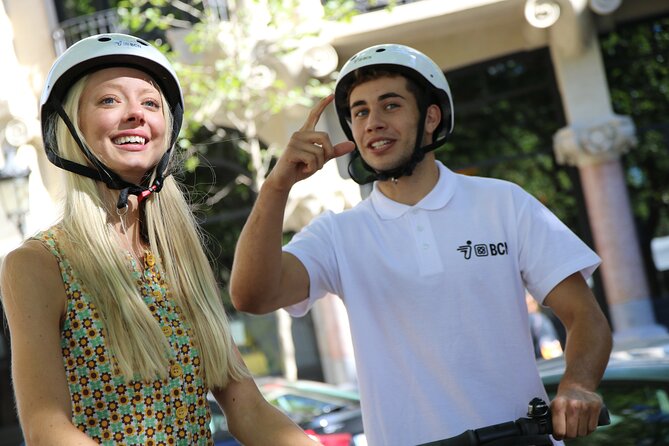
This is where you should be a little picky—in a good way. The tour notes that most travelers can participate, but it also sets clear expectations: you need to be able to step on and off the Segway without assistance, and you should handle curb-like movement the way you would stairs.
The strongest practical safety advice is simple:
- Take the intro slow. Get the instructor to show you how to handle kerbs and bumps.
- If the operator is moving too fast, pause. You’re allowed to ask questions before you roll.
- Wear stable shoes. Keep your stance calm.
The caution isn’t theoretical. One negative experience described a fall in the road after what felt like inadequate instruction. I can’t control how any single guide runs their session, so your best move is to pay attention during training and confirm you understand what to do when the path gets uneven.
The full route: Gaudí sights in the order you’ll see them
Think of the itinerary as three zones: an opening in the older city area, then a Modernist sweep through Gràcia, and finally a long run through the Eixample where Gaudí’s most famous street-level work lines up.



Stop 1: Arc de Triomf (quick orientation)
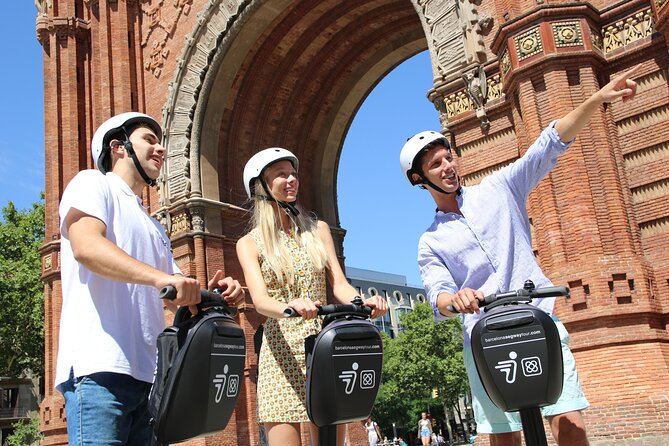
You’ll hit Arc de Triomf for about 5 minutes. This triumphal arch sets the tone: it’s the kind of architectural statement that makes Barcelona feel theatrical. The stop is listed as admission ticket free, so you’re there for views and explanation rather than entry.
How to enjoy it: look for the overall proportions from a few angles—this helps you read the route like a design timeline.
Stop 2: Barri de Gràcia (the longer neighborhood break)
Next is Barri de Gràcia for about 20 minutes, another ticket-free segment. This is the moment where the tour feels more like a city stroll even while you’re on a Segway—street atmosphere, architecture, and a chance to slow down without losing momentum.
Why this time matters: it breaks the pattern of one quick stop after another, so you’ll be less mentally tired when the major Gaudí sights start stacking up.
Stop 3: Casa Vicens (Gaudí’s earlier spark)
Casa Vicens is on the route for about 5 minutes. It’s listed as admission ticket not included, so expect outside viewing and guide commentary rather than interior access.
This stop is useful because it shows that Gaudí wasn’t born fully formed. Even early work has a personality—color, texture, and pattern—so you can start connecting dots before the tour reaches the big Eixample classics.
Stop 4: Palau Macaya (Modernist presence nearby)
You’ll pass CaixaForum Macaya / Palau Macaya for about 5 minutes, also with admission not included. This works as a palate cleanser between the Gaudí-specific stops: Modernism isn’t only one architect, and the area carries multiple voices.
Practical tip: use this stop to practice looking at details—corners, windows, and surface rhythm—because it’ll make the later houses easier to read.
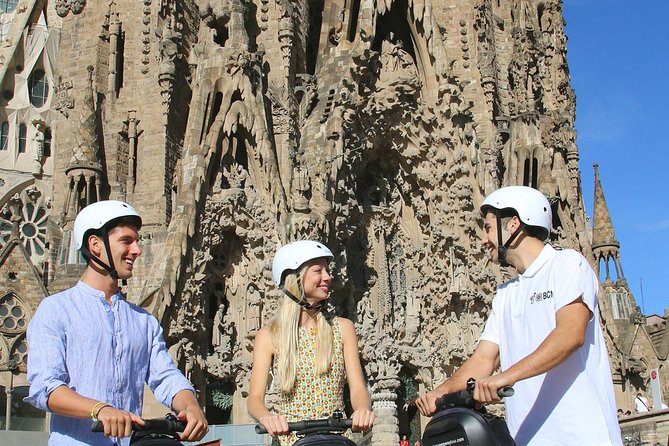
Stop 5: Basilica de la Sagrada Familia (outside views first)
The Sagrada Familia stop is listed for about 5 minutes with admission not included. That means you’ll focus on the exterior impact and the story threads your guide explains, not the interior experience.
Even if you plan to visit later with a ticket, this quick look helps. You’ll see how the facade language works from street level, which is exactly what you want before you commit to an interior visit.
Stop 6: Avinguda Gaudí (city-grid Gaudí moment)
You’ll ride along Avinguda Gaudí for about 5 minutes, listed as admission ticket free. It’s a short transfer stop, but it signals that you’re fully in Gaudí’s world now: the streets and blocks in the Eixample area are part of the story.
Stop 7: Recinte Modernista de Sant Pau (Hospital de Sant Pau)
Next is Hospital de Sant Pau (Recinte Modernista de Sant Pau) for about 5 minutes. Admission is not included, so again, it’s exterior viewing and commentary.
This stop is valuable because it broadens your idea of Modernism beyond houses. It’s architecture built for a purpose, and that makes the forms feel different from Gaudí’s residential work.
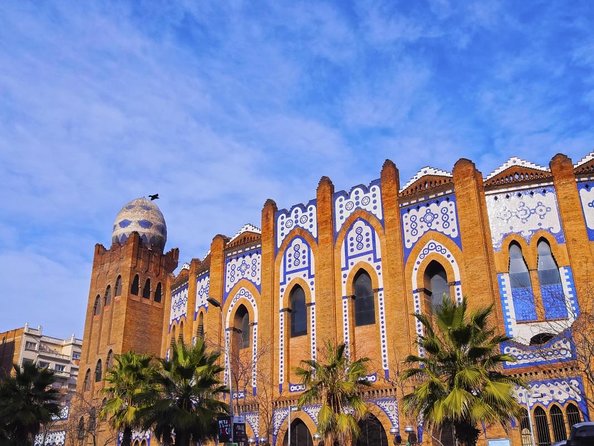
Stop 8: Plaza Toros Monumental de Barcelona
You’ll pass Plaza Toros Monumental de Barcelona for about 5 minutes, with admission not included. It’s not the first thing most people think of when they picture Gaudí, which is exactly why it’s useful. It gives the city context around the Modernist cluster.
How to frame it: don’t treat it as a side quest. Use it as proof the tour isn’t only one-note sightseeing.
Stop 9: Passeig de Gràcia (the Gaudí boulevard)
Passeig de Gràcia is another admission ticket free stop for about 5 minutes. This is a key transition point: it’s where the tour starts concentrating the famous house fronts that people come to see.
If you’ve never been here, you’ll feel the scale of the boulevard. It’s wide, structured, and perfect for stopping without feeling like you’re constantly weaving through tiny streets.
Stop 10: Casa Amatller
You’ll see Casa Amatller for about 5 minutes, admission not included. From the exterior, this is about surface and silhouette—another way to experience Modernism as design, not just architecture.
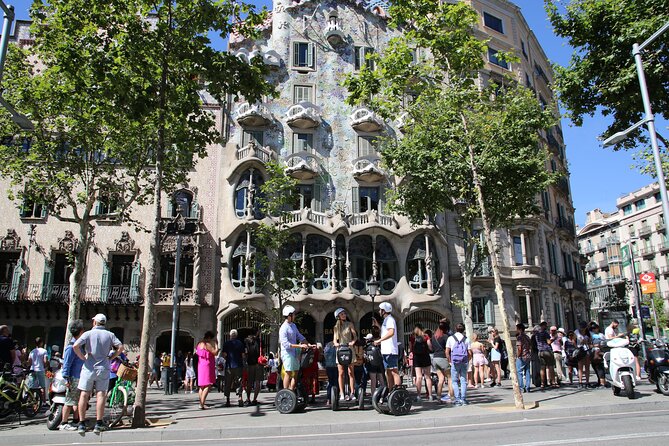
Stop 11: Casa Batlló (one of the big stops)
Casa Batlló takes about 5 minutes, admission not included. This is one of the main showpieces. Even a quick stop is enough to notice the building’s character: the facade reads like it’s alive with curves and pattern.
When you’re on a Segway: treat this as a photo moment plus one detail moment. Don’t do a five-minute stare. Pick one element and focus.
Stop 12: La Pedrera – Casa Milà
La Pedrera (Casa Milà) is next for about 5 minutes, admission not included. It’s one of those facades that feels sculpted rather than built, and it often surprises people who only associate Gaudí with colorful mosaics. Here, the forms can look almost architectural and natural at the same time.
Stop 13: Casa de les Punxes
Casa de les Punxes appears for about 5 minutes, admission not included. Its name alone points to its sharp, spiky identity. This is a strong contrast to the smoother curves you’ll have just seen.
How to enjoy the contrast: look at how the building’s mood changes block to block. This is why the Segway pacing helps—you can compare quickly.
Stop 14: Casa Comalat
You’ll pass Casa Comalat for about 5 minutes, admission not included. Another exterior stop in the same cluster, but useful if you like seeing how each building has its own design logic, even when they’re close together.
Stop 15: Hotel Casa Fuster
The final stop is Hotel Casa Fuster for about 5 minutes, admission not included. This wrap-up matters because it brings you back to the feeling of the Eixample as a place where grand facades are part of everyday street life.
After this, you head back to the meeting point.
What you are and aren’t paying for at each building
The tour is set up around outside seeing. Many stops are listed as admission ticket free, while several are marked as admission not included. In plain terms: you’ll enjoy facades, street-level views, and guide talk, but don’t assume interior access.
That can be a big advantage. If your time in Barcelona is limited, you can still get the highlights without doubling your costs on top of entry tickets.
Group size, private vs group, and who this fits best
You can choose between a private or group tour, depending on budget and schedule. The tour is capped at 20 travelers, which helps keep the ride manageable.
This tour fits especially well if:
- you want a big Gaudí hit without spending your day waiting in lines
- you’re comfortable learning a new ride quickly
- you prefer guided context over wandering alone
It’s less ideal if you want long interior visits. The stops are short by design, and the schedule moves you from highlight to highlight.
Also note the operator’s rules: the tour is for ages above 16 only. The weight guidance is roughly 45 to 120 kg (99 to 264 pounds), and a recent surgery is not recommended for participation.
Photo tips and how to keep the ride enjoyable
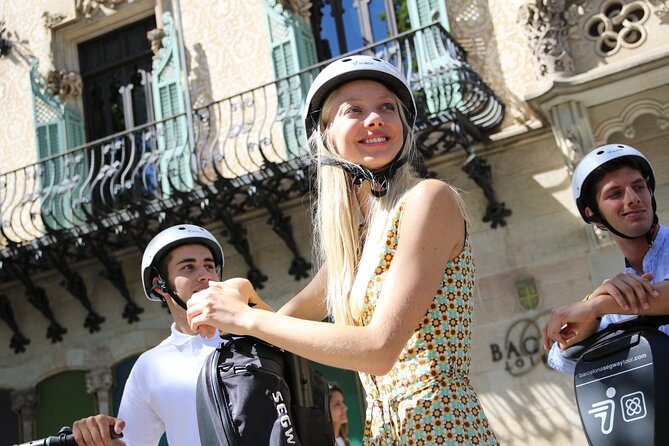
A Segway tour can turn into a blur if you treat it like a race. The best way to get good value is to pair a fast photo with one focused observation.
Try this simple routine at each house:
- snap one wide shot for context
- pick one detail to watch (window rhythm, roofline silhouette, texture)
- keep your body relaxed so you’re stable while you stop
Some guides are praised for photo stops and for giving time to learn. If your instructor is rushing, that’s your cue to slow everything down and ask for the step-by-step basics.
The main downside to watch for: equipment and instruction
The overall rating is high, and most comments point to a fun, smooth introduction and strong guiding. But the caution signs you should take seriously are equipment upkeep and instruction quality.
One criticism asked for more attention to maintenance and cleanliness. Another complained about a dangerous start after a lack of proper demonstration.
So here’s your checklist before you leave the start zone:
- Did the instructor show how to handle kerbs and bumps?
- Did you get time to practice before traffic-style movement?
- Does everyone look steady before the tour starts moving as a group?
If any of those feel off, speak up early.
Should you book the Barcelona Gaudí Segway Tour?
I’d book it if your goal is a high-impact Gaudí day with a guide, lots of exterior viewing, and a fun way to cover ground. The price is reasonable for what’s included—helmet, insurance, water, and guided context—especially when you know you won’t want to spend hours doing separate entries.
I’d think twice if you’re sensitive to riding hardware, you’re unsure you can handle stepping on and off, or you want long interior visits. This is a facade-and-story format.
If you do book: arrive ready to learn, take the first minutes seriously, and insist on clear safety instruction. Get that right, and the whole route clicks.
FAQ
How much does the Barcelona Gaudí Segway Tour cost?
The price is $47.07 per person.
How long is the tour?
The tour lasts about 2 hours 30 minutes.
Where does the tour start and end?
It starts at Passeig de Lluís Companys, 10, Ciutat Vella, 08018 Barcelona, Spain, and ends back at the meeting point.
Are entrance tickets included for stops like Sagrada Familia or the Gaudí houses?
Entrance tickets are not included for many key sights on the route. Some stops are listed as admission free, while others are listed as admission ticket not included.
What age and weight limits apply?
The tour is for people above 16 years of age only. The recommended weight range is approximately 45 to 120 kg (99 to 264 pounds).
Is there a cancellation fee?
Cancellation is free if you cancel up to 24 hours in advance for a full refund. If you cancel less than 24 hours before the start time, the amount paid is not refunded.