REVIEW · BARCELONA
8-Hour Barcelona Private Tour
Book on Viator →Operated by J&G Elegance Cars · Bookable on Viator
Gaudí overload, but in the good way. This private 8-hour plan stacks Barcelona’s can’t-miss landmarks with smart pacing and door-to-door comfort. You’ll spend the day hopping between neighborhoods instead of wrestling buses and lines.
I especially like the hotel pickup and the clean, cool private transportation that keeps your group moving. I also like how the route hits big names and quieter stops, from Paseo de Gràcia architecture to Recinte Modernista de Sant Pau.
One drawback to plan for: major sites cost extra (Sagrada Família, Park Güell, and Camp Nou store), and the schedule is full. If your day cuts short, you still may not feel like you got full value for the time you paid for.
In This Review
- Key things that make this tour worth a close look
- Price and logistics: what you’re really paying for
- Starting strong: hotel pickup and the Plaza Catalunya reset
- Passeig de Gràcia: where the Modernist buildings steal the show
- La Sagrada Família and Park Güell: big-ticket Gaudí, planned for a full day
- Sant Pau Recinte Modernista: the modernist stop that feels like a reward
- Beyond Gaudí: Casa Vicens, Pedralbes, and the calmer side of Barcelona
- Montjuïc day: viewpoints, museums, and Olympic leftovers
- Port Vell, Maremagnum, and Barceloneta: finishing near the water
- Ciutat Vella core: Gothic Quarter, El Born, and Catalan Modernism inside a block
- Camp Nou, Woman and Bird, and the city’s public-art moments
- Guides and comfort: what makes this feel like a true private tour
- Should you book this private 8-hour Barcelona tour?
- FAQ
- How long is the Barcelona private tour?
- What does the tour cost?
- Does the tour include pickup from my hotel?
- Is a mobile ticket included?
- What language is the tour offered in?
- Are entrance fees included?
- Is bottled water included?
- Is this a private tour?
- Are child seats available?
- Can I cancel for a refund?
- If I’m on a cruise, what information do I need to provide?
Key things that make this tour worth a close look
- Door-to-door pickup for your group of up to 6 means less time figuring out transit and more time seeing.
- A Modernist-heavy route that includes the Passeig de Gràcia cluster and then spreads out to Sant Pau and beyond.
- Sagrada Família plus Park Güell with real itinerary time so you can enjoy them instead of rushing past.
- Sant Pau (Hospital de Sant Creu i Sant Pau) gets a proper stop for one of Catalonia’s most impressive modernist complexes.
- Montjuïc finishes with viewpoints and big showpieces, then you slide toward the port side of the city.
- Real guides matter here: names you’ll see in the reviews include Carlos, Heriberto, Pedro, and Reme, and punctuality and responsiveness show up repeatedly.
Price and logistics: what you’re really paying for
This tour costs $1,804.40 per group for up to 6 people, and it runs for about 8 hours. That’s a private-vehicle price, not a per-person ticket. If you’re traveling as a family or a small group, the cost can make more sense than piecing together multiple shared tours.
The tradeoff is that you’ll still pay extra for some entry fees. Based on the listed add-ons, expect costs for Sagrada Família (18€ per person), Park Güell (from 10€), and the FC Barcelona Official Store near Camp Nou (from 29.5€). If you’re the type who wants to see the interiors, these add-ons turn the day into a bigger spend—plan that into your budget.
The tour also leans into a practical style: photo stops and exterior time where they make sense, plus timed attention for the big ones. Reviews praise guides for being accommodating, and that matters because Barcelona runs on crowds and timing. The company is J&G Elegance Cars, which shows up as a private-transport provider in the tour details.
You can also read our reviews of more private tours in Barcelona


Starting strong: hotel pickup and the Plaza Catalunya reset
You begin with pickup, and the start point can be your hotel, the port, or Barcelona Airport. Once you’re in the car, the first win is simple: you avoid the early-day scramble. Barcelona is easy to explore on foot later, but the first hour often decides whether your day feels relaxed or frantic.
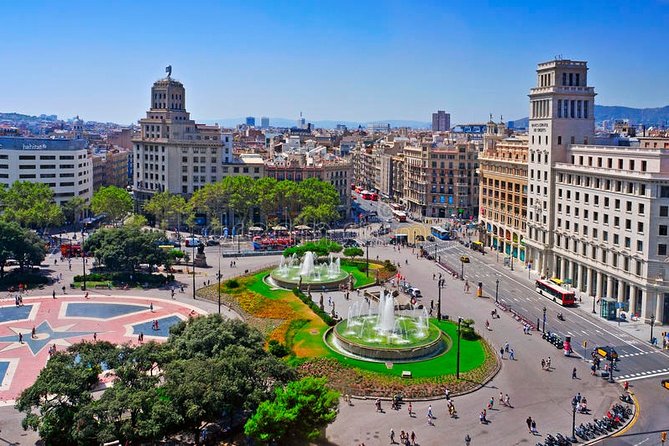
Your first major visual orientation stop is Plaza de Catalunya, the city’s busy nerve center. It’s also where you can mentally split Barcelona into the older core and the more grid-like Ensanche area. From there, the tour naturally channels you toward Passeig de Gràcia, where the Modernist story really begins to shout.
If you hate rushing right at the start, this opening works. You get a central meeting point, then you move into the architecture zone rather than driving in circles.
Passeig de Gràcia: where the Modernist buildings steal the show
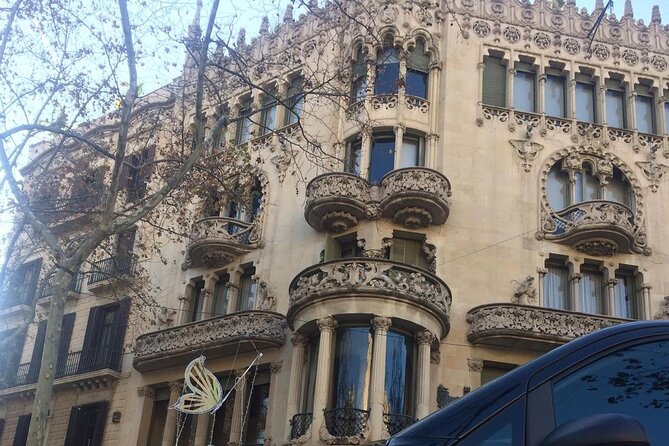
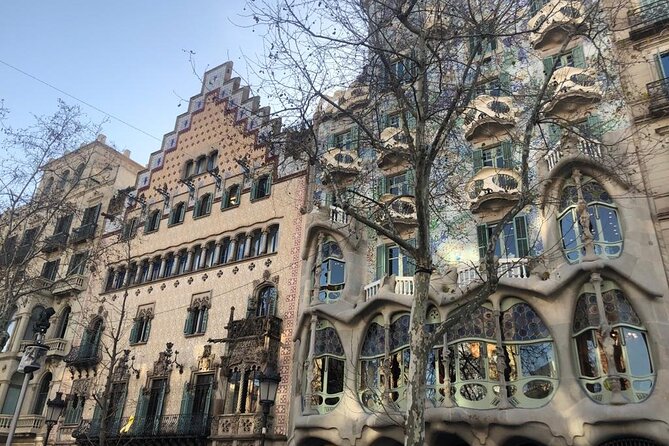
Paseo de Gràcia is one long architecture lesson, and this tour treats it like one. You’ll walk a bit, get short stops for key facades, and learn what you’re looking at without needing to memorize a textbook.
Here’s where the itinerary shines:
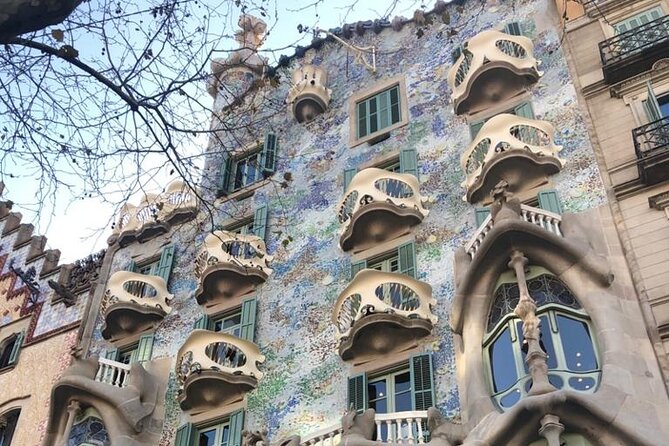
- Casa Batlló and Casa Milà (La Pedrera) sit in the “Manzana de la Discordia” area, the Apple of Discord zone named for the concentration of Modernist buildings by different architects.
- You also get the Casa Lleó i Morera and Casa Amatller context, which makes the whole block feel like a curated set rather than random storefront architecture.
- The descriptions focus on what’s visually distinctive, so even if you’re short on interior time, you still leave with understanding.
What to expect at street level: you’ll likely get small chunks of time at each building—enough for photos and a quick read of the design choices. If you want to go inside, that’s where extra admissions come in for some major stops.
One practical note: this area is popular. Even with a private guide, you’ll still share space with other visitors, especially around the most famous facades. The benefit is that your guide can manage the flow and tell you where it’s easiest to see details without wasting time.
La Sagrada Família and Park Güell: big-ticket Gaudí, planned for a full day
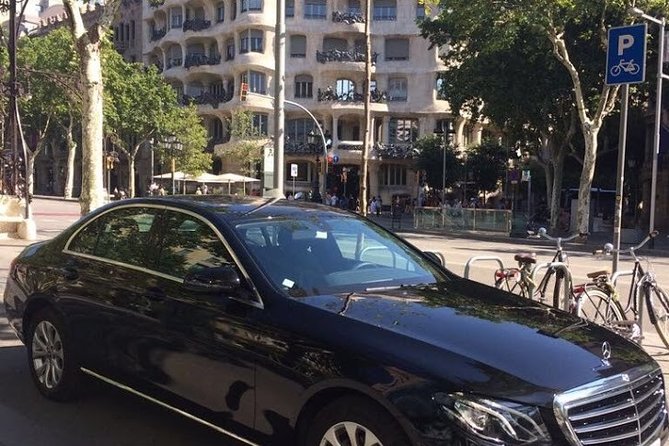
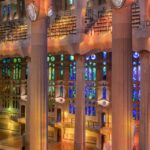
No Barcelona day feels complete without Gaudí’s fingerprint, and this tour places Sagrada Família and Park Güell into the schedule with actual time blocks. Sagrada Família is a Catholic basilica designed by Antoni Gaudí, and construction began in 1882 and is still underway. The basilica is widely regarded as his masterpiece, and the tour’s focus gives you the sense of why it’s such a magnet for visitors.
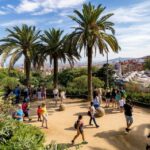
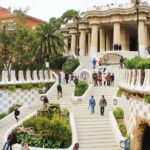
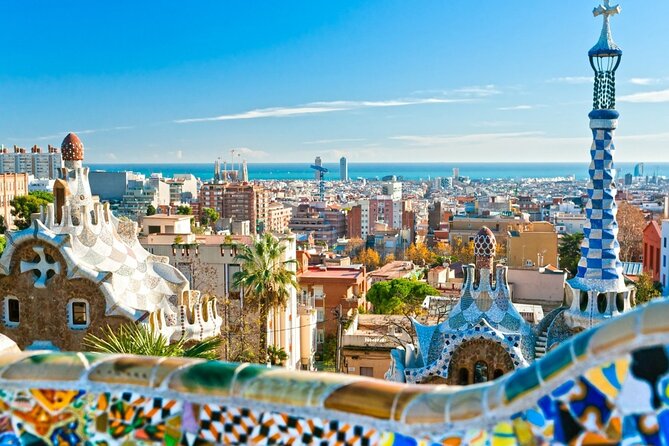
Park Güell is equally intentional. It’s a public park with gardens and architectural elements, built between 1900 and 1914 and inaugurated as a park in 1926. The key idea here is that it shows Gaudí’s naturalist era, where organic shapes and innovative structural solutions show up before later works like the Sagrada Família.
The smart part for your planning: these two stops are heavily visited, so time planning matters. In the reviews, people praised the guide team for timing guidance and for helping with ticket links so you avoid sketchy sites. I’d take that as advice for your own trip: buy or secure tickets early, and use official sources.
Also, bring realistic expectations. Even with a private tour, you’re still in Barcelona. You’ll see crowds around these monuments. Your best bet for a calmer experience is to keep your schedule intact and not try to add extra detours on top of what’s already packed.
Sant Pau Recinte Modernista: the modernist stop that feels like a reward
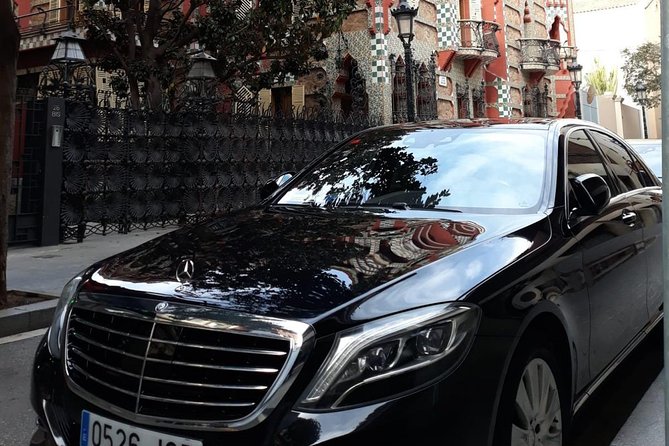
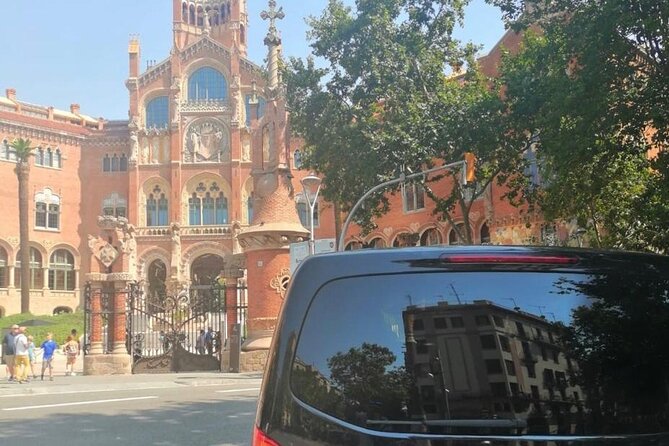
One of the most memorable parts of this tour is Recinte Modernista de Sant Pau—the Hospital de la Santa Creu i Sant Pau complex. Designed by Lluís Domènech i Montaner, it was built between 1902 and 1930 in phases, with the World Heritage recognition coming in 1997.
This is where the day gets more peaceful. While the most famous Gaudí sites can feel like controlled chaos, Sant Pau gives you space to notice details: pavilion-like buildings, a sense of design planning, and a complex that reads like architecture rather than a mere photo spot.
Time here is short in the itinerary (you’ll have about a 10-minute window listed), but the value is that your guide can point out what makes the complex special. If you love architecture but prefer something less obvious than the headline sites, this is a strong inclusion.

Beyond Gaudí: Casa Vicens, Pedralbes, and the calmer side of Barcelona
Not every stop is a major-ticket attraction, and that’s on purpose. The itinerary includes Casa Vicens, Gaudí’s earlier work built between 1883 and 1888, located in the Gràcia district. It’s described as part of his orientalist era with influence tied to styles from the Middle East and parts of Asia. Even if you only see exterior elements, the tour framing helps you connect what you see to a specific creative phase.
Then you head to Monastery of Pedralbes (Santa María de Pedralbes), a Gothic-style complex with an originally walled area, plus Jardins del Palau Reial Pedralbes, the gardens around the Royal Palace of Pedralbes. The palace itself is closed to the public, but the stop includes a listed free garden viewing segment, which still gives you a break from the main tourist circuit.
These stops matter because they change your mental picture of Barcelona. You get an older sacred setting and then royal-era gardens in the same day, which helps the city feel layered instead of only themed around Modernism icons.
Montjuïc day: viewpoints, museums, and Olympic leftovers
Montjuïc is where your day starts to feel like a big panorama tour. The itinerary layers together several different Montjuïc identities: museums and art, leisure architecture, and Olympic-era sports spaces.
A few highlights to know:
- MNAC (Museu Nacional d’Art de Catalunya), in the Palacio Nacional built for the 1929 International Exposition, is a big Romanesque art anchor in Barcelona.
- The Magic Fountain of Montjuïc was tied to the 1929 exposition and later restored with music in the 1980s and just before the 1992 Olympics.
- Poble Espanyol is an outdoor architectural museum with life-sized village-style buildings built for the 1929 exposition.
- The Olympic ring area includes stops like Palau Sant Jordi and Estadi Olímpic, with the Olympic connections dating to the 1992 games.
You’ll also pass by or visit Montjuïc Castle and Jardins del Mirador del Alcalde, a viewpoint area made between 1962 and 1969. Even without lots of time inside museums, these are the moments that help you understand why locals treat Montjuïc like a different world above the city.
One thing to watch: Montjuïc involves walking uphill and moving between zones. Your private transportation helps, but your feet still need to be ready. If your group includes someone who gets tired quickly, plan for slower pacing during the viewpoint moments.
Port Vell, Maremagnum, and Barceloneta: finishing near the water
After the “height and monuments” portion, the tour drops you toward sea level. You’ll see Monument a Colom in the Portal de la Paz area and then head into Port Vell, Barcelona’s old port zone with more than 2,000 years of tradition. Port Vell separates sea access with a breakwater and includes sports-boat areas and the Maremagnum shopping center.
Maremagnum is described as a shopping center around fashion and accessories, plus restaurants, and it’s allowed to open year-round because of its tourism location. This isn’t a museum stop, but it works well as a relaxed break when you’re already architecture-loaded.
Then you reach Barceloneta, the coastal neighborhood where you’ll find beach time and seafood/tapa culture. You may also pass Port Olímpic and then step into Parc de la Ciutadella, once built over the old citadel site and designed with inspiration from Paris’s Luxembourg Gardens. It’s a good way to reset your pace with greenery and space.
If you like your Barcelona days to include a little breathing room, this seaside shift is a big part of why this itinerary feels complete.
Ciutat Vella core: Gothic Quarter, El Born, and Catalan Modernism inside a block
This is the part of the day where Barcelona feels most like a lived-in city.
You’ll visit:
- Arc de Triomf, built as the main entrance for the 1888 Universal Exposition, restored in 1989.
- Palau de la Música Catalana, a Domènech i Montaner project built between 1905 and 1908 and recognized by UNESCO.
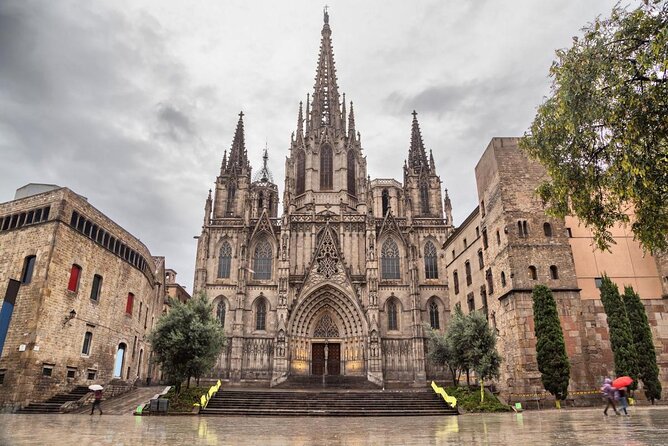
- Catedral de Barcelona, the Gothic cathedral built between the 13th and 15th centuries over earlier layers, with a 19th-century facade component.
- Barri Gòtic, the Gothic Quarter with medieval lanes, food stalls, and craft shops near the cathedral area.
- El Born, a medieval-street neighborhood known for daytime coffee and boutiques, then lively nights.
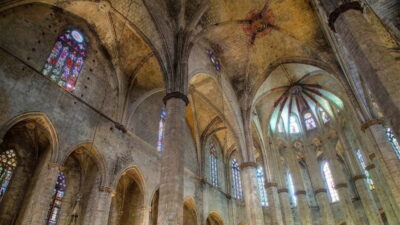
- Santa Maria del Mar, built between 1329 and 1383, listed as an Asset of Cultural Interest.
The itinerary also includes Las Ramblas, the promenade linking Plaza Catalunya to Port Vell, with markets and the Boqueria area nearby. If you’ve been on Ramblas before, you already know it’s busy. The tour helps by keeping it in context and pairing it with nearby neighborhoods so you don’t only spend time on the most crowded strip.
This block is also where the Modernist story returns through Palau de la Música Catalana. So you get both eras: Medieval streets and Catalan Modernism in the same sweep.
Camp Nou, Woman and Bird, and the city’s public-art moments
Not every part of the route is about churches and museums. There’s a fun, slightly left-field inclusion: FC Barcelona Official Store – Camp Nou, listed as a 40-minute stop with entry costing extra (from 29.5€ per person). If your group is into soccer culture, this can feel like a satisfying afternoon anchor rather than a random stop.
Another distinctive art moment is Joan Miró’s Woman and Bird sculpture in Parque Joan Miró. It’s described as Miró’s last major public work, inaugurated in 1983 without Miró present due to health issues. The sculpture is concrete, 22 meters high, and uses trencadís mosaics in bright colors. This is the kind of stop that makes a tour feel like Barcelona, not just a highlight reel.
Finally, you’ll also spend time around Plaza d’Espanya, Torres Venecianas, and other Montjuïc approach landmarks. These ties-in make the day feel like one continuous geography instead of separate tourist bubbles.
Guides and comfort: what makes this feel like a true private tour
This is the part that shows up most clearly in the reviews. The guides named in feedback include Reme, Carlos, Heriberto, and Pedro. Across the notes, the common themes are punctual pickup, responsiveness before the tour, and the ability to adjust timing when plans change.
One practical tip pulled from the feedback: plan your ticket strategy early and use official sources. One review specifically praised the operator for providing official ticket links so the group could avoid online scams. You should treat that as a reminder to be careful with ticket websites when Barcelona is busy.
Also, the tour includes bottled water and private transportation, plus baby chairs and boosters for children on request. That sounds basic, but on an 8-hour day, it can make the difference between a good day and a grumpy one.
Should you book this private 8-hour Barcelona tour?
Book it if you want:
- A single-day plan that covers both the headline sites and the architecture details that make Barcelona interesting.
- Hotel pickup and private transport for a smoother day in a city where getting from point A to B can eat time.
- A guided focus on Modernist Barcelona, from Passeig de Gràcia through Sant Pau and into Palau de la Música Catalana.
Skip it (or shorten your expectations) if:
- You only care about one or two top attractions and hate extra walking and photo stops. This itinerary is full.
- You’re trying to cram the day around uncertain timing like tight flight changes. The full value depends on using most of the 8 hours.
- Your budget can’t handle extra entry fees for Sagrada Família, Park Güell, and the Camp Nou store.
If your goal is to leave Barcelona with a clear sense of the city’s architecture and neighborhoods, without spending your day planning and searching, this is a strong way to do it.
FAQ
How long is the Barcelona private tour?
It lasts about 8 hours.
What does the tour cost?
The price is $1,804.40 per group, up to 6 people.
Does the tour include pickup from my hotel?
Yes. Pickup service at your hotel is included, and the tour can also start from the port or the Barcelona Airport.
Is a mobile ticket included?
Yes, the tour uses a mobile ticket.
What language is the tour offered in?
The tour is offered in English.
Are entrance fees included?
Some stops have free admission, but major paid sites are not included. The listed additional costs include Sagrada Família (18€ per person), Park Güell (from 10€), and the FC Barcelona Official Store near Camp Nou (from 29.5€ per person).
Is bottled water included?
Yes, bottled water is included.
Is this a private tour?
Yes. Only your group participates.
Are child seats available?
Baby chairs and boosters are available on request.
Can I cancel for a refund?
Yes. Free cancellation is available if you cancel up to 24 hours in advance for a full refund.
If I’m on a cruise, what information do I need to provide?
You need to share your ship name, docking time, disembarkation time, and re-boarding time.