REVIEW · BARCELONA
Witch Hunt on Montjuïc: Self-Guided Puzzle Quest in Barcelona
Book on Viator →Operated by Questo · Bookable on Viator
Barcelona’s Montjuïc turns into a game map. This self-guided puzzle quest uses the Questo app, so you can solve clues while you stroll, then pause whenever you want. I especially like that it’s paced by you (not by a tour schedule), and that the route strings together famous Montjuïc landmarks with smaller city stops like Arenas and Plaça d’Espanya.
You’ll start at Parc Joan Miró, get a clue, and the game points you to the next place in the story. Another thing I like is the value: the activity itself is low-cost, and many stops are listed as free to access, so you’re not paying again just to keep the hunt moving.
The one drawback to consider is that a few stops are marked as with admission not included. The good news is that the tour is designed so you don’t need attraction entry to complete the game, but if you want extra time inside the museums or buildings, you may have to plan for separate tickets.
In This Review
- Key things to love about the Witch Hunt on Montjuïc
- Price and what you really get for $8.42
- How the self-guided puzzle quest works (so you’re not confused)
- Parc Joan Miró: starting with an easy first clue
- Arenas de Barcelona (former bull arena): puzzles with a city feel
- Plaça d’Espanya: the puzzle route anchors you
- Torres Venecianes: when the clues point to big shapes
- Font Màgica de Montjuïc: a Montjuïc highlight with story energy
- Museu Nacional d’Art de Catalunya: an interior option you can choose
- Palauet Albéniz: pause, solve, and decide
- Joan Miró Foundation: let the game guide where you look
- Jardins de Mossèn Cinto Verdaguer: reset in the gardens
- Tobogans de Montjuïc: playful energy near the end
- Montjuïc Castle: finish where the story lands
- Who this is best for (and who may bounce off it)
- Should you book Witch Hunt on Montjuïc?
- FAQ
- What’s the duration of the Witch Hunt on Montjuïc puzzle quest?
- How much does it cost?
- What language is the experience in?
- Do I need a tour guide?
- What app do I use to play?
- Is this experience private?
- Are attraction entry tickets included?
- Where does the experience start and end?
- What’s the cancellation policy?
Key things to love about the Witch Hunt on Montjuïc
- Phone-first gameplay via the Questo app: download and play when you’re ready
- 11 walkable stops that keep you moving through Montjuïc and nearby viewpoints and plazas
- Stop-and-start freedom so you can match your energy and timing to the city
- Private for your group so it stays personal instead of feeling crowded
- Plenty of free stops listed along the route, which improves the day’s overall value
Price and what you really get for $8.42
For $8.42 per person, you’re paying for a structured experience, not a guide’s lecture. That can be a big win in Barcelona, where you can spend your money on food, transit, and the places you truly want to enter.
The game runs about 1 hour 45 minutes to 2 hours 10 minutes, which is a practical length for a half-day on Montjuïc. It’s long enough to feel like an actual outing, but short enough that you can still build your own plan after—maybe a relaxed meal, or a slower walk back through areas you found interesting.
You also get a mobile ticket and 24/7 customer support, which matters more than it sounds. Self-guided games are simple, but if your phone or app doesn’t cooperate instantly, having support available day and night can save your whole afternoon.
English is supported, and the experience is limited to just your group, which keeps it from turning into a race. If you like doing things at your pace—without needing to “keep up”—this format fits.
You can also read our reviews of more guided tours in Barcelona


How the self-guided puzzle quest works (so you’re not confused)
This isn’t a map-with-checkmarks kind of scavenger hunt. You’ll follow a story and solve puzzles at each stop, then receive directions to the next location. The flow is built for smartphones: download the experience, then start when you’re ready.
What I like about this setup is that it reduces decision fatigue. Instead of wondering where to go next, the game tells you. And instead of being stuck with a fixed route time, you control your pace. If you need a break or want a longer look at something, you can pause and come back without feeling like you’re falling behind a group.
Here’s what to plan in your head: you’ll spend a short chunk of time at each location—enough to read your clue and solve—then you move on. The total time adds up to about two hours, which is ideal for pairing with a bigger Montjuïc day.
Parc Joan Miró: starting with an easy first clue

Your hunt begins at Parc Joan Miró. This is a smart warm-up stop: you’re in a park setting, so it’s not intimidating, and you can get comfortable with how the app delivers the clue-and-next-step rhythm.
Expect to be given the first part of the story and a clue that starts the chain of directions. Even though this stop is short, it sets the tone—so I recommend arriving with a bit of energy. If you’re hungry or rushing, you’ll feel it later, because the rest of the route moves at the pace of puzzle-solving.
The real advantage here is psychological: once you solve the first clue, you trust the system. Then the later stops feel less like guessing and more like following a trail.
Arenas de Barcelona (former bull arena): puzzles with a city feel
Next up is Centro Comercial Arenas de Barcelona, a site that stands out because it was a former bull arena. That adds character to the game—this isn’t just a view-and-walk day, it’s also a chance to spot a building that has been repurposed.
This stop gives you a new clue, and it’s one where you can stay as long as you like before moving on. That flexibility is useful in a shopping-center setting: if you want a quick snack or a breather, you can fit it in without breaking the game.
A small consideration: if you love quiet, museum-like spaces, a commercial area may feel louder than a park. If that’s your style, time your stop so you’re not standing around waiting—solve the clue, then decide how much time you want to spend.
Plaça d’Espanya: the puzzle route anchors you
At Plaça d’Espanya, you’ll get another clue and continue the story. This is a good mid-route anchor because it’s a public square that helps you orient yourself in Barcelona. Even when you’re focused on puzzles, you still get that sense of place—routes like this work best when they also help you read the city.
The benefit of this stop is pacing. After a building stop like Arenas, the open space gives your brain a reset. You’ll likely move from clue-reading to quick street watching, then back to solving.
If you’re the type who likes to combine activities, Plaça d’Espanya is also a convenient place to think about transport options for later.
You can also read our reviews of more tours and experiences in Barcelona





Torres Venecianes: when the clues point to big shapes
Your next clue takes you to Torres Venecianes. This is the kind of stop that can make the game feel more like sightseeing, because these towers are visible landmarks. The puzzle format helps you look harder than you might otherwise—your attention is guided, not random.
The key advantage is that towers like this give you instant wayfinding cues. Even if you’re not deep into architecture, you can use the towers as reference points while you figure out your next clue location.
One practical tip: if you’re taking photos, do it in between clue attempts, not while you’re in the middle of reading. It’s easy to lose your place in the story if you keep switching tasks.
Font Màgica de Montjuïc: a Montjuïc highlight with story energy
Then you head to Font Màgica de Montjuïc (the Magic Fountain). This is a major Montjuïc draw, and it gives your puzzle quest a showpiece moment. The game provides a new clue here and keeps the stop flexible so you can linger if you want.
The nice part is that the puzzle quest adds a layer beyond the fountain itself. Instead of only looking for the fountain’s spectacle, you’re also hunting for a clue that keeps your attention anchored to the site.
The only consideration: since your experience is self-guided, you’ll need to fit your timing to whatever else you plan that day. The game itself doesn’t require you to turn your whole schedule upside down—it’s built to work at your pace.
Museu Nacional d’Art de Catalunya: an interior option you can choose
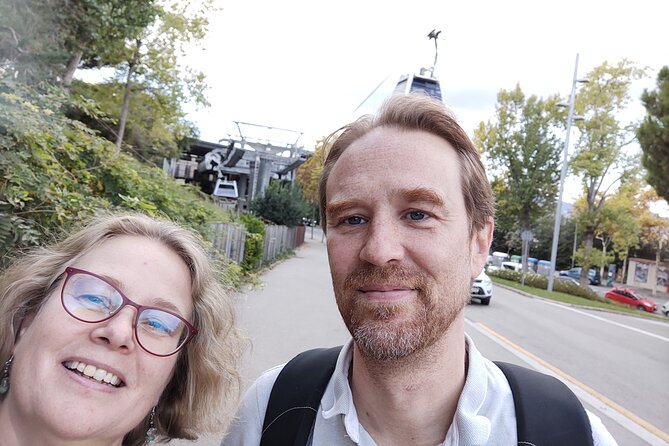
Next is Museu Nacional d’Art de Catalunya. This stop is marked as admission not included, which means you can’t assume the museum entry fee is covered by the game. Still, the overall experience is designed so you don’t need attraction tickets to complete the tour.
I like that balance because it lets you decide. If you want the museum experience, you can budget for it. If you’d rather focus on the puzzle and keep moving, you’re not forced into extra spending.
Also, one review highlighted the appeal of how a museum building can organize different time periods into distinct wings. If architecture and layout catch your eye, this is the kind of stop where slowing down for a look can make the game feel richer, even without going too deep into exhibitions.
Palauet Albéniz: pause, solve, and decide
At Palauet Albéniz, you’ll get another clue. Like the museum, this one is marked as admission not included. So again, the game can be completed without adding ticket costs, but entry is optional if you want more.
This is one of the stops where you’ll probably feel the shift from outdoor Montjuïc landmarks to more “building-focused” viewing. If you enjoy the feel of elegant spaces and want to take a breather, this can be a good moment to slow your pace for a few minutes after solving.
One drawback to note: if you’re traveling with limited patience for indoor rules or lines (and you don’t want to pay for entry), you might find yourself spending less time here and moving quickly to stay on your puzzle rhythm.
Joan Miró Foundation: let the game guide where you look
Next comes the Joan Miró Foundation, again marked as admission not included. Even if you don’t enter, it’s still a meaningful puzzle stop because the foundation is part of the Montjuïc identity.
What makes this stop work well inside the game format is that you’re not just doing a checklist. You’re solving a clue that ties into the story, which encourages you to look more carefully at what’s around you.
If you are the kind of traveler who loves to spot names and influences across a city, this part of the route gives you a cohesive theme: Montjuïc isn’t random—it’s tied together through Joan Miró connections.
Jardins de Mossèn Cinto Verdaguer: reset in the gardens
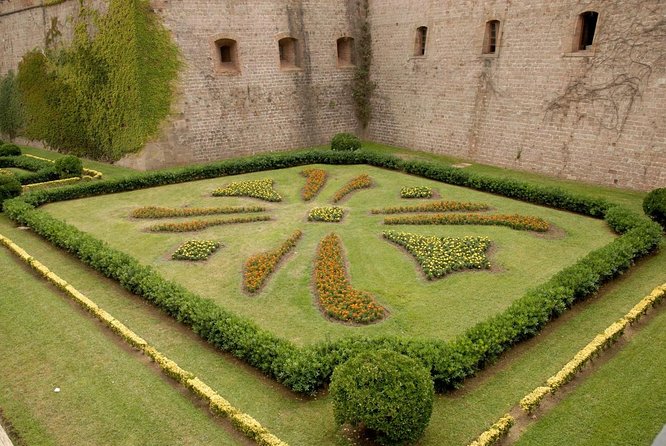
Then you’ll move to Jardins de Mossèn Cinto Verdaguer. This is another free stop on the route, and the garden setting is a natural fatigue manager. After multiple landmarks and buildings, greenery gives your eyes a break and gives you room to think through the next clue.
I like garden stops in puzzle experiences because they help you slow down without feeling like you’re wasting time. You can read, look around, and solve with fewer distractions than a busy street.
If you’re traveling with someone who gets tired easily, this is also a reasonable moment to decide how long you want to linger before moving on to the next stage.
Tobogans de Montjuïc: playful energy near the end
Next you’ll reach Montjuïc Slides (Tobogans de Montjuïc). This is one of those locations that can feel fun even without a ticketed attraction—just the idea of slides and recreation can bring a different mood to the day.
You’ll get the next clue here, and you can linger as long as you like. I find this late-route stop helpful because it keeps motivation up. Even if the puzzle-solving has taken mental effort, the setting helps you shake that off.
Practical note: when you’re close to the finish, don’t rush the clue. You want to save enough time and attention to get the final part correct and avoid the annoying feeling of backtracking.
Montjuïc Castle: finish where the story lands
You end at Montjuïc Castle. This is where both the story and the game exploration portion wraps up. It’s a strong finish because it’s a classic Montjuïc endpoint: dramatic, iconic, and built for a final “look back” moment at the surroundings.
A helpful way to use the end of the experience: don’t treat it like a race to be done. Once you finish the final puzzle, take a few minutes to just enjoy the view and the sensation of completing a route you planned around.
Admission for the castle is marked as not included, so if you want to enter, you’ll need your own plan. But even without that, the finishing location gives you a satisfying sense of closure.
Who this is best for (and who may bounce off it)
This experience is best for you if you like:
- exploring at your own pace without a strict tour schedule
- using your smartphone to guide a walk
- mixing famous Montjuïc spots with puzzle-driven stops
- a short, focused outing (roughly two hours) that doesn’t swallow your whole day
It may be less ideal if you want a lot of history facts from a live guide. This is a puzzle quest, not a narration-heavy tour.
It also works well for small groups, since it’s limited to your group and doesn’t turn into a big crowd experience. And if service animals are part of your travel plans, service animals are allowed.
Should you book Witch Hunt on Montjuïc?
Yes, if you want a clever way to see Montjuïc that doesn’t feel like a checklist. The mix of walkable stops, phone-based clue solving, and flexible timing makes it a strong value at $8.42—especially if you’re already interested in Montjuïc landmarks like Parc Joan Miró and the Magic Fountain.
I’d book it with one condition: be okay spending some time reading and thinking on your feet. If you prefer guided storytelling or you hate puzzles, you might feel boxed in. But if puzzles are your kind of travel fun, this is a practical, low-cost way to make Barcelona feel like you’re following a story through real streets.
FAQ
What’s the duration of the Witch Hunt on Montjuïc puzzle quest?
The experience lasts about 1 hour 45 minutes to 2 hours 10 minutes.
How much does it cost?
It costs $8.42 per person.
What language is the experience in?
It is offered in English.
Do I need a tour guide?
No. It’s a self-guided city exploration game.
What app do I use to play?
You’ll use the Questo app on your smartphone.
Is this experience private?
Yes. It’s listed as private, meaning only your group participates.
Are attraction entry tickets included?
Some stops are listed as free, and others show admission not included. The information indicates that admission tickets are not needed to complete the tour.
Where does the experience start and end?
It starts at Carrer del Consell de Cent, 6769., Sants-Montjuïc, 08014 Barcelona, Spain and ends at Montjuïc Castle, Ctra. de Montjuïc, 66, 08038 Barcelona, Spain.
What’s the cancellation policy?
You can cancel for a full refund up to 24 hours in advance. After that time, refunds are not available.