REVIEW · BARCELONA
The Secret of Cerdà – Barcelona
Book on Viator →Operated by Mystery City Games · Bookable on Viator
Barcelona has a way of surprising you.
This game turns the city center into a living worksheet: you solve puzzles as you walk, then learn how Ildefons Cerdà’s big 19th-century idea shaped what you’re seeing today. It’s a different way to read Barcelona’s streets—less museum, more detective work on foot. You’ll cover about 3 km at an easy walking pace.
I especially like two things: the story tied to real buildings (so the Eixample grid stops being an abstract map), and the fact it works well for families and groups. Even if you’ve been to Barcelona before, you’ll probably spot details you normally skip.
One possible drawback: it can feel pricey for a group of all adults, especially if you’re expecting a big “prize” at the end. The format is also designed for independent puzzle solving, so if you want lots of step-by-step guided lecturing, this may not be your ideal style.
In This Review
- Key things to know before you start
- The Secret of Cerdà: what this “game tour” really feels like
- Price and what you’re paying for (and what you’re not)
- Where it starts: Carrer de Trafalgar and the low-friction logistics
- Before you solve: how to get your group into “game mode”
- Stop 1: Palau de la Música Catalana and why you’re starting here
- Stop 2: Eixample—Cerdà’s grid becomes a living puzzle
- Stop 3: Manzana de la Discordia and architecture that feels playful
- Stop 4: Plaza de Catalunya—wrapping the story with city-scale perspective
- Who this is best for (and who might want something else)
- Timing, pace, and route: what to expect from the walking portion
- Value check: is it worth it for your group size?
- The small details that make or break the experience
- Should you book The Secret of Cerdà?
- FAQ
- What’s the duration of The Secret of Cerdà?
- How long is the route?
- Is it available in English?
- Is this tour private?
- Where does the tour start and end?
- What’s the cancellation policy?
Key things to know before you start
- Puzzle-first route: you’re solving clues while you explore, not just listening from point A to point B.
- Cerda’s Eixample focus: the whole story is built around the expansion plan and how it affects what you see.
- Works for mixed ages: kids handle it well, and adults still get real value out of the walk.
- Private for your group: only your party participates, so the experience feels less crowded.
- Mobile ticket: you won’t be juggling paper vouchers once you’re set up.
- Ends where you begin: same meeting point at the finish, so it’s low-stress.
The Secret of Cerdà: what this “game tour” really feels like
This isn’t a bus tour, and it isn’t a standard “walk and talk.” You’re moving through Barcelona’s historic center with a purpose: find clues, answer questions, and connect those answers to the city’s layout and architecture.
The big hook is Ildefons Cerdà’s 1856 expansion plan. You’ll start to feel how city planning affects daily life: street widths, blocks, intersections, and the way buildings present themselves to pedestrians. When the puzzles point you toward a specific façade or streetscape detail, you end up noticing the “why” behind what you’re looking at—without turning your day into a classroom.
You’ll also be walking in a part of Barcelona that many visitors treat like a transit corridor. Here, it becomes a route with meaning. The game format makes the streets feel less predictable, and that’s a big reason people give it a 4.8 rating and recommend it highly.
You can also read our reviews of more tours and experiences in Barcelona.



Price and what you’re paying for (and what you’re not)
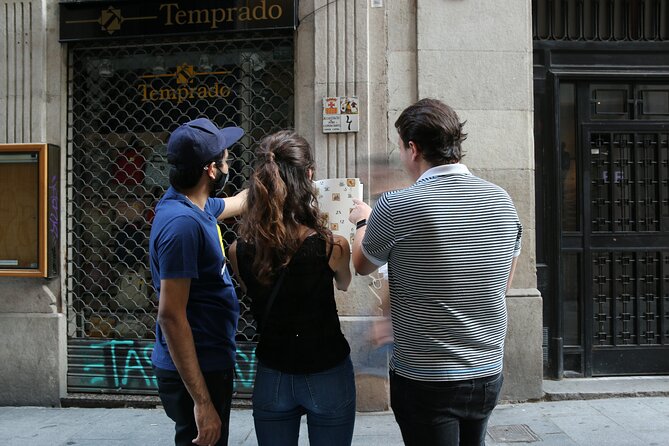
At $26.36 per person for about 2 hours and roughly a 3 km route, you’re paying for a structured activity—not just access to sights. That matters because it replaces “what should we do next?” with a simple plan that stays interesting the whole way.
Here’s the tradeoff: once the game starts, there isn’t continuous staff-led guidance in the way some walking tours offer. It’s mostly you, your group, and the puzzle instructions. That can be great if you like figuring things out together. It can feel less great if you expected constant human interaction throughout.
Also, manage expectations on the end-of-game “reward.” One small disappointment shared is that the final prize turned out to be only a pin, so don’t book expecting a souvenir haul.
Where it starts: Carrer de Trafalgar and the low-friction logistics
Your meeting point is Carrer de Trafalgar, 17 (L’Eixample), 08010 Barcelona. The good news is the activity ends back at that same point, so you don’t have to think about a transfer or mapwork at the end of your time together.
You’ll get a confirmation at booking time, and you’ll use a mobile ticket, which keeps things smooth. It’s also described as near public transportation, which matters in Barcelona where walking and transit mix daily.
One helpful note for families: the format works at your pace. If you need a snack stop or want to slow down, you’re not trapped on a rigid “listen-only” schedule. Most travelers can participate, and service animals are allowed.
Before you solve: how to get your group into “game mode”
Even if you’ve never done an escape-room style activity, this one is built to be friendly. The puzzles are there to guide your attention. You’re not expected to know Barcelona’s architecture ahead of time.
One tip that showed up in the experience: a diary is essential. If you get a booklet or log for the game, treat it as your main tool. Bring it with you at all times, and use it to keep track of clue answers and next steps.
If your group has kids, a practical approach is to assign roles early:
- one person reads clue instructions,
- one person looks for the matching architectural detail,
- one person handles the diary entries.
That keeps everyone busy and reduces the “waiting around while someone figures it out” problem.
Stop 1: Palau de la Música Catalana and why you’re starting here
You kick off at the Palace of Catalan Music (Palau de la Música Catalana). It’s an excellent opener because it sets the tone: Barcelona’s design isn’t just functional; it’s expressive. Starting with a standout landmark makes it easier to understand what you’ll be hunting for later—details, symbols, and stylistic fingerprints.
What you’ll like here is the way the game nudges you to look closely rather than just walk past. Even people who know Barcelona well can end up noticing new things when they’re searching for puzzle-confirming evidence instead of taking quick photos.
Potential drawback: because it’s a famous site, it can be busy depending on the time of day. You’ll still be able to play, but you might want to keep a little patience if foot traffic is heavier around the monument.


Stop 2: Eixample—Cerdà’s grid becomes a living puzzle
Next up is Eixample, the neighborhood most people associate with Cerdà’s planning idea. This is where the experience turns from “cool landmark walk” into something more structural.
In practical terms, you’ll be learning how the Eixample’s grid changes what a city feels like:
- blocks guide how buildings face the street,
- intersections shape movement,
- and planned spacing influences how the city breathes at street level.
The puzzle format helps you remember these concepts. Instead of reading about city planning and forgetting it later, you’re actively connecting the idea to what you see right in front of you.
This is also a place where groups bond. When you’re figuring out clues together, you end up talking. You might even find yourself explaining things to kids in a more natural way than a lecture would allow.
Stop 3: Manzana de la Discordia and architecture that feels playful
Then you reach Manzana de la Discordia—literally the “block of discord.” It’s a great mid-tour checkpoint because it sounds intriguing and visualizes an idea you can actually see.
This stop is about contrasts. Even if you don’t know every designer’s name, you’ll be able to compare styles and notice how different buildings treat the same small space. That’s perfect for a puzzle tour because clues usually rely on visible differences: shapes, motifs, and street-facing elements.
What makes this stop special for your group is the “aha” factor. You go from looking at buildings as backgrounds to recognizing them as deliberate statements. It’s also the part of the route where the walk tends to feel most fun for mixed-age groups, since kids usually enjoy the hunt and adults enjoy seeing the architecture with fresh attention.
Stop 4: Plaza de Catalunya—wrapping the story with city-scale perspective
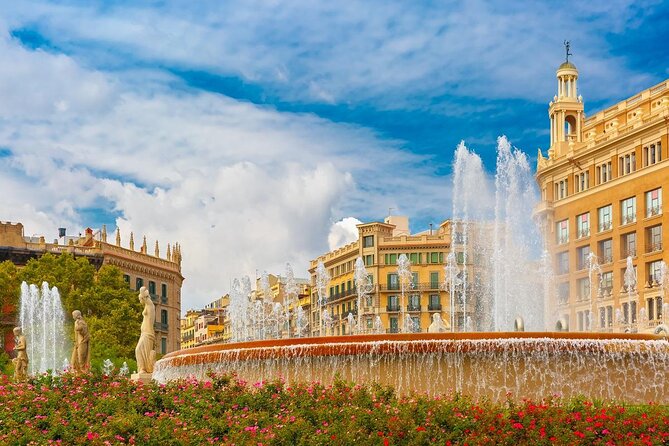
The route finishes at Plaza de Catalunya. This is the kind of location that can feel like a stop on the way to somewhere else for many visitors. In this game, it becomes the end marker that forces you to zoom back out.
You’ll be leaving with a better sense of how Cerdà’s planning ripples beyond one block or one landmark. When you stand in a major square after spending the prior stretch on smaller architectural details, the city’s “system” becomes easier to understand.
Also, ending in an area with transit options is simply practical. Even though the game ends back at the meeting point, reaching the final area usually means your day doesn’t feel cut off. You can plan dinner or onward sightseeing without scrambling for transportation.
Who this is best for (and who might want something else)
This activity shines for:
- families who want kids engaged without screens,
- friend groups who enjoy competitive teamwork (even if it stays friendly),
- people who like city history but want it delivered through walking, not lectures.
It also works well for people who have lived in Barcelona for a while. One of the more charming takeaways from the overall feedback is that even locals can learn new details when the city is presented as a puzzle.
If you should consider another option instead:
- You want a traditional guided tour with lots of continuous storytelling.
- You hate scavenger-style tasks or struggle with clue-based games.
- Your group expects a major end-of-game prize beyond a small item.
Timing, pace, and route: what to expect from the walking portion
Plan for about 2 hours of play time and roughly 3 km walking through the city center. That’s a solid length: long enough to matter, short enough that you’re not exhausted by the end.
You’ll be able to go at your own pace, and the game structure supports breaks. If you’re stopping for food or a drink, it usually won’t ruin the experience as long as your group stays organized with the diary and clue trail.
If you’re visiting during hotter months, wear comfortable shoes and keep water in mind. The route is described as near public transportation, but the main value here is walking—so don’t rely on transit to cover the whole route.
Value check: is it worth it for your group size?
Here’s a straightforward way to judge value: if your group enjoys interactive sightseeing, the cost per person works. You’re buying time plus a built-in “reason to look.”
If you’re traveling with a larger group of all adults, value can feel tighter. One criticism shared is that the experience can seem expensive for what happens once the game begins. That doesn’t mean the puzzles are bad—it just means you’re not paying for constant staff interaction.
So ask yourself: do you want to socialize while solving clues, or do you want an expert guide to do the heavy lifting? This game leans toward the first option.
The small details that make or break the experience
Based on what tends to go well, here are a few choices that help your day:
- Use the diary (if you’re given one). It’s not just a prop—it’s how the game stays readable and trackable.
- Form roles early so kids and adults aren’t competing for the same clue moment.
- Keep your group’s pace consistent. It’s better to solve a clue together than rush and miss the clue clue.
- Bring patience if crowds gather near famous landmarks. You’re still playing, but you may not have total control over foot traffic.
One more factor: customer support gets praise. If anything goes off-script—language mix-up, starting confusion, missing materials—the team handling it can be a big help.
Should you book The Secret of Cerdà?
I’d book it if you want a playful, puzzle-based way to understand Barcelona’s planning and architecture—especially if you’re traveling with kids or a mixed group that likes hands-on activities. The combination of a high rating (4.8), strong recommendations, and the city-center route makes it a dependable use of time.
I wouldn’t book it if your top priority is a traditional, guide-led walking tour with constant narration. And if you’re booking for a group of adults and expect a big final “prize,” manage that expectation—some people found the ending reward underwhelming.
If you’re in the middle—curious about Cerdà, willing to walk, and happy to solve clues together—this is an excellent fit. It’s a way to see Barcelona with new eyes while still feeling like you’re out sightseeing, not stuck in a classroom.
FAQ
What’s the duration of The Secret of Cerdà?
It’s listed as approximately 2 hours.
How long is the route?
The route is about 3 km through the city center.
Is it available in English?
Yes. It’s offered in English, and it’s also available in Spanish, Catalan, and French.
Is this tour private?
Yes. It’s private, and only your group will participate.
Where does the tour start and end?
It starts at Carrer de Trafalgar, 17, L’Eixample, 08010 Barcelona, Spain, and ends back at the same meeting point.
What’s the cancellation policy?
You can cancel for free up to 24 hours in advance for a full refund. If you cancel less than 24 hours before the start time, the amount paid isn’t refunded.