REVIEW · BARCELONA
The Timeless Beauty of Barcelona’s Gothic and Born Quarters
Book on GetYourGuide →Operated by Luca BCN · Bookable on GetYourGuide
Barcelona’s old stones still tell stories. This 2-hour walk with Luca BCN is a smart way to connect the Gothic Quarter to El Born with real landmarks and real characters. You move on foot, guided in English, from the civic core toward the sea, with plenty to photograph along the way.
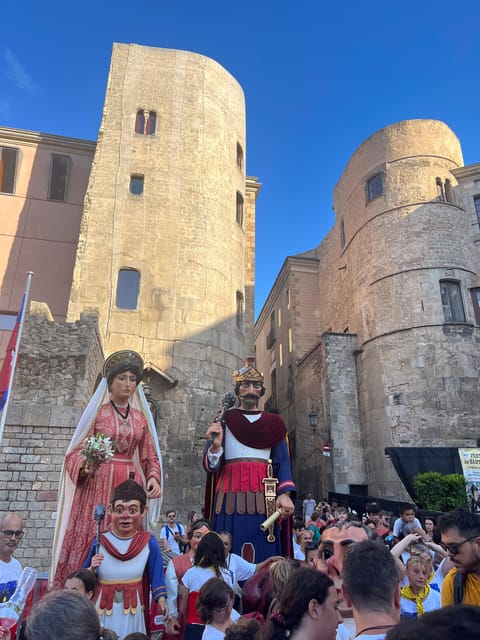
What I like most is the storytelling. You’ll hear about heroes and legends tied to specific spots, from Santa Eulalia and San Jordi to Wilfred the Hairy and el Caganer. I also love the way the walk links big-name sites—especially the Temple of Augustus and the Cathedral del Mar / Santa Maria del Mar area—to everyday street life.
One possible drawback: the route uses narrow medieval streets. It is not suitable if you have mobility issues, and you’ll want comfy shoes plus water.
In This Review
- Key things to know before you go
- From Pl. de Sant Jaume to Santa Maria del Mar: the walk’s smart shape
- Luca BCN runs the show: how the guide style affects your experience
- Pl. de Sant Jaume and the Gothic Quarter: where Barcelona’s public life meets old stone
- The lost Jewish quarter and an ancient synagogue stop
- Placa Sant Felip Neri: a plaza built for stories and resilience
- Bishop’s Bridge and the small details you can actually see
- Temple of Augustus: seeing Roman Barcino in the middle of medieval Barcelona
- Barcelona Cathedral: why Gothic details matter more than you expect
- Palau Reial Major and the shift toward El Born / La Ribera
- El Born: artisan streets, tapas energy, and legend-friendly corners
- Cathedral del Mar and the finish at Santa Maria del Mar: the people’s church feeling
- Price and value: why $14 can work for a 2-hour story walk
- What to bring (and what to plan for) in the Gothic streets
- Who should book this tour
- Should you book Timeless Beauty of Barcelona’s Gothic and Born Quarters?
- FAQ
- How long is the walking tour?
- How much does the tour cost?
- Where does the tour start and where does it end?
- What areas are included during the walk?
- Is food and drinks included?
- What language is the tour offered in?
- What should I bring?
- Is the tour suitable for people with mobility impairments or wheelchair users?
- What is the cancellation policy?
- Is there an option to pay later?
Key things to know before you go
- One guide, one route: this is run by Luca BCN, so you get a consistent, no-gimmicks experience.
- Legends with addresses: stories are tied to places you can point to, not just facts in the air.
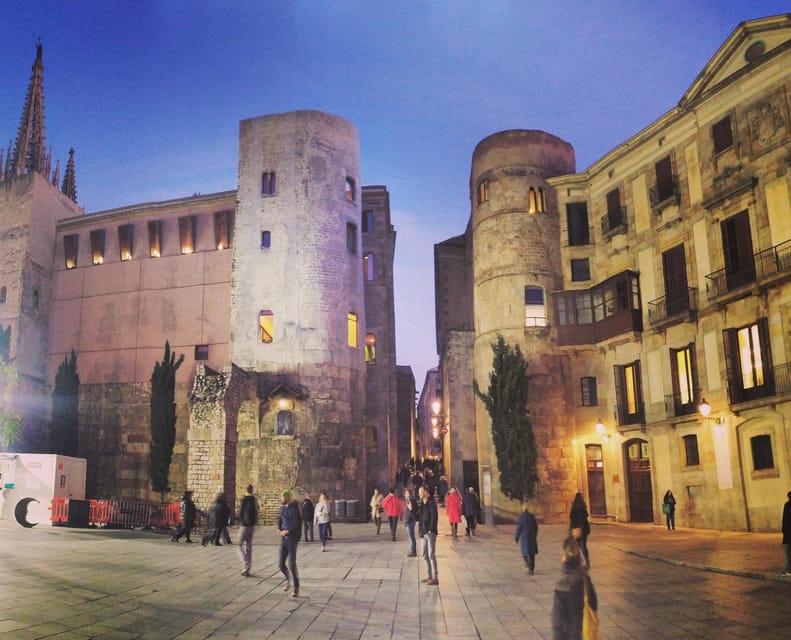
- Roman-to-medieval connections: you’ll see Roman Barcino references and then jump into Gothic-era Barcelona.
- Photo-heavy route: expect stops that make it easy to frame church fronts, plazas, and old stone details.
- Expect narrow streets: great for atmosphere; not great for wheelchairs or limited mobility.
From Pl. de Sant Jaume to Santa Maria del Mar: the walk’s smart shape
The tour starts around Pl. de Sant Jaume and ends at the Basilica de Santa Maria del Mar. That matters because it gives you a natural flow: civic Barcelona first, then medieval Barcelona, and finally the church of the people by the harbor area. You’re not just hopping between random sights—you’re following the city’s logic.
I like that it feels like a walk you’d do with a local friend who knows where the stories live. You’re also in the part of Barcelona where streets squeeze together and details show up close to eye level. If you enjoy noticing stonework, carved faces, and the way plazas function as meeting points, this route rewards you.
Also, you’re finishing at a major landmark, so you get a built-in “wrap-up” feeling. You’ll have an easy sense of accomplishment after the last church stop.
You can also read our reviews of more tours and experiences in Barcelona.
Luca BCN runs the show: how the guide style affects your experience
This is a live, English walking tour, run by one person. That typically means less confusion at meeting time and fewer “handoffs” between guides. It also means the guide’s style becomes the whole experience—so it’s worth knowing what you’re signing up for.
The best part here is clarity. Past participants highlighted the information being broad and clear, and they liked the guide’s effort to make sure everyone understood. In practice, that usually means you’re not just shown what to look at—you’re told why it matters, with context you can actually remember later.
A small caution: one person reported that the delivery felt loud and that some details felt less supported, plus they experienced a shorter duration than advertised. That’s not something you can predict for every run, but it’s a fair reminder. If you’re sensitive to volume or you like slower pacing, consider arriving a few minutes early and setting expectations that it’s a storytelling-forward walk.
Pl. de Sant Jaume and the Gothic Quarter: where Barcelona’s public life meets old stone
Your morning (or afternoon) begins at Pl. de Sant Jaume, 3 area, then you step into the Gothic Quarter. This is where Barcelona’s medieval city planning still shows. Even if you’ve seen photos, being there in person changes the scale. Gothic façades feel taller when you’re standing in a real street canyon.
This section also works well for orientation. You start to recognize the pattern: narrow passages, small squares, and churches that seem to appear at the exact moment you stop needing direction. If you’re trying to get your bearings fast, this is a strong first half of your visit.
Expect the guide to connect people and events to specific corners. The point isn’t just entertainment. It helps you read the city like a text: you start seeing repeated symbols, familiar names, and the way religion and civic life overlap in stone.
The lost Jewish quarter and an ancient synagogue stop
One of the standout story beats is the ancient synagogue area and the discussion of Barcelona’s medieval Jewish presence. The tour frames this as the rediscovery of a lost Jewish quarter and points to the oldest synagogue in Europe.
What I like about including this is balance. Barcelona’s Gothic Quarter can sometimes feel like it’s only about one timeline. Here, you’re reminded that the city’s past had multiple communities—and that history can get covered over, not erased. When the guide ties a religious site to what came before, you get a fuller picture of how Barcelona changed over time.
One practical note: this is still in the old-street fabric. It’s a good time to keep your phone put away unless you’re pausing to shoot. Busy lanes can attract pickpockets, and you’ll be moving with a group.
Placa Sant Felip Neri: a plaza built for stories and resilience
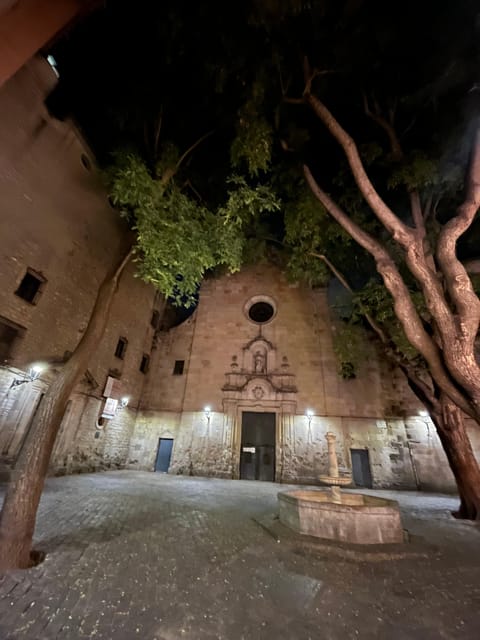
Next comes Placa Sant Felip Neri, a key square where the tour shifts from medieval character to more modern conflict. You’ll hear about Barcelona’s heroic resistance during Franco’s uprising during the civil war era.
This is where a guided walk does more than point at architecture. It gives you the emotional context that you usually miss when you’re sightseeing alone. A plaza becomes more than a backdrop—it becomes a stage where people gathered, defended, and remembered.
Also, squares are your natural “reset points.” You can look up, breathe, and reorient before the next stretch of narrow streets. If you’re taking photos, plazas are often the easiest places to get straight-on shots without weaving through crowds.


Bishop’s Bridge and the small details you can actually see
There’s a short stop at Bishop’s Bridge. It doesn’t take long, but these quick checkpoints are useful on a walk like this. Bridges and passageways in old neighborhoods show you how the city handled movement—where water, pathways, and boundaries mattered.
I also find these micro-stops help you slow down. When you’re only sightseeing, it’s easy to skim. A bridge stop forces you to look at form: angles, stone edges, and how streets connect above or between levels.
If it’s warm or sunny, you’ll likely pass through some shaded and some exposed sections here. That’s a good moment to check your water.
Temple of Augustus: seeing Roman Barcino in the middle of medieval Barcelona
The Temple of Augustus stop is a major reason this tour feels different from a basic Gothic checklist. You get a direct connection to the ancient city of Barcino and the Roman layer that still affects the streets and monuments around you.
What I like is how this helps you escape the common “Barcelona is only Gothic and Gaudí” trap. Even when Gaudí steals your attention, Roman roots are part of the city’s structure. When you can stand by Roman references, the rest of the city starts to make more sense.
This stop is also naturally photo-friendly, because Roman sites often look sharper and more grounded than the surrounding medieval buildings. If you like architectural contrast, you’ll enjoy this.
Barcelona Cathedral: why Gothic details matter more than you expect
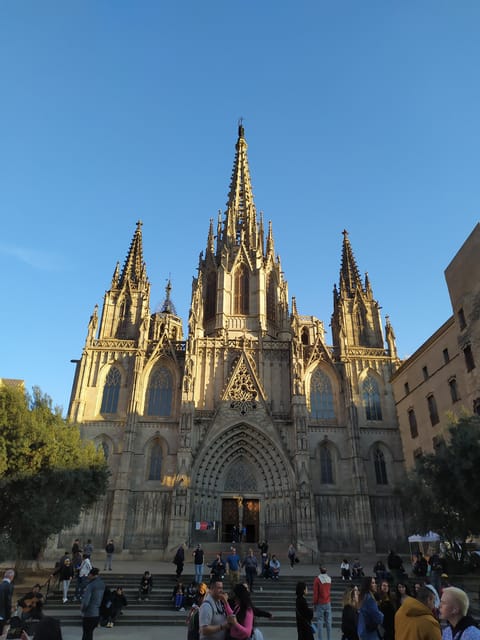
You’ll visit Barcelona Cathedral with a guided explanation. This is one of those sights where it’s easy to think you already know what you’re seeing. In person, it’s the details that change your mind: the rhythm of stonework, the way light plays across surfaces, and the way the cathedral fits into the surrounding street grid.
The guide’s job here is to help you look in the right places. If you just walk through with camera up, you may miss the story behind the design choices. With guidance, you’ll likely get a clearer sense of which parts connect to the city’s identity and which are just impressive decoration.
Drawback-wise: cathedrals can mean more waiting or more crowding depending on the day. Wear shoes you can stand in, and keep your pace steady.
Palau Reial Major and the shift toward El Born / La Ribera
The tour continues toward the Palau Reial Major area, then moves into Barri de La Ribera and eventually El Born. This is the pivot from strict Gothic density to a more lived-in neighborhood feel. You start seeing more of the everyday Barcelona vibe: artisan storefronts, small eateries, and side streets that feel built for strolling.
I like this transition because it prevents the whole tour from feeling like one long museum visit. The city opens up into a quarter where people browse, eat, and gather—so the history stays connected to present-day routines.
In practical terms, this section is also where you may see more tourists. Keep your bag close and don’t set your belongings down while you snap a photo.
El Born: artisan streets, tapas energy, and legend-friendly corners
El Born is where the walk turns more playful. You get bohemian streets with charm and artisan shops, plus some of the best bars and restaurants nearby. Even if you don’t stop for food, you’ll feel the neighborhood’s rhythm.
The guide also brings in more legends and heroes as you walk, which is a smart move. Neighborhood atmosphere is easier to remember when you attach it to stories.
If you like photography, El Born is often where street scenes look best: doorways, small balconies, and textured walls. Just be careful around crowd clusters. Get your shot, then move on.
Cathedral del Mar and the finish at Santa Maria del Mar: the people’s church feeling
The tour spotlights Cathedral del Mar and finishes at Basilica de Santa Maria del Mar. The walk frames this as a spiritual people’s temple since the XIV century, and it also notes modern fame through books and Netflix.
Even if you’re not chasing pop culture, this stop works because it helps you understand what the church represents locally. The “people’s church” idea isn’t just a tagline—it’s a way of thinking about who built religious spaces and why they mattered to ordinary life.
Timing here is also good: by the time you reach the end, you’ve already covered enough background that the final church stops feel like payoffs, not random monuments. You can leave with a clear mental map of how the city’s layers connect.
Price and value: why $14 can work for a 2-hour story walk
At $14 per person for a 2-hour guided walk, this tour is strong value for a few reasons.
First, you’re paying for a local guide who connects sites to names and events. That’s the part most self-guided sightseeing misses. Second, you’re covering a compact area—Gothic Quarter and El Born—so your time isn’t wasted on transit. Third, the walk ends at a major landmark, which usually means fewer hours planning your own route.
The one thing to watch is that the tour is a walking experience through narrow streets. If you’re slow-walking, stopping often, or you’re sensitive to noise, the 2-hour frame may feel tight. Bring your energy, and you’ll get more out of it.
What to bring (and what to plan for) in the Gothic streets
You’ll want:
- Comfortable shoes (this route isn’t designed for flip-flops)
- Camera (the architecture rewards it)
- Sunscreen and water
- A jacket or umbrella if weather turns
This tour also advises you to keep your belongings close. That’s good sense anywhere in central Barcelona, but it matters more in narrow medieval lanes where you can’t easily create space around you.
If you’re visiting in hot season, plan to drink water before you feel thirsty. If you’re going in cooler or rainy weather, keep your outer layer handy but avoid bulky items that make you look like a target.
Who should book this tour
Book it if you want:
- A story-led walk through two major quarters without doing a full-day marathon
- Clear explanations tied to specific landmarks
- A route that connects Roman roots, medieval life, and later resistance history
- A finishing point you can build the rest of your evening around
Skip it if:
- You have mobility impairments or need wheelchair-friendly routes. The narrow streets make it unsuitable.
- You prefer a quiet, low-volume sightseeing style. At least one past participant found the delivery loud, so if that’s a dealbreaker for you, plan accordingly.
Should you book Timeless Beauty of Barcelona’s Gothic and Born Quarters?
Yes, if you’re looking for an efficient, story-focused way to understand the city’s layers. At $14 for two hours, you’re not overpaying for a “see the postcard and go” route. The strong points here are the clear, helpful guidance and the way the guide attaches names like Santa Eulalia, San Jordi, Wilfred the Hairy, and el Caganer to real places.
I’d only hesitate if narrow streets or noisy delivery would make you uncomfortable. If that’s your situation, choose a less tight route elsewhere in Barcelona.
If your goal is to leave with a sharper mental map of Gothic Barcelona plus a feel for El Born’s modern personality, this walk is a good bet.
FAQ
How long is the walking tour?
The tour lasts 2 hours.
How much does the tour cost?
The price is $14 per person.
Where does the tour start and where does it end?
Meet your guide in front of Starbucks. The tour finishes at Basilica de Santa Maria del Mar.
What areas are included during the walk?
You visit the Gothic Quarter and El Born, plus other nearby stops like the Temple of Augustus and the Cathedral del Mar area.
Is food and drinks included?
No. Food and drinks are not included.
What language is the tour offered in?
The tour is offered in English.
What should I bring?
Bring comfortable shoes, a camera, sunscreen, and water. Also be ready with a jacket or umbrella depending on the weather.
Is the tour suitable for people with mobility impairments or wheelchair users?
No. It is not suitable for people with mobility impairments or wheelchair users due to the historic narrow streets.
What is the cancellation policy?
There is free cancellation up to 24 hours in advance for a full refund.
Is there an option to pay later?
Yes. You can reserve now & pay later to keep your plans flexible.