REVIEW · BARCELONA
Stories, Legends and Mysteries of Barcelona
Book on GetYourGuide →Operated by ivan stabile · Bookable on GetYourGuide
Barcelona has a darker side you can walk into. This 2-hour legends-and-mysteries tour turns everyday streets into a story map, from Plaza del Pi pacts to Ponte del Bisbe lore. I like how Ivan’s storytelling comes with extra help, including pictures, so the grim bits actually make sense. You’ll also move with a small group of 10, which makes it easier to ask questions without shouting in the back row.
One thing to plan around: this tour isn’t for everyone. It lists strict age limits (not suitable for children under 10/11/12 years) and also notes maximum age cutoffs, so check that before you book.
What you get is a real narrative walk, not a monument checklist. You’ll connect major religious moments like Santa Eulalia with Roman funeral customs, then finish with darker layers of the city, including the Spanish Civil War scars around Plaça Sant Felip Neri and the dramatic politics hinted at in Plaça del Rei.
In This Review
- Key things that make this tour worth your time
- Why this tour feels different from a normal Barcelona sights walk
- Meeting Ivan in black at Carrer d’Estruc and Carrer de Fontanella
- Plaza del Pi: the devil’s pact and why myths live on
- Santa Eulalia: martyrs, barrels, and the city’s stubborn memory
- Roman funeral rituals: death culture you can actually visualize
- Ponte del Bisbe: the legend attached to an iconic bridge
- Plaça Sant Felip Neri: Spanish Civil War damage you can read in stone
- Plaça del Rei and the Catholic King assassination attempt
- What the $23 price really buys you in a 2-hour format
- The practical stuff: shoes, timing, and who should skip it
- Who this tour suits best (and who might not)
- Should you book Stories, Legends and Mysteries of Barcelona?
- FAQ
- How long is Stories, Legends and Mysteries of Barcelona?
- Where do I meet the guide?
- What languages is the tour offered in?
- What’s the group size?
- Is the tour wheelchair accessible?
- Is it suitable for children or seniors?
Key things that make this tour worth your time
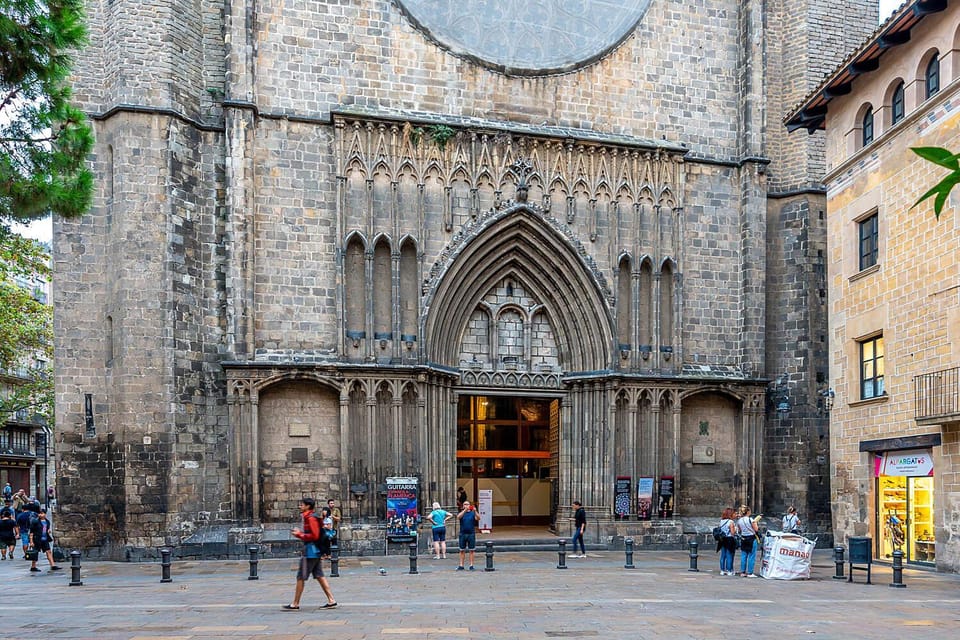
- A story-first route that links famous names to street-level myths and rumors
- Ivan’s picture-supported explanations that make legends feel less random
- Plaza del Pi to Ponte del Bisbe: you’ll learn why these spots have reputations
- Santa Eulalia in full context, including the barrel story and martyr bravery
- Plaça Sant Felip Neri’s war damage, explained through architecture
- Plaça del Rei and the Catholic King plot, for a dramatic shift from legend to politics
Why this tour feels different from a normal Barcelona sights walk
Barcelona can be loud with “must-see” lists. This experience goes the other way. Instead of treating landmarks like trophies, it treats them like clues—places where stories stuck to the stone and never really left.
You’ll get legends and mysteries that don’t come off as spooky for the sake of it. The best part is that each stop links to something you can picture: a pact said to happen in Plaza del Pi, the brutality tied to Santa Eulalia, and the kind of public rituals Romans used to make death feel organized. You’re not just hearing tales. You’re learning how Barcelona tells its own stories.
And yes, the pacing is built for conversation. With a small group, you can ask questions along the way, and your guide can tailor answers to what you’re curious about. That matters on a tour like this, because “why would anyone believe that?” is the whole point.
You can also read our reviews of more tours and experiences in Barcelona.
Meeting Ivan in black at Carrer d’Estruc and Carrer de Fontanella
The tour starts at the intersection of Carrer d’Estruc and Carrer de Fontanella. The meeting point is described as easy to find, and the guide will be in black clothes, so you’re not playing guess-the-guide in a busy square.
Arrive a bit early. Even when a meeting point is easy, old streets have a way of adding a few minutes. Also, these tours work best when you start without stress. Barcelona is all about wandering—so start with your energy intact.
You’ll end back at the same meeting point. That’s a small detail, but it helps you plan the rest of your day. You’re not suddenly dropped across town, hoping you can “figure it out” before dinner.
Plaza del Pi: the devil’s pact and why myths live on
Plaza del Pi sets the tone fast. One of the standout stories is the legend of pacts with the devil associated with the square. It’s the kind of tale that could sound like folklore—until you think about how cities keep using fear, temptation, and morality to explain human behavior.
This stop is useful even if you’re not a mythology person. It teaches you what to listen for as you walk. In Barcelona, legends often attach themselves to a location because people gathered there. Markets, churches, and street festivals create the perfect conditions for stories to spread and stick.
You’ll also get an angle on how local belief systems shaped the city’s storytelling. The tour frames these tales as part of Barcelona’s identity, not just weird trivia.
Santa Eulalia: martyrs, barrels, and the city’s stubborn memory
Next up is Santa Eulalia, the kind of figure history never lets you treat casually. The tour references her bravery as a martyr and includes the darker detail that she was thrown in a barrel. That’s not a “cute” story. It’s meant to show how public suffering became a political and spiritual message.
What I like about this approach is that it doesn’t turn the story into pure shock value. It puts Santa Eulalia into the bigger picture of belief, courage, and how communities remember. Even if you’ve heard of her name before, you’ll walk away with a better sense of why she’s still referenced in the streets.
This part also connects religious history to the physical city. When you see how the tour steers you from one related spot to the next, you start understanding that Barcelona’s past isn’t behind glass. It’s out in the open, in corners you’d otherwise zip past.
Roman funeral rituals: death culture you can actually visualize
One of the more surprising inclusions is the reference to the funeral rituals of Roman society. It’s a smart choice. Roman history often gets flattened into big names and architecture. Here, you’re looking at something more personal: what people did with death, and what they thought it meant.
Even though funeral practice isn’t the most Instagram-able topic, it’s a powerful lens. It helps you understand the logic behind later stories—especially martyr narratives and public ceremonies. When a society has a formal way to handle death, it also has formal ways to explain why it matters.
If you like history that feels human and practical, this stop is a good one. It turns “ancient” into something you can picture: people, rituals, fear, and meaning.


Ponte del Bisbe: the legend attached to an iconic bridge
Then you hit Ponte del Bisbe, and the tour does what great walking tours do: it turns a postcard view into a story you’ll remember.
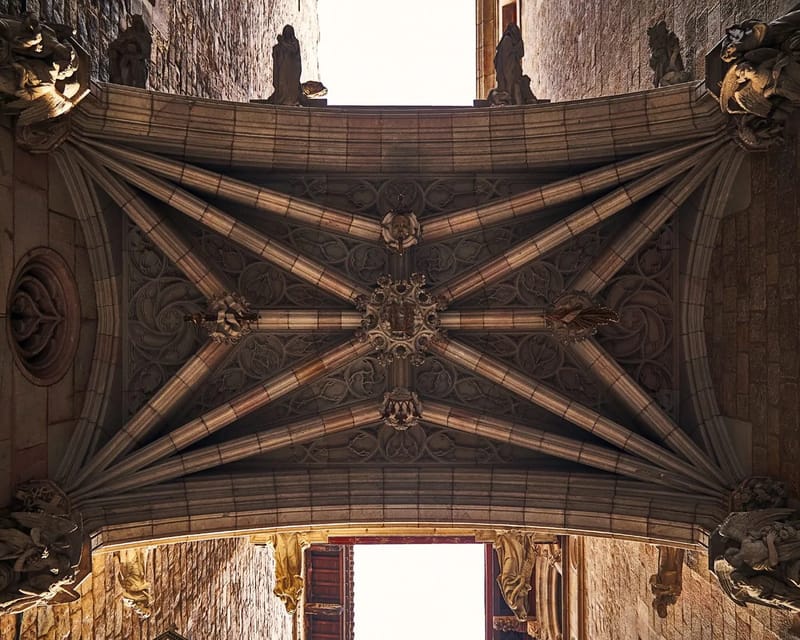
The guide shares a legend tied to this bridge, and that legend helps explain why the place keeps showing up in local storytelling. Bridges are natural gathering points—crossings create movement, movement creates conversation, and conversation creates reputation. In other words, legends need foot traffic.
As you stand there, you’ll understand something important: the tour isn’t trying to convince you every claim is literally true. It’s showing how legends function. They keep a city’s values and anxieties visible long after the original event.
Plaça Sant Felip Neri: Spanish Civil War damage you can read in stone
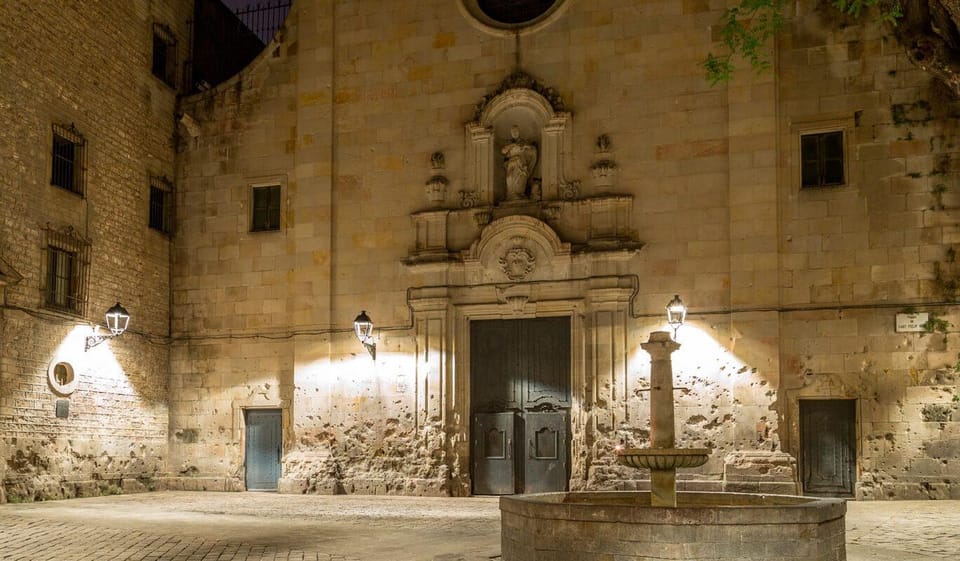
Plaça Sant Felip Neri adds weight to the walk. The tour ties this square to the devastating bombing suffered during the Spanish Civil War, and you’ll learn how the architecture carries traces of that damage.
This is the part where the tour becomes more than “mystery.” It becomes a lesson in memory. If you travel fast, you might treat war-scarred buildings like just another background detail. Here, you’re encouraged to notice how the physical city holds evidence.
It’s also a reminder that the stories Barcelona tells aren’t only ancient. Some are recent enough that families still remember. Even without getting graphic, the tour frames the square as a place where the past is written into structures you can walk around.
Plaça del Rei and the Catholic King assassination attempt
The route also points you toward the Plaça del Rei, where you’ll hear about secrets connected to the politics of the time—specifically an assassination attempt on the Catholic King.
This shift is important for balance. If the tour stayed in legend-land the whole way, it might feel like one long ghost story. Instead, it connects rumor, power, and violence in a way that feels grounded. You’re learning how major events and attempted political upheavals can leave long shadows in a city.
If you like history that mixes story with cause-and-effect, you’ll appreciate this. The “mystery” here isn’t supernatural. It’s how power plays out in public spaces and how those spaces become stage sets for future storytelling.
What the $23 price really buys you in a 2-hour format
At $23 per person, you’re paying for a guided, narrative walk that’s designed to make multiple sites click together. In a city like Barcelona, where self-guided walking is easy, the real value is your guide doing the pattern-recognition for you.
Here’s what you’re getting that would be hard to replicate on your own at the same quality level:
- A professional guide focused on history and legends
- Detailed explanations built for each stop
- A route that links major sites (Santa Eulalia, major squares) with smaller, more mysterious corners
- A close, question-friendly atmosphere for real back-and-forth
Is it expensive for two hours? No. It’s also not a freebie. But the small group size—limited to 10 participants—helps justify the cost. You’re not crammed into a loud herd. The guide can actually respond, and you can follow the thread of the story.
If you’re choosing between this and a generic sightseeing tour, I’d pick this when you care about stories, not just photos.
The practical stuff: shoes, timing, and who should skip it
This tour is built for walking, and the basic advice is the boring-but-true kind: wear comfortable shoes and comfortable clothes. You’ll want support under your feet because old-city streets are not smooth. Also, arrive on time so you don’t miss the opening.
Language options are Spanish and English, and it’s a live guide throughout. If you’re traveling solo or you just prefer small-group interaction, this format fits well.
Now, the important reality check: it lists that the tour is not suitable for people with mobility impairments even though it also says wheelchair accessible. If mobility is a factor for you, confirm details directly when booking so you don’t get stuck with mismatched expectations.
Age rules are also strict. It lists no-go for children under 10, 11, and 12 years, and it also lists upper age cutoffs (including not suitable for people over 70, 80, 95). If you’re traveling with family or planning for older relatives, it’s worth double-checking eligibility before you commit.
Who this tour suits best (and who might not)
This is ideal if you want Barcelona to feel like a lived-in novel. You’ll like it if you enjoy:
- Legends tied to real places
- Martyr and religious storytelling with context
- Darker history that explains why buildings and squares look the way they do
- A guide who can keep momentum for a full 2 hours
It’s not a great match if you want a calm, generic architecture stroll. This tour is story-driven, with emotionally heavy moments (war damage, martyrdom themes) and legends that may include grim details.
Should you book Stories, Legends and Mysteries of Barcelona?
I think you should book this tour if you’re the type of traveler who reads the plaque, then looks for what the plaque can’t tell you. The mix of legend and history works because each stop teaches you a different way Barcelona remembers: through myth, through public ritual, through political violence, and through scars that stayed in the walls.
If you’re on the fence, here’s a quick decision rule:
- Book it if you want meaning behind the streets, not just sights.
- Skip it if you want a lighter, mostly cheerful walk with minimal heavy topics.
One more plus: the experience offers reserve now & pay later, and it includes free cancellation up to 24 hours in advance. That makes it easier to fit into a changeable itinerary, especially if you’re juggling weather or dinner plans.
If your goal is to see a Barcelona you can’t get from a typical guidebook route, this is a strong pick. Start at Carrer d’Estruc in black, and let the city tell you its secrets in the exact places they were meant to live.
FAQ
How long is Stories, Legends and Mysteries of Barcelona?
The tour lasts 2 hours. Starting times vary, so you’ll need to check availability for the schedule.
Where do I meet the guide?
You meet at the intersection of Carrer d’Estruc and Carrer de Fontanella. The tour ends back at the same meeting point.
What languages is the tour offered in?
The live guide offers the tour in Spanish and English.
What’s the group size?
This is a small group tour limited to 10 participants.
Is the tour wheelchair accessible?
The activity is listed as wheelchair accessible, but it also states not suitable for people with mobility impairments. If you have mobility needs, confirm directly when booking.
Is it suitable for children or seniors?
It lists not suitable for children under 10/11/12 years (a strict minimum age) and also lists maximum age cutoffs (including not suitable for people over 70, 80, or 95). Check eligibility before you book.