REVIEW · BARCELONA
Full Day Visiting Tarragona and Sitges from Barcelona
Book on Viator →Operated by J&G Elegance Cars · Bookable on Viator
Two coasts, one Roman day. This full-day route mixes UNESCO Roman Tarraco highlights with an easy shift to Sitges seaside strolling, all in a private car picked up from Barcelona.
I like how the day gives you both big-picture sights and the kind of real walking that makes places feel lived-in, from Tarragona’s promenade and casteller monument to the fishing-quarter atmosphere of El Serrallo. I also like that English is handled well and the experience is built for groups up to 7, with bottled water included and a mobile ticket to keep things simple.
One thing to weigh: time at each stop is fairly short, and not every major site has admission included. You should expect to buy tickets on your own for places like the amphitheatre/circus, the cathedral, and Sitges’ Palau de Maricel.
In This Review
- Key things to know before you go
- Roman Aqueducts and Beach Views: The Big Idea
- Price and Value: What $804.39 Really Means
- The Private Car Experience: Pickup, English, and Real-World Comfort
- Tarragona Stop-by-Stop: From Pont del Diable to the Sea
- Pont del Diable (Acueducto de les Ferreres)
- Tarraco Imperial Square (Kilometre Zero)
- La Rambla Nova and the Castellers Monument
- El Serrallo, Playa del Miracle, and the Sea-First Neighborhood Feel
- Balcón del Mediterráneo
- The Roman Big Guns: Amphitheatre, Circus, and Pretorio Tower
- Tarraco Amphitheatre
- Parc del Miracle
- Circ Roma (Roman Circus)
- Torre del Pretorio Romana
- Medieval Tarragona Layers: Pla de la Seu, Cathedral, Walls, and Roman Walk
- Pla de la Seu
- Tarragona Cathedral (Early Gothic)
- Murallas de Tarragona (Roman-origin walls)
- Passeig Arqueològic (Archaeological Walk)
- Beyond the City: Arch of Bará and Roc de Sant Gaietà
- Arch of Bará (Triumphal Arch)
- Roc de Sant Gaietà
- Sitges: The Beach Shift After Tarragona
- Sitges Old Town Time (about 1 hour)
- Passeig Marítim (2.5 km coastal walk)
- Church of Sant Bartomeu & Santa Tecla
- Palau de Maricel (Maricel Palace)
- What I Think Works Best for Different Types of Travelers
- Should You Book This Tarragona and Sitges Full-Day Tour?
- FAQ
- How long is the Tarragona and Sitges day trip?
- What is the group size limit?
- Is pickup offered?
- What language is the tour offered in?
- Is lunch included?
- Are tickets for the Tarragona amphitheatre and Roman circus included?
- Is the Tarragona Cathedral admission included?
- Is Palau de Maricel admission included?
- What’s included in the tour besides transport?
- Can I cancel for a full refund?
Key things to know before you go
- Pont del Diable: UNESCO aqueduct landmark, with admission included and a dramatic Roman arc in open air
- Tarragona’s sea viewpoints: Balcón del Mediterráneo and Parc del Miracle set you up for big coastal views in limited time
- Castellers culture: You’ll stop by the Monumento a los Castellers and learn what a castell is
- A full Tarragona-to-Sitges arc: Roman ruins in the morning, then a calmer beach promenade and old-town church in Sitges
- Ticket mix is real: Some admissions are included, but not everything is covered (budget for it)
Roman Aqueducts and Beach Views: The Big Idea
This day trip works because it avoids the common trap of doing only ruins with no breathing room. You start with one of the most iconic Roman structures in Tarragona’s orbit, then keep moving through the old city’s key viewpoints and maritime neighborhoods. By the time you reach Sitges, the pacing naturally loosens up, and the coast becomes the main event.
It’s also practical: you’re not trying to stitch together trains, buses, and taxis. You’re picked up in Barcelona (city, Port, or Airport areas), taken in an air-conditioned vehicle, and dropped where you need to be. For many people, that’s the entire value of the tour right there.
And yes, the Roman side is strong. Tarragona is a UNESCO site for Roman remains, and this route makes you see it beyond one photo-stop. You get aqueduct views, amphitheatre context, circus elements, medieval layers, and the Roman wall setting that ties it all together.
You can also read our reviews of more tours and experiences in Barcelona



Price and Value: What $804.39 Really Means
The price is $804.39 per group (up to 7) for about 8 hours, private car included. If you split it at full group size, you’re roughly at $115 per person for transport and the day plan—before lunch and separate admissions.
That’s why this tour can be good value if you have a group of friends or a family unit and you’d otherwise spend money on multiple taxis or ferries and lose time. Bottled water is included, and the car saves you from the stress of navigating between Tarragona’s lower seafront and the upper old town.
Where you’ll spend extra:
- Lunch (not included): lunch menu typically €15–€30
- Tarragona amphitheatre and Roman circus admissions: €7 per person
- Tarragona cathedral admission: €5 per person
- Sitges’ Palau de Maricel admission: €10 per person
If you’re traveling solo or as a couple, the fixed group price can feel steep once you add those tickets and a meal. But if you price in the comfort of private pickup, the day’s driving time, and the fact that multiple UNESCO stops are involved, it often still lands in the “worth it” zone.
The Private Car Experience: Pickup, English, and Real-World Comfort
This is a private tour with only your group, operated by J&G Elegance Cars. That means you’re not competing for seats or dealing with last-minute schedule chaos from other groups.
Pickup is offered in Barcelona at the city, Port, or Airport. The tour uses a mobile ticket, which keeps you from hunting down paper confirmations. The tour language is English.
You also get a few comfort basics that matter on a long day:
- bottled water included
- baby chairs and boosters available on demand
That’s helpful if you’re traveling with kids and want a smoother ride between stops.
One more practical note: the day is structured around short timed visits, so you’ll want to decide early which sites are must-see for you. If you’re hoping for deep museum time or long inside-the-site explanations at every stop, this won’t be that kind of day. It’s more of a highlights-and-views tour with self-walking moments.
Tarragona Stop-by-Stop: From Pont del Diable to the Sea
Pont del Diable (Acueducto de les Ferreres)
This is your opening “wow” moment. The Puente del Diablo aqueduct is part of a Roman system that once carried water from the Francolí River to old Tarraco, about 25 km away. It sits just outside Tarragona and remains in good condition, which is why it earned UNESCO recognition.
You get about 20 minutes, with admission included. This is long enough for photos and for taking in the scale without feeling rushed. It’s also a perfect start because it gives you the Roman engineering context before you hit the amphitheatre and circus later.



Tarraco Imperial Square (Kilometre Zero)
From there you hit the Tarraco Imperial Square, the kilometre zero of Tarragona. The stop is short (about 10 minutes), but it’s a useful orientation point. It’s the kind of place that quietly tells you: you’re in the old Roman center of the story.
La Rambla Nova and the Castellers Monument
Tarragona’s Rambla Nova is the city’s main promenade and daily-life center. Expect terraces, restaurants, and a mix of 19th- and 20th-century architecture, plus a lively feel that contrasts with the Roman ruins.
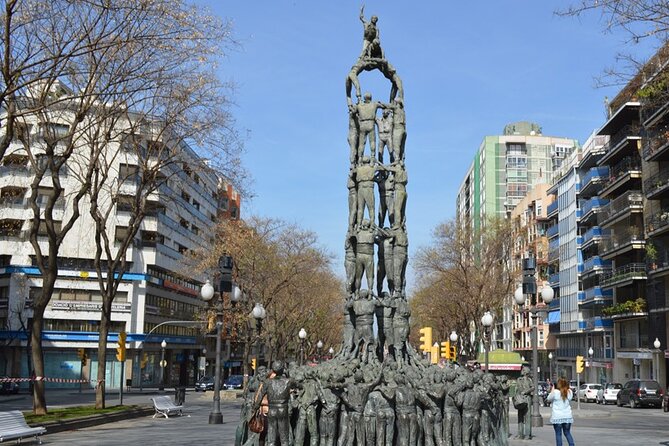
You spend about 10 minutes there, with admission included for the stop. Then you add a culture layer with Monumento a los Castellers, a monument honoring the traditional human tower building teams (castellers). It shows a life-sized 4 in 8 human tower and was inaugurated May 29, 1999.
This stop is only about 5 minutes, but it’s a smart one. Human towers are a living Catalan tradition, and seeing the monument in the promenade makes the culture feel less like an add-on and more like part of the same city fabric you’re walking through.
El Serrallo, Playa del Miracle, and the Sea-First Neighborhood Feel
Next comes the maritime side, and this is where the day becomes more about atmosphere than history.
El Serrallo is Tarragona’s fishing neighborhood: pastel-colored fisherman houses, tapas bars, and Mediterranean restaurants. You’ll also see Las Fonts de Serrallo, a modern fountain complex with sculptures, plus a palm-lined port seafront that links toward the older Church of Sant Pere area.
You get about 10 minutes here, and this portion is free. Close by is Playa del Miracle, in the urban-maritime front under the Balcón del Mediterráneo area. It’s about 5 minutes from the center, so it fits perfectly for a quick coast pause.
You’ll also want to notice how the sea shapes the whole city. From the promenade-level view, Roman structures feel closer to daily life instead of trapped behind fences.
Balcón del Mediterráneo
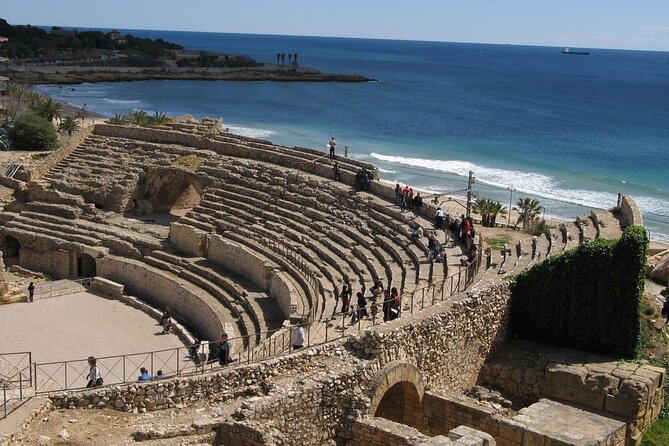
This is one of the easiest “yes” stops on the day. You get sea views over the port, the beach, and the Roman amphitheatre.
It’s about 15 minutes, and admission is included. Think of it as a viewpoint that helps you connect the ruins you’ll see next with the water they sit beside.
The Roman Big Guns: Amphitheatre, Circus, and Pretorio Tower
Tarraco Amphitheatre
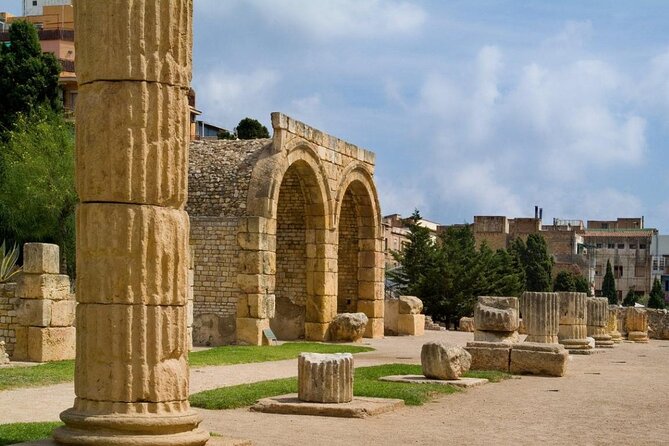
This Roman amphitheatre sits close to the sea, outside the walls of the Roman city. It’s part of UNESCO World Heritage. The tour gives it about 20 minutes.
But here’s the catch: admission is not included. Based on the provided costs, budget €7 per person for the amphitheatre/circus ticket category (you’ll see this again at Circ Roma). If you want the amphitheatre to feel meaningful, try to plan for that ticket cost ahead of time rather than treating it like an optional expense.
Parc del Miracle
Right in front of the sea, Parc del Miracle pairs nicely with the amphitheatre. You get an authentic Roman garden feel, with exceptional views of the amphitheatre nearby.
It’s about 10 minutes, and admission is included. This is a good “sit, look, and absorb” stop—especially if you’ve already done several ruin-heavy minutes in a row.
Circ Roma (Roman Circus)
Then you move to the Roman circus, called Circ Roma. It was built thanks to the Concilium Provinciae Hispaniae Citerioris, a yearly meeting of provincial representatives. It’s also part of UNESCO World Heritage.
You’ll spend about 20 minutes here, but admission is not included. So again, the €7 per person ticket cost matters if you want to access the sites.
Torre del Pretorio Romana
This Roman tower sits around 73 AD and connected the Lower City with the forum, spanning through the circus area.
The stop is short (about 5 minutes) and admission is not included. Still, it helps you understand how Roman Tarraco was laid out, not just where single monuments stand.
Medieval Tarragona Layers: Pla de la Seu, Cathedral, Walls, and Roman Walk
This is where Tarragona gets more than Roman. It becomes layered: Roman ground, medieval streets, and the cathedral view over it all.
Pla de la Seu
About 30 minutes here, and it’s free. Pla de la Seu preserves a strong medieval atmosphere. You’ll see the Cathedral above, plus Gothic mansions and places like the old rectory.
This stop is valuable because it slows the day down. It’s also where you can appreciate how the city grew on top of older sacred spaces, including Roman imperial cult traditions and later religious layers.
Tarragona Cathedral (Early Gothic)
The Catedral Basílica Metropolitana y Primada de Santa Tecla is built in Early Gothic style and sits on top of older structures: a Roman temple dedicated to the imperial cult, a Visigoth cathedral, and an Arab mosque site.
You get about 20 minutes. Admission is not included, with a listed cost of €5 per person. If you like cathedrals and religious architecture, this is the moment to decide if it’s worth paying. If you’re burned out by interiors, you can still enjoy the exterior and setting.
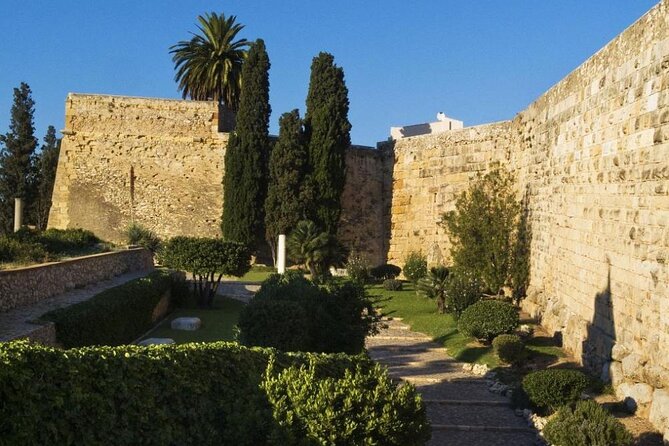
Murallas de Tarragona (Roman-origin walls)
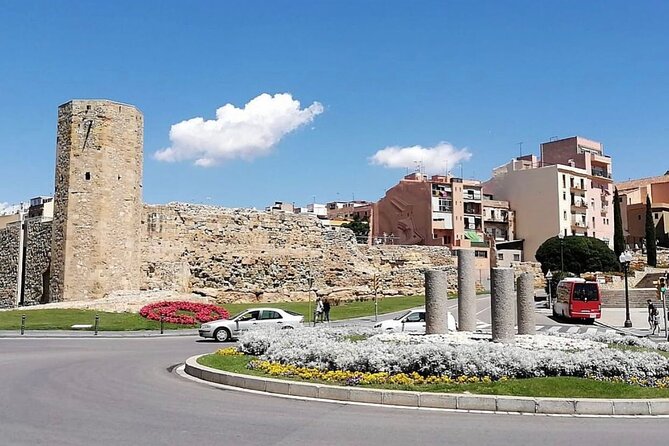
Now you get free time (about 10 minutes) around the city enclosure with Roman origin. It’s UNESCO and described as the oldest construction of Roman Tarraco.
This works well after the cathedral stop because walls explain movement—where people could go and what protected the old city.
Passeig Arqueològic (Archaeological Walk)
The Passeig Arqueològic runs along the kilometre of Roman wall surrounding the old city, with both the original wall and later countermure additions.
You spend about 30 minutes, and it’s free. The tour notes you can see additions and visit towers of the Archbishop and tower of Minerva. Even when you’re not going inside everything, a walk like this gives you the “city scale” understanding that photos can’t.
Beyond the City: Arch of Bará and Roc de Sant Gaietà
This part of the day is about expanding the Roman footprint and getting out toward the coast.
Arch of Bará (Triumphal Arch)
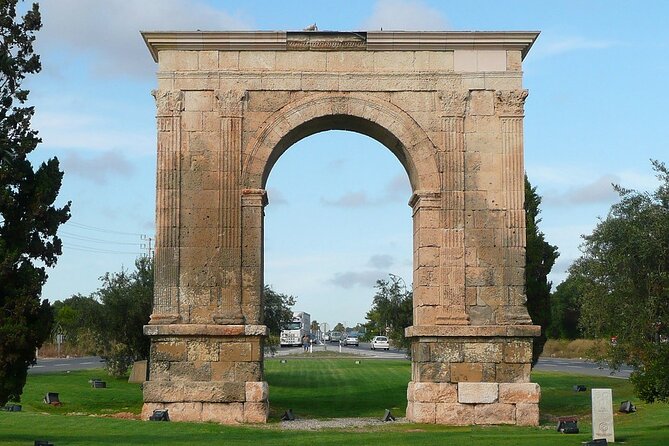
The Arc de Bará is a Roman triumphal arch built around 20 km north-east from Tarragona, in the village of Roda de Bará. It belongs to the archaeological group of Tarraco and is UNESCO-listed.
The stop is listed without an included admission fee, so it’s part of the day flow rather than a ticket-heavy requirement. You get a short visit, which is enough for the basics and a photo from the right angle.
Roc de Sant Gaietà
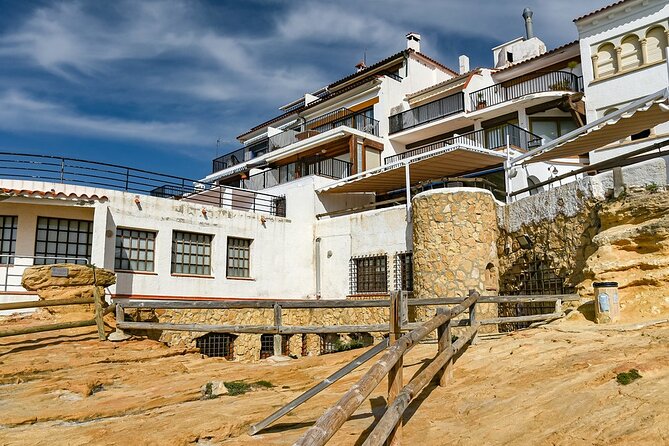
This is a more unusual stop: a Mediterranean-style fishermen villa complex in Roda de Bará called Roc de Sant Gaietà. Construction began in 1964 and ended in 1972, and the streets include styles described as Romanesque, Arabic, and Gothic.
You get about 45 minutes and it’s free. This is the “breathing out” stop after dense Roman sites. It also gives you something that feels less like archaeology and more like a place with character and design.
Sitges: The Beach Shift After Tarragona
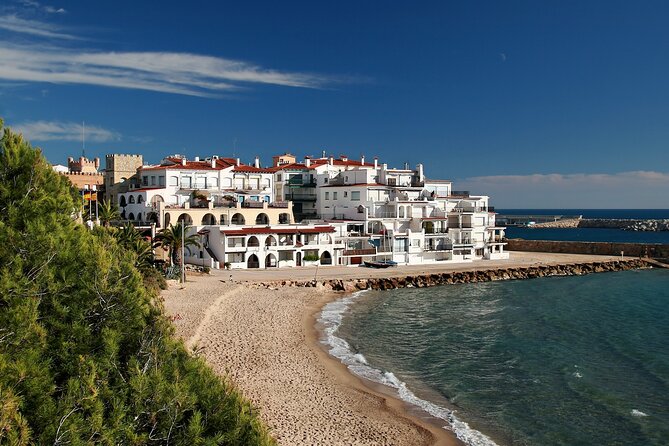
After Roman ruins, Sitges feels like a reward. It’s a coastal city in Catalonia, south-east of Barcelona, surrounded by the Garraf Natural Park. Sitges is known for Mediterranean beaches and a promenade lined with big mansions. Its old town and streets are full of shops, restaurants, and bars, including a gay scene.
Sitges Old Town Time (about 1 hour)
You get about 1 hour here, free admission. That’s enough to wander the streets, check out storefronts, and decide how much time you want to spend near the water.
Passeig Marítim (2.5 km coastal walk)
This is a standout practical add-on: the Paseo Marítimo is described as calming and captivating, about 2.5 km, starting at the Church of San Bartolomé and ending at the Hotel Terramar.
It’s about 15 minutes, and admission is included. You don’t need long to get the feel, and the walk sets you up for great sea views without turning your day into a marathon.
Church of Sant Bartomeu & Santa Tecla
This church is the parochial church of Sitges, built in the 17th century with late modifications. It has that iconic asymmetric silhouette above a hill, overlooking the beach.
The stop is about 15 minutes, admission free.
Palau de Maricel (Maricel Palace)
If you want a bit more culture, this is the add-on. The Maricel Palace (Maricel de Terra) is part of the novecentista artistic complex and housed between 1913 and 1916. The tour gives it about 10 minutes, and admission is not included, with a listed cost of €10 per person.
You’ll also see the broader museum context mentioned for Sitges: Museo Maricel and Museo del Cau Ferrat are noted as places with Catalan and Spanish artworks. The tour doesn’t list museum admissions beyond Palau de Maricel, so this is where you decide if you want to pay for a specific building versus just soaking up the town.
What I Think Works Best for Different Types of Travelers
This tour is a strong match if:
- you want Roman UNESCO highlights without planning your own transportation across Tarragona
- you like viewpoint stops and walking segments that let you connect ruins to the sea
- you’re traveling as a group (up to 7) and can split the fixed cost
- you want a day that ends by the water instead of another full day inside museums
It’s less ideal if:
- you want long timed entries inside major monuments beyond brief stops
- you’re sensitive to ticket add-ons for amphitheatre/circus, cathedral, and Palau de Maricel
- you prefer a dedicated guide walking inside every site without self-navigation moments (some parts feel more like driver-led storytelling plus your own exploring)
Should You Book This Tarragona and Sitges Full-Day Tour?
I’d book it if your ideal day looks like: Roman power in the morning, coastal views in the middle, and a relaxed Sitges finish. The combination is smart, and the private car reduces friction enough that you actually get to enjoy the stops instead of racing between them.
I’d skip or at least rethink it if you’re chasing deep museum time or you want everything included for one flat price. The ticket mix is real, and the day moves quickly at multiple points. If you’re okay planning for those admissions and you like short, scenic stops, this route can feel like a well-spent day rather than a check-the-box marathon.
If you book, do one thing that helps: decide in advance which paid sites you care about most. That way, when you reach the amphitheatre/circus, the cathedral, or Palau de Maricel, you can make the call fast and keep your momentum.
FAQ
How long is the Tarragona and Sitges day trip?
It runs for about 8 hours.
What is the group size limit?
It’s priced for a group of up to 7 people.
Is pickup offered?
Yes. Pickup is offered from a pick-up point in Barcelona City, the Port, and the Airport.
What language is the tour offered in?
English.
Is lunch included?
No. Lunch is not included, and a lunch menu is listed at €15–€30.
Are tickets for the Tarragona amphitheatre and Roman circus included?
No. Admission fees for the amphitheatre and Roman circus are listed as €7.00 per person.
Is the Tarragona Cathedral admission included?
No. The cathedral admission is listed as €5.00 per person.
Is Palau de Maricel admission included?
No. Palau de Maricel admission is listed as €10.00 per person.
What’s included in the tour besides transport?
Private transportation, air-conditioned vehicle, bottled water, and baby chairs and boosters for children on demand.
Can I cancel for a full refund?
Yes. Free cancellation is available up to 24 hours in advance for a full refund.