REVIEW · BARCELONA
Columbus Monument Access With Barcelona Seaside Guided Tour
Book on Viator →Operated by ExperienceFirst · Bookable on Viator
Barcelona’s harbor-to-Columbus views feel like a movie, and this guided walk connects pop art and working port history in about 90 minutes. I especially love the first big visual hit: La Cara de Barcelona (El Cap de Barcelona), Roy Lichtenstein’s pop-art sculpture that sets the tone for a day of art and maritime stories.
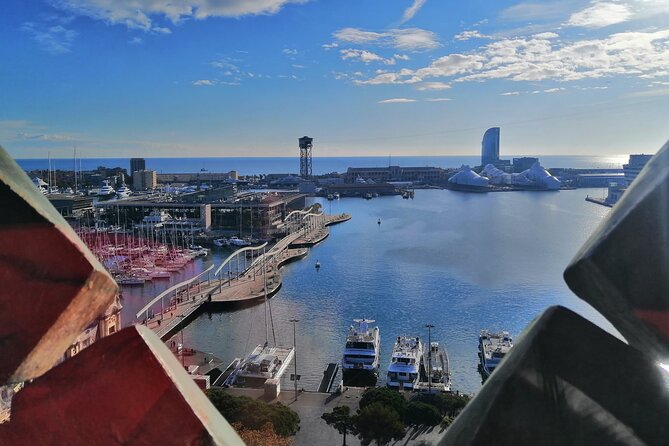
My second favorite part is the payoff at the end. You get Columbus Monument entry plus elevator access, so you can aim for those high, 360-degree views without everything turning into an all-stairs mission. The only real consideration: after the guide gets you to the monument entrance, you do the rest on your own, so if you’re hoping for a long guided time inside the tower, this one is more of a walk-and-view combo than a slow museum session.
In This Review
- Key things you’ll like
- Port-to-Columbus in 90 minutes: a smart way to get oriented
- Where the tour starts (and how to think about the pace)
- El Cap de Barcelona: pop art at street level with Olympic roots
- Port Vell: the old port feeling, without needing a time machine
- Rambla de Mar: the movable bridge that changes how you experience the harbor
- Drassanes Reials (Royal Shipyards): why Aragón and naval power belong here
- Columbus Monument: included elevator access and a view you can pace yourself with
- Price and value: what $40.48 buys you in real-world terms
- Guides you may encounter: what their style tends to do for the experience
- What to wear and bring for this specific route
- Should you book it? My straight take
- FAQ
- How long is the Columbus Monument Access with Barcelona Seaside Guided Tour?
- What is the tour price?
- Is the tour guided in English?
- Where does the tour start and what time does it begin?
- Where does the tour end?
- Do I need a printed ticket?
- What’s included for the Columbus Monument?
- Are there admission costs at the other stops?
- How big is the group?
- Are service animals allowed?
- Can I cancel for a full refund?
Key things you’ll like
- La Cara de Barcelona pop art by Roy Lichtenstein, tied to the Olympic Games
- Port Vell waterfront that reads like Barcelona’s timeline, from medieval roots onward
- Rambla de Mar movable wooden bridge leading you to Maremagnum
- Drassanes Reials (Royal Shipyards) and the naval angle tied to the Kingdom of Aragón
- Columbus Monument access with the elevator plus a shot at wide-open sea and city views
- Small group energy, with a maximum of 20 people and an English guide
Port-to-Columbus in 90 minutes: a smart way to get oriented
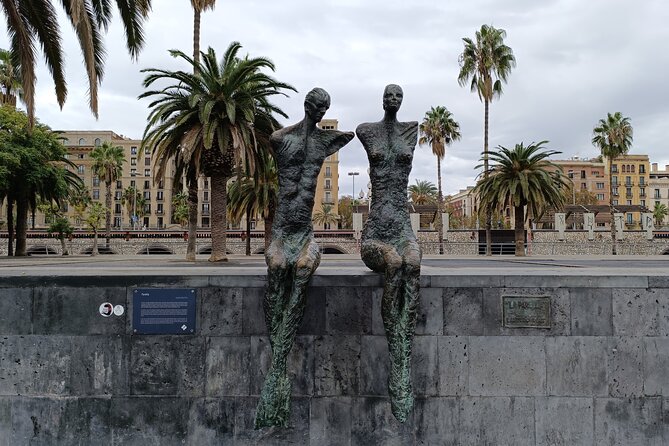
If this is your first morning in Barcelona, you’ll like how quickly this tour helps you place the city. You move from art to the old port to the shipyards, and then finish with the tower that looks back over it all. It’s the kind of route that helps the city make sense fast: where people worked, where they walked, and where the big view lines up.
I also like that the format is simple. You get a guided story for the walking sections, with clear stopping points and short time slots, then you take the final view at your own pace once you reach the entrance.
You can also read our reviews of more guided tours in Barcelona

Where the tour starts (and how to think about the pace)
You start at Pl. de Correus, 1 in Ciutat Vella at 9:00 am, and you end at the Columbus Monument at Plaça Portal de la Pau, s/n. The group is capped at 20 people, and you’ll receive a mobile ticket, which is handy in a city where you’ll be bouncing between phones, maps, and transit.
The pacing is built for seeing a lot without feeling chased. Several guides in past groups were praised for keeping things engaging—one guide (Kristina) was specifically noted for patience on a hot day, and Zeynep was credited with a pacing that worked well even for children. Still, keep your expectations realistic: this is a one-and-a-half-hour walk, so each stop is a moment, not a long sit-down.
El Cap de Barcelona: pop art at street level with Olympic roots
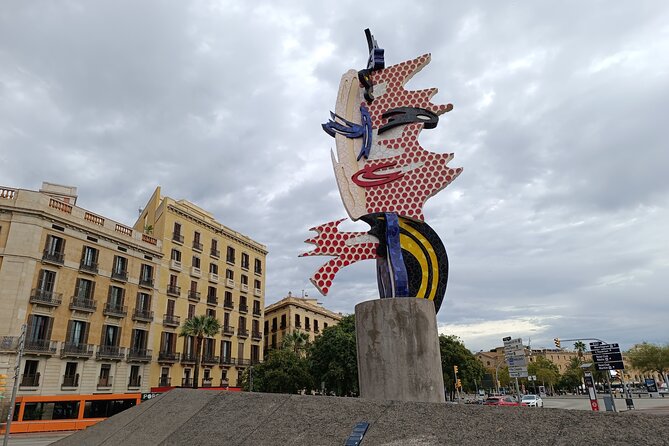
The tour begins with El Cap de Barcelona, also known as La Cara de Barcelona. This is the Roy Lichtenstein pop-art sculpture installed for the 1992 Olympic Games, and it’s an interesting first move because it’s unexpected in a port walk.
Why it works: pop art is visually loud, and it gives you a quick “Barcelona is playful” lesson before you get into medieval stone and shipyard vibes. You’re not just looking at a monument; you’re learning how public art can mark major city moments, even in areas you might otherwise treat as a transit zone.
Port Vell: the old port feeling, without needing a time machine
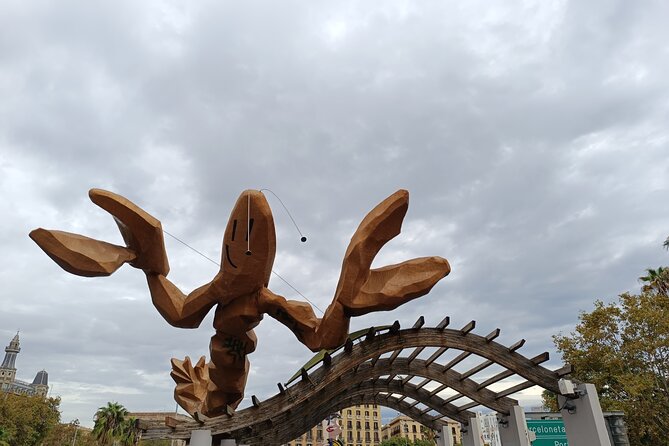
Next you’ll head to Port Vell (Old Port), described as dating back to medieval times. The time at this stop is short, but it’s enough to get your bearings along the waterfront and understand why the port has stayed central to Barcelona’s identity.
What I’d focus on here: the contrast. The waterfront area is where older Barcelona and newer Barcelona bump into each other, and the guide helps you read what you’re looking at—so you’re not just taking photos, you’re getting a framework for why this place matters.
A practical note: this stretch is flat, but it’s still a walk. Comfortable shoes matter, especially if you’re visiting during warmer months.
Rambla de Mar: the movable bridge that changes how you experience the harbor
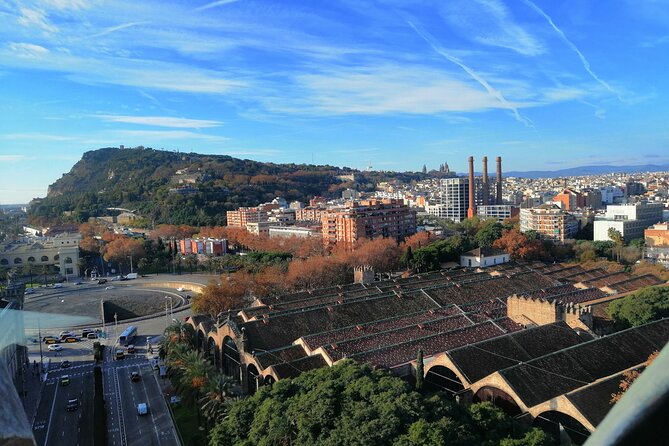
You then cross Rambla del Mar, a movable wooden bridge that leads toward Maremagnum, a lively commercial complex on a small island. This stop is one of the most “hands-on” parts of the route, because you’re physically changing viewpoints as you cross.
The guide’s job here is key. You’re not just walking a bridge—you’re hearing how this area evolved through centuries. That turns a quick crossing into a mini-history lesson about how ports adapt over time and how the city keeps reinventing its edges.
If you like architecture and city design, this is the moment where you’ll appreciate the route planning. You get movement, perspective, and a clear sense of “mainland to port island” in a short time.


Drassanes Reials (Royal Shipyards): why Aragón and naval power belong here
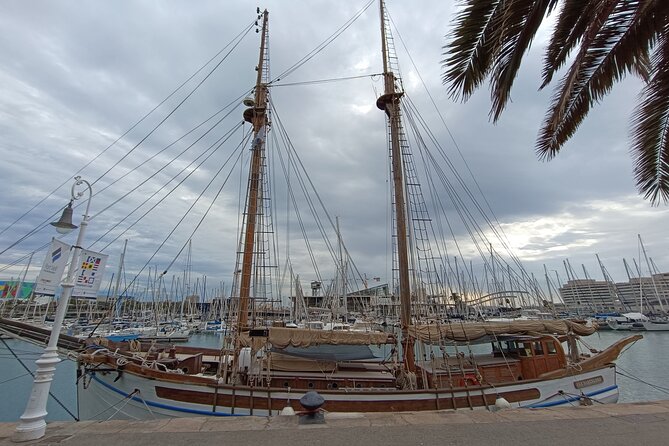
The tour continues around Drassanes Reials, the Royal Shipyards. These date to the 13th century, built to support the royal naval fleet, and the guide ties the maritime story to the ancient Kingdom of Aragón and the region’s naval power.
This is where the tour gets more “why” and less “what.” If you’ve ever wondered how a port city becomes a naval city, this is the answer, explained in human terms. Even if you’re not a history buff, you’ll probably enjoy the way the guide connects local power to the shape of the harbor and the purpose of the shipyards.
There’s also a nice balance here. The first half gives you visuals and scenery; this part gives you meaning. That combo is a big reason people walk away feeling like they understood Barcelona a bit better, not just saw it.
Columbus Monument: included elevator access and a view you can pace yourself with
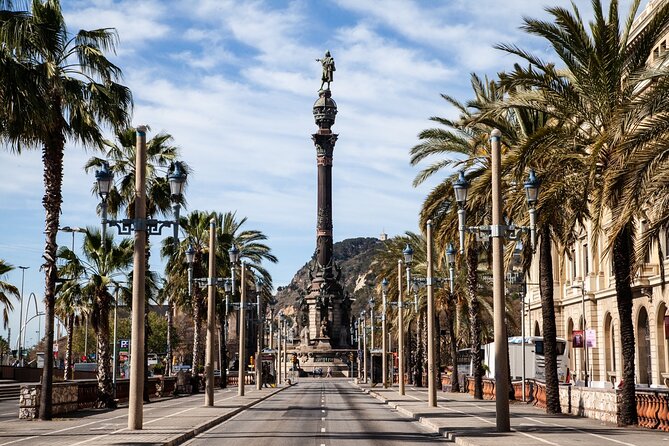
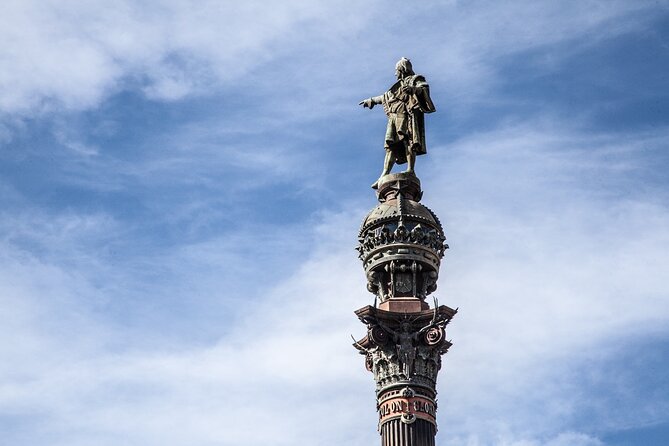
The finale is Mirador de Colom inside the Columbus Monument area. You’ll be brought to the entrance, and from there you can start your ascent for sweeping 360-degree views of Barcelona and the sea.
The value is in the included access. You have entry to the monument and the elevator, which helps a lot if stairs are not your thing. That matters because tower climbs can be a dealbreaker for some people, and here the tour gives you a gentler option.
What makes the monument stop special is that it turns the route into a map. Suddenly, the port walk, the bridges, and the shipyard area can all make visual sense from above. Even if you don’t spend a long time up there, you’ll get that high-level “now I get it” moment.
Price and value: what $40.48 buys you in real-world terms
At $40.48 per person for about 1 hour 30 minutes, you’re paying for three main things:
1) an English guide for multiple high-impact stops,
2) the structural help of knowing where to look and what to listen for, and
3) included monument entry with elevator access.
The other stops are listed as free admissions for the tour’s included visits, which makes the Columbus part the clearest “ticket value” anchor. For a short timeframe, that’s a good deal. You’re not paying extra on the day for every single stop, and you get one paid experience—the tower access—wrapped into the tour price.
One more value point: small group size. A max of 20 people tends to keep questions possible and explanations clear, which is exactly what you want on a port walk where context changes what you see.
Guides you may encounter: what their style tends to do for the experience
The guiding quality is a major highlight. Zeynep is repeatedly praised for being entertaining and for pacing that works for families. Perrine is also mentioned as excellent, turning what could have been a simple viewpoint stop into an actual insight about city life. Other names show up too—Kristina and Christina are noted for keeping explanations clear and interesting.
Even if guide styles differ, the common thread is that they don’t treat the stops like photo ops only. They’re using the route to tell you how this place grew: from seafaring work to city identity to the big panoramic end point.
What to wear and bring for this specific route
Because this is a walking tour along port streets and bridges, plan like you’re doing a coastal morning:
- Wear comfy, grippy shoes for waterfront sidewalks and bridge crossing.
- Bring water, especially if you’re going in warm weather.
- Have your phone charged for the mobile ticket and for maps if you want extra time on your own at the end.
If you’re counting on the elevator for the monument, I’d still be ready to follow staff instructions once you’re inside. The tour includes elevator access, but you’ll still be guided through the space.
Should you book it? My straight take
You should book this tour if:
- you want an efficient first look at Barcelona’s port area with real context,
- you like your sightseeing with explanations (especially maritime and city-evolution themes),
- you care about Columbus Monument access and appreciate elevator help.
You might skip or pair it with something else if:
- you’re hoping for a long, deep visit inside shipyard buildings or a long guided time at the monument itself,
- you prefer a more relaxed, no-rush museum itinerary rather than a stop-by-stop walk.
If you’re trying to balance art, harbor history, and big views in one morning, this hits that sweet spot.
FAQ
How long is the Columbus Monument Access with Barcelona Seaside Guided Tour?
It lasts about 1 hour 30 minutes.
What is the tour price?
The tour costs $40.48 per person.
Is the tour guided in English?
Yes, it’s a guided walking tour in English.
Where does the tour start and what time does it begin?
It starts at Pl. de Correus, 1, Ciutat Vella, Barcelona, at 9:00 am.
Where does the tour end?
The tour ends at the Columbus Monument (Plaça Portal de la Pau, s/n, Ciutat Vella, Barcelona). After that, you can continue your self-guided visit.
Do I need a printed ticket?
No. You’ll use a mobile ticket.
What’s included for the Columbus Monument?
You get entry to the Columbus Monument and elevator access.
Are there admission costs at the other stops?
The stops for El Cap de Barcelona, Port Vell, Rambla del Mar, and Drassanes are listed with free admission for the tour.
How big is the group?
There’s a maximum of 20 travelers.
Are service animals allowed?
Yes, service animals are allowed.
Can I cancel for a full refund?
Yes. You can cancel up to 24 hours in advance for a full refund.