REVIEW · BARCELONA
Barcelona Segway Tour
Book on Viator →Operated by Barcelona Segway Tour · Bookable on Viator
Segway through Barcelona in just two hours. I love the basic training that gets you confident fast, and I love the small-group setup that feels friendly instead of rushed, especially when guides like Edwin and Ruslan keep the ride smooth and explain what you’re actually seeing. You’ll cover a long stretch of the city in one shot, from the Arc de Triomf area down to the waterfront and into the Born.
One thing to consider: if you pay for a longer upgrade, double-check what end time you’re actually getting. A guest reported paying extra for an extended option but feeling the extra time wasn’t reflected in the experience.
In This Review
- Quick hits before you book
- Why a Segway tour is a smart first-look in Barcelona
- Where you meet and how the ride stays efficient
- Segway training and safety: where first-timers usually relax
- Stop-by-stop: Arc de Triomf to the Born, with what each place gives you
- Stops 1–3: Arc de Triomf and the Ciutadella green zone
- Stops 4–7: Port Olímpic, Olympic squares, and the seaside shift
- Stops 8–10: cable car views, Palau de Mar, and the shopping-harbor feel
- Stops 11–14: Port Vell, Basilica de la Mercè, maritime history, and Mirador de Colom
- Stops 15–16: Estació de França, then a longer finish in El Born
- Guides matter: what you can expect from the people running the tour
- Price and value: what $48.37 really buys you
- The longer-tour upgrade question
- What kind of traveler should pick this Segway tour
- Should you book this Barcelona Segway Tour?
- FAQ
- How long is the Barcelona Segway tour?
- Where does the tour start and end?
- What is included in the ticket price?
- Is the tour offered in English?
- What age do you need to ride a Segway in Barcelona?
- How many people are in a group?
- Are meals included?
- Can I choose a time that fits my schedule?
- What is the cancellation policy?
Quick hits before you book

- Training first: helmet on, short practice, then you roll through real streets
- Small group feel: max six people per guide (and 20 travelers total)
- English offered: the tour is available in English
- You cover a lot fast: Olympic waterfront, beaches, cable-car views, harbor sights, then the Born
- Comfort touches: bottle of water plus coffee and/or tea before and after
Why a Segway tour is a smart first-look in Barcelona
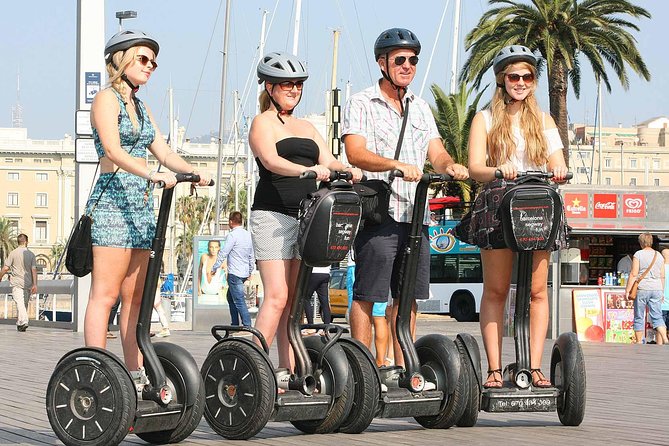
Barcelona is big, and the best parts are spread out. This Segway format is built for getting your bearings quickly. In about two hours, you glide through areas you’d otherwise stitch together with multiple bus or taxi hops.
What I like most is the mix of grand sights and everyday Barcelona. You pass through the Arc de Triomf to the Ciutadella area, then slide into the Olympic-era waterfront, and finish in the Born neighborhood. That’s a lot of variety for one outing, and it helps you decide what to revisit later on your own.
You can also read our reviews of more tours and experiences in Barcelona.



Where you meet and how the ride stays efficient
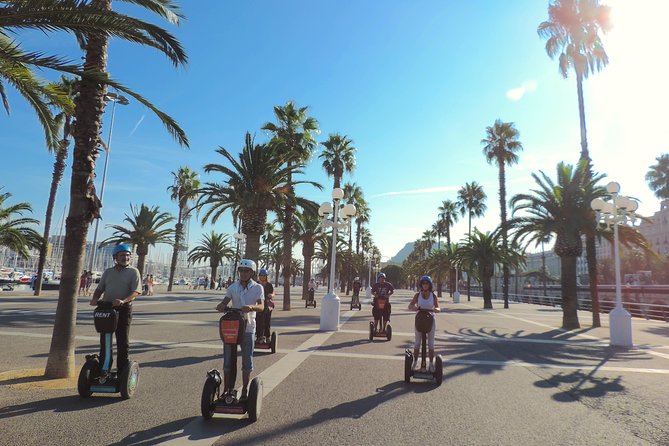
You meet at Passeig de Lluís Companys, 10 (Ciutat Vella) and the tour ends back at the same spot. The tour runs about two hours, and you can pick from a selection of start times that fit your day.
This matters because you’re not paying for “standing around.” Most stops are brief, around five minutes each, so the schedule is about momentum. If you’re the kind of person who wants to linger at every photo spot, you’ll still enjoy it, but you’ll want a plan for follow-up time after the tour.
The tour also keeps things close to public transport, which is useful if you’re pairing it with museums, beach time, or a later dinner in the city.
Segway training and safety: where first-timers usually relax
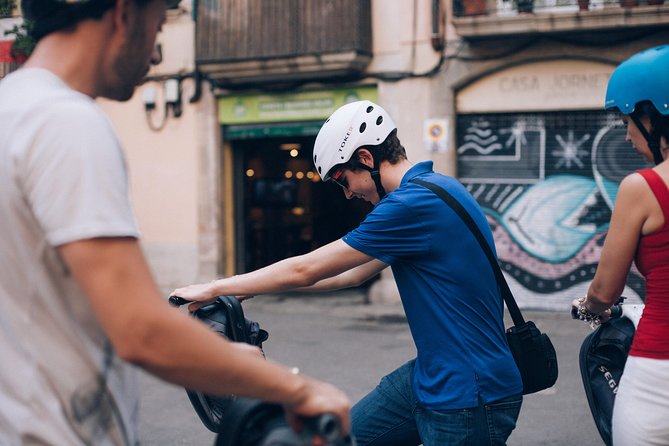
The tour includes basic training plus a helmet, and that’s the part that usually decides whether the experience feels fun or stressful. The training is short, but it’s designed to get you moving with control before you hit the main route.
In the reviews, I saw a consistent theme: the guides pay close attention to nervous riders and first-timers. Names that came up often include Giovanni, Miguel, and Fabio, praised for patience during the learning phase. Another recurring point is that the guides keep the group safe while still letting you get a real sense of speed once you’re comfortable.
If you’re worried about balance, here’s the practical way to think about it: spend the first few minutes taking the training seriously. If you do, the rest of the tour tends to feel like cruising through the city instead of focusing on your footing.
Stop-by-stop: Arc de Triomf to the Born, with what each place gives you
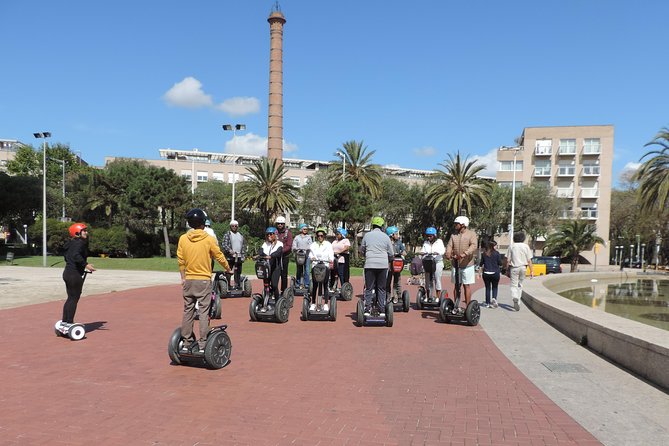
This route is paced for variety. Think of each stop as a quick “label” for the sights, not a long stay.
Stops 1–3: Arc de Triomf and the Ciutadella green zone
Stop 1: Arc de Triomf (Arc de Triomf)
This is your classic start: a tall, ceremonial arch that instantly makes Barcelona feel grand. It’s a clean landmark to orient yourself before the route starts rolling.
Stop 2: Parc de la Ciutadella (Parc de la Ciutadella)
You get a change of mood here, moving from open sight lines into greenery. Even with a short stop, it’s a nice reminder that Barcelona is as much parks as monuments.
Stop 3: Zoo de Barcelona (Barcelona Zoo)
This is more of a landmark glance than a ticket stop. The value is context—this area sits right in the city’s living “system,” not off in some remote theme park zone.
Tradeoff: because each of these is about five minutes, you won’t get long photo sessions or deep details at the park/zoo area. Use this stretch to learn the geography.



Stops 4–7: Port Olímpic, Olympic squares, and the seaside shift
Stop 4: Port Olímpic (Port Olímpic)
Now you’re into the harbor vibe. The Port Olímpic area tends to feel more modern and open, and it’s a perfect place to get rolling smoothly with wide views.
Stop 5: Plaça dels Voluntaris Olímpics (Plaça dels Voluntaris Olímpics)
A quick stop that helps connect the route to the Olympics-era identity of this waterfront stretch.
Stop 6: Platja de la Nova Icària (Platja Nova Icària)
This is where the scenery shifts toward beach life. It’s a great moment to see how the coastline sits inside the city grid.
Stop 7: Playa de La Barceloneta (Playa de La Barceloneta)
Barceloneta is one of Barcelona’s best-known beach areas. Even if you don’t stop long enough to relax, the short glide-by helps you understand the shoreline layout for later.
Tradeoff: beach stops are brief. If you want sand time, plan a separate block after the tour.
Stops 8–10: cable car views, Palau de Mar, and the shopping-harbor feel
Stop 8: Telefèric de Montjuïc (Montjuïc Cable Car), Torre de Sant Sebastià
This is a viewpoint moment and a geography lesson. You see how Montjuïc connects to the harbor area, and you get a feel for the elevation relationship between neighborhoods.
Stop 9: La Tagliatella (Palau de Mar)
This stop is tied to the Palau de Mar area. Even if you’re not dining on the spot, it’s useful to know where these big public spaces sit along the waterfront.
Stop 10: Maremagnum (Maremagnum)
Maremagnum is a recognizable harbor-side hub. The tour stop helps you map it mentally so you know where to wander later.
Stops 11–14: Port Vell, Basilica de la Mercè, maritime history, and Mirador de Colom
Stop 11: Port Vell (Port Vell Barcelone)
Port Vell is the “center of the harbor.” You’ll get a sense of the boats, the promenade energy, and how the waterfront works as a public space.
Stop 12: Basilica of Our Lady of Mercy (Basílica de la Mercè)
A strong landmark jump from the open harbor areas to a more monumental feel. It’s the kind of sight that helps the ride feel like more than just scenery.
Stop 13: Museu Maritim de Barcelona (Reials Drassanes)
This gives you a direct link to maritime Barcelona. The stop is short, but it points you toward an area that makes sense if you’re into ship-and-trade history.
Stop 14: Mirador de Colom (Mirador de Colón)
This is about views. Colom’s lookout area typically lets you see the waterfront flow, which is one reason it’s a good stopping point on a mobility-friendly tour.
Tradeoff: short stays at cultural and maritime stops mean you’ll likely remember the location more than the details. That’s not bad—it’s often the goal. It tells you what to come back for when you have time.
Stops 15–16: Estació de França, then a longer finish in El Born
Stop 15: Estació de Franca (Estació de França)
This is a transportation landmark and a useful one for understanding how the city connects inland to the waterfront.
Stop 16: El Born (20 minutes)
This is the longest stop on the itinerary. It’s a clear finish because El Born is where you want to wander on foot afterward—small streets, atmosphere, and plenty of reasons to keep walking.
If you’re building your itinerary, this is one of the best endings: you glide in, then you can transition into a self-guided stroll without the tour needing to spend time walking with you.
Guides matter: what you can expect from the people running the tour
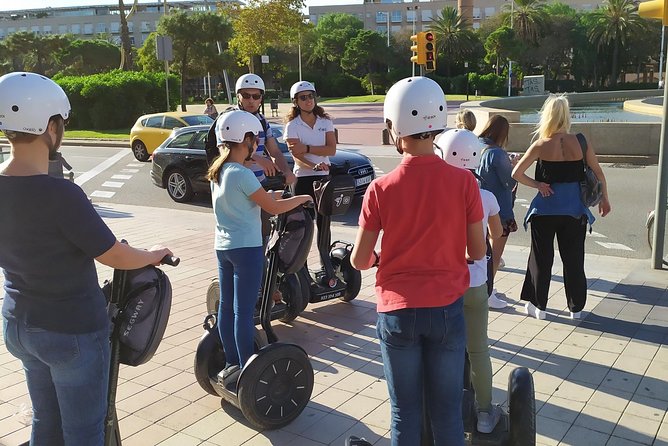
This tour stands or falls on the guide. The best experiences described in the reviews weren’t only about sights. They were about guidance style: patience, clarity, humor, and good local pointers.
Names that came up with strong praise include Edwin, Ruslan, Giovanni, Danny, Arnau, Katherine, Miguel, and Oriol. Common strengths across guides include:
- teaching riders until they feel steady on the Segway
- mixing simple explanations with real city context
- recommending places to eat and drink after the ride
One guest mentioned a guide taking photos during stops, which is a small thing but helpful. If you want a quick set of shots without juggling your camera the entire time, that’s a bonus.
Also, since the tour is limited to small numbers, you’re more likely to get individual attention during the training and in traffic-adjacent moments.
Price and value: what $48.37 really buys you
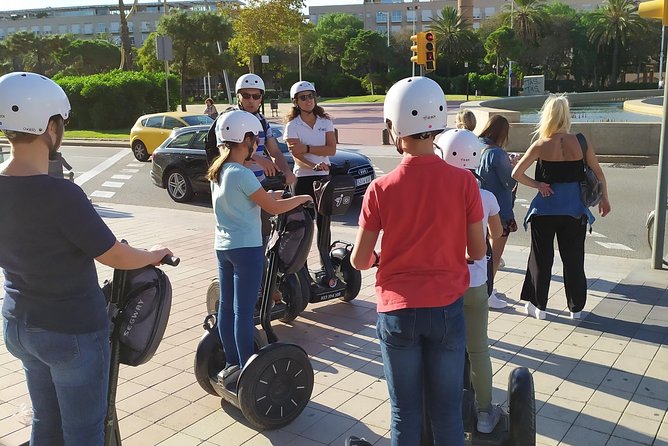
At about $48.37 per person, the big value is that you’re paying for equipment plus time. This isn’t just a walking tour with a novelty vehicle. You get:
- Segway use
- helmet
- basic training
- local guide
- bottle of water
- coffee and/or tea before and after
What you don’t get is food (unless specified). So you’re buying transportation + guided orientation, not a full-day meal plan.
Is it worth it? For me, it usually is when you want a first pass across multiple neighborhoods and you’d rather spend your walking time later. If you already know the route and you only want one or two areas, a walking tour might be cheaper. If you’re short on time and want to cover a wide swath, the Segway format is a fast, fun way to do it.
The longer-tour upgrade question
There is an upgrade option to see more of Barcelona. One guest said they paid extra for an extended version and felt the time didn’t match what they expected. If you’re paying for the longer tour, I’d verify the duration shown on your booking screen so your plan lines up with your day.
What kind of traveler should pick this Segway tour
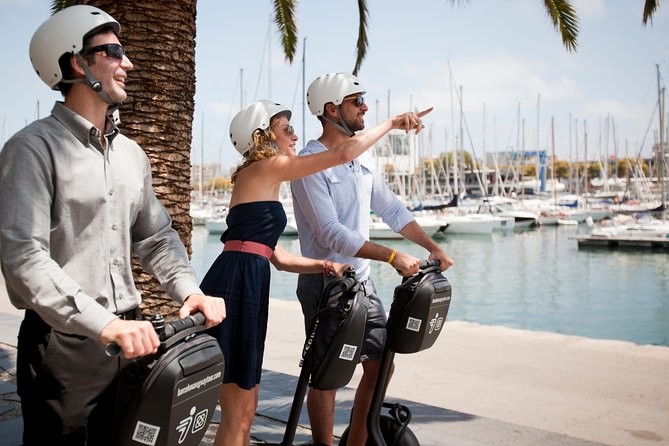
This fits best if you want:
- a fast orientation to Barcelona
- an active way to cover places like the Olympic waterfront and the Born
- help navigating the city’s layout without getting bogged down in logistics
It also helps if you enjoy learning while moving. The itinerary is built with lots of short “stops,” so the tour works well for people who like motion.
It’s not ideal if you want slow museum time or hours of deep stops. Also note: in Barcelona, Segways are permitted for individuals over age 16. If you’re traveling with teens, make sure everyone meets the age rule.
If you’re a total beginner, the training is meant to get you going, but you should still expect a short learning curve before you fully cruise.
Should you book this Barcelona Segway Tour?
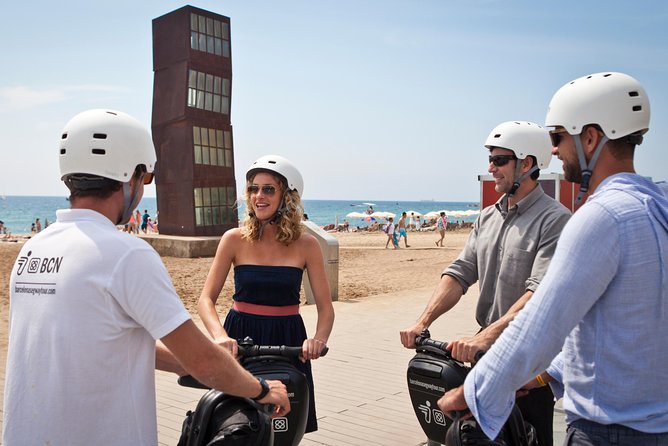
Yes, if you want a fun, time-efficient introduction that sweeps from Arc de Triomf through the harbor and into El Born. The value is strong for the inclusions, and the guide quality seems to be the real differentiator, with lots of praise for patience and humor during the ride.
Consider this as well:
- If you’re paying for the longer upgrade, confirm the actual duration in your booking so you’re not guessing.
- If you hate short stops, plan on doing a second pass on foot around the areas that click for you, especially El Born.
If you want to get your bearings fast and still feel like you did something playful and memorable, this is a very sensible pick for Barcelona.
FAQ
How long is the Barcelona Segway tour?
The tour is about 2 hours (approx.).
Where does the tour start and end?
It starts at Passeig de Lluís Companys, 10, Ciutat Vella, 08018 Barcelona, Spain, and ends back at the same meeting point.
What is included in the ticket price?
Your ticket includes Segway use, a local guide, a helmet, basic training, a bottle of water, and coffee and/or tea before and after the tour.
Is the tour offered in English?
Yes, the tour is offered in English.
What age do you need to ride a Segway in Barcelona?
Segway use is permitted for individuals over the age of 16.
How many people are in a group?
The tour operates with a maximum of six people per guide, and the overall maximum is 20 travelers.
Are meals included?
Food and drinks are not included unless specified.
Can I choose a time that fits my schedule?
Yes. You select from a variety of start times.
What is the cancellation policy?
Free cancellation is available up to 24 hours in advance for a full refund. If you cancel less than 24 hours before the start time, you will not receive a refund.