REVIEW · BARCELONA
Barcelona: Killers, Witches & Inquisition Old Town (day/eve)
Book on GetYourGuide →Operated by Nostos Tours · Bookable on GetYourGuide
Barcelona’s dark legends walk alongside the light. This 2-hour walking tour threads the Spanish Inquisition, torture, public executions, and “the Vampire of Barcelona” through the Gothic Old Town’s narrow streets and plazas. I like that it pushes you to ask what’s documented versus what’s myth-shaped.
I also like the way the stories are told. Guides such as Onno have a knack for animated, theatrical storytelling that mixes local “witch” tales with inquisitor-era fear—without turning it into pure shock value. You’ll see some of the Old Town’s atmospheric corners while hearing the darker reasons they gained their reputation.
One drawback: this is dark, and it’s physical. You walk on uneven surfaces, and the tour is not suitable for children under 12, pregnant women, people with heart problems, or those with mobility impairments.
In This Review
- Key highlights to know before you go
- A Gothic Quarter walk built for fear and atmosphere
- Meeting at Plaça de Catalunya and finding your guide fast
- How the €1 guide headset keeps the stories audible in tight streets
- What you’ll hear about the Spanish Inquisition in Barcelona
- Witch trials in the 16th and 17th centuries: fear dressed up as truth
- The unsettling Vampire of Barcelona legend—and the history vs myth challenge
- Pacing on a 2-hour route: listening matters more than clock-watching
- Value check: why $21 makes sense for a guided dark-history walk
- Who should book, and who should reconsider
- Practical tips that make the experience smoother
- Should you book Killers, Witches & Inquisition in Barcelona?
- FAQ
- How long is the Barcelona Killers, Witches & Inquisition Old Town tour?
- What’s the meeting point in Barcelona?
- Where does the tour end?
- Is the tour in English?
- Is a headset included?
- Is flash photography allowed?
- Is the tour wheelchair accessible?
- Who is the tour not suitable for?
- Is there free cancellation?
- How much does it cost?
Key highlights to know before you go
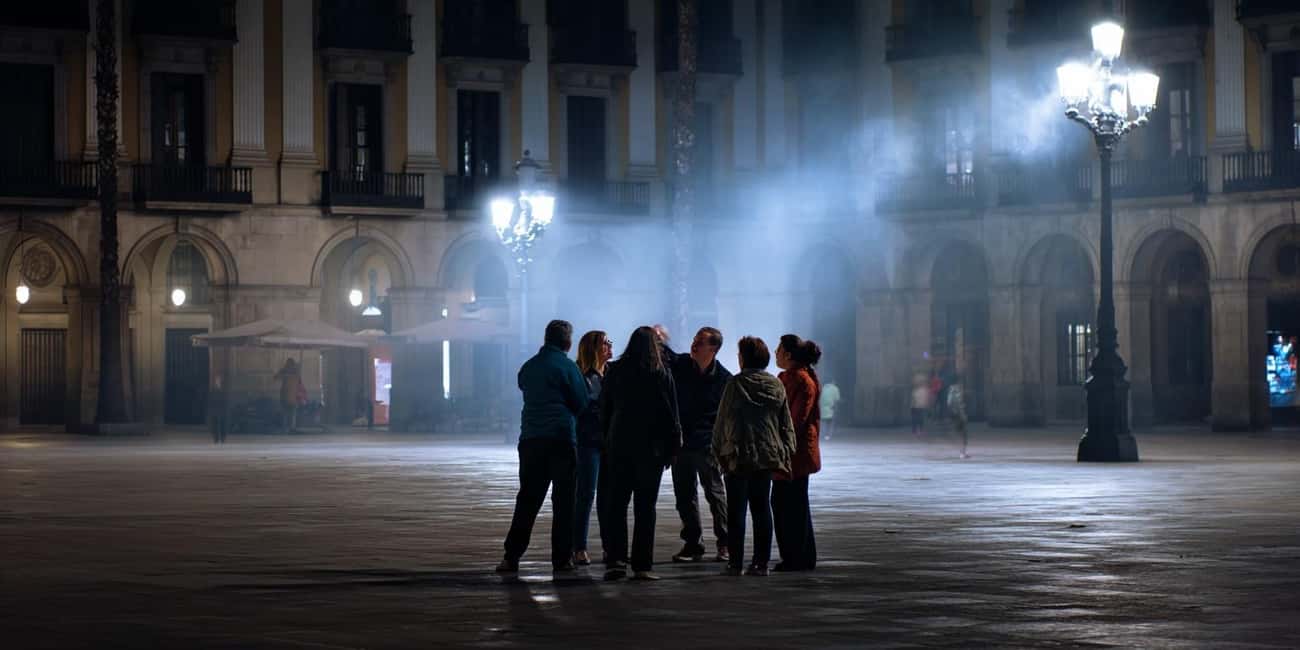
- Gothic Quarter lanes and historic plazas make the setting feel instantly right for Inquisition-era tales
- Stories of torture and public executions give the persecution history weight and tone
- Witch trial stories (16th and 17th centuries) focus on fear, accusation, and paranoia
- The Vampire of Barcelona theme raises the big question: where does history stop and legend begin
- Guides with flair like Onno keep it lively, with a careful mix of fact and folklore
- A paid €1 guide headset helps you hear clearly on tight streets where voices carry poorly
A Gothic Quarter walk built for fear and atmosphere
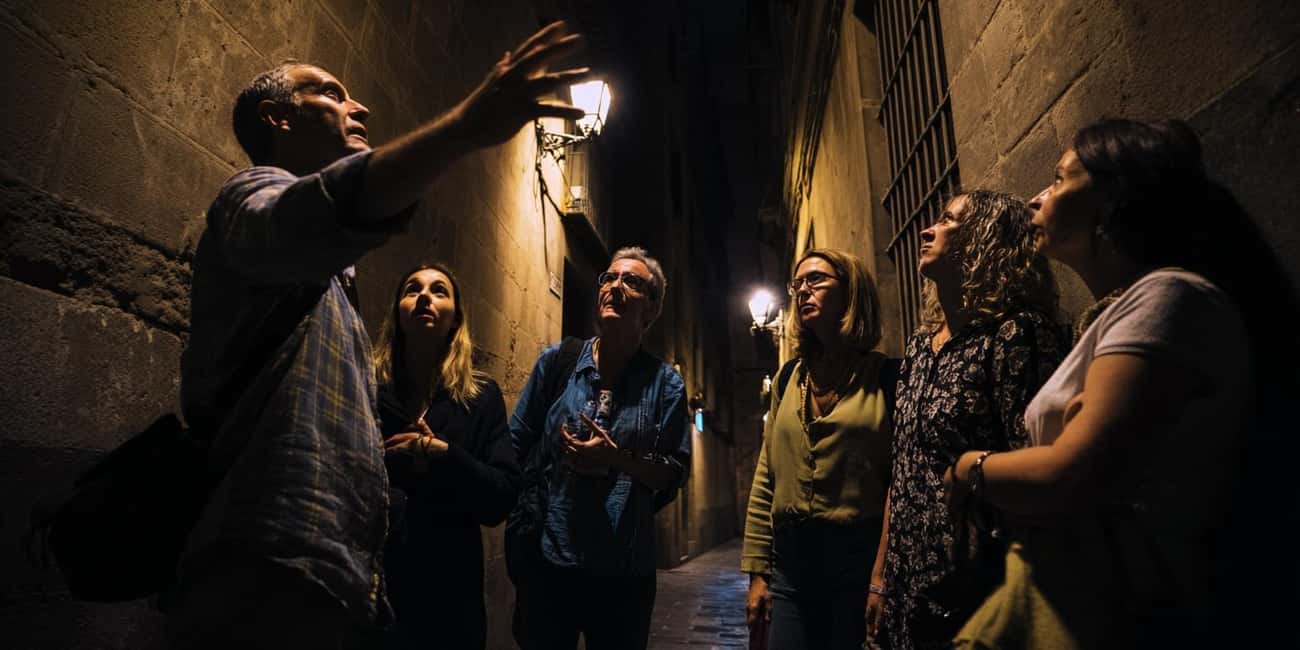
Barcelona’s Gothic Quarter is already dramatic. Even in daylight, narrow lanes and old stone plazas make you slow down without trying. On this Killers, Witches & Inquisition tour, that built-in mood becomes part of the storytelling engine.
Instead of treating the area like a museum, you’re moving through it as people did when fear traveled faster than facts. The tour focuses on Barcelona as a place where faith and power shaped daily life—and where accusations could become punishment. That’s why it’s not just about the Inquisition as an idea. You’re walking where the echoes of that mindset linger, and the guide keeps steering your attention back to the human side of the terror: fear, rumor, and authority.
You’ll also get a clear sense that the tour isn’t trying to sell you one version of the past. It keeps blurring the border between history and myth, especially when legends are attached to real streets. The goal feels less like memorizing dates and more like learning how stories survive—then challenging yourself to sort the signal from the noise.
You can also read our reviews of more tours and experiences in Barcelona.

Meeting at Plaça de Catalunya and finding your guide fast
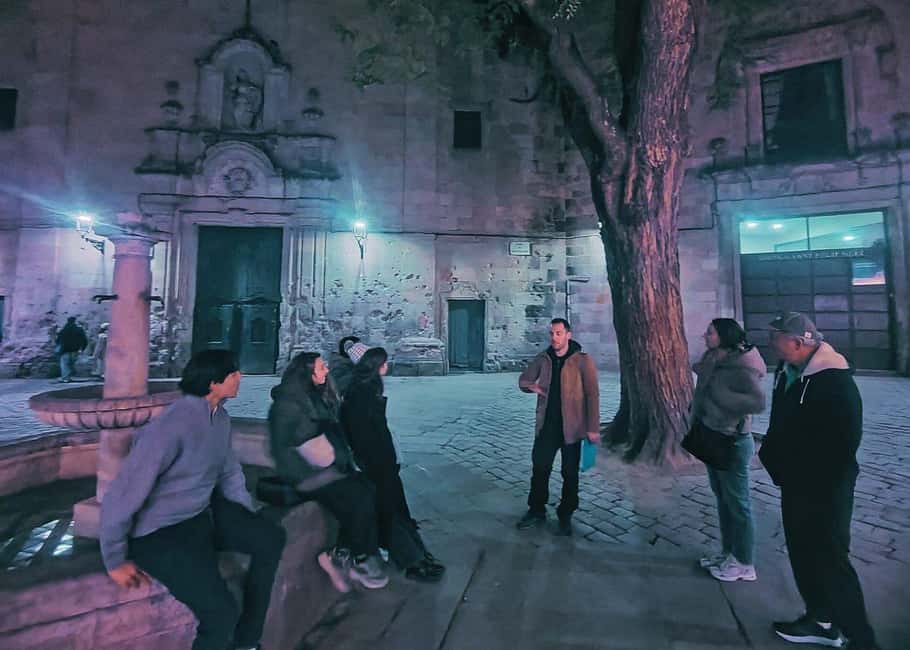
Logistics matter on a walking tour like this. The meeting point is simple: the sidewalk in front of Foot Locker on Plaça de Catalunya. Look for the guide holding a white umbrella. That small detail saves you a lot of awkward searching.
The tour runs for 2 hours, in a day/evening schedule (check available starting times). If you’re choosing between daytime and evening, think about what you want most. Day is easier for visuals and walking comfort. Evening can feel more aligned with the “where history ends and myth begins” vibe, especially when ghost-story and true-crime elements show up in the narration.
Because you’re moving through tight streets, the route benefits from good sound. The provider includes a professional guide, but audio clarity depends on you having the right gear.
How the €1 guide headset keeps the stories audible in tight streets
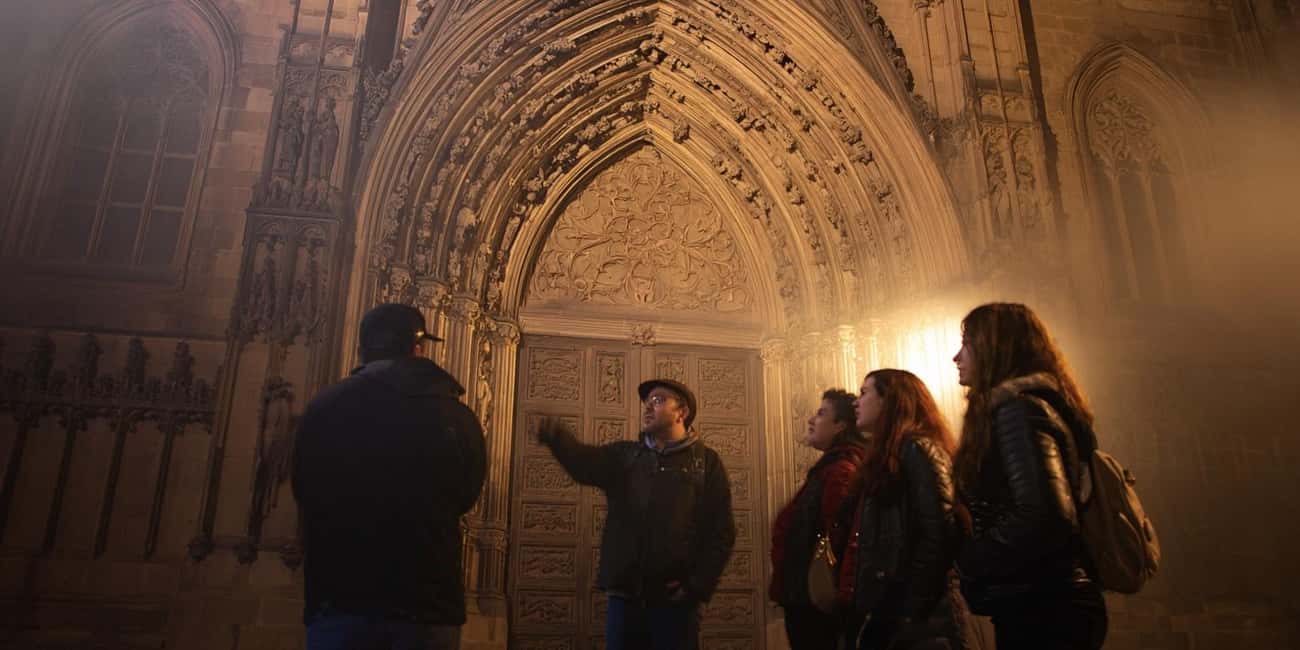
One key detail that affects your experience: the tour uses a guide-radio headset. This is not included, and it costs €1 per person, paid at the start of the tour. If you forget that euro, you may end up straining to catch every line—or letting important parts of the story slide past you.
On narrow streets and busy plazas, it’s hard to hear a guide without help. So I treat the headset as part of the value, not an add-on inconvenience. Bring cash or be ready to pay right away, then you can focus on listening instead of playing guessing games.
Also, there’s one photo rule: flash photography isn’t allowed. If you’re the type who takes quick “proof” shots, plan around that. The storytelling will feel more effective if you keep your camera away and stay present—especially when the tone turns grim.
What you’ll hear about the Spanish Inquisition in Barcelona
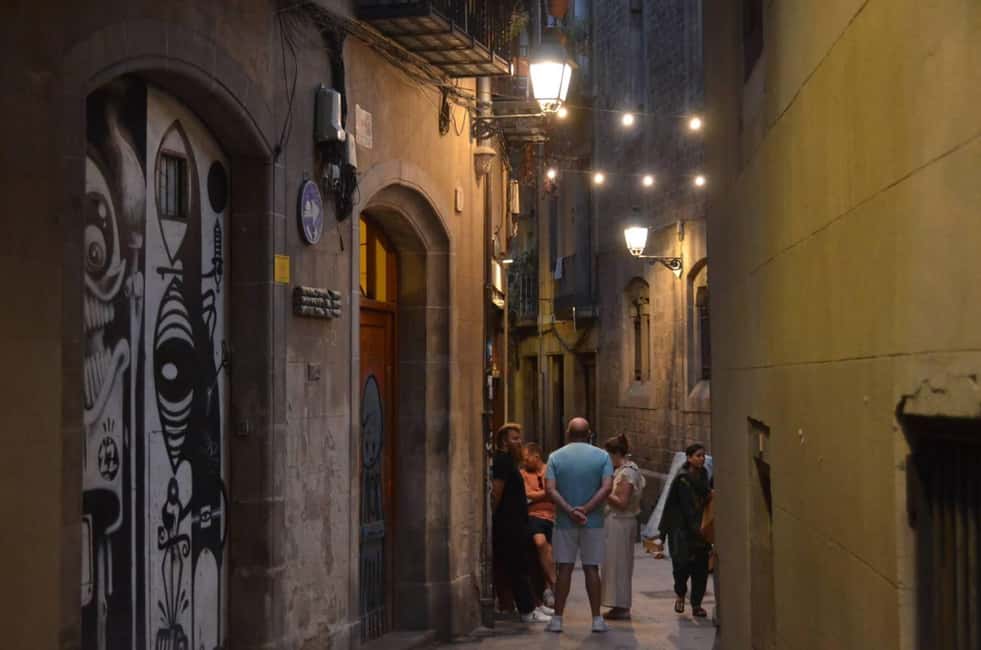
The Spanish Inquisition is the tour’s headline theme, and the guide sets expectations early: this is about persecution, not vibes. You’ll hear stories tied to relentless inquisitors, torture, and public executions. The point isn’t only what happened—it’s how systems of fear get normalized, then enforced.
As you walk through the Gothic Old Town, you’re basically being shown a pattern. The guide connects power to place: how authority uses punishment to control belief, how fear spreads, and how the language of certainty can crush people caught in the wrong accusation.
This is also where the tour’s balance matters. Some tours about dark history push either too far into theatrical exaggeration or too far into dry narration. Here, the intent is to blur the boundary between record and legend so you confront a real travel question: how much of what we repeat is documented, and how much is retold until it becomes story-shaped?
If you enjoy true crime storytelling or historical folklore, you’ll likely like the way the tour uses those themes without pretending they’re the same thing. It encourages you to hold two ideas at once: the cruelty can be real, and the storytelling around it can grow teeth.
Witch trials in the 16th and 17th centuries: fear dressed up as truth
After the Inquisition theme, the tour shifts toward witch trials from the 16th and 17th centuries. The focus is on women accused of everything from summoning storms to communing with the devil.
The important nuance is that the guide frames these accusations as rooted more in paranoia than truth. That’s the part I’d highlight for your planning: this isn’t just a list of claims. It’s about how fear finds a target, then uses belief language to justify punishment.
As you move through the Old Town’s alley-like spaces and historic plazas, these stories land differently. In a classroom, witch trial history can feel distant. In the Gothic Quarter, the environment makes the accusations feel more immediate—like you can almost see how rumor would travel from mouth to mouth in the time before mass communication.
One practical consideration: if you’re sensitive to grim topics, decide ahead of time how you want to handle it. The tour is described as “kind of gruesome” in visitor feedback, so it doesn’t tone down the darkness just to keep things comfortable.


The unsettling Vampire of Barcelona legend—and the history vs myth challenge
Then comes the tour’s signature twist: the Vampire of Barcelona. This is the part where the tour leans into legend and turns your listening into problem-solving.
You’ll confront a question the tour keeps returning to: where does history end, and where do echoes of myth begin? That’s a surprisingly satisfying way to travel through a city like Barcelona, where centuries overlap and stories get layered on top of each other.
I like this element because it turns a “scary” theme into a thinking exercise. The legend isn’t presented as pure fantasy with no connection to place. Instead, it’s treated as a story that grew out of fear, meaning, and local imagination—then stuck.
If you enjoy spooky narratives but also like grounding them in how cities construct meaning over time, this part is often the highlight. You get a darker angle on the Gothic Quarter without needing supernatural belief to enjoy the atmosphere.
Pacing on a 2-hour route: listening matters more than clock-watching
You’re walking a route in the Old Town that stays close to the story world: narrow alleys, historic plazas, and the kind of stone-and-shadow scenery that naturally supports this theme. The tour is 2 hours, so it’s not trying to be a marathon through Barcelona’s entire center.
Because the surfaces can be uneven, wear comfortable walking shoes. This matters more than usual on haunted-history-style routes, since your attention will likely be split between watching your footing and following the plot thread.
Bring a water bottle. It’s not because you’ll be sprinting; it’s because 2 hours of focused listening plus walking adds up, especially if you choose an evening start. Small practical steps keep you from cutting your own experience short.
The pacing is built around “stop and story” moments. That’s why the headset helps and why listening is key. If you zone out for too long to check your phone or chase photos, you’ll miss the connective tissue that makes the tour feel coherent.
Value check: why $21 makes sense for a guided dark-history walk
Price is $21 per person, and the tour includes a professional guide. You’re also paying for more than movement through a neighborhood. You’re paying for interpretation: the guide turns streets into story, and story into context—plus they manage the audio with a guide-radio system that costs €1 at the start.
So your realistic “all-in” cost is often a touch higher once you factor in that headset. Still, in my view, this kind of tour is worth it when you want two things you can’t easily replicate on your own: a controlled route through the Old Town’s most story-friendly zones, and a guide who can connect topics like torture, witch trials, and legend into one narrative arc.
The bigger value signal is the way the tour keeps balancing fact and folklore. Some tours pick one lane—either heavy historical record or campy spooky theater. Here, the format seems designed to keep your brain engaged while you enjoy the scary mood.
Also, the guide isn’t just reading notes. Visitor feedback highlights animated, kind-of-gruesome storytelling, which suggests the guide brings energy and pacing that makes 2 hours feel like a complete story rather than a collection of disconnected anecdotes.
Who should book, and who should reconsider
This tour can be a great fit for you if you like:
- the Gothic Quarter setting and want it explained in a darker, more human way
- true-crime and folklore-style storytelling that still keeps a foot in reality
- learning how legends attach to cities, not just ticking off landmarks
It may be a poor fit if:
- you’re traveling with children under 12
- you’re pregnant
- you have heart problems
- you have mobility impairments and uneven surfaces are a concern
There’s a detail that’s worth taking seriously: the tour is listed as wheelchair accessible, but it’s also listed as not suitable for people with mobility impairments. That conflict suggests the route may be manageable for some wheelchair users in theory, while the uneven surfaces warning is a real-world limitation. If this applies to you, it’s smart to check with the operator before booking.
Practical tips that make the experience smoother
A few small things will help you get more out of the tour.
- Wear comfortable walking shoes for uneven ground.
- Bring a water bottle so you don’t get stuck feeling thirsty mid-story.
- Plan for flash not allowed, so take normal photos if you must, but don’t rely on night-style lighting.
- Bring €1 for the headset so audio stays clear from the start.
- If you choose evening, expect the mood to feel more aligned with the “haunted history” theme.
One more tip: listen for the tour’s recurring theme—where history ends and myth begins. Even if you’re not a conspiracy-minded person, that question makes the whole walk more satisfying because you’re actively interpreting.
Should you book Killers, Witches & Inquisition in Barcelona?
If you want Barcelona beyond beaches and famous architecture, and you like your city stories with a dark edge, this tour is a strong choice. The 2-hour format keeps it focused, and the guide-driven storytelling—highlighted by energetic narrators like Onno—turns the Gothic Old Town into a living set of scenes.
Skip it if the topic matter will stress you out, or if your health or mobility needs make uneven walking and intense themes a bad match. Otherwise, book it with the mindset of a story-walker: you’re not just seeing old streets. You’re learning how fear, power, and legend can stick to the same stones for centuries.
FAQ
How long is the Barcelona Killers, Witches & Inquisition Old Town tour?
The tour lasts 2 hours. Starting times vary, so check availability for the exact departure you want.
What’s the meeting point in Barcelona?
It starts on the sidewalk in front of Foot Locker on Plaça de Catalunya. The guide will have a white umbrella.
Where does the tour end?
The tour ends back at the meeting point.
Is the tour in English?
Yes, the live tour guide speaks English.
Is a headset included?
No. A 1€ guide headset is not included, and you pay it at the start of the tour.
Is flash photography allowed?
No, flash photography isn’t allowed.
Is the tour wheelchair accessible?
The activity is listed as wheelchair accessible, but it is also listed as not suitable for people with mobility impairments, and the tour involves walking on uneven surfaces. If this is a concern for you, it’s best to confirm before booking.
Who is the tour not suitable for?
It is not suitable for children under 12, pregnant women, people with heart problems, and people with mobility impairments.
Is there free cancellation?
Yes. You can cancel up to 24 hours in advance for a full refund.
How much does it cost?
The price is $21 per person (with the 1€ headset paid separately at the start if you need audio through the guide-radio system).