REVIEW · BARCELONA
Barcelona: Art Nouveau & Gaudí Tour
Book on GetYourGuide →Operated by Barcelona Dragon Tours · Bookable on GetYourGuide
Modernism here feels like a live wire. This 3.5-hour walking tour takes you through Barcelona’s Eixample grid and the Golden Square, where palaces use stone, ceramic, and glass to show off a city that finally had room to grow. You’ll hear how politics, money, and culture shaped the buildings you’ve likely skimmed past on your own.
I especially love the quality of the guide. In multiple reviews, the names Johannes and Hannes come up with the same theme: they know the details, but they also connect them—linking buildings to local and political events so the walk never turns into a memorization session. The other big win for me is the way you see Modernism as a story you can follow street by street, including the famous design language of trencadís (shards brought together) and the neighborhood’s grand “statement” architecture.
The main drawback to consider is practical: it’s a relaxed outdoor walk in sun, rain, and wind—even strong showers—and the program focuses on exteriors (not long museum stops). If you’re hoping for lots of indoor time, or you hate wet weather, plan for that before you book.
In This Review
- Key things I’d put on your mental checklist
- Where Eixample starts: meeting at Urquinaona and getting your bearings
- A guide who links architecture to politics and people
- Modernism you can read: stone, ceramic, and glass as messaging
- From 1714 onward: why Eixample became a power statement
- Walking the Golden Square: Eixample as a planned city you can feel
- Domènech i Montaner and the idea of Catalan allegory
- Passeig de Gràcia and trencadís: shards bring luck, design brings meaning
- The Block of Discord: three stars and the theater of façades
- Gaudí’s hour: from Sagrada Família stories to the string trick
- The funny and surprising side: Raval contrasts, Carnival energy, and Chupa-Chups
- Timing, pacing, and what the $212 price buys you
- Practical travel tips so the tour feels easy, not annoying
- Who should book this tour (and who might skip it)
- Should you book Barcelona Art Nouveau and Gaudí Tour with Barcelona Dragon Tours?
- FAQ
- Where does the tour start?
- How long is the Barcelona Art Nouveau and Gaudí walking tour?
- What language is the tour guide?
- Is this tour a private group?
- Is public transport included?
- Are entry fees included?
- Will we visit buildings inside?
- Is the tour wheelchair accessible?
- What weather should I prepare for?
- Is there a cancellation option if plans change?
Key things I’d put on your mental checklist
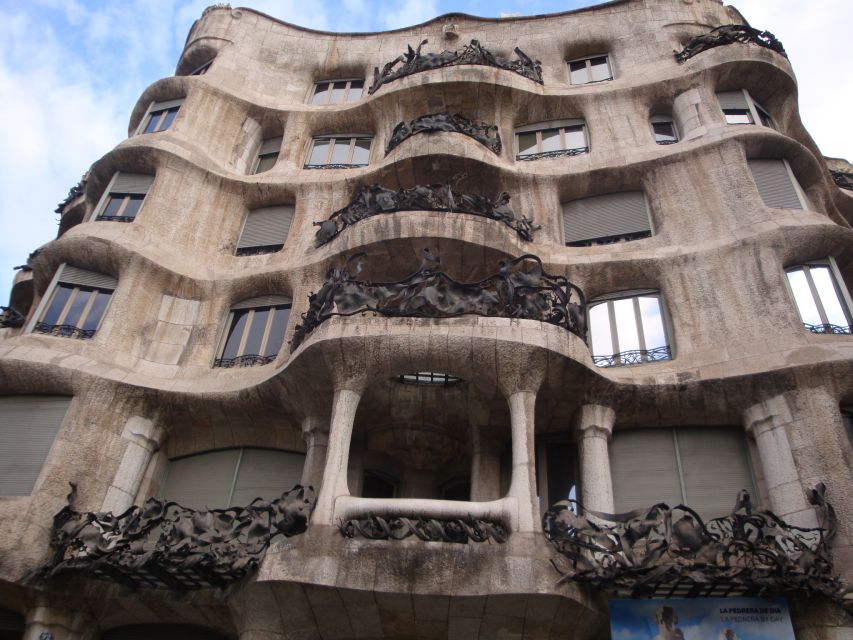
- Golden Square streets first: You’re walking the part of Eixample built when walls fell and money moved outward.
- Modernism explained, not just pointed at: The guide ties architecture to real political and cultural shifts.
- Art Nouveau details with purpose: Expect stories behind decorations, shapes, and materials, not just dates.
- Most sights from the outside: You’ll admire monuments and façades without long interior detours.
- A small private group: Up to 4 people for $212 per group keeps it personal and flexible.
- Weather can be boss: Dress for sun and showers; you’ll still be moving.
Where Eixample starts: meeting at Urquinaona and getting your bearings
Your tour begins at Plaza de Urquinaona, right in front of the Teatro Borrás. That matters because Urquinaona is the kind of starting point that helps you orient fast. You’re not dropped in some far-off corner and asked to play map detective. From here, you head into Eixample, the neighborhood whose very name means “city expansion.”
The Eixample idea is more than a slogan. It took shape in 1854, when Barcelona tore down the city walls. For centuries, the old city had been packed tight. Once the walls came down, there was space between the crowded historic center and the smaller town of Gràcia. Eixample was planned growth, and you can feel that plan in the leveled corner façades and the practical logic of the grid.
If you’ve already strolled Eixample streets on your own, you’ll recognize the geometry. What you might not have noticed is how the architecture uses that geometry to broadcast wealth and identity. That’s what this tour helps you see: the grid isn’t only convenient—it’s a stage.
You can also read our reviews of more tours and experiences in Barcelona.
A guide who links architecture to politics and people
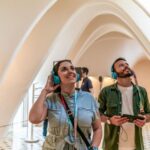
A big part of why this tour works is the guide’s storytelling approach. In the reviews, multiple people praise Johannes/Hannes for knowing the right details instantly, without turning the walk into a search-for-information exercise. They also highlight one skill that’s hard to fake: connecting local events with the buildings and styles you’re seeing.
Think of it like this. You’re not just learning that Catalan Modernism exists. You’re learning why it appeared when it did. The tour frames Modernism as part of a broader cultural movement beginning in 1885, similar in spirit to German Art Nouveau and the Viennese Secession—yet distinctly Catalan. That cultural angle matters because it changes what you notice. Instead of seeing decoration as decoration, you start reading it like a message.
This also helps if your Spanish or Catalan isn’t strong. The tour languages are German and English, and the information is structured as a walking narrative. Even if you only catch parts of the guide’s phrasing, you’ll still connect the dots visually.
Modernism you can read: stone, ceramic, and glass as messaging
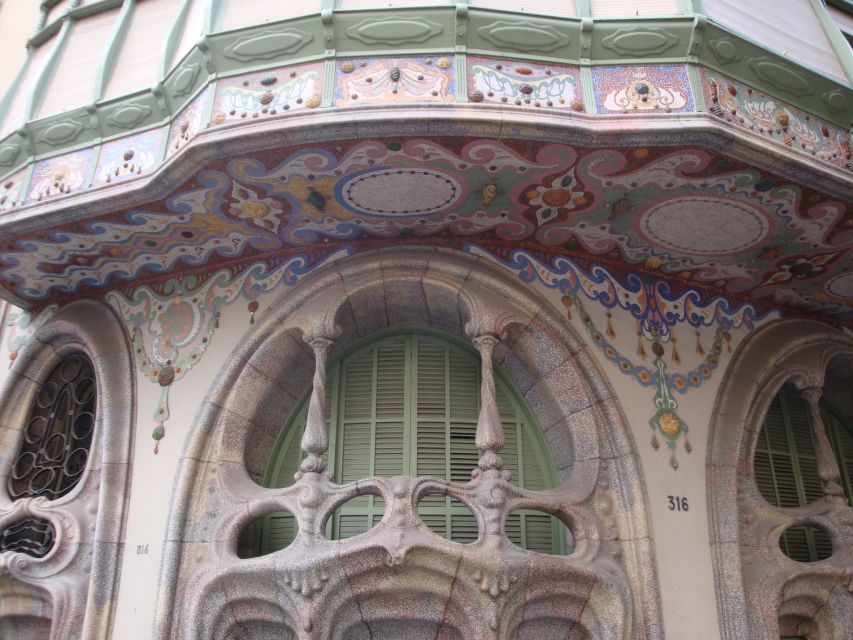
Catalan Modernism (often called Modernisme in Barcelona) isn’t presented here as one neat style with a checklist. It’s a way of thinking. The tour emphasizes materials—stone, ceramic, and glass—because those materials aren’t only for beauty. They’re for identity.
You’ll hear how the wealthy classes in Eixample built palaces to show they were part of the new era. And you’ll learn that it wasn’t random spending. The central government in Madrid refused autonomy and codetermination, and local officials had limited power unless they had money. So the money that could move found its outlet in architecture.
That’s one of the best reasons to take this tour instead of relying on a guidebook. The buildings make more sense when you know the “why.” Once you do, you start seeing patterns: ornament that’s tied to local culture, façades that feel like public announcements, and design choices that turn private residences into civic theater.
From 1714 onward: why Eixample became a power statement
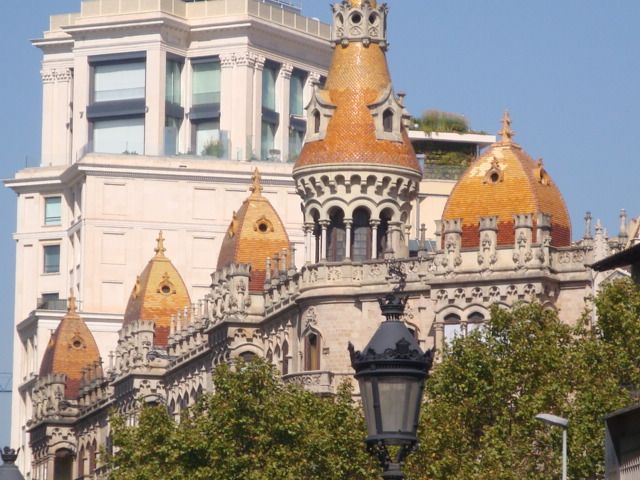
One of the tour’s strongest threads looks backward to 1714 and beyond—the repercussions of conflicts around secession and the consequences that followed. The story line is simple but powerful: Barcelona’s upper classes spent time under pressure, while poorer communities carried the heavier burden.
Then comes the turning point. When the wall came down and Eixample grew, it created room for a new kind of visibility. The people with money—the industrialists, aristocrats, and the Catalans often described as Indianos (those who made fortunes in South America)—were no longer forced to stay packed into the old city. They had space to build, and they used that space to display status and aspiration.
So when you walk these streets, you’re not just seeing “beautiful buildings.” You’re seeing a city renegotiating power and identity after long restrictions. That’s why the tour can feel both fun and heavy at the same time: the façades are gorgeous, but the reasons behind them have stakes.
Walking the Golden Square: Eixample as a planned city you can feel
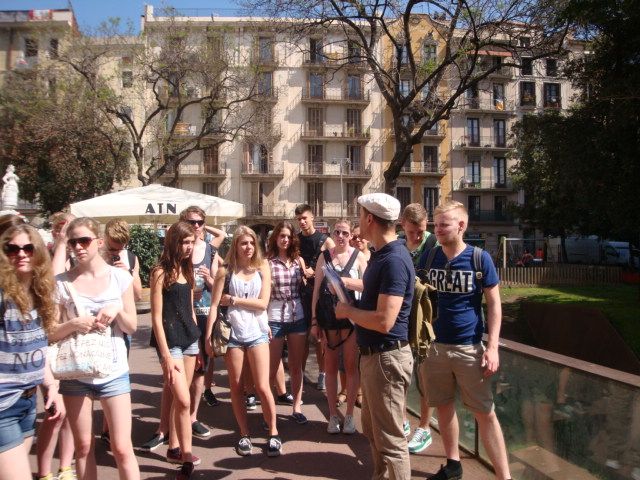
Eixample is also called the Golden Square in the tour framing—because it’s the area where money moved outward and the results still dominate the streetscape.
You’ll learn why the neighborhood’s reputation is tied to its urban design. After the walls were torn down, the city had a chance to rethink how it should work. The tour mentions Ildefons Cerdà’s utopia of the perfect city, which is basically the idea that urban planning could create order and improve daily life. You won’t be given a lecture of maps and diagrams for your entire walk, but you will come away with an understanding of why the grid feels so deliberate.
Also pay attention to the corner façades. Those flattened, leveled corners aren’t only a style choice—they support the geometry of the grid and make the buildings read clearly from multiple angles. If you like street photography, you’ll appreciate this because the architecture gives you clean lines and repeating perspectives.


Domènech i Montaner and the idea of Catalan allegory
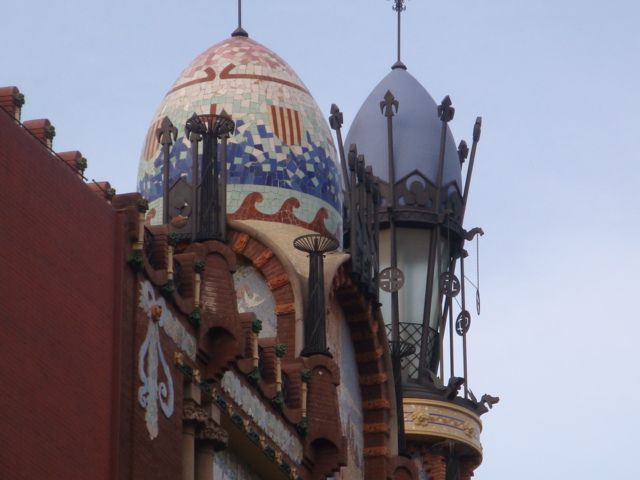
The tour highlights major architects tied to Catalan Modernism—specifically Domènech i Montaner and Puig i Cadafalch, plus of course Gaudí. You’ll hear examples of how they treated architecture like more than shelter.
A standout example mentioned in the tour material is the Palau de la Música Catalana (conceptualized by Domènech i Montaner). The key point isn’t only that it’s impressive. It’s that the building pays homage to Catalan folk songs, not just by referencing music, but by building an allegory out of stone. That’s the kind of detail that changes how you see decorations: patterns aren’t random. They can be cultural references, social statements, even a kind of public storytelling.
Because the tour focuses on street exteriors for most stops, you’re likely to experience that sense of allegory through façades and visible details rather than through inside rooms. Still, you’ll understand what you’re looking at when you get the cultural context.
Passeig de Gràcia and trencadís: shards bring luck, design brings meaning
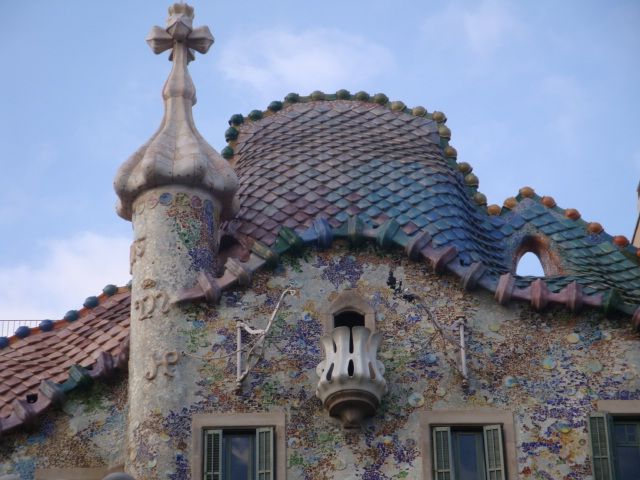
As you approach the famous stretch of Passeig de Gràcia, the tour leans into one of the most recognizable Barcelona design ideas: trencadís, the use of ceramic or stone shards arranged to form patterns.
The tour also frames trencadís with a small slice of local lore: the shards are treated as something that brings luck. That kind of anecdote matters because it turns a design technique into a cultural shorthand. It also makes your photos better. Instead of capturing trencadís as texture, you capture it as symbolism.
One of the big reasons this stop works is that Passeig de Gràcia is visually loud in a good way. Modernisme doesn’t whisper here. You can walk and compare forms, transitions, and ornament styles. If you’ve ever wondered why Barcelona’s Modernisme feels playful next to the stricter styles of other European cities, this stretch helps you answer that question with your own eyes.
The Block of Discord: three stars and the theater of façades
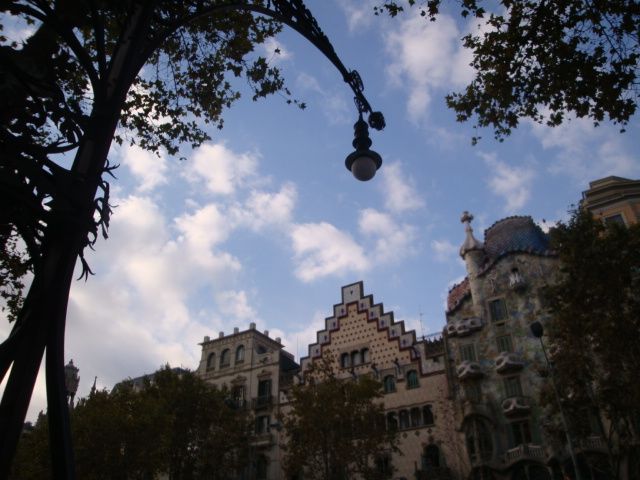
You’ll also spend time on the Block of Discord, which is famous for how three buildings argue with each other through decoration and design choices.
The tour includes the idea of three stars connected to this area, and it uses that to guide your attention. Look at how the façades compete and collaborate at the same time—each design choice a response to the neighboring ones. Even from the outside, the block feels like a carefully staged contest between different interpretations of Modernisme.
If you’re the type who loves design comparisons, you’ll get a lot from this. The tour format helps because it tells you what to watch for. You’re not only staring at pretty details. You’re learning what each building’s style is trying to say.
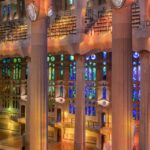
Gaudí’s hour: from Sagrada Família stories to the string trick
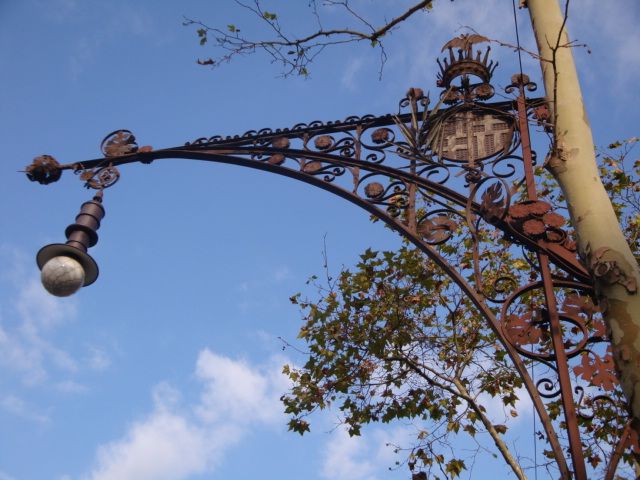
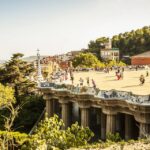
Gaudí is the inevitable gravity of Barcelona, and this tour doesn’t treat him as a standalone celebrity. It places him inside the same Modernisme moment as the other architects, then highlights the way his approach becomes more mythic and inventive.
A few Gaudí-related themes are specifically mentioned:
- Gaudí’s hour, as a kind of shift toward his signature logic of form and ornament
- Sagrada Família and Gaudí’s lost plans, which frames the basilica as both a vision and a work shaped by what was available and what survived
- Gaudí’s trick with string, which is the kind of story that helps you see how engineering and imagination can be linked
- The week of tragedy, Madonna must go, and war of stars on the ceiling, which the tour uses to explain the narrative side of decorative elements
Because this tour is primarily exterior-focused, you won’t be in a museum session for every detail. But the storytelling still pays off. When you see elements connected to these myths and moments, you’ll know what the references are trying to communicate.
If you’re planning a future Sagrada Família visit, this stop gives you a better set of expectations. You won’t arrive blank. You’ll arrive with questions and names in your head.
The funny and surprising side: Raval contrasts, Carnival energy, and Chupa-Chups
Barcelona isn’t only serious stone. The tour leans into contrasts, including the idea of an earlier “enslaved city” and then later periods where the city experiments, celebrates, and cleans itself up.
You’ll hear about the Barcelona World’s Fair era and the shift toward improvement. You’ll also get connections that go beyond pure architecture into cultural history, including:
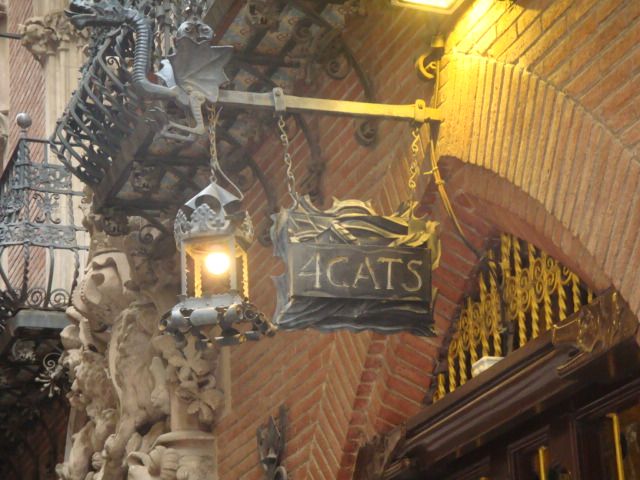
- a dragon’s den with relics, described alongside Karneval with confetti
- references to Dalí and the Chupa-Chups empire
- a note connecting Gaudí and New York
Those bits might sound random until you remember what the tour is trying to do. It’s showing Barcelona as layered. Modernisme didn’t happen in a vacuum. It’s part of a city that changes, rebrands, and reuses symbols over time.
So if you want Barcelona that feels like more than a list of monuments, these moments help. They keep the walk human, not just architectural.
Timing, pacing, and what the $212 price buys you
At $212 per group up to 4, this tour is priced like a private experience, not a mass group shuffle. That matters because the pacing is relaxed. The walk is designed for photos and doesn’t punish you for a bathroom break. You’re not expected to sprint.
Duration is 3.5 hours, which is a sweet spot. It’s long enough to connect themes—walls down, planning, money, architecture, Gaudí—and short enough to still enjoy the rest of your day without feeling scheduled to death.
The tour includes a city tour and an U-Bahn (subway) ticket. That’s useful because it suggests you’ll cover at least some ground efficiently, and it removes one small hassle from your planning. Entry fees are not included, so if a stop does have paid access, you should expect to pay on your own.
The biggest value question is matching expectations. If you like architecture explained in context and you’re okay with exterior viewing, you’ll feel like you paid for insight, not just walking time. If you want interiors and timed ticketing built into the tour, you may find the structure a bit more limited.
Practical travel tips so the tour feels easy, not annoying
This is a 3-weather tour—sun, rain, and wind, even strong showers. That alone shapes how you pack.
I’d bring:
- a hat and sunglasses for sun
- sunscreen in warmer months
- a small bottle of water
- a jacket or thin coat for wind and rain
The guide sticks to streets and squares to get you close to the city’s “real” groups around Barcelona, rather than turning everything into museum time. That’s a plus if you like authentic street life, but it means the weather is part of the deal.
Wheelchair accessibility is listed, and it’s a private group setting. If you’re traveling with mobility needs, this is worth considering, but you should still think about the basics of an outdoor walking route.
Who should book this tour (and who might skip it)
This tour is a great match if:
- you want Catalan Modernism explained with stories, not just photos
- you like comparisons across architects and street façades
- you want a small group format with an experienced guide
You might skip it if:
- you only enjoy interior visits and guided entry tickets
- you’re highly sensitive to rain or wind and can’t adjust your plans
- you want a quick stop at one or two famous sites rather than a neighborhood narrative
Should you book Barcelona Art Nouveau and Gaudí Tour with Barcelona Dragon Tours?
If you’re the type who likes Barcelona to make sense—why certain buildings look the way they do, and why they were built when they were—this tour is a strong bet. The repeated praise for Johannes/Hannes centers on a specific strength: the guide doesn’t just throw facts at you, they connect them. Add the focused Eixample walk, the Golden Square context, and the mix of serious Modernisme with playful city stories, and you’ve got a 3.5-hour experience that can change how the neighborhood feels when you leave.
If you’re unsure, ask yourself one question: do you want to understand Barcelona’s architecture as part of the city’s power and culture shifts? If yes, book it. If your ideal day is mostly indoor sights with guaranteed entry, plan something else.
FAQ
Where does the tour start?
The meeting point is Plaza de Urquinaona, in front of the Theater Borrás.
How long is the Barcelona Art Nouveau and Gaudí walking tour?
The duration is 3.5 hours.
What language is the tour guide?
The live tour guide speaks German and English.
Is this tour a private group?
Yes. It’s listed as a private group, with a maximum of 4 people per group for the price.
Is public transport included?
Yes. The tour includes an U-Bahn (subway) ticket.
Are entry fees included?
No. Entry fees are not included.
Will we visit buildings inside?
The tour focuses on streets and squares with exteriors. Museum visits and interior explorations are not part of the program except for a couple of exceptions.
Is the tour wheelchair accessible?
Yes, wheelchair accessibility is listed.
What weather should I prepare for?
It runs in sun, rain, and wind, including strong showers. Bring appropriate clothing like a hat/sunglasses/sunscreen in summer and a jacket or thin coat in winter.
Is there a cancellation option if plans change?
Free cancellation is offered up to 24 hours in advance for a full refund.