REVIEW · BARCELONA
Andorra, France and Spain Day Tour with 2 Guides and Hotel Pickup
Book on Viator →Operated by Day Trips Barcelona · Bookable on Viator
Three borders, one long mountain day.
This Andorra France Spain road trip is built around big Pyrenees scenery, plus quick, well-timed stops so you see more than just the view from your hotel. You’ll start in Barcelona, pass UNESCO Montserrat, cross into France, and then climb all the way to the highest Pyrenees pass before finishing with a walk through Andorra la Vella.
What I like most is the two-guide setup, especially the way Carl and Peter keep the day moving while still finding time for short walks and photo breaks. Second, the comfort details matter on an 11-hour day: an air-conditioned minibus, free bottled water, and extra touches like blankets and pillows when the mountain weather gets rough.
One drawback to consider: it’s an early start (pickup for a 7:00 am departure) and you’ll spend most of the day in the vehicle. If you’re sensitive to motion or altitude, plan for a slower pace on the stops and tell the guides right away so they can help you stay comfortable.
In This Review
- Key highlights worth planning around
- Why this Andorra-France-Spain day trip feels like a real road trip
- Pickup, timing, and how the van makes a difference (more than you think)
- Barcelona’s outer edge: Montserrat views before the mountain work begins
- Baells reservoir and the Cadí-Moixeró Natural Park tunnel break
- Crossing into France: Bourg-Madame and Enveitg for border scenery
- Entering Andorra at Porta: the passport stamp moment
- Port d’Envalira: the highest Pyrenees pass and the views that justify the drive
- Circ de Pessons downhill stops: waterfalls, churches, and flexible photo breaks
- Lunch in a ski-lodge setting at Canillo
- Meritxell and Andorra la Vella: where the day turns from peaks to people
- The real value in the two-guide team and the photo timing
- Who should book this Andorra-France-Spain tour from Barcelona
- Should you book it? My quick decision guide
- FAQ
- What time does this tour start, and how long is it?
- Where does pickup happen?
- Is this tour private?
- Is food included in the price?
- Are the attraction stops ticketed?
- What language is the tour in?
Key highlights worth planning around
- Two guides/drivers in one private van for smoother navigation, plus constant commentary.
- Montserrat + Baells reservoir views before the border crossings, so the day feels like more than a single-country trip.
- Cadí-Moixeró Natural Park tunnel and Cerdanya valley timing for breakfast with a scenic backdrop.
- Andorra passport stamp at Porta for a small souvenir-style moment.
- Port d’Envalira (highest Pyrenees pass) with Tour de France and La Vuelta connections.
- Meritxell sanctuary and Andorra la Vella walking tour for church-and-city contrast.
Why this Andorra-France-Spain day trip feels like a real road trip
This is not a slow, museum-style day. It’s a driving day with smart stops. You leave Barcelona early, then the scenery changes in a steady rhythm: coast city mood → Catalan mountain foothills → France’s Cerdanya valley → Andorra’s ski-country zones → capital-city streets.
The private format is the reason it works. Since it’s just your group, Carl and Peter can shape the timing around weather and your pace—so you’re not stuck with the hardest parts of a fixed bus schedule. And that matters most in the Pyrenees, where conditions can turn fast.
You’ll also get a tour arc that makes geographic sense. You climb from lower passes toward the high border area, then gradually work your way down through villages and viewpoints. The day ends back in Barcelona with rest breaks on the drive—plus blankets and cushions for the ride home, which I’m thankful for on a long itinerary.
You can also read our reviews of more tours and experiences in Barcelona.
Pickup, timing, and how the van makes a difference (more than you think)
The tour starts at 7:00 am, with pickup from your hotel or apartment (also Sitges and Castelldefels) or the cruise ship terminals N or S at Moll de Barcelona. That early departure is the whole secret to getting multiple countries in one day without feeling frantic.
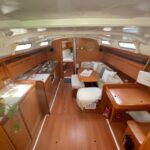
Inside, the Renault Traffic minibus is air-conditioned, and you get free bottled water throughout. Add the comfort items mentioned by people who’ve taken this: blankets and pillows for naps on the mountain drive, and in colder or wetter stretches, extras like coats, hats, rain gear, and umbrellas. It’s the kind of practical hospitality that keeps small weather problems from becoming big travel frustrations.
This is also a full-day commitment. The remaining time is built for travel, meaning you should plan your expectations accordingly. Wear shoes you can stand in for the short strolls, and keep a light layer ready—high altitude can feel much cooler than the start of the day.
Barcelona’s outer edge: Montserrat views before the mountain work begins
Your morning begins with a pass-by view of Montserrat, the famous UNESCO mountain with the monastery and Basilica visible partway up the slope. It’s only a short stop, so you don’t need to budget hours. Think of it as a visual warm-up—one last Barcelona landmark before the day gets serious.
Why this matters: it helps you shift your mindset fast. Instead of waiting all day to see something dramatic, you get a big silhouette early. You’ll also get a sense of why people built major religious sites on mountain heights here—clear visibility, symbolic elevation, and a strong sense of place.
After Montserrat, the route starts moving toward the Pre-Pyrenees. This is when the day begins to feel like a lived-in region, not a checklist. You’ll see ridgelines, reservoirs, and roadside valleys as you head out of the city core and into the areas that surround Barcelona with water and air.
Baells reservoir and the Cadí-Moixeró Natural Park tunnel break
As you push into the Pre-Pyrenees, the itinerary tracks along the Baells reservoir, a major water source for Barcelona. This stop is mostly about changing scenery: big water, wide skies, and the sense that you’re leaving the Mediterranean coast behind.
Then you enter Cadí-Moixeró Natural Park. The driving route includes a 5 km (3-mile) tunnel through the Serra de Moixeró mountain range. It’s one of those details that doesn’t sound romantic, but it keeps the day efficient. In a long day, efficiency is comfort.
Breakfast happens either in the Cerdanya valley or near the Baells reservoir (timing and conditions decide). Even with food not included in the price, the tour’s structure helps you get the meal without turning your day into a hunt for a place to eat.
Practical tip: if you’re prone to getting cold in vehicles, eat breakfast earlier rather than later and keep a layer handy. Mountain weather can cool down quickly, even when the coast feels mild.
Crossing into France: Bourg-Madame and Enveitg for border scenery
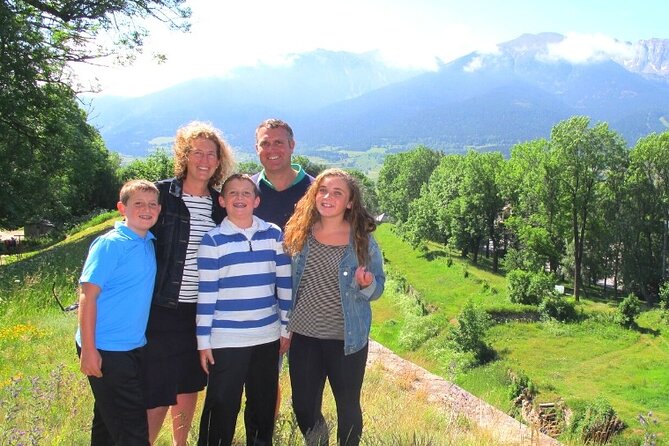
The first border moment is Bourg-Madame, where you cross into France. The Cerdanya valley setting gives you a built-in photo backdrop: the Pre-Pyrenees range off to one side and the Pyrenees structure closer by.
You’ll take a few minutes for photos on the border and then a short stroll through the village. Don’t expect this to be a long sightseeing session—this is more about atmosphere and angles. Border towns in the mountains are where the geography becomes personal. Even the quick walk helps you feel the change in country and rhythm.
If time and weather allow, you get one or two more brief leg-stretch stops in France, including Enveitg. The value here is simple: you’re not trapped inside the minibus for every mile. Short, planned opportunities to stand and breathe reset you for the climb toward Andorra.
Entering Andorra at Porta: the passport stamp moment
You enter Andorra from France at the high altitude border area, stopping at Porta. This is where you can request a unique Andorra tourist passport stamp. It’s small, but it’s the kind of touch that makes a day trip feel like an event instead of a bus tour.
From Porta, the day shifts toward Andorra’s ski-and-shopping zones. If you want atmosphere rather than deep sightseeing, this part delivers. The air feels different, and the views start to show more of the high-country scale.
Before you reach the highest pass, you have the chance to stop at Pas de la Casa, described as the oldest and largest ski village. You can take a short walk for mountain air and vistas, plus browse the popular shopping area with plenty of French day-tour style energy. If you’re shopping-minded, this is where it helps to have limited time—so you can make quick decisions instead of wandering too long.
Port d’Envalira: the highest Pyrenees pass and the views that justify the drive
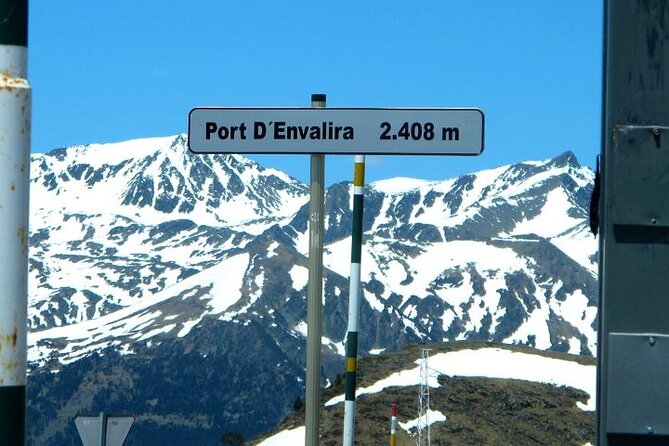
The highlight climb is Port d’Envalira, the highest mountain pass in the entire Pyrenees range. This is one of the reasons this tour is worth doing from Barcelona. You’re not just reaching a country—you’re reaching a vertical wow point.
The tour route also notes that this stretch is used by the Tour de France and La Vuelta cycling races. Whether you’re a cycling fan or not, that matters because it signals a road engineered for big climbs and strong viewing pull-offs.
Time at the pass is short—around 15 minutes—but it’s the right kind of short. You’re there to absorb the big picture: peaks, the Grandvalira ski area view, and a sense of how wide the mountain world becomes. Then you move on downhill.
If weather turns (and it can), don’t be surprised if the guides adjust photo timing and stops for safety. One of the standout things from the experience is how the guide team handles mountain conditions carefully.
Circ de Pessons downhill stops: waterfalls, churches, and flexible photo breaks
As you descend from the pass area, you pass through Circ de Pessons with a series of shorter stops. The key word here is flexible: scenic photo points, souvenir or shopping stops, and even church visits depending on weather and timing.
There’s also a notable waterfall mentioned along the route that cascades all year round, with extra drama after rainfall or snowmelt. This is the kind of stop that can be brief but still memorable because it adds motion to the otherwise “look at the peaks” rhythm.
For you, this is where the trip becomes personal. If the weather is great, you’ll want to step out quickly and take photos. If it’s worse, the guide team can help you stay warm and safe and still get the important sights.
One practical note: since many of these are short hops, keep your outerwear accessible. Don’t bury it at the bottom of the bag. You’ll thank yourself when the stop is over in 10 minutes.
Lunch in a ski-lodge setting at Canillo
For lunch, you stop in Canillo at a typical ski lodge–style family restaurant. The menu described is Mediterranean, with options including vegetarian dishes and grilled meats cooked on a wood stove.
Lunch is about an hour. That’s a helpful rhythm break after border crossings and mountain passes. Also, because the tour doesn’t include food in the listed price, lunch works best if you go in with a flexible budget and treat it as part of the mountain day experience rather than a standard city meal.
If you’re traveling with picky eaters or dietary needs, it’s worth noting that vegetarian options are specifically mentioned. Still, don’t assume everything is available—use the moment at the restaurant to ask what’s possible.
Meritxell and Andorra la Vella: where the day turns from peaks to people
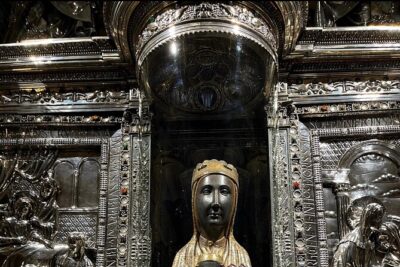
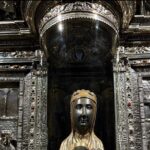
After lunch, the tone shifts to culture. A key stop is the Sanctuary of Meritxell, where the image of Our Lady of Meritxell sits—Andorra’s patron saint. It’s described as part of the Marian Route, which connects four important sanctuaries: El Pilar, Montserrat, Torreciudad, and Lourdes.
Why I think this works on a day trip: it’s not a random church stop. It connects your morning Montserrat moment to what you’re seeing later in Andorra, and it gives the trip a theme that ties the region together across countries.
You then have another quick photo moment at a viewpoint on the road near Escaldes-Engordany, where you can look over Andorra la Vella, the capital city and one of the highest altitude capitals in Europe.
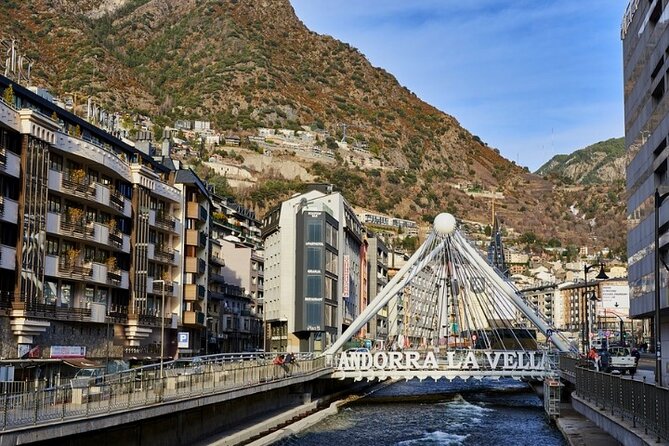
The final stretch is the walking tour in Andorra la Vella. You walk the main shopping street, stop for photos at the fast-flowing Valira river, and there’s also a reference to a Salvador Dalí sculpture. The walk ends in the medieval quarter around St. Esteve of Andorra church and both the ancient and new parliament buildings.
This is a good ending because it shows the contrast: the day starts high in the mountains, but it ends with the feel of everyday Andorra life.
The real value in the two-guide team and the photo timing
This tour’s price has a logic behind it: you’re paying for private transport, a two-guide/drivers team, and the ability to make a high-mileage, multi-country day feel organized instead of chaotic.
From the experience details, Carl and Peter run the day with a mix of smooth timing and constant small fixes—like making sure you get breaks, keeping the vehicle clean and comfortable, and adapting to weather so you don’t lose all the good photo moments. People also mention the guides provided comfort items and rain or cold-weather protection when needed, which is not something you can count on with every day trip.
Photo time is built in throughout—at borders, passes, viewpoints, and the city. And the guides coordinate it in a way that helps everyone stay included, rather than only the people nearest the window getting the best shots.
One more practical angle: because the day is long, having two people share the workload helps. One can handle navigation and timing while the other manages the group’s stop rhythm and quick walkouts.
Who should book this Andorra-France-Spain tour from Barcelona
Book it if you want:
- A mountain day with real elevation and a sense of scale, not just city hopping.
- A private format where you can keep moving but still get short walks and photo breaks.
- The combo of border-crossing scenery plus a focused cultural moment at Meritxell and in Andorra la Vella.
It’s especially a good fit for families and mixed-age groups, since the stops are short and adaptable. It also works well for history and culture lovers who like sanctuaries, routes, and how religion shaped travel between Spain and France.
Rethink it if:
- You’re easily motion-sick or sensitive to altitude. The guides can help you stay comfortable, but it’s still a full driving day with mountain passes.
- You want a relaxed day with long museum time. This tour is about efficient seeing, not staying put.
Should you book it? My quick decision guide
If your goal is to see more than Barcelona—if you want Andorra’s high-country reality plus France border scenery in one shot—this is a strong option. The combination of early pickup, private driving, two-guide guidance, and comfort-focused touches makes the long hours feel manageable.
I’d book it when:
- You have a day to spare and you want maximum variety without switching hotels.
- You’re okay with a fast pace that still includes multiple meaningful stops.
I’d skip it when:
- You’re not comfortable with long drives or changing mountain weather.
- You prefer one country only, at a slower pace.
FAQ
What time does this tour start, and how long is it?
The tour starts at 7:00 am and runs for about 11 hours.
Where does pickup happen?
Pickup is offered from your hotel, apartment, or the cruise ship terminals at Moll de Barcelona (terminals N and S). The tour also picks up in Sitges and Castelldefels.
Is this tour private?
Yes. It’s a private tour/activity, and only your group participates.
Is food included in the price?
Food and drinks are not included. The itinerary includes time for breakfast and a lunch stop, but you’ll pay for meals separately.
Are the attraction stops ticketed?
The itinerary lists admission ticket as free for the stops included.
What language is the tour in?
The tour is offered in English.