REVIEW · BARCELONA
Sant Pau Recinte Modernista Entrance Ticket in Barcelona
Book on Viator →Operated by Fundació Privada Hospital de la Santa Creu i Sant Pau · Bookable on Viator
Modernist medicine meets art everywhere here. With a prepaid Sant Pau ticket, you get self-guided freedom in one of Europe’s biggest Art Nouveau hospital complexes, plus the chance to wander through underground tunnels that connect the buildings like something out of a sci-fi novel. Prebooking also helps you arrive, check in, and start sightseeing without waiting in line.
I love that the complex is built for slow walking: you can start at the Administration Pavilion, then follow the trail of pavilions at your own pace. I also like the range of experiences—architecture, hospital history, and even interactive elements like a touch table and a video presentation. One possible drawback: the self-guided route can feel a little confusing at times, with some visitors finding the directions and signposting hit-and-miss.
In This Review
- Key things to know before you go
- Why Sant Pau feels different from most Barcelona sights
- The self-guided flow: how the route really works
- Administration Pavilion: your best first stop
- Sant Salvador Pavilion: the history timeline you’ll actually remember
- Tunnels and gardens: the calm break that makes the day feel longer
- Exterior details worth slowing down for
- Sant Rafael Pavilion and the old Surgery Room
- Rooms named for people: Domènech i Montaner and Pau Gil
- Sant Jordi Pavilion: the rotating exhibitions stop
- Price and value: is $21.78 a good deal?
- Timing and duration: how long you should plan
- Logistics: check-in, getting in, and finding your way
- Who this experience fits best
- Should you book the Sant Pau entrance ticket?
- FAQ
- How long does the Sant Pau visit take?
- Can I start at any time during opening hours?
- Is this ticket self-guided or a guided tour?
- Is the ticket mobile?
- What language is offered?
- Where is Sant Pau located?
- What’s included in the price?
- Are food and drinks included?
- Are temporary exhibitions included?
- Is free cancellation available?
Key things to know before you go
- Prebooked admission helps you avoid the most annoying wait times.
- Administration Pavilion start point: you can begin at the Administration Pavilion during opening hours.
- Underground tunnel network links the pavilions and adds a totally different side to the visit.
- Hospital history meets Modernisme through spaces dedicated to key figures and the evolution of care.
- Temporary exhibitions at the Sant Jordi Pavilion mean you might see something new on your visit.
- Audio/paper aids may help if you want clearer guidance through the complex.
Why Sant Pau feels different from most Barcelona sights
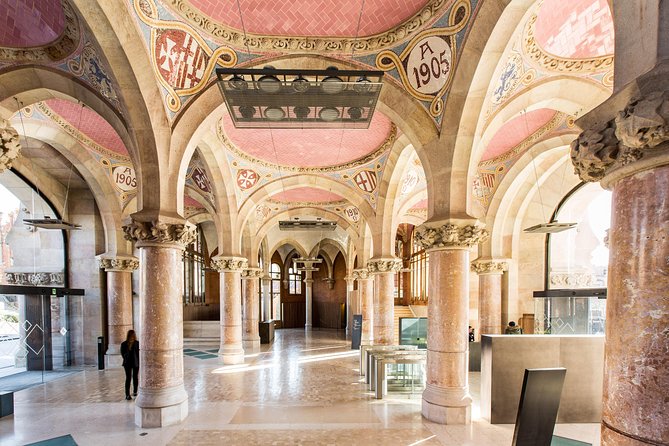
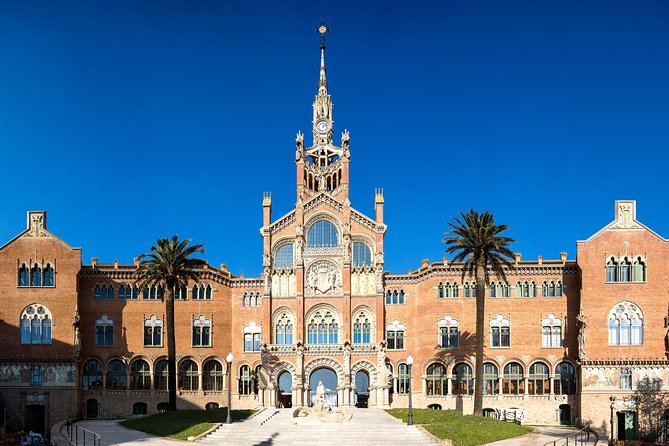
Sant Pau Recinte Modernista is the kind of place that makes you slow down without trying. This isn’t just a pretty Modernist façade. It’s a whole hospital campus—once used for care—and the design was meant to improve how patients were treated and how spaces worked. That means you’re not only looking at art and tilework. You’re reading a story about health, daily routines, and architectural thinking.
The best part, for my taste, is how it supports a calmer visit. You don’t need to match a group’s pace. You can spend time on exterior details like stained glass and domes, then switch gears and explore interior rooms and historical displays when you’re ready. And if you like “I’ll figure it out as I go” sightseeing, Sant Pau rewards that style.
The practical advantage is prebooking. At a popular site like this, you don’t want your day to hinge on last-minute entry. With a prepaid voucher, you can plan your timing around the rest of your Barcelona route, not around a queue that might or might not cooperate.
You can also read our reviews of more tours and experiences in Barcelona


The self-guided flow: how the route really works
Your ticket gives you admission only. No guide is included, so you’re steering the experience yourself. The good news: the site is laid out as a network of pavilions, gardens, and connecting spaces. That makes it natural to wander in a loop.
Here’s the flow you can aim for, based on what you’ll be able to access:
1) Start at the Administration Pavilion any time during opening hours.
2) Work through the exhibition areas, interactive pieces, and video presentation.
3) Move toward the tunnel network and out into the gardens for breaks and quick photo stops.
4) Continue through the restored and historical pavilions in the order the building gives you—ending at the Sant Jordi Pavilion for rotating temporary exhibitions.
Because it’s self-guided, the biggest variable is how long you spend in each stop. If you’re the type who reads every panel and stares at mosaics for way longer than your feet want, you’ll use the full time. If you want a strong overview with selective reading, you can still make it work within the lower end of the 1 to 2 hour window.
Administration Pavilion: your best first stop
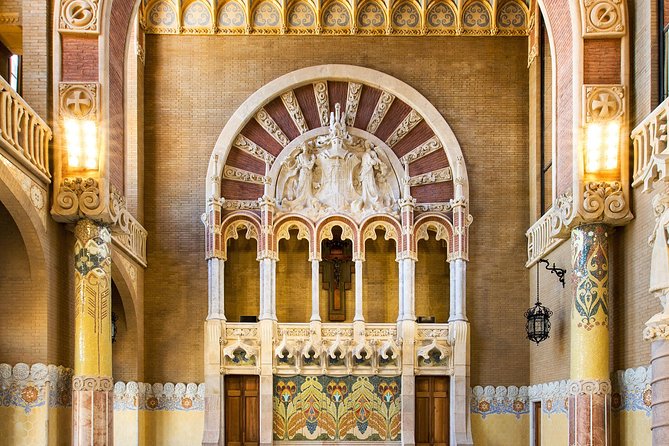
The Administration Pavilion is the easiest place to anchor your visit. You can begin here any time during opening hours, which helps if you’re fitting Sant Pau between other sights.
Inside, you’ll find an exhibition space that ties together the site’s medical role and its artistic heritage. A couple of elements are especially useful when you don’t have a guide:
- An interactive touch table that helps you understand the facility’s contribution to medicine.
- A video presentation that gives you context without asking you to read everything first.
This is also where you can get your bearings. If you pick up any map or paper guide available on arrival, use it right away. Some visitors find the self-guided experience easier when they have that extra handhold, especially because the complex is big and the signage can be uneven.
Sant Salvador Pavilion: the history timeline you’ll actually remember
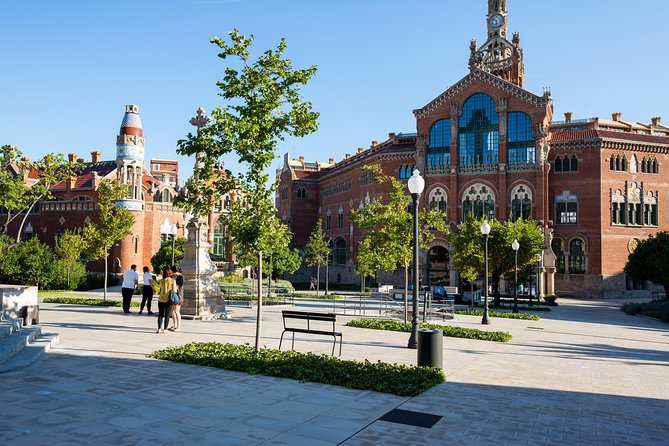
At the Sant Salvador Pavilion, you’re given the big-picture story of the Hospital de la Santa Creu i Sant Pau—from its founding in 1401 up through the 21st century. This is the kind of information that makes the architecture click. Without it, you’re mostly admiring design. With it, you start noticing how the layout supports care.
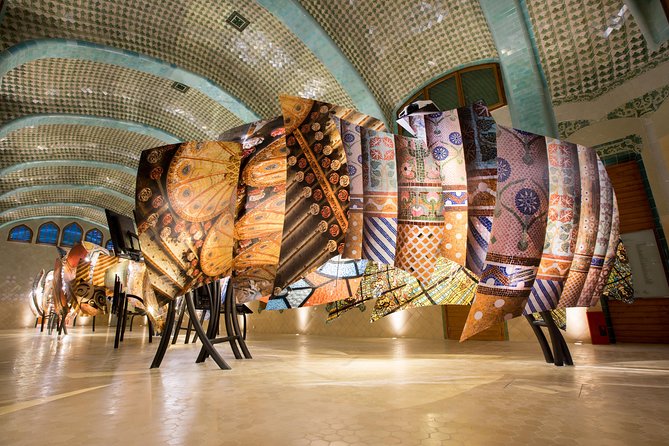
On the upper floor, there’s also a contemporary installation symbolizing a dragon. It’s described as a tribute related to Lluís Domènech i Montaner, the architect strongly linked with Modernisme. If you’re into how Barcelona’s Art Nouveau style overlaps with cultural identity, this connection is worth pausing for.
I like this stop because it gives you a “why” for the rest of the visit. After you know what the campus was for, the pavilions feel less like random landmarks and more like a planned system.
Tunnels and gardens: the calm break that makes the day feel longer

One of the signature experiences here is the network of underground tunnels that wind between pavilions. These aren’t just functional passages. They add drama to the visit because you experience the campus as an integrated machine—not just a collection of buildings.
Then you emerge back toward the gardens. That switch matters. You get a bit of open-air breathing room after indoor spaces and close-up exhibits. It’s also a good time to reset your pace, especially if you’re visiting on a hot day. One review specifically noted the benefit of air-conditioned indoor areas, which is a good reminder that you can plan your walking rhythm: gardens when you need a break, indoor rooms when the weather turns.
If you like photography, the tunnels and outdoor details give you different angles and lighting. If you’re more focused on history, the tunnels still add value because they show how movement through the campus supported care and operations.



Exterior details worth slowing down for
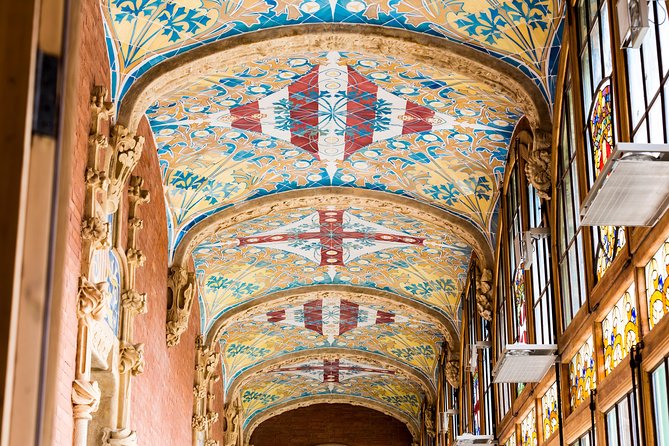
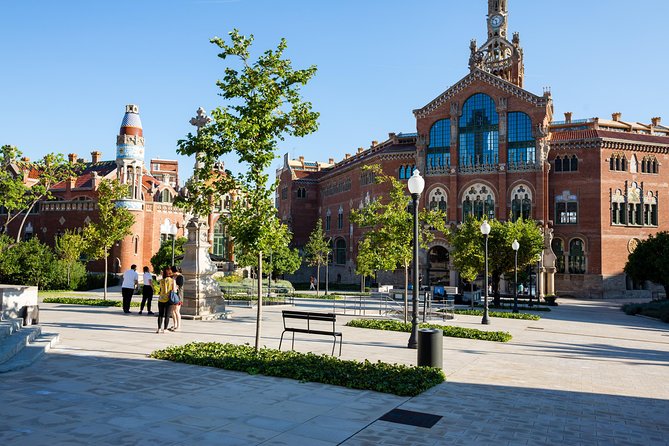
Sant Pau has a lot of moments where you’ll be tempted to keep walking. Don’t always. The exterior details are a major part of the appeal, including stained glass, sculptures, and domes. The complex is essentially built from decorative decisions, and you’ll start spotting patterns once you slow your pace.
Also, because the campus is large, you won’t see everything in a quick burst. If you want the best mix of “wow” and “understanding,” spend time on one or two exterior clusters, then come back inside. You’ll get more from it than trying to snap photos while moving at full speed.
Sant Rafael Pavilion and the old Surgery Room
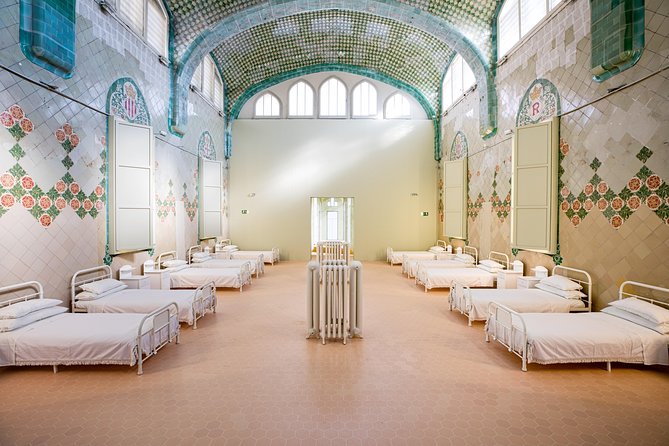
After you’ve started building your context, you can focus on the restored pavilions and historical interior spaces. The restored Sant Rafael Pavilion and the old Surgery Room are central to that feeling that you’re stepping into a working medical environment from the past.
This is where the “hospital museum” concept stops being abstract. Surgery rooms and care-focused layouts naturally make you think about what treatments meant at the time—and how patients experienced the building. Even without a guide, the combination of architecture plus historical function makes the space easier to understand than a typical decorative museum.
If you’re someone who appreciates the evolution of healthcare, this portion adds weight to the visit. You’re not only admiring design. You’re seeing how design supported the medical world of its era.
Rooms named for people: Domènech i Montaner and Pau Gil
Two room names are a big clue that Sant Pau isn’t trying to be vague. You’ll pass through spaces dedicated to key figures:
- The Lluís Domènech i Montaner Room
- The Pau Gil Room
The value here is not just the name. It’s that these rooms help connect the architecture to the people and ideas behind it. If you’ve been seeing Modernisme across Barcelona—especially around Sagrada Família area—you’ll probably enjoy how this site adds another layer to that story. It makes the architectural movement feel practical, not just ornamental.
Then there’s the Main Hall, which acts like a central indoor anchor. Think of it as a place to pause, orient, and take a breath before you continue.
Sant Jordi Pavilion: the rotating exhibitions stop
The visit can end at the Sant Jordi Pavilion, which hosts rotating temporary exhibitions. This matters because it gives your trip some flexibility. Even if you’ve seen other museum collections, temporary exhibits add a reason to go now rather than later.
For a self-guided ticket, this is also a nice way to structure your time. You don’t have to worry about “missing the last piece” of the complex. You can aim to finish here when you’re ready, and let your pace decide whether you spend a little or a lot of time on the temporary content.
Price and value: is $21.78 a good deal?
At $21.78 per person, this ticket is priced in a way that usually makes sense for major “must-see” Barcelona attractions—especially because you’re paying for more than a photo stop. You’re paying for entry to a large campus, multiple pavilions, an interactive element set, and the tunnel-and-garden experience.
It’s also clearly a “plan ahead” product. The site is popular, and this is typically booked about 18 days in advance on average. Prebooking isn’t just about convenience. It’s about protecting your time. If you arrive without a guaranteed slot and the site is busy, your day can get derailed.
One extra value point: the ticket is an English option, and you’re using a mobile ticket. That reduces friction on travel days, when you’d rather not hunt for printouts.
No guide is included, so if you strongly prefer guided storytelling, you might feel the absence. But if you like learning at your own pace—and you’re comfortable reading panels—you can turn this into a satisfying couple of hours.
Timing and duration: how long you should plan
The duration is listed as about 1 to 2 hours. In practice, the campus size means your time depends on how you move and how much you read.
If you want a comfortable pace:
- Give yourself closer to 90 minutes if you’ll hit the main pavilion highlights and spend some time with the interactive touch table and video.
- Go toward 2 hours if you’re the type who stops for architecture details, tunnels, and outdoor gardens, and you don’t want to rush the rooms.
Also consider seasonal heat. Some spaces are indoor and air-conditioned, and the gardens are where you’ll feel the sun. A smart approach is to alternate: indoor pavilion first, outdoor garden break next, then return indoors to recharge.
Logistics: check-in, getting in, and finding your way
This ticket is a mobile ticket, and check-in is designed to be simple. One practical tip from visitor experiences: you can show your phone to the front desk, and they handle ticket confirmation quickly.
What about navigation? Sant Pau is big enough that “just follow your instincts” can work, but it’s not always perfectly intuitive. Some visitors have described self-guided directions as confusing or not clearly laid out, and they’ve mentioned signposting that can be inconsistent. That doesn’t mean it’s impossible. It means you’ll get more out of it if you grab any map or paper guide you’re offered on arrival and use it early.
Accessibility note: there are some stairs in the mix, and at least one review mentioned lift access feeling limited. If you have mobility issues, go into the visit with that in mind and plan your stamina.
Who this experience fits best
This ticket is best for people who like:
- Architecture with meaning, not just architecture for photos
- Hospital history and how environments support healthcare
- Slow sightseeing where you can choose what to read and what to skip
It’s also a strong option if you dislike big group tours and want quiet time. Multiple visitors specifically highlighted the peaceful atmosphere and the feeling that the complex is less crowded than other top Barcelona stops.
If you want a high-level overview with someone directing your pace and translating everything for you, you may want to consider a guided alternative. But for an independent traveler who enjoys cultural context, Sant Pau’s self-guided format can feel like a gift.
Should you book the Sant Pau entrance ticket?
Book this if you want a quieter, more thoughtful Barcelona attraction with a real sense of place. The big value is the combination of Art Nouveau campus design and medical history, plus tunnel-and-garden spaces that you don’t get at most museums.
Skip it only if you know you dislike self-guided navigation and you really depend on a guide to connect the dots. The architecture is spectacular, but you’ll need to do some of the interpretation yourself.
FAQ
How long does the Sant Pau visit take?
It’s listed as about 1 to 2 hours.
Can I start at any time during opening hours?
Yes. You can begin your visit at the Administration Pavilion any time during opening hours.
Is this ticket self-guided or a guided tour?
This is a self-guided admission ticket. A guide is not included.
Is the ticket mobile?
Yes. It’s a mobile ticket.
What language is offered?
The experience is offered in English.
Where is Sant Pau located?
It’s in central Barcelona on Sant Antoni Maria Claret.
What’s included in the price?
Your ticket includes admission to the Sant Pau Recinte Modernista.
Are food and drinks included?
No. Food and drinks are not included.
Are temporary exhibitions included?
Yes. The Sant Jordi Pavilion hosts rotating temporary exhibitions.
Is free cancellation available?
Yes. You can cancel up to 24 hours in advance for a full refund.