REVIEW · BARCELONA
Online Experience: Zoom around panoramic Barcelona
Book on Viator →Operated by The Barcelona Feeling · Bookable on Viator
Barcelona from your couch is still Barcelona. This Zoom tour gives you a tight, story-driven day tour of the city, with a guide steering you through big-hitter sights and a few smarter side stops. I like that you’re not just watching slides. You can actually ask questions while the route rolls past places like Montjuïc, Casa Batlló, Barceloneta, the Gothic Quarter, and more.
Two things I especially like: the pace is short enough to stay sharp, and the mix of views (panoramic lookouts plus architectural deep focus) helps you understand Barcelona as a real place, not a checklist. One consideration: since it runs on Zoom, you’ll want a stable internet connection and a quiet spot where you can follow along without audio dropouts.
In This Review
- What You’ll Do on a Live Zoom Ride Around Barcelona
- Key Stops That Make the Route Feel Like a Real Day
- Entering Mercat de Sants: Start With Local Life, Not Just Landmarks
- Montjuïc Hill: The View That Teaches You the City Layout
- Casa Batlló and Modernisme: Getting the Meaning Behind the Look
- Barceloneta as a Lunch Break: Beach Vibes With Practical Spanish Food Talk
- Sagrada Família With Google Earth 3D: Design First, Name Second
- Recinte Modernista de Sant Pau: A Worthwhile Detour Near Sagrada Família
- The Gothic Quarter and an End With Live Music at a Bar
- Interaction, Guide Style, and Why the Experience Feels Personal
- Price and Value: When $53 Makes Sense (and When It Doesn’t)
- Practical Notes Before You Join (So You Don’t Waste Your Slot)
- Who This Barcelona Zoom Tour Is For
- Should You Book This Zoom Barcelona Tour?
- FAQ
- How long is the Zoom tour around Barcelona?
- What is the price of the experience?
- Where does the tour start?
- Do I need a ticket, and is it mobile?
- Is the experience interactive?
- Which places are covered during the tour?
- Do I need to be in Barcelona to join?
- Is internet access required?
- What time zone should I use when booking?
- What’s the cancellation policy?
What You’ll Do on a Live Zoom Ride Around Barcelona
This isn’t a prerecorded video. You log in to a live session and follow the guide as they take you around Barcelona’s highlights from the screen, using photos and explanations to connect the dots. The tour is designed to feel like you’re getting your bearings fast, but with enough detail that you’re not left guessing what you’re looking at.
You’ll get a guided flow that roughly mirrors a full day of sightseeing: an everyday local stop, a scenic viewpoint, major architecture, seaside vibes, and a city-center walk with a finish that leans into Barcelona’s music culture. Along the way, you can ask questions during the experience, which is a big deal if you want context like how neighborhoods differ or what a particular building is trying to communicate.
The session lasts about 1 hour 15 minutes, which is perfect for short attention spans or for days when you’re tired from jet lag. It also works well if you’re visiting Barcelona in a trip gap or if the idea of navigating crowds and walking-heavy routes sounds like a headache.
Key Stops That Make the Route Feel Like a Real Day
Mercat de Sants as your starting point
You begin at Mercat de Sants (Carrer de Sant Jordi, 6). It’s an easy way to anchor the tour in everyday Barcelona, not just monuments.
Montjuïc panoramas for city layout clarity
You climb up the hill on screen to get those broad views that help everything else make sense.
Casa Batlló through Gaudí and Modernisme ideas
You get the why behind the look, including how this fits Modernism’s style and Gaudí’s signature thinking.
Barceloneta beach break with lunch and tapas talk
You get a virtual lunch-at-the-beach moment, plus explanations that make Spanish tapas feel less mysterious.
Sagrada Família in 3D using Google Earth
You get a visual walkthrough that focuses on design, not just name recognition.
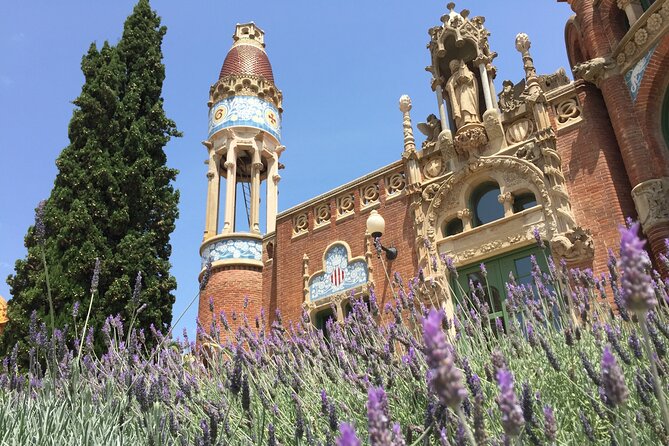
Sant Pau’s Recinte Modernista as a bonus architectural stop
You’ll also cover the Recinte Modernista de Sant Pau, a powerful site that many people miss even when they’re focused on Sagrada Família.
You can also read our reviews of more tours and experiences in Barcelona.

Entering Mercat de Sants: Start With Local Life, Not Just Landmarks
The tour opens at Mercat de Sants, a traditional market hall in Barcelona’s Sants-Montjuïc area. Starting here matters because it places you in the rhythm of the city. Before you jump into famous architecture, you get the sense that Barcelona isn’t only grand buildings and iconic photos. It’s also daily shopping, food culture, and a living neighborhood.
Even in a virtual format, this kind of opening stop helps you “read” the rest of the day better. When you later see the seaside, the historic quarters, and the monument zones, you’ll have a clearer sense of how people actually move through the city.
What to expect: a quick but meaningful explanation of traditional market halls and what you can look for when you’re there in person one day.
The possible drawback: you may finish this segment wanting a snack. That’s not a problem with the tour, but it can be a motivation bump you’ll notice.
Montjuïc Hill: The View That Teaches You the City Layout
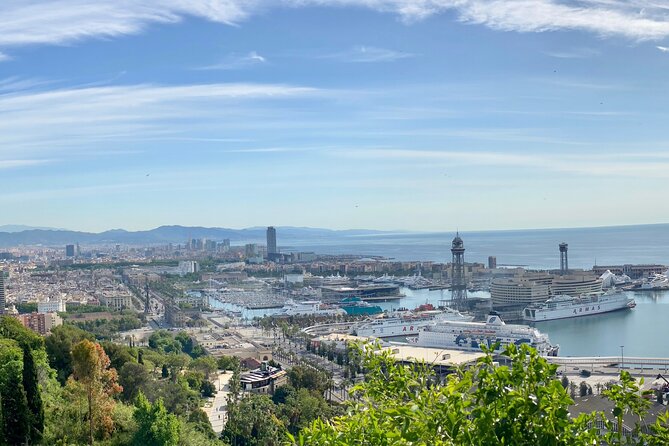
Next comes Montjuïc, with a virtual climb up the hill and panoramic viewpoints over Barcelona. This is one of the most valuable parts of a virtual “day trip” because a viewpoint does what maps struggle to do: it gives you spatial context fast.
From Montjuïc, the city tends to feel organized by elevation, corridors, and distance. That helps you later understand why certain areas feel close together while others feel separated by terrain, or why some neighborhoods feel more “grand” and others feel more “local.”
What to expect: guided commentary focused on city layout, plus the kind of landmark “where-is-that?” context that pays off for future planning.
My practical tip: if you can, set a notepad nearby and jot down any stop that sparks questions. Since you can ask questions during the tour, having a few ready helps you make the most of the interaction.
Casa Batlló and Modernisme: Getting the Meaning Behind the Look
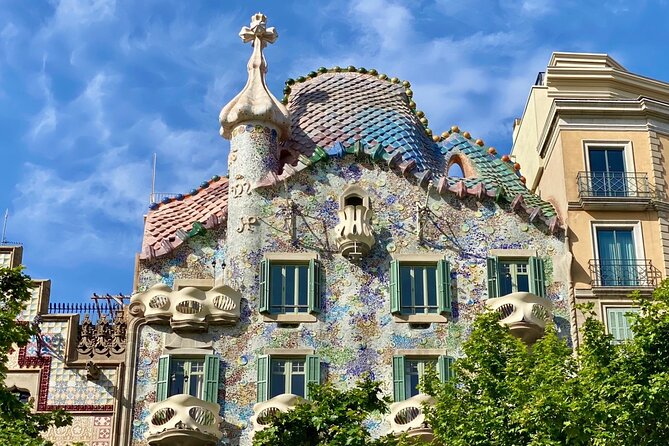
Then the tour pivots to architecture, specifically Casa Batlló. The guide connects this building to Gaudí and the broader Modernisme style. This is where the experience becomes more than scenic scrolling. Instead of treating Casa Batlló like a famous facade, you learn what makes the design conceptually important.
Gaudí’s work often feels like art that grew into architecture, and Modernisme is the umbrella that helps you frame that mindset. When you understand the style, you stop seeing only curves and colors. You start noticing how Barcelona’s creative identity shows up in the details.
What to expect: a walkthrough of what makes Casa Batlló significant, and what to look for as you picture it in real life later.
The tradeoff: since this is virtual and time is limited, you’re not getting the same level of interior exploration you’d see on a ticketed building tour. Still, you’ll come away with enough context to make a future in-person visit feel less confusing.
Barceloneta as a Lunch Break: Beach Vibes With Practical Spanish Food Talk
After the architecture stop, you get a more relaxed reset at Playa de La Barceloneta. The tour sets up a virtual lunch-at-the-beach moment while explaining lunch menus and Spanish tapas.
This is a clever segment for virtual travel because it turns “sightseeing time” into “decision time.” If you’re planning where to eat later, tapas and lunch culture can be hard to decode in a new language and a new city. This segment helps you understand the logic behind what you’ll order and how you might structure a meal.
What to expect: a lighter, food-focused explanation tied to what you’d likely encounter along the beachfront.
My practical tip: use this segment to plan your first food mission in Barcelona. If you can’t decide what to order, start by asking the guide for a quick recommendation style. Even a general framework can save you from the classic trap of ordering the most touristy thing on the menu.


Sagrada Família With Google Earth 3D: Design First, Name Second
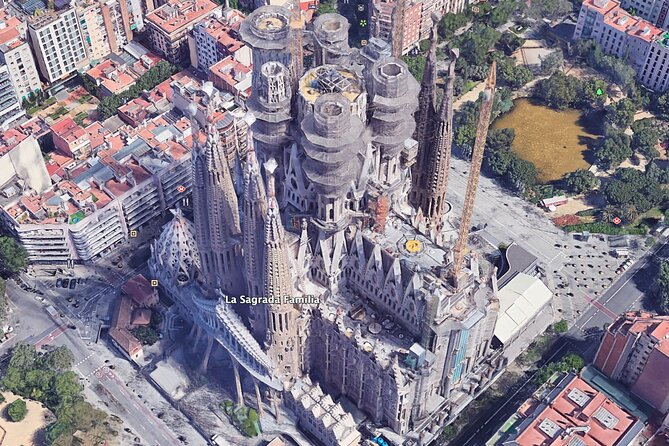
One of the standout segments is Sagrada Família. Instead of only seeing a frontal photo, the tour uses a 3D way of viewing the church through Google Earth, with explanations of the design.
That design-focused approach is why this stop works so well in a virtual format. You can’t walk around every angle in 10 minutes. But you can still “fly” around conceptually to understand the structure and why it looks the way it does.
What to expect: a visual 3D tour experience, plus clear design commentary meant to make the building feel legible rather than just famous.
The possible drawback: if Sagrada Família is your top priority, you’ll likely still want an in-person visit afterward. Virtual is great for orientation and understanding. It’s not the same as standing inside and hearing your own footsteps echo.
Recinte Modernista de Sant Pau: A Worthwhile Detour Near Sagrada Família
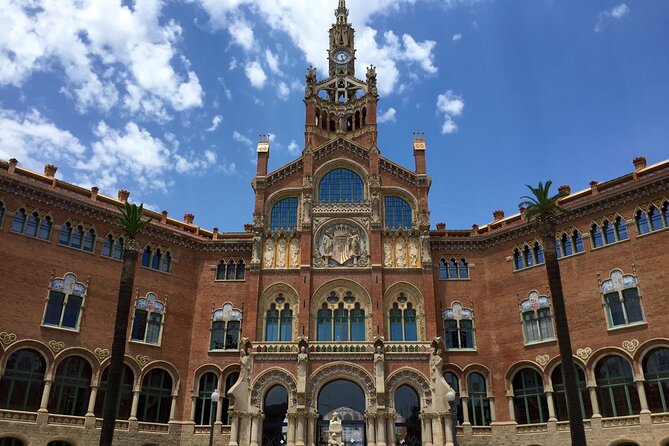
Right after Sagrada Família, the tour includes Recinte Modernista de Sant Pau. This is a smart scheduling choice because the site is close enough in theme to complement Sagrada Família, but different enough that it feels like a real find rather than repetition.
The focus here is on the modernist complex itself. It’s the kind of stop that gives you variety: not another Gaudí-only moment, but another big architectural statement that fits the Modernisme identity of Barcelona.
What to expect: an architectural explanation with a sense of why this place matters, especially if you’re the type of traveler who wants more than the top three photos everyone takes.
Why this matters: if you go to Barcelona and only chase the most obvious icons, you can leave with photos but not much understanding. A stop like Sant Pau helps you build a broader mental map of the city’s creative eras.
The Gothic Quarter and an End With Live Music at a Bar
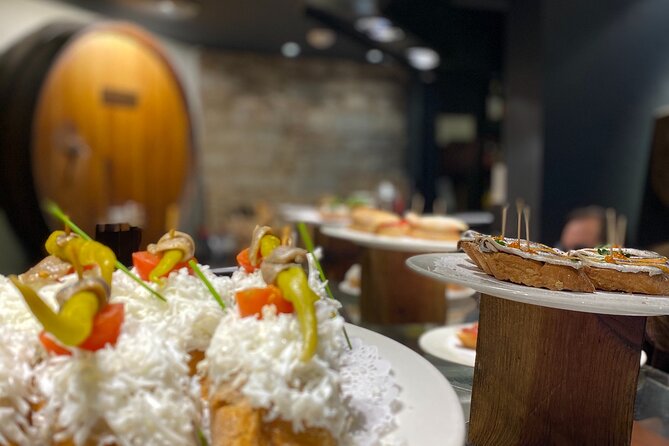
The tour then moves through the Gothic Quarter. This is the historic, tightly packed part of Barcelona where lanes and squares feel like they were made for wandering. In a virtual format, you’re still guided through the look and layout, so you get the mood even if you’re not physically turning corners.
The session finishes in a bar with live music, with the idea that you end your virtual day tour the way Barcelona days often end: with a little atmosphere and sound, not a hard stop.
What to expect: a final neighborhood walkthrough feel, then a music-focused close that gives the tour a cultural landing spot.
My practical tip: if you’re planning your actual evening in Barcelona, think about how you’ll mirror this kind of ending. Even one hour of live music in a local bar can make your trip feel less like museum hopping and more like living in the city.
Interaction, Guide Style, and Why the Experience Feels Personal
The interaction factor is where this tour gains real momentum. You can ask questions during the session, and that turns the guide into a problem-solver rather than just a narrator. Want help choosing which neighborhood to explore first once you arrive? Ask. Curious about how to interpret what you’re seeing on screen? Ask.
A standout element from customer feedback is the guide’s ability to make the tour feel like you’re there. Christian is highlighted as amazing for both knowledge and customer service, with a calm, enthusiastic style that keeps you engaged. That matters because virtual tours can sometimes feel like talking into the void. Here, the intent is to keep you connected.
Group size: the experience caps at 100 travelers. For Zoom, that’s an important detail. Smaller groups tend to feel less chaotic when questions start flying.
Price and Value: When $53 Makes Sense (and When It Doesn’t)
At about $53 for roughly 1 hour 15 minutes, this sits in the category of a “buy a guided orientation” experience. That’s what it’s best at.
Here’s how I think about value:
- If you’re short on time in Barcelona, the tour helps you prioritize what matters most before you physically visit.
- If you’re not in Barcelona yet (or you’re not able to get around easily), this gives you a structured way to experience the city without the logistics stress.
- If you already know Barcelona well and want deep, hands-on learning at each landmark, you’ll probably want in-person tours or museum tickets. This one is more about understanding and context than replacing a real visit.
Mobile ticket support and the virtual format make it easy to fit into a travel day. You also won’t spend time and money getting to a starting point in the city, which can lower the hidden cost of “orientation tours.”
Practical Notes Before You Join (So You Don’t Waste Your Slot)
You’ll need an internet connection. That’s the main “bring this from home” requirement, along with a Zoom-ready device and good audio.
If you’re booking based on your home time zone, you’ll need the correct Spanish time slot. The guidance is simple:
- For EST, add 6 hours.
- For PST, add 9 hours.
Also, the tour includes a mobile ticket. Keep that on your phone so you can access it quickly on the day.
The tour notes that it’s near public transportation, and service animals are allowed. It also says most travelers can participate, which is reassuring if you’re deciding based on comfort level.
Who This Barcelona Zoom Tour Is For
This is a great fit if you want:
- A guided way to learn Barcelona before you go
- A low-effort way to experience major sights from home
- A structure that helps you plan an itinerary once you’re in town
- An option for mobility challenges, where a “walk-all-day” plan might not work
It’s less ideal if you’re looking for a hands-on, ticketed, in-the-building experience at places like Sagrada Família or Casa Batlló. Think of it as a sharp primer and a cultural sampler with guided context.
Should You Book This Zoom Barcelona Tour?
Yes, I’d book it if you want a fast, guided sense of the city and you appreciate interaction. The combination of panoramic viewpoints, architecture explanations, a beach-and-food break, and a Gothic Quarter finish gives the session real shape. And with a guide like Christian, plus the option to ask questions during the tour, it feels less like watching and more like learning.
If your main goal is to “do” Barcelona physically, this won’t replace being in the streets. But if your goal is to arrive in Barcelona understanding what you’re looking at, or to experience the city without mobility and travel friction, this is a solid value.
FAQ
How long is the Zoom tour around Barcelona?
It runs for about 1 hour 15 minutes.
What is the price of the experience?
The price is $53.
Where does the tour start?
It starts at Mercat de Sants (Carrer de Sant Jordi, 6, Sants-Montjuïc, 08028 Barcelona, Spain).
Do I need a ticket, and is it mobile?
Yes, you’ll use a mobile ticket.
Is the experience interactive?
Yes. You can ask questions throughout the tour.
Which places are covered during the tour?
It includes Mercat de Sants, Montjuïc, Casa Batlló, Playa de La Barceloneta, Sagrada Família, Recinte Modernista de Sant Pau, the Gothic Quarter, and it finishes at a bar with live music.
Do I need to be in Barcelona to join?
No. It’s designed for exploring Barcelona from your own home via Zoom.
Is internet access required?
Yes, an internet connection is required.
What time zone should I use when booking?
If you’re booking from EST, add 6 hours. If you’re booking from PST, add 9 hours to match the Spanish time slot.
What’s the cancellation policy?
You can cancel up to 24 hours in advance for a full refund. Changes within 24 hours of the start time are not accepted, and refunds are not available within 24 hours.