Clay therapy in Barcelona, five days flat. This intensive handbuilding course at Taller Gingell mixes real studio time with a Barcelona setting, running Monday to Friday in a small group of up to eight. It is hands-on from day one, with instructor coaching and plenty of making time.
I love the close instruction from Wendy and Eric, especially during the individual build sessions where they watch what you do and guide your next move. I also like the no-stress setup: everything is included, from aprons and tools to clay and kiln firings for up to five items per student. That means you can focus on making instead of shopping.
The main thing to consider is the pace: it is an intensive week, and you only get to choose up to five pieces for kiln firing. If you want to create a big pile of extras, you will need to plan around that limit (and shipping is not included if you want it).
In This Review
- Key takeaways before you book
- Why Barcelona is a smart setting for handbuilding ceramics
- Meet Wendy and Eric: small class, close coaching
- Inside the 5-day rhythm: technique first, making second
- What you’ll learn: functional forms, sculptural ideas, and kiln prep
- Choosing your pieces for firing: the up-to-5 plan
- Included studio setup: tools, clay, aprons, WIFI
- Language and comfort: Spanish and English in the studio
- Timing and location: making space for Barcelona sightseeing
- Value check: is $612.78 for 5 days worth it?
- Should you book this intensive handbuilding course?
- FAQ
- How long is the intensive ceramic handbuilding course?
- What time and where does the course meet?
- Do I need prior ceramics experience?
- How many people are in a class?
- What languages are used during instruction?
- What’s included, and do I need to bring anything?
- How many items will be kiln fired, and is shipping included?
- Can I cancel for a full refund?
Key takeaways before you book
- Up to eight students means you get real feedback, not just a quick glance and a shrug.
- Wendy and Eric lead the process, with a friendly, open studio vibe.
- Five days, 20 hours total: technique teaching first, then construction with dedicated help.
- Everything is provided: aprons, modeling tools, clay, kiln firings, and studio WIFI.
- You select up to five items for kiln firing, so choose what you truly want finished.
- English is available, with Spanish and/or English used based on your preference.
Why Barcelona is a smart setting for handbuilding ceramics
Barcelona turns a ceramics course into more than “just a class.” You are working in a real city, with access to public transportation near the studio, so it is easier to tack on sightseeing before or after sessions. And since the course runs in the daytime, you are not trying to squeeze clay into your night plans.
The meeting point is on Carrer de Salvà 71 in the Sants-Montjuïc area. That matters because it is not a remote “tour bus only” setup. You can reach it using public transit, and the activity ends back at the same spot—useful when you are building a week around multiple things.
One more practical note: because your sessions are studio-based, Barcelona’s weather and energy feel different while you are focused. The best part is that you can switch modes. In the morning, you are hands-on with clay. Later, you can be a normal traveler again—walking, people-watching, and finding your way through neighborhoods like you actually live there for a week.
You can also read our reviews of more tours and experiences in Barcelona.



Meet Wendy and Eric: small class, close coaching
This course runs with a maximum of eight participants, which is the difference between feeling lost and feeling guided. When you are learning handbuilding—pinching, shaping, joining, and refining—small-group attention is everything. You will spend more time getting corrections and less time waiting.
Your teacher is Wendy, and Eric is also part of the experience and teaching team. Based on what people highlight from their time in the studio, Wendy’s teaching style lands as careful and supportive, while Eric’s role shows up as friendly guidance that keeps the atmosphere relaxed.
I like this teaching setup because it is built for both beginners and people improving existing skills. No prior ceramics experience is required, so you do not have to pretend you know what a kiln is or what a good join line looks like. At the same time, the course is still structured enough for more experienced makers to work on technique instead of “free time with clay.”
If you are traveling solo, this kind of studio class also makes Barcelona feel social in a natural way. You are there for the work, but you are not isolated.
Inside the 5-day rhythm: technique first, making second
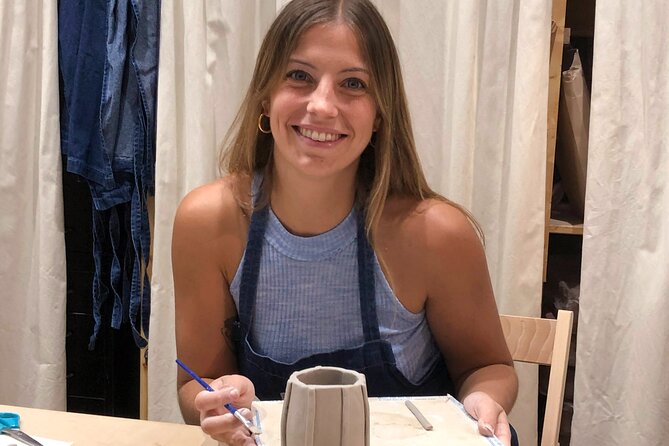
The schedule is five consecutive days, Monday through Friday, with four-hour classes. You start at 10:00am, and with that start time and four-hour blocks, you can expect the sessions to run until around the early afternoon. That rhythm is great for planning the rest of your day: it leaves room to explore Barcelona without needing late-night energy.
Each day has a clear two-part flow:
- First two hours: technique instruction and demonstration for specific handbuilding skills.
- Second two hours: hands-on construction with dedicated instruction as you work.
This structure is valuable because it avoids the classic ceramics problem: either you only watch demos (and panic later), or you only make things (and never learn how to improve). Here, you get short teaching blocks, then you immediately apply the lesson. It is how you build skill fast, without turning the week into chaos.
Also, this course is described as a one-week block with dedicated teaching and studio work, designed for mastery of key handbuilding skills. That is not “a taste class.” It is more like a short boot camp for ceramics fundamentals—exactly what you want if you want results by the end of the week.
And yes, expect to use your hands a lot. Plan for clay on your sleeves, a bit of mess, and the fact that your brain will be tired in a good way after each session.
What you’ll learn: functional forms, sculptural ideas, and kiln prep
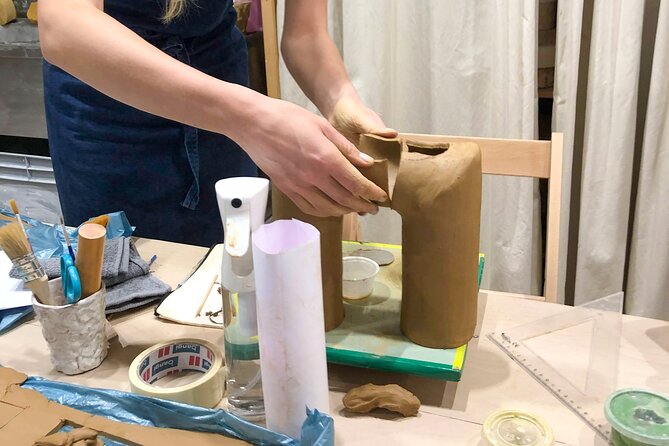
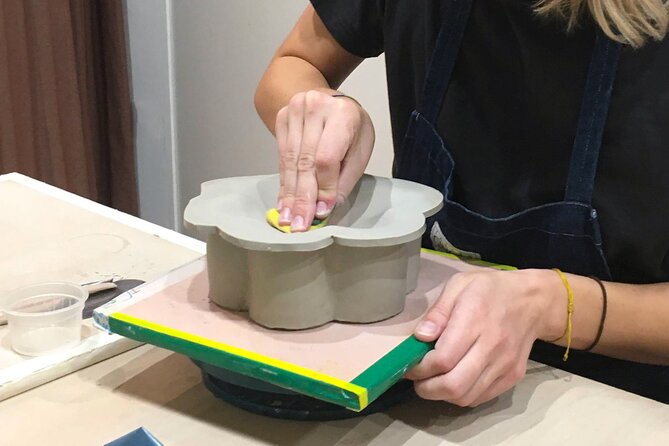
The course is built around essential handbuilding techniques used to make both functional and sculptural ceramics. That mix matters because it keeps options open. If you want mugs, cups, or table pieces, you get the skills that support everyday function. If you want a more artistic, sculptural result, you still learn the “how,” not just the idea.
From the training topics people mention, you can expect coverage that goes beyond basic shaping. During their week, participants describe learning sculpting and handbuilding methods, plus things like mold making, and learning about glazes/underglazes and kiln testing. Even if you do not use every technical piece in your own final work, you walk away understanding what is happening behind the finished pottery you buy in shops.
Here is why this matters for you: ceramics is not just making something that looks good. It is making something that survives drying, firing, and glaze firing. Technique lessons give you control over common issues like weak joins, uneven thickness, and problems that show up later after firing.
The course also emphasizes producing a body of work by the end of the week, with unique pieces in your style. You are not locked into one template. You learn the fundamentals, then apply them to what you actually want to make—whether that is a full set of forms or a few standout items.
Choosing your pieces for firing: the up-to-5 plan
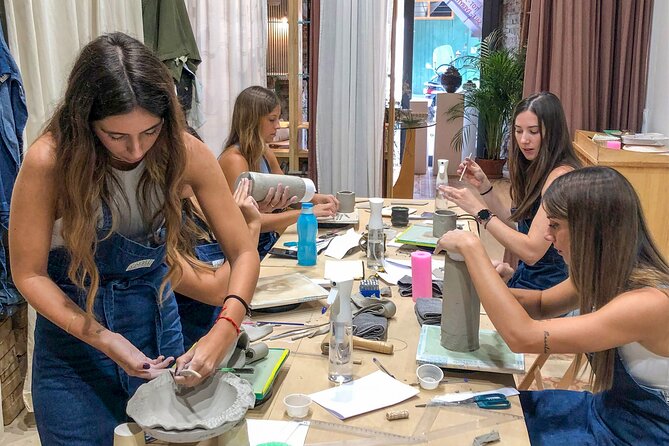
One smart feature: each student can select up to five items to be kiln fired. That is a real constraint, but it also forces you to make better decisions during the week. Instead of building ten things and hoping for the best, you choose what deserves finishing.
If you like strategy, use your first day or two to test ideas and figure out what clay behavior you enjoy. Then, once you understand the feel and pace of the studio, pick your strongest designs for the final firing list. If you try to cram everything into five slots, you will feel rushed at the end.
This course also includes kiln firings in the package, which is a major part of the value. Firing is the stage that turns “wet clay projects” into real ceramics you can actually own and use. And since shipping is not included if you want items shipped later, it is worth planning how you will transport your finished work after firing is complete.



Included studio setup: tools, clay, aprons, WIFI
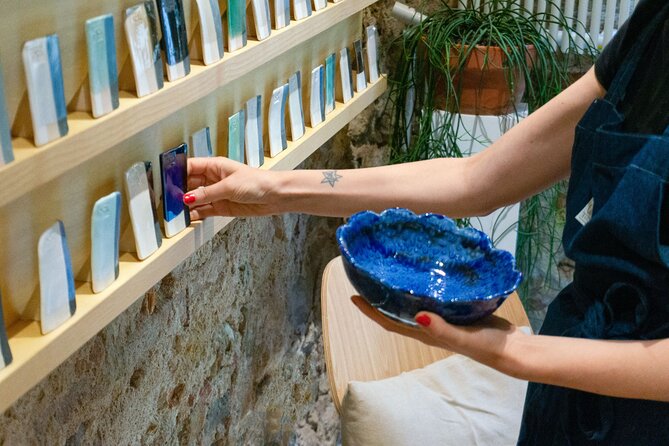
This class is designed to be easy to join, because you do not need to bring much. You get:
- Aprons
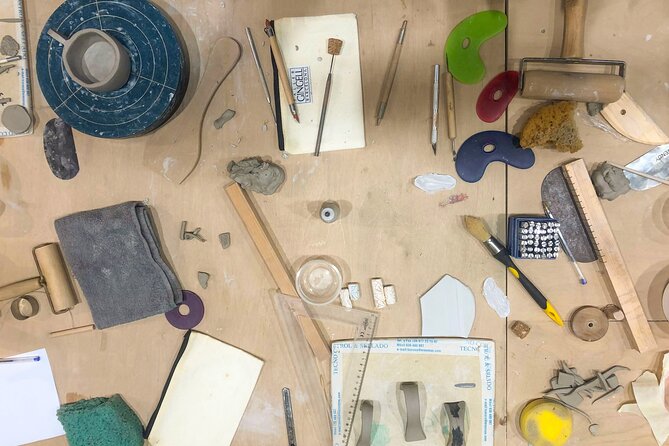
- Ceramic modeling tools
- Clay
- Kiln firings
- WIFI
That is the kind of inclusion that changes the whole travel experience. You do not have to worry about finding supplies in Barcelona or carrying fragile tools through transit. You can arrive, sign in, and start working right away.
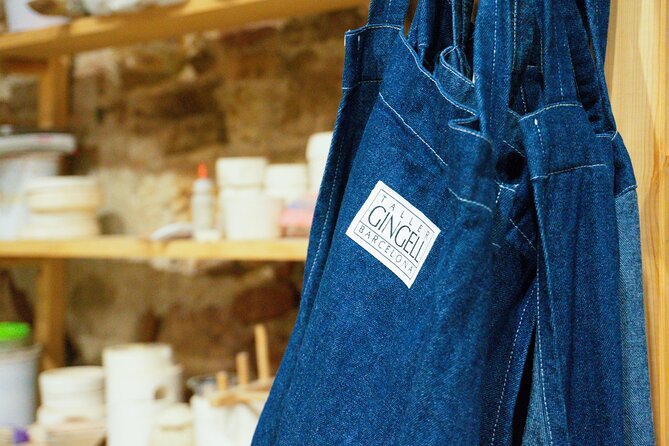
Aprons are particularly useful because clay work gets messy. Tools being provided means you can focus on learning technique rather than figuring out which tool does what. Clay being included is also important because it removes uncertainty around material differences.
WIFI being included is not a reason to book by itself, but it helps if you want to take notes, reference steps, or upload progress photos while you are at the studio. In a course like this, small moments of documentation can be helpful when you want to remember what you did once you are back home.
Language and comfort: Spanish and English in the studio
The course offers instruction in Spanish and/or English based on your preferences. That is a big practical detail. It means you can learn technique and get feedback without feeling shut out.
For beginners, language choice matters because handbuilding has a lot of specific actions. If you are not sure what the teacher means by a join, a trimming step, or how to build a form, the pace gets frustrating fast. Having instruction in your preferred language keeps it clear.
The vibe is also described as open and friendly, with a teacher-led approach plus hands-on practice. That combination is ideal for a travel workshop: you want structure, but you do not want the experience to feel stiff or intimidating.
And if you are a returning maker, you still benefit because you can explain what you want to build and get guidance on technique adjustments. It is not presented as a one-size-fits-all style class.
Timing and location: making space for Barcelona sightseeing
The course starts at 10:00am and runs as four-hour sessions Monday through Friday. That timing is excellent for mixing studio time with sightseeing. You can plan your mornings around the class, then use the rest of your day to explore Barcelona without scrambling for late-night logistics.
Your meeting point and end point are the same: Carrer de Salvà 71. That keeps your “where do I go after clay?” question simple. It also means you can build your day around one main location and keep your transit time down.
Because the studio is near public transportation, you are not stuck making everything walkable. You can move between neighborhoods efficiently—especially helpful if you are pairing the course with popular sights on your list.
I like the idea of combining craft and sightseeing because ceramics gives you a creative anchor. After a few days, the city starts to feel linked to what you are making, not just something you pass through.
Value check: is $612.78 for 5 days worth it?
At $612.78 per person for an approximately 5-day, 20-hour course, the value comes down to three things: what is included, the small group size, and the firing process.
First, a big portion of the cost is not just “class time.” You also get kiln firings included (for up to five items), plus clay, tools, and aprons. Those pieces add up in real-world terms, because firing and materials are expensive stages compared to a basic workshop.
Second, the group limit of up to eight means you are paying for instruction quality. In a course this hands-on, one extra person can make feedback harder to give. Here, the studio model is designed so your teacher can actually see what you are doing.
Third, you are paying for time. Five consecutive days means you can build skill quickly and carry momentum from one session to the next. Short workshops can be fun, but the learning often stays shallow. A full week makes it more likely you will leave with pieces you feel proud of and techniques you can repeat later.
Price is always personal, but if you want a serious skill-building week—not a quick souvenir session—this is priced in a way that makes sense for the amount of making time and included firing.
Should you book this intensive handbuilding course?
Book it if you want a real skill week in a small studio setting. This is especially good for you if you are:
- a beginner who wants a structured start without prior experience
- someone who already makes pottery and wants focused technique time
- a traveler who likes active days and wants the final result to be tangible
Skip it or think twice if you know you want to create way more than five pieces for firing. The up-to-5 kiln plan is the main constraint, and shipping is not included if you want extras handled later. Also, since it is an intensive Monday-to-Friday course, it may not fit if you prefer slow travel or long unscheduled days.
If you do book, come in ready to work and take direction. Choose your best ideas early, and let the technique lessons guide your decisions. With Wendy and Eric running the studio and coaching you through both instruction and individual construction, you are set up for a week that feels productive—while still being relaxed and friendly.
FAQ
How long is the intensive ceramic handbuilding course?
It runs for five days (approximately) with a total of about 20 hours of teaching and studio work. The format is five consecutive four-hour classes, Monday through Friday.
What time and where does the course meet?
It starts at 10:00am at Carrer de Salvà 71, Sants-Montjuïc, 08004 Barcelona, Spain. The activity ends back at the same meeting point.
Do I need prior ceramics experience?
No. The course says no prior ceramics experience is necessary and it is suitable for all levels.
How many people are in a class?
The maximum group size is eight participants, which keeps the course small.
What languages are used during instruction?
Instruction is in Spanish and/or English based on your preferences.
What’s included, and do I need to bring anything?
Aprons, ceramic modeling tools, clay, kiln firings, and WIFI are included. You do not need to bring anything special, and an apron will be ready for you.
How many items will be kiln fired, and is shipping included?
Each student can select up to five items to be kiln fired. Shipping is not included if desired.
Can I cancel for a full refund?
Yes. You can cancel up to 24 hours in advance for a full refund, and cancellations made less than 24 hours before the start time are not refunded.