Barcelona’s story sits in small squares.
This Hidden Barcelona tour is a smart way to see Ciutat Vella without rushing—one private guide, your questions welcome, and a route full of places most people pass without noticing. I especially liked the private pacing (you can ask Adi anything and linger where you want) and the tight focus on history that feels human, not textbook.
One thing to consider: the tour includes some heavy moments tied to executions, the Spanish Inquisition, and the Spanish Civil War, so it’s best if you’re okay with darker chapters mixed into the scenery.
In This Review
- Key things I’d plan around
- Price and time: what $56.78 buys you
- The private pacing that changes everything
- Stop 1: Plaça de Sant Jaume is where power gets named
- Stop 2: MUHBA Temple d’August shows Barcelona’s buried Roman layer
- Stop 3: Plaça del Rei mixes royal legend with dark public moments
- Stop 4: Barcelona Cathedral and the sense of deep time
- Stop 5: Casa de l’Ardiaca turns a courtyard into a story machine
- Stop 6: Plaça Sant Felip Neri and the Spanish Civil War aftertaste
- Stop 7: Pont del Bisbe is a landmark with a 1929 origin
- Stop 8: Museu Frederic Mares and the Spanish Inquisition link
- How the guide style makes this worth it
- What you should know before you go
- Who this Hidden Barcelona tour is best for
- Should you book this Hidden Barcelona tour?
- FAQ
- How long is the Hidden Barcelona tour?
- Is this tour private?
- What language is the tour offered in?
- Where does the tour start and end?
- Are tickets required for the stops?
- What is the cancellation policy?
Key things I’d plan around
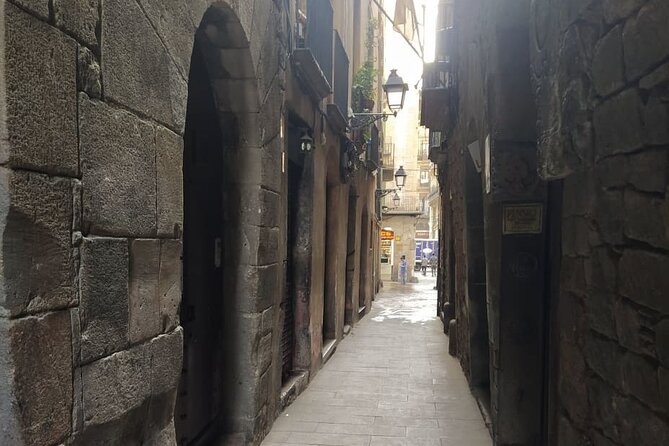
- Private guide, full attention: you’re not squeezed into a big group.
- Short stops, great storytelling: each place is a quick doorway into a bigger era.
- Free-access sites: every stop is listed as ticket-free, so your money goes to the guide.
- Roman to medieval to modern layers: you’ll see Barcelona stack eras in walking distance.
- Dark history is part of the package: expect execution sites, Inquisition links, and civil-war context.
- Real local texture: the guide’s explanations can include long-running everyday spots (like a pharmacy) alongside the landmarks.
Price and time: what $56.78 buys you
At about $56.78 per person for roughly 2 hours, this is priced like a small luxury: a private guide focused on a walk that’s mostly outdoors and stops at sites you can reach fast. The value isn’t just the price—it’s how little friction you deal with. The stops are listed as free admission, so you’re not paying extra just to “do the sights.”
Think of it like buying time with someone who can connect the dots. In Barcelona, that matters. The city looks easy on a map, but the meaning is hidden in details: who ruled here, what power looked like, and how older structures got reused or built over.
If you’re a history person, this length works well because you’re not stuck in a long program. And if you’re not a history person, the guide’s style (including humor and conversation) can make the facts feel less like homework and more like a good walk with a local.
You can also read our reviews of more tours and experiences in Barcelona.
The private pacing that changes everything
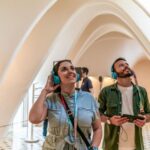
This is a private tour, so you get a smoother rhythm than the big-group model. The tour highlights say there’s no need to rush, and the reviews back that up with a guide who doesn’t sprint you from stop to stop. That’s a big deal in Barcelona, where many “must-sees” are tiny spaces. Being able to stand, look, and ask questions without feeling in the way makes the whole experience better.
You’ll start and end at the same spot in Ciutat Vella, so you don’t spend your time “getting there.” The meeting point is Pl. de Sant Jaume, 3, 08002 Barcelona. From there, your guide can steer the timing around what you care about: architecture, politics, daily life, or the scary parts of the past.
Also: it’s offered in English with a mobile ticket, and service animals are allowed. It’s listed as near public transportation, which helps if you’re building the day around other sights.
Stop 1: Plaça de Sant Jaume is where power gets named
Your walk begins at Plaça de Sant Jaume, Barcelona’s main square, where the city hall and the Catalan parliament sit side by side. Even if you only see it for a short time, it’s a strong starting point because it tells you how Barcelona organizes itself: government, identity, and public life in one place.
Why I like using this as a first stop: it sets the theme for the rest of the tour. You’re not just collecting beautiful buildings. You’re learning how different eras used the same kind of spaces to show authority.
Potential drawback: if you want purely architectural details, this square is more about civic history and political meaning. You’ll still hear the stories, but this is the anchor for context rather than a “wow, look at this roof” moment.
Stop 2: MUHBA Temple d’August shows Barcelona’s buried Roman layer
Next is MUHBA Temple d’August, described as the Roman temple of Barcelona and also as the oldest place in town, hidden from the eye. That “hidden” part matters. Barcelona often hides the older layers inside courtyards, walls, and pockets of space you’d never notice unless someone points them out.
The Roman theme here is also a good reset. After the square’s civic life, you step into a much older idea of what this city was—before today’s streets took their modern shape. You’ll get a sense of how long the city has kept rewriting itself on the same ground.
Tip for you: bring your curiosity and ask the guide how this Roman presence connects to what came later. That kind of comparison is where the tour pays off.
Stop 3: Plaça del Rei mixes royal legend with dark public moments
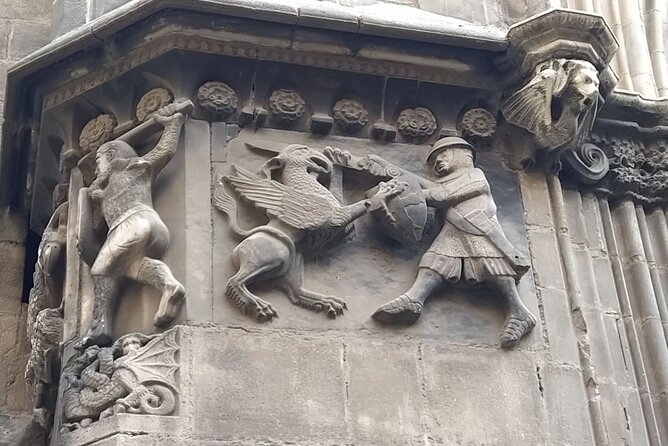
Then you reach Plaça del Rei, the place of the palace of the kings of Catalonia. This is where the tour leans into dramatic history, including important events such as public executions.
That can feel jarring—and it’s supposed to. Squares like this weren’t neutral. They were stages. Learning that changes how you view the open space: you start noticing how power can be performed in plain sight.
Consideration: if you prefer light storytelling only, this stop may feel heavy. But if you like understanding how places earn their reputation, the honesty here is a strength.


Stop 4: Barcelona Cathedral and the sense of deep time
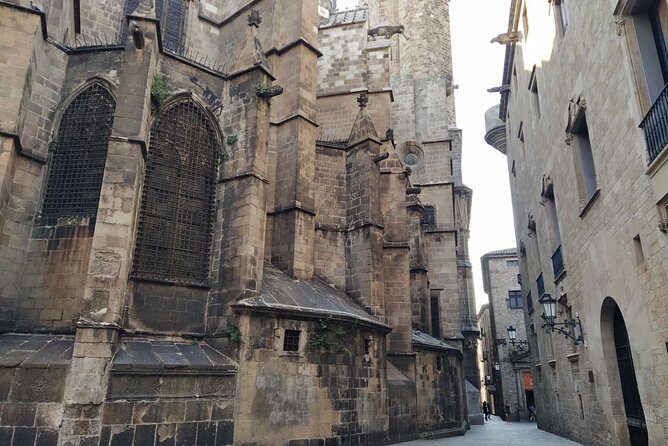
Next is Barcelona Cathedral, presented as the most important church of Barcelona, with the tour framing the site as going back to 1298 BC. The date is clearly meant to stress how far back the story goes, even if you’ll want to treat the exact timeline as something to interpret through the guide’s explanation.
Either way, the cathedral stop helps you connect faith, art, and authority in one location. It’s not just “a church.” It’s a long-running landmark that reflects different eras of rebuilding and belief.
Practical note: this stop tends to work best if you slow down. Look at the surroundings, not only the biggest structure. In older cities, the space around a major building often carries clues to the day-to-day past.
Stop 5: Casa de l’Ardiaca turns a courtyard into a story machine
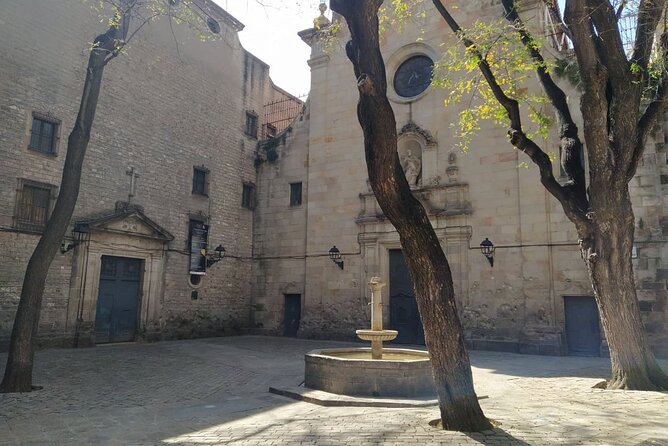
At Casa de l’Ardiaca, you get a beautiful courtyard tied to the guild of lawyers. One of the most specific details here is a mailbox made by Lluís Domènech i Montaner, which the tour describes as having a funny meaning behind it. There are also Roman remains hiding in the back, which is exactly the kind of contrast that makes this route feel like finding secrets.
This is one of the tour’s best “learn-by-looking” stops. A courtyard is naturally easy to miss—until the guide points out what you’re actually seeing. And when you mix legal guild life, a designer’s quirky detail, and older Roman leftovers, the place becomes more than a pretty pause.
Potential drawback: this is a quiet style of sightseeing. If you want big dramatic visuals every minute, you might find this stop more thoughtful than spectacle.
Stop 6: Plaça Sant Felip Neri and the Spanish Civil War aftertaste
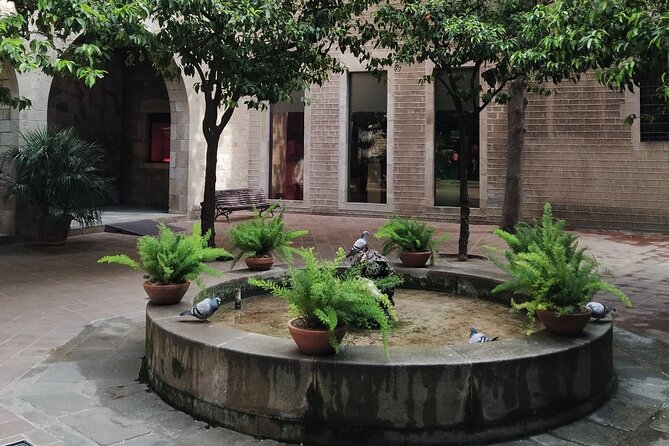
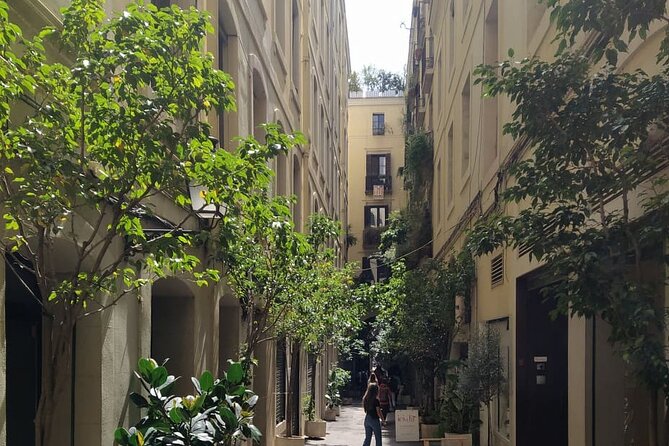
Next comes Plaça Sant Felip Neri, described as a beautiful hidden square. It relates to a church and a school, with a dark history from the time of the Spanish Civil War. On the more positive side, the tour also notes that movies were filmed here.
This stop works because it shows how a place can hold multiple meanings at once. It’s not just “sad history.” It’s also a reminder that people kept living, studying, and creating even while the world around them was tense.
Tip: if you enjoy movie connections, ask your guide how the filming link fits into the space. Those kinds of side stories are often what makes a square stick in your mind later.
Stop 7: Pont del Bisbe is a landmark with a 1929 origin
Now you reach Pont del Bisbe, described as a real landmark of Barcelona—a bridge built for the World Exposition of 1929. Bridges are good tour anchors because they create a clear viewpoint. They also show how Barcelona reinvented older urban areas with modern design moments.
What I like here: it breaks the medieval-and-ancient feeling and gives you a concrete 20th-century reference point. The city stops being only “old.” It becomes a living timeline.
Consideration: bridges can be tight for photos depending on foot traffic. The private format helps here, because you’re not forced to squeeze into a rigid group line.
Stop 8: Museu Frederic Mares and the Spanish Inquisition link
The final stop is Museu Frederic Mares, described as a charming patio with a dark story. The tour frames it as the headquarters of the Spanish Inquisition in Barcelona.
This is the last step, and it lands with weight. After you’ve seen government power, royal spaces, church influence, and law-guild life, the Inquisition connection ties those systems together. The patio setting makes it feel intimate, which can make the story more intense—less like a distant museum label, more like a place where decisions were made.
If you’re sensitive to dark topics: you can brace for it by focusing on context. Ask your guide what the Inquisition meant locally, and how those patterns affected everyday life.
How the guide style makes this worth it
A lot of tours toss facts at you. This one sounds like it does something more useful: it invites conversation. The reviews mention a guide named Adi who was friendly, funny, and easy to chat with. They also mention he didn’t rush and that he stopped at long-running stores—one example given is a pharmacy—to share little tidbits and gossip-style facts that you wouldn’t find on your own.
That approach matters. In a place like Barcelona, what you remember later usually isn’t the biggest monument. It’s the small detail you can’t unsee: a symbol on a mailbox, a courtyard layout, the kind of story that makes you rethink a square.
What you should know before you go
This is a compact 2-hour walk with multiple stops that each last around 10 to 20 minutes. That format is great for getting oriented and learning a connected story. It’s not designed to replace long museum visits, and that’s okay.
Wear shoes you’re comfortable in. You’ll be on sidewalks and in and around public spaces. Also, because the route includes serious historical themes, you might want to mentally calibrate for that mix of beauty and harsh reality.
Finally, since it’s offered in English and is private, you can tailor questions. If you care about architecture, ask about how each site changed over time. If you care about politics, ask how these spaces functioned. If you care about art or design, ask about details like the Montaner mailbox.
Who this Hidden Barcelona tour is best for
I’d put this tour near the top of your list if:
- You like history in real places, not just in lecture form.
- You want a private guide instead of big-group pacing.
- You enjoy “hidden” angles—Roman traces, courtyards, and squares most people walk past.
- You’re fine with stories that include executions, the Inquisition, and civil-war context.
It may not be ideal if you mainly want a photo-heavy highlights reel with minimal heavy topics and minimal explanation. But if you want meaning with your sightseeing, this fits.
Should you book this Hidden Barcelona tour?
If your time in Barcelona is limited and you want a focused way to understand the city’s layers, I’d book it. The strongest selling points are the private format, the guide-led pace, and the fact that you’re paying mostly for interpretation—not for a pile of paid attractions.
If dark history makes you uncomfortable, decide based on your tolerance. The places are beautiful, but the stories aren’t candy-coated. If you’re okay with that, this is an efficient, memorable way to see “real Barcelona” in just about two hours.
FAQ
How long is the Hidden Barcelona tour?
The tour lasts about 2 hours.
Is this tour private?
Yes, it’s private. Only your group participates.
What language is the tour offered in?
It’s offered in English.
Where does the tour start and end?
It starts at Pl. de Sant Jaume, 3, Ciutat Vella, 08002 Barcelona, Spain, and ends back at the meeting point.
Are tickets required for the stops?
The tour lists admission as ticket-free for each stop.
What is the cancellation policy?
You can cancel for a full refund if you cancel at least 24 hours before the experience start time. If you cancel less than 24 hours before, the amount paid is not refunded.