REVIEW · BARCELONA
Gothic Quarter & Beyond: Leisurely Local Discoveries
Book on Viator →Operated by Icono Spain Tours · Bookable on Viator
The Gothic Quarter has more doors than you think. This 3.5-hour walk mixes small-group questions with practical, photo-friendly stops across Ciutat Vella and beyond, guided in English by people like Laura who keep the explanations clear. I love how you get easy, free-entry access to real sites (not just viewpoints), plus an eat-like-a-local snack moment that helps you pace the walk. One thing to consider: this is weather-dependent, so bring a plan B mindset if it’s rainy or too hot.
With a maximum of 12 people, the vibe stays relaxed and you can actually ask follow-ups instead of shouting into the wind. You’ll also move at a strolling pace that works for most visitors, with lots of “wait, look at that” corners that many first-timers miss. The route also ends near more dining options, which makes the timing feel smart.
In This Review
- Key points that make this tour worth your time
- Getting your bearings in the Gothic Quarter, minus the chaos
- Centre Cívic Convent de Sant Agustí: when buildings change jobs
- Sant Pere de les Puelles: a monastery with a time-stamped roller coaster
- Capella d’en Marcús: a tiny chapel near an old road
- Basilica dels Sants Martirs Just i Pastor: the Gothic Quarter’s quieter church vibe
- MUHBA Temple d’August: four columns with over 2,000 years of age
- Palau de la Música Catalana and Museu Frederic Marès: music meets objects
- What the price covers (and why it feels fair)
- How to make the most of it on your own day
- Who this tour is best for
- Should you book Gothic Quarter & Beyond?
- FAQ
- How long is the Gothic Quarter & Beyond tour?
- How much does it cost?
- What language is the tour offered in?
- How big is the group?
- Where does the tour start and end?
- Are the admission tickets at the stops included?
- Do I need to buy a paper ticket?
- Is the tour dependent on weather?
- Are service animals allowed?
- How far in advance do people usually book?
Key points that make this tour worth your time
- Ask questions freely: a small group (up to 12) keeps the guide conversation going.
- Real local snack, not a museum-cookie: you’ll pause to taste something traditional.
- Lesser-seen architectural moments: Romanesque, Gothic, and the Roman layer show up in surprising places.
- Photo stops with breathing room: you’ll hit spots that aren’t constantly crowded.
- Free admission at every listed stop: you can focus on the experience instead of ticket math.
Getting your bearings in the Gothic Quarter, minus the chaos
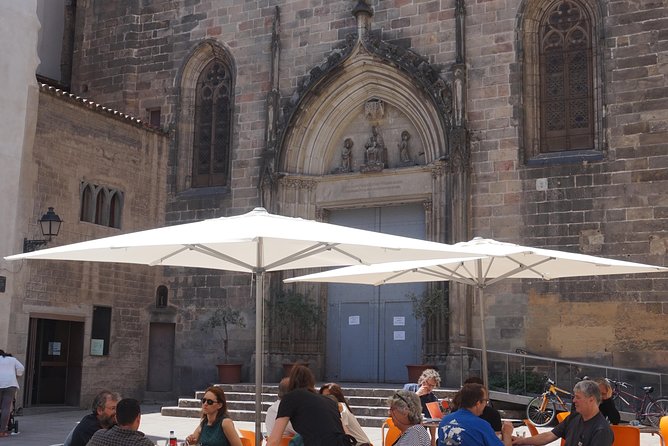
Barcelona’s Gothic Quarter can feel like a maze at first: narrow streets, sudden courtyards, and churches tucked behind walls that look like regular buildings. This tour helps you read the neighborhood like a map with personality. Instead of sprinting from highlight to highlight, you get a slow route that makes the city’s layers easier to understand—Roman-era remnants, medieval monasteries, and later civic uses all in one afternoon.
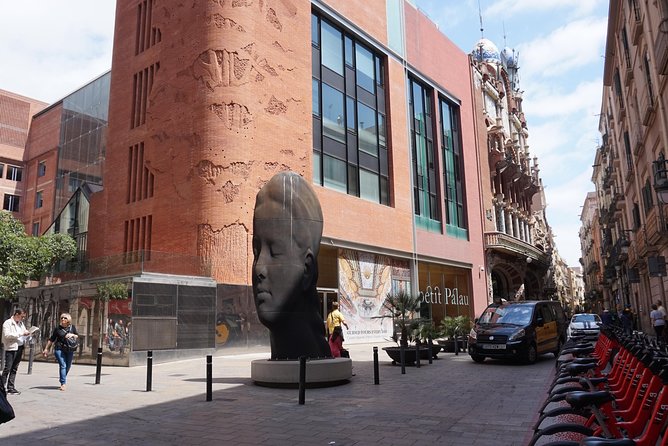
I also like that the meeting point puts you right where you can start walking immediately, around the Palau de la Música area. The tour ends near Plaça Sant Iu, which is handy if you want to keep going on your own for dinner or a last wander.
You can also read our reviews of more tours and experiences in Barcelona.
Centre Cívic Convent de Sant Agustí: when buildings change jobs
Your first stop is the Centre Cívic Convent de Sant Agustí (the Sant Agustí Vell area). The site’s story is all about how Barcelona repurposed space instead of scrapping it. Construction began in 1349, but later the Augustinians had to leave because of the Fortress of the Ciutadella. Between 1728 and 1750, they created the newer convent and church—so you get two eras braided together.
Today, much of the older convent is used as the Ciutat Vella Civic Centre, the Barcelona Photographic Archive, and the Chocolate Museum. That matters because it explains something I love about Barcelona: many “historic” places aren’t just preserved like glass cases. They’re part of everyday city life, and you can feel that through the way the space is used.
What to watch for: look for the preserved elements of the old convent, like a wing of the sanctuary that was restored and a lateral part of the church. These are the details that help you understand what you’re seeing, even if you’re not an architecture student.
Sant Pere de les Puelles: a monastery with a time-stamped roller coaster
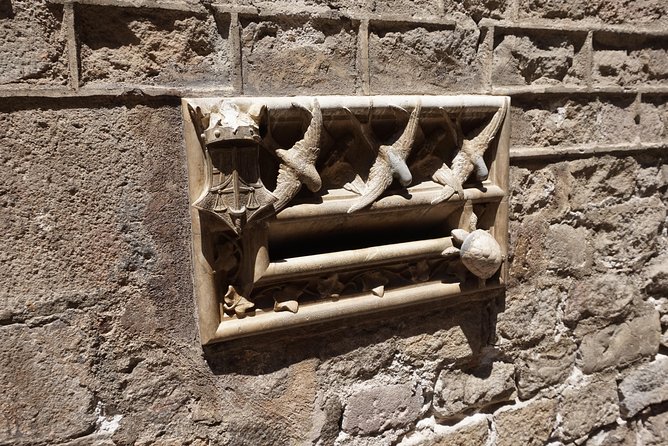
Next you head to Sant Pere of the Puelles, tied to an ancient monastery dating back to 945 AD. It was consecrated that year and became the first convent of Benedictine nuns in Barcelona. That’s your big-picture anchor: this place wasn’t a footnote—it helped shape early religious life in the city.
The building you see has been transformed by major events. Arab troop attacks, fires, and the 19th-century expulsion of the religious community all pushed the site into new forms. In 1879, the nuns moved to a more permanent site in Sarrià-Sant Gervasi, so the story continues outside this exact location.
A practical consideration here: since this is an older site with shifting uses over time, you may want to keep your expectations flexible. You’re not here for a single “perfect” viewing angle. You’re here to understand how the past survived through damage, rebuilding, and change.
Capella d’en Marcús: a tiny chapel near an old road
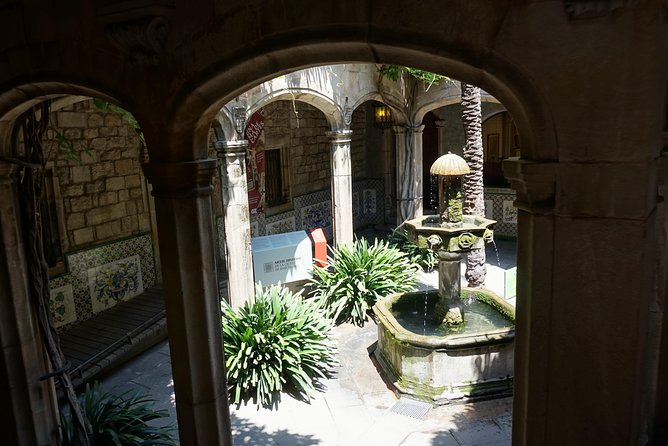
Capella d’en Marcús is short, but it’s a strong reminder of how movement shaped medieval cities. Bernat Marcús sponsored the construction of a small chapel in 1166—at least partly to house travelers and act as a hospital for the poorest people in Barcelona. That’s a powerful detail because it turns a small building into something social, not just sacred.
Originally, it was called Capella de la Mare de Deu de la Guia, and it sat in a “right place” because it was on the old Roman road that led toward France. So you’re literally standing where travel routes once mattered. If you like the city as a web of connections, this stop hits.
Since this is brief, treat it like a punctuation mark in the walk. Stop, notice the structure, and let the meaning land. It’s the kind of moment you’ll remember later when you see how Barcelona’s streets keep aligning with older paths.
Basilica dels Sants Martirs Just i Pastor: the Gothic Quarter’s quieter church vibe
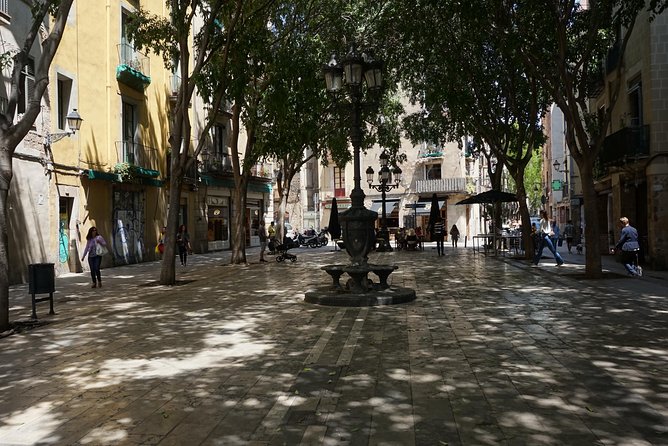
Then you reach Basilica dels Sants Martirs Just i Pastor. Tradition calls it Barcelona’s oldest church, though the tour frames it with a gentle “whether that’s true or not.” Either way, it’s undeniably a 14th-century building in one of the Gothic Quarter’s most beautiful and least explored spots.
This is the kind of stop that works well when you’re trying to get beyond postcard Barcelona. The Gothic Quarter isn’t only big monuments. It’s also the smaller sacred buildings that feel lived-in by time—places where the architecture tells you the city’s values changed, but faith (and community) still shaped daily life.
Photo tip: keep an eye out for angles where the basilica’s structure meets the tight urban setting around it. This isn’t a “wide-open square and pose” church. You’re photographing architecture in context, which usually gives better results anyway.


MUHBA Temple d’August: four columns with over 2,000 years of age
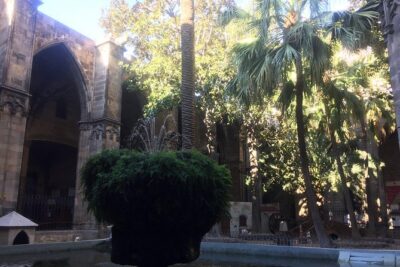
If you want a clean, mind-bending contrast to all the medieval walls, this is it. MUHBA Temple d’August is one of Barcelona’s best-kept secrets, located on Carrer Paradís. Inside a small medieval courtyard, you can still see four columns from the Temple of Augustus. They’re over 2,000 years old.
This stop is valuable because it helps you see how Barcelona layers time. You might pass Roman-era remnants without realizing they’re there, then suddenly you’re in a courtyard that makes the age feel real. The columns are the whole focus, which makes this a strong stop even if you’re not trying to read every plaque.
Possible drawback: because this is a small courtyard, it can feel tight if a lot of people arrive at once. That’s where a guided group and timed pacing help. You’ll typically get the space to look without getting shoved along.
Palau de la Música Catalana and Museu Frederic Marès: music meets objects
Your later portion becomes a two-part lesson in what Catalonia cares about—music, and the way art gets collected and shown.
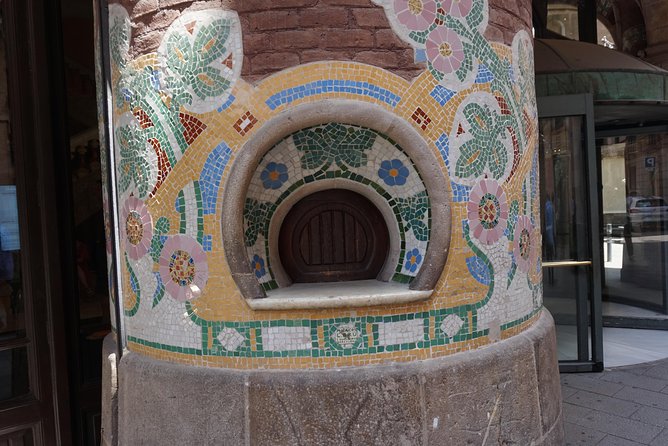
First: the Palau de la Música Catalana. This concert hall is designed by Domènech i Montaner and has UNESCO World Heritage status. It was built as the home of the Orfeó Català choir, funded by public donations. That funding detail matters, because it explains why this isn’t just a private monument. It’s a civic project tied to community music.
Next: Museu Frederic Marès. This museum sits in the heart of the Gothic Quarter, in part of a former royal palace connected to the Counts of Barcelona. The museum reflects the collecting life of Frederic Marès, with an extensive collection of artworks and objects he built over his lifetime.
For you, the practical value is pacing. After churches and courtyards, the Palau and the museum give you a breather. And if you like seeing how art and architecture reflect identity, these stops connect the dots between “Catalonia as culture” and “Catalonia as place.”
Photo tip: at the Palau, watch for views that let you capture the building’s structure without only taking the same angles everyone else does. Your route is built to give you options, not just one shot.
What the price covers (and why it feels fair)
The tour costs $61.54 per person for about 3 hours 30 minutes, offered in English with a mobile ticket. On top of that, the listed sights have free admission at the stops, which is a big deal. You’re paying mainly for guide time, the walking plan that links these places intelligently, and the local snack.
This price makes sense if you’re the type of traveler who hates wasted time—standing in the wrong place, missing the “why” behind a building, or trying to piece together a route from Google Maps while still figuring out what century you’re in. The small-group size helps you get answers, and that can quickly turn a walk into something you’ll remember.
Also, group discounts are mentioned, which can help if you’re pairing up with a friend.
How to make the most of it on your own day
Even with a guide leading the way, your success depends on your setup. Wear shoes you’re comfortable walking in for a few hours on old streets. Bring water. If you’re sensitive to heat, try to plan this earlier in the day.
Because the tour is weather-dependent, it’s smart to pack for “changed plans.” If it gets uncomfortable outside, you’ll want something breathable and light. If it’s canceled due to poor weather, you’ll be offered a different date or a full refund, and that’s a relief when you’re working around reservations.
Finally, think of this walk as a foundation. You’ll finish near Plaça Sant Iu, so you can keep exploring nearby streets for dinner or a final look at the Gothic Quarter in softer evening light. If you’re planning a museum-heavy day, this tour can still work as the cultural warm-up—less tiring than cramming three indoor stops back-to-back.
Who this tour is best for
I’d point you toward this experience if you want:
- a high-footprint, low-stress way to understand the Gothic Quarter’s layers
- a guide you can ask questions of (small group, up to 12)
- a route that mixes well-known landmarks with quieter, off-the-main-path corners
- a day that includes a local snack without turning it into a food tour
It’s also a good fit for first-time visitors who don’t want a checklist tour, and for returning visitors who want a different angle on Ciutat Vella.
Should you book Gothic Quarter & Beyond?
If you’re torn, here’s my practical take. Book it if you want a guided walk that explains what you’re seeing and keeps you moving through real, mostly free stops—plus that extra pause to eat like locals. The small group and the chance to ask questions make the experience feel more personal than a larger group cram session.
Skip it (or at least be cautious) if your schedule is extremely rigid or you’re expecting a fully indoor route. This one does require good weather, and the joy depends on being able to stroll and look closely as you go.
If you like architecture, city layers, and photo-friendly corners with room to breathe, this tour is a smart way to spend an afternoon in Barcelona’s older heart.
FAQ
How long is the Gothic Quarter & Beyond tour?
It runs about 3 hours 30 minutes.
How much does it cost?
It costs $61.54 per person.
What language is the tour offered in?
The tour is offered in English.
How big is the group?
It has a maximum of 12 travelers.
Where does the tour start and end?
It starts at Carrer del Palau de la Música, C/ Palau de la Música, Ciutat Vella, 08003 Barcelona, Spain, and ends at Museu Frederic Mares, Plaça Sant Iu, 5, Ciutat Vella, 08002 Barcelona, Spain.
Are the admission tickets at the stops included?
The tour lists free admission for the stops included.
Do I need to buy a paper ticket?
You’ll use a mobile ticket.
Is the tour dependent on weather?
Yes. It requires good weather, and if canceled for poor weather you’ll be offered a different date or a full refund.
Are service animals allowed?
Yes, service animals are allowed.
How far in advance do people usually book?
On average, it’s booked 27 days in advance.