REVIEW · BARCELONA
Gaudi & Sagrada Familia Donation-Based Tour in English
Book on Viator →Operated by Runner Bean Tours · Bookable on Viator
Gaudí feels bigger when it’s explained on the street. This donation-based, English-speaking tour strings together iconic stops and a walk through central Barcelona, so you get the story behind the shapes, not just a postcard checklist. I especially like how it starts in Plaça Reial and ends at Sagrada Família, with stops along the way that show Gaudí’s range.
The two biggest wins for me: a local guide who keeps the pace moving and makes Gaudí’s life click (guides like Tati, Julie, Lisa, and Jarrod are repeatedly praised), plus practical help for getting around, including Metro tips. The main drawback to plan for: attraction entry is not included, so you’ll usually see buildings from the outside and you may need tickets if you want to go in—especially for Sagrada Família.
If you want an efficient introduction and you’re okay doing some self-guided ticket planning, this tour is a strong start. It’s also a good fit for travelers who enjoy photos and walking, because you’ll be set up with excellent sightlines along Passeig de Gràcia.
In This Review
- Key things to know before you go
- Pay-What-You-Want Gaudí: Why This Is Such Good Value
- Starting at Plaça Reial: The Perfect “Gaudí Warm-Up”
- Palau Güell: Seeing a Different Side of Gaudí
- Manzana de la Discordia: The Architecture “Showdown” on Passeig de Gràcia
- Casa Batlló and Casa Milà (La Pedrera): What to Look For Outside
- Sagrada Família: Views, Symbols, and Why Timing Matters
- Metro Moves and Tickets: How Not to Trip Over Logistics
- The Guides: The Real Reason People Keep Recommending This Tour
- Who This Tour Is Best For (And Who Might Skip It)
- Should You Book This Donation-Based Gaudí Tour?
- FAQ
- Is this tour really donation-based?
- What’s included in the tour price?
- Do we enter Gaudí buildings during the tour?
- How long is the tour?
- Where does the tour start and end?
- What language is the tour offered in?
- How big are the groups?
- Can I cancel for free?
Key things to know before you go
- Pay what you want: your ticket price is low, and the end-of-tour donation is part of the value equation.
- English guide, small feel: the experience is capped at 20 travelers, with reservations limited to smaller groups.
- Outside views only: major Gaudí sights are primarily seen from the street, not through the doors.
- Metro guidance included: you’ll take two short Metro rides, and the guide helps you figure it out.
- Photo-friendly route: the stops are chosen for angles and quick “aha” moments.
- Sagrada Família time is focused: expect explanation + views; entry is not part of the tour ticket.
Pay-What-You-Want Gaudí: Why This Is Such Good Value
This tour is priced at $3.63 per person, then it runs on a donation at the end based on satisfaction. That structure can feel intimidating, but here’s the practical way to look at it: you’re paying for a guide who organizes the route, tells you what you’re looking at, and helps you connect Gaudí’s life to his buildings.
You also get a lot of walking-light sightseeing. Over about 2 hours 30 minutes (often stretching closer to 3 when the guide has extra stories), you’ll cover multiple neighborhoods and architectural moments that usually take separate planning. For first-timers, that matters.
One more value point: the guides are not just reciting facts. In the best sessions, they connect details to real choices—why certain forms look the way they do, and what Gaudí was trying to solve artistically. People rave about guides like Tati, who held attention even for an 11-year-old, and Julie, who made Gaudí’s personal struggles understandable.
You can also read our reviews of more tours and experiences in Barcelona.

Starting at Plaça Reial: The Perfect “Gaudí Warm-Up”
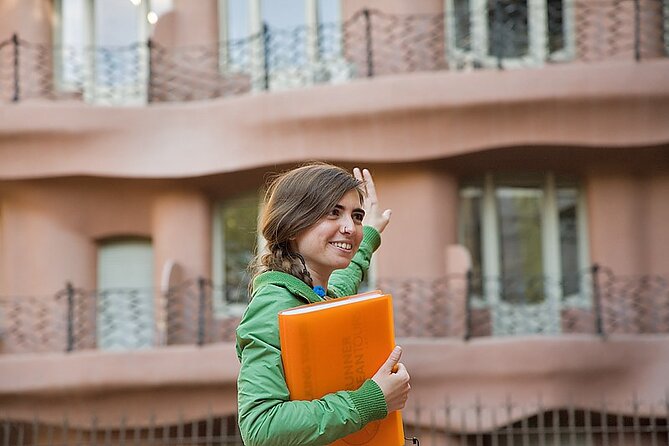
You meet in Plaça Reial, in the Ciutat Vella area. This is a great opening choice because the square has that classic Barcelona feel: palm trees, outdoor cafés, and the kind of atmosphere that makes you stop looking at your phone and start looking up.
A big part of the value here is the transition. The tour doesn’t treat Gaudí like a distant museum exhibit. It begins where the city actually breathes. You’ll get a quick vibe check on the different styles you’ll see later, including how Gaudí’s signature touches fit into Barcelona’s broader architecture.
Also, Plaça Reial is simply photogenic. The guide will help you position for pictures, and that matters when you’re trying to capture Gaudí’s work and the street-level character around it.
Palau Güell: Seeing a Different Side of Gaudí
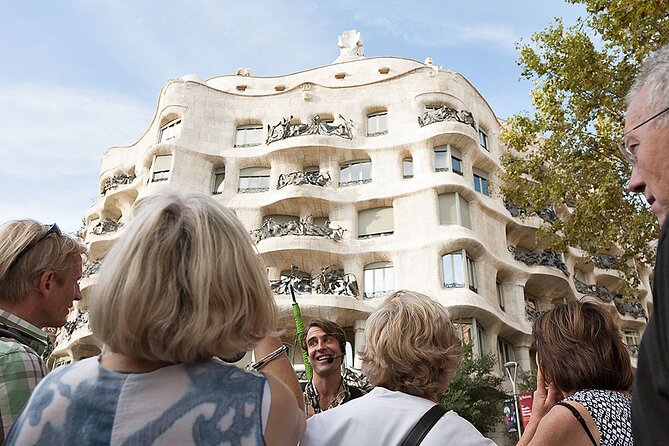
Next up is Palau Güell, Gaudí’s early masterpiece for Eusebi Güell, completed in 1888. If your only memory of Gaudí is colorful façades, this stop is a reality check—in a good way.
From the street, you’ll focus on the features that make this building feel theatrical even without going inside. Expect the guide to point out how Gaudí shapes light, ventilation, and ornament, and how that early commission helped establish his future approach.
The drawback here is straightforward: entry isn’t included. So you’re not walking the interior rooms. But the tour is still useful because it gives you a guided framework for what to notice outside. If you later decide to add Palau Güell entry, you’ll go in with better “eyes.”
Manzana de la Discordia: The Architecture “Showdown” on Passeig de Gràcia
Then comes one of Barcelona’s most famous stretches for architecture lovers: the area commonly called Manzana de la Discordia. You’ll be on or near Passeig de Gràcia, looking at three standout buildings—Casa Batlló, Casa Amatller (mentioned in the route context), and Casa Lleó-Morera.
Even if you only skim façades from the outside, this is a fun stop because it feels like a visual competition. The guide’s job is to help you see what each architect choice is saying. It’s less about memorizing names and more about noticing recurring themes: bones of the structure, how curves replace straight lines, and how decorative elements become part of the building’s “logic.”
This stop is also a great break from pure walking. It’s short enough to stay energetic, but long enough to get a few clean photo moments and a mental map for what you’ll see at Casa Batlló next.
Casa Batlló and Casa Milà (La Pedrera): What to Look For Outside
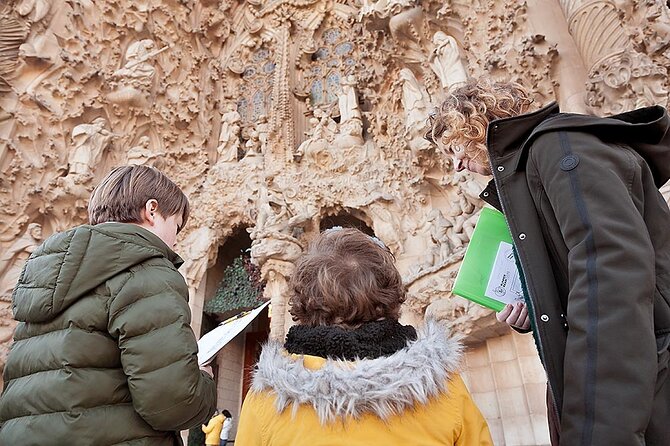
After Manzana de la Discordia, the tour spends time at Casa Batlló and later moves on to Casa Milà, also known as La Pedrera. Both are UNESCO World Heritage sites, and both are famous for façades that don’t look like “normal” buildings.
Since tickets are not included for entry, the real win is the guided eye. Your guide can help you interpret what you’re seeing without making you feel lost. For example, Casa Batlló’s façade is often described like a dream you can’t quite explain—and that’s exactly why a guide helps. You’ll likely get pointers on how the building’s lines and colors suggest story-like symbolism.
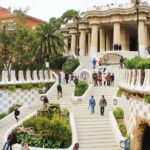
At Casa Milà, you’ll get another style lesson. The stone-like exterior, the unusual balconies, and the famous rooftop forms are the headlines. The tour focuses on the exterior presentation, plus the ideas behind it. Many guides share images during the walk to help you understand what you’re looking at, and that helps if you’re trying to recognize details from street level.
One thing to consider: if you were hoping for full inside access, you’ll need to do separate bookings for interiors. The tour is built to get you oriented first. Think of it as paying for clarity, not for entry stamps.


Sagrada Família: Views, Symbols, and Why Timing Matters
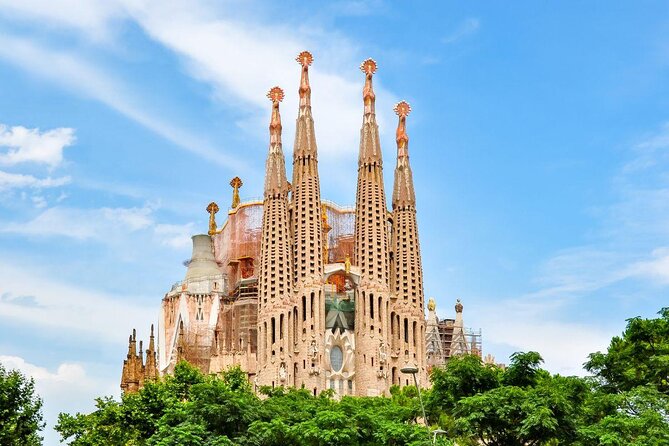
The finish point is Sagrada Família on Carrer de Mallorca. You’ll have about 40 minutes there, which is a good amount for an exterior-focused experience.
Even without entry, Sagrada Família hits hard. It’s a building designed to be read—spires, carvings, and the sense that everything is doing a job. A good guide connects what you’re seeing outside to what you’ll find inside, including the famous stained glass effect. The practical catch is that the tour’s admission is not included, so you’re not automatically going inside during your guided time.
This is where you should plan strategically. If you want to go in, book tickets separately in advance. One useful detail from real-world experience: Saturdays can get busy, and it can require planning ahead. If you arrive without an entry plan, you can still enjoy the exterior and the explanation, but you’ll want to accept that the inside experience will be on a different day.
Also, Sagrada Família is a natural photo magnet. Expect the guide to help you position and pick angles, especially if you’re there during less-than-ideal weather. Rain shows up in Barcelona sometimes, and several guides are praised for keeping the group moving and protecting the flow of the tour.
Metro Moves and Tickets: How Not to Trip Over Logistics
This tour includes two short Metro trips, and the guide helps you navigate them. That’s honestly one of the underrated reasons to do it. Barcelona’s transit is straightforward once you’re oriented, but on your first day, it’s easy to waste time figuring out lines and stations.
Practical advice I’d follow:
- If you have a Metro pass, it should make transfers easier, and your guide can point you to the cleanest route between stops.
- Keep your phone charged. You’ll likely use maps while you’re matching directions to station names.
- Watch your pace. It’s a walking tour, and you’ll want to keep moving so the group stays on schedule.
For tickets: the tour does not include admission to the buildings. You’ll be seeing façades and key views from outside. That’s not a dealbreaker, but it changes the math on your total trip cost. If you add interior tickets later, budget for it.
The Guides: The Real Reason People Keep Recommending This Tour
This is the part you can’t see in the itinerary, but you feel it during the walk. The repeated praise isn’t just that the guides are friendly. It’s that they can hold attention through story, humor, and clear explanations.
You’ll hear different styles:
- Some guides, like Tati, are praised for fun facts and for making the architecture feel understandable even to kids.
- Others, like Julie, are praised for connecting Gaudí’s personal timeline—how his hardships shaped his design decisions.
- People also mention guides like Lisa using photos to explain details, and Jarrod giving Metro and even basic safety tips so you feel confident moving around the city.
One consideration: this is an English-speaking tour, and English clarity can vary by guide. The best guides pace themselves so everyone can follow. If you’re sensitive to speed or noise, speak up early and ask for slower repetition. You’ll get the most out of it when you can actually keep up.
Who This Tour Is Best For (And Who Might Skip It)
I think this tour is ideal if you:
- Want a packed introduction to Gaudí without spending hours on planning.
- Like walking and photography and want the route to hit several headline buildings in one go.
- Appreciate a guide who helps you connect buildings to Gaudí’s life, not just his style labels.
- Are comfortable seeing buildings from the outside first, then choosing any interiors later.
You might consider skipping if you strongly prefer full admissions included. Since entry isn’t part of the tour, you’ll need separate tickets if you want interiors like you would on a true ticketed sightseeing day.
Also, if you know you’ll be traveling with limited mobility, the Metro + walking combination could be tiring. The tour says most travelers can participate, but your comfort with transit and sidewalks still matters.
Should You Book This Donation-Based Gaudí Tour?
If your goal is simple—get your bearings in Barcelona and understand Gaudí fast—book it. The price is low, you get a professional local guide, you walk through the city in a way that feels connected, and you leave with a much clearer sense of what you’re seeing when you spot Gaudí’s buildings later.
If your goal is “I want interiors only,” then this isn’t the right tool. You’ll likely end up spending extra on tickets anyway. But even then, doing this first can make your paid visits feel smarter and more meaningful.
My recommendation: do this tour early in your trip. It helps you plan what to add next—especially around Sagrada Família—so you’re not guessing when the calendar gets tight.
FAQ
Is this tour really donation-based?
Yes. The tour has a low listed price, and you’re expected to leave a donation to the guide at the end based on satisfaction.
What’s included in the tour price?
You get a professional English-speaking local guide. The tour does not include transportation fare or attraction tickets.
Do we enter Gaudí buildings during the tour?
No. The buildings are primarily seen from the outside, and attraction admission is not included. If you want to go inside places like Sagrada Família, you’ll need separate tickets.
How long is the tour?
It runs about 2 hours 30 minutes. Timing can vary depending on what the guide shares and how the walk goes.
Where does the tour start and end?
It starts at Plaça Reial and ends at Sagrada Família near Carrer de Mallorca, close to metro and bus connections.
What language is the tour offered in?
The tour is offered in English, and you’ll receive a mobile ticket.
How big are the groups?
The tour has a maximum of 20 travelers, and reservations are limited (double reservations aren’t accepted). The tour notes a max of 6 people per reservation.
Can I cancel for free?
You can cancel for a full refund if you cancel at least 24 hours before the start time.