REVIEW · BARCELONA
Bodega Barcelona Barrio Tradition in Bulk
Book on Viator →Operated by Culinary Backstreets Walks · Bookable on Viator
Vermut tastes better when locals lead. This Barcelona bodega tour strings together El Raval, Sant Andreu, and L’Eixample in about four hours, with a small maximum group size (7) and free entry at each cultural stop. I especially like how the tastings are tied to neighborhood history, not just served and forgotten.
The only real catch: you’ll be on your feet for most of the evening, moving between districts and markets. If you want a totally relaxed stroll with long sit-down breaks, this one may feel a bit fast.
In This Review
- Key highlights
- Why this Barcelona bodega tour feels different
- Getting your bearings at Mercat de Sant Antoni
- El Raval kickoff: carajillo, Catalan brandy, and the street-level version of Barcelona
- Sant Andreu and the Tres Tombs center: a short stop with real payoff
- Casa Golferichs: the kind of bite you actually remember
- Mercat de Sant Antoni: stalls, a drink break, and how food culture works up close
- L’Eixample vermut hour: olive garnish, soda siphon, and tapas that fit the moment
- What you’ll actually eat and drink (and how to get the best out of it)
- Group size, guide quality, and why that matters for value
- Practical matters: getting there, wearing the right shoes, and timing your evening
- Should you book Bodega Barcelona Barrio Tradition in Bulk?
- FAQ
- How long is the tour?
- What’s the meeting point for this experience?
- Is the tour offered in English?
- How many people are in the group?
- Do I get a mobile ticket?
- What stops and drinks should I expect?
- Is admission included for the cultural stops?
- What is the cancellation and weather situation?
- Is this tour near public transportation and suitable for most people?
Key highlights
- Carajillo start in El Raval: coffee spiked with Catalan brandy at an old neighborhood hangout
- Sant Andreu context at the Tres Tombs center: short and focused history of local character
- Casa Golferichs stop: a community-center setting that keeps the tour grounded in real daily life
- Mercat de Sant Antoni food-world detour: stalls plus a drink break inside a classic Barcelona market
- L’Eixample vermut hour: vermut served chilled with just an olive garnish, plus the soda siphon spritz moment
- Guides who connect food to the city: names like Ivan, Pam, Paola, and Senem come up again and again in the feedback
Why this Barcelona bodega tour feels different
A bodega tour can easily turn into a loop of bars where you’re herded from one pour to the next. This one works because it treats drinking and eating like a language Barcelona locals use to talk about place, time, and identity.
You also get a guide who’s clearly not reading from a script. I love when a guide explains why a particular drink tastes the way it does, or how a neighborhood’s layout and architecture shaped daily habits. In the tour feedback, guides such as Ivan, Pam, Paola, and Senem are described as both warm and genuinely plugged into the city.
Price-wise, $160 for ~4 hours can look steep until you add up the real value: multiple tastings, guided stops, and free admission at the listed cultural locations. And with an average booking time of about 15 days in advance, it’s clearly popular enough that planning ahead helps you lock it in.
You can also read our reviews of more tours and experiences in Barcelona.


Getting your bearings at Mercat de Sant Antoni
You start at Mercat de Sant Antoni (Eixample, 08015 Barcelona) and end back at the same meeting spot. That round-trip setup matters more than it sounds. It helps you avoid that late-tour feeling of being stranded across town when you’re ready to head back to your hotel.
This is also a smart start point because it’s a real Barcelona market area, not a tourist bus deposit. The vibe is practical: you’re around locals buying food, people milling through stalls, and the city doing city things. It sets you up to understand why bodegas and vermut culture belong in everyday life, not just in a nightlife brochure.
From there, the tour flows outward toward neighborhoods with different personalities—so you’re not just tasting, you’re watching how the city shifts block by block.
El Raval kickoff: carajillo, Catalan brandy, and the street-level version of Barcelona
Your first stop lands in El Raval, one of Barcelona’s most historic and multicultural neighborhoods. Instead of beginning with something bland and universal, the tour starts you with a carajillo—coffee spiked with Catalan brandy—at a neighborhood haunt.
That choice tells you what kind of tour this is. It’s not trying to be fancy. It’s trying to be accurate. Carajillo is the kind of drink that feels like it has a routine behind it: who orders it, when they order it, and what it means as a quick break from the day.
From El Raval, you move toward the San Antoni and Poble Sec bodega areas. This portion is about helping you see how Barcelona uses small food-and-drink places as social hubs. You’re learning to recognize the logic of the neighborhood route: where people gather, how long they linger, and why a “drink stop” can also be a cultural stop.
A note on pace: this opening phase is where you’ll probably feel most of the walking, because Raval and the adjacent areas reward curiosity but don’t do much hand-holding. If you’re the type who likes to look up at architecture and scan for details, you’ll be in your element.
Sant Andreu and the Tres Tombs center: a short stop with real payoff
Next you visit the Centre d’Interpretacio dels Tres Tombs de Sant Andreu. It’s a compact 30-minute history stop, and the value is in the framing.
Tres Tombs (in Sant Andreu) ties local identity to tradition and community movement—so the tour doesn’t treat culture as separate from food and drink. It helps you understand why certain neighborhoods feel more “theirs” than others, even when they share the same city streets.
If you’re the type who skips museums because you fear it will feel like homework, this one is short enough to avoid that trap. It’s also a helpful contrast after El Raval. You’re seeing that Barcelona doesn’t just have famous landmarks. It has traditions that live in the logic of daily neighborhoods.
Casa Golferichs: the kind of bite you actually remember
The next 30 minutes takes you to Casa Golferichs, described as a wonderful community center. The point here is balance. After the history stop, you get something more social—an environment that feels like it belongs to residents, not just visitors.
The tour’s wording around this moment focuses on the best bite around the community center area. In practice, this segment is a palate-and-vibe reset. It’s where you start to feel the tour’s rhythm: learn a little, taste a little, then learn more.
I like this stop because it keeps the bodega story from becoming too narrow. Bodegas aren’t only about alcohol. They’re also about meeting points—places where people gather, talk, and carry on normal routines.



Mercat de Sant Antoni: stalls, a drink break, and how food culture works up close
You then return to the market world with Mercat de Sant Antoni, with about 1 hour here. This is a strong mid-tour anchor because markets show you what “local” means in an everyday way.
Inside, you visit interesting stalls and then head to a beverage moment at a smaller, stand-out spot in the market area. The key value isn’t just what you drink—it’s why you drink it here. Market breaks are part of Barcelona’s tempo. They’re tied to hunger, errands, and the social habit of sharing small snacks.
If you’re doing this early in your trip, this stop gives you useful habits for the rest of the week. You’ll start spotting what kind of places Barcelonans trust: markets with regular foot traffic, counters where locals chat with staff, and drinks that fit the meal.
One practical tip: markets can be a little chaotic if you arrive later in the day. Go with the flow, keep your attention on the guide’s cues, and don’t try to outsmart the route. You’ll enjoy it more.
L’Eixample vermut hour: olive garnish, soda siphon, and tapas that fit the moment
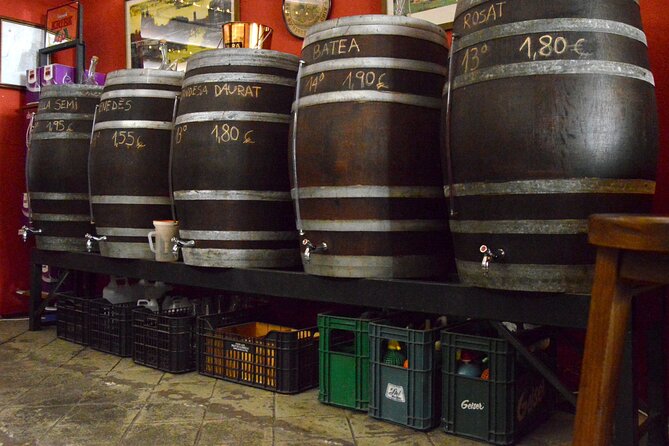
The final stretch lands you in L’Eixample for the traditional afternoon vermouth hour. This is the segment that turns the tour from “interesting” into “this tastes like Barcelona.”
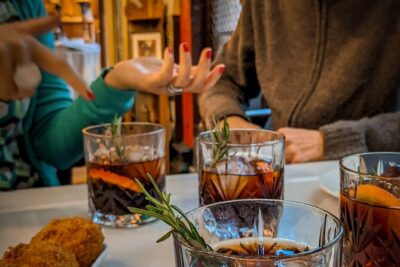
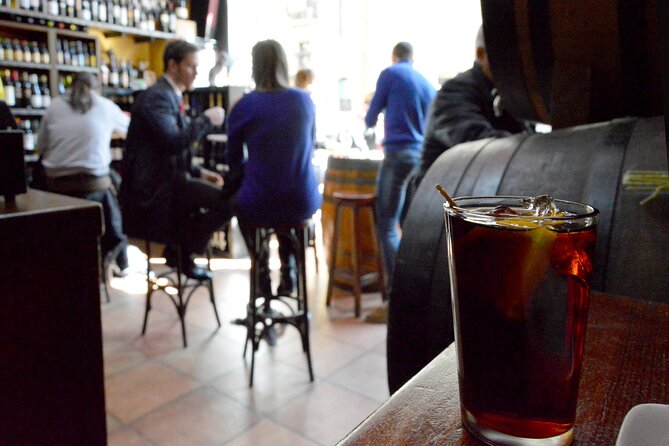
You’ll get your vermut served chilled, with the classic simplicity spelled out: just an olive garnish. That matters. Vermut culture isn’t about complicated presentation. It’s about a clean, cold drink at the right time, followed by small plates that make the afternoon feel like a ritual instead of a random stop.
Then comes a fun practical detail: an old-time soda siphon bottle for the occasional spritz. This is one of those things that you won’t easily spot on your own, and it’s also a great example of how traditional tools still shape what people order today.
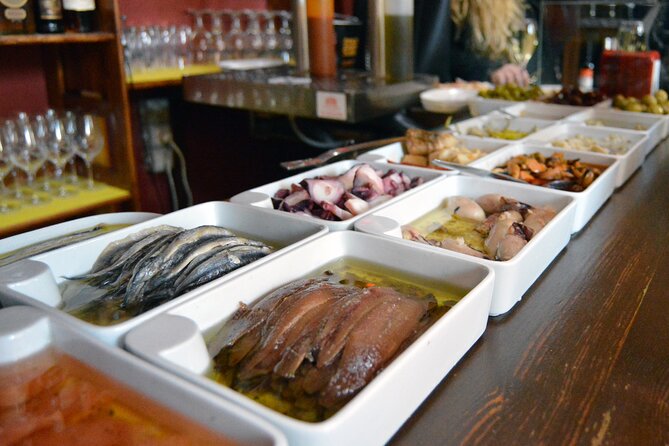
Tapas round out the moment, and the tour keeps the pairing logical—so you’re tasting with purpose, not just sampling what sounds interesting on a menu. If you’ve had limited success with tapas in the past, you’ll likely like this approach because it teaches you how Barcelona organizes flavor across small bites and shared drinks.
Also, L’Eixample’s streets make this a visually satisfying finish. Even when you’re focused on food, the area helps you feel like you’ve covered multiple sides of the city in one evening.
What you’ll actually eat and drink (and how to get the best out of it)
The tour is built around tasting, not just sightseeing. You can expect classic Barcelona-style moments like:
- Carajillo in El Raval (coffee with Catalan brandy)
- Vermut in L’Eixample, chilled and served with an olive garnish
- Spritz-style mixing using a soda siphon
- Tapas paired alongside the drinks
- Additional beverages at market stops, plus small bites that match each setting
Because the tour is led by people like Ivan, Pam, Paola, and Senem, the tasting choices come with context. That’s a big deal. If you know what you’re tasting and why it belongs there, it tends to stick in your memory longer than drinks you just order because you’re curious.
For you, the best strategy is simple: stay open, ask questions, and don’t worry about finishing every sip or bite perfectly. This kind of tour is about experiencing the rhythm of local life, not about performing.
If you have dietary needs, the feedback includes a case where the guide tailored tastings for a pescatarian diet. Still, since the exact approach isn’t guaranteed in the information provided here, it’s smart to mention any needs when booking.
Group size, guide quality, and why that matters for value
This is capped at 7 travelers, and that’s one of the reasons people consistently rate it at the top. Smaller groups mean you can actually talk to the guide, ask what something is, and get quick answers without feeling rushed.
The guide names that show up in the feedback—Ivan, Pam, Paola, Senem—suggest a team of leaders who know both food and the city’s inner logic. When a guide can explain architecture and city planning alongside what you’re drinking, you end up learning more than just menu items.
That’s also how this becomes good value for the money. A $160 tour that takes you to one bar for a single drink is a different product than a route with cultural stops, market time, and multiple tastings across neighborhoods.
Booking about 15 days in advance also makes sense. Popular tours like this can be limited by availability, and the small group size means fewer slots overall.
Practical matters: getting there, wearing the right shoes, and timing your evening
The tour includes a mobile ticket and works in English. It’s close to public transportation, so you shouldn’t need a taxi just to start the walk.
The weather requirement is worth planning around. Since the experience needs good weather, you’ll want to check the forecast and be ready to adjust if conditions are poor. If the tour can’t run due to weather, you’ll typically be offered another date or a refund.
Wear shoes that handle uneven sidewalks and lots of turns. Four hours in Barcelona walking isn’t extreme, but it is steady. If you’re traveling with someone who gets impatient on foot, consider setting expectations up front: this is a guided neighborhood route.
Should you book Bodega Barcelona Barrio Tradition in Bulk?
Book it if you want a real bodega route that mixes tastings with neighborhood context. This is a great choice for a first visit to Barcelona because it helps you understand the city’s food culture as part of daily life, not as an isolated tourist activity.
I’d skip it if your ideal evening is mostly sitting, or if you dislike walking between districts. The tour’s strength is that it moves through Barcelona’s different areas on foot, building a story as you go.
One more reason I’d lean yes: the guide quality seems to be a core part of the experience. When you see names like Ivan, Pam, Paola, and Senem repeatedly connected to knowledge and comfort, that’s a strong signal that you’ll be taken care of.
If you can handle a few hours on your feet and you’re excited about carajillo and vermut hour, this is the kind of Barcelona outing you’ll still talk about after your souvenirs are bought.
FAQ
How long is the tour?
It runs for about 4 hours.
What’s the meeting point for this experience?
You start at Mercat de Sant Antoni (Eixample, 08015 Barcelona, Spain), and the tour ends back at the same meeting point.
Is the tour offered in English?
Yes, it is offered in English.
How many people are in the group?
The tour has a maximum of 7 travelers.
Do I get a mobile ticket?
Yes. The experience includes a mobile ticket.
What stops and drinks should I expect?
You’ll visit multiple neighborhood spots and markets, including an El Raval carajillo stop, a vermut hour in L’Eixample (chilled vermut with an olive garnish), and tapas. You’ll also have additional beverage moments during the market and other community stops.
Is admission included for the cultural stops?
The stops listed include free admission tickets.
What is the cancellation and weather situation?
You can cancel for a full refund up to 24 hours in advance. The experience requires good weather, and if it’s canceled due to poor weather you’ll be offered a different date or a full refund.
Is this tour near public transportation and suitable for most people?
Yes, it’s near public transportation and most travelers can participate. Service animals are allowed.