REVIEW · BARCELONA
Barcelona: Phone Photography Tips & Tricks – Park & Old Town
Book on GetYourGuide →Operated by Nostos Tours · Bookable on GetYourGuide
Phone cameras can be better than you think. This hands-on Barcelona class teaches framing and positioning, then shows iPhone-friendly zoom-magic tricks as you move from Arc de Triomf to Ciutadella Park and into El Born.
I love that it stays practical: you learn real composition choices without fussing with technical settings like aperture, ISO, or shutter speed. I also love the mix of scenes—big fountain backdrops in Ciutadella, then medieval lanes and courtyards in El Born—so you practice both street photography and building photography.
One consideration: you’ll need a charged smartphone, and the tour is better suited for iPhones and higher-end Androids, so older/basic phones may feel limiting.
In This Review
- Key highlights you’ll feel right away
- Starting at Arc de Triomf: learn framing and positioning under the white umbrella
- Ciutadella Park: fountain drama, the mammoth sculpture, and Jurassic palms
- El Born medieval streets: street, people, and building photography in one loop
- The iPhone workflow: camera modes, quick editing, and better selection
- The practical skills that keep paying off after Barcelona
- Price and value: why $28 can make sense for phone users
- Who should book this Barcelona phone photography class
- Should you book it? My honest take
- FAQ
- How long is the tour?
- Where do I meet the instructor?
- Where does the tour end?
- What should I bring?
- Is a camera included?
- Does this work for any phone, or only iPhones?
- Is the tour taught in English?
- Can I cancel for a refund?
Key highlights you’ll feel right away
- Framing-first teaching: you learn how to place your subject and manage the picture, not just press buttons
- Zoom-magic for iPhones: experiment with camera lenses/zoom effects to create more dramatic images
- Two very different photo worlds: Ciutadella Park scenes, then El Born street and architectural moments
- On-phone editing basics: quick, simple adjustments for a final polish
- A relaxed, interactive vibe: practice with small challenges and posing so you actually try the techniques
Starting at Arc de Triomf: learn framing and positioning under the white umbrella
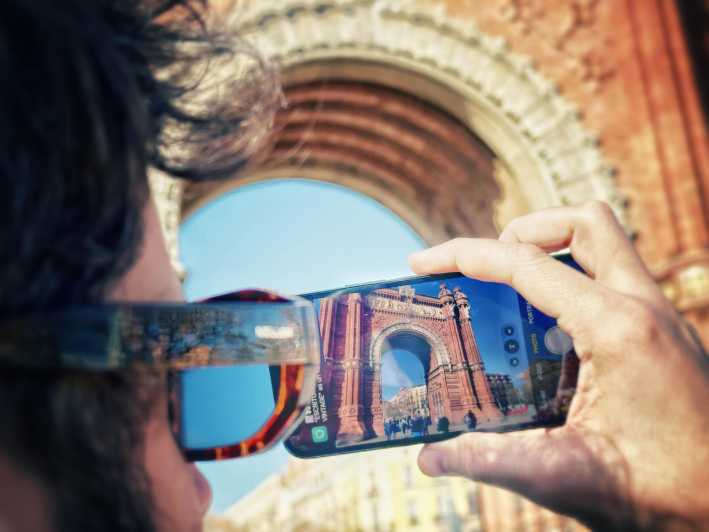
The meeting point is easy to spot: your instructor is waiting with a white umbrella under the arch of Arc de Triomf. That matters more than you might think. In a city like Barcelona, starting clean and on-time helps you get the most out of a short 2.5-hour session.
Right from the start, the class is about the most important part of photography: where you put things inside the frame. Instead of turning this into a technical lecture, you practice quick, repeatable habits—framing, composition, and positioning—so you can turn around and use them immediately on the street.
This is also where the approach feels different from a typical photo walk. You’re not just following a guide for views. You’re learning a way of seeing. Even if you’re using a smartphone you already paid a lot for, the point is to help you get more intentional results from it.
If you like a structured lesson that still feels like exploring, this opening phase sets the tone.
You can also read our reviews of more photography tours in Barcelona



Ciutadella Park: fountain drama, the mammoth sculpture, and Jurassic palms
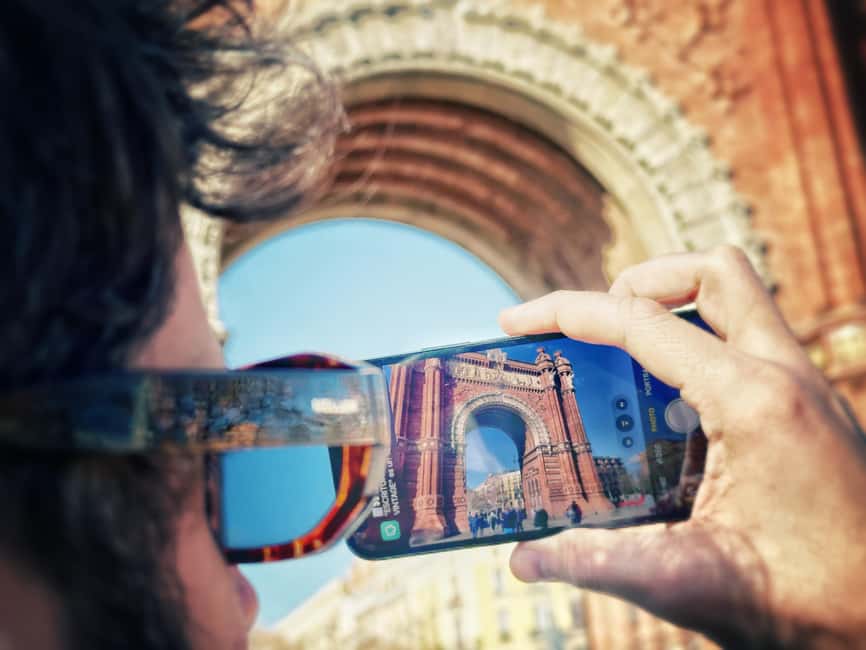
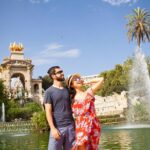
Then you head to Ciutadella City Park, and the setting does a lot of the heavy lifting for great photos. You get a massive fountain, a sculpture of a mammoth, and Jurassic palms—real “wow” backdrops that look good from lots of angles.
This is where the class shifts into experimentation. You try different approaches for how to use your phone’s camera to create surprise. The instruction emphasizes zoom effects—the guide calls it zoom-magic—so you learn how to make your shots look more deliberate, even when you’re not using a traditional camera.
Practical takeaway: park photography often fails because people treat it like a postcard mission. This class pushes you to treat it like a scene. You’ll practice finding composition inside all that space: where the lines go, where the subject sits, and how distance changes what your camera can emphasize.
Possible drawback? Parks can be popular, and you may need a bit of patience to find angles where you can frame cleanly. Since the class is short, that’s why starting with the technique at Arc de Triomf is so useful. You’re better equipped to move quickly to the next photo idea.
El Born medieval streets: street, people, and building photography in one loop
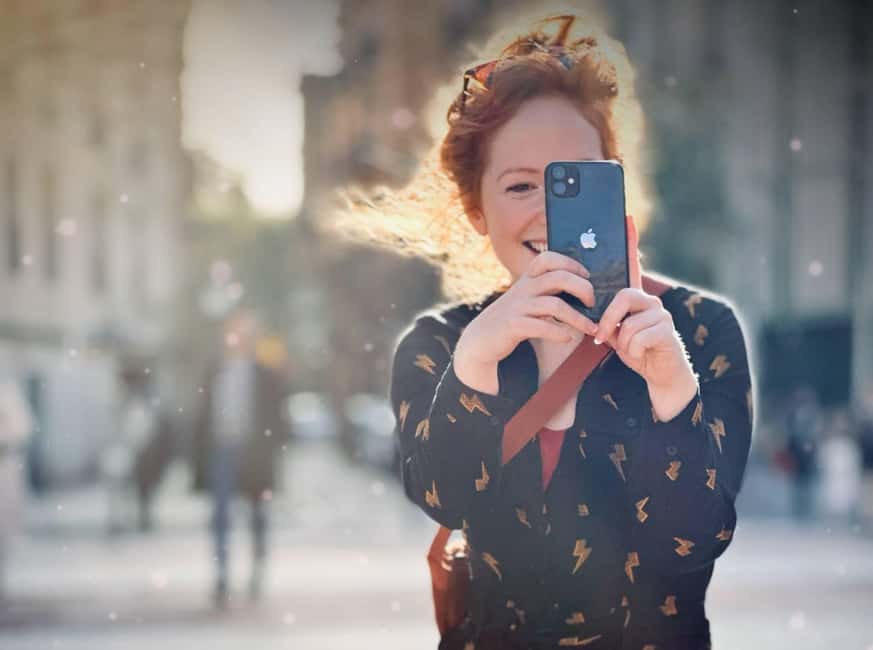
Next comes El Born, where the vibe changes fast. The medieval streets and courtyards are perfect for the kinds of pictures people try to get on their own and struggle with: street scenes with personality, plus architectural shots that don’t look flat.
This portion is built around a simple concept: different environments need different photo habits. In a narrow lane, spacing and perspective matter. In a courtyard, framing and openings matter. You learn how to spot patterns in the buildings, then mix in people and everyday moments so your photos feel lived-in instead of staged.
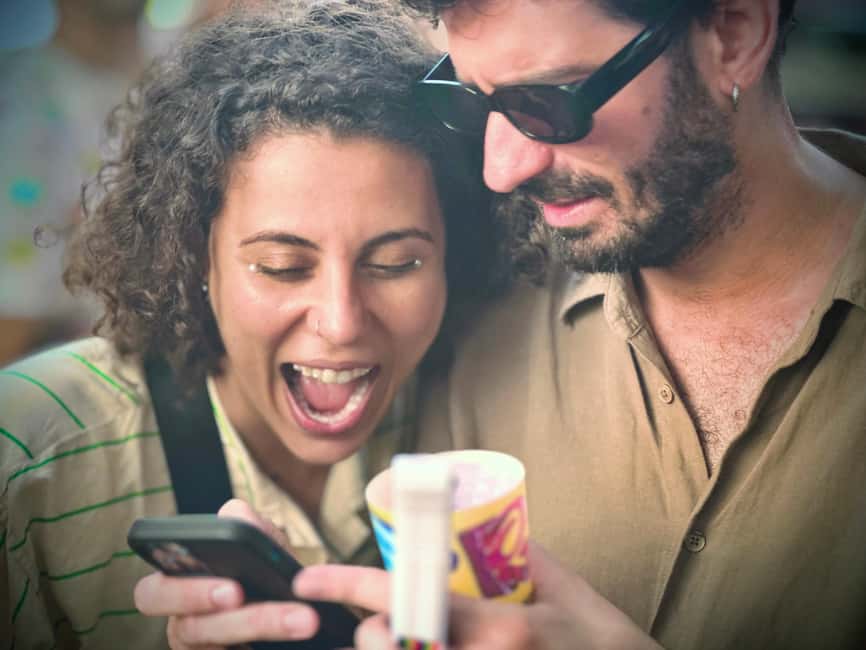
The class also encourages interaction. You’ll do posing exercises and small challenges—fun, yes, but also useful. When you pose even briefly, you learn what your camera does with body position, head angles, and the way you place yourself relative to the background.
Then it flips back toward street photography: taking photos of people and streets with a sense of timing and composition. That combination—architecture plus real human scale—turns your phone into a tool for storytelling, not just capturing sights.
If you want to bring home Barcelona photos that don’t all look like the same “tourist angle,” El Born is where you’ll earn that variety.
The iPhone workflow: camera modes, quick editing, and better selection
A big reason this class gets strong results is that it doesn’t stop at shooting. You also get a focused look at the next steps: camera modes and simple editing on your phone.
You’re not asked to learn complex photography settings. Instead, you’re taught how to use your device more intentionally—so you can get reliable results without needing a photography degree.
Then you finish with quick editing techniques. That’s where your photos go from decent to polished. Small adjustments can help you improve clarity, balance, and mood—without turning this into hours of screen time.
There’s one more subtle skill here that makes a difference on your next trip: learning to look at your own photos more critically. You start thinking like a photographer who’s choosing the best image, not collecting every image. That skill saves you time when you post later or try to pick favorites for friends and family.
You’ll also enjoy a drink as part of the ending. It gives you a natural reset before you review what you practiced and how to apply it again.
The practical skills that keep paying off after Barcelona
The headline promise here is that the techniques should stay with you for the rest of your life—and the reason that’s believable is the teaching style. You’re not memorizing camera settings. You’re building habits.
Here are the big habit changes you’ll come away with:
1) You’ll frame on purpose
Instead of snapping first and fixing later, you start composing as you move. That’s how photos start looking “planned” even when you’re traveling fast.
2) You’ll use angles to add interest
Smart angles help any phone image, whether it’s a person or a building. The class keeps nudging you to try new perspectives rather than repeating the same eye-level shot.
3) You’ll treat zoom as a creative tool
Zoom effects can flatten images if you use them randomly. Used with composition, it helps you isolate details, compress scenes, and create emphasis. That’s exactly the kind of trick this tour practices.
4) You’ll pose without overthinking it
You don’t need to become a model. Simple posing prompts teach you how to cooperate with the camera and keep the background working for you.
5) You’ll edit with restraint
Quick adjustments are easier than heavy edits. The goal is to make your images look like they belong together—clean, readable, and closer to the feeling you remember.
And one more practical point: this class is a strong choice early in your trip. You’ll start using the techniques on the next day’s sights, not just collecting tips to test later.




Price and value: why $28 can make sense for phone users
At $28 per person for a 2.5-hour hands-on class, the value is mostly in what you get that you can’t easily learn from a random YouTube video on the spot.
You’re paying for:
- an expert photography teacher who’s also a tour guide of Barcelona
- targeted practice at multiple iconic settings (Arc de Triomf, Ciutadella Park, El Born)
- clear instruction on framing, composition, posing, street photography, and building photography
- camera-mode guidance and quick editing on your phone
- a drink at the end
You bring your own camera device—your smartphone. The fact that it’s a phone class is the point. If you already own a capable iPhone (or higher-end Android), this is a low-cost way to turn that hardware into a real tool for better images.
The main “watch-out” is fit. This class is designed around phone-first photography, so if you’re looking for heavy, manual-camera theory, you may find it too simple. But if you want stronger results with less fuss, it’s a smart use of time.
Who should book this Barcelona phone photography class
This experience is a great fit if you:
- want to learn composition and framing in a hands-on way
- feel annoyed by your phone photos and want a clear plan for improvement
- want to practice street and building photography in two very different Barcelona neighborhoods
- would rather learn on-location than in a classroom full of slides
- like a relaxed pace with interactive challenges instead of stiff instruction
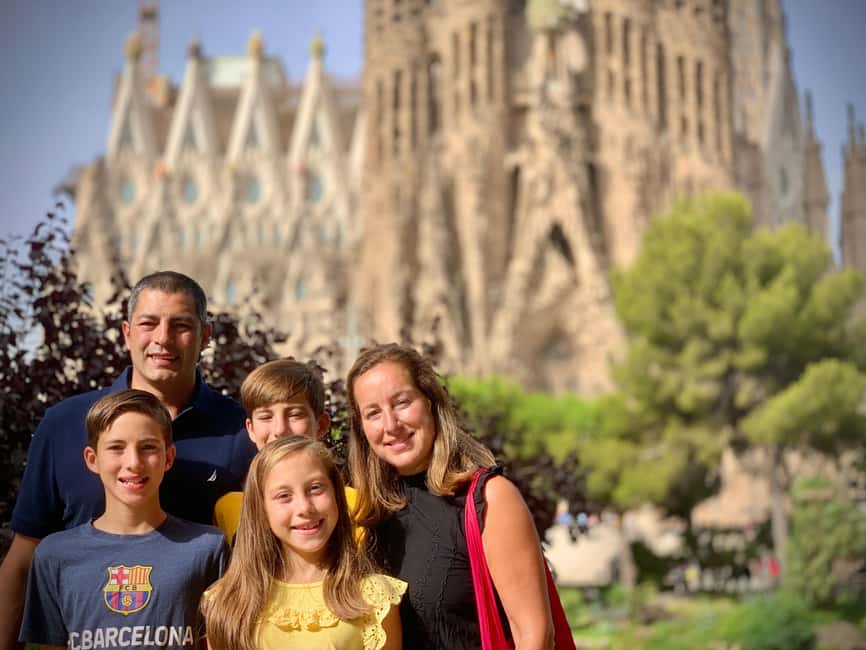
It’s also a good idea if you’re traveling with family members who want the day to include both sightseeing and practical skills. The teaching vibe is built to keep it friendly and doable while you explore.
If you’re the type who loves photography but hates technical settings, you’ll probably click with this approach fast.
Should you book it? My honest take
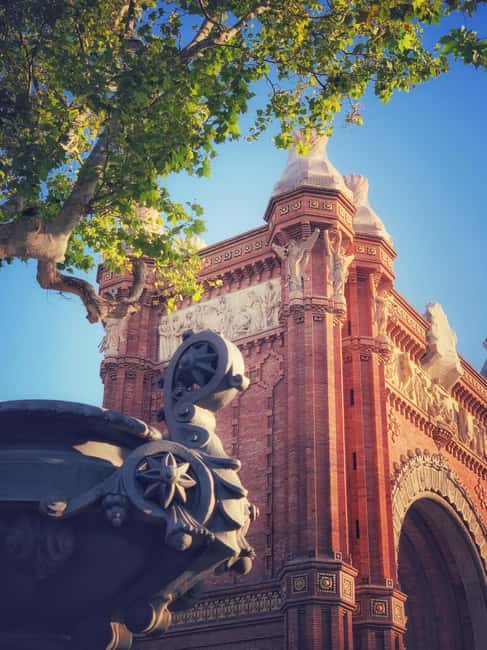
Book this class if you want better photos with a phone, without turning your trip into a camera workshop. The Arc de Triomf start makes the lesson easy to follow, Ciutadella gives you dramatic practice space, and El Born helps you apply the skills to real street scenes. Add in camera-mode guidance plus quick editing, and you’ve got a full loop—from shooting to finishing.
Skip it only if you already feel fully confident with framing and editing on your phone and you’re mainly looking for a guided tour where the photos are secondary.
If you’re aiming to leave Barcelona with pictures you actually want to keep and share, this is a solid use of 2.5 hours.
FAQ
How long is the tour?
The activity lasts 2.5 hours.
Where do I meet the instructor?
You meet at Arc de Triomf, where the instructor is waiting with a white umbrella underneath the arch.
Where does the tour end?
The activity ends back at the meeting point.
What should I bring?
Bring a charged smartphone.
Is a camera included?
No, the camera is not included. You use your own smartphone.
Does this work for any phone, or only iPhones?
It’s suitable for any smartphone, but it’s better suited for iPhones and higher-end Androids.
Is the tour taught in English?
Yes, the instructor is English-speaking, and the tour is also listed as wheelchair accessible.
Can I cancel for a refund?
Yes. You can cancel up to 24 hours in advance for a full refund. There’s also a reserve now & pay later option to keep plans flexible.