Barcelona’s Gothic Quarter has layers you can trace. This guided stroll links Roman origins to medieval power, with legends at nearly every turn and plenty of photo-ready corners. It’s also a smart way to cover ground without losing your nerve in a maze of narrow streets.
I really like that you get a local guide to keep the route clear and the stories connected to what you’re looking at—especially with guides like Victoria, who can make each stop feel purposeful. I also love the mix of sights you don’t usually put together on your own: cathedral stonework, royal squares, a synagogue area, Civil War scars, and a bridge legend. The only possible drawback is pacing: each stop is brief (about 10–20 minutes), so if you want long hangs in one spot, this tour may feel a bit quick.
In This Review
- Key Highlights You’ll Notice Right Away
- Roman Walls and Lucky Courtyards: Why This Walk Works
- Price, Group Size, and What You Actually Get for $29.57
- Entering Barcelona Cathedral: Roman Wall Origins and Thirteen White Geese
- Placa del Rei: Royal Power Above and Roman Barcino Below
- The Antigua Casa del Verdugo: Medieval Barcelona’s Dark Job
- Placa de Sant Jaume: Catalonia’s Main Political Square
- Jewish Quarter Streets and a Synagogue Site: Everyday Life Stories
- Saint Philip Neri: Shrapnel Marks, Quiet Corners, and Film Connections
- Pont del Bisbe: Neo-Gothic Bridge Photos and the Hidden Skull Legend
- Casa de l’Ardiaca: Touch the Palm Tree and Rub the Lucky Turtle
- Is This the Right Tour for You?
- FAQ
- How long is the Barcelona Gothic Quarter tour?
- What does the tour cost?
- Is the tour offered in English?
- Do I need to buy tickets for the stops?
- What’s included in the price?
- Where do I meet, and where does the tour end?
- Is there a minimum height requirement?
- What’s the cancellation and weather policy?
- Can I bring a service animal?
Key Highlights You’ll Notice Right Away
- Roman wall to medieval streets: you see Barcelona’s timeline laid out on foot.
- Thirteen white geese lore at the cathedral courtyard and legend-driven storytelling.
- Free-entry stops throughout the route, so you’re paying for the guide, not admissions.
- A “good luck” finish at Casa de l’Ardiaca, with a palm-tree touch and a lucky turtle charm.
- Big atmosphere in short visits: political squares, a synagogue area, and wartime shrapnel marks.
- Small group size (max 20) makes the guide’s pacing easier to follow.
Roman Walls and Lucky Courtyards: Why This Walk Works
If you like your travel with context, this is the right kind of Gothic Quarter tour. Barcelona’s center can feel confusing fast—alleys branch, plazas appear out of nowhere, and the streets whisper older versions of the city than you can see at first glance. Here, the guide commentary gives you a thread to follow, from Roman remains to medieval legends and the more modern shadows of the Spanish Civil War.
What makes it especially appealing is that the route isn’t only about buildings. Yes, you’ll see churches and historic architecture. But you’ll also hear the stories attached to specific spots—the kind of details you’d miss if you were just walking and hoping. That includes a place tied to good luck, plus urban folklore that turns architecture into a puzzle.
And because this is an organized walk (2 to 3 hours), you get more “I understand what I’m looking at” moments than you would with a loose self-guided plan—without turning it into a marathon.
You can also read our reviews of more tours and experiences in Barcelona.
Price, Group Size, and What You Actually Get for $29.57
At about $29.57 per person, the value comes from how the time is used. You’re paying for a guided route across multiple major points in the Gothic Quarter, and the itinerary is set up so you’re not hit with entrance fees at each stop (the stops are marked as free-entry ticket points in the route).
You also get a few practical bonuses:
- The tour runs in English.
- It uses a mobile ticket.
- The group is capped at 20 travelers, which helps with flow in tight streets.
Duration is listed as 2 to 3 hours, and the stops are relatively short. That’s good for many visitors who want the highlights without spending half a day. It’s not ideal if you prefer slow museum-style lingering.
One more practical note: the experience requires good weather, and if it’s canceled for poor conditions you’ll be offered a different date or a full refund.
Entering Barcelona Cathedral: Roman Wall Origins and Thirteen White Geese
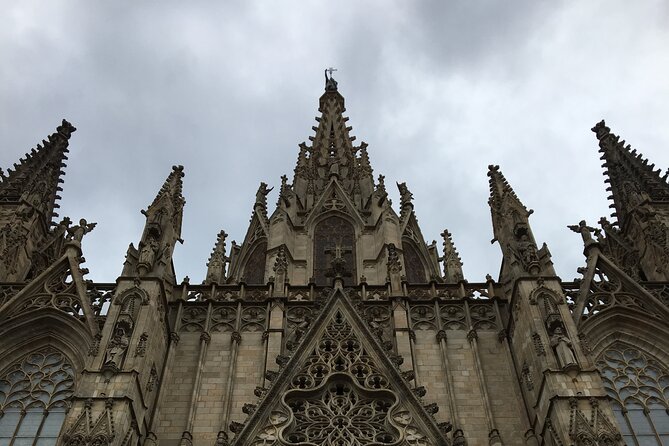
Your first stop sets the tone: Barcelona Cathedral. You’re not just looking at Gothic-era grandeur here. You’re standing where an early Christian basilica once sat, and you’ll also see a section of the Roman wall that points back to the city’s origins.
This is one of the best “zoom out” moments in the tour, because it helps you understand that this neighborhood didn’t begin as a Gothic Quarter postcard. It began as a city with walls, then layered into religious power, then into the legends people kept telling.
What you’ll do at this stop is exactly the point of a guided walk:
- Listen to legends connected to miracles and holy relics.
- Learn the story behind the thirteen white geese in the courtyard.
- Take photos with the Roman wall stones in the frame.
The geese element is what makes this stop feel memorable. It’s not just architecture; it’s folklore anchored to a visible place. If you like local stories tied to physical details, this is where you’ll feel that connection fastest.
Placa del Rei: Royal Power Above and Roman Barcino Below
Next up is Placa del Rei. This elegant square looks like it belongs to rulers, and the tour explains why. You’ll find the Royal Palace once associated with the Counts of Barcelona and the Kings of Aragon, plus a museum space that highlights underground Roman remains of Barcino.
The practical value of this stop is how it bridges eras without feeling like a history lecture. The guide ties royal life and political events to the very ground you’re walking on. You’ll also hear stories about lavish feasts held here, which gives you a mental image of what this spot might have felt like when the city’s elite gathered.
Because the visit is brief, you won’t leave with a full museum education. But you will leave with a clearer sense of why the square matters—and that makes the rest of the Gothic Quarter easier to read.
The Antigua Casa del Verdugo: Medieval Barcelona’s Dark Job
Then the tour takes a darker turn: Antigua casa del verdugo Municipal. This building is linked to the time Barcelona had an official executioner, and it’s associated with public punishments in the city.
If your travel style includes the underbelly of old cities (the stuff you don’t see on polished postcards), you’ll likely appreciate this stop. The guide commentary leans into city folklore and the role of the executioner, which gives you a reminder that medieval life wasn’t only churches and rulers—it also included fear, discipline, and public spectacle.
The main thing to consider: this part of the route is a mood shift. It’s still informative, but it’s not light. If you prefer purely cheerful architecture, you might treat this as a quick, informative stop rather than a highlight.


Placa de Sant Jaume: Catalonia’s Main Political Square
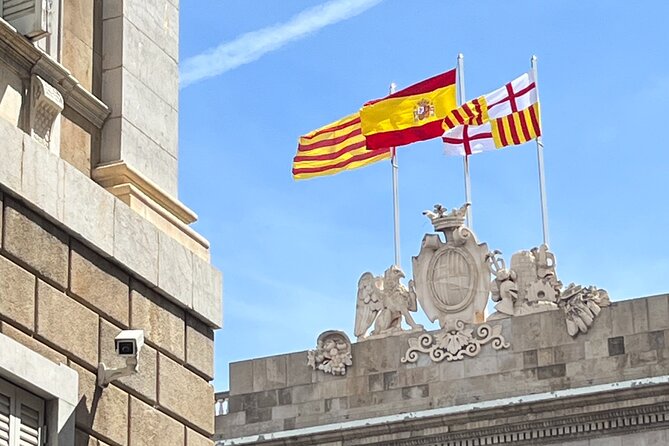
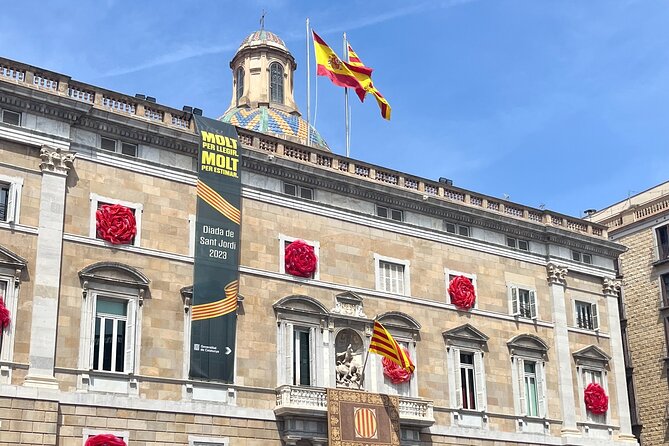
After the darker story, you move back into civic power at Placa de Sant Jaume. This is presented as Barcelona’s main political square, where you’ll see the Ajuntament (city hall) and the Palau de la Generalitat (Palace of the Government of Catalonia).
This stop helps you understand that culture here isn’t just food and festivals. It’s also governance and identity. The guide explains how the city maintains its unique culture and touches on Catalonia’s autonomous status.
In practical terms, this is a great pause in the walking pattern. You’re in a more open square than the narrow lanes of the Jewish Quarter, so it’s a chance to reset your eyes. It also gives you a clear marker of where political Barcelona sits within the old city fabric.
Jewish Quarter Streets and a Synagogue Site: Everyday Life Stories
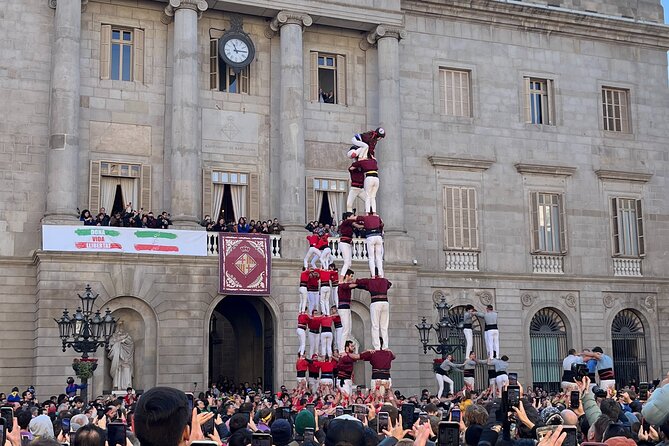
Next comes the Jewish Quarter, where you’ll walk narrow streets and see one of the oldest surviving synagogues in Europe. The focus here is less on big-picture monuments and more on everyday life—trade, customs, and the people who lived here.
This stop can be emotionally heavier than some of the other places, but it’s also one of the most meaningful ways to learn about the neighborhood. The guide’s stories make the medieval community feel human rather than abstract. The tour may also include mention of ongoing commemorations or events connected to the site, so you may see a trace of how history continues to matter.
If you’re hoping for a purely architectural tour, you may find this stop more about lived culture than stone details. But if you want your Gothic Quarter visit to feel complete, it’s a key piece.
Saint Philip Neri: Shrapnel Marks, Quiet Corners, and Film Connections
At Church of Saint Philip Neri, the pace stays gentle, and the atmosphere changes. You’ll see a quiet, secluded square, and the walls include shrapnel marks from the Spanish Civil War. That detail turns the space into a physical reminder of what the city endured.
The tour also points out that scenes from movies—Perfume and Vicky Cristina Barcelona—were filmed here. That’s a fun connection for film lovers, but it also helps you understand how the city’s mood gets reused. The same quiet square that held wartime shelter imagery can also serve as cinematic backdrop.
What makes this stop worth your time is the blend: you’re seeing a site where history and modern storytelling overlap. For photos, it’s the kind of location where even a simple frame looks layered.
Pont del Bisbe: Neo-Gothic Bridge Photos and the Hidden Skull Legend
Now for one of the most recognizable Gothic Quarter pictures: Pont del Bisbe. This neo Gothic bridge connects the Government building to a neighboring Episcopal structure, and it’s designed in a way that invites close attention.
The guide shares a legend connected to the bridge: a hidden skull in the ornate design. That turns a “pretty bridge” into a scavenger hunt. If you enjoy spotting symbolism in carvings, this stop is where you’ll have fun looking closely instead of only admiring from a distance.
Practical tip: this is a short stop, so position yourself early for your photo. The bridge is iconic, which means it can get crowded during peak times, and you don’t want to waste your allotted minutes.
Casa de l’Ardiaca: Touch the Palm Tree and Rub the Lucky Turtle
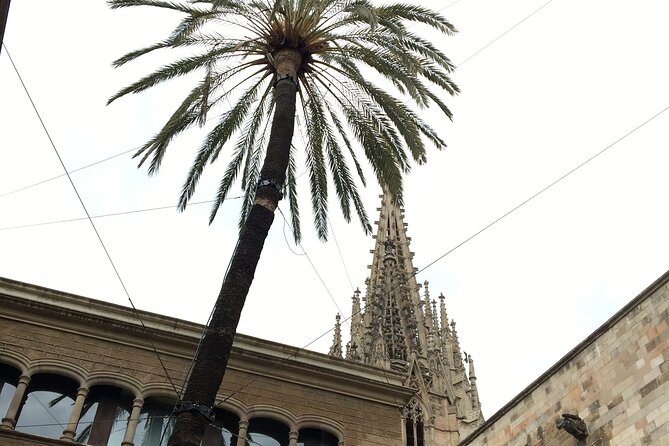
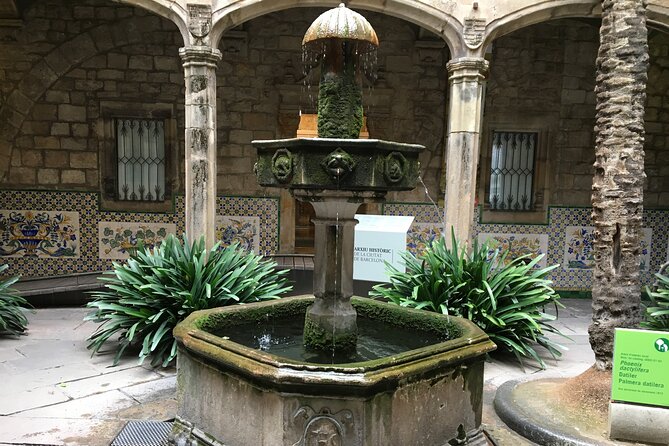
The tour ends at the perfect kind of finish: Casa de l’Ardiaca. You’ll see a historic building with a courtyard featuring a fountain and a palm tree noted as Barcelona’s oldest palm tree. You’ll also find a small stone turtle associated with a traditional lucky charm.
This is the stop where the tour’s “legend and good luck” promise becomes physical. You’ll be guided to:
- touch the ancient palm tree
- rub the turtle sculpture on the fountain for good luck
The guide also explains the house’s connections to both church and secular authorities. Then you’re left with a simple takeaway: locals see the courtyard as a symbol of peace and prosperity.
It’s a satisfying ending because it’s calm and visual, not rushed. You’re also getting that “I did something here” feeling, rather than only hearing stories while moving on.
Is This the Right Tour for You?
I think this tour fits best if you:
- want a guided way to connect Roman, medieval, and wartime layers in one short outing
- like local legends tied to specific places (the geese, the hidden skull, the lucky charms)
- need help navigating the Gothic Quarter without spending your energy on wrong turns
- want a budget-friendly guided experience with free-entry stops and a group capped at 20
Skip or reconsider if you:
- prefer spending a long time at fewer stops instead of brief visits to eight key sites
- would rather focus only on architecture and not on folklore and darker medieval topics
If you’re only in Barcelona for a short window and you want to feel oriented in the heart of the city, this is a solid choice. You’ll leave with a mental map that makes the streets make sense.
FAQ
How long is the Barcelona Gothic Quarter tour?
The duration is listed as approximately 2 to 3 hours.
What does the tour cost?
The price is listed as $29.57 per person.
Is the tour offered in English?
Yes, the tour is offered in English.
Do I need to buy tickets for the stops?
The stops in the itinerary are marked as admission ticket free.
What’s included in the price?
You get a tour with a local guide.
Where do I meet, and where does the tour end?
The meeting point is listed at Roman Aqueduct / Casa de l’Ardiaca, Carrer de Santa Llúcia, 1, Ciutat Vella, 08002 Barcelona. The activity ends back at the meeting point.
Is there a minimum height requirement?
Yes. The tour notes that you must be at least 150 cm (about 4’11”) tall.
What’s the cancellation and weather policy?
You can cancel for a full refund if you cancel up to 24 hours in advance. The experience requires good weather; if it’s canceled due to poor weather, you’ll be offered a different date or a full refund.
Can I bring a service animal?
Service animals are allowed.