REVIEW · BARCELONA
Barcelona & Gaudi. Regular Tour
Book on Viator →Operated by Barcelona Architecture Walks · Bookable on Viator
Gaudí is more than buildings; it’s a way of thinking. This Barcelona architecture walk uses his world of Modernisme to connect design, politics, and big ideas across the city, all in about three hours.
What I love most is the way the guide turns stonework into stories you can actually use, and how the route stays small-group friendly with a max of 20 people.
Second, I really like the guide’s delivery: in the best way, it’s both sharp and human. Pia (a practicing architect) brings warm humor and real clarity, so you’re not just looking at facades—you’re understanding what you’re seeing. One thing to consider: the tour keeps it exterior-only, so if you want inside views, you’ll need to plan those separately.
In This Review
- Key highlights
- A 10:30 am Walk That Makes Gaudí Make Sense
- Pia and the Architect-Led Approach You’ll Actually Enjoy
- Modernisme as a Story: From Politics to Deliquescent Surfaces
- Casa Milà (La Pedrera) Exterior Study: Texture, Motion, and Meaning
- Casa Batlló: The Facade as a Visual Argument
- Casa Calvet and Eixample Logic: Design Inside the City Grid
- La Mansana de la Discordia: One Block, Several Modernists, One Big Contrast
- Fundació Antoni Tàpies: A Modern Art Pause with Architecture Brainpower
- What You Don’t Get: Exterior-Only Viewing (Plan Your Next Step)
- Price and Value: $54.44 for Architect-Led Context
- Who Should Book This Barcelona & Gaudí Architecture Walk
- Should You Book It: My Straight Call
- FAQ
- How long is the Barcelona & Gaudí regular tour?
- How big is the group?
- Does the tour go inside the buildings?
- What language is the tour offered in?
- Where does the tour start and end?
- Is free cancellation available?
Key highlights
- Practicing architects guide the walk, so the design talk stays grounded and specific
- Modernisme explained as a chain of ideas, not a list of facts
- Casa Milà, Casa Batlló, Casa Calvet, plus the Mansana de la Discordia
- Hidden Eixample courtyards get attention, even without going indoors
- Fundació Antoni Tàpies adds a post–Gaudí bridge to modern art in the same neighborhood
- No building interiors: you’ll study exteriors, textures, and symbolism from the street
A 10:30 am Walk That Makes Gaudí Make Sense
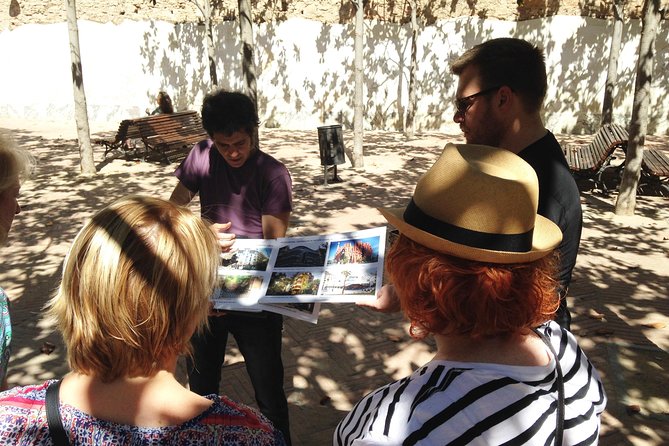
This is a smart-length tour for Barcelona: 3 hours is long enough to learn patterns, short enough that you can still enjoy the rest of your day. It starts at 10:30 am near Monument al Llibre on Gran Via de les Corts Catalanes (Eixample) and loops back to the same meeting point.
The big win is that you’re not just bouncing from one famous facade to the next. The guide traces a Modernism route that shows how Antoni Gaudí’s path moved from social concerns toward something more spiritual and cathedral-like in spirit. That storyline matters because once you understand the “why,” the shapes stop feeling random.
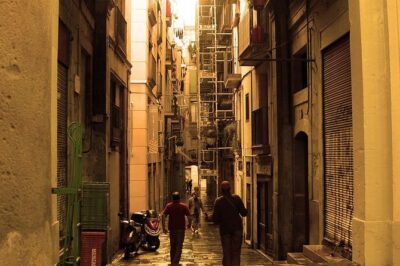
It also helps that you’re walking through the Eixample grid—Barcelona’s planned city fabric. You get orientation fast: you start seeing how the blocks, courtyards, and street angles shape how Modernist buildings feel from ground level.
You can also read our reviews of more tours and experiences in Barcelona.
Pia and the Architect-Led Approach You’ll Actually Enjoy
If you’ve ever had a city tour that feels like someone reading a textbook, you’ll appreciate the tone here. Pia’s style stands out for its mix of accuracy and kindness. One of the most-quoted themes from the experience is her humor, plus a very human, compassionate way of sharing.
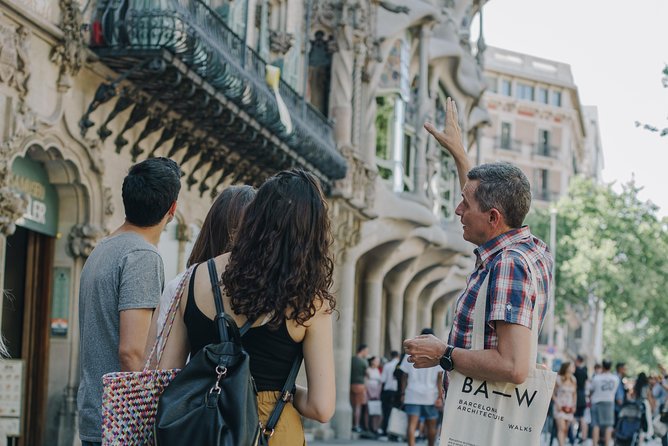
Even better, the tour is led by practicing architects, not just guides with a script. That shows up in how details are explained. You’re more likely to hear about design logic—structure, surface behavior, and how a building communicates ideas—rather than only dates and names.
Small group size (max 20) is not just a comfort feature. It helps you ask questions, slow down when something catches your eye, and keep the walking pace comfortable. For design-minded people, that’s a big quality upgrade.
Modernisme as a Story: From Politics to Deliquescent Surfaces
What I like about this tour is that it treats architecture as culture. You’ll hear how eclecticism shifts, what modernism loses and gains, and how the end of one era sets up the next. The guide also weaves in social and political currents—things like utopian socialism, positivist materialism, anarchism, and the Spanish Civil War.
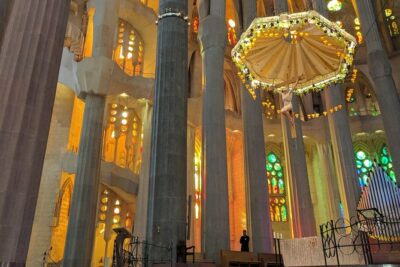
There’s also a spiritual thread in the Gaudí narrative. The tour talks about his move from everyday concerns toward total absorption with the divine, and it frames him as the last great cathedral builder. You’ll also hear terms that sound strange until they click in context, like beatification and deliquescent surfaces. That last one is basically about how some of Gaudí’s work seems to soften, melt, and flow—think surfaces that don’t behave like plain stone.
You might not remember every concept word-for-word. But you’ll walk away with a framework. Next time you see a Modernist facade in Barcelona, you’ll understand what it’s trying to do.
Casa Milà (La Pedrera) Exterior Study: Texture, Motion, and Meaning

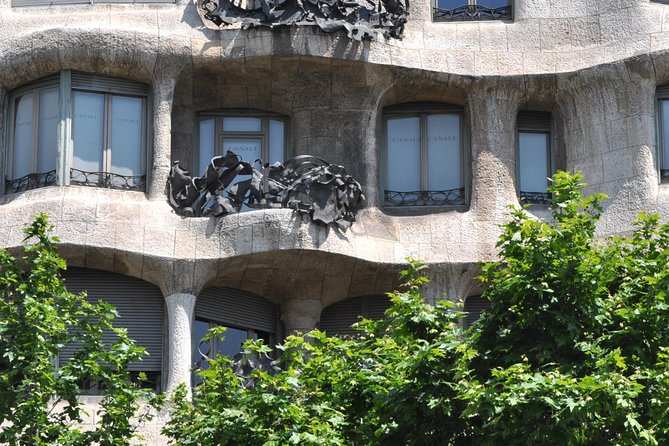
Stop one sets the hook hard: Casa Milà, also known as La Pedrera. This is a good start because it’s where you can quickly sense Gaudí’s approach to surface and form. From the street, the building already feels like it’s in motion.
Since the tour doesn’t go inside, the focus stays on what you can actually observe outdoors:
- how the facade plays with light and shadow
- how the irregular rhythm of openings changes the building’s mood
- how details give the illusion of life rather than rigid structure
What you’ll get from an architect-led explanation is the “how” behind the “wow.” You learn how the design language supports the bigger theme the guide is building through the walk—Gaudí’s ideas getting more intense and more symbolic.
Tip for your experience: start watching for “behavior” in the stonework. Even if you can’t name every element, you’ll begin to notice patterns of curve, break, and repetition.
Casa Batlló: The Facade as a Visual Argument
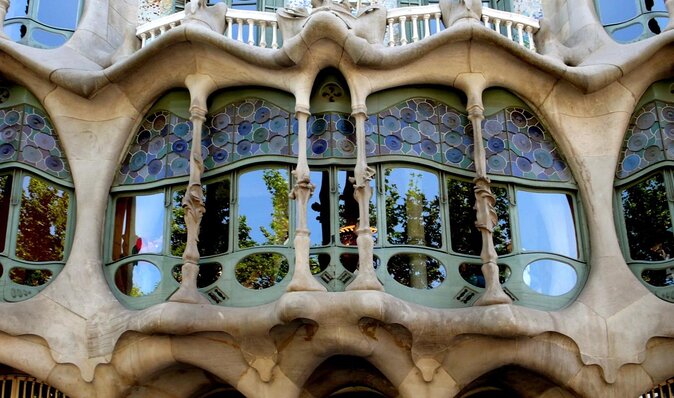
Next comes Casa Batlló. It’s one of those buildings that can feel overwhelming at first—too much shape, too much color, too many details. The tour helps you slow down so it doesn’t turn into just a quick photo stop.
From the street, you’ll focus on how Gaudí uses curves and layered surfaces to create a sense of transformation. This is where the Modernisme story becomes practical. When you understand the framework—ideas about eclecticism, shifts in modernism, and Gaudí’s evolving direction—the building becomes less like a spectacle and more like an argument.
Also, this is a stop where “no interiors” works fine. Even without entering, Casa Batlló’s exterior gives you plenty to study. The guide’s job is to keep your eyes moving in the right order, so you don’t miss the design decisions that make the building coherent.


Casa Calvet and Eixample Logic: Design Inside the City Grid
Stop three is Casa Calvet, which helps balance the route. By now you’ve seen Gaudí’s style in full color and high drama, and Casa Calvet gives you a different angle on the Modernist conversation happening in Eixample.
This is also where you start feeling how Barcelona’s urban planning shapes architecture. In Eixample, buildings are close enough that you experience them as a collection, not as isolated monuments. You’ll get attention on street-scale details and how a facade “reads” when you’re not staring from a museum-distance.
If you’re the type who likes to understand context, this stop is valuable. It shows that Modernisme wasn’t one-person genius only. It was a citywide shift in taste and design thinking, competing and collaborating at the block level.
The drawback? If you’re purely chasing Gaudí’s most famous creations, this stop might feel quieter. Still, it’s part of what makes the tour feel like a real walk through Barcelona, not a highlight reel.
La Mansana de la Discordia: One Block, Several Modernists, One Big Contrast
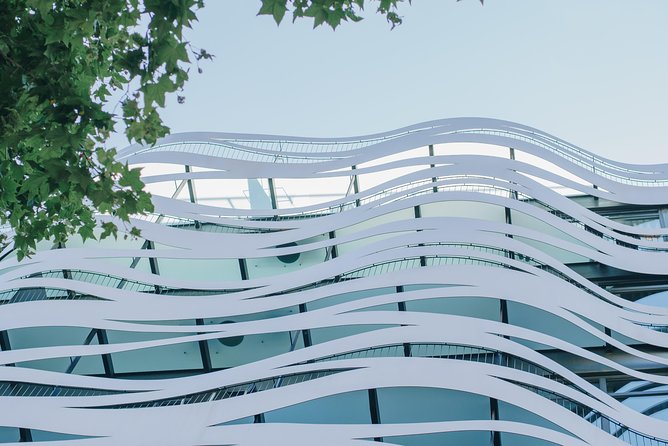
The highlight for many architecture fans is La Mansana de la Discordia—the block of “the apple of discord,” where different Modernist voices face off along the same streets.
You’ll see buildings associated with Domènech i Montaner and Puig i Cadafalch—and this matters because it changes how you compare Gaudí. Instead of treating Gaudí as an island, you see him as part of a conversation. Each architect brings a different temperament to the same urban space.
The tour also points out some hidden Eixample courtyards, which is where your perspective really changes. Courtyards are the calm after the street noise. They help you understand the architecture as a system for light, air, and everyday life, not just a facade designed for passing eyes.
If you’re short on time in Barcelona, this block is a strong use of it. You get multiple landmark-scale ideas without needing extra transit.
Fundació Antoni Tàpies: A Modern Art Pause with Architecture Brainpower
Stop five is Fundació Antoni Tàpies. Even though you don’t go inside, it’s a smart pivot. By this point, you’ve spent time with Modernisme’s visual language. Now you shift toward the next cultural layer—how Barcelona’s artistic identity evolves beyond the Gaudí-centered era.
I like this timing because it prevents the walk from feeling like a single-theme lecture. You finish with a sense that the city keeps generating ideas, and architecture isn’t separate from art. It’s one culture moving into another.
Again, because interiors aren’t part of the tour, your experience here is about exterior impressions and the guide’s context-setting. If you want to go deeper later, you’ll have the foundation laid to understand what you see.
What You Don’t Get: Exterior-Only Viewing (Plan Your Next Step)
One clear detail: the tour doesn’t go inside the buildings. That’s not a small note—it changes how you should plan your expectations.
So this is ideal if:
- you love facades, street-level design, and materials you can see up close
- you want context and interpretation more than ticketed interiors
- you enjoy walking and learning without long lines
It’s less ideal if your top goal is interior spaces like chapels, courtyards behind doors, or museum-style rooms. In that case, treat this walk as the “pre-visit brain upgrade.” After this, you’ll be better prepared for any building entry you choose later.
Also, the experience requires good weather. If it’s canceled due to poor weather, you’ll be offered a different date or a full refund. Build flexibility into your day when you can.
Price and Value: $54.44 for Architect-Led Context
At $54.44 per person for about 3 hours, this sits in the “good value if you care about the details” category. You’re paying for three things that are hard to replicate on your own:
- an architect-led explanation that connects design choices to larger ideas
- a structured route that covers multiple major Modernist works in a tight time window
- a smaller group (max 20) that keeps the experience interactive
You could walk the neighborhood by yourself and take photos. But you’d likely miss the interpretive layer—why Gaudí’s forms change, what social and political ideas are doing in the background, and how Modernisme fits into the timeline.
In other words, the value isn’t only the sights. It’s what you learn while moving between them.
Who Should Book This Barcelona & Gaudí Architecture Walk
This tour fits best if you:
- want a Barcelona architecture walk with real context, not just a sightseeing checklist
- care about how Modernisme connects art to politics, society, and belief
- like being in a small group where the guide’s personality can shine
- enjoy walking through Eixample and noticing details you’d otherwise skip
It’s also a decent choice for many people because most can participate, and it’s offered in English. Service animals are allowed, and it’s near public transportation, which helps if you want to keep the rest of your schedule simple.
If you’re traveling with someone who hates long talks, this may still work—because the pace stays tied to exterior stops and visual observations. You’re not stuck listening for long stretches without anything to look at.
Should You Book It: My Straight Call
Book this tour if you want Gaudí in context—explained by practicing architects, guided with humor and warmth, and delivered in a small-group format that keeps you engaged. The route covers several major Modernist works, and the storyline about Modernisme helps you see more than the obvious.
Skip it (or treat it as a bonus) if your priority is inside access, because it’s exterior-only. Also, if weather is likely to be rough, build in flexibility since the tour depends on good conditions.
If you’re on a first trip to Barcelona and you want your Gaudí day to feel like a real education—with practical takeaways—you’ll probably be glad you booked.
FAQ
How long is the Barcelona & Gaudí regular tour?
It’s about 3 hours.
How big is the group?
The tour has a maximum of 20 people.
Does the tour go inside the buildings?
No. It focuses on exterior views, and it doesn’t go inside the buildings.
What language is the tour offered in?
It’s offered in English.
Where does the tour start and end?
It starts at Monument al Llibre, Gran Via de les Corts Catalanes, 634, L’Eixample, 08007 Barcelona, and ends back at the same meeting point.
Is free cancellation available?
Yes. You can cancel for a full refund up to 24 hours before the start time.