REVIEW · BARCELONA
Barcelona: Discover Gaudi Architectural Guided Tour
Book on GetYourGuide →Operated by Barcelona Architecture Walks · Bookable on GetYourGuide
Gaudí clicks fast when an architect explains it. This 3-hour walk is a street-level lesson in Modernisme architecture and how Barcelona’s city planning evolved, not just a list of famous façades. I like the engineering-first way the guide connects Gaudí’s forms to real structural ideas, and I like the mix of major stops plus surprises like hidden courtyards. One thing to consider: you won’t go inside the buildings, so the experience is best if you’re happy studying the exteriors and courtyard spaces.
You’ll meet by the sculpture of Joan Brossa in front of the Comedia Cinema, right at Passeig de Gràcia and Gran Via, then follow your architect guide past Modernisme powerhouses and Gaudí’s most iconic residential works. The best part for me is that the guides are practising architects (often also professors and critics), so questions don’t feel like interruptions—they feel like part of the walk.
In This Review
- Key Highlights You’ll Feel in the First 10 Minutes
- Why an Architect-Led Gaudí Walk Changes How You See Barcelona
- The Meeting Point on Passeig de Gràcia: Joan Brossa Gets You Oriented
- Gaudí’s Three Signature Homes: Calvet, Batlló, and Milà
- Casa Calvet: A lesson in structure and restraint
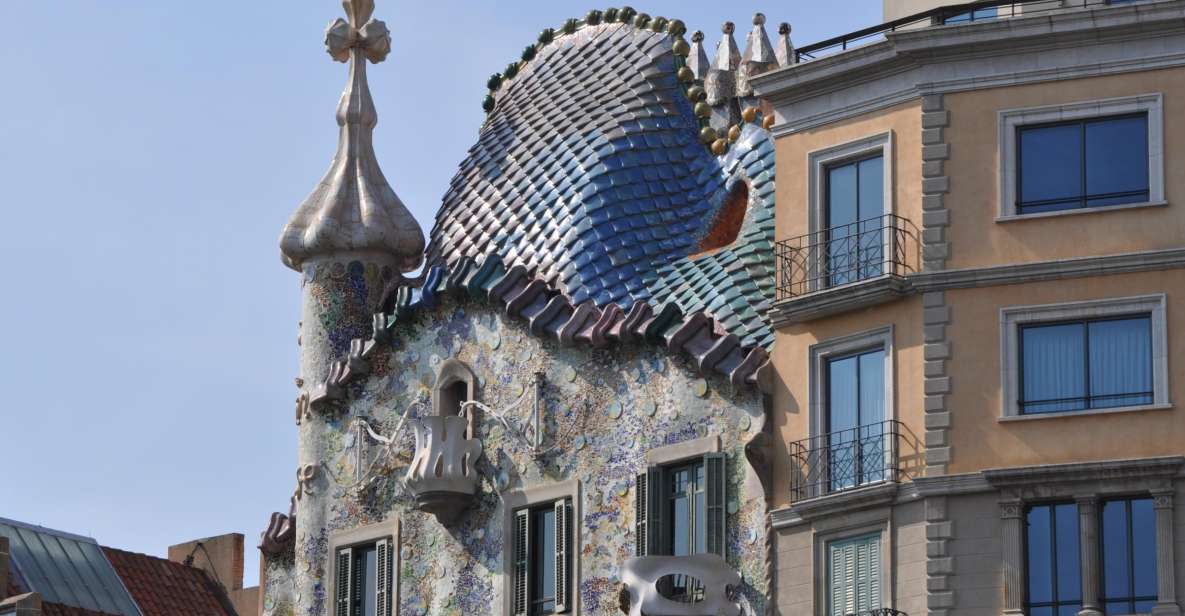
- Casa Batlló: Curves that read like logic
- Casa Milà: When the city becomes part of the design
- More Than One Modernisme Star: Tàpies, Casa Lleó Morera, and Casa Amatller
- Hidden Courtyards That Become Public Gardens
- Tracing Gaudí’s Turning Points: Güell, Manhattan, and Sagrada Família
- What the Architect Guides Actually Do (And Why It Matters)
- Timing and Walking Comfort for a 3-Hour Architecture Morning
- Who This Tour Is Best For
- Should You Book This Gaudí Architectural Guided Tour?
- FAQ
- Where is the meeting point for the tour?
- How long is the Barcelona Gaudí architectural guided tour?
- How much does the tour cost?
- What language is the guided tour offered in?
- Will I go inside any of the buildings?
- Is the tour wheelchair accessible?
- What buildings and sights will we see?
- What should I bring for the tour?
- How will I know what to do after the tour?
- Is cancellation possible if the weather looks bad?
Key Highlights You’ll Feel in the First 10 Minutes

- Architects lead the conversation: practising architects with teaching and criticism experience, so you get design thinking, not just trivia.
- Engineering as the main story: Gaudí’s buildings are framed as practical technical achievements as well as visual masterpieces.
- A tight route with big-name Modernisme: you’ll see major works tied to different Modernisme architects, not only Gaudí.
- Hidden courtyards become public gardens: you learn how private-in-feel spaces ended up supporting shared urban life.
- Real turning points in Gaudí’s career: the walk traces how his work shifts, including a Manhattan project and the Güell connection.
- A post-walk printed guide: you finish with local suggestions for drinks and more architecture to notice.
Why an Architect-Led Gaudí Walk Changes How You See Barcelona
Most Gaudí tours teach you what to look at. This one tries to teach you how he thought. You start to notice patterns—how shapes push and pull, how materials work together, and how the city around him helped define what was possible.
I love that the guide doesn’t treat Gaudí as a pure artist who happened to design buildings. Instead, the emphasis is on engineering choices and the cause-and-effect behind the look. That matters because you’ll keep seeing the logic later, even when you’re off the tour and wandering on your own.
You’ll also get social and historical context without it turning into a lecture. The strongest version of this experience is when your guide knows how to keep technical explanations clear while still answering the big why questions. In past outings, guides such as Pia, Daniela, and Tomasz were praised for staying engaging, using visual aids and notes, and keeping technical talk at a level that most people can follow.
You can also read our reviews of more guided tours in Barcelona

The Meeting Point on Passeig de Gràcia: Joan Brossa Gets You Oriented
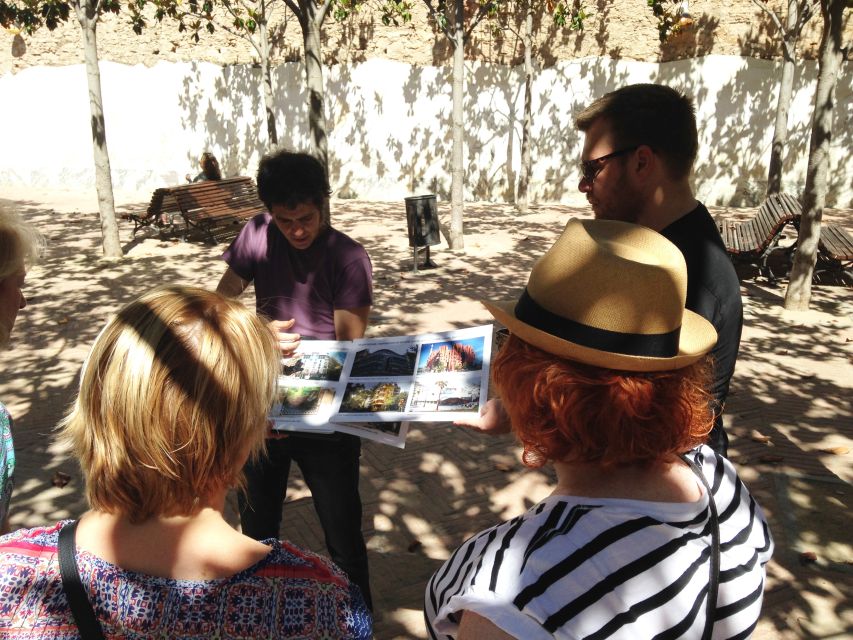
Meeting by the Joan Brossa sculpture outside the Comedia Cinema is a smart setup. It puts you right on the spine of Barcelona’s architecture, where the buildings aren’t hidden behind side streets. That means less time hunting and more time clocking details.
From the start, the walk feels like a focused way to read the neighborhood. Passeig de Gràcia is famous for Modernisme, but it’s also a place where you can see how different architects shaped the same urban stage. The guide helps you connect the dots: what the designers were trying to do, and why Barcelona became fertile ground for this style.
If you prefer quiet, slow-paced sightseeing with minimal talk, this may be a tougher fit. The format is built for active listening, and the guide’s job is to keep ideas moving from stop to stop.
Gaudí’s Three Signature Homes: Calvet, Batlló, and Milà
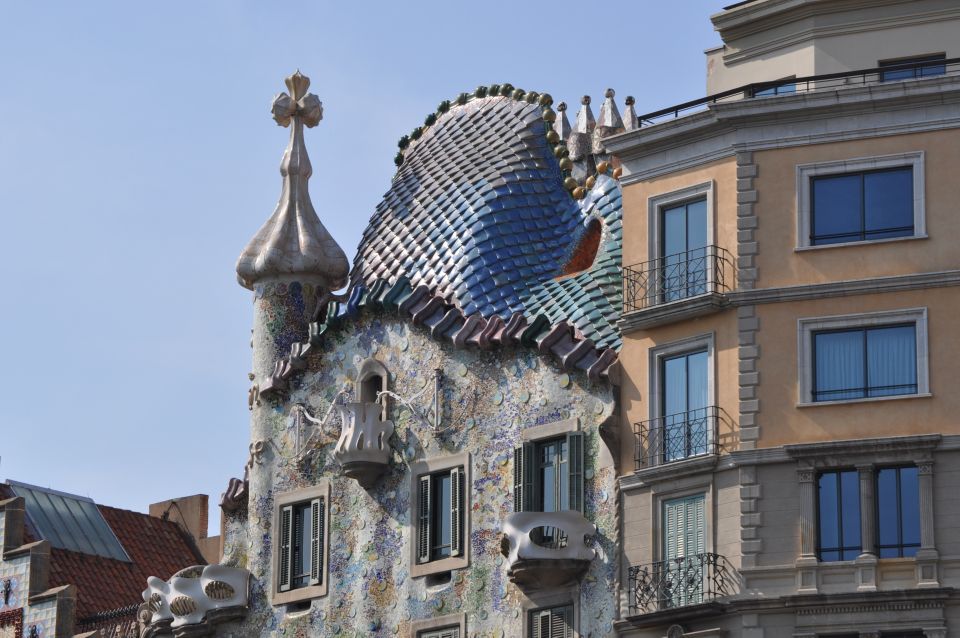
This is the core of the tour, and it’s where the architecture stops being a postcard and starts being a story you can understand.
Casa Calvet: A lesson in structure and restraint
Casa Calvet is one of those buildings that rewards close viewing. The guide frames it as part of Gaudí’s early path toward a more personal language—one where design decisions connect to function and structural behavior. You’ll learn to spot how ornament and form work together instead of feeling like decoration pasted on top.
Casa Batlló: Curves that read like logic
At Casa Batlló, you’ll focus on how Gaudí translated imagination into built reality. The tour approach here is practical: you’re taught to interpret the building’s visual power as something grounded in engineering thought. That’s why many people leave with the feeling that the building makes sense, even if you never studied architecture before.



Casa Milà: When the city becomes part of the design
Casa Milà is the place where Gaudí’s approach feels fully confident. The guide connects it to the larger arc of his career—how his thinking changes as his reputation grows and his commissions evolve. You’ll also get the sense that these buildings aren’t only meant to impress passersby. They’re meant to create a daily environment for residents.
A useful tip for your own enjoyment: go into these stops ready to look up and to step back. The details can be dramatic, but the overall design language is easiest to catch from a few paces away, then confirm with a closer look.
More Than One Modernisme Star: Tàpies, Casa Lleó Morera, and Casa Amatller
Gaudí gets center stage, but the tour also makes sure you don’t miss the wider Modernisme context. That’s part of the value here. Barcelona’s late-19th/early-20th century design scene wasn’t one-person show—it was a competitive, collaborative moment in which several architects pushed different ideas.
You’ll see highlights including:
- Antoni Tàpies Foundation
- Casa Lleó Morera by Domènech i Montaner
- Casa Amatller by Puig i Cadafalch
What I like about including these stops is that it gives you contrast. When you see different design approaches on the same main boulevard, you start to understand what Gaudí reacted to and what he built upon. Even if you only catch a couple of new ideas per stop, the contrast makes the learning stick.
One caution: the guide will likely cover a lot of architectural vocabulary and design thinking. If you tend to tune out mid-explanation, pick your moments to ask questions. Guides on this tour have been praised for handling questions smoothly and keeping the talk organized.
Hidden Courtyards That Become Public Gardens
One of the most memorable parts of the experience is the chance to access hidden courtyards and understand how they evolved into public gardens. This is more than a neat “wow” moment. It connects architecture to everyday life.
Barcelona’s courtyards are a lesson in how cities can soften dense blocks. Instead of only street-facing beauty, the buildings create an inner world where light, air, and greenery matter. Then, over time, some of those spaces shifted from private-feeling realms to shared urban resources.
For you, that means the tour doesn’t stop at façades. You come away thinking about circulation, access, and how design decisions shape social space. If you enjoy architecture that changes how people live in a neighborhood, this section is a big win.
Tracing Gaudí’s Turning Points: Güell, Manhattan, and Sagrada Família
The tour is also a guided timeline disguised as a walking circuit. You’ll hear about how Gaudí’s career changes direction, from social concerns toward a later intensity tied to religious devotion—ending with the framing of him as the last great cathedral builder.
You’ll also connect specific turning points to what you see:
- A project in Manhattan
- The last commission from his patron Eusebi Güell
- His first architectural steps tied to Sagrada Família
Even if you’re not planning a separate Sagrada Família visit right away, this background helps you interpret why Gaudí’s residential work looks the way it does. You start to see continuity: the same thought process showing up in different contexts, from private homes to grand public religious ambition.
I also appreciate that this kind of storytelling makes the architecture feel less random. Gaudí’s forms can seem like they belong to another planet, but the tour gives you the human path that led there.
What the Architect Guides Actually Do (And Why It Matters)
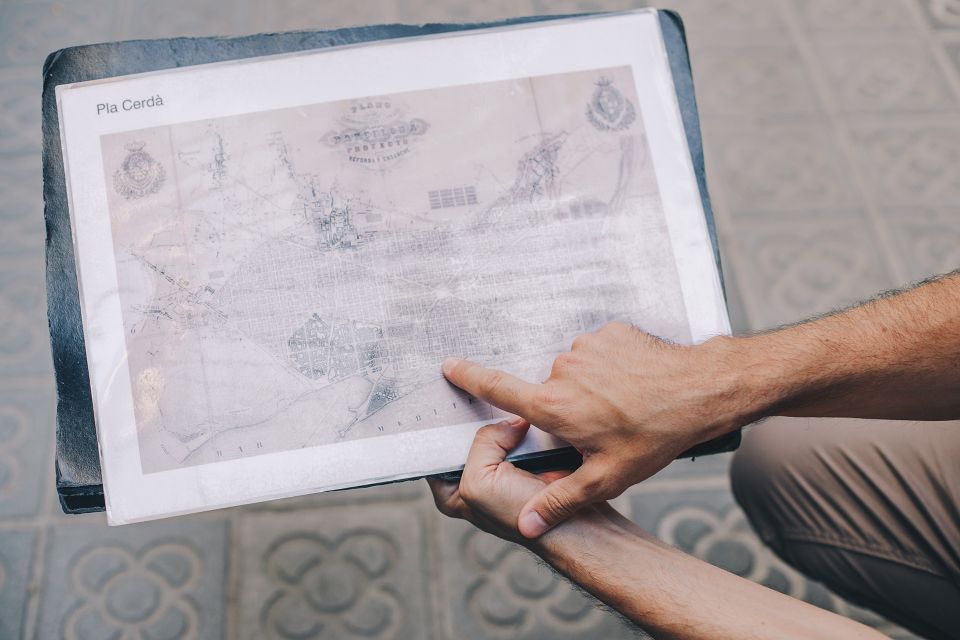
The guides aren’t just trained docents. They’re practising architects, with many also teaching or critiquing architecture. That changes the tone of the tour in a practical way: answers are built to explain how design works, not just what it looks like.
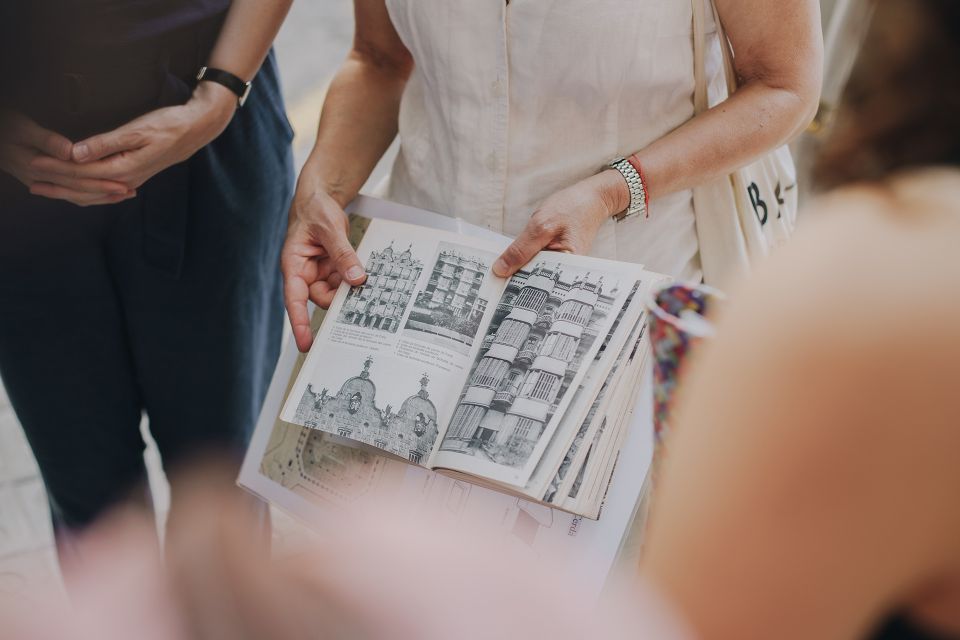
In well-reviewed experiences, guides such as Pia were noted for using her own notes and sharing pictures to reinforce explanations. Tomasz was praised for being friendly, enthusiastic, and prepared with visual aids, even when handling what felt like a very large group.
That preparation shows up for you as clarity:
- You get explanations that match what you’re seeing right now.
- You can ask questions and get usable answers, not vague “because art” responses.
- You’re guided to understand the big ideas without losing the thread.
There is still a chance that you’ll get a more technical talk than you expected, depending on your guide and your group’s questions. If you love design detail, that’s a strength. If you prefer lighter interpretation, just keep asking for the short version when needed.
Timing and Walking Comfort for a 3-Hour Architecture Morning
This is a 3-hour walking tour, so pace matters. The route is concentrated in the Passeig de Gràcia area and nearby Modernisme sites, which helps. You’re not crossing the whole city, but you will be on your feet.
The practical note: wear weather-appropriate clothing. Barcelona weather is usually pleasant, but tours cancel only if safety is threatened. Pack for sun and shade, and bring a light layer if you’re sensitive to morning breeze.
Also remember: the tour is wheelchair accessible. The important information is that you won’t go inside the buildings, so the accessibility focus is about getting you to view and experience the exterior and courtyard spaces safely.
Who This Tour Is Best For
This tour is ideal if you want more than surface-level sightseeing. You’ll enjoy it most if you like:
- Architecture with real-world structure behind the visuals
- Learning how neighborhoods and planning shaped design outcomes
- Asking questions and getting answers from working professionals
- Comparing Gaudí to other Modernisme architects nearby
It’s also a strong choice for couples, small groups, and solo travelers who like guided context. If you want purely relaxed “stroll and take photos” sightseeing with minimal explanation, you might find the format a little talk-heavy.
Should You Book This Gaudí Architectural Guided Tour?
If your goal is to understand Gaudí instead of simply seeing him, I’d book it. The best reason is the way the tour connects engineering thinking, Barcelona’s planning context, and the major Modernisme buildings into one coherent story.
The value is also in the mix: you see key Gaudí houses (Calvet, Batlló, Milà), plus other important Modernisme works, plus the courtyard-to-public-garden idea. And you end with a guide prepared by the local partner’s team, with suggestions for drinks and more architecture to notice.
Two smart reasons to hesitate, though. First, you won’t enter buildings, so interiors won’t be part of the experience. Second, if you dislike structured walking tours, this format may feel too organized.
If those aren’t deal-breakers, this is one of the more rewarding ways to spend a morning in Barcelona’s architecture district—because you don’t just look at Gaudí. You start to read him.
FAQ
Where is the meeting point for the tour?
Meet by the Joan Brossa sculpture in front of the Comedia Cinema, at the intersection of Passeig de Gràcia and Gran Via.
How long is the Barcelona Gaudí architectural guided tour?
The tour lasts 3 hours.
How much does the tour cost?
It costs $53 per person.
What language is the guided tour offered in?
The tour guide speaks English.
Will I go inside any of the buildings?
No. You won’t go inside the buildings, but you will be able to access hidden courtyards as part of the tour experience.
Is the tour wheelchair accessible?
Yes, the entire tour is wheelchair accessible.
What buildings and sights will we see?
The tour includes examples such as the Antoni Tàpies Foundation, Casa Lleó Morera, Casa Amatller, hidden courtyards, and Gaudí’s three main residential buildings: Casa Calvet, Casa Batlló, and Casa Milà.
What should I bring for the tour?
Bring weather-appropriate clothing, since Barcelona weather can vary.
How will I know what to do after the tour?
At the end of the walk, you receive a guide written by the local partner’s team with suggestions for where to have a drink and which architecture to admire.
Is cancellation possible if the weather looks bad?
Tours are cancelled only if the weather poses a safety threat, and there is free cancellation available up to 24 hours in advance for a full refund.